• Our new ticketing site is now live! Using either this or the original site (both powered by TrainSplit) helps support the running of the forum with every ticket purchase! Find out more and ask any questions/give us feedback in this thread!

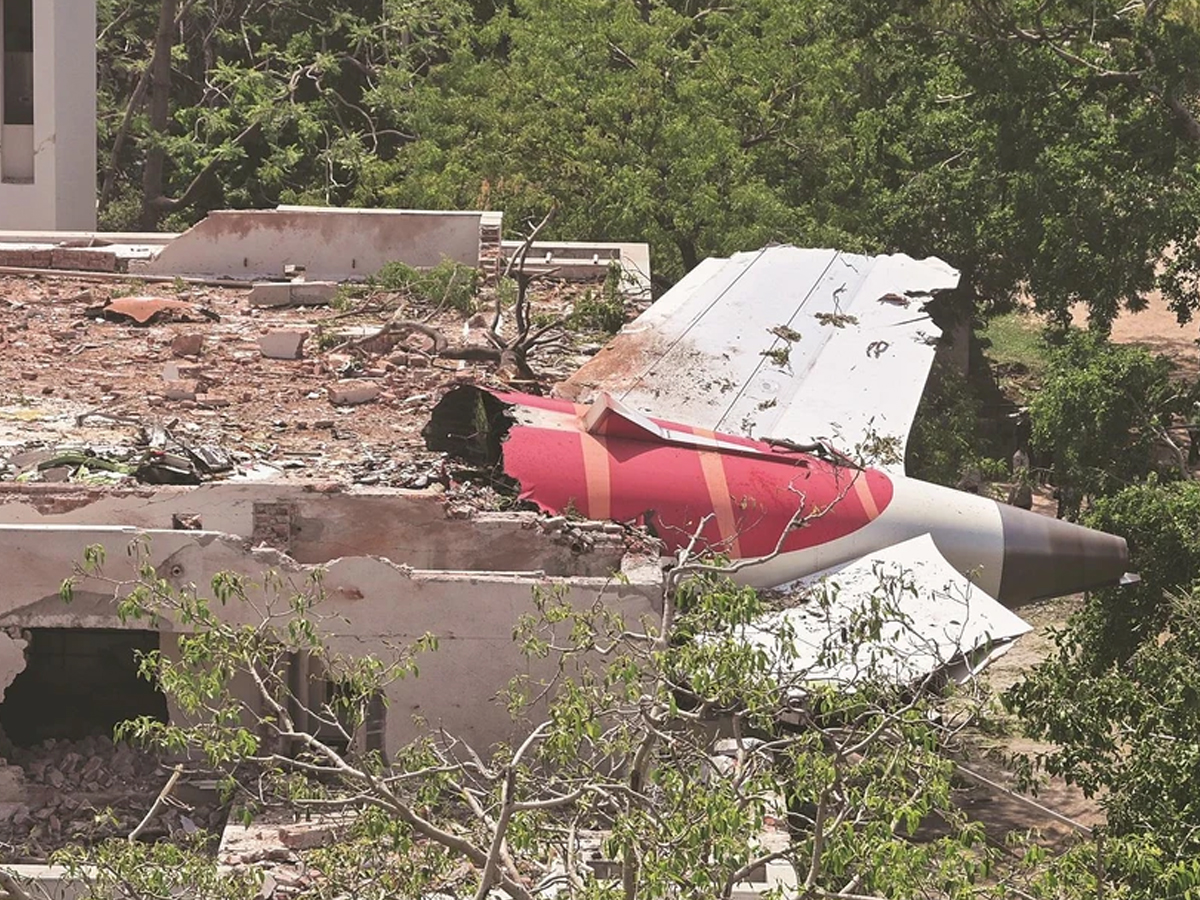
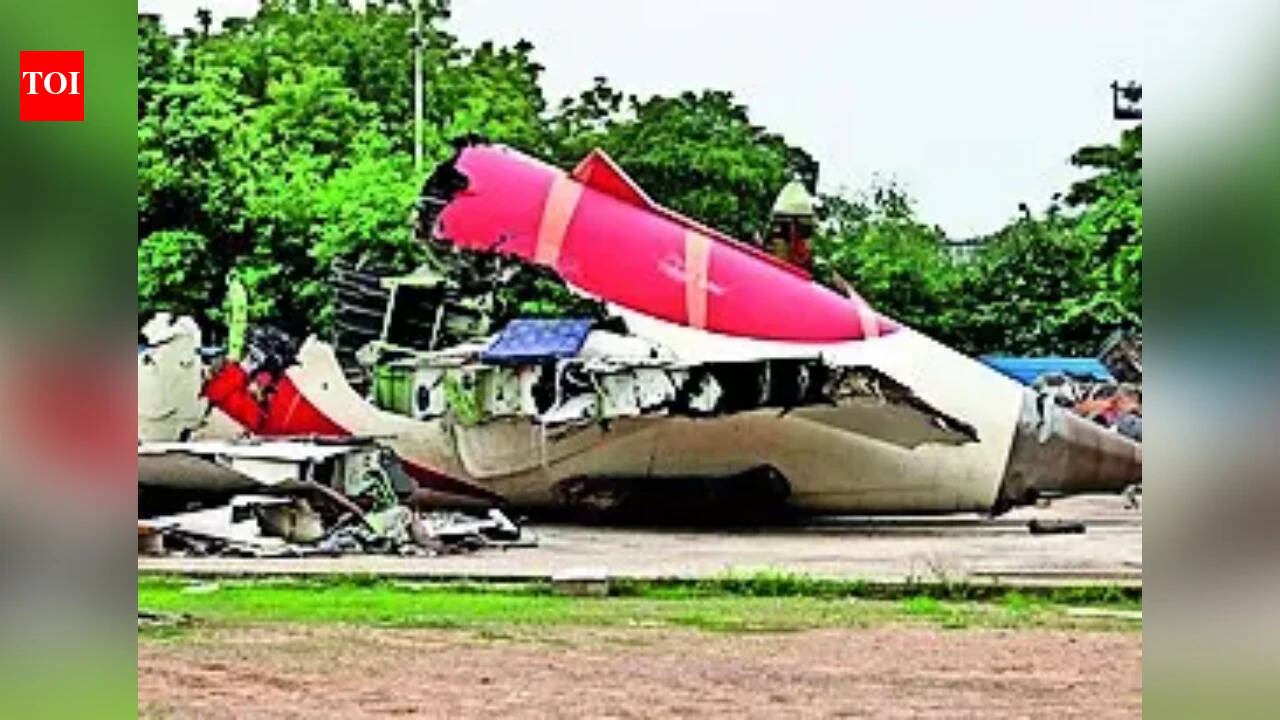
Air India crash at Ahmedabad on flight towards Gatwick - 12/06/2025

Status
Not open for further replies.

pug1

Member
Joined
6 Nov 2022
Messages
515
Location
Humber
It is supposed to be accurate. But I fear we are going round in circles.
But it’s not a story. Tech Log pages are to note issues of a technical nature, they will have work orders attached to show the work completed by the engineers, we can’t see those from this one snap of the TLP. The flight crew, depending on protocols within AI and in accordance with the Indian regulator, will have submitted a report to the company detailing what occurred. We can’t see that either. We know the aircraft departed LHR 14 minutes late, but we don’t know why. We know full engineering inspection was completed after arrival into BLR but we don’t know exactly what was done (from the TLP) apart from it was in line with AMM and no defect was found. We know that the U.K. regulator has requested the findings of the investigation as part of normal due process but this has been sensationalised to read as though they have ‘demanded answers’.

The reality is that a Tech Log entry is a snapshot of a result, not a transcript of the decision-making process. If the crew identified a handling issue during start-up, communicated with Maintrol, and subsequently verified the switch was 'fully and positively latched' before taxiing, then the aircraft was technically in a safe and flyable configuration for departure.

By logging it at BLR, they ensured the home-base engineers could perform the formal AMM Pull-to-Unlock force-tension tests—which, as we now know, the aircraft passed. We have to stop conflating a 'finicky' switch that may require a specific handling angle with a mechanical failure that may render an aircraft unairworthy. Until the full investigation report is released, assuming the crew 'bypassed' safety protocols based on one photo is just speculation, not aviation analysis.
 
Last edited:
Sponsor Post - registered members do not see these adverts; click here to register, or click here to log in
R

RailUK Forums

Cloud Strife

Established Member
Joined
25 Feb 2014
Messages
2,962
UK aviation regulator seeks answers from Air India over Boeing 787 fuel switch incident after DGCA finds ‘no defects’

To be honest, there needs to be serious questions over Air India's handling of this situation. The captain first of all needs to answer as to why he continued with the journey with a potentially faulty fuel switch, but also, did Air India give him any sort of authorisation to continue? Yes, according to aviation law, the commander is in complete control of their aircraft, but this is a very hierarchical Indian culture that we're discussing. So, did he ask for permission to continue, and who granted that permission?

I suspect the UK CAA saw straight through this ridiculous attempt to change the narrative, and this is a quiet reminder to Air India not to mess about in future.

Apparently Air India do have an maintenance engineer on the ground at Heathrow, so this raises even more questions as to why they continued the flight without having it inspected first. But I think the most likely scenario is that this situation simply never happened, and that the commander simply was following orders to try and cause a diversion from the investigation.

== Doublepost prevention - post automatically merged: ==

By logging it at BLR, they ensured the home-base engineers could perform the formal AMM Pull-to-Unlock force-tension tests—which, as we now know, the aircraft passed.

They could have been done in Heathrow as well. Given the seriousness of the situation, it makes no sense to carry on with the flight, even if it appears to be latched correctly. It was and is highly irresponsible to carry on with the flight until it was actually checked properly, and there's no excuse for not doing those checks in Heathrow. I understand why they might not want to do those checks in a smaller airport, but this is one of the world's major airports with some of the best aviation mechanics and engineers available on site.

The only answer, of course, is that the UK would (and seemingly is) investigate properly and they wouldn't be able to lie.
 
Last edited:

pug1

Member
Joined
6 Nov 2022
Messages
515
Location
Humber
I’m sorry @Cloud Strife but that’s utter nonsense. You’re again looking for conspiracy theories and sensationalising the U.K. CAA input when, as I’ve already explained (as I have quite significant experience in this area) that it is normal ops for the CAA to request more information.

What you and others have done is look at one Tech Log Page entry that provides zero context whatsoever and drawn some fantastical conclusion that the Captain made a dangerous decision to go or that it was part of some elaborate cover up to blame Boeing. Honestly it’s preposterous!

Am I ruling out unsafe decision making? No, but I’m drawing on my many years experience in FOQA/peripheral safety and my (albeit limited so far) experience on the flight deck to tell you unequivocally that you cannot make judgements like that from a TLP and expect to be taken seriously.

Knowing the CAA if they had any inkling of unsafe practice we would know about it, certainly after the AI171 event.
 

TravelDream

Member
Joined
7 Aug 2016
Messages
1,159
I’m as skeptical as anyone on this. Hence I don’t see the need to sensationalise it at this time. As I also said it wouldn’t feature in the MEL due to it being a safety critical element. Nor indeed could I envisage it being a hold over item, a return to stand definitely. AOG almost certainly unless there was a clear cause of the switch being unable to lock (debris etc). Is there a suggestion that the aircraft was AOG when it returned to its destination? This could have been a very minor issue that was discussed with whomever AI have in place to discuss with and determined not to be an issue - if indeed this TLP is real.

I think that's fair.
It's human nature to try to 'fill in the blanks' and this one, at first, just seems totally odd and wrong.
But you're right that we are simply jumping to conclusions when we do that. And, perhaps unfairly, with Air India most jump to a very negative conclusion.

We can't know the reason the captain only wrote in the techlog after landing is India. Maybe it was ass-covering - that's certainly happened before - but we can't be sure.

I am glad the CAA have requested further information and I'm confident that the outcome of that, whatever it may be, will be satisfactory from the UK CAA's side.
 

pug1

Member
Joined
6 Nov 2022
Messages
515
Location
Humber
I think that's fair.
It's human nature to try to 'fill in the blanks' and this one, at first, just seems totally odd and wrong.
But you're right that we are simply jumping to conclusions when we do that. And, perhaps unfairly, with Air India most jump to a very negative conclusion.

We can't know the reason the captain only wrote in the techlog after landing is India. Maybe it was ass-covering - that's certainly happened before - but we can't be sure.

I am glad the CAA have requested further information and I'm confident that the outcome of that, whatever it may be, will be satisfactory from the UK CAA's side.
Of course, and I can understand the discussion these types of events attract. However what does disappoint me, particularly in the case of forums like PPrune, is the tendency of people I consider to be highly experienced pilots/operators (those that are genuine of course) making otherwise unfounded or sensationalised comments to a topic that is based on very scant information with zero context. We know the press scour those pages!

Point is that, though we can’t rule anything out, Occam’s razor applies. The CAA, if they don’t receive suitable context, will act. However I’m confident that AI, in conjunction with the Indian Authorities, have thus far co-operated suitably to satisfy the U.K. regulator that they are following best practice. In the absence of any information to the contrary then we need to trust the process and sit patient.
 

Cloud Strife

Established Member
Joined
25 Feb 2014
Messages
2,962
I’m sorry @Cloud Strife but that’s utter nonsense. You’re again looking for conspiracy theories and sensationalising the U.K. CAA input when, as I’ve already explained (as I have quite significant experience in this area) that it is normal ops for the CAA to request more information.

And I'm glad that it is normal, because Air India's little stunt was clearly carried out in a very amateurish way. It's an airline that's been a basket case for many years, and this sort of thing happening at exactly the right moment to distract attention from the report that the Indian AAIB were leaning towards intentional pilot murder-suicide is exactly what I'd expect from Air India.

What you and others have done is look at one Tech Log Page entry that provides zero context whatsoever and drawn some fantastical conclusion that the Captain made a dangerous decision to go or that it was part of some elaborate cover up to blame Boeing. Honestly it’s preposterous!

And I think you're completely ignoring the reality of Indian culture in all of this. This sort of thing is absolutely par for the course, and when you combine it with other events such as the Indian Supreme Court putting pressure on the investigation, it's not a surprise that many people are saying straight out that it's just an obvious attempt to deflect attention from the real issue. There is a strong culture in India of deflecting blame and coming up with incredibly elaborate scenarios to avoid accepting the obvious, and I've seen it quite a few times in my professional field. It's just how it is, they place a huge amount of emphasis on 'face', perhaps more so than in any other Asian culture. Individuals in India can and will sacrifice their own reputation for this, and it's often the cause of substantial conflict between Indian teams and others.

I'm not looking at one page, I'm looking at the entire picture. If the switch was truly defective, or had been defective in operation in any way, then the sensible thing to do would have been to park up (or not depart from the gate) and get a mechanic to look at it. It didn't happen, and there's no evidence at all that the switch was looked at by a professional on the ground before reaching India. While many things can be handled via voice comms / messages, the extreme sensitivity in Air India regarding these switches would have justified such an action. Instead, they just flew on and trusted that the locking mechanism was actually working.

And, perhaps unfairly, with Air India most jump to a very negative conclusion.

I don't think it's unfair. Air India have had a terrible reputation for many years, and even their own CEO has been open about how difficult the situation has been for them with spare parts. The airline themselves have been pretty honest about the terrible state that they found it, and it's not a big secret that they were forced into cannibalising their own planes for parts: not because the parts weren't available (which has been an issue elsewhere), but because they didn't have the money or organisational capacity to obtain them in the first place. They were even caught a few months ago at their subsidiary for submitting falsified documents after not replacing some parts of their A320 engines.

Anyway, to add to this thread, I found the datasheet for the fuel switch in question. Helpfully, pages 12 and 13 show the locking mechanisms in use.


pug1

Member
Joined
6 Nov 2022
Messages
515
Location
Humber
And I'm glad that it is normal, because Air India's little stunt was clearly carried out in a very amateurish way. It's an airline that's been a basket case for many years, and this sort of thing happening at exactly the right moment to distract attention from the report that the Indian AAIB were leaning towards intentional pilot murder-suicide is exactly what I'd expect from Air India.


And I think you're completely ignoring the reality of Indian culture in all of this. This sort of thing is absolutely par for the course, and when you combine it with other events such as the Indian Supreme Court putting pressure on the investigation, it's not a surprise that many people are saying straight out that it's just an obvious attempt to deflect attention from the real issue. There is a strong culture in India of deflecting blame and coming up with incredibly elaborate scenarios to avoid accepting the obvious, and I've seen it quite a few times in my professional field. It's just how it is, they place a huge amount of emphasis on 'face', perhaps more so than in any other Asian culture. Individuals in India can and will sacrifice their own reputation for this, and it's often the cause of substantial conflict between Indian teams and others.

I'm not looking at one page, I'm looking at the entire picture. If the switch was truly defective, or had been defective in operation in any way, then the sensible thing to do would have been to park up (or not depart from the gate) and get a mechanic to look at it. It didn't happen, and there's no evidence at all that the switch was looked at by a professional on the ground before reaching India. While many things can be handled via voice comms / messages, the extreme sensitivity in Air India regarding these switches would have justified such an action. Instead, they just flew on and trusted that the locking mechanism was actually working.


I don't think it's unfair. Air India have had a terrible reputation for many years, and even their own CEO has been open about how difficult the situation has been for them with spare parts. The airline themselves have been pretty honest about the terrible state that they found it, and it's not a big secret that they were forced into cannibalising their own planes for parts: not because the parts weren't available (which has been an issue elsewhere), but because they didn't have the money or organisational capacity to obtain them in the first place. They were even caught a few months ago at their subsidiary for submitting falsified documents after not replacing some parts of their A320 engines.

Anyway, to add to this thread, I found the datasheet for the fuel switch in question. Helpfully, pages 12 and 13 show the locking mechanisms in use.

Again, you’re using judgements based on a single Tech Log Page which doesn’t tell a story. The CAA will certainly not be asking questions if a cultural nature, and indeed I think you completely invalidate your own argument by bringing such a prejudicial bias into it.

Could there be corporate culture issues? Certainly, and in fact there is a potential issue with crew feeling like the can’t call fatigued through fear of a punitive response. However that is certainly not an issue isolated to Air India or even India in general as BALPA would likely tell you.

I think we should stick to the technical evidence rather than making broad generalizations about an entire culture. Attributing a complex aviation incident to 'national traits' or 'saving face' ignores the documented technical history of the Boeing 787 fuel switches and the rigorous international training these pilots undergo.
 

Royston Vasey

Established Member
Joined
14 May 2008
Messages
2,992
Location
Cambridge
Attributing a complex aviation incident to 'national traits' or 'saving face' ignores the documented technical history of the Boeing 787 fuel switches and the rigorous international training these pilots undergo.
We are doing the exact opposite of that. We are not ignoring the documented technical history of the B787 fuel switches, because there isn't one. Unless you care to enlighten us, there isn't a documented technical history of issues with these switches other than a 2018 FAA SAIB: https://ad.easa.europa.eu/blob/NM-18-33.pdf/SIB_NM-18-33_1 (link downloads a pdf from EASA.europa.eu) referring mainly to different P/Ns on 737 aircraft but also advising 787 operators which already had better designed switches and wasn't considered serious enough to be a directive anyway.

And the rigorous international training is not in doubt, but identifying a problem like that and still flying to India, raises a question either over the issue, or the decision to fly. Hence the CAA "please explain".

I think we should stick to the technical evidence rather than making broad generalizations about an entire culture. Attributing a complex aviation incident to 'national traits' or 'saving face'
And this has been a documented cause of countless aviation disasters in highly heirarchical cultures like Korea, Japan and India
 
Last edited:

pug1

Member
Joined
6 Nov 2022
Messages
515
Location
Humber
We are doing the exact opposite of that. We are not ignoring the documented technical history of the B787 fuel switches, because there isn't one. Unless you care to enlighten us, there isn't a documented technical history of issues with these switches other than a 2018 FAA SAIB: https://ad.easa.europa.eu/blob/NM-18-33.pdf/SIB_NM-18-33_1 (link downloads a pdf from EASA.europa.eu) referring mainly to different P/Ns on 737 aircraft but also advising 787 operators which already had better designed switches and wasn't considered serious enough to be a directive anyway.

And the rigorous international training is not in doubt, but identifying a problem like that and still flying to India, raises a question either over the issue, or the decision to fly. Hence the CAA "please explain".


And this has been a documented cause of countless aviation disasters in highly heirarchical cultures like Korea, Japan and India
There was a Service Bulletin raised previously regarding the exact same switch and mechanisms as I mentioned upthread which also affected my employer on the B737NG fleet as you correctly identified, however you’d have incorrectly interpreted the SB as having no relevance to the B787. There is a difference between a Service Bulletin and an AD, an SB doesn’t attach mandatory maintenance actions. My employer did complete these non mandatory checks, there is suggestion that AI did not. So therefore there is documented technical concerns, but you’d need a MyBoeingFleet account to access that information regarding the 787 specific SB, unless it’s online somewhere. What is clear in your link though is that the part of possible concern shared the same number on the 787 as did the 737NG.

Cultural issues may well have been the documented cause of past events, they even have been in British aviation disasters, and I’m not ruling it out as a possibility. Merely trying to steer the conversation in the way the CAA will be approaching it, and rather than ‘demanding answers’ with a prejudicial bias, they will be investigating with an open mind clear from any preconception as any professional investigation would.

So again, there is no story here. It’s a single Tech Log Page with no context attached to it.
 
Last edited:

gabrielhj07

Established Member
Joined
5 May 2022
Messages
1,603
Location
Herts
So again, there is no story here. It’s a single Tech Log Page with no context attached to it.
I’m afraid there is context in the loss of VT-ANB, and the intense focus on these switches that the crash precipitated. The CAA will have their own paperwork exercises to complete, in the meantime discussion around a potentially very similar occurrence to AI171, especially from the same operator, is quite legitimate.
 

pug1

Member
Joined
6 Nov 2022
Messages
515
Location
Humber
I’m afraid there is context in the loss of VT-ANB, and the intense focus on these switches that the crash precipitated. The CAA will have their own paperwork exercises to complete, in the meantime discussion around a potentially very similar occurrence to AI171, especially from the same operator, is quite legitimate.
Again, not in terms of professional investigation it’s not a discussion point, though I completely understand why people are keen to draw parallels.

Part of the root cause analysis the CAA will be expecting will include any company cultural issues such as whether the crew felt under pressure to fly the aircraft back to India, however I remained open minded due to my own operational experience and hence I keep repeating that an isolated Tech Log Page does not tell a story. I fully expect that the AI171 incident was indeed fresh in the minds of the crew when they felt they couldn’t position the switch initially, perhaps there was confirmation bias at play and this was resolved via a chat with either the maintrol department or a quick visit by and discussion with the engineers in LHR. But that’s speculation and again we just don’t know.

As for the cause of AI171, we could speculate almost infinitely. Sometimes unexpected things just happen, no matter how unfortunate they may be.

https://www.flightglobal.com/safety...d Kaminski-Morrow16,on the sequence of events.
 

ainsworth74

Forum Staff
Staff Member
Global Moderator
Joined
16 Nov 2009
Messages
31,069
Location
Redcar
We seem to going a bit circular at the moment so I think this is the opportune time to lock the thread pending any substantive updates.
 

Cloud Strife

Established Member
Joined
25 Feb 2014
Messages
2,962
The updates are coming thick and fast now. This one comes from The Hindustan Times:


Clear cockpit audio, pilot's ‘almost certainly intentional’ act: In Air India crash, new claims via Italian news report

Corriere della Sera says probe to state in final report that AI-171 crashed because pilot turned off fuel switch in act that was "almost certainly" intentional.

On a day when the Supreme Court of India sought a progress report on the probe into an Air India plane's June 2025 crash in Ahmedabad — 260 people were killed — an Italian newspaper came out with new claims citing sources in aviation agencies. The claims put a pilot at the centre of the crash.

Key claims in new media report on AI-171 crash​

Who moved the switch?​

The news report said the Indian investigators are preparing to state in their final probe report that Air India Flight 171 crashed because one of the pilots turned off the aircraft's fuel switches in an act that was "almost certainly" intentional.
These findings would be based on the fact that there's no technical defect found in the aircraft, meaning a human could have caused crash, Italian newspaper Corriere della Sera reported on Wednesday. It said key evidence included cockpit voice recordings, cleansed of background noise, identifying which pilot moved the fuel switch “from RUN to CUTOFF”.
It's unclear so far whether the final probe report will explicitly pin responsibility, the name at the centre of it all is the aircraft's pilot commander, Sumeet Sabharwal, who died in the crash, Corriere della Sera reported.

Indian pilots associations and Sabharwal’s family have criticised what they see as an attempt to pin the blame; and have called for more scrutiny on the aircraft maker, the airline and other factors too.
India’s probe agency Aircraft Accident Investigation Bureau (AAIB) and the civil aviation ministry did not respond to HT’s requests for comment on the report.

How ‘evidence’ emerged​

Flight 171, a Boeing 787 Dreamliner, crashed on June 12 shortly after takeoff from Ahmedabad airport, killing 241 of the 242 on board and 19 on the ground, as the aircraft plummeted onto a medical students' hostel just seconds after losing thrust from both engines upon takeoff. The flight was headed to London.
In December 2025, AAIB investigators travelled to Washington, where they re-analysed the aircraft's black box data at the US National Transportation Safety Board laboratories, focusing particularly on cleaned-up cabin audio recordings, sources told Corriere.

Did pilot make a mistake?​

The Italian newspaper said a conclusion pointing to the flight captain is a "desired turning point" for US experts who've been confronting their Indian counterparts with evidence, as the Indian team refused to recognise a human role in the tragedy.
The report said audio analysis made clear which pilot took the fatal action.
It also ruled out the possibility of a mistake, the newspaper report added.
An AAIB preliminary report one month after the crash established that the engines shut down almost simultaneously after fuel switches were moved.
The cockpit voice recorder captured one pilot asking "Why did you turn off the engines?" with the other responding "It wasn't me", though the report did not identify which pilot said what.
US experts conducting simulator tests of a Boeing 787 never found a scenario in which both engines shut down due to a failure, it added. Human intervention, whether intentional or accidental, is the only reasonable explanation, Corriere reported.
Evaluations based on the flight-data recorder pointed to Sabharwal, who was monitoring, while First Officer Clive Kunder was piloting, the newspaper said. The engines shut down in sequence: first the left engine, where the captain sits, then the right. In the final seconds, the first officer's control yoke was positioned to regain altitude while the captain's remained stationary, according to the news report citing probe sources.

Has Indian team's position changed?
There was already pressure on India from western countries in particular that, if the probe was not carried out with full facts, the security level of all Indian airlines could be re-evaluated, the news report noted.
This risked damaging the image of a country investing heavily in air transport, tourism and trade, it quoted sources as saying.
"Admitting that it was one of the pilots who knocked down the plane is increasingly considered a sustainable sacrifice," one source told the newspaper.
The final conclusions will undergo a "political" evaluation, the Corriere's sources said. A final report could adopt a more cautious version to avoid strong national controversies, the outlet reported.
US NTSB spokesman Peter C Knudson referred Corriere to the AAIB. Indian authorities — including the AAIB, the Directorate General of Civil Aviation and the civil aviation ministry — did not respond to the newspaper's questions, it noted.

SC seeks progress report on AAIB probe
Unrelated to the Italian newspaper's report but also on Wednesday, the Supreme Court sought to know the progress and procedural protocol of the AAIB in its probe, in three weeks' time.
A bench led by Chief Justice of India Surya Kant noted the submissions made by the Solicitor General of India, Tushar Mehta, representing the Centre, who said that the investigation was at its fag end and sought three weeks to submit a report.
During the hearing, the court cautioned against speculation and premature conclusions on the cause of the crash. "With one stroke of the pen, you cannot say that a particular model of aircraft is defective. These are highly technical and sophisticated issues," the court observed.
The plea in the SC was filed by Safety Matters Foundation seeking a court-monitored inquiry.
Acknowledging the anxiety of the victims' families, the court said, “We appreciate the concern of the parents and relatives of the pilots and passengers... This kind of proceeding is not meant for a blame game between different stakeholders.”

There's also a second report:


AI 171 pilot 'intentionally shut fuel switches’: Italian report’s claim on final probe finding

Indian investigators are preparing to state in the final report that Air India Flight 171 crashed because one of the pilots turned off the aircraft's fuel switches in an "almost certainly" intentional act, Italian newspaper Corriere della Sera reported on Wednesday, citing sources in western aviation agencies.

The findings are based on what the report said was a lack of technical defect being found, and analysis of cleaned-up cockpit voice recordings that investigators said identified which pilot moved the switches.

India’s Aircraft Accident Investigation Bureau and the civil aviation ministry did not respond to HT’s requests for comment on the report.

Flight 171, a Boeing 787 Dreamliner, crashed on June 12 shortly after takeoff from Ahmedabad airport, killing 260 people — 241 of the 242 on board and 19 on the ground when the aircraft plummeted onto a medical student hostel 32 seconds after losing thrust from both engines.

While it remains unclear whether the final report will include a detailed description of how the switches were intentionally turned off or explicitly attribute responsibility, the main suspect is the aircraft's commander, Sumeet Sabharwal, who died in the crash, Corriere reported.

Indian pilots associations and Sabharwal’s family have criticised what they say has been a designed attempt to pin the blame for tragedy, and calling for more scrutiny on the aircraft maker, the airline and other factors.

The newspaper said a conclusion pointing to the captain marks a "desired turning point" for US experts assisting the investigation, after weeks of confrontations with their Indian counterparts who had refused to recognise a human role in the tragedy.
In December, Indian investigators from the AAIB travelled to Washington where they re-analysed the aircraft's black box data at National Transportation Safety Board laboratories, focusing particularly on cleaned-up cabin audio recordings, the sources told Corriere.

The audio analysis made clear which pilot took the fatal actions and ruled out the possibility of a mistake, according to the report.

New Delhi's apparent change in position stems from US pressure and Western threats to re-evaluate the security level of Indian airlines, which risk damaging the image of a country investing heavily in air transport, tourism and trade, the sources said.

"Admitting that it was one of the pilots who knocked down the plane is increasingly considered a sustainable sacrifice," one source told the newspaper.

US experts conducting simulator tests of a Boeing 787 never found a scenario in which both engines shut down due to a failure, with human intervention — whether intentional or accidental — the only reasonable explanation, Corriere reported.

Western evaluations based on the flight data recorder pointed to Sabharwal, who was monitoring while first officer Clive Kunder was piloting, the newspaper said. The engines shut down in sequence — first the left engine, where the captain sits, then the right. In the final seconds, the first officer's control yoke was positioned to regain altitude while the captain's remained stationary, according to the report.

The preliminary report, released one month after the crash, established that the engines shut down almost simultaneously after fuel switches were moved from "run" to "cutoff". The cockpit voice recorder captured one pilot asking "Why did you turn off the engines?" with the other responding "It wasn't me", though the report did not identify which pilot said what.

The final conclusions will undergo a "political" evaluation, the sources told Corriere on condition of anonymity. The final document could adopt a more cautious version to avoid strong national controversies, the newspaper reported.

NTSB spokesman Peter C Knudson referred Corriere to the Indian AAIB. Indian authorities — including the AAIB, the Directorate General of Civil Aviation and the Civil Aviation Ministry — did not respond to the newspaper's questions.

There's also a very interesting Daily Mail report which gives some more details on what was reported in the Italian press:


Air India pilot did turn off fuel switches before crash disaster, Western sources claim

A pilot in charge of flying the Air India plane that crashed last June, killing 260 people, turned off the fuel switches in a move that was 'almost certainly' intentional, Western sources have claimed.

The Boeing 787, bound for London Gatwick, crashed into a medical college 32 seconds after taking off from Ahmedabad Airport in India on June 12.

A total of 241 passengers were killed as well as 19 people on the ground. Only one passenger - British national Vishwash Kumar Ramesh - survived. Of the passengers, 53 were British.

Since the tragedy, investigators from India's Aircraft Accidents Investigation Bureau have been leading the probe into the cause of the crash.

They have been working with officials from the US' National Transportation Safety Board (NTSB), as well as Boeing and the engine's manufacturer, GE Aerospace.

Western sources told Italian newspaper Corriere della Sera that the blame likely lay at the feet of the plane's captain, Sumeet Sabharwal.

Sabharwal was monitoring the plane at the time of the crash, while first officer Clive Kunder was in control.

The newspaper reported that investigators have found that the left engine was shut down before the right one. Given that captains always sit on the left, the paper reported that this pattern indicated Sabharwal had turned the engines off.

In one blackbox recording, one pilot was heard asking the other: 'Why did you turn off the engines?'

The other responded: 'It wasn't me.'

On top of this, Kunder's control stick appeared to be in a position that indicated he was trying to regain altitude in the final moments before the crash, whilst Sabharwal's stick was stationary.

According to simulations of the Boeing 787 plane, US experts found that it wasn't possible for both engines to shut down due to a technical fault, leaving human intervention, intentional or otherwise, as the only reasonable explanation.

And following an analysis of data from the plane's two black boxes in Washington, investigators ruled out human error as the cause of the engines being shut down.

The newspaper also reported that Indian officials have frustrated the investigation process over the past seven months.

Sources told Corriere that the conclusions of the report will be subjected to a 'political' evaluation with the aim of avoiding national controversy in India.

It is likely that the final report will be released between June 8 and June 12 this year, and may be toned down.

Despite the aim of avoiding controversy in India, US pressure and the threat of 'reassessing' the safety ratings of India's airlines pushed New Delhi.


Amid increasing investment in air travel, tourism and trade, the nation reportedly did not want its overall image to be damaged.

A source told Corriere: 'Admitting that one of the pilots was responsible for the plane's downfall is increasingly seen as a worthwhile sacrifice.'

The newspaper reported that the final report will be written to help improve aviation in India, and will likely add a recommendation to make continual assessments on the physical and mental wellbeing of pilots.

In November, sole survivor Mr Ramesh revealed why he is still unable to speak to his family following the deadly crash.

Footage shocked the world as he was seen walking away from burning wreckage with minor visible injuries, even as thick smoke poured into the sky.

But since returning to his home city of Leicester in England, Ramesh, who said he feels like the 'luckiest man' alive, has been struggling with severe post-traumatic stress disorder and can barely speak to his wife and four-year-old son.

Speaking publicly for the first time, he told BBC News: 'Now I'm alone. I just sit in my room alone, not talking with my wife, my son. I just like to be alone in my house.'

His younger brother, Ajay, had been sitting a few rows away and died in the crash. He emotionally added: 'I lost my brother as well. My brother is my backbone. Last few years, he was always supporting me.'

The horror unfolded moments after take-off when flames engulfed the aircraft.

Ramesh previously explained from his hospital bed in India how he freed himself from seat 11A and crawled out of a gap in the fuselage.

During the interview, he broke down several times as he spoke alongside Leicester community figure Sanjiv Patel and spokesman Radd Seiger. Asked about his memory of the crash, he said: 'I can't say anything about that now.'

He described the pain he and his family are now forced to deal with.

'Physically, mentally, also my family as well, mentally… my mum last four months, she is sitting every day outside the door, not talking, nothing,' he said. 'Every day is painful for the whole family.'

The survivor also spoke about ongoing injuries, saying he has constant pain in his leg, shoulder, knee and back. 'When I walk, not walk properly, slowly, slowly, my wife help,' he said. He has not worked or driven since the crash.

His advisers say he received a PTSD diagnosis in India but has had no treatment since he came back to Britain.

They claim he feels abandoned and that the family fishing business in Diu, India, which he ran with his brother, has collapsed.

Mr Patel said the family is 'in crisis, mentally, physically, financially' and insisted Air India executives should meet them.

'Whoever's responsible at the highest level should be on the ground meeting the victims of this tragic event,' he said. Mr Patel added that the tragic incident had 'devastated his family'.

The AAIB has rebutted this report:


Air India AI-171 Crash Probe Still Underway, AAIB Rejects ‘Intentional Act’ Reports As Speculation; Final Cause Yet To Be Determined

AAIB says Air India AI-171 crash probe is ongoing and rejects speculation about intentional pilot action as investigation into Ahmedabad disaster continues.

India’s Aircraft Accident Investigation Bureau (AAIB) has firmly stated that the probe into the devastating Air India Flight AI-171 crash has not concluded and that reports suggesting a final cause remain speculative. The clarification comes after international media claims hinted at a possible intentional action linked to the aircraft’s fuel switches. Officials emphasised that investigators continue to analyse technical data and cockpit recordings before reaching any conclusions about the tragedy that killed 260 people near Ahmedabad in 2025.

The agency stressed that aviation accident investigations follow international protocols and take time to ensure accuracy. It urged the public to avoid relying on unverified claims while experts continue to examine mechanical systems, human factors, and flight data.

Air India AI-171 Crash: What Did AAIB Say About The Air India Crash Investigation?

The AAIB directly addressed recent speculation about the probe’s status. Officials said, “The investigation is still in progress. No conclusions have been reached.” The agency explained that the final report will include confirmed findings and safety recommendations only after the full investigation concludes.

Authorities also highlighted that preliminary findings do not represent the final cause. Aviation experts continue to review multiple scenarios, including possible mechanical faults, cockpit actions, and operational factors that could have contributed to the disaster.

What Did The Italian Report Claim About AI-171 Crash Probe?

The controversy intensified after an Italian newspaper cited unnamed Western aviation sources and suggested that investigators had ruled out technical defects. According to that report, the crash may have occurred after the aircraft’s fuel switches were intentionally turned off during the flight.
The AAIB dismissed these claims as premature and speculative. Officials said they have not issued any final findings or confirmed any specific cause. They reiterated that investigators will publish official conclusions only after completing the comprehensive analysis required under international aviation standards.

Air India AI-171 Crash: What Happened During The Air India Flight AI-171 Crash Near Ahmedabad?
Air India Flight AI-171, a Boeing 787 Dreamliner, crashed shortly after takeoff from Ahmedabad on June 12, 2025. The aircraft lost thrust from both engines within seconds of departure and crashed into a nearby medical student hostel. The disaster killed 260 people, including 241 of the 242 passengers and crew on board.
Investigators’ preliminary report described the aircraft’s final moments. It revealed that the fuel cutoff switches moved from the ‘RUN’ position to the ‘CUTOFF’ position almost simultaneously. Cockpit voice recordings captured a confusing exchange between the pilots, with one asking, “Why did you cut off?” and the other replying, “I did not do so.”
However, the report did not explain why the switches moved or what triggered the sudden loss of engine power.

Air India AI-171 Crash: What Did The Preliminary Report Reveal About Fuel Switch Mystery?
The preliminary investigation detailed the timeline of events but stopped short of assigning blame. It described how the engines lost fuel supply almost immediately after takeoff, leading to a rapid drop in thrust. Investigators confirmed that one pilot questioned the switch movement while the other denied taking action.
Despite these findings, the AAIB clarified that the mystery behind the simultaneous dual-engine failure remains unresolved. Experts continue to examine whether mechanical malfunction, human error, or another factor caused the switches to change position.

Air India AI-171 Crash: When Will The Final Air India AI-171 Crash Report Be Released?
Officials confirmed that the final investigation report will be released only after completing detailed analysis and safety reviews. They noted that aviation crash probes often take months or years because investigators must verify every technical and operational detail.
Until then, authorities have urged the public and media to rely only on official updates. The AAIB said the final report will present verified conclusions and recommendations to improve aviation safety and prevent similar tragedies in the future.
 

pug1

Member
Joined
6 Nov 2022
Messages
515
Location
Humber
With the greatest of respect there has, as the AAIB said, been absolutely no news on this. ‘Sources say’ is the most basic journalist speak for ‘we made this up’.

Also, we already knew about the communication in the flight deck as we saw part of the transcript months ago. The fact that the captains stick was neutral even though the FO was ‘trying to regain altitude’ is what you’d probably expect if one pilot is flying the aircraft which is not unusual, particularly if the pilot monitoring is busy trying to trouble shoot and relight the engines! @Cloud Strife with your inquisitive mind have you ever considered the impact that startle factor has? Anyone who’s been on initial and recurrent CRM training will know all about startle factor and how it leads to impaired decision making for between 30 and 90 seconds on average, which is why it’s often best to sit on your hands and do nothing til you collect yourself. Sadly in this case they didn’t have the luxury of time (or available sky!) as it took just over 30 seconds from fuel cut off to impact…

There will be no update on this story until the officials go on record about it, be it AAIB, NTSB, Boeing, whoever. Until such time these articles that cloud strife has posted are nothing but clickbait.
 
Last edited:

ACDC

Member
Joined
4 Jan 2025
Messages
72
Location
Reading
They had a whole year to sort this out. Why now. Boeing and Air India are going to say inconclusive.
 

Belperpete

Established Member
Joined
17 Aug 2018
Messages
3,594
Long read arricle on BBC about this. It doesn’t add to what is already known, but does summarise the key issues, including industry politics, quite neatly.

Agreed. The big issue seems to be a raft of amateur and semi-amateur sleuths coming up with their own conclusions, and complaining that the inquiry must be biased if it doesn't reach the same conclusion.
 

pug1

Member
Joined
6 Nov 2022
Messages
515
Location
Humber
Agreed. The big issue seems to be a raft of amateur and semi-amateur sleuths coming up with their own conclusions, and complaining that the inquiry must be biased if it doesn't reach the same conclusion.
Very well put. It creates noise and distraction. To quote your article, ICAO Annex 13 outlines the fundamental principle behind all aviation accident and incident investigation:

"the sole objective of the investigation of an accident or incident shall be the prevention of accidents or incidents. It is not the purpose of this activity to apportion blame or liability".

Amateur internet sleuths and armchair air crash investigators take note!
 

Harpo

Established Member
Joined
21 Aug 2024
Messages
3,764
Location
Newport
"the sole objective of the investigation of an accident or incident shall be the prevention of accidents or incidents. It is not the purpose of this activity to apportion blame or liability".

Amateur internet sleuths and armchair air crash investigators take note!
Perhaps it should also add ‘……nor be allowed to shield vested interests’.?
 

pug1

Member
Joined
6 Nov 2022
Messages
515
Location
Humber
Perhaps it should also add ‘……nor be allowed to shield vested interests’.?
Well no because that is incorporated into the intent not to apportion blame or liability.

Of course there are vested interests, there always will be in these high profile cases, but there are checks and balances to hold organisations to account when the primary objective has been lost.

My point is that the media and people on social media start drawing conclusions without any objectivity or access to sufficient data to back their assumptions up. I’m disappointed that a former AAIB senior ops inspector is quoted with his theory as I do not believe he is involved in the field any longer and therefore is unlikely to have access to any further data than we do. I accept that it’s possible he’s been quoted out of context.
 

Cloud Strife

Established Member
Joined
25 Feb 2014
Messages
2,962
The investigation is rolling on slowly, but it seems that it is progressing in the right direction.


The Directorate General of Civil Aviation (DGCA) has found no abnormality in the fuel control switch locking mechanism after subjecting it to Original Equipment Manufacturer (OEM)-level testing in Seattle, even as further inspection of the aircraft's thrust control module continues as part of the ongoing investigation into the June 2025 Air India AI-171 crash, which claimed 260 lives.

The government also maintained that there was no delay in the Aircraft Accident Investigation Bureau's (AAIB) final report, saying the probe remained an evolving process and was in its final stages.

Replying to a question in the Rajya Sabha, Minister of State for Civil Aviation Murlidhar Mohol said the DGCA had ordered OEM-level testing of the fuel control switch locking mechanism as part of continued airworthiness checks following the February 2026 grounding.

He said a detailed examination of the fuel control switch, including the structural integrity of its detents, found no abnormality. However, a detailed inspection of the complete thrust control module at the OEM facility in Seattle is still underway.

On the delay in publication of the AAIB's final report into the AI-171 crash, the minister rejected the suggestion that the investigation had been delayed. He said the timeline for investigating a major aircraft accident could not be predicted as it depended on several factors and remained an evolving process involving multiple variables.

Mohol said the investigation was continuing and all probable causes and contributing factors, including every possible aspect linked to the crash, were being examined.

Responding to questions over reports in sections of the international media regarding pilot conduct, the minister did not comment specifically on any individual factor. He said all possible causes and contributing factors leading to the accident were under investigation.

The minister said the final investigation report, containing all findings, would be made public and uploaded on the Aircraft Accident Investigation Bureau (AAIB) website after the investigation is completed.

This more or less confirms that the fuel switches didn't switch by themselves. It's a very good thing that India's AAIB and DGCA agreed to allow for Boeing to investigate the switches and thrust control module, as this avoids any and all doubt about the integrity of the Indian investigation processes. Whether this translates into the final report actually being published with all parties in (broad) agreement is another question, but it does seem as if the Indian Government is resisting the pressure.

As I've said before, I think the Indian AAIB and others already know what the cause of the crash is, but that they need to slowly eliminate all other possibilities before the final report can be published. My reasoning is that neither Boeing nor anyone else ordered any grounding or changes to the plane, but that it will take time to painstakingly go through everything to confirm that it wasn't a software or hardware fault.
 

pug1

Member
Joined
6 Nov 2022
Messages
515
Location
Humber
The investigation is rolling on slowly, but it seems that it is progressing in the right direction.


This more or less confirms that the fuel switches didn't switch by themselves. It's a very good thing that India's AAIB and DGCA agreed to allow for Boeing to investigate the switches and thrust control module, as this avoids any and all doubt about the integrity of the Indian investigation processes. Whether this translates into the final report actually being published with all parties in (broad) agreement is another question, but it does seem as if the Indian Government is resisting the pressure.

As I've said before, I think the Indian AAIB and others already know what the cause of the crash is, but that they need to slowly eliminate all other possibilities before the final report can be published. My reasoning is that neither Boeing nor anyone else ordered any grounding or changes to the plane, but that it will take time to painstakingly go through everything to confirm that it wasn't a software or hardware fault.
Wrong. Suspicion does not = knowledge. If you look at examples such as the Germanwings incident, it was obvious very early on what had happened, international aviation authorities had to know and certain procedures were implemented and/or recommended (though not mandated) to prevent future occurrences.

What they are doing is exhausting all mechanical failure possibilities FIRST, (I refer you back to ICAO ANNEX 13) partly because they have little to no evidence of human error/intentional interference. This will form the final piece of the investigation once every other avenue has been exhausted.
 
Last edited:

Cloud Strife

Established Member
Joined
25 Feb 2014
Messages
2,962
I entirely admit to speaking too soon. It turns out that the Indian Supreme Court is yet again meddling in the investigation.


NEW DELHI: Supreme Court on Tuesday accepted the request of the father of the pilot, who died in the Ahmedabad air crash last June, for not making public the final inquiry report, expected in Oct, and the Centre said that it will furnish the report in a sealed cover to the court.

Solicitor general Tushar Mehta told a bench of CJI Surya Kant, and Justices Joymalya Bagchi and V Mohana that govt respects the sentiments of the pilot's father and will submit the final report, as soon as it is finalised, to Supreme Court in a sealed cover. The SG, however, brushed aside objections to the ongoing inquiry into the crash of Air India's London flight that killed 260, all but one passenger and many on ground.

Appearing for the NGO, advocate Prashant Bhushan attempted to punch holes in the inquiry, terming it to be biased because of absence of independent members in the probe team and said it did not follow the standard operating procedure for such inquiries. The solicitor general said the inquiry is being conducted following prescribed process scrupulously.

Air Accident Investigation Bureau (AAIB) on July 14 had responded to the petition filed by the deceased pilot's father Pushkar Raj Sabharwal, and said, "In view of the nature, scale and complexity of the present accident, the AAIB has carefully assessed the timeline for completion of the investigation. In all probability, the investigation activities, subject to resolution of the pending external dependencies, are anticipated to be completed within six weeks."

"Thereafter, the draft final report, following completion of the analysis phase, is expected to be ready approximately in Oct 2026," it had said. "As per the treaty mandate, upon preparation of draft final report, the same has to be mandatorily shared with the Accredited Representatives of the State of Design and Manufacture, for comments, as required under the relevant rules of International Civil Aviation Organisation , which in the present case - the National Transportation Safety Board, USA."

I still have absolutely no faith that the final report will ever be released, especially if the captain's father is hell bent on supressing it.
 

ACDC

Member
Joined
4 Jan 2025
Messages
72
Location
Reading
I've spoken to many pilots and there is an issue with the switches. There is a cover up. Easy to blame the dead guys.
 

Belperpete

Established Member
Joined
17 Aug 2018
Messages
3,594
I entirely admit to speaking too soon. It turns out that the Indian Supreme Court is yet again meddling in the investigation.


I still have absolutely no faith that the final report will ever be released, especially if the captain's father is hell bent on supressing it.
I see nothing in that report to show the Court is meddling in the investigation. All that they have ruled is that the court be provided with a sealed copy of the draft report at the same time as interested parties. If the court were then to block publication of the report, or try to get it amended, then that would be meddling. If the court were to allow the families or their representatives to see this sealed report and make public comment, then that would be meddling. However, as far as I can see, while the court has had the potential to meddle in the investigation, it has so far scrupulously avoided doing so.

I would say that there is a moral argument that the families of the pilots should have the same right to see and comment on the report as say Boeing or Air India.

== Doublepost prevention - post automatically merged: ==

I've spoken to many pilots and there is an issue with the switches. There is a cover up. Easy to blame the dead guys.
Can we not wait until the report is published before starting to fling allegations of cover up around?
 
Status
Not open for further replies.

Top