• Our new ticketing site is now live! Using either this or the original site (both powered by TrainSplit) helps support the running of the forum with every ticket purchase! Find out more and ask any questions/give us feedback in this thread!

Taxing road users by mile

Peter Sarf

Established Member
Joined
12 Oct 2010
Messages
9,573
Location
Croydon
Not to mention that switching itself involves environmental costs
This is very true. For a very light user the environmental costs of use are extremely low. the environmental costs of building a replacement become significant.

== Doublepost prevention - post automatically merged: ==

Road tax I see as undesirable as it penalises, as you say, having a car available. It would be better to encourage the ownership of a small runaround as well as a large family car so the right tool is used for each job rather than e.g. a Range Rover being used for local urban journeys with one person, but it discourages that. For a long time I've therefore favoured moving it onto fuel, but with EVs that's not feasible so we move onto a per mile or road pricing.
Very good point. It does allow those with a choice to use the appropriate car for the job. Even where a small EV gets used around town with the large ICE getting less use for the odd longer trip.

An extreme example would be the old faithful camper van that spends most of the year on the drive. Zero road tax and a mileage tax would make ownership of a small EV more attractive than taking the camper van out for the trip to the shops etc.
 
Sponsor Post - registered members do not see these adverts; click here to register, or click here to log in
R

RailUK Forums

JamesT

Established Member
Joined
25 Feb 2015
Messages
4,824
Road tax I see as undesirable as it penalises, as you say, having a car available. It would be better to encourage the ownership of a small runaround as well as a large family car so the right tool is used for each job rather than e.g. a Range Rover being used for local urban journeys with one person, but it discourages that. For a long time I've therefore favoured moving it onto fuel, but with EVs that's not feasible so we move onto a per mile or road pricing.
Though encouraging having two cars then means having to find space to store both.
 

renegademaster

Established Member
Joined
22 Jun 2023
Messages
2,210
Location
Croydon
Road tax I see as undesirable as it penalises, as you say, having a car available. It would be better to encourage the ownership of a small runaround as well as a large family car so the right tool is used for each job rather than e.g. a Range Rover being used for local urban journeys with one person, but it discourages that. For a long time I've therefore favoured moving it onto fuel, but with EVs that's not feasible so we move onto a per mile or road pricing.

When you account for the manufacturing emissions of 2 Vs 1 car does that kinda strategy actually save anything? Especially considering cheap small 2 door cars aren't really made anymore
 

Bletchleyite

Veteran Member
Joined
20 Oct 2014
Messages
112,941
Location
"Marston Vale mafia"
When you account for the manufacturing emissions of 2 Vs 1 car does that kinda strategy actually save anything?

Interesting question. I would expect so, particularly if you consider the other negative externalities of driving a large SUV in an urban area such as increased risk to pedestrians.

Especially considering cheap small 2 door cars aren't really made anymore

2 door cars don't really exist any more, but small runarounds absolutely do, they are just normally 4 door now. There are loads of choices if you want one, both ICE and EV. And there are options like Nissan Leafs with only a small range left which are perfect urban runarounds.
 

Bikeman78

Established Member
Joined
26 Apr 2018
Messages
6,170
Not to mention that switching itself involves environmental costs
Indeed. Scrapping a fully functioning six year old car would be ridiculous. Most cars last double that, diesels slightly longer than petrol.
 

Bletchleyite

Veteran Member
Joined
20 Oct 2014
Messages
112,941
Location
"Marston Vale mafia"
Not to mention that switching itself involves environmental costs

Only if a new car is built or a car is scrapped. Shuffling cars around - a high user upgrading to a newer, less polluting car and the older one moving to a very low user - is very desirable.

If of course the stock of cars is reduced by scrapping the polluting one with no replacement, i.e. a household reduces from 2 to 1 or 1 to 0 cars, that's also highly desirable.
 

35B

Established Member
Joined
19 Dec 2011
Messages
5,362
Only if a new car is built or a car is scrapped. Shuffling cars around - a high user upgrading to a newer, less polluting car and the older one moving to a very low user - is very desirable.

If of course the stock of cars is reduced by scrapping the polluting one with no replacement, i.e. a household reduces from 2 to 1 or 1 to 0 cars, that's also highly desirable.
Shuffling cars around I agree on. But if that shuffling process is disrupted by pressure on drivers to shift to EV, that effect will be reduced significantly.

There may well be arguments over timing, but the policy approach of removing new ICE cars from the roads is a more viable way of achieving this change, as supply shifts and bangernomics start to favour EV over ICE while the cascades continue.

That process will eventually be accelerated as petrol and diesel become more expensive and harder to find as demand falls, so supply reduces to match.
 

The Ham

Veteran Member
Joined
6 Jul 2012
Messages
12,021
There may well be arguments over timing, but the policy approach of removing new ICE cars from the roads is a more viable way of achieving this change, as supply shifts and bangernomics start to favour EV over ICE while the cascades continue.

For all those scared of getting an EV, yes they're terrible, believe all the scares stories, don't ever buy one and keep spreading the scarey stories about how the batteries need changing every 3 years and they catch fire all the time and the like with everyone you know.

You don't need to read any further and can be happy that you're right.

No really, my post is long and you'll not be in interested, skip past it.

Right, now they've gone:

If you can find the right car it's potentially that we're almost there.

We've just brought a 6 year old Peugeot e208 for £6,300 with nearly 110,000 miles on the clock. The range isn't quite the full quoted 220 miles, but still around 180 so not bad (and that's real world range so it's possibly the battery is sightly healthier than the numbers suggest).

However, even if that were to fall to 60 usable miles, for what we've got it for (second car, mostly doing short trips) that's still going to be fine.

That price looks scary for most doing bangernomics, until you think:
- doing 8,000 miles a year over 4 years will save around £2,900 (9p a mile in energy savings, allowing for the 3p a mile tax) which would make the effective cost £3,400
- it was through a garage and so has a 12 month warranty*, so a private purchase could result in a lower price
- servicing is little more than changing the pollen filter, topping up the screen wash and regassing the AC (no oil, spark plugs, etc.) which makes the servicing easier
- with regen braking the need to replace disks and pads reduces, saving on those costs
* reading through the list of items covered by the warranty was interesting as half the things listed weren't relevant to the car

All in (purchase, insurance, VED, maintenance, tyres, etc) over 4 years it's likely to work out at around 40p per mile even if it is entirely worthless at the end of that 4 years. That means that any business milage we do would likely be "profitable".

It also gives us the potential for a car for a teenager to learn to drive in (although any insurance quote on any car isn't something I'm looking forwards to finding out any time soon!), as whist that would limit them to only EV's I'm not sure that's much of an issue if they are thinking about a car of their own (say after uni) in at least 3 years time when the maths may be even more in their favour of getting an EV.

As I said, probably still not quite there, but getting fairly close.

One final thing, why did I say what I did at the start, well I don't want everyone thinking EV's are good, by keeping those who are scared of them out of the second hand EV market they stay nice and cheap for the rest of us.

 

HSTEd

Veteran Member
Joined
14 Jul 2011
Messages
20,265
Will every car have to have a black box to record what miles you travelled? or will it be an annual charge, levied each year when your car goes for MOT, and the milage is recorded? then will that payment be a lump sum, or over 12 months as per the current RFL,and what rates per car type ?

Should larger heavier cars be charged more than say my lightweight MGTF, because heavier cars do more damage to the roads, especially EV's
I'd suggest a system where mileage is recorded at MOT and a bill is raised then, but also permit people to self report and pay at any time between MOTs if they wish.

We can adjust the rate per mile based on characteristics like nominal vehicle weight.

== Doublepost prevention - post automatically merged: ==

The arguments about the relative damage to road is largely irrelevant to the conversation, the road budget is already comfortably covered by VED alone. We should instead think about what raises the most money with the least secondary impact.
Point of order, National highways' budget is comfortably covered by VED, but I am not sure it is accurate to say that the entire roads budget is covered by VED, which is only around £9bn per annum.

Hard to get good data but last time I looked I got an estimate more like £12bn for road spending.
 

Bald Rick

Veteran Member
Joined
28 Sep 2010
Messages
35,581
To get obesity down it's shorter trips you need to disincentivize people from, not charging someone £100 to drive to lake District

Funnily enough I drove to the Lake district the other day, paid £60 tax.


Erm, I must be imagining the high levels of duty that I've been paying on my ICE car

You have imagined.

Compared to other economies of similar size in Europe, our fuel duty is the lowest (France, Italy, Germany). Of our nearest neighbours, Belgium is about 1% less, Ireland is 15% more, Netherlnds is 40% more. Some other EU countries have lower fuel duty, but Spain aside, they are relatively small economies.

Compared to the start of the century, fuel duty for unleaded has risen by 13%, compared to inflation of 143% since. That is a real terms cut of over 50%.


Not to mention that switching itself involves environmental costs

As does changing any car.
 

35B

Established Member
Joined
19 Dec 2011
Messages
5,362
You have imagined.

Compared to other economies of similar size in Europe, our fuel duty is the lowest (France, Italy, Germany). Of our nearest neighbours, Belgium is about 1% less, Ireland is 15% more, Netherlnds is 40% more. Some other EU countries have lower fuel duty, but Spain aside, they are relatively small economies.

Compared to the start of the century, fuel duty for unleaded has risen by 13%, compared to inflation of 143% since. That is a real terms cut of over 50%.
No, I haven't imagined. I filled the car up at £1.50/ltr this week. 53p/ltr of that was fuel duty, and a further 25p VAT, meaning over one third of my bill was duty and, with VAT, over half the amount I paid was tax.

That is a lot of tax to be paying on a purchase. It may or may not be higher or lower than elsewhere, but that doesn't alter the absolutes.
 

The Ham

Veteran Member
Joined
6 Jul 2012
Messages
12,021
No, I haven't imagined. I filled the car up at £1.50/ltr this week. 53p/ltr of that was fuel duty, and a further 25p VAT, meaning over one third of my bill was duty and, with VAT, over half the amount I paid was tax.

That is a lot of tax to be paying on a purchase. It may or may not be higher or lower than elsewhere, but that doesn't alter the absolutes.

Indeed, however given that there's around 5,000 premature deaths linked to air quality per year (around 4 times higher than deaths caused by collisions), is it any wonder why there's such a tax in place.

Add to that the fact that 8% (or about 1 in 12) trips made by car in the UK are under 800m (about 12 minutes walk for most people) which is likely a significant factor in deaths due to being sedentary.

Whist some of those trips will be because they are part of a longer trip or for people who are unable to travel that far otherwise, a significant number will be down to too many people having the attitude that they leave their house and they get in their car.

That costs us a country a lot in extra heath costs, extra congestion and lack of social interaction (those who live near you and walk or waiting at a bus stop are more likely to recognised than those who drive, although you may notice a car you don't necessarily know who the driver is).

EV's still have a lot of those issues, which is why they also need some taxes to discourage their use.
 

35B

Established Member
Joined
19 Dec 2011
Messages
5,362
Indeed, however given that there's around 5,000 premature deaths linked to air quality per year (around 4 times higher than deaths caused by collisions), is it any wonder why there's such a tax in place.

Add to that the fact that 8% (or about 1 in 12) trips made by car in the UK are under 800m (about 12 minutes walk for most people) which is likely a significant factor in deaths due to being sedentary.

Whist some of those trips will be because they are part of a longer trip or for people who are unable to travel that far otherwise, a significant number will be down to too many people having the attitude that they leave their house and they get in their car.

That costs us a country a lot in extra heath costs, extra congestion and lack of social interaction (those who live near you and walk or waiting at a bus stop are more likely to recognised than those who drive, although you may notice a car you don't necessarily know who the driver is).

EV's still have a lot of those issues, which is why they also need some taxes to discourage their use.
You confuse the costs of an activity with its taxation. Fuel duty is not dedicated to the costs of fuel use, but treated as part of general taxation - and is a net income generator for government.

Someone once described taxation as “the art of plucking the goose to get maximum feathers with minimum hissing”. It will die as a meaningful proportion of the tax base within the next 10-20 years, and leave a hole for the Treasury to fill.

Discussion of what replaces it needs to reflect that reality rather than follow the logic of sin taxes.

It’s for that reason that I find a simple mileage based charge, possibly banded, so attractive. It’s straightforward to collect, easily measured, and hard to avoid. Done with the right payment process, it will also be relatively invisible to us geese as we’re plucked. Done wrong, and it will be a cause of public dissent at taxation, and effectively unenforceable.
 

martin butler

Member
Joined
9 Oct 2018
Messages
847
Is there scope to add a surcharge on to the base rate every time you charge your EV? of the same rate as fuel duty is charged at? that then goes to the Government ? In very much as service stations, will pay the exchequer the fuel duty on sales,

Then no need for road pricing no need for complex tax changes etc, and it could run alongside fuel duty until the last petrol and diesel engined cans are consigned to a museum.
 

signed

Established Member
Joined
13 May 2024
Messages
2,369
Location
ROI
It’s for that reason that I find a simple mileage based charge, possibly banded, so attractive. It’s straightforward to collect, easily measured, and hard to avoid.
Unless and until we get either unhackable black boxes or a continually streaming one, it is trivial (and indeed rampant) to keep rolling back the odometer between the yearly checks

Is there scope to add a surcharge on to the base rate every time you charge your EV? of the same rate as fuel duty is charged at? that then goes to the Government ? In very much as service stations, will pay the exchequer the fuel duty on sales,
How do you police that at home? Most people will only be charging at home as public charging is a bad ripoff already
 

martin butler

Member
Joined
9 Oct 2018
Messages
847
Unless and until we get either unhackable black boxes or a continually streaming one, it is trivial (and indeed rampant) to keep rolling back the odometer between the yearly checks


How do you police that at home? Most people will only be charging at home as public charging is a bad ripoff already
Don't the electric companies have a different rate if you are using a car charger?
 

signed

Established Member
Joined
13 May 2024
Messages
2,369
Location
ROI
Don't the electric companies have a different rate if you are using a car charger?
Apparently it’s a thing

Are EV tariffs good value for money? There’s no hard and fast rule about this because everyone has different driving habits. But generally, the more you use your EV, the more worthwhile an EV tariff is likely to be.

There are two different types of EV tariff to choose from.

Time of use: this kind of tariff gives you a discounted rate for electricity during off-peak hours, such as 12am to 5am. Any electricity you use at home during this time will be charged at the lower rate.

Type of use: this kind of tariff gives you a discount on your EV charging, whenever you do it – but everything else in your home is charged at the normal rate.

But if it’s anything like Ireland or France, Time of use is much more likely than type of use, since apart from using a compatible charger that sends your meterage to the power company live, I don’t know how they can estimate what’s your EV charging and what’s not EV charging with only one meter.
 

35B

Established Member
Joined
19 Dec 2011
Messages
5,362
Unless and until we get either unhackable black boxes or a continually streaming one, it is trivial (and indeed rampant) to keep rolling back the odometer between the yearly checks
Continuously streaming is precisely where I think policy will fail on privacy grounds

As for clocking, it’s already a criminal offence and the tax impact may increase enforcement. But for the vast majority of cars, it will work straightforwardly using existing tools
 

Harpers Tate

Established Member
Joined
10 May 2013
Messages
2,034
Is there scope to add a surcharge on to the base rate every time you charge your EV? of the same rate as fuel duty is charged at? that then goes to the Government ? In very much as service stations, will pay the exchequer the fuel duty on sales,
IF (if!) we are to persuade people looking for their next car (new or used) to consider BEVs rather than ICEs, then adding further cost to roadside charging will not help. The problem is that for whatever reason/s (or excuses) the cost per mile of roadside charging is already i.e. without any extra taxation, only marginally lower than using duty-paid liquid fuel. Making roadside charging yet more expensive will tend to move people who would need to rely to any extent on roadside charging in the opposite direction. It's the same issue that the ill thought out 3p eVED causes; it is "sold" as an extra charge (which is what it is, of course). A better approach would have been to make all cars pay a mileage-based VED supplement. If the budget allows, then a reverse adjustment to fuel duty would partly or fully offset the extra costs on existing ICE users, so the net result would be the same, but the perception would be very different. And then, once in place for all drivers, a shift away from fuel duty and towards mile-charges (at incrementally banded rates based on environmental considerations) could take place.
 

signed

Established Member
Joined
13 May 2024
Messages
2,369
Location
ROI
Continuously streaming is precisely where I think policy will fail on privacy grounds
Continuously steaming black boxes don’t work, else we would do it on airplanes

And it would make a major issue of the mobile coverage to a level inimaginable (though I absolutely know that lots of new cars already send data of the car to the manufacturers but on a way smaller scale to what a continuously streaming mass would do)
 

edwin_m

Veteran Member
Joined
21 Apr 2013
Messages
28,589
Location
Nottingham
You confuse the costs of an activity with its taxation. Fuel duty is not dedicated to the costs of fuel use, but treated as part of general taxation - and is a net income generator for government.

Someone once described taxation as “the art of plucking the goose to get maximum feathers with minimum hissing”. It will die as a meaningful proportion of the tax base within the next 10-20 years, and leave a hole for the Treasury to fill.

Discussion of what replaces it needs to reflect that reality rather than follow the logic of sin taxes.

It’s for that reason that I find a simple mileage based charge, possibly banded, so attractive. It’s straightforward to collect, easily measured, and hard to avoid. Done with the right payment process, it will also be relatively invisible to us geese as we’re plucked. Done wrong, and it will be a cause of public dissent at taxation, and effectively unenforceable.
The other purpose of taxes is to deter activity with a cost to society, and encourage activity with a benefit to society. So fuel tax incentivises IC vehicle owners to drive less, drive more carefully and pick a more fuel-efficient model or an EV. Although the cost isn't hypothecated, society would have to spend less if there was no illness created by traffic pollution.

I think I agree a mileage charge for all vehicles is the way to go, although it might be supplemented by congestion charges (applied to all vehicles) in certain areas.
 

35B

Established Member
Joined
19 Dec 2011
Messages
5,362
The other purpose of taxes is to deter activity with a cost to society, and encourage activity with a benefit to society. So fuel tax incentivises IC vehicle owners to drive less, drive more carefully and pick a more fuel-efficient model or an EV. Although the cost isn't hypothecated, society would have to spend less if there was no illness created by traffic pollution.

I think I agree a mileage charge for all vehicles is the way to go, although it might be supplemented by congestion charges (applied to all vehicles) in certain areas.
You mean that people make purchasing decisions based on price. That doesn’t have to be tax based - indeed, there’s an argument that the supply shocks caused by Trump’s little jaunts in the Middle East are having their impact diluted by the level of fuel duty here, as distinct from the very direct effect on pump prices in the US.

It also needs to be remembered that sin taxes also encourage evasion and crime (see tobacco duty).

During the transition from ICE to electric, I can see some value in calibrating whatever replaces fuel duty to reflect the environmental cost of different vehicles. Personally, I’d do that by banding and removing the attempt to tax fuel at all - though the excessive cost of electricity in the UK might make that tricky
 

signed

Established Member
Joined
13 May 2024
Messages
2,369
Location
ROI
During the transition from ICE to electric, I can see some value in calibrating whatever replaces fuel duty to reflect the environmental cost of different vehicles. Personally, I’d do that by banding and removing the attempt to tax fuel at all - though the excessive cost of electricity in the UK might make that tricky
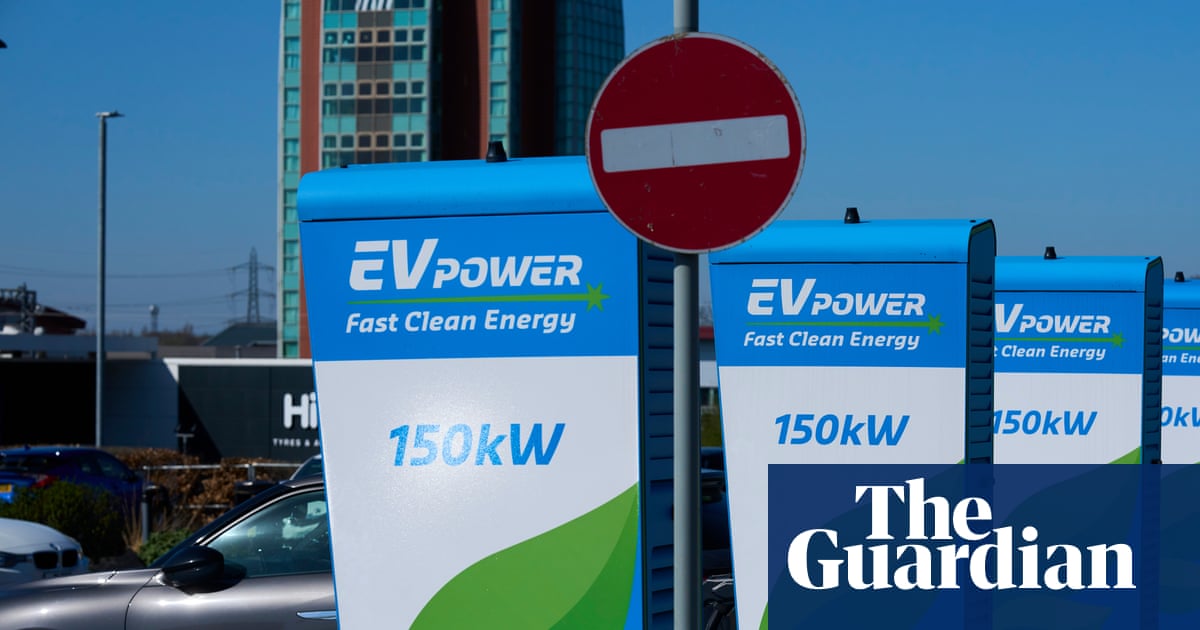
Remember as well that public EV charging in the UK is already VATed at 20% (which contributes to the absolute ripoff of public chargers), and the treasury has previously blocked lowering it


Government officials considered cutting the VAT charged on electricity used at public EV chargers from 20% to 5% at the last budget, but the Treasury under chancellor Rachel Reeves rejected the proposal amid disagreement between departments.

Officials in the Department for Transport encouraged electric car charge point operators to write to the Treasury explaining how they would respond to a VAT cut, according to three industry sources. The charger companies said that they would pass the tax cut on to consumers.


DfT ministers are understood to support lowering VAT on public charging, at a time when households are under pressure from the cost of living. The department is led by Heidi Alexander.

The government is coming under increasing pressure to cut VAT on electricity for public charging, because of a perceived unfairness between those able to charge at home and those without off-street parking.

People who charge at home pay the domestic rate of 5% on their electricity, but but HMRC applies the standard 20% rate to public charging. Critics have called the difference a “pavement tax” that is holding back the transition to electric vehicles, particularly in urban areas.

However, the Treasury has resisted change, over what are understood to be concerns about the cost of future lost VAT, which would grow as the number of EVs rises and fuel duty revenues from petrol and diesel cars decline.

The VAT disparity will be an important part of the government’s review of public charging costs, which is due to report in the autumn.
Though apparently it is illegal
Yet the Treasury’s hand could be forced. A London tax tribunal in March found that the rate should have been 5% all along, because of a misapplication of the law. HMRC is appealing against the ruling, but several experts have said they doubt it will succeed.
 

35B

Established Member
Joined
19 Dec 2011
Messages
5,362
Remember as well that public EV charging in the UK is already VATed at 20% (which contributes to the absolute ripoff of public chargers), and the treasury has previously blocked lowering it
I'm well aware of that, but note that petrol and diesel are also subject to the same VAT rate.

The discussion in the Guardian then makes the point for me that taxes on fuel are part of the overall government income stream, and therefore any reduction in fuel duty proceeds will need to be made up elsewhere to maintain a constant government income.
 

edwin_m

Veteran Member
Joined
21 Apr 2013
Messages
28,589
Location
Nottingham
You mean that people make purchasing decisions based on price. That doesn’t have to be tax based - indeed, there’s an argument that the supply shocks caused by Trump’s little jaunts in the Middle East are having their impact diluted by the level of fuel duty here, as distinct from the very direct effect on pump prices in the US.
The government has no control over price, other than the rate of duty and VAT. Sitting back and hoping geopolitics will solve the problem doesn't sound like such a good idea, especially when Trump is involved. The dilution of global prices is a good thing in some ways, as people who have no alternative to driving won't face such a shock as prices go up.
 

35B

Established Member
Joined
19 Dec 2011
Messages
5,362
The government has no control over price, other than the rate of duty and VAT. Sitting back and hoping geopolitics will solve the problem doesn't sound like such a good idea, especially when Trump is involved. The dilution of global prices is a good thing in some ways, as people who have no alternative to driving won't face such a shock as prices go up.
Precisely, government don't have control over price. But with duty at 1/3 of the total pump price, that acts to insulate consumer prices from the full impact of price changes - which is very different from the very direct impact on the duty-less American system.

If, like me, you consider price is a key indicator of availability or scarcity, then diluting the price signal reduces the chances of people responding to it.
 

Sonic1234

Member
Joined
25 Apr 2021
Messages
785
Location
Croydon
The other purpose of taxes is to deter activity with a cost to society, and encourage activity with a benefit to society.
In theory yes and this is the public justification for fuel taxes. But the government loves the revenue from them, it's budget is dependent on it.

When you have people saying "the train is too expensive, lets drive", a benevolent government would be thinking let's fix this - driving has negative externalities. But in reality I expect the Treasury is saying "Excellent, someone has switched from subsidised rail to highly-taxed driving. More income and that saves the need to shell out for rail capacity upgrades, and also council funding because they'll use a car park too."
 

Bald Rick

Veteran Member
Joined
28 Sep 2010
Messages
35,581
Continuously steaming black boxes don’t work, else we would do it on airplanes

Umm, as has been done in aerospace for decades. One example from 7 years ago:


The Rolls-Royce Airline Aircraft Availability Centre has reached a momentous 15 years of continuously supporting our global widebody customers, 24 hours a day, seven days a week, 365 days a year. Based in Derby, UK, the Airline Aircraft Availability Centre uses industry-leading data analytics, plans engine operations and maintenance, and drives efficiency for Rolls-Royce customers. Just as importantly, it provides a single point of support whenever they need assistance.

A Rolls-Royce powered aircraft takes off or lands every 16 seconds, by monitoring the data transmitted from these engines, the Centre helps to ensure those aircraft are available for service 24/7, with the right parts and people available to make that happen. By combining the latest in digital data management and technology, this milestone for the Airline Aircraft Availability Centre marks another step towards our mission to ensure that every Rolls-Royce powered aircraft can depart and land on time, every time.

The Airline Aircraft Availability Centre has taken our digital capability further as engine data has transformed enormously in terms of scale and scope over the past 15 years – from kilobytes of data per flight to terabytes – allowing for faster service decisions to be made.

The Centre complements our global network of Customer Service Centres, which have been created to place us closer to our customers, as well as to provide more localised expertise. The Airline Aircraft Availability Centre also positions us for the future, by helping to turn our IntelligentEngine vision into a reality – combining analysis of digital data from our engines with that shared by our customers and partners can make dramatic improvements in terms of aircraft availability and fuel efficiency, supported by new technologies and techniques for engine servicing.

Dominic Horwood, Services Director - Civil Aerospace, said: "We are entering a new era of digital connectivity and new services technology which allows us to greatly expand the type of services we can offer, with aircraft availability a key objective. As the industry services pioneer, our Airline Aircraft Availability Centre incorporates the advances of today and tomorrow to support our vision of every Rolls-Royce powered aircraft taking off and landing on time, every time."

The Airline Aircraft Availability Centre truly is a hub within Rolls-Royce for the introduction of new technology. For example, a new real-time collaboration system lets engineers working on engines around the world share live pictures from inside an engine with the specialist engineers based at the Centre to receive their advice on the next steps to take. In addition, ‘remote surgery’ techniques will let experts at the Centre carry out complex engineering tasks on the engine by digital twin-related remote control.
 

signed

Established Member
Joined
13 May 2024
Messages
2,369
Location
ROI
Umm, as has been done in aerospace for decades. One example from 7 years ago:
What I mean by that is while in flight.

Sure they send data when they are on the ground, like a car, but not continuously either
 

JamesT

Established Member
Joined
25 Feb 2015
Messages
4,824
What I mean by that is while in flight.

Sure they send data when they are on the ground, like a car, but not continuously either
They do it in flight. https://aviationweek.com/business-a...rm-engine-health-monitoring-services-products
Rolls-Royce, arguably the best in the industry for averted missed trips and AOG responses, leverages advanced predictive and diagnostic techniques with Engine Health Monitoring Vibration Units (EHMVU) to constantly monitor both engines. Collecting continuous engine data is a shift from traditional engine health monitoring systems, which only capture data at five points throughout the flight.

Monitoring engine operations throughout an entire flight has enabled Rolls-Royce to detect issues before sending a warning to the flight deck and identify trends or anomalies to address potential issues before they cause operational disruption.
 

Top