• Our new ticketing site is now live! Using either this or the original site (both powered by TrainSplit) helps support the running of the forum with every ticket purchase! Find out more and ask any questions/give us feedback in this thread!

What constitutes an appropriate vehicle for long distance bus services?

stevieinselby

Established Member
Joined
6 Jan 2013
Messages
1,659
Location
Selby
Anyone with any experience of them advise what they're like? They appear to be quite long so I'm assuming not suitable for some routes where tight turning is required?
I can think of at least half a dozen places on the Coastliner routes where I would expect vehicles of that size to be at serious risk of getting stuck, not to mention the significant reduction in capacity compared to the current double-deckers. I would imagine that these limitations would affect a lot of the routes where people are calling for coach-type vehicles.
 
Sponsor Post - registered members do not see these adverts; click here to register, or click here to log in
R

RailUK Forums

Teapot42

Member
Joined
12 Jan 2022
Messages
1,102
This is one thing I don't like about the new fleet at Chesterfield. While the old 'Gold' buses were that - buses - they at least had decently comfortable seats. The new E400EVs and even the Yutongs have what are very obviously short-distance interiors. The seats aren't comfortable and are too close together.

Yes, this gives flexibility to use any bus on any service, but you can be on the X17 well over an hour - indeed, if you did the whole route on a Sunday it's nearly three. Even for the shorter 'main' sections (Matlock>Chesterfield and Chesterfield>Sheffield) I feel offering a 'premium' service would get people out of cars and off the train. It was that at first, now it's just another service.
 

Tetchytyke

Veteran Member
Joined
12 Sep 2013
Messages
17,443
Location
Isle of Man
High quality, appropriate use of buses appeals to me.
The difficulty is that what counts as a "high quality, appropriate bus" is highly subjective.

I get the impression that you have coaches in mind for long-distance bus routes. Operators who use coaches for bus services often face complaints from people about the stairs, Go North East certainly did when they put Plaxton Interdecks on the Newcastle to Middlesbrough route.

'Full' coaches are awkward to use for wheelchair passengers because it's such a high wheelchair lift into the bus. That's fine for an intercity coach which only makes a few stops, but not so good for a bus service. Also they’re no good for other people, such as buggy or walker users, who aren’t wheelchair users.

The compromise options such as the Interdeck then receive complaints about the way wheelchair users are basically stuck in a cubbyhole behind the driver.

Plaxton tried a low-floor coach with the Panther LE but, to be quite honest, it was rubbish as a bus and rubbish as a coach, which is why nobody bought it.
I asked about the Panther LE once before.
As above, there’s a reason why nobody bought it. Too cumbersome to use as a bus but the compromises meant it was a pretty rubbish coach too.

There isn't really anything that fits the concept of a "dual-purpose" vehicle in this country anymore
I think the Citaro still gets pretty close. We don’t necessarily have the distance here but we do have a lot of high speed running on rural roads. The Citaros cope really well, even the older ones.

But the Citaro is not popular with many operators, I suspect because it’s a bit more expensive than an E200MMC.

== Doublepost prevention - post automatically merged: ==

While the old 'Gold' buses were that - buses - they at least had decently comfortable seats
I’d agree with this.

Quite recently I took an ‘old’ Gold bus from Ellesmere Port to Chester and a ‘new’ Gold bus back. The two buses were worlds apart even though they were substantially the same bus- an E400MMC- underneath.

You look at what Transdev still deliver on the 36 from Leeds to Harrogate and Ripon and it can be done. Bus operators just seemingly no longer want to.

Arriva are an excellent example of this. Their new E400MMCs in the north east all have low back seats. These buses then run on long distance routes from Newcastle to Alnwick. They’ve just gone for the cheapest option and not given it a second thought, even though I can’t imagine there’s much price difference between a low back Civic V2 and one with the high back.
 
Last edited:

GusB

Established Member
Joined
9 Jul 2016
Messages
8,110
Location
Elginshire
The difficulty is that what counts as a "high quality, appropriate bus" is highly subjective.
Indeed. It also very much depends on the characteristics of individual routes. Is it a long town-to-town route with relatively few stops or does it also function as the "toon service" when it passes through intermediate settlements where you're likely to be picking up passengers who are only going a short distance? In the former case a high-floor vehicle with lift is probably okay, but in the latter, a low-entry vehicle certainly is more desirable.

One route that springs to mind is the Stagecoach 35 Elgin to Aberdeen which carries both local passengers and people who are travelling longer distances. Nobody in their right mind would use it to go from end-to-end when both the 10 and M96 take a more direct route, but there's no alternative (other than the car) for anyone who lives in somewhere like Banff or Macduff and has to go to Aberdeen.

Historically, this route had single-deck coaches such as the Plaxton Interurban but recently has been served by double-deckers. I can't say that I felt that uncomfortable on my most recent E400 journey, but it still seemed like a bit of a downgrade.

I think the Citaro still gets pretty close. We don’t necessarily have the distance here but we do have a lot of high speed running on rural roads. The Citaros cope really well, even the older ones.

But the Citaro is not popular with many operators, I suspect because it’s a bit more expensive than an E200MMC.
I was looking at the Mercedes website earlier and there's a Citaro U that's designed for interurban use, but I don't think it'd be very popular here for the reasons that you state. I also had a look at the Setra Multiclass 500 which seems to be a bit of a half-way house, but the seating capacity is awful.
 

RJ

Established Member
Joined
25 Jun 2005
Messages
8,811
Location
Back office
But the Citaro is not popular with many operators, I suspect because it’s a bit more expensive than an E200MMC.

Cost may be a factor, but time sensitivity may also play a part. If an operator wins a contract and needs a batch of new buses within 12 months, they might have to look at off the shelf type options which can be easily and quickly adapted to their needs. The Citaro is an entirely bespoke product.

The work I do is limited stop routes under 35 miles. Having tried Dennis, Scania, Volvo and Optare vehicles, I’ve settled on a fleet of Citaros for single deckers. I like the build quality, ride quality, power and versatility they offer, they’re very reliable too. I am in the market to buy new, at the moment I’d be wanting more of the same.

I was looking at the Mercedes website earlier and there's a Citaro U that's designed for interurban use, but I don't think it'd be very popular here for the reasons that you state. I also had a look at the Setra Multiclass 500 which seems to be a bit of a half-way house, but the seating capacity is awful.

Only the basic model and its G and K variants are available in the UK. The LE and U aren’t available here. I liked the idea of the low entry model as it offers more seats and apparently a better ride quality than a fully low floor bus (hastening to add that Citaros ride very well). I was also interested in the U, again for seating capacity, but not an option here. There was the OC500LE but not much uptake in the UK.
 
Last edited:

Edirim

Member
Joined
17 Nov 2016
Messages
247
It's high time we copied our European neighbours and opted for level boarding via a front door and level exit by a middle door. Middle door would also be the entry/exit for buggies, prams and wheelchairs. Beyond the middle door you could have higher section of seating for better comfort on longer journeys. In short the Iveco Crossway LE Line or Scania Citywide LE Suburban which are common place in Czechia and the Nordics respectively. Speedier and easier boarding and better ride quality for longer journeys albeit at a bigger cost??
 

signed

Established Member
Joined
13 May 2024
Messages
2,369
Location
ROI
While here in the UK, they are only made to order. That’s been my experience with Daimler Bus UK.
TIL, wonder if it’s a byproduct of the fact they’re not that populat
 

scosutsut

Established Member
Joined
1 Jan 2019
Messages
1,217
Location
scosutsut
I agree with a lot of the comments here, the "problem" compared to ~25 years ago is caused by the absolutely necessary requirements that have emerged around accessibility, that's completely dented high floor suitability.

Needing to work around low floor access in most scenarios has led to traditional bus shaped things doing more work previously done by dual purpose and coach seated vehicles.

Working within those necessary boundaries I think seating quality is a must have - I'm particularly pleased by Lothian's post 2015 decision to only spec high backed seating, and wish that was the norm as that reduces the friction when a lessor than normal bus needs to substitute on a longer route.

Engine noise is definitely the other, Border's 4 cylinder E200 MMCs on the 253 are a perfect example of this ruining things. Nice vehicles with a really high internal spec but absolutely screaming their lungs out and you can't hear yourself think on them.

Id like to see more operators use heavyweights - like the B8RLE/Evora on those longer distance/faster running services where coaches don't work over lightweights like E200s - these to me are the spiritual successor for the old school dual purpose vehicles in terms of what they are used on.

Electrification has obviously confused the picture further, with no real sign of a proper emerging solution to those longer, demanding routes. But I think that will arrive in time.
 

RJ

Established Member
Joined
25 Jun 2005
Messages
8,811
Location
Back office
It's high time we copied our European neighbours and opted for level boarding via a front door and level exit by a middle door. Middle door would also be the entry/exit for buggies, prams and wheelchairs. Beyond the middle door you could have higher section of seating for better comfort on longer journeys. In short the Iveco Crossway LE Line or Scania Citywide LE Suburban which are common place in Czechia and the Nordics respectively. Speedier and easier boarding and better ride quality for longer journeys albeit at a bigger cost??

It depends on what the vehicle is being used for. With limited stop work where people are riding a fair distance, I think offering more seats is preferable to shorter dwell times. For intensive urban stop-start work then sacrificing seating and reducing dwellings times does make sense. Bendy buses are great in this respect, a full three door bus takes about 20 seconds to empty out, four doors must be even quicker. Vs a double decker that can take almost 2 minutes.

Low entry buses are the standard here - think virtually all Enviro 200s are low entry.

What I have found interesting is low entry artics on the continent with a third set of doors with a step entrance!
 

Great_Western

Member
Joined
18 May 2016
Messages
203
There's some really interesting comments in this thread, but it feels like the biggest fundamental problem to better buses on long distance services is being missed.. cost.

The truth is, overseas there are much higher bus subsidies and tighter government control that allow better and more appropriate vehicles to be procured.

No commercial operator in their right mind would pick something like Yutong GT12 for a long distance service when they can purchase and run an E200 with high back seats for half the cost unless they are incentived to do so.

It's also not like there aren't options there for operators to purchase should they need too (The Yutong E12's used on the T1 Carmarthen to Aberystwyth service are fine vehicles, for example, as are the split level Sunsuns in Ireland). The right framework just needs to be in place for these vehicles to actually be nessesary.
 

johncrossley

Established Member
Joined
30 Mar 2021
Messages
4,374
Location
London
No commercial operator in their right mind would pick something like Yutong GT12 for a long distance service when they can purchase and run an E200 with high back seats for half the cost unless they are incentived to do so.

However the future is not necessarily going to be commercial, depending on how much of the country becomes franchised. At the moment it looks like around half the English population (possibly more) will be living in franchised areas within the next few years, assuming those authorities currently progressing plans actually proceed.

On the other hand, franchising is being done mostly on a combined authority basis so long distance routes may be more problematic as longer distance local buses will likely cross franchise boundaries. Nevertheless, the Netherlands has nationwide franchising on an area by area basis and they still have quite a lot of long distance routes that cross franchise boundaries. Maybe our resident Dutch expert @DanielB can advise how they overcome franchise boundaries.

== Doublepost prevention - post automatically merged: ==

The Irish completely have the right idea, both North and South of the border.

I wonder if the fact that there is one single transport authority in Ireland, and similarly in Northern Ireland, means it is easier for them?
 
Last edited:

AilsaBus

Member
Joined
7 May 2023
Messages
101
Location
Scotland
Plaxton tried a low-floor coach with the Panther LE but, to be quite honest, it was rubbish as a bus and rubbish as a coach, which is why nobody bought it.

ERM! I think you'll find Stagecoach bought them for their Fife operations having traveled on several they seem perfectly fine for what they are used for.
 

DanielB

Established Member
Joined
27 Feb 2020
Messages
1,439
Location
Amersfoort, NL
Nevertheless, the Netherlands has nationwide franchising on an area by area basis and they still have quite a lot of long distance routes that cross franchise boundaries. Maybe our resident Dutch expert @DanielB can advise how they overcome franchise boundaries.

== Doublepost prevention - post automatically merged: ==
Dutch long distance routes are sometimes not even crossing franchise boundaries as some franchises are incredibly large. But when they do cross boundaries it's relatively common for the documentation of the franchise to contain a list of routes that are tolerated by neighboring franchises as well as a list of routes from neighboring franchises which have to be tolerated.

However in the past some very long routes have been cut in half or even more parts. Usually this were routes crossing multiple borders. And occasionally it happens that a route is forgotten about and passengers start complaining after the franchise has started. Though recently that is happening less often.
 

markymark2000

On Moderation
Joined
11 May 2015
Messages
5,090
Location
Great Britain
To use a slightly different angle to other posters.

'Appropriate' also needs to cover the handling, speed and engine noise.
Far too many bus operators are throwing out buses on motorway and long distance routes, which are speed limited quite low. Bedford MK1 is the one I remember the most. Going up the M1 at 45mph in a 400MMC. All the HGVs flying past. It was certainly an embarrassing time to be on a bus and you thought you'd never get to MK.
The other one is operator using buses where hitting anything near 50mph means deafening both the passengers and nearby neighbourhoods within a 3km radius. D&G is another one with the enviro 200s on the 82.

This is one reason why I quite like Evoras. The ones I've been on at least seem to be quite good at getting up to speed, and can handle quite well on the bends at higher speeds. The engine isn't roaring to stupid levels either when it tops out. The only issue is that operators (or transport authorities by virtue of them owning the buses) are speed limiting them too low so you're still not getting the best out of them on the distance work.

Operators need to remember that PSVs can go 70 on the motorway (if they aren't fitted with a tachograph) and so any long distance bus using the motorway should be capable of doing just that. Sitting comfortably at 62 at a minimum, or 70 ideally. Any operator limiting buses to below 62mph should be banned from using any motorways or dual carriageways in my opinion, serve them right for their injustice of slowing everyone else down and making passengers journeys needlessly slow.
 

TheGrandWazoo

Veteran Member
Joined
18 Feb 2013
Messages
22,842
Location
Somerset with international travel (e.g. across th
I've been watching this one play out.

First of all, the basic premise of the question is fundamentally flawed. It assumes that every long distance bus service is broadly similar and has the same passenger flows and requirements. This isn't true, as some commenters have pointed out.

For instance, in Scotland and the Irish Republic, you have a network of long distance services that act as local bus services. Of course, whilst they do act as local buses, the reality is that they are either limited on stops and/or serve great expanses of very low density countryside with few passengers. With long distances and few stops, then high floor coaches are an effective tool to use on such routes. Across England and Wales, there are much fewer instances of such routes, probably owing to much greater population density. Forever stopping and starting with a high floor machine and the issues of wheelchair lifts massively delays vehicles; ironic given that two of the main proponents are also frequently cite the issue of dwell times from ticketing issues as being a scourge (as evidenced on many threads).

So when people say "oh, look at Ireland..."
The 32 from Letterkenny to Dublin at 16 stops in a 4 hour run, or the 64 has 42 in a 7.5 hr journey. The X10 has 21 in 1.5 hours. It's really not a true comparison. You're talking about limited stop expresses or runs very much akin to those in Scotland. The 261 that runs from Belfast to Enniskillen is basically an express from Belfast to Dungannon (where it has a few stops) but then it's through achingly quiet territory. When you look at a relatively longer in Northern Ireland, that does have more stops (e.g. the 402 from Coleraine to Ballycastle or the 520 from Belfast to Newcastle) then you're looking at something comparable to a GB operator such as a Hawk or Electroliner/Streetdeck.

@Tetchytyke is a fellow NE emigree so I know the examples he quoted. The X10 had interdecks allocated but as well as the issues with stops, it also had issues with Eldon Square bus station and this is another problem; to run a high floor coach of high capacity, you're also looking at a 15m vehicle and that's not always practicable. Hence why the X10 migrated back to double deck operation - loadings demand vehicles of a certain size OR a substantial increase in resources.

Keeping in the North East, and with @Tetchytyke's examples, there are the North Road routes that run from Newcastle via Morpeth and Alnwick to Berwick. And I do agree with him that the more recent Arriva deliveries (72 plates) have the wrong seats - I don't know if they were specified cheaply or a diverted order but they're not comfortable for the longer passenger duration journeys that these services enjoy. These are routes that need deckers and even more so since the ENCTS pass arrived. However, not specifying high backed seats seems almost a dereliction of duty! Again to draw the comparisons with Bus Eireann... in 3.5 hours, the X15 has 86 listed stops.

So what of the past. Well, here's the rub. For much of the 20th century, there were few coach type vehicles employed on longer "stage carriage" services. It was probably into the 1950s/1960s where the dual purpose vehicle began to appear and they were often high backed seats in a bus shell... That would be perhaps a Bristol MW/RE or a Leyland Leopard/Marshall. Hardly different to having high backed seats in a Wright Eclipse in many respects. The use of coach shell vehicles on local bus services was relatively rare, involving the downgrading of older vehicles. It was really with the introduction of the new bus grant in the 1970s when coach shell vehicles really began to be used as you could essentially get a coach for half price as long as you used it on stage carriage for a proportion of the year (typically in the Oct to May so it could be used Jun to Sep on coaching work). So essentially, the coach on local expresses/long distance bus work is a relatively modern confection but as the industry moved to low floor operation and compliance with the Disability Discrimination Act, the use of coaches was much reduced. At the same time, traffic congestion and other factors (like diverting routes to replace withdrawn services) has seen the number of local expresses reduced in number and length.

That brings us to 2026 and the question as originally posed. Well there isn't one single answer. For a route like the SW Falcon (which is similar to the Bus Eireann Expressway concept) then a coach is the best option. For a route like the 36 or the 840/843 Coastliner or the Excel in Norfolk, it's probably a decker with high backed seats and perhaps with some concession to bespoke design like some tables etc that reflect the longer average journey duration and/or target clientele. For a route like the 375-377 Bristol to Wells to Bridgwater/Taunton/Yeovil - it's probably a decent decker with high backed seating.

And when people mention Northern Ireland or the Republic... that's the sort of distinction that they make too. I mentioned the Translink examples (and how Goldline is different from regular bus services). Well, for Bus Eireann, they'll have double deck coaches from Dublin to Dundalk and up to Navan among other places. What they also do is keep up the tradition of keeping some archaic old coaches for rural work as they cascade stuff through the fleet. Arguably, they have fewer intensely urban operations from which to cascade buses from, coaches suit the schools requirements and, more importantly, given the condition of roads in rural Ireland and paucity of passengers, it all makes sense.

So there really isn't one appropriate vehicle... It all depends on circumstances and finances.
 

Stan Drews

Established Member
Joined
5 Jun 2013
Messages
2,139
Operators need to remember that PSVs can go 70 on the motorway (if they aren't fitted with a tachograph) and so any long distance bus using the motorway should be capable of doing just that. Sitting comfortably at 62 at a minimum, or 70 ideally. Any operator limiting buses to below 62mph should be banned from using any motorways or dual carriageways in my opinion, serve them right for their injustice of slowing everyone else down and making passengers journeys needlessly slow.
The vast majority of buses and coaches have required to have speed limiters fitted and set to maximum 100kph (62mph) since 1988, so any operator ignoring such legislation is indeed very likely to be banned from using any motorways, …due to the loss of their operators licence!
 

Russel

Established Member
Joined
30 Jun 2022
Messages
5,376
Location
Lichfield
Operators need to remember that PSVs can go 70 on the motorway (if they aren't fitted with a tachograph) and so any long distance bus using the motorway should be capable of doing just that. Sitting comfortably at 62 at a minimum, or 70 ideally. Any operator limiting buses to below 62mph should be banned from using any motorways or dual carriageways in my opinion, serve them right for their injustice of slowing everyone else down and making passengers journeys needlessly slow.

The thought of doing 70mph on a motorway in any bus produced over the last 15 years is pretty terrifying.
 

markymark2000

On Moderation
Joined
11 May 2015
Messages
5,090
Location
Great Britain
The vast majority of buses and coaches have required to have speed limiters fitted and set to maximum 100kph (62mph) since 1988, so any operator ignoring such legislation is indeed very likely to be banned from using any motorways, …due to the loss of their operators licence!
Bar where tachographs are used (I understand and appreciate they are limited to 62mph) any rules stating buses should be limited to 62 is stupid when the speed limit is 70mph for buses under 15 metres (https://www.gov.uk/speed-limits).

But either way, any operator limiting buses lower than 62 should be banned from using motorways, and any limit under 60 should be prohibited from using dual carriageways..
 

Teapot42

Member
Joined
12 Jan 2022
Messages
1,102
@Tetchytyke is a fellow NE emigree so I know the examples he quoted. The X10 had interdecks allocated but as well as the issues with stops, it also had issues with Eldon Square bus station and this is another problem; to run a high floor coach of high capacity, you're also looking at a 15m vehicle and that's not always practicable. Hence why the X10 migrated back to double deck operation - loadings demand vehicles of a certain size OR a substantial increase in resources.
I've never used the X10, but from the comments my mother made, she preferred the Interdecks but they caused a lot of operational problems. Not just where they had to stop in Newcastle, things like access for pushchairs etc slowed things down.

Sticking with the north east, am I remembering correctly that United used Leyland Tigers on the 21x services (Sunderland to Teeside). I have a memory of a day out by myself when I was maybe 14 or 15 on an Explorer ticket which involved a ride from Bishop Auckland back to the Village, and I'm sure it was something like that.

Maybe there is another concern at play though - not just long distance vs short distance, but premium services which sit between a normal service bus and a coach. It always felt to me as if 'X' services should fall in that category but they rarely do, or even did. The main challenge is while such services could justifiably command a price premium, how do you persuade people to pay it? Fairly local to me, I'm always surprised how the Red Arrow survives not only at the frequency it does, but using coaches. There are plenty of other routes where I think something more premium would work, but at the same time getting such a service off the ground in the days of a £2 capped fare won't be easy.
 

dgl

Established Member
Joined
5 Oct 2014
Messages
3,039
The ex. Greenline Wright Gemini's we have in First Wessex land seem a decent compromise. Originally had working air-con and decent seats, including a couple of tables.
Only improvement would be more USB outlets and more luggage space.
Do find it strange when they get allocated to the Lyme Regis park and ride where a fancy bus is certainly not required! (Though hill climbing capability is!)
 

stevieinselby

Established Member
Joined
6 Jan 2013
Messages
1,659
Location
Selby
Operators need to remember that PSVs can go 70 on the motorway (if they aren't fitted with a tachograph) and so any long distance bus using the motorway should be capable of doing just that. Sitting comfortably at 62 at a minimum, or 70 ideally. Any operator limiting buses to below 62mph should be banned from using any motorways or dual carriageways in my opinion, serve them right for their injustice of slowing everyone else down and making passengers journeys needlessly slow.
What is this ridiculous obsession so many people have with trying to outlaw anything and everything that they find to be a minor inconvenience or annoyance? This is even more absurd than whoever it was that wanted to ban buses from using bus lanes if they don't have tap-on tap-off payments.

Almost every vehicle used on PSV services in the UK will have a 62mph speed limiter by law, so expecting them to drive at 70mph is plain nonsense. Even the generous derogation to only require them to be able to do 62 is barmy. Trucks are by law limited to 56mph so banning buses that can only go at the same speed as trucks are allowed to is just pure spite. Even beyond that, there is no minimum speed limit even on motorways, let alone dual carriageways where farm traffic is allowed and that won't get anywhere near 56mph.

Yutong advertise their E10 and E12 buses as having a top speed of 50mph – would operators be let off the ban because they hadn't chosen to limit the vehicle's top speed, or is your ire just as strong because they should have bought a faster bus?
 

TheGrandWazoo

Veteran Member
Joined
18 Feb 2013
Messages
22,842
Location
Somerset with international travel (e.g. across th
I've never used the X10, but from the comments my mother made, she preferred the Interdecks but they caused a lot of operational problems. Not just where they had to stop in Newcastle, things like access for pushchairs etc slowed things down.
The Interdecks were a fleeting appearance and just weren't appropriate for a route like that.

The X10 throughout time has largely been operated by deckers. The X10 appeared in the early 1980s and did indeed use Leopards (usually Willowbrook and Plaxton and the former were hardly luxurious) initially but such was popularity that DP Olympians duly appeared and operations were largely double decked ahead of deregulation. That's really how it stayed save the Interdeck experiment.
Sticking with the north east, am I remembering correctly that United used Leyland Tigers on the 21x services (Sunderland to Teeside). I have a memory of a day out by myself when I was maybe 14 or 15 on an Explorer ticket which involved a ride from Bishop Auckland back to the Village, and I'm sure it was something like that.
You're correct that United had a number of cross Co Durham services that historically ran from Sunderland via Peterlee to Stockton, Darlington, Middlesbrough and Bishop. During the 1970s/1980s, they were operated by Leyland Nationals (or even Bristol LHs - nice). It was c.1987 that United elected to concentrate a number of their Leyland Leopards onto those routes, and they were subsequently replaced by Leyland Tigers - they were available at reasonable prices at the time as bus operators withdrew or reduced their coaching activities. Some of those were express types (so they had twin leaf doors) but quite a few were 12m with coach doors which made boarding slower.

I did many an Explorer trip on those routes ;)
 

Tetchytyke

Veteran Member
Joined
12 Sep 2013
Messages
17,443
Location
Isle of Man
I like the build quality, ride quality, power and versatility they offer, they’re very reliable too. I am in the market to buy new, at the moment I’d be wanting more of the same.
My only criticism of the Citaro is that build quality seems to be declining. Bus Vannin has just bought a few more new Hybrids and the internal fixtures and fittings seem to rattle a lot more than they do on the older Citaros. I suppose it’s the way of the world.

Sticking with the north east, am I remembering correctly that United used Leyland Tigers on the 21x services (Sunderland to Teeside). I have a memory of a day out by myself when I was maybe 14 or 15 on an Explorer ticket which involved a ride from Bishop Auckland back to the Village, and I'm sure it was something like that.
And more recently Arriva used the Plaxton Prima on quite a few inter urban services. The 685 was the main one but they also used them on the X93 to Whitby and the 501/3 from Newcastle to Alnwick. Both Arriva and Go also went through a phase of using ex-NatEx hand-me-down coaches on express routes. Accessibility got rid of them.

I’d love to see coaches on more routes, the 685 is a lot less comfortable these days (although even back then, Stagecoach usually used PS-bodied B10Ms, eugh). But it’s not really practicable any more.

ERM! I think you'll find Stagecoach bought them for their Fife operations having traveled on several they seem perfectly fine for what they are used for.
Other than those initial 19 for Dunfermline, neither Stagecoach nor anyone else ever bought any more. There’s a reason why.
 

markymark2000

On Moderation
Joined
11 May 2015
Messages
5,090
Location
Great Britain
Almost every vehicle used on PSV services in the UK will have a 62mph speed limiter by law, so expecting them to drive at 70mph is plain nonsense.
"Expecting them to do 70". I mean. It's the legal maximum speed limit for a bus according to the government. Why would they set the speed limit to 70 if the buses had to have limiters at 62. It makes no sense.


You will also find that buses (specifically buses, not coaches) are quite often limited lower than 62mph. and I know of some transport authorities who are managing the limiters are set at 50mph, but I have heard of operators such as Stagecoach setting the limiter at 45mph or lower, and then allocating those buses to routes which use the motorway and it's a joke.

Maybe you spend more time on city buses, I'm not sure, but as someone who has been on the bus more times than Id like to admit, watching HGVs overtake and you're left behind until you're just a spec in their mirror, it's a really bad advert for buses. It does nothing but reinforce the general publics view that buses are slow.
 

Magrar

On Moderation
Joined
20 Jun 2026
Messages
186
Location
Reading
It is surely possible to make sure an Enviro400MMC is an appropriate vehicle for a long distance service, allowing you to convey schoolkids and shoppers over medium distances as well as commuters and tourists over longer distances, with nobody left behind or standing, despite the less frequent service.

Ordinary street stops in assorted towns and villages, with express running on strategic A roads inbetween. Anything else is surely not a "bus" service at all. It's rural for long stretches, but not remote.

One trip I made on such a vehicle was astonishingly comfortable, even though I was on it for a very long time, most definitely using it as a day tripper. I had dreaded the approach of a "city bus" for such a journey, but wow. How wrong I was.

The most obvious reason was indeed simply the seating. Not high backed, but an individual seat, with nice thick padding and plush moquette. Someone had clearly put a lot of thought into what would be most comfortable on a long journey, and was ensuring it stayed that way, day after day, year after year. It was also the first bus with a genuinely visibly clean seat I'd been on in years. I'm talking hoovering, and right into the corners.

I suspect it probably did also have a more approptiate engine and gearbox option for faster running, but if that puts off an operator, they're in the wrong business. The route is long enough that even at this less frequent frequency, you can have a small batch of such buses dedicated to it, and cover peaks or failures with more standard buses. I suspect they do have a full PVR, with interlopers only for MOTs and such.

The buses were most likely bought for the route, maybe even refurbed second hand. The route had notably seen all manner of different types over the years, including proper coaches and high spec single deck buses, then any old rubbish after Covid, until seemingly finally settling on this type.

Ironically it may have only been the previous use of costly and much more bespoke vehicles, things you couldn't hope to have used on other work, that boosted passengers enough to make sure this route survived Covid, into this pretty much exclusively Enviro era.

It is well known and well used, despite being, to any casual observer, just another bus service now. All prior attempts to brand it felt a little pretentious. You have to know your customers. Your area.

I also think it had a lot to do with the opco/depot in question being far more diligent about maintenance, as reflected by the bus being far smarter and cleaner than its city cousins working for the same group. Perhaps because these were their buses. Pride. Hence, as best I recall, no annoying rattles or squeaks. Perfect suspension.

Related to that, perhaps it had regular drivers, ones well versed in the route, the roads, and the many transitions between A roads and country lanes, the potholes and traffic issues. Where and how to drive the vehicle, so you don't draw attention to yourself as some kind of novice, moron or someone just phoning it in. The fundamentals.

Quite obviously, being well planned to allow for such running, is also a factor. It ran fast when appropriate, not all the time. The driver was in no rush, nor was he artificially wasting time (my pet peev). This was not an off peak run either, we hit the schools rush on the way back.

Maybe he drove so well because his work was valued and he had the appropriate support. It is notably one of those routes with a full ten minute layover at a bus station, technically being a mutli-registration. I am quite sure he left the bus for a comfort break. Or it was two different drivers, but they were so good, you didn't notice the change.

Given the route and other passengers, I loved the fact I could get upstairs out of the way, bagging the front seat for the views. I don't recall any lurching. It is of course an aquired taste, fast running on a top deck, but the seats and quality of the driving make a lot of difference, as I know from having been on standard deckers on a short city expresses driven by idiots.

It was a a very nice trip. Had it been a coach, I'd have not had such a great view, perhaps not even gettin a window seat at all. Had it been a Citaro, I'd have had a sweaty bum from the leather seats, and been closer than I like to be to noisy teenagers and kids in prams on a long journey.

 

johncrossley

Established Member
Joined
30 Mar 2021
Messages
4,374
Location
London
My only criticism of the Citaro is that build quality seems to be declining. Bus Vannin has just bought a few more new Hybrids and the internal fixtures and fittings seem to rattle a lot more than they do on the older Citaros. I suppose it’s the way of the world.

The (e)Citaro doesn't seem to be the best seller it used to be. Citaros used to be everywhere but VDL Citea, Ebusco, Hess LighTram, Heuliez, Irizar ie, Solaris Urbino and Yutong are often being used in their place nowadays and all those models seem pretty decent when I've ridden on them.

I would reiterate my earlier point about how surprisingly good I found the Yutong U15 on motorway routes even though it is a bus body.

Here's a discussion about them with video clip and internal view:


Great_Western

Member
Joined
18 May 2016
Messages
203
The (e)Citaro doesn't seem to be the best seller it used to be. Citaros used to be everywhere but VDL Citea, Ebusco, Hess LighTram, Heuliez, Irizar ie, Solaris Urbino and Yutong are often being used in their place nowadays and all those models seem pretty decent when I've ridden on them.

I would reiterate my earlier point about how surprisingly good I found the Yutong U15 on motorway routes even though it is a bus body.

Here's a discussion about them with video clip and internal view:

The interior of that U15 is not dissimilar from the premium spec of the Yutong E12's as used on the Transcymru T1 which I mentioned upthread.

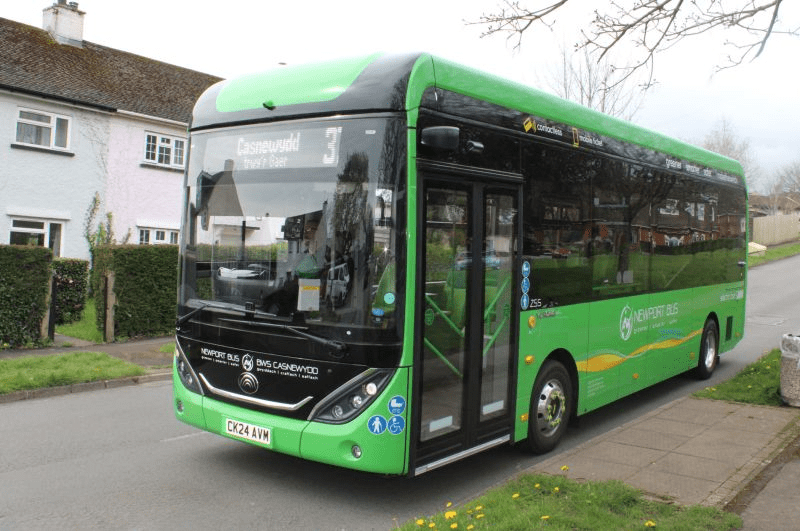
I'm fairly certain that if a UK operator wanted to place an order for the U15, Yutong would be more than happy to supply it. After all, the E9L only exists in the UK because Newport Bus had a specific requirement for such a vehicle:


I appreciate that I often find myself praising Yutong products, but they really are that good and a class above anything else in the UK bar the Citaro. It's no wonder they're already used on so many interurban routes.
 

Top