But isn't this a big part of the problem, that individual countries are basically able to choose how they want to implement this system? I've had completely different experiences entering Spain or France versus the unpleasant, deliberate problems and aggravation going into the Sweden and Denmark which are patently punishment of British passport holders for Brexit. There's no standardisation, at all.
This is basically it. The idea was something like this:
- if needed, register on the EES system. This could be done via an app, via a kiosk, etc. They were supposed to be located away from the first line controls, so that passengers could register in peace.
- once registered, travellers would proceed to the first line controls. The biometric data would be checked, either via a photograph or fingerprints, while the EES records would be checked.
The first line control could be manual checks or e-gates, but the idea was to funnel as many people as possible through the e-gates. The UK is the textbook example here: most people go through them with no problems at all.
If something was wrong such an overstay, the traveller would be directed for a second line control. The e-gates would also have the possibility of "detaining" the passenger until sometime could come to deal with them.
--
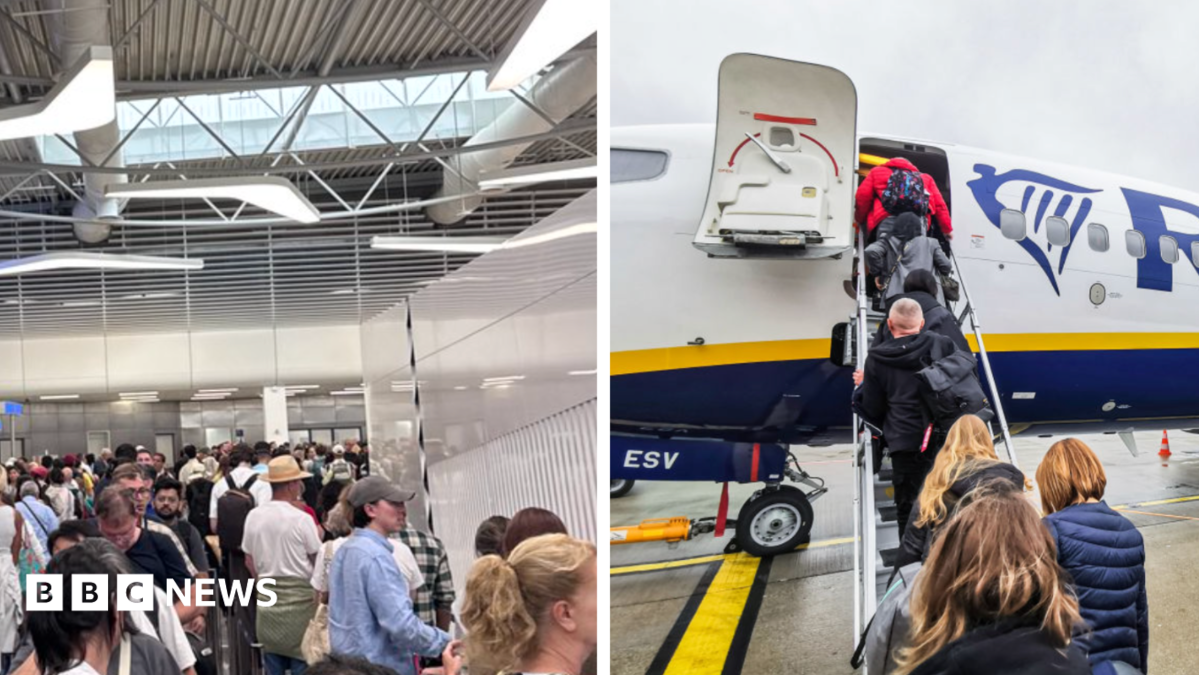
Unfortunately, what has happened is that some countries have created a truly idiotic implementation where the kiosks are being used for border control as well as EES registration. It makes zero sense, as it means chaos with people having problems with registration being mixed up with people who simply need to get through border control.
On top of this, many airports have dramatically reduced staffing levels. It's not uncommon to see as few as two people working on manual controls, meaning huge queues.
If the system was implemented properly, it would be seamless and straightforward. Unfortunately, it seems that quite a few countries simply botched it, and that many IT issues simply weren't resolved properly.


 www.bbc.co.uk


 When I got to the manual inspection apparently I was in the system twice so they had to phone someone. It was something to do with my Porto visit recently. Luckily only took a few minutes to resolve.