• Our new ticketing site is now live! Using either this or the original site (both powered by TrainSplit) helps support the running of the forum with every ticket purchase! Find out more and ask any questions/give us feedback in this thread!

The Labour Party under Andy Burnham

TravelDream

Member
Joined
7 Aug 2016
Messages
1,158
How long does it take to recover the CO2 emissions from building said power station and extracting Uranium from its ore?
And how about the emissions for building wind farms or solar power stations or dams for hydroelectric?

Of course it creates emissions to build a nuclear power stations just as it does a wind farm.

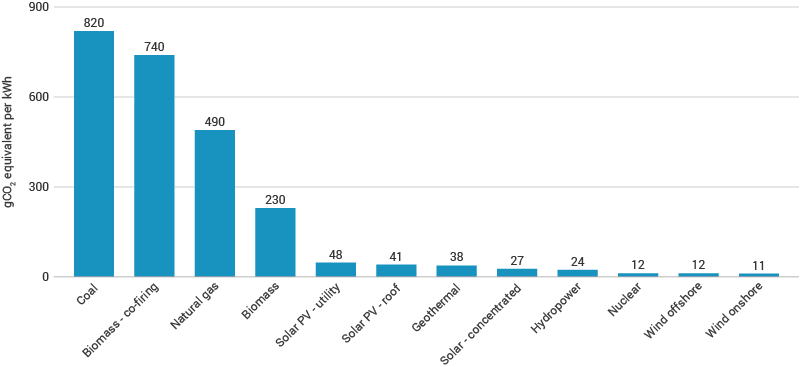
Now I am no expert, but based on IPCC figures, nuclear has very comparable lifetime emissions per kWh to wind and lower emissions per kWh than hydroelectric and solar. All are a fraction of gas/ oil of course.

The difference with nuclear and solar/ wind? Nuclear provides very stable 24/7 supply. Please don't let your hatred of 'nuclear evil' blind you to how incredibly good nuclear is for the environment. Especially is such a geologically stable region.


Not semantics at all. You repeat a fallacy.

Avoidance is legal.
Why and how would HMRC come after someone for it?

Fraud and tax evasion are obviously illegal and that's totally different. And some people do push avoidance into legal grey areas. Their legality is for the courts to decide/ new legislation, not us.

And if everyone waits for someone else to go first...

And when China and India see us jump off the cliff you think they ill happily run along and join us......

We, insanely, claim that because we build less we are cutting emissions and are happy with it. Funnily enough, a car built in China instead of the UK actually produces more global emissions than if the equivalent were built in the UK.

Clearly we need international agreements and adult level stuff. Countries and economies are not kids in the primary school playground as you seem to suggest.

I don't think anyone is suggesting that we shut down, but in this increasingly unstable world, having a sovereign source of power, instead of relying on importing oil from despots half a world a way, seems more and more like an advantage.

Very much agree we need to rely on our own resources more.

I like Mlliband in many ways, but he is ideologically committed to not using domestic energy resources and ideologically committed to high domestic energy prices/ low domestic energy security.

Somehow, to him, importing our own oil from Norway and importing gas from Qatar is better than building up domestic energy production.

On the first point, that is essentially what we are asking of our economy. We have some of the highest industrial energy prices in the world due to government policy. Of course companies hurt when this happens and it is purely ideological. Any 'industrialization strategy' as Burnham, Farage and others have proposed will require cuts to energy prices
 
Sponsor Post - registered members do not see these adverts; click here to register, or click here to log in
R

RailUK Forums

najaB

Veteran Member
Joined
28 Aug 2011
Messages
33,589
Location
Scotland
And when China and India see us jump off the cliff you think they ill happily run along and join us.
Jumping off a cliff into a field of marshmallow (random analogy). Moving to a low-carbon economy also means energy independence. For example. we have enough wind power resource to meet our electricity needs several times over.
 

ainsworth74

Forum Staff
Staff Member
Global Moderator
Joined
16 Nov 2009
Messages
31,067
Location
Redcar
Jumping off a cliff into a field of marshmallow (random analogy). Moving to a low-carbon economy also means energy independence. For example. we have enough wind power resource to meet our electricity needs several times over.
This is one that's always puzzled me. So being able to, broadly (as there will always be some reliance on fossil fuels), turn our noses up at the various dictatorships or similar dubious regimes and be considerably more insulated from the vagaries of global energy markets is something we shouldn't work towards because some countries aren't as far along the journey of decarbonising their economies as we are? Not that China isn't actually making great strides (I wonder why? Might it be that they also are working towards energy independence?) themselves:

China’s installations of wind and solar in May are enough to generate as much electricity as Poland, as the world’s second-biggest economy breaks further records with its rapid buildup of renewable energy infrastructure.

China installed 93 GW of solar capacity last month – almost 100 solar panels every second, according to an analysis by Lauri Myllyvirta, a senior fellow at the Asia Society Policy Institute. Wind power installations reached 26 GW, the equivalent of about 5,300 turbines.

While estimates for the amount of power generated by solar panels and wind turbines vary depending on their location and weather conditions, Myllyvirta calculated that May’s installations alone could generate as much electricity as Poland, Sweden or the United Arab Emirates.
https://www.theguardian.com/environ...up-or-government-can-stop-clean-energy-future
Between January and May, China added 198 GW of solar and 46 GW of wind, enough to generate as much electricity as Indonesia or Turkey.

“We knew China’s rush to install solar and wind was going to be wild but WOW,” Myllyvirta wrote on social media.

China’s installed solar photovoltaic capacity has now surpassed 1,000 GW for the first time, equivalent to half of the world’s total installed solar capacity.

And that was from twelve months ago, the pace, as far as I'm aware hasn't dropped off. India is similarly installing a lot of renewable energy.

Yes both of them still have considerable amounts of fossil fuel energy and are even still installing some at the moment. But they're going big on renewables because it gets them independent of dodgy supplies of fossil fuels and the price shocks that can bring as well as the climate effects that it has. But sure, we should drill baby drill because China hasn't yet decarbonised their economy (whilst they're in the middle of doing it) and remain beholden to volatile fossil fuel prices (when there are perfectly viable options to reduce that reliance that are actually cheaper)...
 

martin butler

Member
Joined
9 Oct 2018
Messages
847
This is one that's always puzzled me. So being able to, broadly (as there will always be some reliance on fossil fuels), turn our noses up at the various dictatorships or similar dubious regimes and be considerably more insulated from the vagaries of global energy markets is something we shouldn't work towards because some countries aren't as far along the journey of decarbonising their economies as we are? Not that China isn't actually making great strides (I wonder why? Might it be that they also are working towards energy independence?) themselves:


And that was from twelve months ago, the pace, as far as I'm aware hasn't dropped off. India is similarly installing a lot of renewable energy.

Yes both of them still have considerable amounts of fossil fuel energy and are even still installing some at the moment. But they're going big on renewables because it gets them independent of dodgy supplies of fossil fuels and the price shocks that can bring as well as the climate effects that it has. But sure, we should drill baby drill because China hasn't yet decarbonised their economy (whilst they're in the middle of doing it) and remain beholden to volatile fossil fuel prices (when there are perfectly viable options to reduce that reliance that are actually cheaper)...
Do we need to drill, though, if there are viable others resources such as wind and solar that can provide our electricity needs, yes, we will need to develop our own gas fields, but at the moment electricity by far outweighs gas for much of our needs, and if we can provide much of what we need, it should protect us from an unstable oil and gas market.
 

ainsworth74

Forum Staff
Staff Member
Global Moderator
Joined
16 Nov 2009
Messages
31,067
Location
Redcar
Do we need to drill, though, if there are viable others resources such as wind and solar that can provide our electricity needs, yes, we will need to develop our own gas fields, but at the moment electricity by far outweighs gas for much of our needs, and if we can provide much of what we need, it should protect us from an unstable oil and gas market.
Well yeah I think we should be building out wind/solar and nuclear at a break neck pace. But it seems many others would prefer us to remain beholden to the fossil fuel markets forever more.
 

Magdalia

Established Member
Joined
1 Jan 2022
Messages
7,299
Location
The Fens
The South East is #2 in total spend.
On a per head basis, South East is the lowest. In ranking order the per head numbers are:

£16116 Northern Ireland
£15563 Scotland
£15217 London
£15155 Wales
£14102 North East
£13835 North West
£13160 West Midlands
£12783 Yorkshire and the Humber
£12432 South West
£12296 East
£12158 East Midlands
£12031 South East
 

speedy1

Member
Joined
1 Sep 2023
Messages
302
Location
Mossley
On a per head basis, South East is the lowest. In ranking order the per head numbers are:
...
Yes...I did read the report that I linked :) Which figure you use depends what each of us is trying to argue: fairness, political importance etc. I hadn't decided nor have much an opinion really
 

Harpo

Established Member
Joined
21 Aug 2024
Messages
3,734
Location
Newport
On a per head basis, South East is the lowest. In ranking order the per head numbers are:

£16116 Northern Ireland
£15563 Scotland
£15217 London
£15155 Wales
£14102 North East
£13835 North West
£13160 West Midlands
£12783 Yorkshire and the Humber
£12432 South West
£12296 East
£12158 East Midlands
£12031 South East
Spending per head is a metric that works against rural areas. The superb recent piece in Modern Railways by John Morris exposed the current bias towards London and the South East investment brilliantly.

For example, Shropshire (West Mids) and Essex (South East) are nearly an equal size but with a six times larger population, Essex probably gets 5 times the expenditure of Shropshire.
 

Stathern Jc

Member
Joined
30 Nov 2019
Messages
410
Location
Inverness
Well yeah I think we should be building out wind/solar and nuclear at a break neck pace. But it seems many others would prefer us to remain beholden to the fossil fuel markets forever more.
In general terms, renewables & nuclear as far as possible and at as healthy a pace as reasonably possible.

However, I would limit my encouragement for solar to those panels on buildings and land with no possible agricultural use.
Food security is every bit as important as energy security; and while accepting that Britain's agriculture can't provide everything we need, there's no excuse to give up altogether and cover even more important farm land under acres of solar panels.

(We may be getting into a lengthy discussion on an aspect of a wide subject which warrants its own thread, and probably has one?)
 

najaB

Veteran Member
Joined
28 Aug 2011
Messages
33,589
Location
Scotland
However, I would limit my encouragement for solar to those panels on buildings and land with no possible agricultural use.
Food security is every bit as important as energy security; and while accepting that Britain's agriculture can't provide everything we need, there's no excuse to give up altogether and cover even more important farm land under acres of solar panels.
I agree that arable land shouldn't be covered, but there is a lot of pastoral land that potentially can support both solar and grazing.
 

Stathern Jc

Member
Joined
30 Nov 2019
Messages
410
Location
Inverness
I agree that arable land shouldn't be covered, but there is a lot of pastoral land that potentially can support both solar and grazing.
Yes. Potentially is the key word here.
You would see well grown cattle walking in a field of solar panels.
But, I do have doubts as to how easy it would be to count, or check the health of a flock of sheep when a significant portion could be beneath them sitting in the shade.

I don't know what proportion of the existing grass would grow beneath solar panels to be available for grazing after the reduction in sunlight and increase in soil dryness after rain runs off the panels and out of the field compared with the previous even distribution, including the loss of the light showers which would have prevented the surface of the ground baking and becoming unable to absorb a portion of heavy storms.
I do know that there is anxiety about flooding downstream from proposed (and approved!) sites of solar farms.
 

Yew

Established Member
Joined
12 Mar 2011
Messages
7,210
Location
UK
Very much agree we need to rely on our own resources more.

I like Mlliband in many ways, but he is ideologically committed to not using domestic energy resources and ideologically committed to high domestic energy prices/ low domestic energy security.

Somehow, to him, importing our own oil from Norway and importing gas from Qatar is better than building up domestic energy production.

On the first point, that is essentially what we are asking of our economy. We have some of the highest industrial energy prices in the world due to government policy. Of course companies hurt when this happens and it is purely ideological. Any 'industrialization strategy' as Burnham, Farage and others have proposed will require cuts to energy prices
My understanding is that Labour have made reforms to decouple the price of energy from the Gas price, as it was previously. This isn't a system that Ed Milliband designed for the current crisis, but one he inherited and was the norm for decades.

Similarly, we've seen schemes to deregulate solar in the pipelines, that doesn't sould like building up a reliance on foreign energy to me.
 

The Ham

Veteran Member
Joined
6 Jul 2012
Messages
12,021
Spending per head is a metric that works against rural areas. The superb recent piece in Modern Railways by John Morris exposed the current bias towards London and the South East investment brilliantly.

For example, Shropshire (West Mids) and Essex (South East) are nearly an equal size but with a six times larger population, Essex probably gets 5 times the expenditure of Shropshire.

Whilst that's true, the population density as a whole for the West Midlands is 1,230 per square miles and with spending of £13,835 per person the spending per square mile is a fraction over £17 million.

This compares to the Southeast having a population density of 1,310 per square mile and with spending of £12,031 per person the spending per square mile is a fraction under £15.8million.

That's because whilst there's some fairly rural areas in the West Midlands the overall isn't that significantly different and so the extra spend which is received still results in a per square mile spend which is around 8% higher than the Southeast.

Of course spending is only half the picture, tax revenue per head of population is roughly:

RankRegion / NationRevenue Per Head
1London£24,343
2South East£17,645
3East of England£16,211
4Scotland£16,118
5Yorkshire and The Humber£14,600
6East Midlands£14,400
7North West£14,310
8South West£13,830
9West Midlands£13,560
10Wales£11,500
11North East£11,300
12Northern Ireland£11,200

The majority aren't that different from the above spending, other than:
London, the Southeast, and East of England which get far less spending than taxes paid
Wales, North East and Northern Ireland which get noticeable more spent than taxes paid

It's also worth noting that there's are times when it being rural means that costs to do some things can be lower (for example, there can be less need for road improvements, there's fewer street lights and fewer traffic lights).
 

brad465

Veteran Member
Joined
11 Aug 2010
Messages
11,380
Location
Taunton or Kent
This is one that's always puzzled me. So being able to, broadly (as there will always be some reliance on fossil fuels), turn our noses up at the various dictatorships or similar dubious regimes and be considerably more insulated from the vagaries of global energy markets is something we shouldn't work towards because some countries aren't as far along the journey of decarbonising their economies as we are? Not that China isn't actually making great strides (I wonder why? Might it be that they also are working towards energy independence?) themselves:


And that was from twelve months ago, the pace, as far as I'm aware hasn't dropped off. India is similarly installing a lot of renewable energy.

Yes both of them still have considerable amounts of fossil fuel energy and are even still installing some at the moment. But they're going big on renewables because it gets them independent of dodgy supplies of fossil fuels and the price shocks that can bring as well as the climate effects that it has. But sure, we should drill baby drill because China hasn't yet decarbonised their economy (whilst they're in the middle of doing it) and remain beholden to volatile fossil fuel prices (when there are perfectly viable options to reduce that reliance that are actually cheaper)...
And still people claim unless China do more there's no point, well, they are not only doing more, they are running away with renewable capacity increases and exporting solar panels en masse to help others too. Yes they still have a coal problem, but this appears to have peaked, with new installations mainly replacing older ones, not being new capacity.
 

HSTEd

Veteran Member
Joined
14 Jul 2011
Messages
20,267
And how about the emissions for building wind farms or solar power stations or dams for hydroelectric?

Of course it creates emissions to build a nuclear power stations just as it does a wind farm.

Now I am no expert, but based on IPCC figures, nuclear has very comparable lifetime emissions per kWh to wind and lower emissions per kWh than hydroelectric and solar. All are a fraction of gas/ oil of course.

The difference with nuclear and solar/ wind? Nuclear provides very stable 24/7 supply. Please don't let your hatred of 'nuclear evil' blind you to how incredibly good nuclear is for the environment. Especially is such a geologically stable region.
Nuclear emissions are essentially neglible.
At least one study has a dominant source of emissions being the plant's employees driving to work in petrol cars.
Even offshore wind will beat emissions from gas plants within a matter of a couple of months of turning on.

However, nuclear construction will never proceed on a meaningful scale under the auspices of the post 1990 electricity "market".
Privatisation killed the nuclear industry and nothing short of nationalisation and vertical integration of the electricity system can really resurrect it.

The Hinkley Point debacle is a prime example of what happens when the "market" tries to build nuclear power. It gets very expensive very quickly, the cost of capital in the private system is simply too high.

We, insanely, claim that because we build less we are cutting emissions and are happy with it. Funnily enough, a car built in China instead of the UK actually produces more global emissions than if the equivalent were built in the UK.
Embedded emissions in EVs will rapidly be made good by avoiding burning lots and lots of carbonaceous fuel.

So fast in fact, that it doesn't really matter where the cars come from, just that they arrive.
Given European manufacturers inability to compete meaningfully in the EV space..... so be it.
They've had decades of warning and have failed miserably.


I like Mlliband in many ways, but he is ideologically committed to not using domestic energy resources and ideologically committed to high domestic energy prices/ low domestic energy security.
There is no serious amount of viable oil and gas left in the north sea, especially given the low oil prices that prevail today (outside the now apparently subsiding Iran shock).

It will make no meaningful difference to energy security, nor will it raise a meaningful amount of tax income.

As an energy system researcher, I'm of the view that this is all desperate politicians clutching at straws. They want another 80s oil boom that will provide them with a flood of free money to avoid confronting any of our actual problems.

They can just do a Blair and drown the issue in the money hose. But the oil is gone and the proceeds already squandered.
On the first point, that is essentially what we are asking of our economy. We have some of the highest industrial energy prices in the world due to government policy.
The electricity system has been rotting out for 35 years. The rot has just become impossible to ignore and climate change response gets the blame.
The CEGB legacy is spent, now we feel the full force of the electricity "market" system.
 

The Ham

Veteran Member
Joined
6 Jul 2012
Messages
12,021
Yes. Potentially is the key word here.
You would see well grown cattle walking in a field of solar panels.
But, I do have doubts as to how easy it would be to count, or check the health of a flock of sheep when a significant portion could be beneath them sitting in the shade.

I don't know what proportion of the existing grass would grow beneath solar panels to be available for grazing after the reduction in sunlight and increase in soil dryness after rain runs off the panels and out of the field compared with the previous even distribution, including the loss of the light showers which would have prevented the surface of the ground baking and becoming unable to absorb a portion of heavy storms.
I do know that there is anxiety about flooding downstream from proposed (and approved!) sites of solar farms.

To pick up a few points:
1) grass can do quite well in semi shaded areas and actually does better during summer months in such locations.

Also sheep don't always need the highest quality grass (see the sheep who live in our uplands and moors).

2) I'd be surprised if the impact of solar panels on flooding is as great as some are making out, for starters when the ground is saturated (mostly in the winter months) there's very little absorption anyway and so the risk of extra flooding is limited.

Also if the panels tip the water to the uphill side it still flows across the same area of ground, even if it doesn't it's only really the down hill row/column which isn't going over the same area of ground (likewise it's only the top row/column which would see reduced water for the grass, and unless this is on the ridge it's unlikely to be no water).

Likewise, if the ground is fairly flat, then the grass will slow the water flow, whilst fairly steep sites wouldn't have much absorption into the ground even as an undeveloped site.

3) Tennant farmers can do quite well out of grazing sheep, as the solar farms charge them a lot less than for undeveloped grazing land as they are saving money in not having to pay to have the vegetation maintained, as such if it takes them a bit more time to monitor their flock it's unlikely to be a significant issue. Anyway, to properly check on livestock it's unlikely tobe something you can do from standing at a gate and looking across a field which is 100m or more across.

4) Farms owned by Farmers do well as they have an income stream from renting the land to the solar farm and so they can potentially afford to spend a bit more time monitoring their sheep.

== Doublepost prevention - post automatically merged: ==

There is no serious amount of viable oil and gas left in the north sea.

Indeed, in the last 14 years the new oil and gas licenses issued have produced a grand total of 6 months of UK gas use.
 

najaB

Veteran Member
Joined
28 Aug 2011
Messages
33,589
Location
Scotland
I don't know what proportion of the existing grass would grow beneath solar panels to be available for grazing after the reduction in sunlight and increase in soil dryness after rain runs off the panels and out of the field compared with the previous even distribution, including the loss of the light showers which would have prevented the surface of the ground baking and becoming unable to absorb a portion of heavy storms.
I do know that there is anxiety about flooding downstream from proposed (and approved!) sites of solar farms.
Vertically mounted, bi-facial solar panels are something like 70% as efficient at summer power generation as single-sided panels at the optimum tilt angle, and have negligible impact on the growth of grazing fodder.

When faced east/west they have two production peaks - in the morning and afternoon - which is the opposite to south-facing panels which produce their peak at local noon. They also generate something like 20% more electricity during winter when the sun stays low in the sky - though they do have to be spaced quite far apart to avoid shading each other so you can't get as much energy per square metre.
 
Last edited:

Richard Scott

Established Member
Associate Staff
International Transport
Railtours & Preservation
Joined
13 Dec 2018
Messages
4,575
And how about the emissions for building wind farms or solar power stations or dams for hydroelectric?
Why are you cutting my quote off to match your argument? I did state that in my reply that all initiatives have a CO2 footprint; I just asked how they compared to Nuclear Power.
I'd rather you didn't manipulate my quotes in future as appears trying to belittle what I wrote. Thank you.
 

simonw

Established Member
Joined
7 Dec 2009
Messages
1,398
Avoidance is legal.
Why and how would HMRC come after someone for it?

Fraud and tax evasion are obviously illegal and that's totally different. And some people do push avoidance into legal grey areas. Their legality is for the courts to decide/ new legislation, not us.
HMRC can and will come after people for tax avoidance. of course, as with anything the courts are the final arbiters of anything that is not settled beforehand.
I never claimed that it for to 'us' whoever us is to define what is and is not avoidance.


Below is a list of cases that made it to the courts in recent years
perhaps have a read of


styles

Established Member
Joined
7 Dec 2014
Messages
4,616
Location
Gwynedd
Well yeah I think we should be building out wind/solar and nuclear at a break neck pace. But it seems many others would prefer us to remain beholden to the fossil fuel markets forever more.
Indeed, and solar is the quickest form of energy generation to 'install' or get up and running. You can create large solar farms in a matter of days, and install it in houses in a matter of hours, especially if you're building a new house and already have the scaffolding up.

Personally I think all new houses should come with solar unless there's a good reason not to on a case-by-case basis.
 

Mogster

Member
Joined
25 Sep 2018
Messages
1,031
But that's kind of the point. Ukraine has shown that many defence tasks are better done with many less sophisticated weapons than with a small number of costly systems that are difficult to replace. This is against an opponent who have (or had) arguably the world's second most powerful military and the same one the UK might be up against.

Part of that is to maintain a strategic relationship with Ukraine, the largest army in Europe outside Russia and very motivated to strike back if Russia moves forces away to try something elsewhere (with or without a settlement). Bringing Ukraine into NATO or some similar arrangement minus the USA is very much in everyone's interest.

Drones are part of the picture but that’s all they are. Drone and counter drone technology is going to be an important part of the defence budget going forward. However it shouldn’t be at the expense of completely losing current proven capabilities. I think it’s as dangerous to assume that every future conflict will be like Ukraine as it is to ignore what’s happening there completely.

Anyway, pleased to see GCAP and AUKUS receiving funding today. Less impressed with the lack of follow on orders for the RN. Large unmanned combat vessels raise a lot of questions and at the very least sound like tech for the far future.
 

edwin_m

Veteran Member
Joined
21 Apr 2013
Messages
28,590
Location
Nottingham
Drones are part of the picture but that’s all they are. Drone and counter drone technology is going to be an important part of the defence budget going forward. However it shouldn’t be at the expense of completely losing current proven capabilities. I think it’s as dangerous to assume that every future conflict will be like Ukraine as it is to ignore what’s happening there completely.

Anyway, pleased to see GCAP and AUKUS receiving funding today. Less impressed with the lack of follow on orders for the RN. Large unmanned combat vessels raise a lot of questions and at the very least sound like tech for the far future.
I do agree there is more to it than just drones, and we will need some hi-tech equipment for certain tasks, countering Russian submarine incursions from the Arctic being one of the more obvious (although USA should still be interested in this given the threat extends across the Atlantic).
 

Big Jumby 74

Established Member
Joined
12 Feb 2022
Messages
2,217
Location
UK
There's no political will from any party to either tax more or to cut other areas to increase defence spending.
Not Labour, not the Tories and not Reform.
And whilst it's currently in the news a lot, the general public don't really care on the whole
I concur with your sentiments. From the 'general public' view point I wonder if this was similar in Ukraine until quite recently? It is very easy to become complacent after so many years (in general terms) of peace in Europe.

I know very well why Britain retains its presence in Cyprus. Three letters - USA.

It's questionable how viable it is to retain said bases if Cyprus really wants us gone even though they are sovereign British territories.

The recent ME conflict has really shaken the Cypriot government's and public's belief in Britain. The bases, rather than protecting Cyprus, put a huge target on them. With the current defence review, that ability we have to protect them will only be further diminished.

Frankly, from the Cypriot point of view they'd probably prefer them if they were US sovereign bases like Gitmo. At least the US has the ability to defend them.
There are obviously discussions to be had between (the likes of) Cyprus (and others?) who may wish to strike a deal with the US in future, but the US has it's own domestic problems which will be draining resources in similar vain to the UK and elsewhere, so (as DT has rightly said - like him or not) European countries need to ramp up their own protection in such a way that at least meets the US input mid way, or to a (%) degree that works for both the US and those other countries concerned.

I have family who served with the USAAF during WW2 and beyond, so I believe in the US armed forces as I do our own. There will always be people in the here and today who criticise, but were they there on the ground (or in the air) when it counted....!

I actually have a very positive view of Britain and dislike the doom and gloom over the negatives of empire or slavery when essentially none of us were alive when the last country was colonised by Britain.
Well said.

I certainly don't think everyone hates us. Some countries put empire under a very negative light and some countries much less so. Some blame empire for their problems when they should actually look closer to home - though, of course, Britain is a convenient scapegoat.
Again, very well observed.

Strange how our (UK) media/TV etc, likes to highlight Britain's role in the slave trade at every chance they get (as an example), when the Portuguese and Dutch input was I believe far greater (*), and yet we (here in UK) seldom hear any criticism of our EU 'friends' in this regard....!

(*) PS: in addition the involvement of certain African states/tribes (of the time) mustn't be overlooked either, although again, conveniently forgotten/ignored by some in todays world.
 
Last edited:

TravelDream

Member
Joined
7 Aug 2016
Messages
1,158
Why are you cutting my quote off to match your argument? I did state that in my reply that all initiatives have a CO2 footprint; I just asked how they compared to Nuclear Power.
I'd rather you didn't manipulate my quotes in future as appears trying to belittle what I wrote. Thank you.

With all due respect, and I mean this in the nicest way, I didn't intend cut your argument off and I did answer your query in full in my post.

Your full post says: ''How long does it take to recover the CO2 emissions from building said power station and extracting Uranium from its ore?
Any so called green initiative has some CO2 emissions linked to its construction but not sure Nuclear Power is the way forward. Happy to be proved wrong if you have data to back it up.''

As I said in my answer, I am no expert, but I think most people think the IPCC as a UN body is a fairly neutral, if green focused, organization. They say nuclear and wind has a lifetime emission about equivalent to each other per kWh. Nuclear has around half the emissions of hydro and less than half of solar.
Obviously all are a lot better than gas, oil or coal.

Nuclear is the best option as it provides 24/7 365 day electricity. Obviously there's some emission cost from construction and from mining uranium, but they are tiny per kWh.

Here's an image of the IPCC figures.
ef1237b8-1611-49b0-953f-dbb8d1f1aaef.png

Source: https://world-nuclear.org/informati...ent/carbon-dioxide-emissions-from-electricity
 

Railwaycat

Member
Joined
15 Jul 2023
Messages
277
Location
Derbyshire
Indeed, and solar is the quickest form of energy generation to 'install' or get up and running. You can create large solar farms in a matter of days, and install it in houses in a matter of hours, especially if you're building a new house and already have the scaffolding up.

Personally I think all new houses should come with solar unless there's a good reason not to on a case-by-case basis.

Hasn't it been a requirement on all new builds since May (not certain about exact dates) so long as their situation is favourable. That said, a lot of new builds seem to have panels, but the bare minimum. Given the low cost for an individual panel, I think this is just being cheapskate.
 

43096

On Moderation
Joined
23 Nov 2015
Messages
18,728
Closer to home, there’s talk of a ‘No 10 north’ in Manchester(?) under Burnham. That has to be great news for rail users assuming that some ministers & MPs will have to use XC, Northern, TPE, EMR, TfW.
And that's bad news for Avanti given how even more high profile Euston to Manchester will become!
 

Richard Scott

Established Member
Associate Staff
International Transport
Railtours & Preservation
Joined
13 Dec 2018
Messages
4,575
With all due respect, and I mean this in the nicest way, I didn't intend cut your argument off and I did answer your query in full in my post.

Your full post says: ''How long does it take to recover the CO2 emissions from building said power station and extracting Uranium from its ore?
Any so called green initiative has some CO2 emissions linked to its construction but not sure Nuclear Power is the way forward. Happy to be proved wrong if you have data to back it up.''

As I said in my answer, I am no expert, but I think most people think the IPCC as a UN body is a fairly neutral, if green focused, organization. They say nuclear and wind has a lifetime emission about equivalent to each other per kWh. Nuclear has around half the emissions of hydro and less than half of solar.
Obviously all are a lot better than gas, oil or coal.

Nuclear is the best option as it provides 24/7 365 day electricity. Obviously there's some emission cost from construction and from mining uranium, but they are tiny per kWh.

Here's an image of the IPCC figures.
ef1237b8-1611-49b0-953f-dbb8d1f1aaef.png

Source: https://world-nuclear.org/informati...ent/carbon-dioxide-emissions-from-electricity
Ok, accept it was in good faith but would have helped if full quote posted.
 

The Ham

Veteran Member
Joined
6 Jul 2012
Messages
12,021
There are obviously discussions to be had between (the likes of) Cyprus (and others?) who may wish to strike a deal with the US in future, but the US has it's own domestic problems which will be draining resources in similar vain to the UK and elsewhere, so (as DT has rightly said - like him or not) European countries need to ramp up their own protection in such a way that at least meets the US input mid way, or to a (%) degree that works for both the US and those other countries concerned.

I have family who served with the USAAF during WW2 and beyond, so I believe in the US armed forces as I do our own. There will always be people in the here and today who criticise, but were they there on the ground (or in the air) when it counted....!

Whilst I generally agree with your post there's a few factors which make a straight like for like comparison between the USA and European countries slightly difficult.

First up, the USA has a wider reach and so arguably the percentage it provides to NATO isn't 100% of spending. Whilst this is also partly true of the UK, if it came to it, the UK would (for example) recall ships from the Gulf.

The other factor is the cost of healthcare, for the US they have to provide a lot of military hospitals to treat their personal, whilst there are military hospitals in the UK they are supposed by the NHS so they don't need tobe as far reaching. Whilst this may only be a fairly limited impact, it is likely to alter the percentage of GDP a little.

Finally, the US has a lot more personal, this means that things like their ships and bases are bigger and so are more costly to build and operate. Again that has an impact on their costs whilst not necessarily increasing their impact by the same amount.

Hasn't it been a requirement on all new builds since May (not certain about exact dates) so long as their situation is favourable. That said, a lot of new builds seem to have panels, but the bare minimum. Given the low cost for an individual panel, I think this is just being cheapskate.

There's been requirements for longer than since May, as that would only apply to new planning permissions since then (which would likely be nearly zero homes which are being sold currently).

However, yes, installing 2 panels rather than (say) 10 panels is likely to save maybe a few hundred pounds, especially where they are insert into the roof and you can save on the cost of tiles.

The really crazy thing is they don't even offer this as a costed upgrade if you put a deposit down before building is compleat. As it could be offered at nearly market rates yet their costs would be much lower.

For example, an inverter costs £1,800 and each panel £100, so a basic 2 panel system would cost £2,000. To get a 10 panel system on the open market is likely to cost £5,000. As such, the house builders could offer an upgrade for £3,000 and they might pay out £1,600 in extra costs but the rest would be profit (as would be any savings they'd make). Whilst the homeowners would be happy as they'd have saved £2,000 (as with electronics, the last one to touch a system is the one who has to warranty it and so few if any would use the existing kit and so will supply their own inverter).
 

HSTEd

Veteran Member
Joined
14 Jul 2011
Messages
20,267
So it appears that Starmer has left Burnham with a poisoned chalice of a big funding hole in the Defence Infrastructure Plan.....

A cynic would think it was revenge against the party for failure to obey him.

Quite from the BBC article 'Burnham's chancellor will have to find extra £4.7bn for defence, says minister'

Andy Burnham's government will have to find an extra £4.7bn to fund the defence investment plan announced by the outgoing prime minister, Sir Keir Starmer, a defence minster has said.

Luke Pollard told the BBC the next chancellor "whoever that may be" will have to "find the resources" in their autumn Budget.

In one of his final acts as PM, Sir Keir announced £15bn of spending over the next four years to support a long-awaited plan to boost the UK's defences.

But the Treasury said only £10.3bn in savings had currently been identified, meaning Burnham, who is widely expected to take over as prime minister on 20 July, will have to find the resources to plug the gap.
Edited to add source
 
Last edited:

Top