• Our new ticketing site is now live! Using either this or the original site (both powered by TrainSplit) helps support the running of the forum with every ticket purchase! Find out more and ask any questions/give us feedback in this thread!

Bookham Tunnel - Track Workers Near-Miss

Deepgreen

Established Member
Joined
12 Jun 2013
Messages
7,458
Location
Gomshall, Surrey
I haven't seen this elsewhere, but please merge if I have missed it. BBC News is reporting that a near-miss with track workers in Bookham tunnel, Surrey is to be investigated.
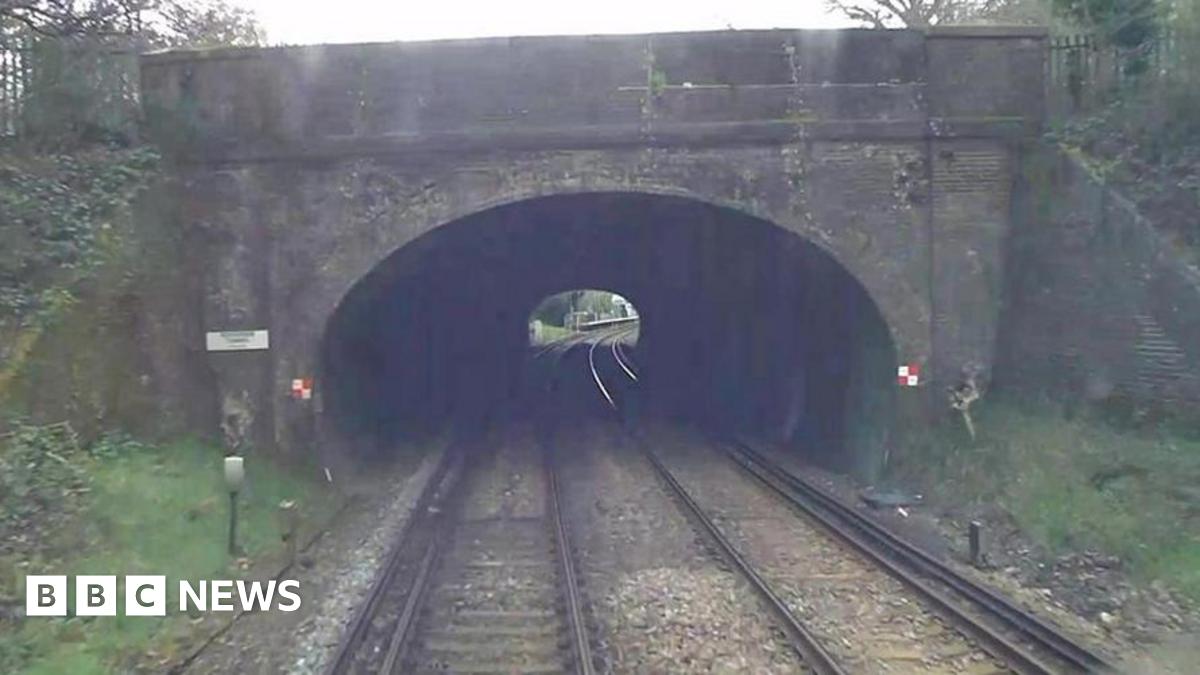

A near miss involving three track workers and a passenger train in Surrey is to be investigated by the government.
At around 11:44 BST on 29 April, a train operated by South Western Railway was involved in the incident at Bookham Tunnel.
Upon hearing the approaching train, two of the track workers entered refuges built into the tunnel walls, while the third worker leant against the tunnel wall as the train passed.
The workers, who were not hurt, had been walking back to Bookham station after completing work on the telephones located at either end of the tunnel.
A line blockage had been arranged with the signaller to stop trains from running through the tunnel, but it was later discovered that this had been arranged for the nearby Mickleham Tunnel and did not cover Bookham Tunnel.

Two things strike me - the almost unbelievable claimed confusion between Mickleham and Bookham tunnels, and the fact that the tunnel refuges did at least provide their intended escape (for some at least).
 
Sponsor Post - registered members do not see these adverts; click here to register, or click here to log in
R

RailUK Forums

Mag_seven

Forum Staff
Staff Member
Global Moderator
Joined
1 Sep 2014
Messages
11,933
Location
here to eternity
Thanks for bringing our attention to this. We will invite comments as soon as the RAIB issue a report. Meanwhile, this is the current status (with thanks to @John Webb for providing the link):

At around 11:44 on 29 April 2025, a train operated by South Western Railways, which was travelling at around 30 mph (48 km/h), was involved in a near miss with a team of three track workers within Bookham Tunnel in Surrey.

The track workers involved were walking back to Bookham station through the tunnel at the time of the near miss, having previously completed work on the telephones located at either end. On hearing the approaching train, two of the track workers entered refuges built into the tunnel walls, while the third worker leant against the tunnel wall as the train passed them. No one was injured in the incident, and no damage was caused.

A line blockage had been arranged by the team with the signaller before the incident occurred. This was intended to stop trains from running through the tunnel. It was later discovered that this line blockage had been arranged for the nearby Mickleham Tunnel, and that it did not cover Bookham Tunnel.

Our investigation will seek to identify the sequence of events which led to the incident. It will also consider:

  • the actions of those involved and the factors that may have influenced them
  • the way in which the work was planned and how the risks associated with being on or near a railway line were being managed
  • the roles, responsibilities and working patterns of relevant staff
  • any underlying management factors.
 
Last edited by a moderator:

Mag_seven

Forum Staff
Staff Member
Global Moderator
Joined
1 Sep 2014
Messages
11,933
Location
here to eternity
Report now out:

Summary
At around 11:42 on 29 April 2025, a passenger train was involved in a near miss with a team of three track workers walking through Bookham Tunnel, on the approach to Bookham station in Surrey. The train was travelling at 33 mph (53 km/h) as it passed the team. The track workers either moved to refuges inside the tunnel or stood against the tunnel wall as the train passed them.

RAIB’s investigation found that the track workers were walking in a different location to that which had been blocked to trains and that neither the track workers, nor the signaller who had granted the line blockage, had realised this. This happened because the safe work pack, which formally detailed the safety arrangements for the task, incorrectly contained line blockage arrangements for the nearby Mickleham Tunnel, and not the tunnel around which the team was working. The error in the safe work pack had been introduced during the planning stage for the work and went unnoticed, despite the pack being checked multiple times during various stages of the safe work process.


Ambient Sheep

Member
Joined
28 Jul 2015
Messages
115
What an incredible chain of events! A very thick stack of Swiss Cheese slices, and yet all the holes lined up, seemingly due to nearly everyone involved (Planner, Supervisor, PIC, and especially the Signaller) being overworked.

Two things about the report that struck me, one big, one small:

1. In Figure 7 (the signaller's copy of the Line Blockage form), although the actual signal details for the line block are for the Down Portsmouth running through Mickleham tunnel, under "Site of Work" near the top of the form is quite clearly handwritten "BOOKHAM". (Also, lower down the page, in Section 4, next to "What is the current location of the requester?" has again been handwritten "BOOKHAM".)

I'm surprised that (a) this too somehow slipped the signaller's attention, especially if it was they who wrote it, but (b) far more so that the report doesn't mention this at all. You'd expect paragraphs 56 or 58 to do so, especially the former. Indeed, surely it makes a mockery of the last sentence of paragraph 56 ("The signaller did not realise that the PIC was at Bookham Tunnel not Mickleham Tunnel during this initial call"), doesn't it?

What with the phone concentrator buttons saying "BOOKM", and "BOOKHAM" being handwritten on the signaller's form, surely it makes more sense for the signaller to have thought the work crew were at Bookham, but hadn't tied that up with the fine details on the form being for Mickleham?

But then surely the signaller would have realised it was the wrong tunnel when they realised they had to call Dorking... baffling.

I don't understand why the report seems to have glossed over all those handwritten "BOOKHAM"s on Figure 7, and the implications thereof.

EDIT: and what the signaller said afterwards, in paragraph 64, just adds to the confusion, given they had "BOOKHAM" written all over their paperwork! I think it would be informative to know who wrote them and when, but again – unless I've missed it – the report is silent on this.

2. In Figure 8, the RAIB's annotation very clearly says "Bookam tunnel" [sic] in large friendly letters. Oh dear...
 
Last edited:

Purple Train

Established Member
Joined
16 Jul 2022
Messages
2,444
Location
Despond
What an incredible chain of events! A very thick stack of Swiss Cheese slices, and yet all the holes lined up, seemingly due to nearly everyone involved (Planner, Supervisor, PIC, and especially the Signaller) being overworked.

Two things about the report that struck me, one big, one small:

1. In Figure 7 (the signaller's copy of the Line Blockage form), although the actual signal details for the line block are for the Down Portsmouth running through Mickleham tunnel, under "Site of Work" near the top of the form is quite clearly handwritten "BOOKHAM". (Also, lower down the page, in Section 4, next to "What is the current location of the requester?" has again been handwritten "BOOKHAM".)

I'm surprised that (a) this too somehow slipped the signaller's attention, especially if it was they who wrote it, but (b) far more so that the report doesn't mention this at all. You'd expect paragraphs 56 or 58 to do so, especially the former. Indeed, surely it makes a mockery of the last sentence of paragraph 56 ("The signaller did not realise that the PIC was at Bookham Tunnel not Mickleham Tunnel during this initial call"), doesn't it?

What with the phone concentrator buttons saying "BOOKM", and "BOOKHAM" being handwritten on the signaller's form, surely it makes more sense for the signaller to have thought the work crew were at Bookham, but hadn't tied that up with the fine details on the form being for Mickleham?

But then surely the signaller would have realised it was the wrong tunnel when they realised they had to call Dorking... baffling.

I don't understand why the report seems to have glossed over all those handwritten "BOOKHAM"s on Figure 7, and the implications thereof.

EDIT: and what the signaller said afterwards, in paragraph 64, just adds to the confusion, given they had "BOOKHAM" written all over their paperwork! I think it would be informative to know who wrote them and when, but again – unless I've missed it – the report is silent on this.

2. In Figure 8, the RAIB's annotation very clearly says "Bookam tunnel" [sic] in large friendly letters. Oh dear...
Indeed, it's an incredible sequence of events and a really interesting report. Particularly given the tunnels had sets of points with the same number as each other as a relevant marker for line blockages, and were displayed near enough vertically on top of each other on the signaller's display. Overwork has played weirder tricks on the brain.

(As per Figure 8 (the signaller's panel diagram) and paragraph 76):
The entry blocking points for both Bookham and Mickleham Tunnels are both at Leatherhead Junction (figure 16). The blocking points are very similar, with
860 diamond crossing used for Bookham Tunnel and 860 points for Mickleham Tunnel. However, the exit blocking points are different, with signal CA186 used for Mickleham Tunnel and signal GD623 for Bookham Tunnel.
 

Dave W

Member
Joined
27 Sep 2019
Messages
874
Location
North London
Complacency combined with a bit of being led up a garden path were also factors, it seems - I suspect the circumstances of this wouldn't always have met the criteria for a full report (perhaps a safety digest) - but as noted above the Swiss cheese slices were many. There being two tunnels essentially in the same spot on two different lines after a junction is rather misleading (not suggesting we fix that!) - but this was a very interesting incident in terms of human factors. Of course pleased that greater consequences didn't attend it.
 

Peter Mugridge

Veteran Member
Joined
8 Apr 2010
Messages
17,790
Location
Epsom
EDIT: and what the signaller said afterwards, in paragraph 64, just adds to the confusion, given they had "BOOKHAM" written all over their paperwork! I think it would be informative to know who wrote them and when, but again – unless I've missed it – the report is silent on this.
Is there any possibility that the paperwork would have been compiled by any third party back office / admin subcontractor?

I've had awful issues with these people in the past when I was working, and I am uncomfortably aware that at least one of the such subcontractors used by the railway is the same one that made catastrophic mistake after catastrophic mistake where I was working.

I do not like coincidences like that.
 

RailwayRookie

Member
Joined
28 Jul 2023
Messages
268
Location
Norfolk
Is there any possibility that the paperwork would have been compiled by any third party back office / admin subcontractor?
If you are referring to who wrote "BOOKHAM" on the form, that's the signaller.

Figure 6 is the version completed electronically by the COSS on site and Figure 7 is a semi-populated copy sent to the signal box before hand with missing information written by hand while the block is being arranged/taken.

Part of the COSS and Signallers responsibilities is to go through the entire form with readbacks at the start. So it doesn't matter who compiled the paperwork. It should have been notice (again) when the block was taken.
 

68000

Member
Joined
27 Jan 2008
Messages
832
The fact that one safe work pack was produced for two different jobs on separate lines should have been an immediate red flag in the planning stages of the work. The fact that this was not picked up at all points towards a superficial understanding by all involved about what was planned, the geography and non-existent checking of the paperwork
 
Last edited:

Deepgreen

Established Member
Joined
12 Jun 2013
Messages
7,458
Location
Gomshall, Surrey
None of this should have happened of course, but let's not overlook the fact that there were refuges there, which did their job. In days of yore that would probably have been the only thing in any 'safety case'!
 

Peter Mugridge

Veteran Member
Joined
8 Apr 2010
Messages
17,790
Location
Epsom
If you are referring to who wrote "BOOKHAM" on the form, that's the signaller.
No, I'm referring to the administrative processes behind the scenes.

That's one reason that it would be nice if the report discussed it.
Exactly my feeling, because I know for a fact that the same back office third party subcontractor was working for both the railway and the engineering contractor at the same time when something serious happened and the paperwork faults were heavily criticised in the subsequent inquiry. I'm not going to say which incident it was, or what any of the companies are.

Since the railway started using that back office subcontractor, we have seen a very high number of these near misses with track workers in which the paperwork has been revealed to be defective.

Therefore, yes - we should be told officially who exactly is preparing the behind the scenes administrative work on all these possessions.
 

Ambient Sheep

Member
Joined
28 Jul 2015
Messages
115
If you are referring to who wrote "BOOKHAM" on the form, that's the signaller.

Figure 6 is the version completed electronically by the COSS on site and Figure 7 is a semi-populated copy sent to the signal box before hand with missing information written by hand while the block is being arranged/taken.

Yes, it seems that @Peter Mugridge was not, but I certainly was (asking that). :)

Thank you for answering what the report did not. Yes, that was what I'd assumed had happened re. Figure 7, but it scarcely seems believable that the signaller could have written down "BOOKHAM" twice whilst being aware they were line-blocking the Mickleham Tunnel.

Just goes to show what overwork and trying to manage four line blocks at once can do to the brain, poor chap[ess].
 

Nicholas Lewis

Established Member
Joined
9 Aug 2019
Messages
7,983
Location
Surrey
When you've got Safe Work Packs of 39 and 40 pages long for a simple job is it any wonder nobody really looks at them properly before signing them.

Reality is there is far too much paperwork that isn't adding value and if anything its giving people a false sense of assurance. Less is more
 

Elecman

Established Member
Joined
31 Dec 2013
Messages
3,567
Location
Lancashire
When you've got Safe Work Packs of 39 and 40 pages long for a simple job is it any wonder nobody really looks at them properly before signing them.

Reality is there is far too much paperwork that isn't adding value and if anything its giving people a false sense of assurance. Less is more
Absolutely!!
 

Sheridan

Member
Joined
11 Jan 2012
Messages
613
Paragraph 21 says that the planner who produced the Safe Work Pack moved to the Wimbledon S&T team in 2023. This implies that they are employed by Network Rail but doesn’t absolutely confirm it.
 

Purple Train

Established Member
Joined
16 Jul 2022
Messages
2,444
Location
Despond
Paragraph 21 says that the planner who produced the Safe Work Pack moved to the Wimbledon S&T team in 2023. This implies that they are employed by Network Rail but doesn’t absolutely confirm it.
Paragraph 11:
Network Rail owns and maintains the infrastructure at this location. It also employs the track workers involved in the incident, those who planned the work being undertaken, and the signallers at the Wimbledon Area Signalling Centre.
My bold.

I presume this includes the planner?
 

MadMac

Established Member
Joined
13 Jun 2008
Messages
1,492
Location
Moorpark, CA
When you've got Safe Work Packs of 39 and 40 pages long for a simple job is it any wonder nobody really looks at them properly before signing them.

Reality is there is far too much paperwork that isn't adding value and if anything its giving people a false sense of assurance. Less is more
Virtual carbon copy of This Incident at Dundee (worksite and protection didn’t match).
 

alxndr

Established Member
Joined
3 Apr 2015
Messages
1,674
When you've got Safe Work Packs of 39 and 40 pages long for a simple job is it any wonder nobody really looks at them properly before signing them.

Reality is there is far too much paperwork that isn't adding value and if anything its giving people a false sense of assurance. Less is more
I’ve said this for a long time. There’s a lot of outdated guff that appears because it’s an incredibly onerous process to try and get it updated. So people stop reading it, and because they stop reading it they stop complaining, so no one pushes for it to be updated… the cycle continues.

I think my “favourite” random hazard listed in a SWP is “Station cellar: Underground fire at this location since 26/08/82”. Most likely said fire has burnt itself out by now, and even if it hasn’t it’s of very little consequence to me if working on track and not breaking ground!

In contrast, if going to a fault it’s a 2 page Incident Response Pack written by the COSS and a line blockage form. I’m not saying do away with pre-planned arrangements, but also it wouldn’t be a bad thing as it forces the COSS to engage more with their paperwork if they’re writing it, and therefore having to pay it more heed than just reading a form verbatim.
 

Tw99

Member
Joined
25 Aug 2015
Messages
227
Location
Reading
When you've got Safe Work Packs of 39 and 40 pages long for a simple job is it any wonder nobody really looks at them properly before signing them.

Reality is there is far too much paperwork that isn't adding value and if anything its giving people a false sense of assurance. Less is more
That was my impression on reading the report too.

I guess there's years and years of "lessons learned" and arse covering in these documents such that it's now virtually impossible to ever make anything smaller and more practically meaningful.
 

GingerSte

Member
Joined
26 May 2010
Messages
291
That was my impression on reading the report too.

I guess there's years and years of "lessons learned" and arse covering in these documents such that it's now virtually impossible to ever make anything smaller and more practically meaningful.
I would add to that... Nobody wants to be the one responsible (and getting shouted at by the people in silly wigs) for saying "Yes, let's get rid of this bit." even if that bit is just repeating some information from a previous page on a form.
 

Kevin51

Member
Joined
12 Dec 2019
Messages
61
Location
Herts
After the Bedford incident, strange how that immediately makes me think of the 1965 film, I checked up on the number of track incidents on the rail network. This was because the recent crash was only the second fatality onboard a train this century. In 2024 there were 24 deaths of track workers and it is getting worse. I get that deaths of track workers isn't headline grabbing but that is a truly awful statistic. What are Network Rail doing about this?
 

Mojo

Forum Staff
Staff Member
Administrator
Joined
7 Aug 2005
Messages
21,168
Location
0035
In 2024 there were 24 deaths of track workers and it is getting worse. I get that deaths of track workers isn't headline grabbing but that is a truly awful statistic. What are Network Rail doing about this?
Where on earth have you got this statistic from? In the years 2023/4 and 2024/5, no track workers were killed whatsoever. Across these two years there were two workforce fatalities, one was a fall from height and one was a staff assault.
 

43096

On Moderation
Joined
23 Nov 2015
Messages
18,728
This was because the recent crash was only the second fatality onboard a train this century.
I’m not sure where you have got that from, but it is very obviously wrong. Hatfield, Great Heck, Potters Bar, Ufton Nervet, Grayrigg, Carmont, Talerddig and now Elstow is rather more than two fatalities this century.
 

mattdickinson

Member
Joined
14 Nov 2010
Messages
603
Location
Uxbridge
Where on earth have you got this statistic from? In the years 2023/4 and 2024/5, no track workers were killed whatsoever. Across these two years there were two workforce fatalities, one was a fall from height and one was a staff assault.
It looks like that's the number of all fatalities including trespassers (rather than track workers)
 

Deepgreen

Established Member
Joined
12 Jun 2013
Messages
7,458
Location
Gomshall, Surrey
After the Bedford incident, strange how that immediately makes me think of the 1965 film, I checked up on the number of track incidents on the rail network. This was because the recent crash was only the second fatality onboard a train this century. In 2024 there were 24 deaths of track workers and it is getting worse. I get that deaths of track workers isn't headline grabbing but that is a truly awful statistic. What are Network Rail doing about this?
I'm afraid those figures are wildly wrong.
 

alxndr

Established Member
Joined
3 Apr 2015
Messages
1,674
Here are the actual figures for mainline railways from the ORR. Apologies if the formatting hasn’t come out well.


Time periodCustomer facing staffInfrastructure workersOther workforceTrain drivers
Apr 2002 to Mar 20031310
Apr 2003 to Mar 20040710
Apr 2004 to Mar 20050211
Apr 2005 to Mar 20060301
Apr 2006 to Mar 20070011
Apr 2007 to Mar 20080200
Apr 2008 to Mar 20090300
Apr 2009 to Mar 20100300
Apr 2010 to Mar 20110100
Apr 2011 to Mar 20120100
Apr 2012 to Mar 20130200
Apr 2013 to Mar 20140300
Apr 2014 to Mar 20150420
Apr 2015 to Mar 20160000
Apr 2016 to Mar 20170100
Apr 2017 to Mar 20180010
Apr 2018 to Mar 20190200
Apr 2019 to Mar 20200201
Apr 2020 to Mar 20211211
Apr 2021 to Mar 20220101
Apr 2022 to Mar 20231100
Apr 2023 to Mar 20240000
Apr 2024 to Mar 20251000


It’s not good enough, no one should be losing their life just trying to do their job, but it’s no where near as bad as the 24 per year figure.
 

Attachments

  • IMG_7115.png
    IMG_7115.png
    426.5 KB · Views: 38

edwin_m

Veteran Member
Joined
21 Apr 2013
Messages
28,590
Location
Nottingham
Here are the actual figures for mainline railways from the ORR. Apologies if the formatting hasn’t come out well.


Time periodCustomer facing staffInfrastructure workersOther workforceTrain drivers
Apr 2002 to Mar 20031310
Apr 2003 to Mar 20040710
Apr 2004 to Mar 20050211
Apr 2005 to Mar 20060301
Apr 2006 to Mar 20070011
Apr 2007 to Mar 20080200
Apr 2008 to Mar 20090300
Apr 2009 to Mar 20100300
Apr 2010 to Mar 20110100
Apr 2011 to Mar 20120100
Apr 2012 to Mar 20130200
Apr 2013 to Mar 20140300
Apr 2014 to Mar 20150420
Apr 2015 to Mar 20160000
Apr 2016 to Mar 20170100
Apr 2017 to Mar 20180010
Apr 2018 to Mar 20190200
Apr 2019 to Mar 20200201
Apr 2020 to Mar 20211211
Apr 2021 to Mar 20220101
Apr 2022 to Mar 20231100
Apr 2023 to Mar 20240000
Apr 2024 to Mar 20251000


It’s not good enough, no one should be losing their life just trying to do their job, but it’s no where near as bad as the 24 per year figure.
Follow the link and download it and you get:
The data table worksheet contains annual data on the number of workforce fatalities, injuries and shock and trauma incidents by worker type on mainline, London Underground and other non-mainline networks in Great Britain.
 

Top