• Our new ticketing site is now live! Using either this or the original site (both powered by TrainSplit) helps support the running of the forum with every ticket purchase! Find out more and ask any questions/give us feedback in this thread!

Settle–Carlisle Local Services, Pre–May 1970?

Chrius56000

Member
Joined
18 Aug 2010
Messages
262
Location
Walsall
It was 1986 when the present number of local stations on the S & C were re–opened by Ron Cotton (initially as an extension to "Dalesrail") to provide the current local stopping service, but my query refers to the pre 1970 local services before they were withdrawn for the first time leaving just Settle and Appleby open!

A book I once read about the S & C in Morecambe library said "The Midland Railway had always regarded the Settle and Carlisle as a means to an end, in even in the line's busiest heyday there were never more than five local services each way".

. . .The book went on to say "after being run by assorted tank engines, Class 9Fs and whatever was available at the time, the local services were taken over in September 1966 by two–car diesel multiple units".

During the four years of DMU operation before all the local stations closed for the first time in 1970, were these locals "skip–stop" like the E.C.M.L. Newcastle–Edinburgh locals, (Table 47) or did all trains serve all stations open during that period?
 
Sponsor Post - registered members do not see these adverts; click here to register, or click here to log in
R

RailUK Forums

308165

Member
Joined
11 Feb 2017
Messages
98
All stopping services called everywhere. The service was composed of two Carlisle - Skipton services each way, a morning Appleby - Carlisle and evening return plus a single morning Garsdale - Leeds.

At some point in the late 60s and likely associated with all services being DMU worked was the extension of services from Hellifield to Skipton.
 

D6130

Established Member
Joined
12 Jan 2021
Messages
8,934
Location
West Yorkshire/Tuscany
Initially the out-and-back working from Skipton was diagrammed for Accrington-based Craven's two car class 113 diesel-hydraulic units, interworking with the Skipton-Manchester Victoria services. However, as these units became increasingly prone to spontaneous combustion, Newton Heath-allocated class 105 and 108 units frequently substituted. The out-and-back working from Carlisle was diagrammed for a Kingmoor class 108 two car unit....complete with Cumbrian Coast window bars. (Source: Old hand Skipton drivers with whom I worked back in the 1990s).
 

Mcr Warrior

Veteran Member
Joined
8 Jan 2009
Messages
17,161
Anyone able to append a scan of the Leeds-Carlisle timetable from the late 1960s, even if it is just the one for midweek travel?
 

30907

Veteran Member
Joined
30 Sep 2012
Messages
21,922
Location
Airedale
Anyone able to append a scan of the Leeds-Carlisle timetable from the late 1960s, even if it is just the one for midweek travel?
Sorry, but the 1965 one is on timetableworld. It is steam era but after the closure of Saltaire etc and has the same basic pattern as described.
 

308165

Member
Joined
11 Feb 2017
Messages
98
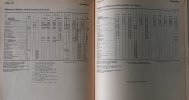
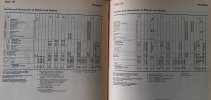
May 1969 - May 1970 below for weekdays.
 

Attachments

  • 20260614_205926.jpg
    20260614_205926.jpg
    1.6 MB · Views: 124
  • 20260614_205912.jpg
    20260614_205912.jpg
    1.6 MB · Views: 123

jfollows

Established Member
Joined
26 Feb 2011
Messages
10,078
Location
Wilmslow
Anyone able to append a scan of the Leeds-Carlisle timetable from the late 1960s, even if it is just the one for midweek travel?
A couple of steam trains still (Limited Load, for example), but mainly diesel & DMU.
 

Attachments

  • Carlisle and Skipton 18 April 1966 to 5 March 1967.pdf
    5 MB · Views: 44
Last edited:

thesignalman

Member
Joined
9 Jan 2012
Messages
153
. . .The book went on to say "after being run by assorted tank engines, Class 9Fs and whatever was available at the time, the local services were taken over in September 1966 by two–car diesel multiple units".
I believe the tank engines were only diagrammed for shorts to Appleby and Garsdale. The full distance trains were worked by Black 5s from my memory of the time.

John
 

Mcr Warrior

Veteran Member
Joined
8 Jan 2009
Messages
17,161
Looks from the timetable extracts kindly provided that there were just two Northbound "all stations" D.M.U. services, operating between Skipton and Carlisle, back in the late 1960s, one late morning, and the second mid/late afternoon. Journey time around two-and-a-half hours. Passengers from Leeds or other stations south of Skipton would have needed to change there.

Nowadays more services, and a somewhat quicker journey time.
 

nw1

Established Member
Joined
9 Aug 2013
Messages
9,414
Looking at that timetable extract which service was Manchester-operated? Looks like the morning out-and-back would have been Carlisle operated but the 1633 from Skipton had no incoming working so presumably that one?
But would that have then laid over in Carlisle for almost a day to form the 1636 next day?

Interesting also to see some additional stations on the northern section that were never re-opened - but also south of Skipton the only open stations where Shipley, Bingley and Keighley. Also a very infrequent and irregular service on the line south of Skipton - even by 1982 this had improved to approximately 2tph Bradford-Keighley and 1tph Leeds-Skipton. Again only the above named stations were open. Of course in 1982, the Settle and Carlisle service was very basic and the intermediate stations were not served.
 
Last edited:

MichaelAMW

Member
Joined
18 Jun 2010
Messages
1,021
May 1969 - May 1970 below for weekdays.

I find it odd that the sleeper is from Euston, rather than St Pancras, and that the sleeping cars are only to/from Northampton. Was that a temporary diversion owing to some work on the MML?
 

jfollows

Established Member
Joined
26 Feb 2011
Messages
10,078
Location
Wilmslow
I find it odd that the sleeper is from Euston, rather than St Pancras, and that the sleeping cars are only to/from Northampton. Was that a temporary diversion owing to some work on the MML?
Search the forum, there’s quite a lot about this.
The sleeper was diverted from Saint Pancras to Euston 1970-1972, but the sleepers were only available as far south as Northampton even though there were regular coaches in the formation for seated passengers as well.
https://www.railforums.co.uk/threads/thames-clyde-express-in-the-1970s.264956/page-3#post-6735267 for example
 

Merle Haggard

Established Member
Joined
20 Oct 2019
Messages
3,851
Location
Northampton
Search the forum, there’s quite a lot about this.
The sleeper was diverted from Saint Pancras to Euston 1970-1972, but the sleepers were only available as far south as Northampton even though there were regular coaches in the formation for seated passengers as well.
https://www.railforums.co.uk/threads/thames-clyde-express-in-the-1970s.264956/page-3#post-6735267 for example

I'm pretty sure that you could book a sleeper from, say, Euston to Leeds or to Kilmarnock.
At Glasgow Central it was displayed as a train to Northampton, because of the availability of faster, direct trains. I think that it was shown at Euston as being to Glasgow, though.
The down evening service (21.00) was very useful for Northampton passengers as by far the fastest service of the evening. The Up morning service was usually late at Northampton and then ran Slow Line so not so advantageous.
I know a retired Nottingham driver who worked the Down service sometimes in his second man days. An unusual diagram - passenger to Market Harborough then walk to the 'bus station, catch a United Counties 'bus to Derngate, Northampton and walk to the railway station. Could be an unusual delay attribution United Counties bus no. 961 failed at Brixworth loss of coolant :)
I travelled on it a couple of times, in the sleeper. Does anyone know if it was slip working at Nottingham and Leeds (i.e. fresh loco) or ran round?

Edited because of my confusion with slip working
 
Last edited:

Djgr

Established Member
Joined
30 Jul 2018
Messages
3,262
It was 1986 when the present number of local stations on the S & C were re–opened by Ron Cotton (initially as an extension to "Dalesrail") to provide the current local stopping service
Mention of Ron Cotton reminds me that it is not always yes men who are the heroes.
 

D6130

Established Member
Joined
12 Jan 2021
Messages
8,934
Location
West Yorkshire/Tuscany
Mention of Ron Cotton reminds me that it is not always yes men who are the heroes.
In my railway experience, yes men are rarely - if ever the heroes. (cf. Chris Green, Peter Rayner, Gordon Pettit, etc....plus numerous less-senior examples.)
 

WesternLancer

Veteran Member
Joined
12 Apr 2019
Messages
14,954
Interesting also to see some additional stations on the northern section that were never re-opened -

Yes.
I'm going on memory of things I've read over the years here so will stand corrected - I think this is all mixed up with the history of Dales Rail - and the earlier re-introduction of limited Dales Rail services to stations in the Yorks Dales National Park well before 1986 (in the mid 1970s?) - and the National Park paying for the platforms to be kept serviceable for these services - which meant they were relatively easy to re-opened in 1986 *
But the National Park boundary is just south of Appleby - so presumably north of Appleby there was no equivalent body to step in and ensure platforms were not cut back etc which then made it harder to do re-opening - plus there may have been less realistic passenger demand I suppose.

I think possibly some other stations that closed far earlier are missing from those late 1960s timetables (obviously) - easy to verify of course, but I've not checked

*EDIT - I found this on link below - text a speech given in 2014 explaining exactly what happened by one of the people who pulled it off! - really interesting to read in full - mixed up with the WCML electrification, Ramblers Association and all sort of work by people we clearly have much to thank for

And also explains that a bit later Cumbria County Council did financially support the re-opening of 3 stations on the northern section - so credit to them too.


I've copied a section of it here - my bolds

During an Easter 1973 hike with the West Riding Ramblers over Rapes Highway, between Littleborough and Marsden, sitting behind a drystone in the rain wall having lunch, two or three of us discussed the idea of the Ramblers actually chartering their own excursion train service from British Rail, just as the RA was now doing with its coaches.

It seemed a good idea, so we approached British Rail and received the quotation of £300 for a three coach train to call at three of the disused stations – Dent, Garsdale and Kirkby Stephen, before running on to Appleby. The West Riding Ramblers Association Executive Committee, but only on the casting vote of the Chairman, agreed to run a train and risk £300. We needed 200 passengers to cover our costs. Within days every ticket was sold and we had to go back to BR and ask for more coaches until eventually with 500 tickets sold and 9 coaches filled we had to call a halt and turn people away. The Ramblers made a clear profit of £300 on the day.

It seemed that at very least Ramblers Specials could become an annual or even twice annual event.

But we then came across what can best be described as the Dead Hand of Bureaucracy with a decision that defied all logic. Because the line was going to be used a diversionary route during West Coast electrification, then the platforms of the disused intermediate stations were to have all their platform edge stones removed in case one would work loose and damage one of the new Mark 3 coaches used on the diverted express trains. This would prevent – probably forever – any future use of the stations for walkers’ trains.

By happy coincidence I had at that time been appointed onto the newly created Yorkshire Dales National Park Committee, and was able to get myself on a working committee with local Councillors in the autumn of 1974 to see what opportunity there might be to repeat the success of the RA 1974 special.

Fortunately I had an ally within the local BR maintenance teams, whose Area Engineer reckoned that the platforms could be “made safe” for around £1,500- £2,000 per station to allow them to be used for occasional charter services like the Ramblers Specials. Thankfully his bosses agreed and BR took what was a small but decisive step forward. The new National Park Committee agreed £5,000 to finance the repair of Horton, Ribblehead, and Dent platform edges whilst Cumbria chipped in £500 towards Garsdale – which was actually in very good nick.

Having got the National Park to spend money to save the platforms, it was then not a huge leap of imagination to suggest that there was no point in saving platforms if no trains called there. Prices for a pilot service of trains operating on three weekends, Saturday and Sundays between Leeds and Appleby were agreed with British Rail in Leeds. Thanks to great support from National Park Committee Chairman Keith Lockyer and Park Officer Richard Harvey, £2,000 was allocated to cover the cost of trains and a further £200 for publicity. Everything else, including the guided walks and stewarding the trains – and this was a sign of things to come – had to be done by volunteers.
 
Last edited:

Mcr Warrior

Veteran Member
Joined
8 Jan 2009
Messages
17,161
I think possibly some other stations that closed far earlier are missing from those late 1960s timetables (obviously) - easy to verify of course, but I've not checked
Think the various, now no longer open, stations, on the line between Skipton and Carlisle, were...

• Bell Busk (closed May 1959);
• Crosby Garrett (closed October 1952);
• Ormside (closed June 1952);
• Long Martin (closed May 1970);
• New Biggin (closed May 1970);
• Culgaith (closed May 1970);
• Little Salkeld (closed May 1970);
• Cotehill (closed April 1952);
• Cumwhinton (closed November 1956);
• Scotby (closed February 1942).

Apologies if I've missed any! Can someone confirm the above?
 

The exile

Established Member
Joined
31 Mar 2010
Messages
9,309
Location
Somerset
Yes.
I'm going on memory of things I've read over the years here so will stand corrected - I think this is all mixed up with the history of Dales Rail - and the earlier re-introduction of limited Dales Rail services to stations in the Yorks Dales National Park well before 1986 (in the mid 1970s?) - and the National Park paying for the platforms to be kept serviceable for these services - which meant they were relatively easy to re-opened in 1986 *
But the National Park boundary is just south of Appleby - so presumably north of Appleby there was no equivalent body to step in (or willing to step in) and ensure platforms were not cut back etc which then made it harder to do re-opening - plus there may have been less realistic passenger demand I suppose.

I think possibly some other stations that closed far earlier are missing from those late 1960s timetables (obviously) - easy to verify of course, but I've not checked

*EDIT - I found this on link below - text a speech given in 2014 explaining exactly what happened by one of the people who pulled it off! - really interesting to read in full - mixed up with the WCML electrification, Ramblers Association and all sort of work by people we clearly have much to thank for


I've copied a section of it here - my bolds
The other three survivors are realistically the only ones which a) have a local population of any size immediately at hand and b) aren’t so close to Carlisle as to make a sparse service pointless. Unfortunately the northerners doesn’t have quite the same “pull” for walkers.
 
Last edited:

WesternLancer

Veteran Member
Joined
12 Apr 2019
Messages
14,954
Think the various, now no longer open, stations, on the line between Skipton and Carlisle, were...

• Bell Busk (closed May 1959);
• Crosby Garrett (closed October 1952);
• Ormside (closed June 1952);
• Long Martin (closed May 1970);
• New Biggin (closed May 1970);
• Culgaith (closed May 1970);
• Little Salkeld (closed May 1970);
• Cotehill (closed April 1952);
• Cumwhinton (closed November 1956);
• Scotby (closed February 1942).

Apologies if I've missed any! Can someone confirm the above?
Thanks. More closures than I thought pre 1970.

== Doublepost prevention - post automatically merged: ==

The other three survivors are realistically the only ones which a) have a local population and b) aren’t so close to Carlisle as to make a sparse service pointless. Unfortunately the northerners doesn’t have quite the same “pull” for walkers.
Thanks.
 

D6130

Established Member
Joined
12 Jan 2021
Messages
8,934
Location
West Yorkshire/Tuscany
Think the various, now no longer open, stations, on the line between Skipton and Carlisle, were...

• Bell Busk (closed May 1959);
• Crosby Garrett (closed October 1952);
• Ormside (closed June 1952);
• Long Martin (closed May 1970);
• New Biggin (closed May 1970);
• Culgaith (closed May 1970);
• Little Salkeld (closed May 1970);
• Cotehill (closed April 1952);
• Cumwhinton (closed November 1956);
• Scotby (closed February 1942).

Apologies if I've missed any! Can someone confirm the above?
Correct....but Long Martin should read Long Marton. (Assumed autocorrect error! ;)).
 

Mag_seven

Forum Staff
Staff Member
Global Moderator
Joined
1 Sep 2014
Messages
11,937
Location
here to eternity
Just a gentle reminder that this thread is to discuss Settle–Carlisle Local Services, Pre–May 1970.

I have split off some posts that were discussing Northampton to Market Harborough to this thread:


InkyScrolls

On Moderation
Joined
20 Jul 2022
Messages
1,456
Location
North of England
Think the various, now no longer open, stations, on the line between Skipton and Carlisle, were...

• Bell Busk (closed May 1959);
• Crosby Garrett (closed October 1952);
• Ormside (closed June 1952);
• Long Marton (closed May 1970);
• New Biggin (closed May 1970);
• Culgaith (closed May 1970);
• Little Salkeld (closed May 1970);
• Cotehill (closed April 1952);
• Cumwhinton (closed November 1956);
• Scotby (closed February 1942).

Apologies if I've missed any! Can someone confirm the above?
All correct. It's a real shame Culgaith has never reopened; it has a decent enough population to warrant a station.
 

Top