Am I being over-critical or are the Beeb being exceptionally inept here: https://www.bbc.co.uk/news/articles/c39y0pj1j92o - when most passengers would have been going on a third route yesterday - and today will have been back on their booked routes!


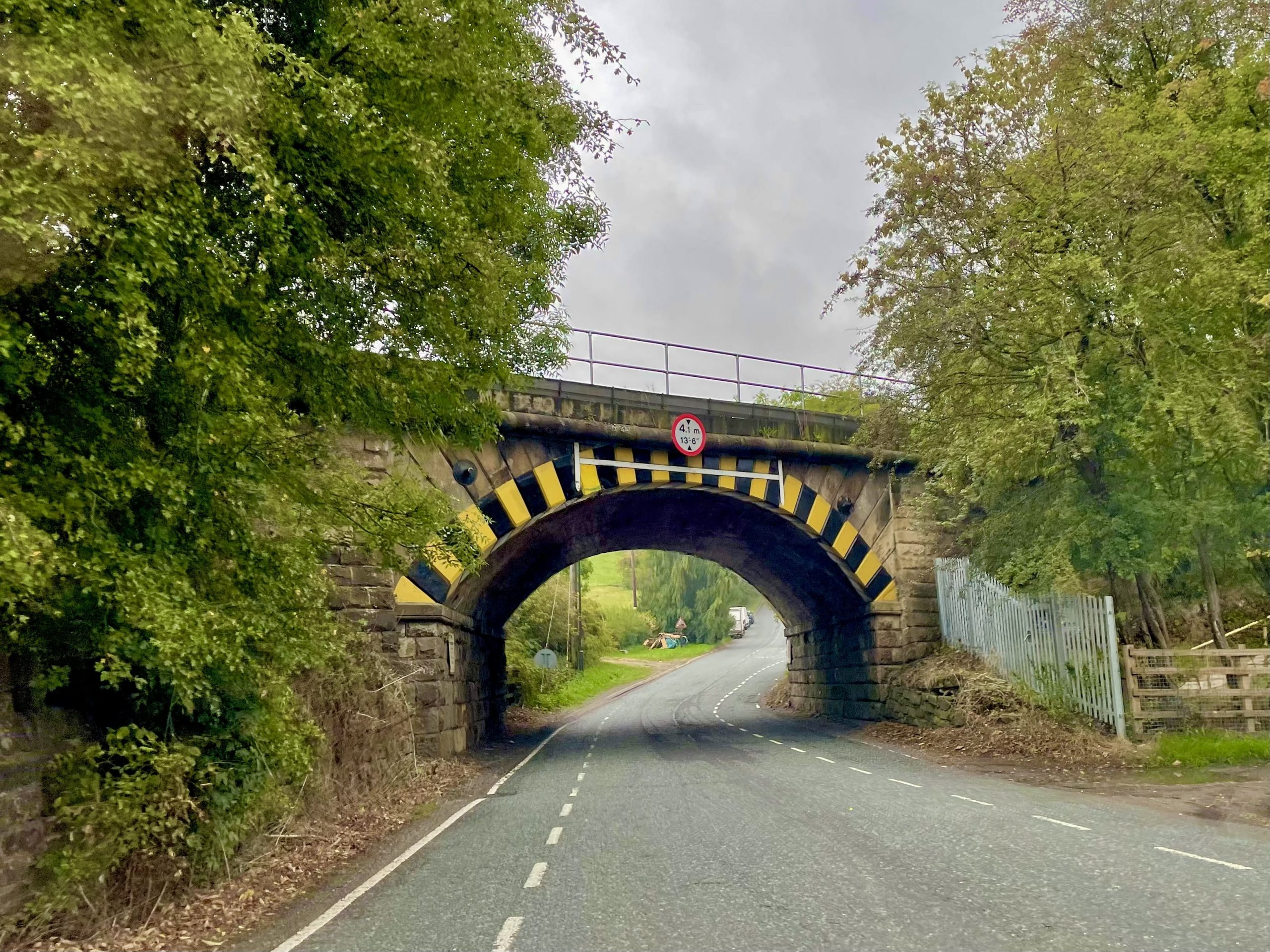
So lobbing up a beam in front of a bridge isn't allowed, it needs to be attached to the bridge. There's some examples at the end of the doc, and I know of one near me, on the Hope Valley line at New Smithy. It's substantial, and its seen some action:3.1 The collision protection beam (CPB) and its supports must form an integral part of the existing structure in accordance with the Highways Act 1980 [Ref 5.N].
NOTE A CPB on free-standing supports in advance of a bridge or tunnel can be considered as an obstruction to the highway contrary to Section 178 of the Highways Act 1980 [Ref 5.N].
3.1.1 The CPB should be positioned so that it is considered to be a part of the protected structure.
3.1.2 The CPB should lie parallel to the protected structure rather than askew.
3.2 CPBs for the protection of existing railway bridges, over the highway, must be in accordance with Sections 16 and 46 of the Railway Clauses Consolidation Act Railways Act 1845 [Ref 9.N].


By the time such a program was completed, vehicle technology would have largely solved the problem at no expense to the railway.That's just delay repay though, now add in all of the other costs associated with this one...
Not saying adding preventative measures such as metal beams will pay for themselves straight away, but long term thinking is key, you also need to factor in the risk reduction to the railway.
It’s not just a problem for road vehicles in the US:I should not laugh but I have been watching that channel - 11 foot 8 - for years when I was in the USA and there truly are some idiots and hilarious truck, caravan etc damage.
Roughly the same annual average number of bridge strikes now as in the year 2000 at around 1600 via a couple of spikes in excess of 2000 hits and a fall back to current levels.I indicated an increased frequency.
Research conducted by Network Railfound that 32% of drivers admitted to setting off while not being aware of the height of their vehicle
 go2stream.com


Strange that the article states that costs are passed on to the UK taxpayer, surely the driver’s insurance has to meet the cost? Or is the 12 million/year based on costs that couldn’t be recovered e.g. drivers doing a runner or being uninsured?Roughly the same annual average number of bridge strikes now as in the year 2000 at around 1600 via a couple of spikes in excess of 2000 hits and a fall back to current levels.
Even if SatNav is taking drivers towards low bridges, unless the system knows both heights and warns the driver and the driver stops, its back to knowing your height and reading signs. Presumably though, a smarter sat nav needs the height to be input by someone who knows it in the first place?
I’ve attached a link below to an article that shows NR’s data as a graph. It also says:
The True Cost of Bridge Strikes | Blog
An analysis on bridge strikes, the areas in the UK in which they are most frequent, and how drivers can ensure they avoid them.
I’ve had it before where I’ve chosen a route on Google Maps, not the ‘fastest’ one they recommended, but then deviated slightly from that route (in one case because my car was parked facing the opposite direction to what they assumed). When Google ‘recalculated’ the route to account for this deviation it has then set the route back to the ‘recommended’ route and sent me the fastest way again. I can see how this would be an issue if used by an HGV driver having selected a route to avoid a low bridge. Sometimes it will recalculate the route just because a bit of GPS drift makes it think you’ve deviated.Sat Navs are fine if used responsibly. I use them - but I meticulously plot the route in some time before the journey starts, with as many waypoints as necessary added to force the correct route. This avoids any height restrictions.
They're a very dangerous aide for drivers who don't take the necessary precautions to ensure they are on a safe route. I keep a close eye on what drivers are up to - unfortunately some use a satnav to plot their own route instead of following the one they are given. These people are at very high risk of hitting a bridge and if they do it after being remind of the policy on routes, I don't permit them to drive my vehicles any more.
National Rail is the umbrella name for Network Rail (whose signallers were responsible for stopping the trains) as well as the TOCs who actually operate them.I wasn't aware National Rail ran trains.
It was also reported that the bridge parapwt itself, or the protection it had, was faulty, which meant the culpability was shared with the hifhway authority.While I agree entirely with your point, I suspect that that [Ixshott] driver was fortunate that his truck landed on an almost empty train and caused no serious injuries. Had it landed on, or immediately in front of, a well loaded train, he might well have faced manslaughter charges.
Thats all very well, but trying to measure the overall height of the vehicle you have just loaded, possibly in the dark and pouring rain, and on an uneven surface, when it is much taller than you are, is not easy. People WILL cut corners, even thoufh they risk prosecurion for getting it wrong.My bold.
There seems to be legislation that requires the overall height (i.e. including the load) to be displayed in the cab of lorries and buses..
There's a National Highways document for bridge collision protection beams:
CD 366 Design criteria for collision protection beams
In particular it says:
So lobbing up a beam in front of a bridge isn't allowed, it needs to be attached to the bridge. There's some examples at the end of the doc, and I know of one near me, on the Hope Valley line at New Smithy. It's substantial, and its seen some action:
View attachment 205872
View attachment 205874


National Rail is the umbrella name for Network Rail (whose signallers were responsible for stopping the trains) as well as the TOCs who actually operate them.
So yes, it does.
== Doublepost prevention - post automatically merged: ==
I’ve had it before where I’ve chosen a route on Google Maps, not the ‘fastest’ one they recommended, but then deviated slightly from that route (in one case because my car was parked facing the opposite direction to what they assumed). When Google ‘recalculated’ the route to account for this deviation it has then set the route back to the ‘recommended’ route and sent me the fastest way again. I can see how this would be an issue if used by an HGV driver having selected a route to avoid a low bridge. Sometimes it will recalculate the route just because a bit of GPS drift makes it think you’ve deviated.
National Rail is the umbrella name for Network Rail (whose signallers were responsible for stopping the trains) as well as the TOCs who actually operate them.
AFAIK National Rail is a brand/public face of RDG (Rail Delivery Group), which is the industry trade body for the TOCs - see https://www.raildeliverygroup.com/about-us.htmlWho's told you that?
That is interesting. I am sure there used to be separate beams in fromt of a bridge over the A5 near Hinckley. Perhaps they have been removed.There's a National Highways document for bridge collision protection beams:
CD 366 Design criteria for collision protection beams
In particular it says:
So lobbing up a beam in front of a bridge isn't allowed, it needs to be attached to the bridge. There's some examples at the end of the doc, and I know of one near me, on the Hope Valley line at New Smithy. It's substantial, and its seen some action:
This is what I object to.There's a National Highways document for bridge collision protection beams:
CD 366 Design criteria for collision protection beams
In particular it says:
So lobbing up a beam in front of a bridge isn't allowed, it needs to be attached to the bridge. There's some examples at the end of the doc, and I know of one near me, on the Hope Valley line at New Smithy. It's substantial, and its seen some action:
View attachment 205872
View attachment 205874
This isn't a prohibition on separate bridge protection beams, merely a requirement for permission.178 Restriction on placing rails, beams etc. over highways.
(1)No person shall fix or place any overhead beam, rail, pipe, cable, wire or other similar apparatus over, along or across a highway without the consent of the highway authority for the highway, and the highway authority may attach to their consent such reasonable terms and conditions as they think fit.
All of that is true, National Rail is not however an umbrella term for Network Rail (whatever that means)AFAIK National Rail is a brand/public face of RDG (Rail Delivery Group), which is the industry trade body for the TOCs - see https://www.raildeliverygroup.com/about-us.html
Amongst other things, RDG runs the National Rail website and the phone apps - which effectively makes it the online public face of the railway (beyond the individual TOC websites and apps).
<snip>
Presumably though, a smarter sat nav needs the height to be input by someone who knows it in the first place?
<snip>
You are correct, but norbitonflyer did refer to both Network Rail and the TOCs, not just Network Rail.All of that is true, National Rail is not however an umbrella term for Network Rail (whatever that means)

The Wikipedia article that I linked previously says that that attempt by the insurer failed, and liability remained with the driver:It was also reported that the bridge parapet itself, or the protection it had, was faulty, which meant the culpability was shared with the highway authority.
Presumably the equivalent in this case would be "The highway authority should have provided a barrier to prevent my client driving his truck into the bridge". I would hope that any such attempt would similarly fail.In October 2003, Fortis was a party in a legal case in the High Court, to try to recover some of the funds it had paid out. They alleged that the safety barrier was too short, and in a statement said that if it had been longer, the crash would not have happened. On 30 October 2003, the judge ruled that negligence on behalf of the Highways Agency had not been established, and that Hart was the precipitating cause of the accident.
This isn't a prohibition on separate bridge protection beams, merely a requirement for permission.
(1)No person shall fix or place any overhead beam, rail, pipe, cable, wire or other similar apparatus over, along or across a highway without the consent of the highway authority for the highway, and the highway authority may attach to their consent such reasonable terms and conditions as they think fit.

I used to live near there, and never heard of that particular bridge getting hit, certainly to a level this serious.See post #210:
To be high risk, this bridge would have to be being bashed on a regular basis.

I thought there were 4 tracks reduced to 3 by BR in the mid 1980s. When the Trent Valley 4-tracking was done 20 years later I believe the 4th was not reinstated there because an M42 bridge built meanwhile had insufficient clearance.The nearest crossovers southbound from TV Slow (at Attleborough North) to TV Fast and back to TV Slow (at Newbold approaching Rugby) are about 10.5 miles apart, so that capacity will be lost until repairs are carried out.
That's going to complicate pathing on the Up TV Fast, particularly for freight.
These appear to be 50mph crossovers which is good for keeping speeds up.
I don't think there were ever 4 tracks between Shilton and Attleborough.
WCRM reinstated the 4th track between Rugby TV Jn and Shilton further south (but reversed the designations with the Down Slow on the inside and new Down Fast on the outside).
During the gauge-cracking meltdown in 2000, the Fast lines were reduced to 20mph, but the Up Slow stayed at 75mph so most trains were routed over it.

There's a broken rail between Rugby and Nuneaton.1S78 lost 41 minutes between High Oaks and Attleborough just now, with a long queue of trains behind. I wonder if this is related?
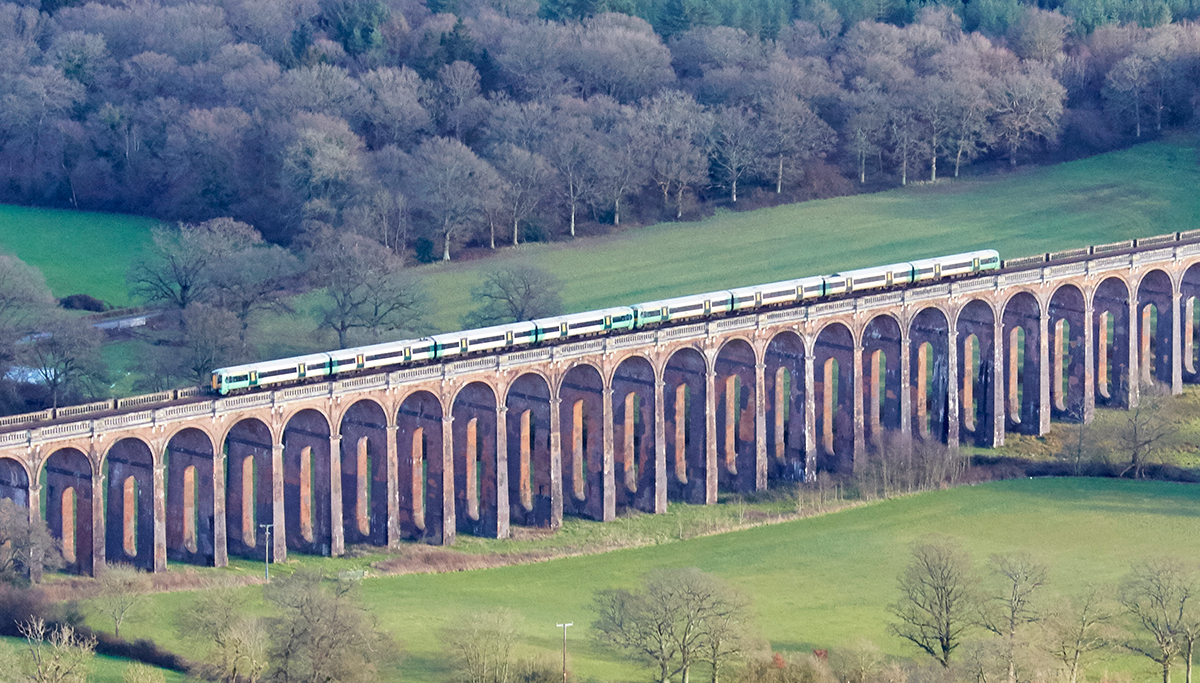
Joints in the abutment brickwork suggest that the original bridge was widened by the addition of one additional track on the east side. The current three tracks seem to be symmetrical on the deck, and there's no sign of the abutments ever having been longer.I thought there were 4 tracks reduced to 3 by BR in the mid 1980s. When the Trent Valley 4-tracking was done 20 years later I believe the 4th was not reinstated there because an M42 bridge built meanwhile had insufficient clearance.
I thought there were 4 tracks reduced to 3 by BR in the mid 1980s. When the Trent Valley 4-tracking was done 20 years later I believe the 4th was not reinstated there because an M42 bridge built meanwhile had insufficient clearance.
The station was originally built with two platforms but with the increase in traffic, particularly coal from the North Warwickshire Coalfields, a third line was installed - the up slow line - which resulted in an island platform being provided servicing both up lines.
This third line ran between Bulkington and Rugby and was opened on 14th August 1871. Initially this third line was purely used for goods traffic but was later upgraded as a 'slow line' in June 1876. The last twenty years of the 19th century saw an ever increasing amount of traffic resulting in the LNWR applying for permission to widen 13 miles, 4 furlongs, 2 chains of the Trent Valley line between Rugby and Nuneaton. However, other than the sections between Rugby and Brinklow, and Attleborough Sidings and Nuneaton, this was not carried out. More powerful locomotives and increased capacity elsewhere reduced the need for continuous quadruple track.
Brinklow - Attleborough (Nuneaton) only ever had three lines; no Down Slow - due to the proximity of the Oxford Canal.
The M42 crosses the Trent Valley at Tamworth, its 4 tracks there. Its 3 tracks where the M69 crosses it which opened in 1977. Its never been 4 tracks along there.I thought there were 4 tracks reduced to 3 by BR in the mid 1980s. When the Trent Valley 4-tracking was done 20 years later I believe the 4th was not reinstated there because an M42 bridge built meanwhile had insufficient clearance.

As an ex-HGV driver of nearly 3 decades, I find that suggestion both insulting and laughable to the true professional drivers. Probably quite unworkable too in the real world of today’s traffic issues. Part of being a professional is knowing your height, length, restrictions with ADR etc. It’s down to poor training and changing attitudes that make all classes of driver so bad now.PSV and HGV operators should not let drivers to plot their own routes from scratch - somebody should be tasked with route planning and providing the driver with the route to follow for every single trip, and also train them on how to use navigation software if they permit it to be used. That would prevent a lot of bridge strikes. I know a lot of things don't always go to plan with road blockages and closures which is why there should also be a procedure for a driver to call for help if stuck.
The major change, dating back to 1980 or so, was to introduce reversible signalling on the up fast, so that any one out of the three lines could be closed but allowing a two track railway to continue. Prior to the change, there was only one line signalled in the down direction. Before the change, the layout was as shown in the attachment here.The M42 crosses the Trent Valley at Tamworth, its 4 tracks there. Its 3 tracks where the M69 crosses it which opened in 1977. Its never been 4 tracks along there.
There are Sat Navs specifically for HGV. The dimensions of the truck have to be entered at set up. Possibly the details of several vehicles can be entered and stored as different profiles.
However one has to hope the trucker isn't distracted by their sat nav. The taxi driver the other day was clearly distracted at times.