• Our new ticketing site is now live! Using either this or the original site (both powered by TrainSplit) helps support the running of the forum with every ticket purchase! Find out more and ask any questions/give us feedback in this thread!

Wind Power and UK Energy Use

jon0844

Veteran Member
Joined
1 Feb 2009
Messages
30,887
Location
UK
Something that finally clicked for me is that I think a lesser-talked about reason why certain people seem reluctant to move away from fossil fuel stuff, whether by opposing buying electric cars or demanding more North Sea drilling, is an aversity to change. Yes there is propaganda and climate denialism, but a human mindset is living in the past and a fear that the next technology won't work for them.

Fortunately renewable tech has now developed to the point where a tipping point has been reached around the world that makes its adoption easy and more affordable. Oil prices above $100 a barrel are accelerating this even further (amazing how oil barons suddenly dislike the free market when alternatives are competing). Ironically Trump might be the best president for combating climate change to date.

Trump probably can't comprehend how much he's helped the entire world look to a future without reliance on fossil fuels. It isn't just people getting EVs, but also realising solar and wind are not bad things. They can now see the part gas plays in making electricity expensive. They can install solar and batteries and get an income from having them.

It will speed up companies switching company cars and vans to electric, and hopefully also industry to adopt solar and batteries to be more competitive in manufacturing. The services industry can also benefit from the cheaper electricity - especially for things like data centres.

We need oil for other things, but reducing the need for oil for anything where a viable alternative exists is going to happen whatever the lobbyists and shills say.
 
Sponsor Post - registered members do not see these adverts; click here to register, or click here to log in
R

RailUK Forums

Class 317

Member
Joined
7 Jul 2020
Messages
565
Location
Cotswolds
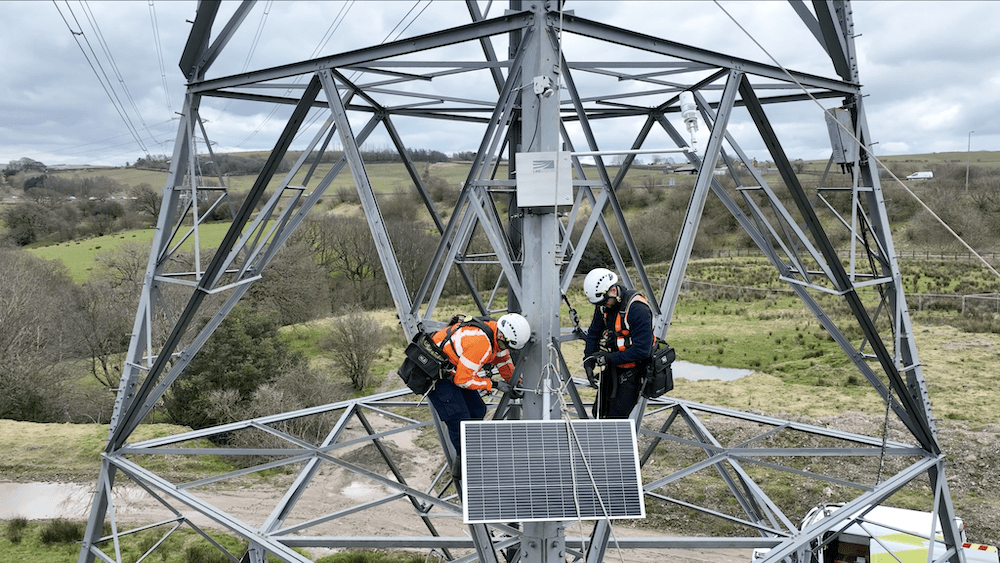
National grid have just signed a contract to use DLR on 475km of additional transmission lines. DLR is dynamic line rating, in essence using sensors to allow existing transmission lines to run at higher capacity. I can't find it being reported yet but its estimated to allow at least 8% more transmission over the year but would be a higher percentage in cold weather.

It should help to reduce the curtailment costs.
 

Trainbike46

Established Member
Joined
18 Sep 2021
Messages
4,372
Location
belfast
National grid have just signed a contract to use DLR on 475km of additional transmission lines. DLR is dynamic line rating, in essence using sensors to allow existing transmission lines to run at higher capacity. I can't find it being reported yet but its estimated to allow at least 8% more transmission over the year but would be a higher percentage in cold weather.

It should help to reduce the curtailment costs.
That's great to hear!

Last year there was an announcement about an earlier implementation across 275km, starting that entered service last summer.

Articles in the specialist press have reported that after this extra 475km becomes operational, more than 900km will have DLR, so this contract represents a doubling.


brad465

Veteran Member
Joined
11 Aug 2010
Messages
11,463
Location
Taunton or Kent
National grid have just signed a contract to use DLR on 475km of additional transmission lines. DLR is dynamic line rating, in essence using sensors to allow existing transmission lines to run at higher capacity. I can't find it being reported yet but its estimated to allow at least 8% more transmission over the year but would be a higher percentage in cold weather.

It should help to reduce the curtailment costs.
Can I point out I think that sort of acronym on a rail forum needs writing in full clarity first, rather than later in the post.
 

Simon11

Established Member
Joined
7 Nov 2010
Messages
1,389
Haha, I was thinking how on earth is Docklands Light Railway going to be supporting this!
 

The Ham

Veteran Member
Joined
6 Jul 2012
Messages
12,036
Some numbers for Solar:

Britain saw the highest number of solar installations in a decade in March, government data showed on Thursday, as ‌households moved to protect themselves from soaring energy prices due to the Iran conflict.

Data from the Department for Energy Security and Net Zero showed more than 27,000 solar installations were ⁠completed in March 2026 - the highest monthly total since 2012.

The increase was mainly driven by rooftop solar, with two thirds of installations being new solar panels on homes.

The March additions took the total number, including solar farms and rooftop installations across the UK, to more than two million.

April ‌also ⁠saw a new solar generation record, with output surpassing 15 gigawatts on Britain's electricity system for the first time.

April installations would likely have meant many were likely to do it anyway and larger projects (for example solar farms, businesses, community buildings, etc.) would have had been planned to happen since before the Iran issue.

Such a spike might see a lull at some point as those who were doing it anyway, but just brought it forward, may not be replaced by others buying panels.

Although, the more normal it is to see panels, the more people will want to have them. In that if there's only one set of panels in your neighborhood it's seen as something rare and probablyonly worth doing in the right circumstances. However, if there's panels on 4 out of 16 houses in your street, then people are gongto see that as normal and maybe they should get them too as clearly there's something worthwhile in getting them.
 

PMN1

Member
Joined
20 Sep 2013
Messages
61
I suppose this is sort of wind...though I thought I had seen it suggested a while back


For centuries, the gusts of air produced as Britain's trains rush around the country have been wasted – until now.

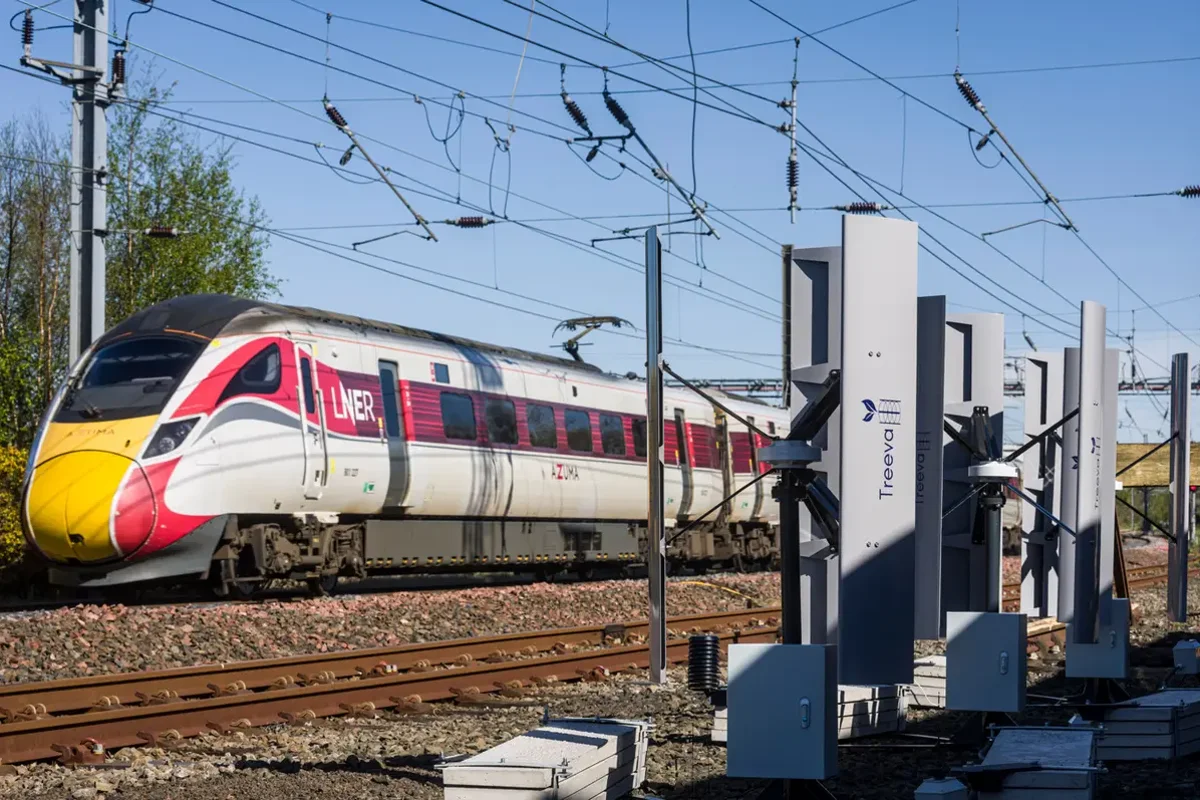
In a UK first, rail company LNER have installed three experimental wind turbines alongside the track, to harness the turbulent airflow blasted out by passing high-speed trains and turn it into electricity.

The turbines, named "Windiana Jones", "Sir Spins-a-lot", and "AC Breezy", have been installed alongside the East Coast Main Line at Hitachi Rail’s Craigentinny depot in Edinburgh by LNER and clean energy infrastructure firm Treeva.

The six‑foot‑tall devices, made from "upcycled materials", are the first turbines to be operated next to a UK main line. They require no grid connection, and their design allows for easy deployment on hitherto unused railway land close to the tracks.

Turbines-LNER.jpg


According to LNER, the trial could pave the way for a roll out of such technology "across Britain's rail network".

At this stage the clean energy the turbines produce will be harnessed, measured, and used to power a range of devices, enabling a better understanding of the potential power-generation opportunities available to rail operators.


"A single turbine can generate enough energy to power a third of a small station's lighting needs, four CCTV cameras, or run two passenger information screens," LNER said. "Five turbines have the capacity to reduce emissions of more than 12,000 kilograms of CO2 each year – the equivalent of planting 500 trees."

The project is the product of the Future Labs rail industry innovation scheme, which pairs rail operators with tech start‑ups to tackle industry challenges. Treeva, a graduate of the programme and winner of its People’s Choice Award, has been working with LNER to adapt its technology for rail environments.

“Our goal is to transform the way transport infrastructure is powered,” said Treeva co‑founder and chief executive Anjali Devadasan. “By capturing energy created by passing trains, we can turn unused land into a meaningful source of clean power and enable sustainable systems that pay for themselves within months.”

LNER’s Mark Haymer called the trial “a really exciting" step, which could make rail travel "even greener".

"Developing new ideas and solutions in any industry is always a challenge, but thanks to a strong partnership between Treeva, Hitachi, Network Rail, and LNER, we’ve delivered a successful and safe installation at Craigentinny. We’re looking forward to seeing how the turbines perform over the next six months," he said.

In 2019, a separate scheme was unveiled in which a solar array at Aldershot provided some of the power required for passing trains. The project, called "Riding Sunbeams", has been a success, prompting major interest in using further solar power on train lines, with Network Rail announcing last year that they were seeking suppliers.
 

brad465

Veteran Member
Joined
11 Aug 2010
Messages
11,463
Location
Taunton or Kent
I suppose this is sort of wind...though I thought I had seen it suggested a while back


For centuries, the gusts of air produced as Britain's trains rush around the country have been wasted – until now.

In a UK first, rail company LNER have installed three experimental wind turbines alongside the track, to harness the turbulent airflow blasted out by passing high-speed trains and turn it into electricity.

The turbines, named "Windiana Jones", "Sir Spins-a-lot", and "AC Breezy", have been installed alongside the East Coast Main Line at Hitachi Rail’s Craigentinny depot in Edinburgh by LNER and clean energy infrastructure firm Treeva.

The six‑foot‑tall devices, made from "upcycled materials", are the first turbines to be operated next to a UK main line. They require no grid connection, and their design allows for easy deployment on hitherto unused railway land close to the tracks.


According to LNER, the trial could pave the way for a roll out of such technology "across Britain's rail network".

At this stage the clean energy the turbines produce will be harnessed, measured, and used to power a range of devices, enabling a better understanding of the potential power-generation opportunities available to rail operators.


"A single turbine can generate enough energy to power a third of a small station's lighting needs, four CCTV cameras, or run two passenger information screens," LNER said. "Five turbines have the capacity to reduce emissions of more than 12,000 kilograms of CO2 each year – the equivalent of planting 500 trees."

The project is the product of the Future Labs rail industry innovation scheme, which pairs rail operators with tech start‑ups to tackle industry challenges. Treeva, a graduate of the programme and winner of its People’s Choice Award, has been working with LNER to adapt its technology for rail environments.

“Our goal is to transform the way transport infrastructure is powered,” said Treeva co‑founder and chief executive Anjali Devadasan. “By capturing energy created by passing trains, we can turn unused land into a meaningful source of clean power and enable sustainable systems that pay for themselves within months.”

LNER’s Mark Haymer called the trial “a really exciting" step, which could make rail travel "even greener".

"Developing new ideas and solutions in any industry is always a challenge, but thanks to a strong partnership between Treeva, Hitachi, Network Rail, and LNER, we’ve delivered a successful and safe installation at Craigentinny. We’re looking forward to seeing how the turbines perform over the next six months," he said.

In 2019, a separate scheme was unveiled in which a solar array at Aldershot provided some of the power required for passing trains. The project, called "Riding Sunbeams", has been a success, prompting major interest in using further solar power on train lines, with Network Rail announcing last year that they were seeking suppliers.
Technically these already exist in the form of the mini turbines with a solar panel found at junction boxes along the railway, which I'm guessing can harness train drafts. However these new "turbines" will definitely be more powerful.
 

eldomtom2

On Moderation
Joined
6 Oct 2018
Messages
2,383
I heard some people claim that these would create aerodynamic drag which would cancel out any energy gained from the turbine in increased power usage by the train. Evidently not if they're already used.
 

InTheEastMids

Established Member
Joined
31 Jan 2016
Messages
1,393
In a UK first, rail company LNER have installed three experimental wind turbines alongside the track
I remain pretty sceptical about small-scale wind, it's one of those whackamole technologies that pops up every few years with some start-up claiming to have solved all the problems. Trials are announced, but results are rarely heard about.

First red flag is when they talk about harnessing turbulent air. Wind turbines are bad at extracting energy from turbulent air. This is why wind works best offshore with very tall turbines - to access consistent wind flows that aren't being disrupted by trees, buildings etc, and why building mounted wind turbines never really took off (EST 2009 field trial demonstrated this)

Secondly, strong gusts from passing trains, even on a busy line are going to be a fraction of the time - e.g. suppose we put one next to the WCML down fast. A 260m Pendolino takes <5 seconds to pass at 125mph so maybe you get 10s of effect. Every 3 minutes for 16h/day is going to equate to less than 1h per day where output is being "boosted" by passing trains.

I guess the advantage of this system is a lack of blade flicker, limited risk of toppling onto the railway. That of course only helps if the things work.

They require no grid connection, and their design allows for easy deployment on hitherto unused railway land close to the tracks.
This is the critical point, if there's no power network, you don't care what grid electricity costs, instead it's the value the thing that is powered creates, or the value of displacing diesel generators. So there's solar-powered fuel price signs near some service areas. Their success is measured in extra petrol, coffee or petrol-station bouquets sold, and the cost avoided of sending a person to the roadside to top up the generators.

A single turbine can generate enough energy to power a third of a small station's lighting needs, four CCTV cameras, or run two passenger information screens," LNER said.
This give a bit of info about its output. Google suggests a PIS power consumption in the region of 100W - i.e. 200W average output, which typical output of micro-wind turbines does point to a rating of around 2kW. Although you could come up with a number between half and double that depending on what capacity factor you're using for the turbine, the specific PIS and perhaps whether the screen is assumed to be turned off for hours in the night.

Five turbines have the capacity to reduce emissions of more than 12,000 kilograms of CO2 each year – the equivalent of planting 500 trees.
This only makes sense if it's based on displacing diesel generator sets, as based on current DfT data, 12,000 kg of carbon saving needs 66,000 kWh of clean generation, which is >13000 kWh per turbine, an order of magnitude more than the above estimate and would put the turbine into 5-10kW class which the photos suggest it definitely isn't. the 12,000 falls to something like 1,500 if comparing against grid electricity.
 

HighlandStorm

Member
Joined
27 Sep 2024
Messages
162
Location
Inverness
Does anyone have any info on why this no longer shows any hydro power component for North of Scotland generation, it has been like this all through winter?


HSTEd

Veteran Member
Joined
14 Jul 2011
Messages
20,315
I heard some people claim that these would create aerodynamic drag which would cancel out any energy gained from the turbine in increased power usage by the train. Evidently not if they're already used.
Well no, that's not strictly true.

Even if they do cause a net loss of energy, they may still be worth it as a means of providing a power supply to some equipment that would be difficult to supply otherwise.

Their will likely not be a 1:1 increase in drag as they will capture energy that would otherwise have been dispersed into trees moving or other things in the general environment.

But it seems unlikely that they can meaningfully change railway energy consumption.
 

Bald Rick

Veteran Member
Joined
28 Sep 2010
Messages
35,801
NESO today published the reuslts of its connections reform process, on the back of yesterday announcing that over half of projects needed to hit 2030 targets have got firm grid connection offers

Headline is that 37GW of new capacity has confirmed connection offers, and it is all renewable or energy storage.


Together with Energy Networks Association (ENA) and network operators, we can confirm more than half (58%) of connection offers for transmission and distribution projects in the <2030 pipeline have now been issued as of 10 June.

The connection offers to ready-to-go energy projects, including offshore and onshore wind, solar, battery storage and hydro, amount to 37GW of new electricity capacity, supporting the energy generation and storage expansion required to deliver the government’s clean energy goals.

Today’s milestone marks a major step forward in the reforms to how energy ventures connect to Britain’s electricity networks, with a new pipeline of deliverable projects replacing the ‘first come, first served’ system that led to bottlenecks and delays.

So far, 713 of the 1,223 projects in the <2030 pipeline have received offers. The offers set out when and where projects can connect, and what enabling upgrades are needed on the transmission and distribution networks. This gives developers the certainty they need to move forward and unlock investment.

In total, the projects supported by this process could help unlock up to £40bn of annual clean energy investment, supporting economic growth while helping deliver a system that is reliable, clean and affordable for consumers.
 

Nicholas Lewis

Established Member
Joined
9 Aug 2019
Messages
8,005
Location
Surrey
NESO today published the reuslts of its connections reform process, on the back of yesterday announcing that over half of projects needed to hit 2030 targets have got firm grid connection offers

Headline is that 37GW of new capacity has confirmed connection offers, and it is all renewable or energy storage.

Just have to see how many now get built as majority haven't taken FID (Final Investment Decision) yet although the receipt of a Gate 2 offer should unlock that decision for many now.
 

Bald Rick

Veteran Member
Joined
28 Sep 2010
Messages
35,801
Just have to see how many now get built as majority haven't taken FID (Final Investment Decision) yet although the receipt of a Gate 2 offer should unlock that decision for many now.

agreed, my guess is that nearly all of it will get built. Solar+battery is just about the cheapest form of energy generation now.
 

Nicholas Lewis

Established Member
Joined
9 Aug 2019
Messages
8,005
Location
Surrey
agreed, my guess is that nearly all of it will get built. Solar+battery is just about the cheapest form of energy generation now.
If only the sun shone all day it would be but at a system level you still have to factor in the cost of alternative generation. Personally I would be mandating new solar to have 4hrs BESS so we don't end up constraining power off when its sunny windy day.
 

Nottingham59

Established Member
Joined
10 Dec 2019
Messages
3,332
Location
Nottingham
If only the sun shone all day it would be but at a system level you still have to factor in the cost of alternative generation.
Agreed. But the capital cost of alternative generation is relatively small compared to the capital cost of a windfarm. If you only use it occasionally, the cost of the fuel is minor.
 

Nicholas Lewis

Established Member
Joined
9 Aug 2019
Messages
8,005
Location
Surrey
Agreed. But the capital cost of alternative generation is relatively small compared to the capital cost of a windfarm. If you only use it occasionally, the cost of the fuel is minor.
Yesish but you still need all the fixed infrastructure in place and that gets reflected in the overall cost of generation as they still face having to pay transmission charges as they are charged by MW connected not energy sent out.
 

edwin_m

Veteran Member
Joined
21 Apr 2013
Messages
28,654
Location
Nottingham
Is there an unbiased comparison somewhere of whole-life cost of a renewables strategy with appropriate levels of energy storage and thermal backup, against one that relies fully on thermal instead?
 

Nicholas Lewis

Established Member
Joined
9 Aug 2019
Messages
8,005
Location
Surrey
Is there an unbiased comparison somewhere of whole-life cost of a renewables strategy with appropriate levels of energy storage and thermal backup, against one that relies fully on thermal instead?
Not that Ive ever seen views are very polarised to pro renewables or fossil fuels based. Actually neither groupings really help themselves as the reality is even if renewables are capable of powering all demand (im not convinced) the journey to get there is still long. Thus we need an approach that recognises gas remains central to electricity generation but in diminishing quantities year on year and an environment that is conducive to supporting gas generation. The risk is owners walk away as they wont generate sufficient income to cover their costs and we will be left with insufficient standby generation cable of covering a dark winters night with low wind output.
 

Class 317

Member
Joined
7 Jul 2020
Messages
565
Location
Cotswolds
There are quite a few studies out there. It's the last 10% of generation when it's not windy or sunny that is very expensive to replace with renewables plus back up generation.
 

Trainbike46

Established Member
Joined
18 Sep 2021
Messages
4,372
Location
belfast
Not that Ive ever seen views are very polarised to pro renewables or fossil fuels based. Actually neither groupings really help themselves as the reality is even if renewables are capable of powering all demand (im not convinced) the journey to get there is still long. Thus we need an approach that recognises gas remains central to electricity generation but in diminishing quantities year on year and an environment that is conducive to supporting gas generation. The risk is owners walk away as they wont generate sufficient income to cover their costs and we will be left with insufficient standby generation cable of covering a dark winters night with low wind output.
The government already has a system for ensuring sufficient generation capacity stays on the market, and this has existed for years. It is known as the capacity market, and during the coal phase-out it ensured the coal power stations closed gradually and as they became unnecessary, instead of all at once and before the replacement generating capacity came online. The same will apply for gas power stations.

There have actually been a few new gas power stations, designed for rapid up and downrating to help supply match demand, over the last few years, and it is likely that the ability to get a contract under the capacity market was a key reason for those stations being built at all.
 

Nicholas Lewis

Established Member
Joined
9 Aug 2019
Messages
8,005
Location
Surrey
The government already has a system for ensuring sufficient generation capacity stays on the market, and this has existed for years. It is known as the capacity market, and during the coal phase-out it ensured the coal power stations closed gradually and as they became unnecessary, instead of all at once and before the replacement generating capacity came online. The same will apply for gas power stations.

There have actually been a few new gas power stations, designed for rapid up and downrating to help supply match demand, over the last few years, and it is likely that the ability to get a contract under the capacity market was a key reason for those stations being built at all.

== Doublepost prevention - post automatically merged: ==

It does but it failed to secure enough coal fire generation and they had to additionally deploy Supplemental Balancing Reserve (SBR) as ruse to keep them available at the capacity mkt price wasn't sufficient to cover their fixed costs. Since we've had several new interconnectors and allowed batteries into the capacity mkt as well and they are now depressing the capacity mkt price again. The outcome here is operators could choose to void their capacity mkt contract if economics go against them and we would need to instigate something along the lines of SBR again. Actually other commentators with far deeper knowledge advocate that the govt takes control of the CCGT assets to ensure they stay available as strategic assets.
 
Last edited:

ainsworth74

Forum Staff
Staff Member
Global Moderator
Joined
16 Nov 2009
Messages
31,094
Location
Redcar
The risk is owners walk away as they wont generate sufficient income to cover their costs and we will be left with insufficient standby generation cable of covering a dark winters night with low wind output.

I almost wonder if there isn't a need for some sort of, probably state owned (even if at an arms length like Network Rail), organisation whose role is to provide that standby generation capacity as cheaply and efficiently as possible but isn't intended to be a profit making exercise so won't need to "walk away" if somewhere like Pembroke B can't be kept on profitably but would still be very useful from a grid point of view. A reasonable amount of generation can probably be run on a commercial basis (it certainly does elsewhere!) but it feels like there's bit that we really need where it it just going to be cheaper and more efficient to have non-profit seeking body do it. You could perhaps call it the Central Electricity Generating Board Authority :lol: ;)
 

AndrewE

Established Member
Joined
9 Nov 2015
Messages
7,338
I almost wonder if there isn't a need for some sort of, probably state owned (even if at an arms length like Network Rail), organisation whose role is to provide that standby generation capacity as cheaply and efficiently as possible but isn't intended to be a profit making exercise so won't need to "walk away" if somewhere like Pembroke B can't be kept on profitably but would still be very useful from a grid point of view. A reasonable amount of generation can probably be run on a commercial basis (it certainly does elsewhere!) but it feels like there's bit that we really need where it it just going to be cheaper and more efficient to have non-profit seeking body do it. You could perhaps call it the Central Electricity Generating Board Authority :lol: ;)
That is exactly what
Actually other commentators with far deeper knowledge advocate that the govt takes control of the CCGT assets to ensure they stay available as strategic assets.
is saying. I have read that too, and like the idea very much... The main problem is that it will be seen as "Nationalisation" or the rebirth of state monopolies (and damned in the propaganda press) - except it wouldn't be. It would deprive some investors of big returns, but be far better for all the rest of us.
 

Brubulus

Member
Joined
13 Oct 2022
Messages
974
Location
Cambridge
I almost wonder if there isn't a need for some sort of, probably state owned (even if at an arms length like Network Rail), organisation whose role is to provide that standby generation capacity as cheaply and efficiently as possible but isn't intended to be a profit making exercise so won't need to "walk away" if somewhere like Pembroke B can't be kept on profitably but would still be very useful from a grid point of view. A reasonable amount of generation can probably be run on a commercial basis (it certainly does elsewhere!) but it feels like there's bit that we really need where it it just going to be cheaper and more efficient to have non-profit seeking body do it. You could perhaps call it the Central Electricity Generating Board Authority :lol: ;)
Fundamentally you are facing the same realities, regardless of if it's owned by the state or the private sector and the fixed costs of maintaining such plants are high and that is simply a reality of the electricity decarbonisation path we have chosen that there will effectively be a secondary backup generation network of gas plants.
 

ainsworth74

Forum Staff
Staff Member
Global Moderator
Joined
16 Nov 2009
Messages
31,094
Location
Redcar
That is exactly what

is saying. I have read that too, and like the idea very much... The main problem is that it will be seen as "Nationalisation" or the rebirth of state monopolies (and damned in the propaganda press) - except it wouldn't be. It would deprive some investors of big returns, but be far better for all the rest of us.
Ah yes fair, probably should have read on before replying! :oops:
Fundamentally you are facing the same realities, regardless of if it's owned by the state or the private sector and the fixed costs of maintaining such plants are high and that is simply a reality of the electricity decarbonisation path we have chosen that there will effectively be a secondary backup generation network of gas plants.
Sure but can't help but wonder if the public sector does it those costs are going to be better ameliorated when there isn't also a need to seek a profit. You're role is to provide standby power as cheaply and efficiently as possible. It is annoying if that plant stands idle for 10 months of the year making no money but it doesn't sink your business and therefore you don't need to price it in such a way as that you can cover all your running costs and profit margin for the 2 months of the year it might actually operate!
 

JamesT

Established Member
Joined
25 Feb 2015
Messages
4,857
Sure but can't help but wonder if the public sector does it those costs are going to be better ameliorated when there isn't also a need to seek a profit. You're role is to provide standby power as cheaply and efficiently as possible. It is annoying if that plant stands idle for 10 months of the year making no money but it doesn't sink your business and therefore you don't need to price it in such a way as that you can cover all your running costs and profit margin for the 2 months of the year it might actually operate!
Surely it requires all the running costs regardless of who owns it? The issue for standby plants is that you simply can't be as efficient if you need to ramp up and down on demand as a plant that runs continuously.

https://lordslibrary.parliament.uk/renewable-energy-costs/ appears to be a reasonably unbiased look at renewables from 2024. Figure 2 is interesting as it suggests the costs of renewables double if you apportion all the indirect costs of the renewables to them, rather than the headline direct figure.
 

Nicholas Lewis

Established Member
Joined
9 Aug 2019
Messages
8,005
Location
Surrey
As of todays 1700 settlement period virtually no gas was scheduled to dispatch due to high wind and solar output but because of the grid constraints in Scotland NESO has had dispatch multiple gas plants onto the system. Its paying c£30/MWhr to windfarms to shut down and £140/MWh to £215/MWh to CCGTs to ramp up. Yes price of gas is elevated due to Hormuz debacle but there is also a lot in the price to cover ramping up as CCGTs are only highly efficient when running stably at full load and they only get dispatched for 30mins. Of course reality is they will be redispatched every 30mins so are really taking advantage but thats market design.

Then the other nonsense we get is all but the French i/c's are in export mode currently as energy traders know that wholesale price would be depressed with forecast high renewable output so they bid to take that power and sell it in Europe. Thing is they dont have to pay the actual system costs for doing so. The battery operators equally benefit from low wholesale prices.

The CEGB would have run the system for least cost the current market design doesnt deliver that for consumers.
 

Top