• Our new ticketing site is now live! Using either this or the original site (both powered by TrainSplit) helps support the running of the forum with every ticket purchase! Find out more and ask any questions/give us feedback in this thread!

UK switching to electric vehicles discussion

The Ham

Veteran Member
Joined
6 Jul 2012
Messages
12,021
With an EV, given you just plug in for a few seconds then go off and do something else, it's the easiest by far in my opinion. And I've been driving for a long time, so nobody can tell me that it's better to fill up a tank quickly - I've been there and done that probably thousands of times and don't miss it one bit.

It's certainly nicer to be sat (or stretching my legs) looking at an orchard having a drink and snack having been to the loo than standing in a smelly petrol forecourt, before then having to go to the loo and maybe saving 15 minutes on a 4 hour journey (maybe 25 minutes if we left with a full tank and just drove it without a break).

However, we always have at least 50% charge every morning (more than enough for a second days of typically travel, even though the range is only just sub 200 miles and my wife's commute is around a 50 mile round trip, so quite high compared to many, but then she only does it 3 days a week).

As such, we just plug the car in upon arrival at home (30 seconds, about 5 times a fortnight, 2.5 minutes) every other day, without having to fill up every fortnight (3 minutes, if we are passing a petrol station and not having to fill up and having to make a special trip).
 
Sponsor Post - registered members do not see these adverts; click here to register, or click here to log in
R

RailUK Forums

Snow1964

Established Member
Joined
7 Oct 2019
Messages
11,012
Location
West Wiltshire
The car infrastructure has moved on loads, with lots of places to charge between London and Penzance (there's a bit of a gap in choice options through the Black down Hills, but that's due to be down graded and traffic sent to Taunton, so why would anyone look to invest there).

That is very different to 2 years ago when there was noticeably less (we were considering a replacement car and so looked at EV charging and it was OK but there was a greater risk of finding a lack of chargers at sites and fewer sites to pick from).
Exactly, whereas 2 or 3 years ago had to allow for deviations on long journeys to visit rapid chargers, now they are all over the country.

Currently 6953 locations with rapid (50-149 Kw) or ultra rapid (150+Kw) and these sites have 28,374 chargers. An extra 285 were added in a month (May).

So now easy to do quick top ups all over the country and getting close to point where rapid & ultra rapid charging locations is catching up and might overtake number of petrol station locations (about 8300)


Overall, if include all public chargers, including slow (upto 8Kw) and normal fast (9-49 Kw) there are now 121,262 chargers at 46,664 locations

Data from zap map


Stephen42

Member
Joined
6 Aug 2020
Messages
803
Location
London
I would have thought it was quite easy to electrify long-distance lorries given there are required breaks at regular intervals, which could be ample time to charge up at those rest times.

To me, the big challenge isn't packing in the biggest battery possible in a lorry but having lots of places to charge when you need to park up for your rest break.
Exactly and the cost of that rapid charging being cost effective compared to diesel. From a low base, the number of battery HGVs doubled from end of 2023 to end of 2025. About 1 in 360 HGVs were battery at end of December 2025.

If anything the segment of concern would be motorbikes. They are further ahead in up take than HGVs but the number of battery motorbikes have been consistently decreasing over the last year. That's going to mostly be range issues with limited space/weight available for bigger batteries.
 

jon0844

Veteran Member
Joined
1 Feb 2009
Messages
30,836
Location
UK
An influencer friend did some work for a couple of electric motorcycle companies, and it seems the big problem isn't so much electrifying a motorcycle but the disinterest from the motorcycling community.

It seems few bikers want one, and part of that is probably the lack of noise - because when it comes to power and acceleration, they're crazy fast.

Assisted bicycles are fine but once you're making something that looks like a motorcycle you have a totally different audience to convince and thus far it isn't going well.
 

SargeNpton

Established Member
Joined
19 Nov 2018
Messages
1,704
An influencer friend did some work for a couple of electric motorcycle companies, and it seems the big problem isn't so much electrifying a motorcycle but the disinterest from the motorcycling community.

It seems few bikers want one, and part of that is probably the lack of noise - because when it comes to power and acceleration, they're crazy fast.

Assisted bicycles are fine but once you're making something that looks like a motorcycle you have a totally different audience to convince and thus far it isn't going well.
Very few electric motorcycles are currently available for road use. Of those perhaps the best known is Livewire. It's Alpinista model is marketed as a sports tourer with a "City" range of 143 miles. However, get it out onto the open road and the effective range is less than 100 miles. Not good enough for a tourer!

Most of the rest are just commuter bikes with 40-80 miles range. Until the open road range gets up to at least 150 miles I don't see sales increasing.
 

jon0844

Veteran Member
Joined
1 Feb 2009
Messages
30,836
Location
UK
Very few electric motorcycles are currently available for road use. Of those perhaps the best known is Livewire. It's Alpinista model is marketed as a sports tourer with a "City" range of 143 miles. However, get it out onto the open road and the effective range is less than 100 miles. Not good enough for a tourer!

Most of the rest are just commuter bikes with 40-80 miles range. Until the open road range gets up to at least 150 miles I don't see sales increasing.

But the issue is more about convincing bikers to switch. They're more like people who buy performance cars and won't consider electric.

Those who just ride for things like commuting may well switch and some may be happy with a regular assisted bicycle.

I've seen a few electric mopeds for deliveries (proper ones with lights, registration etc) and that market may grow - but motorcycles seem like a very different beast.

Range can hopefully be solved by better integration of the batteries (structurally) and higher energy densities, plus improving charging technology so they can accept a higher power rate to top up quickly, so the tech will improve.
 

Peter Sarf

Established Member
Joined
12 Oct 2010
Messages
9,559
Location
Croydon
But the issue is more about convincing bikers to switch. They're more like people who buy performance cars and won't consider electric.

Those who just ride for things like commuting may well switch and some may be happy with a regular assisted bicycle.

I've seen a few electric mopeds for deliveries (proper ones with lights, registration etc) and that market may grow - but motorcycles seem like a very different beast.

Range can hopefully be solved by better integration of the batteries (structurally) and higher energy densities, plus improving charging technology so they can accept a higher power rate to top up quickly, so the tech will improve.
It seems EVs as cars are always heavier than the ICE equivalent ?.

For a vehicle with only two wheels so requiring the rider to keep it upright the weight becomes a very important consideration.

Anyway I doubt motorcycles are a big proportion of the emission problem. But users of ICE motorcycles might suffer when there are fewer ICE cars and so fewer filling stations.
 

The Ham

Veteran Member
Joined
6 Jul 2012
Messages
12,021
It seems EVs as cars are always heavier than the ICE equivalent ?.

For a vehicle with only two wheels so requiring the rider to keep it upright the weight becomes a very important consideration.

Anyway I doubt motorcycles are a big proportion of the emission problem. But users of ICE motorcycles might suffer when there are fewer ICE cars and so fewer filling stations.

Given that there's (roughly):
0.5 million HGV's
1.5 million motorcycle
34.5 million cars

Even on that basis, their emissions are likely to be low.

However, if you look at the billion miles travelled by each:
3.0 motor cycles
16.3 HGV's
262.4 cars

Then it's obvious that whilst a shift is needed, other areas are of more concern to shift fast.

That said, around 1% of motorcycles are EV's so maybe around 5 years behind where cars are at (currently around 6% of fleet size, but was at a similar level at the start of 2021).

------------------------------------------------

Changing back to cars, one thing we did recently was our 240 mile trip to see family on the bank holiday, whilst we used two stops (rather than one) to give us flexibly if there was a lack of chargers.

At the first stop when we turned up there was 2 of 2 free, but others nearby (100m walk from where we planned to have breakfast).

At the second, there was always at least 5 out of 14 free and whilst that wasn't where we stopped for lunch (which did have chargers but were being used in larger numbers) the second charge was only about 10 minutes (and not much longer than the loo break we took there).

As such, even on a very busy travel day, access to chargers wasn't an issue, even on the travel down the A303/A30 at the start of half term.
 

jon0844

Veteran Member
Joined
1 Feb 2009
Messages
30,836
Location
UK
Changing back to cars, one thing we did recently was our 240 mile trip to see family on the bank holiday, whilst we used two stops (rather than one) to give us flexibly if there was a lack of chargers.

At the first stop when we turned up there was 2 of 2 free, but others nearby (100m walk from where we planned to have breakfast).

At the second, there was always at least 5 out of 14 free and whilst that wasn't where we stopped for lunch (which did have chargers but were being used in larger numbers) the second charge was only about 10 minutes (and not much longer than the loo break we took there).

As such, even on a very busy travel day, access to chargers wasn't an issue, even on the travel down the A303/A30 at the start of half term.

Did you use an app that shows how many chargers are free in real-time? I find that's a very useful service, and some apps like A Better Route Planner can send you somewhere else if they're all full I believe (not sure if it's automatic or asks you - because thus far I've never been to a site that was full*).

* The only time I've had to queue in a year was when a Tesla site went out of action and everyone drove to the next nearest, and even then it was a case of waiting about 10 minutes. I've never been sure how the etiquette works when they're all full because cars may come from different sides on a road - but it was a bit like queueing at a bar with everyone seemingly working out who was next. Suffice to say, we did as quick a charge as possible as a courtesy to others.
 

The Ham

Veteran Member
Joined
6 Jul 2012
Messages
12,021
Did you use an app that shows how many chargers are free in real-time? I find that's a very useful service, and some apps like A Better Route Planner can send you somewhere else if they're all full I believe (not sure if it's automatic or asks you - because thus far I've never been to a site that was full*).

* The only time I've had to queue in a year was when a Tesla site went out of action and everyone drove to the next nearest, and even then it was a case of waiting about 10 minutes. I've never been sure how the etiquette works when they're all full because cars may come from different sides on a road - but it was a bit like queueing at a bar with everyone seemingly working out who was next. Suffice to say, we did as quick a charge as possible as a courtesy to others.

We do use an app which tells is real time (although there can be a bit of a lag between different apps), which is a useful tool.

Although, we try and find locations where there's a second site nearby as a fall back.

For example at Wincanton we'd use the McDonald's (2 chargers) as our preference, but there's a few chargers at Starbucks (recently reopened, as had been a KFC) about 100m away which means that we should always get to charge.

As I said, we didn't need it as we had the choice of both chargers at McDonald's when we got there. Even though thesecond charger was in use as we got back to the car they were still only just plugging into the second charger at that point and so we left within maybe 5 minutes.
 

Snow1964

Established Member
Joined
7 Oct 2019
Messages
11,012
Location
West Wiltshire
Indeed, If market share keeps growing at current rates in 5 years EV's will be somewhere between 20 and 25% of cars on the roads.
And with all the new small EVs it could change the size balance. For last few years small hatchbacks models have tended to be discontinued from sale new, with very few new models. Consequently many smaller second cars tend to be older. A sector that is now booming with replacements.

What might happen is people with 2 cars replace their runaround, use it more and use their big family car less. If during transition therea choice of using big car that expensive to fuel or EV with cheap overnight electricity in the family then might be usage percentage outgrows volume percentage.

This year (Jan-May) already 220,629 EVs sold, so likely to be around 550k for whole of 2026. As recent months have seen about 27% EV (and trending upwards) likely to be 3-4m more EVs in 5 years, and possibly more like 5-7m more. So totally agree with you.


dcbwhaley

On Moderation
Joined
4 Aug 2018
Messages
827
Exactly, whereas 2 or 3 years ago had to allow for deviations on long journeys to visit rapid chargers, now they are all over the country.

Currently 6953 locations with rapid (50-149 Kw) or ultra rapid (150+Kw) and these sites have 28,374 chargers. An extra 285 were added in a month (May).

So now easy to do quick top ups all over the country and getting close to point where rapid & ultra rapid charging locations is catching up and might overtake number of petrol station locations (about 8300)


Overall, if include all public chargers, including slow (upto 8Kw) and normal fast (9-49 Kw) there are now 121,262 chargers at 46,664 locations

Data from zap map

Compared with 60,000 fuel pumps in 8,000 locations.
But I still seem to see more fuel stations than charging stations on my travels
 

jon0844

Veteran Member
Joined
1 Feb 2009
Messages
30,836
Location
UK
The traditional petrol station has usually been well marked at the side of a road, or in most large supermarkets.

EV chargers are often away from the main roads in places like retail parks, other car parks or even industrial estates.

For sites with maybe just 3 or 4 charging bays they're somewhat smaller to see. Indeed even a 10-20 bay site can be pretty small unless they've built facilities around it such as Gridserve.
 

The Ham

Veteran Member
Joined
6 Jul 2012
Messages
12,021
Compared with 60,000 fuel pumps in 8,000 locations.
But I still seem to see more fuel stations than charging stations on my travels

EV's make up 6% of cars on the road so to be comparable the ratio should be 1:17.

There's 28,000 rapid chargers vs 60,000 fuel pumps, that's a ratio of roughly 1:2.

Now even allowing for EV's needing to charge for 25 minutes vs a much faster refuel for petrol a car can occupy a petrol pump for around 3 minutes and be comparable.

Only a lot of milage done by EV's is done from charging at home and so the demand for away from home top ups for EV's is much lower.

Anyway, the reason you don't notice the EV charging points vs fuel stations is historic. No one is particularly interested in creating an app which best creates a driving route - even if you could save money - when range is less of an issue and most people are interested in convenience and you can see the large signs from a good distance away.
 

Bald Rick

Veteran Member
Joined
28 Sep 2010
Messages
35,571
This year (Jan-May) already 220,629 EVs sold, so likely to be around 550k for whole of 2026. As recent months have seen about 27% EV (and trending upwards) likely to be 3-4m more EVs in 5 years, and possibly more like 5-7m more. So totally agree with you.

Assuming 5m, and also assuming average mileage and average miles per kWh, that will need an average of 1.5GW of generating capacity.

Fortunately, we will significantly exceed that, even allowing for average capacity factors of wind and solar, and that Hinckley Point C doesn’t generate before 2032.
 

Mawkie

Established Member
Joined
17 Feb 2016
Messages
1,242
BYD Flash Charging: live demo, UK roll out, prices and all your questions answered

Auto Express was at the UK launch of the BYD Flash Charging that charges a large battery (122 kWh, my Tesla for example is 75ish kWh) in 9 minutes.

Is this the gamechanger the diehards have been waiting for? Interestingly, BYD have chosen to install battery packs on-site, with slow recharging overnight. This serves the twin purposes of being able to buy electricity at cheaper prices, but more importantly I suspect, avoid the very long waits for power upgrades to arrive on site - sometimes years, if at all.

The article states power is supplied via a single CCS cable, but I seem to remember a video where both CCS ports on compatible vehicles are used for maximum power delivery.

Article linked above, quoted below.
The holy grail of EVs – recharging as quick as filling a petrol car – is a step closer, with BYD undertaking the first ever Flash Charging demonstration in the UK.
Auto Express was present at BYD’s Uxbridge headquarters to witness a Z9GT, the launch car for its premium Denza range, recharge its huge, 122kWh battery from 10 to 97 per cent full in eight minutes and 58 seconds.

Even more significantly, BYD is targeting a 50 pence per kWh unit cost for drivers of its cars, slashing around 30p off chargepoint operators’ (CPOs) current rate. The Chinese EV and battery giant is also promising to roll out 300 Flash Chargers in the British Isles by the end of 2027, at its dealers, refuelling stations and retail outlets.
We’ve spoken exclusively to the executive planning the network, Diego Pareschi, to bring you this definitive guide to BYD’s Flash Charging.

How does Flash Charging work – and how fast is it?​

BYD – which rose to prominence as a battery maker and claims to file 52 patents a week – has developed T-shaped Flash Chargers, which can deliver up to 1,500kW (1.5-megawatts) – three-to-four times the current ultrarapid charging gold standard – through a single CCS connector.
This mega-charging is enabled by two on-site storage batteries, each capable of harvesting two megawatts, so four megawatts in total. This storage solution is crucial given the huge UK backlog to get high-power grid connections: BYD claims the big batteries can be charged by a modest 200kW connection, overnight when demand is low and energy is cheapest, ready for the electricity to be utilised the next day.

BYD’s Flash Charging sales pitch is ‘Ready in 5, Full in 9, Cold Add 3’. In five minutes, the Z9GT should charge from 10 to 70 per cent: in the live demonstration, the posh Denza came up just short at 66 per cent full, though its 249-mile projected range would cover the distance from London to Newcastle-Upon-Tyne.
The car was 97 per cent full within nine minutes, for a 363-mile range. Freezing temperatures can drag out typical EV refuelling way past 60-minutes, but at –30C, BYD reckons Flash Charging only adds a further three to get from 20 to 97 per cent. That’s because of the second critical component alongside the chargers – BYD’s next-gen batteries, whose chemistry is less vulnerable to extreme temperatures.

What is BYD’s Blade Battery 2.0 and which cars is it in?​

BYD’s first ‘blade’ battery was launched in 2020, and its name comes from its horizontal, lithium iron phosphate cells packaged across the battery like razor blades. The Blade 2.0 introduces ‘high speed channels’ for the lithium-ions, smoothing their passage through the ground-breaking electrolyte from cathode to anode.

“Moving very efficiently in a very smooth way generates less heat, and heat is the number one enemy of charging fast,” said Pareschi. “If the system doesn't overheat, you can inject much more energy [to recharge].”

The second-gen blade battery powers three Denza models – the Z9GT, D9 MPV and B5 SUV – launching in the UK in 2026. The first two come with a choice of pure electric or plug-in hybrid powertrains, the SUV is only available with petrol/electric power.
BYD sees Flash Charging as a USP to help Denza attract premium EV buyers, with Porsche’s Taycan an obvious rival to the Z9GT. Denza owners should get 18-months of free Flash Charging when they purchase a car.
But the Blade battery 2.0 is beginning to power BYD cars in China too, with the replacement Atto 3 already on sale with the new battery. Expect these batteries to be widely adopted by new BYDs coming to the UK market.

Can any EV driver use Flash Chargers?​

Unlike the Tesla Supercharger network in its infancy, the Flash Charging network will not be exclusive to BYD and Denza owners: “[regulators compel] networks to be open for everyone,” Pareschi told Auto Express. “This is good, because our overall mission is to enable the transition to clean-air technologies. But we will incentivize the use of stations for Flash Charging-compatible vehicles.”

There are a number of levers BYD could pull to stop slow-charging EVs hampering throughput. They are likely to face higher rates, with Denza and BYD drivers getting the cheapest price.
All cars will probably face a 10-minute maximum charge time. This will also help anyone queuing to understand how long it will take to get on a charger, although BYD’s built-in navigation may also include a reserve function.
The user experience is claimed to be seamless, with owners signing in to an app downloaded in the car which will trigger the charge and handle automatic payments. All owners need to do is slide the cable along the overhead bar, and plug the CCS connector into the car for the magic to start.

Where will Flash Chargers be sited – and how much will they cost?​

BYD’s vision is to have its initial 300 UK chargers ideally spaced about 50km (31 miles) apart. Theoretically the simplest to install will be at BYD and Denza retailers.
UK country manager Bono Ge reckons up to 40 of the company’s 144 retailers already have the requisite power supply boxed off; they have been asked to begin the planning permission process. All Denza retailers will have one, as BYD thinks a Flash Charging demonstration will help close deals.

BYD is also in discussion with chargepoint operators, to form partnerships where it can upgrade obsolete charger connections. But Ge admitted it’s “a challenge to get a commercial agreement with the CPOs”.
“If we set up the charger on their site, they charge 79p and I charge 50p, they will kill me, right? We will probably offer a special rate for the BYD customers, then we need to match their price for the non-BYD customers.”
Pareschi said BYD was looking at multiple arrangements, including paying rent. But CPOs, who are struggling to make money with their massive investment costs, may like the idea of Flash Chargers attracting EV drivers to their sites – and picking up the overflow if the T-chargers are busy. BYD will definitely look to muscle its way into motorway services, which will necessitate doing a deal with Gridserve.

The third location target is retail, such as supermarkets. InstaVolt has nurtured its network by partnering with the likes of McDonalds and Starbucks – and BYD is set to follow suit.
BYD knows relying on new grid connections would be a massive bottleneck. “We will try to keep [those] to as few as possible, because it could easily add two years,” Pareschi told us. “We will focus on existing grid connections and upgrading them, and an alternative is to put in more [battery] storage.”
So what’s the budget for the roll-out of 3,000 charging stations across Europe? “It’s a really significant amount of money, the biggest investment in charging infrastructure ever done in Europe,” replied the Italian engineer, who spearheaded charger development at tech company ABB before joining BYD. Bono Ge estimates each charger install will cost from £500,000 to £1-million, depending on the scope of individual projects.
The first of Europe’s 3,000 Flash Chargers is due to kick off the roll-out in Italy in mid-June.

 

jon0844

Veteran Member
Joined
1 Feb 2009
Messages
30,836
Location
UK
BYD Flash Charging: live demo, UK roll out, prices and all your questions answered

Auto Express was at the UK launch of the BYD Flash Charging that charges a large battery (122 kWh, my Tesla for example is 75ish kWh) in 9 minutes.

Is this the gamechanger the diehards have been waiting for? Interestingly, BYD have chosen to install battery packs on-site, with slow recharging overnight. This serves the twin purposes of being able to buy electricity at cheaper prices, but more importantly I suspect, avoid the very long waits for power upgrades to arrive on site - sometimes years, if at all.

The article states power is supplied via a single CCS cable, but I seem to remember a video where both CCS ports on compatible vehicles are used for maximum power delivery.

Article linked above, quoted below.

Once EV charging is super fast and comparable to filling up a tank, you can be sure that the anti-EV brigade are going to say 'Who needs such fast charging? You'll be wanting to stretch your legs and go to the toilet anyway'.
 

HSTEd

Veteran Member
Joined
14 Jul 2011
Messages
20,262
Saw 2 x HGV EVs today.
Yes, they are around, but they do remain exceptionally rare in Britain at present - compared to regular cars where the transition is proceeding rapidly.

Personally, I would suggest we should relax the weight and length limits for battery electric HGVs to speed adoption to something resembling the Swedish go-anywhere length norm (~25.5m and ~60 tonnes). Although that would probably require a specialised driving licence to assuage safety concerns.
 

SargeNpton

Established Member
Joined
19 Nov 2018
Messages
1,704
Yes, they are around, but they do remain exceptionally rare in Britain at present - compared to regular cars where the transition is proceeding rapidly.

Personally, I would suggest we should relax the weight and length limits for battery electric HGVs to speed adoption to something resembling the Swedish go-anywhere length norm (~25.5m and ~60 tonnes). Although that would probably require a specialised driving licence to assuage safety concerns.
Increase the length and there will be more roads that they are unable to drive down. Increase the weight and the already badly maintained roads will wear out even more.
 

HSTEd

Veteran Member
Joined
14 Jul 2011
Messages
20,262
Increase the length and there will be more roads that they are unable to drive down. Increase the weight and the already badly maintained roads will wear out even more.
The normal calculus on road damage is it scales by a power of axle weight, increasing the length of the vehicles will most likely increase the number of axles as fast or faster than it increases the weight - so road damage will not increase per tonne of material moved. It may even decrease due to fewer cab/tractor units needed.

As to length.... these longer vehicles are double articulated so vehicle length is not an enormous issue - and if the hauliers can't reach their destination they probably won't try.

EDIT:

A 6-axle 44 tonne HGV has an axle weight more or less identical to an 8-axle ~60t HGV combination. This normally takes the form of a "regular" 6-axle HGV hauling a two axle second trailer, typically with a ~20ft long swap body on it.
 
Last edited:

telstarbox

Established Member
Joined
23 Jul 2010
Messages
6,361
Location
Wennington Crossovers
Compared with 60,000 fuel pumps in 8,000 locations.
But I still seem to see more fuel stations than charging stations on my travels
On A roads and in towns there are often EV chargers * at * petrol stations - if there are only 2 bays then it won't look much different from the tyre pressure machine from a drive by.

Motorway services tend to have them at the far end of the main car park.
 

The Ham

Veteran Member
Joined
6 Jul 2012
Messages
12,021
The normal calculus on road damage is it scales by a power of axle weight, increasing the length of the vehicles will most likely increase the number of axles as fast or faster than it increases the weight - so road damage will not increase per tonne of material moved. It may even decrease due to fewer cab/tractor units needed.

As to length.... these longer vehicles are double articulated so vehicle length is not an enormous issue - and if the hauliers can't reach their destination they probably won't try.

EDIT:

A 6-axle 44 tonne HGV has an axle weight more or less identical to an 8-axle ~60t HGV combination. This normally takes the form of a "regular" 6-axle HGV hauling a two axle second trailer, typically with a ~20ft long swap body on it.

As a rather niche bit of information which supports the above:

The design vehicle for roundabout design is significantly more onerous than a modern articulated lorry, even though the latter is actually longer (it's partly due to wheel positioning, with the wheels on the design vehicle being right at the end of the trailer vs being a few metres from the end, as this changes the required kerb to kerb radius requirements).

Likewise, the design vehicle for non residential t-junctions is a rigid lorry and trailer, again more onerous than a modern articulated lorry.

As such, a longer lorry wouldn't necessarily cause them to be unable to access many more places than the current lorry fleet.
 

E27007

Member
Joined
25 May 2018
Messages
1,032
A report by the Financial Times newspaper of Monday 15th June.
The Govt is poised to amend the ZEV target, PM Starmer lowering the minimum year-target for share of the market by all-electric cars from 80% in 2030 to 50%.
The trajectory of ZEV adoption is to be flattened following warnings by industry executives and trade union leaders about the struggle to meet existing ZEV targets, risks to investment in the sector, and job losses in the sector.
The current market share of sales of all-electric cars for 2026 is quoted as 24% vs the existing target of 33%, highlighting the chasm between the reality of ZEV adoption vs the exponential targets of the ZEV mandate.

Govt poised to amend the ZEV mandate targets(paywall)
 

Mawkie

Established Member
Joined
17 Feb 2016
Messages
1,242
I wonder how much of an impact this will make in reality. From what I can see, the momentum for EVs is growing, with zero percent of people in my social/work circle suggesting they would go back to an ICE car.

Article in full for those interested.
Sir Keir Starmer is poised to water down Britain’s ambitious electric car sales targets by allowing motorists greater freedom to buy hybrid options, although the government will stick to its pledge to end the sale of new petrol and diesel vehicles by 2030.

The UK prime minister is set to launch a consultation into the changes following conversations with industry leaders, business secretary Peter Kyle and trade union bosses concerned about job losses in the sector from stricter green targets.

The current zero-emission vehicle (ZEV) mandate requires 80 per cent of all new cars sold in Britain to be all-electric by the end of the decade, with hybrid cars making up the other 20 per cent.

But Starmer has signed off a plan to reduce the electric cap to 50 per cent, with hybrid cars — which run on a mix of fossil fuels and electric — making up the other 50 per cent.

Ministers are not dropping the promise to phase out the sale of new internal combustion engine (ICE) vehicles by 2030 as set out in Labour’s 2024 general election manifesto.

Meanwhile, the government will also keep 2035 as the cut-off point for the sale of hybrids, after which only fully electric vehicles will be sold in the new-purchase market.

The ZEV mandate applies only to newly produced cars and has no impact on older cars or second-hand vehicles already on the road.

Labour’s plans to again shake up the ZEV mandate come despite the party previously criticising the former Tory government for undermining the sector by “chopping and changing” the rules.

But Starmer felt obliged to act after automotive executives warned that the policy would force them to reduce investment in the UK.

Some manufacturers have struggled to hit EV targets without offering heavy discounts or buying carbon credits from rival manufacturers such as Tesla and BYD.

One government figure described the current mandate as “exponential”, saying that although EV sales were rising they were struggling to keep pace with the trajectory of the mandate. “This is all about flattening the pathway,” they said.

There has been a rise in EV sales, particularly as the conflict in the Middle East pushed up the price of fuel. In the first five months of the year, EVs made up 24 per cent of new car sales in the UK, according to the Society of Motor Manufacturers and Traders, compared with 21 per cent in 2025, but the figure is still below the 33 per cent required by the government.

Industry executives had warned that many carmakers would not be able to meet the sharp rise in targets in the next few years despite some flexibilities introduced last year.

One industry executive said the change in trajectory would “ease the pressure” while calling for more clarity on what would count as hybrids.

Two other industry executives said further more moderate options to weaken the EV targets were also still on the table.

A government official said Kyle had been pivotal in the change of policy, having worked closely not only with industry executives but also with Sharon Graham, general secretary of Unite the Union, to tackle the issue.

Graham last week called for the targets to be “radically reduced”, saying the mandate was “significantly contributing to the loss of automotive jobs in Britain”.

The government had been due to conclude a review of the ZEV mandate in early 2027 but Starmer, whose premiership is under threat, appears to have brought it forward as part of what could be his final burst of activity in office.

Proponents of the targets have warned that changing the government direction at a time when EV sales are rising could confuse consumers and penalise companies that have invested heavily in shifting away from the combustion engine.

Greg Jackson, chief executive of Octopus Energy, criticised the government for choosing “short-termist incumbent lobbying instead of the long-term future of industry.

“The fossil fuel market is shrinking globally and our best hope is to speed up development of electric vehicles, not go the other way,” he added.

Japanese carmaker Honda said it welcomed the government’s “more pragmatic” approach. “Policy needs to match the reality of the market,” it added.

James Alexander, chief executive of the UK Sustainable Investment and Finance Association, said investors needed certainty to fund the rollout of vehicle charging infrastructure.

“Any attempt to water down these targets could send warning signals to these investors about the government’s long-term commitment to electrifying our transport network.”

The Society of Motor Manufacturers and Traders, a trade body, said it awaited the publication of any proposals.

“Unless there is urgent relief of the mandate, which is still running well ahead of demand and about to ramp up, then the cost will be in jobs, investments and the viability of some businesses,” the SMMT added.
 

The Ham

Veteran Member
Joined
6 Jul 2012
Messages
12,021
A report by the Financial Times newspaper of Monday 15th June.
The Govt is poised to amend the ZEV target, PM Starmer lowering the minimum year-target for share of the market by all-electric cars from 80% in 2030 to 50%.
The trajectory of ZEV adoption is to be flattened following warnings by industry executives and trade union leaders about the struggle to meet existing ZEV targets, risks to investment in the sector, and job losses in the sector.
The current market share of sales of all-electric cars for 2026 is quoted as 24% vs the existing target of 33%, highlighting the chasm between the reality of ZEV adoption vs the exponential targets of the ZEV mandate.

Govt poised to amend the ZEV mandate targets(paywall)

The Guardian also covered it:


The government’s electric vehicle targets, known as the zero emission vehicle (ZEV) mandate, were first introduced under the Conservatives in 2023 to force carmakers to increase sales of electric cars up to 80% by 2030.

The latest proposed change would mark the second time since coming to power that the Labour government has weakened the rules by allowing carmakers to sell more hybrid vehicles.

Ministers tweaked the mandate rules last year to allow prolonged sales of plug-in hybrid cars – which have petrol engines and a small battery – in a move that campaigners warned would significantly drive up emissions. Just under 14% of sales are now of plug-in hybrid models.

The government had already committed to review the mandates again in 2027 but is now set to bring that forward. According to a report in the Sunday Times, the prime minister, Keir Starmer, has opted to back the business secretary, Peter Kyle, in weakening the mandate rather than sticking to net zero targets as urged by the energy secretary, Ed Miliband.

Electric vehicle sales are increasing steadily but continue to lag behind the government’s targets after initial years of rapid growth. In May, 27.3% of UK new car registrations were battery electric, below the 33% mandate for 2026 sales. Manufacturers have said they are having to discount heavily to boost sales of EVs, whose production costs have not yet fallen as fast as anticipated.

Under the ZEV mandate carmakers are credited for electric car sales but face fines if they do not reach the annually growing proportion of EVs compared with petrol and diesel sales.

According to the Unite union, which has campaigned to review the targets, the mandate could cost up to £11,000 in fines per vehicle and threaten jobs in the sector in the UK.

The Unite general secretary, Sharon Graham, described the reported change as a “huge victory”, saying car workers had been increasingly fearful for their jobs

She said: “The failure to act would have been an act of self-harm to a sector which is a jewel in the crown of UK manufacturing. The consultation must be swiftly concluded and its findings quickly implemented to provide the sector and workers with much-needed certainty.”

The car industry body the Society of Motor Manufacturers and Traders declined to comment.

However, others reacted with dismay at the news. Businesses in the EV charging sector in particular have stressed the need to keep the mandates in place to drive change.

James Alexander, the chief executive of the UK Sustainable Investment and Finance Association, said: “Investors have been absolutely clear that the ZEV mandate is vital for driving investment into our charging infrastructure. Any attempt to water down these targets could send warning signals about the government’s long-term commitment to electrifying our transport network.”

Vicky Read, the chief executive of ChargeUK, which represents charging companies, said it was astonishing that Starmer would consider weakening the mandate again, warning that it would “slam the brakes on infrastructure rollout and send the entire transition into a tailspin”.

The Transport & Environment thinktank warned that the industry lobbying for weaker mandates would backfire in the long term. The T&E UK director, Anna Krajinska, said: “This policy is what’s driving billions in investment – from manufacturers to EV charging – to future-proof the auto industry as global markets go electric. Pulling back again now would send a clear signal that the UK is not serious about competing in the global EV race or having an auto industry.”
 

The Ham

Veteran Member
Joined
6 Jul 2012
Messages
12,021
Alternate headline:

Government backs down to lazy and greedy industry executives

Indeed, especially as growth isn't likely to be linear and so over the next 4 years is likely to accelerate as more people know someone with an EV and so it becomes more normal to own one (and they can explain how they've not suffered whatever fear those opposed to EV's are peddling).
 

Bald Rick

Veteran Member
Joined
28 Sep 2010
Messages
35,571
My take on it is that the targets are irrelevant now and have done their job. I don’t know anyone with an EV who will go back, and I don’t know anyone without one who is thinking about a new or newly new car who is thinking of anything except an EV. Accepting that I live in a part of the world with high EV take up.
 
Last edited:

jon0844

Veteran Member
Joined
1 Feb 2009
Messages
30,836
Location
UK
As said by others, it doesn't really matter about regulations or mandates now. The transition is happening and people will vote with their wallets.

Even on the commercial side, we now have some very good electric van offerings with significant savings for those using vehicles for work.

Even white van man, who if you follow the stereotypes should be totally against electric, are realising the benefits - perhaps not least because they're nicer to drive and quicker too. If you've ever been tailgated by someone in a van, you'll see why this might be considered great for the driver of that vehicle!!

As people switch, and it becomes harder to sell an ICE car for a good price (depreciation is going to hit hard in the future - more so than EVs which are now selling for less new as the technology matures) there will be a flood of cheap ICE cars on the market which might keep them going a bit longer - but at some point people won't even want them then because of the higher running costs.

The fossil fuel industry can keep funding politicians and think tanks to cast doubt on electric but the battle has been lost.

Next comes convincing people they don't likely need a hybrid because range anxiety issues only last a short rime for the vast majority.
 

Harpo

Established Member
Joined
21 Aug 2024
Messages
3,731
Location
Newport
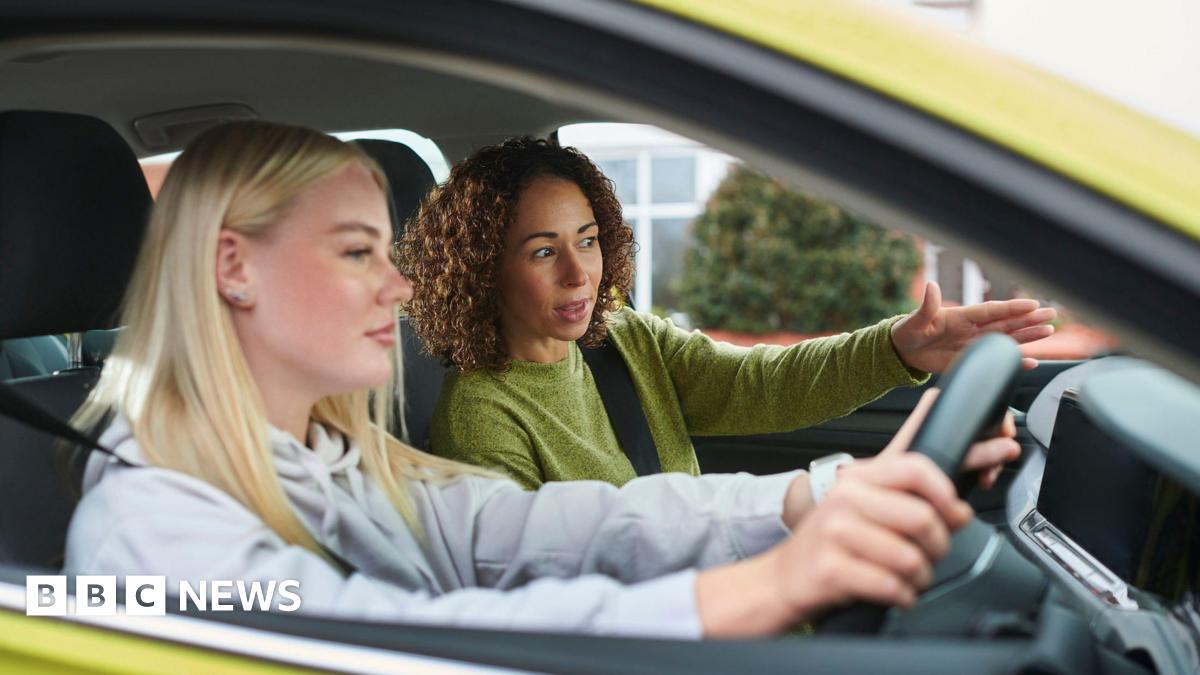
A car trader friend mentioned recently that a side effect of the move to EVs is that he cannot get enough automatic ICE vehicles. I found an old BBC article (linked) showing tests taken in automatics going from 6% in 2013 to around 26% by 2025.

Presumably any ICE respite will need to reflect that changing competence.


Top