Not going down well this. I'm not sure why but this one seems to have caught many people unaware, I know myself I've had to cancel some meetings tomorrow at the last minute due to the strike whereas the previous ones there seemed to be a bit more general awareness in the run up and things were arranged around it. The different timings are also catching people out with many lines not operating in the morning tomorrow. Hopefully this is resolved soon.

-
Our new ticketing site is now live! Using either this or the original site (both powered by TrainSplit) helps support the running of the forum with every ticket purchase! Find out more and ask any questions/give us feedback in this thread!
You are using an out of date browser. It may not display this or other websites correctly.
You should upgrade or use an alternative browser.
You should upgrade or use an alternative browser.
RMT strikes re: 4 day week
- Thread starter Watershed
- Start date
Sponsor Post - registered members do not see these adverts; click here to register, or click here to log in
R
RailUK Forums

kitchenoven
Member

Going into the morning peak it doesn't seem too bad - main disruption is to central London. The District line was listed as suspended when I checked on TfL Go earlier, however it seems to be running now with severe delays.
== Doublepost prevention - post automatically merged: ==
Seems like as I was writing this the Victoria line has also been reinstated with severe delays.
Warrior2852
Member
- Joined
- 27 Oct 2018
- Messages
- 319
Victoria's running with 3-5 minute headways ("Severe delays" on a frequency any other city would celebrate, shows how efficient the Victoria normally is!).
Hopefully this is resolved soon.
There seems to be strikes regularly for various reasons. Once these latest rounds are resolved, there will inevitably be more strikes for other railway staff concerning whatever matters they raise.
For a lot of people (outside the railway industry), strikes are just par the course now.
Victoria's running with 3-5 minute headways ("Severe delays" on a frequency any other city would celebrate, shows how efficient the Victoria normally is!).
The Victoria was pretty much fine as was the District in the morning at least when I used it. The District was a disaster zone this evening however with all trains at Victoria going to Olympia for some reason and not being able to get in full trains.

Dstock7080
Established Member
Shuttle services running, to keep the drivers from each depot assigned:The District was a disaster zone this evening however with all trains at Victoria going to Olympia for some reason and not being able to get in full trains.
Upminster-Olympia: Barking, Upminster
High Street-Ealing: Acton Town
High Street-Richmond: Acton Town, Earl’s Court
Edgware Road-Wimbledon: Earl’s Court
Warrior2852
Member
- Joined
- 27 Oct 2018
- Messages
- 319
Did the Northern shut down at some point? It seemed to be running this morning on the status page but then a station announcement at Embankment later on said it was suspended.

The Charing + branch has been suspended since just after lunchtime with no service running Battersea Power to Golders Green. Services running Morden to Barnet via Bank, Edgware to Golders Green, and a Mill Hill East shuttle.Did the Northern shut down at some point? It seemed to be running this morning on the status page but then a station announcement at Embankment later on said it was suspended.
Warrior2852
Member
- Joined
- 27 Oct 2018
- Messages
- 319
I also see that the entire District and the shared H&C section to Barking are now also gone. Meaning the subsurface lines are now reduced down to the outdoors bit of the Met, and Hammersmith to Liverpool Street on the H&C.

boiledbeans2
Member
Normal service on the Jubilee today, based on the (lack of) status updates.
85.8% of timetabled services ran on Jubilee.Normal service on the Jubilee today, based on the (lack of) status updates.
60.6% of the day was advertised as a "Good Service" on Jubilee.
At the other end of the spectrum, the Piccadilly Line ran 0% of timetabled services and advertised a good service 0% of the time.
Excepting the Jubilee line, no other line achieved more than 0% "advertised good service", leading to a combined network average of 5.5%.
Total amount of service ran is listed as 35.9% across all lines.
(The caveats being, percentages may not always add up to 100% and strike action may make these figures inaccurate!)
weeklycommuter
Member
- Joined
- 2 Feb 2019
- Messages
- 1,039
I note there was disruption on the Elizabeth Line yesterday which must have worsened the overall disruption. When operating normally this now provides a better high capacity alternative for many East West journeys through London including to and from Heathrow Airport.
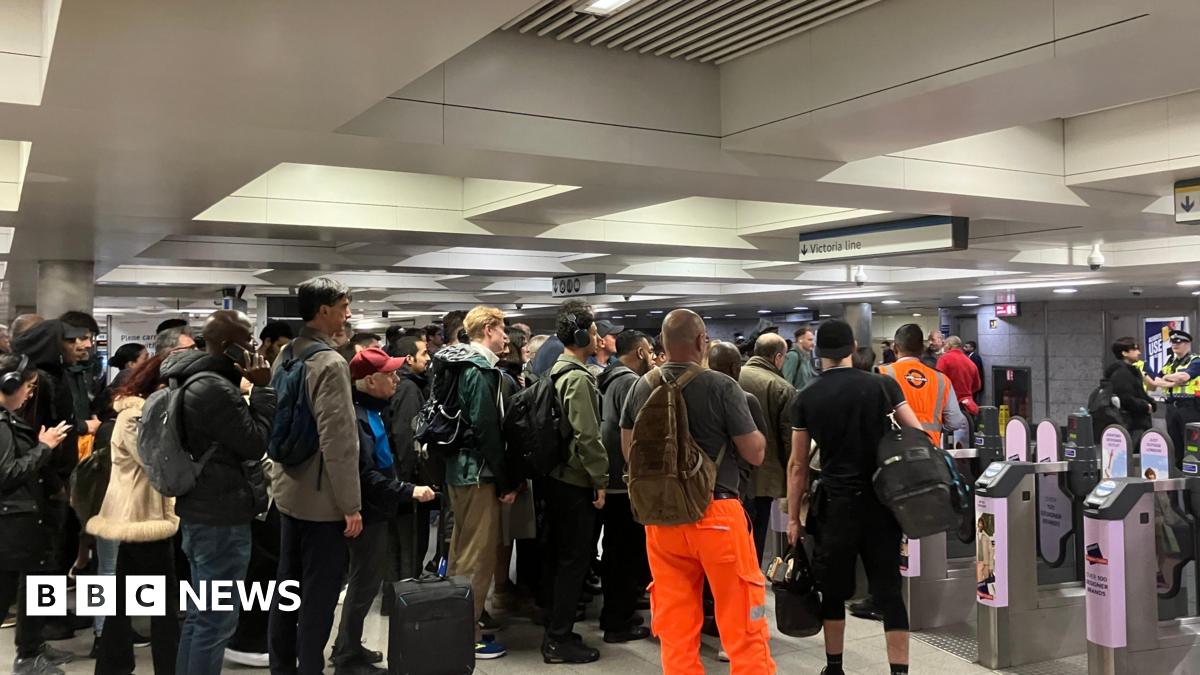
Delays and suspensions for commuters as Tube strikes continue across London
Transport for London (TfL) has advised passengers to finish their journeys by 21:00 BST, with strike action due to end just before midnight.www.bbc.co.uk
17:04 2 June What to expect on your journey home
Elizabeth line - There are severe delays between Reading, Abbey Wood and Heathrow Terminals Four and Five due to a faulty train
Last edited:
Goldfish62
Veteran Member
- Joined
- 14 Feb 2010
- Messages
- 13,238
Finn Brennan, ASLEF District Organiser, has posted the following on his Facebook page. It's an interesting read:
4 day week for Tube Drivers. The facts behind the spin.
The introduction of the 4-day week will be the biggest improvement in working conditions for Underground Train Drivers in decades. It means you will have working conditions that are as good as, or better than, those on any mainline train company.
There has been lots of false information circulated, so it is important that every driver understands the facts about what it means for you.
The 4-day week will be piloted first on the Bakerloo line before rolling out across the combine. Detailed discussions on everything involved are taking place, with both trade unions meeting management every week. When the details are agreed, draft rosters and duty sheets will be produced so that everyone can see exactly what the new working pattern will look like and decide if they want to move to a 4-day week or stay on a 5-day pattern.
And of course it is voluntary. Anyone who wants to stay working on current conditions can do so. The choice is yours.
The key differences are;
An extra month away from work every year.
• The 4-day week means you will spend 35 fewer days at work every year. That is more than an extra month off.
• Your annual leave entitlement will not change. It will remain at 7.4 working weeks. A week’s leave will now use up only 4 days of your entitlement instead of 5.
• An extra rest day each week means roster patterns and duty swaps can be arranged in different ways so you will have more flexibility to block leave together, or take long weekends or mini-breaks if you prefer.
A 32 hour week.
• Average weekly rostered hours will reduce to 34 hours from the current average of 36.
• Your undisturbed meal break will be counted as part of your working hours. Drivers will be the only grade this applies too.
• That means you will be working an average 32 hour week, as your rostered hours will be 34 hours less 2 hours (4 x ½ hour meal breaks)
Flexible working arrangements.
• There will be no change to your right to request flexible working arrangements. This is a legal entitlement and won’t change in any way.
• If you have a flexible working agreement in place, that is not affected by the move to a 4-day week.
Less fatigue.
• Having a third rest day every week means more time at home and a lot less time spent traveling to and from work. Reducing fatigue and giving you a better quality of life.
• As the average rostered week reduces to 34 hours, your longest possible working week will reduce from 42.5 hours now to 38 hours per week. That’s 4.5 hours fewer at work if you do the roughest possible turn all week.
What about Pool Drivers?
• Currently all pool drivers are a “line resource” and can work out of any depot on the line. On the 4-day week the majority of pool drivers will be at their home depot only with a partial rest day roster meaning certainty about their shifts and the ability to plan ahead for family commitments etc.
• All pool drivers will get an extra rest day every week. And for the first time, one rest day will be rostered in advance so that people can plan ahead.
Saving you money.
• As well as the time you save traveling to work one day less every week, you will also save money on travel or childcare costs.
• There are already 120 drivers across the combine on a four-day week, with over 130 on waiting lists. Instead of only getting 80% of salary, they will have the option of receiving full pay.
Overtime.
• For the first time drivers will have the opportunity to volunteer for overtime like every other grade.
• If you don’t want to work overtime you won’t have to, but you will have the opportunity to make some extra money if you need it, by working one day a week at time and a quarter.
Using an Ipad.
• Instead of having to carry rule books, line information books, DISI and duty books etc, and signing on manually all documents will be available electronically.
• The only time you would use it when away from work would be to check duties, just as you would check your diary or messages from syndicates now.
Don't want to do it?
• Not a problem. The 4-day week is voluntary. If you want to stay on a 5-day working pattern you can. It's your choice. How this works in practice will be discussed in detail at Trains Council which includes both unions.
• The reality is few people will want to keep working an extra day and more hours every week for no extra money and less time off! (After all, why would anyone want to spend more than a month extra at work every year?) But ASLEF will support any member who wants to remain on a five-day working pattern to do so.
Your local ASLEF reps will be happy to discuss any questions or concerns and resolve any individual issues. Instead of the same old rhetoric and slogans you hear from others, ASLEF are determined to deliver the best possible package of pay, working conditions and fair treatment for every train driver.
Railway trade unions have been talking about a 32 hour 4 day week for decades. Now ASLEF are delivering it.
DLRnotDave
Member
This is all well and good but the service levels this week show that the strike is holding strong which means RMT drivers clearly have some kind of a problem with the proposal, if this was as good as ASLEF are selling it then why aren't the RMT drivers crossing the picket/jumping ship to ASLEF.Finn Brennan, ASLEF District Organiser, has posted the following on his Facebook page. It's an interesting read:
I really want to know what the actual issue is, the public messaging by the RMT hasn't exactly been great.
leonie13
Member
I'm afraid, this has been the case since Lynch stepped down. This is meant as no slight on the incumbent general sec, but Lynch knew how to get the message across effectively.I really want to know what the actual issue is, the public messaging by the RMT hasn't exactly been great.

Chiltern 165
Member
What are these strikes even about?
I keep seeing people mentioning that it's not just about the 4 day week, but I can't really gather what else it's about (other than something to do with iPads??)
I keep seeing people mentioning that it's not just about the 4 day week, but I can't really gather what else it's about (other than something to do with iPads??)

starlight73
Member
Post #115 on page 4 has some info about the issues in the dispute
https://www.railforums.co.uk/threads/rmt-strikes-re-4-day-week.299636/page-4#post-7758518
https://www.railforums.co.uk/threads/rmt-strikes-re-4-day-week.299636/page-4#post-7758518
I don't speak for the RMT, but I do have access to documents the public don't necessarily get to see - both from LU and the RMT. With this in mind, I've addressed the ASLEF post from Facebook below as a reference point really - I'm not anti-ASLEF - I believe everyone should be in a union. (Made it red for ease of reading.)
The 4-day week will be piloted first on the Bakerloo line before rolling out across the combine. Detailed discussions on everything involved are taking place, with both trade unions meeting management every week. When the details are agreed, draft rosters and duty sheets will be produced so that everyone can see exactly what the new working pattern will look like and decide if they want to move to a 4-day week or stay on a 5-day pattern.
Draft rosters need to be in place before the proposal, I'm being asked to agree to something when I don't have all the information. They produced a model roster for the Bakerloo Line, but it didn't mean anything to me as I don't drive that line. LU have 160 years worth of experience of producing rosters and couldn't find the time to produce even a single example duty page for each line with the new increased driving parameters? It doesn't add up.
And of course it is voluntary. Anyone who wants to stay working on current conditions can do so. The choice is yours.
If it's truly voluntary, why have LU refused to put it in writing? In fact, they have said this week they can't give that assurance until the negotiations continue. They want me to agree to implementation before I know if it suits me. Someone said to them it's like going to a used car salesman and asking about a car, "Does it have electric windows?", don't worry guvnor, it's a lovely red colour. "Does it have an automatic gearbox?", you can find that all out later, look at the shine on that paintwork...
The key differences are;
An extra month away from work every year.
• The 4-day week means you will spend 35 fewer days at work every year. That is more than an extra month off.
• Your annual leave entitlement will not change. It will remain at 7.4 working weeks. A week’s leave will now use up only 4 days of your entitlement instead of 5.
It's true that train ops get 7.4 weeks, but they do extra time (unpaid) with the roster to accrue banked rest days. This means train ops currently get 4x2 weeks leave and 3 days ad-hoc. This is going down to 6 weeks en-bloc and 6 days ad-hoc, so I'm losing 2 weeks holiday. The chances of getting ad-hoc days during summer is near on impossible as it's down to coverage in the depot and it's impossible getting the 3 days I have now! So I'll end up with 6 days tagged on somewhere in November or February.
• An extra rest day each week means roster patterns and duty swaps can be arranged in different ways so you will have more flexibility to block leave together, or take long weekends or mini-breaks if you prefer.
I can't go on holiday with 34 additional single days, it doesn't give me sufficient time away from the job to recover. With drivers on 2 sets of parameters in the same depot, this will actually reduce the amount of drivers available to swap with.
A 32 hour week.
• Average weekly rostered hours will reduce to 34 hours from the current average of 36.
Overall hours may be reduced, but "handle time" (the time I'm actually driving a train) will massively increase. LU refuse to reveal how much extra productivity they'll get from drivers, or how much it will save them.
• Your undisturbed meal break will be counted as part of your working hours. Drivers will be the only grade this applies too.
They will give me 30 mins paid meal relief, but take away the booking on time and walking times.
• That means you will be working an average 32 hour week, as your rostered hours will be 34 hours less 2 hours (4 x ½ hour meal breaks)
Flexible working arrangements.
• There will be no change to your right to request flexible working arrangements. This is a legal entitlement and won’t change in any way.
• If you have a flexible working agreement in place, that is not affected by the move to a 4-day week.
Less fatigue.
• Having a third rest day every week means more time at home and a lot less time spent traveling to and from work. Reducing fatigue and giving you a better quality of life.
• As the average rostered week reduces to 34 hours, your longest possible working week will reduce from 42.5 hours now to 38 hours per week. That’s 4.5 hours fewer at work if you do the roughest possible turn all week.
On my 130 ish line roster, the "roughest" week is 36.47hrs, so I'm not sure where 42.5hrs comes from. It sounds like a theoretical maximum that doesn't happen in reality. Such a lengthy week would have to be 'paid back' at some point over the next 12 weeks.
What about Pool Drivers?
• Currently all pool drivers are a “line resource” and can work out of any depot on the line. On the 4-day week the majority of pool drivers will be at their home depot only with a partial rest day roster meaning certainty about their shifts and the ability to plan ahead for family commitments etc.
Pool drivers will be trapped for a minimum of 5 years once allocated to a depot, or after they move lines/depots. Currently, drivers book on and off at a single depot (park your car, use your locker, put your food in the fridge, get changed into uniform, etc) LU are proposing that pool drivers will be forced to book on at any depot on the line and travel there in they're own time. This could add significant time to a driver's working day. Between Acton Town and Northfields - maybe not such an issue. Northfields to Cockfosters? That's a stretch each way. The proposal is full of terms like "should", "could", and "might" rather than being definitive. We are an industry that literally runs on rule books, so it's understandable drivers are nervous about such wooly terms.
• All pool drivers will get an extra rest day every week. And for the first time, one rest day will be rostered in advance so that people can plan ahead.
Pool drivers and spare drivers will be allocated work via an ipad at 0345hrs the day before (to be clear, the notification could come on Monday at 0345hrs for a duty for Tuesday, so 24 hours notice). This is very difficult for people with caring responsibilities or children. In particular, see above about booking on at remote locations and additional travel time. IIRC duties can also be changed by 2 hours either way by a notification on the iPad at 0345hrs, so if you had a childminder booked for 0700, you could be asked to book on 1.5 hours away from your home depot and/or 2 hours before or after.
Saving you money.
• As well as the time you save traveling to work one day less every week, you will also save money on travel or childcare costs.
People who buy season tickets will still need to buy a annual ticket, so this is moot. Childcare costs may increase as some shift start times can be altered by 2 hours either way.
• There are already 120 drivers across the combine on a four-day week, with over 130 on waiting lists. Instead of only getting 80% of salary, they will have the option of receiving full pay.
There is a waiting list for the pro-rata 4 day week, with no interest from LU in allowing more drivers to work flexibly. (Note this is a different 4 day week to the proposed 4 day week).
Overtime.
• For the first time drivers will have the opportunity to volunteer for overtime like every other grade.
RMT is opposed to overtime, even if I am not. It doesn't appear to be a sustainable stance to me.
• If you don’t want to work overtime you won’t have to, but you will have the opportunity to make some extra money if you need it, by working one day a week at time and a quarter.
Using an Ipad.
• Instead of having to carry rule books, line information books, DISI and duty books etc, and signing on manually all documents will be available electronically.
The ipad is a bit of a red herring. It's not so much the 'manager in your house' argument, but more, if I'm booking on with an ipad on the platform, what will happen to trains managers in the train crew accommodation, and the actual TCA itself? Will mess rooms remain in situ? Or will the TCAs be sold and redeveloped?
• The only time you would use it when away from work would be to check duties, just as you would check your diary or messages from syndicates now.
There is a suite of apps that have been developed that utilise GPS. When sitting spare and coming towards the end of my shift, there comes a time when a driver can't do any substantive work (not enough time to drive to somewhere and back) so common practice is to allow the driver a 'cutaway'. The original Trains Change proposal used GPS to book off, ensuring you were still in or around the workplace. The suspicion being that LU would require payback of the cutaway time at some future date.
Don't want to do it?
• Not a problem. The 4-day week is voluntary. If you want to stay on a 5-day working pattern you can. It's your choice. How this works in practice will be discussed in detail at Trains Council which includes both unions.
It's not fair to ask me to agree to something when LU haven't thought through all the implications. This proposal is rushed, even after taking 3 years to force it through it various guises.
Much hangs on the idea of being voluntary, but nobody, not even LU, have been able to explain how 2 sets of working parameters will work within one depot. My fear is that LU will make it impossible for me to remain on a 5DW, by limiting swaps of rest days and duties and annual leave and eventually force me to move depots where I will be placed into the pool and stuck there for 5 years getting the crappy shifts nobody else wants. If someone has experience of how 2 sets of parameters could work within a railway environment, please get in touch.
• The reality is few people will want to keep working an extra day and more hours every week for no extra money and less time off! (After all, why would anyone want to spend more than a month extra at work every year?) But ASLEF will support any member who wants to remain on a five-day working pattern to do so.
If so few want to stay on their current terms and conditions, how is it that the majority of train ops across both unions voted against implementing it? Likewise, if so popular, then LU should agree that no driver will suffer any detriment as a result of staying on 5DW. They agreed to this last month (and RMT suspended action based on that) and then changed their mind. For the avoidance of doubt, I consider moving depots to be to my detriment.
Your local ASLEF reps will be happy to discuss any questions or concerns and resolve any individual issues. Instead of the same old rhetoric and slogans you hear from others, ASLEF are determined to deliver the best possible package of pay, working conditions and fair treatment for every train driver.
Railway trade unions have been talking about a 32 hour 4 day week for decades. Now ASLEF are delivering it.
There is no mention of the earlier start times and the later finish times - latest finish will become 0215 and earliest start time will become 0345 I think.
Currently train crew depots run largely on "mafias", these are people who shake up the weekly duties and try and give people the rest days they need or the duties they need. There is no mention of these in the 4DW plan, but none of the mafia guys I've spoken to have any idea how it can work, or even if the mafia will be allowed to remain.
Apologies again for the red text, but I hope this goes some way to helping understand the issues, and if anyone needs clarity, do ask - I'll answer, but I'm obviously biased! In summary, I think the RMT want a 4DW, just not this version of a 4DW.
The 4-day week will be piloted first on the Bakerloo line before rolling out across the combine. Detailed discussions on everything involved are taking place, with both trade unions meeting management every week. When the details are agreed, draft rosters and duty sheets will be produced so that everyone can see exactly what the new working pattern will look like and decide if they want to move to a 4-day week or stay on a 5-day pattern.
Draft rosters need to be in place before the proposal, I'm being asked to agree to something when I don't have all the information. They produced a model roster for the Bakerloo Line, but it didn't mean anything to me as I don't drive that line. LU have 160 years worth of experience of producing rosters and couldn't find the time to produce even a single example duty page for each line with the new increased driving parameters? It doesn't add up.
And of course it is voluntary. Anyone who wants to stay working on current conditions can do so. The choice is yours.
If it's truly voluntary, why have LU refused to put it in writing? In fact, they have said this week they can't give that assurance until the negotiations continue. They want me to agree to implementation before I know if it suits me. Someone said to them it's like going to a used car salesman and asking about a car, "Does it have electric windows?", don't worry guvnor, it's a lovely red colour. "Does it have an automatic gearbox?", you can find that all out later, look at the shine on that paintwork...
The key differences are;
An extra month away from work every year.
• The 4-day week means you will spend 35 fewer days at work every year. That is more than an extra month off.
• Your annual leave entitlement will not change. It will remain at 7.4 working weeks. A week’s leave will now use up only 4 days of your entitlement instead of 5.
It's true that train ops get 7.4 weeks, but they do extra time (unpaid) with the roster to accrue banked rest days. This means train ops currently get 4x2 weeks leave and 3 days ad-hoc. This is going down to 6 weeks en-bloc and 6 days ad-hoc, so I'm losing 2 weeks holiday. The chances of getting ad-hoc days during summer is near on impossible as it's down to coverage in the depot and it's impossible getting the 3 days I have now! So I'll end up with 6 days tagged on somewhere in November or February.
• An extra rest day each week means roster patterns and duty swaps can be arranged in different ways so you will have more flexibility to block leave together, or take long weekends or mini-breaks if you prefer.
I can't go on holiday with 34 additional single days, it doesn't give me sufficient time away from the job to recover. With drivers on 2 sets of parameters in the same depot, this will actually reduce the amount of drivers available to swap with.
A 32 hour week.
• Average weekly rostered hours will reduce to 34 hours from the current average of 36.
Overall hours may be reduced, but "handle time" (the time I'm actually driving a train) will massively increase. LU refuse to reveal how much extra productivity they'll get from drivers, or how much it will save them.
• Your undisturbed meal break will be counted as part of your working hours. Drivers will be the only grade this applies too.
They will give me 30 mins paid meal relief, but take away the booking on time and walking times.
• That means you will be working an average 32 hour week, as your rostered hours will be 34 hours less 2 hours (4 x ½ hour meal breaks)
Flexible working arrangements.
• There will be no change to your right to request flexible working arrangements. This is a legal entitlement and won’t change in any way.
• If you have a flexible working agreement in place, that is not affected by the move to a 4-day week.
Less fatigue.
• Having a third rest day every week means more time at home and a lot less time spent traveling to and from work. Reducing fatigue and giving you a better quality of life.
• As the average rostered week reduces to 34 hours, your longest possible working week will reduce from 42.5 hours now to 38 hours per week. That’s 4.5 hours fewer at work if you do the roughest possible turn all week.
On my 130 ish line roster, the "roughest" week is 36.47hrs, so I'm not sure where 42.5hrs comes from. It sounds like a theoretical maximum that doesn't happen in reality. Such a lengthy week would have to be 'paid back' at some point over the next 12 weeks.
What about Pool Drivers?
• Currently all pool drivers are a “line resource” and can work out of any depot on the line. On the 4-day week the majority of pool drivers will be at their home depot only with a partial rest day roster meaning certainty about their shifts and the ability to plan ahead for family commitments etc.
Pool drivers will be trapped for a minimum of 5 years once allocated to a depot, or after they move lines/depots. Currently, drivers book on and off at a single depot (park your car, use your locker, put your food in the fridge, get changed into uniform, etc) LU are proposing that pool drivers will be forced to book on at any depot on the line and travel there in they're own time. This could add significant time to a driver's working day. Between Acton Town and Northfields - maybe not such an issue. Northfields to Cockfosters? That's a stretch each way. The proposal is full of terms like "should", "could", and "might" rather than being definitive. We are an industry that literally runs on rule books, so it's understandable drivers are nervous about such wooly terms.
• All pool drivers will get an extra rest day every week. And for the first time, one rest day will be rostered in advance so that people can plan ahead.
Pool drivers and spare drivers will be allocated work via an ipad at 0345hrs the day before (to be clear, the notification could come on Monday at 0345hrs for a duty for Tuesday, so 24 hours notice). This is very difficult for people with caring responsibilities or children. In particular, see above about booking on at remote locations and additional travel time. IIRC duties can also be changed by 2 hours either way by a notification on the iPad at 0345hrs, so if you had a childminder booked for 0700, you could be asked to book on 1.5 hours away from your home depot and/or 2 hours before or after.
Saving you money.
• As well as the time you save traveling to work one day less every week, you will also save money on travel or childcare costs.
People who buy season tickets will still need to buy a annual ticket, so this is moot. Childcare costs may increase as some shift start times can be altered by 2 hours either way.
• There are already 120 drivers across the combine on a four-day week, with over 130 on waiting lists. Instead of only getting 80% of salary, they will have the option of receiving full pay.
There is a waiting list for the pro-rata 4 day week, with no interest from LU in allowing more drivers to work flexibly. (Note this is a different 4 day week to the proposed 4 day week).
Overtime.
• For the first time drivers will have the opportunity to volunteer for overtime like every other grade.
RMT is opposed to overtime, even if I am not. It doesn't appear to be a sustainable stance to me.
• If you don’t want to work overtime you won’t have to, but you will have the opportunity to make some extra money if you need it, by working one day a week at time and a quarter.
Using an Ipad.
• Instead of having to carry rule books, line information books, DISI and duty books etc, and signing on manually all documents will be available electronically.
The ipad is a bit of a red herring. It's not so much the 'manager in your house' argument, but more, if I'm booking on with an ipad on the platform, what will happen to trains managers in the train crew accommodation, and the actual TCA itself? Will mess rooms remain in situ? Or will the TCAs be sold and redeveloped?
• The only time you would use it when away from work would be to check duties, just as you would check your diary or messages from syndicates now.
There is a suite of apps that have been developed that utilise GPS. When sitting spare and coming towards the end of my shift, there comes a time when a driver can't do any substantive work (not enough time to drive to somewhere and back) so common practice is to allow the driver a 'cutaway'. The original Trains Change proposal used GPS to book off, ensuring you were still in or around the workplace. The suspicion being that LU would require payback of the cutaway time at some future date.
Don't want to do it?
• Not a problem. The 4-day week is voluntary. If you want to stay on a 5-day working pattern you can. It's your choice. How this works in practice will be discussed in detail at Trains Council which includes both unions.
It's not fair to ask me to agree to something when LU haven't thought through all the implications. This proposal is rushed, even after taking 3 years to force it through it various guises.
Much hangs on the idea of being voluntary, but nobody, not even LU, have been able to explain how 2 sets of working parameters will work within one depot. My fear is that LU will make it impossible for me to remain on a 5DW, by limiting swaps of rest days and duties and annual leave and eventually force me to move depots where I will be placed into the pool and stuck there for 5 years getting the crappy shifts nobody else wants. If someone has experience of how 2 sets of parameters could work within a railway environment, please get in touch.
• The reality is few people will want to keep working an extra day and more hours every week for no extra money and less time off! (After all, why would anyone want to spend more than a month extra at work every year?) But ASLEF will support any member who wants to remain on a five-day working pattern to do so.
If so few want to stay on their current terms and conditions, how is it that the majority of train ops across both unions voted against implementing it? Likewise, if so popular, then LU should agree that no driver will suffer any detriment as a result of staying on 5DW. They agreed to this last month (and RMT suspended action based on that) and then changed their mind. For the avoidance of doubt, I consider moving depots to be to my detriment.
Your local ASLEF reps will be happy to discuss any questions or concerns and resolve any individual issues. Instead of the same old rhetoric and slogans you hear from others, ASLEF are determined to deliver the best possible package of pay, working conditions and fair treatment for every train driver.
Railway trade unions have been talking about a 32 hour 4 day week for decades. Now ASLEF are delivering it.
There is no mention of the earlier start times and the later finish times - latest finish will become 0215 and earliest start time will become 0345 I think.
Currently train crew depots run largely on "mafias", these are people who shake up the weekly duties and try and give people the rest days they need or the duties they need. There is no mention of these in the 4DW plan, but none of the mafia guys I've spoken to have any idea how it can work, or even if the mafia will be allowed to remain.
Apologies again for the red text, but I hope this goes some way to helping understand the issues, and if anyone needs clarity, do ask - I'll answer, but I'm obviously biased! In summary, I think the RMT want a 4DW, just not this version of a 4DW.
Old Walter
Member
It’s basically that ASLEF high-ups and LU managers are working together on a plan which will cut the numbers of drivers, make conditions far worse than they are today and tear up many agreements that have been set in stone for many years. The majority of LU drivers don’t want these changes and the RMT isn’t even asking for anything extra - just that these plans are dropped.
Add to this RMT having half the drivers on LU and the Trains Functional Council (top table of LUL trains) being made up of 3 RMT and 6 ASLEF - the representation at that level is not consistent with the membership numbers. I note that Finn Brennan makes reference to spin - the only spin I see is from his union trying to make their management siding deal sound like it’s doing drivers a favour.
What we are seeing is oneupmanship from ASLEF trying to say they’ve delivered a four day week instead of RMT but at any cost. It’s trying to peg back the amount of times the RMT have delivered improvements but they (ASLEF) haven’t. In my view ASLEF have no place on LU.
Add to this RMT having half the drivers on LU and the Trains Functional Council (top table of LUL trains) being made up of 3 RMT and 6 ASLEF - the representation at that level is not consistent with the membership numbers. I note that Finn Brennan makes reference to spin - the only spin I see is from his union trying to make their management siding deal sound like it’s doing drivers a favour.
What we are seeing is oneupmanship from ASLEF trying to say they’ve delivered a four day week instead of RMT but at any cost. It’s trying to peg back the amount of times the RMT have delivered improvements but they (ASLEF) haven’t. In my view ASLEF have no place on LU.
starlight73
Member
While I don't know the details, the mention of overtime made me think of the situation with Northern rail (up north) ... they are so reliant on overtime that they've withdrawn Sunday services on some lines (not to take this off topic though!)
 www.railforums.co.uk
www.railforums.co.uk
Wilmslow - Styal - Airport RRBs - why?
I'm only an occasional visitor so apologies if I've missed something obvious in what I'm about to ask. I've put this in Infrastructure so mods please move if I've guessed wrong. I spent a few hours yesterday driving a coach on rail replacement between Wilmslow and Manchester Airport via Styal...
www.railforums.co.uk
Shocking performance from Northern as per usual.
There are no Chester to Leeds services running AT ALL tomorrow on the 21st July and I just think that's absolutely appalling service from any TOC, how are they able to get away with such service as the Northern Connect routes are very popular and should run as much as they can. Not to mention...
www.railforums.co.uk
Worth saying that the RMT TFC reps are in situ for a limited amount of time, then have to stand down. ASLEF TFC reps are permanent reps, they will never have to drive under the new parameters.Add to this RMT having half the drivers on LU and the Trains Functional Council (top table of LUL trains) being made up of 3 RMT and 6 ASLEF - the representation at that level is not consistent with the membership numbers.
Of course, the TFC numbers are fundamentally unfair, as it then allows ASLEF to position 47 local reps around the combine, compared to RMT's 33.
DLRnotDave
Member
Very much appreciated, first time I've actually understood what's going on.I don't speak for the RMT, but I do have access to documents the public don't necessarily get to see - both from LU and the RMT. With this in mind, I've addressed the ASLEF post from Facebook below as a reference point really - I'm not anti-ASLEF - I believe everyone should be in a union. (Made it red for ease of reading.)
You have my full support, absolutely appalling behaviour on the part of LU and (as usual) ASLEF.
To be fair to ASLEF, they are a driver only union, so they answer solely to that grade. RMT is an all grades union so the two of them often have differing interests.Very much appreciated, first time I've actually understood what's going on.
You have my full support, absolutely appalling behaviour on the part of LU and (as usual) ASLEF.
Thr nature of the line I drive (Piccadilly) means we usually get 4 longish duties and one short duty - a 'snip' turn. These can be very short, but every duty* has to have a meal relief included, often tagged onto the end of the driving part (meaning I can just go home after as little as 3.5hrs driving). So I do a 4½ day week, every week.
If I was on, say, the Victoria Line, then as I understand it, they do 5x 7hr12m duties. So dropping a full day would have more of a positive benefit for them.
*Yet another condition that's disappearing under the 4DW proposal, the paid meal relief is no longer included in every working day.
leonie13
Member
It's this attitude of ASLEF that totally baffles me. They will happily take any deal in the best interests of their own membership - regardless of how negatively it affects any other grade or union.To be fair to ASLEF, they are a driver only union, so they answer solely to that grade. RMT is an all grades union so the two of them often have differing interests.
Aren't we repeatedly told on this forum that's the whole point of a union? The union exists solely to get the best deal for their members, regardless of their employer or the customers.It's this attitude of ASLEF that totally baffles me. They will happily take any deal in the best interests of their own membership - regardless of how negatively it affects any other grade or union.
That shouldn't be too baffling. ASLEF is (quite right IMO) doing exactly what it's members want! I don't really buy into the "the other side is bad" argument.It's this attitude of ASLEF that totally baffles me. They will happily take any deal in the best interests of their own membership - regardless of how negatively it affects any other grade or union.
Each union has its merits, but if I was an ASLEF member and ASLEF considered anyone but train drivers I'd be furious as it's literally what it says on its advertising material.

Picture shows the ASLEF home page where it states "ASLEF, the train driver's union" three times.
I don't speak for the RMT, but I do have access to documents the public don't necessarily get to see - both from LU and the RMT. With this in mind, I've addressed the ASLEF post from Facebook below as a reference point really - I'm not anti-ASLEF - I believe everyone should be in a union. (Made it red for ease of reading.)
The 4-day week will be piloted first on the Bakerloo line before rolling out across the combine. Detailed discussions on everything involved are taking place, with both trade unions meeting management every week. When the details are agreed, draft rosters and duty sheets will be produced so that everyone can see exactly what the new working pattern will look like and decide if they want to move to a 4-day week or stay on a 5-day pattern.
Draft rosters need to be in place before the proposal, I'm being asked to agree to something when I don't have all the information. They produced a model roster for the Bakerloo Line, but it didn't mean anything to me as I don't drive that line. LU have 160 years worth of experience of producing rosters and couldn't find the time to produce even a single example duty page for each line with the new increased driving parameters? It doesn't add up.
And of course it is voluntary. Anyone who wants to stay working on current conditions can do so. The choice is yours.
If it's truly voluntary, why have LU refused to put it in writing? In fact, they have said this week they can't give that assurance until the negotiations continue. They want me to agree to implementation before I know if it suits me. Someone said to them it's like going to a used car salesman and asking about a car, "Does it have electric windows?", don't worry guvnor, it's a lovely red colour. "Does it have an automatic gearbox?", you can find that all out later, look at the shine on that paintwork...
The key differences are;
An extra month away from work every year.
• The 4-day week means you will spend 35 fewer days at work every year. That is more than an extra month off.
• Your annual leave entitlement will not change. It will remain at 7.4 working weeks. A week’s leave will now use up only 4 days of your entitlement instead of 5.
It's true that train ops get 7.4 weeks, but they do extra time (unpaid) with the roster to accrue banked rest days. This means train ops currently get 4x2 weeks leave and 3 days ad-hoc. This is going down to 6 weeks en-bloc and 6 days ad-hoc, so I'm losing 2 weeks holiday. The chances of getting ad-hoc days during summer is near on impossible as it's down to coverage in the depot and it's impossible getting the 3 days I have now! So I'll end up with 6 days tagged on somewhere in November or February.
• An extra rest day each week means roster patterns and duty swaps can be arranged in different ways so you will have more flexibility to block leave together, or take long weekends or mini-breaks if you prefer.
I can't go on holiday with 34 additional single days, it doesn't give me sufficient time away from the job to recover. With drivers on 2 sets of parameters in the same depot, this will actually reduce the amount of drivers available to swap with.
A 32 hour week.
• Average weekly rostered hours will reduce to 34 hours from the current average of 36.
Overall hours may be reduced, but "handle time" (the time I'm actually driving a train) will massively increase. LU refuse to reveal how much extra productivity they'll get from drivers, or how much it will save them.
• Your undisturbed meal break will be counted as part of your working hours. Drivers will be the only grade this applies too.
They will give me 30 mins paid meal relief, but take away the booking on time and walking times.
• That means you will be working an average 32 hour week, as your rostered hours will be 34 hours less 2 hours (4 x ½ hour meal breaks)
Flexible working arrangements.
• There will be no change to your right to request flexible working arrangements. This is a legal entitlement and won’t change in any way.
• If you have a flexible working agreement in place, that is not affected by the move to a 4-day week.
Less fatigue.
• Having a third rest day every week means more time at home and a lot less time spent traveling to and from work. Reducing fatigue and giving you a better quality of life.
• As the average rostered week reduces to 34 hours, your longest possible working week will reduce from 42.5 hours now to 38 hours per week. That’s 4.5 hours fewer at work if you do the roughest possible turn all week.
On my 130 ish line roster, the "roughest" week is 36.47hrs, so I'm not sure where 42.5hrs comes from. It sounds like a theoretical maximum that doesn't happen in reality. Such a lengthy week would have to be 'paid back' at some point over the next 12 weeks.
What about Pool Drivers?
• Currently all pool drivers are a “line resource” and can work out of any depot on the line. On the 4-day week the majority of pool drivers will be at their home depot only with a partial rest day roster meaning certainty about their shifts and the ability to plan ahead for family commitments etc.
Pool drivers will be trapped for a minimum of 5 years once allocated to a depot, or after they move lines/depots. Currently, drivers book on and off at a single depot (park your car, use your locker, put your food in the fridge, get changed into uniform, etc) LU are proposing that pool drivers will be forced to book on at any depot on the line and travel there in they're own time. This could add significant time to a driver's working day. Between Acton Town and Northfields - maybe not such an issue. Northfields to Cockfosters? That's a stretch each way. The proposal is full of terms like "should", "could", and "might" rather than being definitive. We are an industry that literally runs on rule books, so it's understandable drivers are nervous about such wooly terms.
• All pool drivers will get an extra rest day every week. And for the first time, one rest day will be rostered in advance so that people can plan ahead.
Pool drivers and spare drivers will be allocated work via an ipad at 0345hrs the day before (to be clear, the notification could come on Monday at 0345hrs for a duty for Tuesday, so 24 hours notice). This is very difficult for people with caring responsibilities or children. In particular, see above about booking on at remote locations and additional travel time. IIRC duties can also be changed by 2 hours either way by a notification on the iPad at 0345hrs, so if you had a childminder booked for 0700, you could be asked to book on 1.5 hours away from your home depot and/or 2 hours before or after.
Saving you money.
• As well as the time you save traveling to work one day less every week, you will also save money on travel or childcare costs.
People who buy season tickets will still need to buy a annual ticket, so this is moot. Childcare costs may increase as some shift start times can be altered by 2 hours either way.
• There are already 120 drivers across the combine on a four-day week, with over 130 on waiting lists. Instead of only getting 80% of salary, they will have the option of receiving full pay.
There is a waiting list for the pro-rata 4 day week, with no interest from LU in allowing more drivers to work flexibly. (Note this is a different 4 day week to the proposed 4 day week).
Overtime.
• For the first time drivers will have the opportunity to volunteer for overtime like every other grade.
RMT is opposed to overtime, even if I am not. It doesn't appear to be a sustainable stance to me.
• If you don’t want to work overtime you won’t have to, but you will have the opportunity to make some extra money if you need it, by working one day a week at time and a quarter.
Using an Ipad.
• Instead of having to carry rule books, line information books, DISI and duty books etc, and signing on manually all documents will be available electronically.
The ipad is a bit of a red herring. It's not so much the 'manager in your house' argument, but more, if I'm booking on with an ipad on the platform, what will happen to trains managers in the train crew accommodation, and the actual TCA itself? Will mess rooms remain in situ? Or will the TCAs be sold and redeveloped?
• The only time you would use it when away from work would be to check duties, just as you would check your diary or messages from syndicates now.
There is a suite of apps that have been developed that utilise GPS. When sitting spare and coming towards the end of my shift, there comes a time when a driver can't do any substantive work (not enough time to drive to somewhere and back) so common practice is to allow the driver a 'cutaway'. The original Trains Change proposal used GPS to book off, ensuring you were still in or around the workplace. The suspicion being that LU would require payback of the cutaway time at some future date.
Don't want to do it?
• Not a problem. The 4-day week is voluntary. If you want to stay on a 5-day working pattern you can. It's your choice. How this works in practice will be discussed in detail at Trains Council which includes both unions.
It's not fair to ask me to agree to something when LU haven't thought through all the implications. This proposal is rushed, even after taking 3 years to force it through it various guises.
Much hangs on the idea of being voluntary, but nobody, not even LU, have been able to explain how 2 sets of working parameters will work within one depot. My fear is that LU will make it impossible for me to remain on a 5DW, by limiting swaps of rest days and duties and annual leave and eventually force me to move depots where I will be placed into the pool and stuck there for 5 years getting the crappy shifts nobody else wants. If someone has experience of how 2 sets of parameters could work within a railway environment, please get in touch.
• The reality is few people will want to keep working an extra day and more hours every week for no extra money and less time off! (After all, why would anyone want to spend more than a month extra at work every year?) But ASLEF will support any member who wants to remain on a five-day working pattern to do so.
If so few want to stay on their current terms and conditions, how is it that the majority of train ops across both unions voted against implementing it? Likewise, if so popular, then LU should agree that no driver will suffer any detriment as a result of staying on 5DW. They agreed to this last month (and RMT suspended action based on that) and then changed their mind. For the avoidance of doubt, I consider moving depots to be to my detriment.
Your local ASLEF reps will be happy to discuss any questions or concerns and resolve any individual issues. Instead of the same old rhetoric and slogans you hear from others, ASLEF are determined to deliver the best possible package of pay, working conditions and fair treatment for every train driver.
Railway trade unions have been talking about a 32 hour 4 day week for decades. Now ASLEF are delivering it.
There is no mention of the earlier start times and the later finish times - latest finish will become 0215 and earliest start time will become 0345 I think.
Currently train crew depots run largely on "mafias", these are people who shake up the weekly duties and try and give people the rest days they need or the duties they need. There is no mention of these in the 4DW plan, but none of the mafia guys I've spoken to have any idea how it can work, or even if the mafia will be allowed to remain.
Apologies again for the red text, but I hope this goes some way to helping understand the issues, and if anyone needs clarity, do ask - I'll answer, but I'm obviously biased! In summary, I think the RMT want a 4DW, just not this version of a 4DW.
I’ve been reading this thread for a while and have registered because it feels like the RMT view is being presented as the only driver view on this. Its not there's loads of train ops out there who think this is a good deal. Plenty of drivers on my line want the 4DW. Not everyone obvs and there are fair questions about how its gonna work, but the idea that train ops are all being dragged kicking and screaming into this just isn’t true. The fact of the matter is that RMT were trying to get a reduction in contractual hours for all LU staff as part of pay talks last year, and have tried to kill this offer which is just for drivers as it undermines that. It definitely is RMT v ASLEF power struggle which is annoying to say the least.
Thats not to say the offer is perfect some of the concerns being raised are valid. I’m not dismissing any of that but lets be honest this is a big cut in hours. The Jubilee line 4DW trial from 2015 or whenever was proper compressed working, but this is 4.5h less than that everyweek. Reduction in hours and no cut in pay is obviously gonna come with tradeoffs.
You're saying here that drivers are being asked to decide now on something they don't have all the detail on, but that's not what i'm seeing? Who's being asked now? All they've said is they want to pilot on the Bakerloo. From what i've seen in the letters being shared in the whatsapp groups etc, the 4DW offer was a high level thing that the company now wants the TUs to engage with them on how its gonna work. RMT are spinning that as you've described, wheras ASLEF are saying that they're talking to try get answers to all this and everything will become clear in due course. Either way I think the strikes this week have been way premature.
For me the key point is choice. If someone wants to stay on the current 5DW, fair enough, that should be protected. But I don’t see why that should mean blocking everyone else from having the option of a 4DW. I don't know why RMT won't just sit down and talk and try get the answers.
Welcome to the forum. Lots of drivers are in favour of this proposal, so it's good that alternative views are being put forward. There are always 2 sides to every story, and in this case, three!I’ve been reading this thread for a while and have registered because it feels like the RMT view is being presented as the only driver view on this. Its not there's loads of train ops out there who think this is a good deal. Plenty of drivers on my line want the 4DW. Not everyone obvs and there are fair questions about how its gonna work, but the idea that train ops are all being dragged kicking and screaming into this just isn’t true. The fact of the matter is that RMT were trying to get a reduction in contractual hours for all LU staff as part of pay talks last year, and have tried to kill this offer which is just for drivers as it undermines that. It definitely is RMT v ASLEF power struggle which is annoying to say the least.
Thats not to say the offer is perfect some of the concerns being raised are valid. I’m not dismissing any of that but lets be honest this is a big cut in hours. The Jubilee line 4DW trial from 2015 or whenever was proper compressed working, but this is 4.5h less than that everyweek. Reduction in hours and no cut in pay is obviously gonna come with tradeoffs.
You're saying here that drivers are being asked to decide now on something they don't have all the detail on, but that's not what i'm seeing? Who's being asked now? All they've said is they want to pilot on the Bakerloo. From what i've seen in the letters being shared in the whatsapp groups etc, the 4DW offer was a high level thing that the company now wants the TUs to engage with them on how its gonna work. RMT are spinning that as you've described, wheras ASLEF are saying that they're talking to try get answers to all this and everything will become clear in due course. Either way I think the strikes this week have been way premature.
For me the key point is choice. If someone wants to stay on the current 5DW, fair enough, that should be protected. But I don’t see why that should mean blocking everyone else from having the option of a 4DW. I don't know why RMT won't just sit down and talk and try get the answers.
To be fair to me, I was responding to a Facebook post from Finn Brennan, so I thought the ASLEF position was covered - and I literally said I was biased.

If LU say to me that the 4DW is entirely voluntary, and that I won't suffer any detriment by staying on my current terms and conditions, then let's bring it on. At the moment they are stalling, and I wonder why they can't make this simple assurance. I believe it would go 90% of the way to ending the dispute.
I'll shut up now, and hopefully some others will come along with their take on everything.
Tube driver
Member
- Joined
- 7 Jan 2018
- Messages
- 135
It seems if you're against it then you believe the RMT spin in totality and if you’re for it then you believe everything ASLEF is pushing whereas the truth is somewhere in between.
There is an awful lot of bull**** out there surrounding this deal and it’s worth trying to seek out the terms (as they stand) for yourself and treat all the guff put out by the unions with a healthy dose of scepticism as it’s seems at the moment that getting one over on the ‘other lot’ is taking precedence.
There is stuff to like in the deal and stuff that isn’t. No deal will be perfect and it should also be viewed as platform for further change down the line. If we can get it in drivers today, why can’t we get it in for station staff tomorrow? type thing.
What this has shown is where do the RMT go from here? More strikes? That’ll work I don’t think. Mess rooms are filled with peed off drivers losing money and seeing trains run. Gone are the days where if either union‘s drivers could bring the entire network to a standstill and the company will see any service running, no matter how delayed, as a victory and will stand any future strike dates. Unless the RMT get control room staff out alongside the drivers, which won’t in all probability happen, then what’s the plan?
There is an awful lot of bull**** out there surrounding this deal and it’s worth trying to seek out the terms (as they stand) for yourself and treat all the guff put out by the unions with a healthy dose of scepticism as it’s seems at the moment that getting one over on the ‘other lot’ is taking precedence.
There is stuff to like in the deal and stuff that isn’t. No deal will be perfect and it should also be viewed as platform for further change down the line. If we can get it in drivers today, why can’t we get it in for station staff tomorrow? type thing.
What this has shown is where do the RMT go from here? More strikes? That’ll work I don’t think. Mess rooms are filled with peed off drivers losing money and seeing trains run. Gone are the days where if either union‘s drivers could bring the entire network to a standstill and the company will see any service running, no matter how delayed, as a victory and will stand any future strike dates. Unless the RMT get control room staff out alongside the drivers, which won’t in all probability happen, then what’s the plan?