• Our new ticketing site is now live! Using either this or the original site (both powered by TrainSplit) helps support the running of the forum with every ticket purchase! Find out more and ask any questions/give us feedback in this thread!

LMS-owned canals

SargeNpton

Established Member
Joined
19 Nov 2018
Messages
1,704
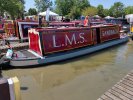
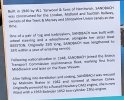
Well, here's a new one for me. Went to the Canal Boat Festival at Crick (in Northamptonshire) yesterday. In amongst the historic boats on display was one carrying the "LMS" moniker. Evidently, the LMS was once the owner of the Trent & Mersey and Shropshire Union Canals. Not something that I was previously aware of.

The attached photos show one of the boats, and the history behind it.
 

Attachments

  • LMS 1.jpg
    LMS 1.jpg
    3.6 MB · Views: 65
  • LMS 2.jpg
    LMS 2.jpg
    210.1 KB · Views: 64
Sponsor Post - registered members do not see these adverts; click here to register, or click here to log in
R

RailUK Forums

Merle Haggard

Established Member
Joined
20 Oct 2019
Messages
3,850
Location
Northampton
Some time ago I went on an 'old staff re-union' to the Standedge tunnels and there was a canal boat moored around there with Great Central Railway lettering, although I don't know whether it was a genuine ex GC one, or from another operator.
 

SuspectUsual

Established Member
Joined
11 Jul 2018
Messages
6,665
The LMS owned quite a lot of canals at various points, in addition to the ones you mentioned:

Ashby
Coalport
Cromford
Forth & Clyde
Huddersfield
Lancaster
Manchester, Bolton & Bury
St. Helens
Ulverston

(Of course owning a canal didn't require them to own any boats other than for maintenance, and having asked my dad, who knows a fair bit about the canals, he thinks the LMS owned maybe 80 boats maximum)
 

zwk500

Veteran Member
Joined
20 Jan 2020
Messages
18,401
Location
Northampton
There's another slice of history, this time on the NER (and Later LNER) owned Pocklington Canal: https://canalrivertrust.org.uk/medi...50Lw/018d458c-920c-7b65-8e40-770e27ae3ec6.pdf

Railway companies were not generally interested in operating waterways, especially where they competed with their own lines. Tolls were quickly raised and as little as possible was spent on maintenance, despite a legal obligation to keep the canal open and in good repair.

I suspect many of the claims about not properly maintaining the canals were relevant to the LMS owned canals as well!
 

The exile

Established Member
Joined
31 Mar 2010
Messages
9,305
Location
Somerset
So - we have canals owned by the LMS and the LNER. The GWR owned the Kenneth & Avon and (by then defunct but still watered) Somersetshire Coal Canal at least; any SR-constituent owned canals as actual going concerns?
 

Sir Felix Pole

Established Member
Joined
21 Oct 2012
Messages
2,151
Location
Wilmslow
Some time ago I went on an 'old staff re-union' to the Standedge tunnels and there was a canal boat moored around there with Great Central Railway lettering, although I don't know whether it was a genuine ex GC one, or from another operator.
The Macclesfield Canal was owned by the GCR (later LNER) and had commercial traffic well into the '50s, transitioning then to leisure use. As a later canal, it was much better engineered with the locks grouped at one point (Bosley).
 

Lemmy282

Member
Joined
8 Apr 2021
Messages
202
Location
Sheffield
When the railways started the canals were seen as competition, so rail companies bought them up taking their traffic to the railways.
 

Taunton

Veteran Member
Joined
1 Aug 2013
Messages
12,218
So - we have canals owned by the LMS and the LNER. The GWR owned the Kenneth & Avon and (by then defunct but still watered) Somersetshire Coal Canal at least; any SR-constituent owned canals as actual going concerns?
The GWR, like the others, owned quite a lot of them. They could be bought up for minimal amounts when most of their revenue traffic had been taken by the railway. The Taunton & Bridgwater canal is still there, having been bought by the GWR in Victorian times. It supplied the railway with water, free, which is why both the Creech watertroughs and the big Taunton water tank (still there) were built right next to the canal, with steam pumps from the canal (used to have a fireman from Taunton shed). Its alignment through the town south of the station was later taken for the avoiding line and the west end wagon storage yard. The docks at Bridgwater stayed in commercial use, with considerable rail trackage alongside which engaged a small fleet of locos well into the diesel era, Class 03s at the end.
 

Sir Felix Pole

Established Member
Joined
21 Oct 2012
Messages
2,151
Location
Wilmslow
There were a few canals too, where the route was converted to a railway. Ledbury to Gloucester (closed 1959) was one such example; the northern canal section to Hereford was not so treated. Perhaps the most famous example is Strood Tunnel in Kent.
 

SuspectUsual

Established Member
Joined
11 Jul 2018
Messages
6,665
There were a few canals too, where the route was converted to a railway. Ledbury to Gloucester (closed 1959) was one such example; the northern canal section to Hereford was not so treated. Perhaps the most famous example is Strood Tunnel in Kent.

And the Burry Port and Gwendraeth Valley
 

Rescars

Established Member
Joined
25 May 2021
Messages
2,516
Location
Surrey
There were a few canals too, where the route was converted to a railway. Ledbury to Gloucester (closed 1959) was one such example; the northern canal section to Hereford was not so treated. Perhaps the most famous example is Strood Tunnel in Kent.
There were some early situations where railways were built because it was impractical to convert a river to a canal. The Wandle powered so many mills and similar industries that it was decided it could not be canalised, resulting in the Surrey Iron Railway being built instead to connect Croydon with the Thames.
 

High Dyke

Established Member
Joined
1 Jan 2013
Messages
4,995
Location
Yellabelly Country
I suppose it makes a change from the railway companies buying up.the "competition" and subsequently closing them.

As an aside, we also saw railway companies operating/owning bus companies.
 

ikcdab

Member
Joined
3 Feb 2012
Messages
473
Location
Cogload Junction
The GWR, like the others, owned quite a lot of them. They could be bought up for minimal amounts when most of their revenue traffic had been taken by the railway. The Taunton & Bridgwater canal is still there, having been bought by the GWR in Victorian times. It supplied the railway with water, free, which is why both the Creech watertroughs and the big Taunton water tank (still there) were built right next to the canal, with steam pumps from the canal (used to have a fireman from Taunton shed). Its alignment through the town south of the station was later taken for the avoiding line and the west end wagon storage yard. The docks at Bridgwater stayed in commercial use, with considerable rail trackage alongside which engaged a small fleet of locos well into the diesel era, Class 03s at the end.
I actually live in the engine mans cottage at Charlton on the Bridgwater and Taunton and I like to think that my cottage was once owned by the GWR. Indeed we have a gwr style pw hut in our garden that was used by the lengthmen maintaining the canal.
 

WesternLancer

Veteran Member
Joined
12 Apr 2019
Messages
14,946
Well, here's a new one for me. Went to the Canal Boat Festival at Crick (in Northamptonshire) yesterday. In amongst the historic boats on display was one carrying the "LMS" moniker. Evidently, the LMS was once the owner of the Trent & Mersey and Shropshire Union Canals. Not something that I was previously aware of.

The attached photos show one of the boats, and the history behind it.
Great picture. I wonder if the livery is authentic.
I assume it probably is.
Lovely paintwork.
 

Rescars

Established Member
Joined
25 May 2021
Messages
2,516
Location
Surrey
A statistical snippet. According to the 1932 edition of the Railway Year Book, of the 615,592 staff employed by the railways of Great Britain, 1,288 were canal staff. By comparison, dock and quay staff numbered 13,330.
 

Mcr Warrior

Veteran Member
Joined
8 Jan 2009
Messages
17,152
There were some early situations where railways were built because it was impractical to convert a river to a canal. The Wandle powered so many mills and similar industries that it was decided it could not be canalised, resulting in the Surrey Iron Railway being built instead to connect Croydon with the Thames.
Wasn't part of the present day railway line (= 9 miles or so?) from East Croydon to London Bridge, built by the London and Croydon Railway Company along the alignment of the one-time early 19th century Croydon Canal? Believe the railway company had bought the (by then) abandoned canal for ~£40,000 in the mid-1830s.
 

Rescars

Established Member
Joined
25 May 2021
Messages
2,516
Location
Surrey
Wasn't part of the present day railway line (= 9 miles or so?) from East Croydon to London Bridge, built by the London and Croydon Railway Company along the alignment of the one-time early 19th century Croydon Canal? Believe the railway company had bought the (by then) abandoned canal for ~£40,000 in the mid-1830s.
Croydon appears to have had a challenging relationship with canals! Apparently the Croydon Canal was the first canal in the country to be formally abandoned by Act of Parliament in 1836. West Croydon station was built over the site of the canal basin. There is lots about the Croydon Canal in Wikipedia, including the claim that it made probably the first commercial use of an internal combustion engine in the world.
 

furnessvale

Established Member
Joined
14 Jul 2015
Messages
4,897
Well, here's a new one for me. Went to the Canal Boat Festival at Crick (in Northamptonshire) yesterday. In amongst the historic boats on display was one carrying the "LMS" moniker. Evidently, the LMS was once the owner of the Trent & Mersey and Shropshire Union Canals. Not something that I was previously aware of.

The attached photos show one of the boats, and the history behind it.
I owned SANDBACH for several years. The crimson lake livery which it carries is not original and I did consider repainting her in original grey and black for authenticity but decided against it.

SANDBACH is the only surviving steel LMS tug afloat, BEESTON being on the bank in a very poor condition. A wooden tug ROAMER also survives. SANDBACH was built for heavy maintenance work on the Shroppie canal when the embankments were showing signs of distress. Within 12 months she was transferred to the Weaver where towing huge barges with a 25ft tug was considered dangerous and the union insisted she was lengthened to 35ft before use.
 
Last edited:

AndrewE

Established Member
Joined
9 Nov 2015
Messages
7,300
There were a few canals too, where the route was converted to a railway. Ledbury to Gloucester (closed 1959) was one such example; the northern canal section to Hereford was not so treated. Perhaps the most famous example is Strood Tunnel in Kent.
The south end of the canal in the Churnet valley too became the railway line to Uttoxeter.
Unlike railway companies neglecting canals to get their traffic, I believe the Birmingham Canal Navigation served so many factories directly (and before road transport was very effective) that canal-to-railway transshipping sheds were built. I think one has a preservation order on it and can be seen from the railway between Brum and Wolves.
 

WesternLancer

Veteran Member
Joined
12 Apr 2019
Messages
14,946
I owned SANDBACH for several years. The crimson lake livery which it carries is not original and I did consider repainting her in original grey and black for authenticity but decided against it.

SANDBACH is the only surviving steel LMS tug afloat, BEESTON being on the bank in a very poor condition. A wooden tug ROAMER also survives. SANDBACH was built for heavy maintenance work on the Shroppie canal when the embankments were showing signs of distress. Within 12 months she was transferred to the Weaver where towing huge barges with a 25ft tug was considered dangerous and the union insisted she was lengthened to 35ft before use.
Thanks for this - very interesting post and answers my point about livery above, for which many thanks.

So the livery here is an 'imagined' LMS canal boat livery? And the original would have been a more plain 'austerity era' grey and black paint scheme then.

After nationalisation, did the BTC have a standard canal boat livery for their fleet, and if so what was it?
 

SuspectUsual

Established Member
Joined
11 Jul 2018
Messages
6,665
After nationalisation, did the BTC have a standard canal boat livery for their fleet, and if so what was it?

The (edited) version of my dad's answer on this (he has been around the canals since he was 10 and seems to know an awful lot) - "dark blue and yellow, but depots had their own versions. There wasn't a 'standard' livery"
 

WesternLancer

Veteran Member
Joined
12 Apr 2019
Messages
14,946
The (edited) version of my dad's answer on this (he has been around the canals since he was 10 and seems to know an awful lot) - "dark blue and yellow, but depots had their own versions. There wasn't a 'standard' livery"
Thanks - I did a quick search which definitely confirms your dad's info!

I can only post the link because it's mostly pics but also a pdf of the painting specification from BTC / BW is there too - well worth a look at the images here.


From 2017
we can all remember that BW used "Blue & Yellow" as a livery. Despite a directive for the application of the livery being sent to all that mattered only a few followed the guidelines to the letter. Bulls Bridge certainly did (most of the time) but places like Bradley had a completely different interpretation.
 

billh

Member
Joined
7 Jan 2015
Messages
320
There's another slice of history, this time on the NER (and Later LNER) owned Pocklington Canal: https://canalrivertrust.org.uk/medi...50Lw/018d458c-920c-7b65-8e40-770e27ae3ec6.pdf


I suspect many of the claims about not properly maintaining the canals were relevant to the LMS owned canals as well!
By contrast with the LMS, the LNER did maintain their "Western Canals" that is the Macclesfield, Peak Forest and Ashton to a fair standard, even though there was little traffic. It was only after nationalisation that maintainence standards fell resulting in the closure of the Ashton and lower section of the Peak Forest by 1961. The LNER inherited these canals from the GCR who in turn got them from the MS&LR . In MS&LR times the company encouraged boat traffic , mostly limestone products from the Peak Forest quarries to the Manchester area. We still have that traffic today, transferred to rail, see Dowlow -Ashburys and PF-Hope St,Salford.
 

Merle Haggard

Established Member
Joined
20 Oct 2019
Messages
3,850
Location
Northampton
By contrast with the LMS, the LNER did maintain their "Western Canals" that is the Macclesfield, Peak Forest and Ashton to a fair standard, even though there was little traffic. It was only after nationalisation that maintainence standards fell resulting in the closure of the Ashton and lower section of the Peak Forest by 1961. The LNER inherited these canals from the GCR who in turn got them from the MS&LR . In MS&LR times the company encouraged boat traffic , mostly limestone products from the Peak Forest quarries to the Manchester area. We still have that traffic today, transferred to rail, see Dowlow -Ashburys and PF-Hope St,Salford.
My bold

Perhaps this was because the MS&L didn't have a rail route into the area? Probably would have been opposed by the L&NWR if they had proposed one.

//

PS, The boat at Standedge that I referred to earlier was in MS&L livery, not GC, perhaps that was its origins.

//

I have a hazy recollection that the LNWR/LMS kept one canal open as, amongst other requirements, it fed water supply for locos. - possibly troughs.
 

billh

Member
Joined
7 Jan 2015
Messages
320
My bold

Perhaps this was because the MS&L didn't have a rail route into the area? Probably would have been opposed by the L&NWR if they had proposed one.

//

PS, The boat at Standedge that I referred to earlier was in MS&L livery, not GC, perhaps that was its origins.

//

I have a hazy recollection that the LNWR/LMS kept one canal open as, amongst other requirements, it fed water supply for locos. - possibly troughs.
That is exactly the reason , MS& L had a canal route, with the Peak Forest Tramway linked to Bugsworth Basin but no rail route in the area.
I am very familiar with the boat you describe at Standedge, she was returned to MSLR livery , as best as could be deduced from B&W photos and a painting from c1895 in year 2005.
 

Merle Haggard

Established Member
Joined
20 Oct 2019
Messages
3,850
Location
Northampton
That is exactly the reason , MS& L had a canal route, with the Peak Forest Tramway linked to Bugsworth Basin but no rail route in the area.
I am very familiar with the boat you describe at Standedge, she was returned to MSLR livery , as best as could be deduced from B&W photos and a painting from c1895 in year 2005.

Thanks, it was a retired railway staff visit and I did wonder how many people who were't enthusiasts would realise what 'M. S. & L. R.' stood for.

Good to have an authentic livery - the LMS one seems to be based on the assumption that the LMS painted everything maroon with black & yellow edging. At the time of that boat's construction - 1946 - even 'Princess Coronation' class locos were being painted black.
 

Top