• Our new ticketing site is now live! Using either this or the original site (both powered by TrainSplit) helps support the running of the forum with every ticket purchase! Find out more and ask any questions/give us feedback in this thread!

Price and time saved difference between HS2 at 225mph and 185mph

Technologist

Member
Joined
29 May 2018
Messages
467
Where are there places which would justify 3tph (or better) where such an acceleration rate would have a material impact on journey times?

For most people they would feel like their train is faster by not having to wait as long between services.

Most people want at least 2tph, however factor in some time for delays (it's not uncommon for a commuter to get the train that gets then to work at 08:29 even though they could get there at 08:59) especially if they have to change.

Typically passenger modeling assumes this delay to be half the gap in service provision.

That means that the "saving" from having a train service running at 3tph vs 2tph is 5 minutes. Even at maximum performance (1.3m/s2 from 0-360kph at each stop) that's not going to save as much as the more frequent service, unless there's more than 4 station stops.

However, most trains with more stops (i.e. typically those getting up to 100mph) are going to have higher acceleration rates (even the third rail 444's can do 1m/s2) which reduces the acceleration advantage.

As such that's a lot of engineering for not a lot of savings (basically none under normal conditions, as you shouldn't be timetabling for such tight margins).

Everywhere!

The long term vision is based on two technological changes:

1: Autonomous cars are going to change how we get around massively and do so well within the timescales of any rail plan set out today
2: Electric cars have essentially made extreme performance a negligible cost option (manufacturing costs for 300KW PM motors are less than £1k), this applies to electric rail vehicles.

So the vision would be this, every rail line becomes a metro where every station is a stop.

Every train is procured with the ability to accelerate at 1.3m/s2 with a knee velocity approaching its top operating speed. So comparing the class 444 is not as simple as comparing 1ms2 to 1.3ms2. The class 444 takes 2 minutes 34 seconds/4.5km to get to 100mph (unladen, without aero drag/friction, without any margins) our BEMU gets to 100mph in 34 seconds/800m (where we're going we don't worry about drag!). This also means we can potentially convert acceleration/deceleration into speed, trains can accelerate up to higher speeds between geometry which limits speed and modern signalling should facilitate this.

  • We use our higher performance get every train to stop at every station without the end to end times suffering, in fact we might even improve them.
  • We get rid of the mixed traffic so we can run more trains, every railway should be a walk up railway
  • We rationalise how many stations we have, people living near a current infrequently served station will be able to get an autonomous car to a walk up railway service with a blazingly fast train and do the same at the other end.
  • We develop the areas around the stops which now have faster and vastly more frequent rail services
  • The revenue from land value up-lift is fed into improving track geometry to allow services to go faster
  • The faster services extend the effective size of the UK largest urban areas thus allowing them to generate agglomeration economic gains - profit!
As an example of what high acceleration could do for us I picked at random the Welsh South Wales Main Line:

1775077057875.png

I asked AI to measure track radius and then propose max speeds based on this.

1775043839243.png
I then asked it to model how fast a train accelerating and decelerating at 1.3ms2 could get up to between corners.
1775078636074.png

The final map is a poor representation of the calculations it actually did, AI isn't good at drawing (it gave me a table of curves and distance between them). The parameters were a train that can accelerated and decelerated at 1.3ms2. However for safety I have set the braking point at 16 seconds of driver and control system operation at peak speed followed by an emergency brake at 1.8ms2 (regen plus + eddy current) before taking the corner at the speed limit. This results in an average braking speed of 0.9ms2. The other big effect of every train being a high speed stopping service is that it means every train goes at the same speed on every bit of the line, this means we can have high cant on the tracks and not worry about freight and slow services grinding in inner rail. This was a pretty big lever, on that track example there most of the corners could go from being 75-85mph turns flat to 100-110mph turns with 100mm of can plus 150mm deficiency.

We could also play with eddy current braking to get the normal service braking speed to 1.3ms2 passenger comfort level

ScenarioTop Speed AchievedTime for the sectionAverage Speed
Scenario 1 (Uncapped)224mph4:04152.3mph
Scenario 2 (186mph Cap)186mph4:18143.7mph
Scenario 3 (155mph Cap)155mph4:46129.5mph
Scenario 4 (125mph Cap)125mph5:15117.8mph

One final caveat, this in no way suggests that the South Wales Mainline would have ever have enough traffic on it to justify 20 train per hour super BEMU services and the upgrades to track and intermittent electrification that would all need. But think about what that would do on the ECML!

== Doublepost prevention - post automatically merged: ==

My point was rather that if using BEMUs would unlock much greater levels of acceleration, why haven't we seen any railway do so?
1: How long have BEMU's been a prospective solution that a mainstream railway engineer would suggest?
2: How many people who operate fully electrified services are thinking about using BEMUs to boost acceleration, most people are still thinking of BEMUs as slow and heavy?

I think with our legacy mixed traffic system the UK might be the place where high performance BEMUs will be the most transformational. It's very much a turbocharging of the APT solution, super train dumb track. However where the differences lie today are we have the signalling systems to make it happen and all the autonomous car tech is going to make them much cheaper soon.
 
Last edited:
Sponsor Post - registered members do not see these adverts; click here to register, or click here to log in
R

RailUK Forums

FMerrymon

Member
Joined
11 Dec 2024
Messages
362
Location
Reading
I've not seen this document before, but it was released redacted as part of an FOI request: https://www.whatdotheyknow.com/request/pwc_international_benchmarking_s/response/1284988/attach/5/FOI F0016746 Redacted Document.pdf?cookie_passthrough=1

It includes a cost a capital cost chart of comparative costs for construction depending on speed. This is prior to the first budget rise in 2020 after the Chairman's stocktake in 2019. I suppose the issue here is that its for the same alignment, so we cannot see what a different alignment would cost. There's quite a lot more interesting information in there around energy use and other factors influenced by speed.

1775087516441.png
 

The Ham

Veteran Member
Joined
6 Jul 2012
Messages
12,036
Well this is an interesting development, especially for North South freight capacity in the UK:


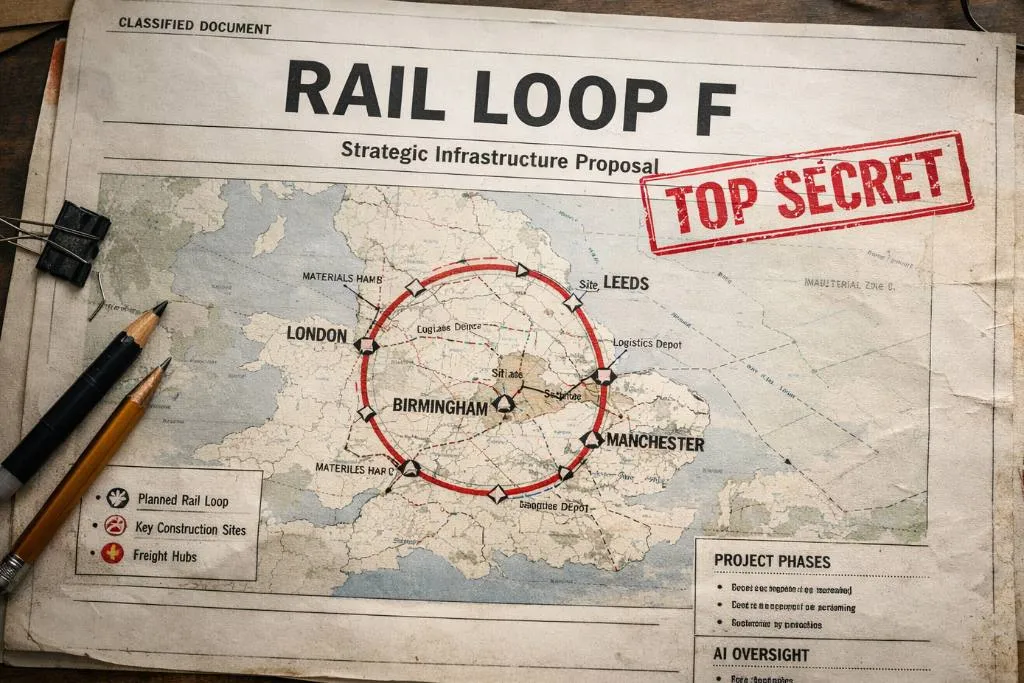
Ministers are drawing up plans for a major new passenger rail line linking London, Manchester and Leeds, with HS2 set to be converted into a freight-only route, according to Whitehall sources.

The proposal, being discussed under the working title “Rail Loop F”, is said to have emerged after officials concluded that the public may be reluctant to travel on HS2 due to its spiralling costs, delays and years of negative headlines.

Especially the bit about public perception:

One Department for Transport source said early polling had been promising.

“When members of the public were asked whether they would travel on HS2, the response was cautious,” the source said.

“However, when they were asked if they would use a brand-new high-speed railway between London, Manchester and Leeds that was definitely not HS2, most said yes.”

It does to the question of what speed they would look to build it to, especially given that the savings from lower speeds are tiny and if people will really catch on with this plan.

First published 2026/04/01
 

Snow1964

Established Member
Joined
7 Oct 2019
Messages
11,181
Location
West Wiltshire
Meanwhile in Spain, RENFE is tendering for new 350 km/h trains to operate Madrid - Barcelona (at 621km slightly less than KX - Edinburgh).

RENFE


(Google Translate).
Just looked at this.
Intention for about 45 trains revealed late 2025
Published announcement 30 trains + 10 options last week
Manufacturers to submit bids by 9th June
Public announcement of winners 9th September 2026

So Renfe can spend about £1.15bn (or £1.5bn with options) and get order sorted in about 9 months, but meanwhile UKs sleepy tendering process takes years.

350km/h trains, high speed tendering.
UK is hopelessly slow in comparison, and award dates just drift into future years, and years after awarding contract still dithering over top speed.
 

Justin Smith

Established Member
Joined
14 Nov 2009
Messages
1,429
Location
Sheffield
They'd find something else to complain about. Most Chiltern locals don't want any railway at all (ideally anywhere) because they drive everywhere.
That's a bit contentious but what is not is that HS2 trains would not be of any use to them as there will be no station in the Chilterns. Unlike the M40, which they could actually use once it was built !
 

Shrop

Established Member
Joined
6 Aug 2019
Messages
1,357
That's a bit contentious but what is not is that HS2 trains would not be of any use to them as there will be no station in the Chilterns. Unlike the M40, which they could actually use once it was built !
Therein lies the fundamental difference between the UK and (some) other countries.

The UK culture is to oppose things which have a tiny chance of causing personal inconvenience, even if there are huge benefits to be gained for many others.

Japanese culture (for example) is to see things in the context of their country, and to understand that small amounts of personal sacrifice are worthwhile for the greater good.

People in the UK are generally more self centred than this.

I strongly suspect that a great many users of the M40 who opposed HS2, think absolutely nothing of speeding through towns and villages where they don't live, in order to get where they want to.
 

eldomtom2

On Moderation
Joined
6 Oct 2018
Messages
2,390
Therein lies the fundamental difference between the UK and (some) other countries.

The UK culture is to oppose things which have a tiny chance of causing personal inconvenience, even if there are huge benefits to be gained for many others.

Japanese culture (for example) is to see things in the context of their country, and to understand that small amounts of personal sacrifice are worthwhile for the greater good.

People in the UK are generally more self centred than this.

I strongly suspect that a great many users of the M40 who opposed HS2, think absolutely nothing of speeding through towns and villages where they don't live, in order to get where they want to.
Oh there's been a lot of Japanese NIMBYism, especially when it comes to the Shinkansen! I would say the difference is not culture but one of laws and HSR design.
 

The Ham

Veteran Member
Joined
6 Jul 2012
Messages
12,036
I strongly suspect that a great many users of the M40 who opposed HS2, think absolutely nothing of speeding through towns and villages where they don't live, in order to get where they want to.

I'm aware of a place where there was speeding issue, only problem is the road was a long cul-de-sac and so it was pretty much only residents who were the ones speeding.
 

Justin Smith

Established Member
Joined
14 Nov 2009
Messages
1,429
Location
Sheffield
Therein lies the fundamental difference between the UK and (some) other countries.

The UK culture is to oppose things which have a tiny chance of causing personal inconvenience, even if there are huge benefits to be gained for many others.

Japanese culture (for example) is to see things in the context of their country, and to understand that small amounts of personal sacrifice are worthwhile for the greater good.

People in the UK are generally more self centred than this.

I strongly suspect that a great many users of the M40 who opposed HS2, think absolutely nothing of speeding through towns and villages where they don't live, in order to get where they want to.
I'll tell you an interesting sidelight on NIMYISM, or rather the inconsistent attitude to it.
One of the arguments most commonly bought up by adherents of a blanket 20mph in built up areas is that "the locals want it". I am quite prepared to believe (if the boundary of those surveyed is "nicely" drawn) that a majority of residents in any given area might back a local 20mph limit. However nationally there is undoubtedly a huge majority that hates blanket 20mph limits (on through routes) as people driving through them are frustratingly inconvenienced
Now the argument that there should be "local power over the greater good" within their local neighbourhood may have validity (though personally I am unconvinced in the case of 20mph limits on through routes ! ) but surely it has to be applied consistently ? So here's the question, do those same people arguing for "local power" also think people in an area should have the final say over building developments that the residents don't want ?* I suspect they don't, rightly or wrongly they'd call locals against building developments NIMBYS. So, what they really mean is they are in favour of locals having power over their local environment, but only if it's something they want them to have anyway....

* Bear in mind that residents arguably have more of a case for being against building development because that is changing the local environment for the worse (as they see it) over what it was when they moved in. Whereas those wanting a 20mph limit want stuff changing over what it was when they chose to live there in the first place !
 

The Ham

Veteran Member
Joined
6 Jul 2012
Messages
12,036
I'll tell you an interesting sidelight on NIMYISM, or rather the inconsistent attitude to it.
One of the arguments most commonly bought up by adherents of a blanket 20mph in built up areas is that "the locals want it". I am quite prepared to believe (if the boundary of those surveyed is "nicely" drawn) that a majority of residents in any given area might back a local 20mph limit. However nationally there is undoubtedly a huge majority that hates blanket 20mph limits (on through routes) as people driving through them are frustratingly inconvenienced
Now the argument that there should be "local power over the greater good" within their local neighbourhood may have validity (though personally I am unconvinced in the case of 20mph limits on through routes ! ) but surely it has to be applied consistently ? So here's the question, do those same people arguing for "local power" also think people in an area should have the final say over building developments that the residents don't want ?* I suspect they don't, rightly or wrongly they'd call locals against building developments NIMBYS. So, what they really mean is they are in favour of locals having power over their local environment, but only if it's something they want them to have anyway....

* Bear in mind that residents arguably have more of a case for being against building development because that is changing the local environment for the worse (as they see it) over what it was when they moved in. Whereas those wanting a 20mph limit want stuff changing over what it was when they chose to live there in the first place !

Blanket 20mph hit differently depending on the places they are put in.

If there's an alternative route which isn't impacted by them then which previously was (say) 30 seconds longer but now because of the 20 limit on the more direct route it's now 90 seconds faster that's not really going to impact most people as much as there only being the one through route which is now 120 seconds slower.

Having said that, most people living in an area would want the slower limit.

Firstly, because they are impacted by it fast less than someone driving the full length of the limit (even if they are impacted the full length going (say) left of their house/road they wouldn't be impacted at all going the other way.

Also, they are going to benefit from the road safety improvements of the lower speeds limits, as almost everyone will be a pedestrian at some point within the 20mph limit locally to them. The risk of being fatalily hit in a 20mph is 2.5% (basically someone is frail, infirm or otherwise had an underlying health condition - it's why cyclists causing fatalilies almost always do so to someone over 70, with a lot of the rest being under 10 due to the more erratic behaviour they are likely to show - although as there's in average 0.02 pedestrian deaths per billion km caused by cyclists vs 2.5 pedestrian deaths per billion km caused by cars, we're dealing with low numbers; even if you include the UK and EU data together you're looking at around 10-23 deaths a year compared with 400 deaths just in the UK for cars and around 20,000 if you include the EU as well)

Finally the other thing the locals are likely to enjoy is a reduction in through traffic, even in a route with no alternative the extra time delay Will likely have some impact on the frequency of some of the users of the route as they time, especially if they are traveling through several built up areas, could have the perception of significant delay and so if they can they might try and reduce how often they do those trips.

Of course for those routes where there's an alternative route, the reduction in the volume of traffic is likely to be more significant.

That then further increases the road safety for them as pedestrians as well as improving air quality.

Sometimes, which at first may sound like a paradox, by putting in a 20mph limit journey times can improve for locals. In that they are traveling over a shorter section of road and so they're overall time impact is less, however if there's less traffic they are likely to be able to join a main road with a shorter wait time and then at other junctions they travel through may see lower delays than previously seen.

However, it does so highlight why local support for schemes in their area are likely to be higher for things the people can see a direct benefit from (like 20mph limit) but are less likely to support things they can't see a direct benefit from (new housing, HS2, etc.).

Even though there's a fairly good chance that they would see benefits.

In the case of HS2, even if the trains at their local stations aren't any more frequent, they are likely (if they could be used to do a journey which could now be done on HS2) to have a better chance of getting a seat.

Even if they personally don't use rail, when HS2 creates new freight paths they would benefit from fewer lorries on the roads, in addition to the motorways being a little quieter than they would have been (note, as time goes on, they still might be busier than now due to traffic growth, however they would still have less traffic than they would have had without HS2).

Also, if HS2 is running very fast (185mph) vs a more typical intercity speed in the UK (125mph, or maybe 140mph) then they traffic reduction over what would have happened is likely to be more pronounced (cutting rail times from, say, 2:08 minutes to 1:48 minutes is hardly going to change the numbers going by train, cutting it to 1:08 would mean that it could take 30 minutes to get to one end of the faster service and it still be faster than driving.

Take for instance travelling from Aylesbury the drive time to Manchester Airport is 3 hours with limited traffic (i.e. early hours of the morning), rail currently takes around 4 hours to Manchester Piccadilly (yes I know different end points, however you'll see why I'm a minute).

By reducing rail's journey time by 1 hour, someone travelling by rail to central Manchester had got their whilst someone driving would still be outside the city and likely be slower to get to their end destination, even showing for the rail user having to change trains or modes to get where their going, even though they've travelled about 40 miles in the wrong direction to get onto a HS2 service.

Yes the numbers traveling between Aylesbury and Manchester are likely to be small, however it does show that for people wishing the Chilterns it could have done reduction in traffic, especially on the M40. It's also a good illustration as to why faster speeds can have some advantages for those who's local area the line passes through.

The other thing which HS2 will do is limit where more housing can be built. That's because few developers would want to build their homes near the line, as they wouldn't be able to sell them for as much as if they built them a few miles further away.

In a previous job we had a client who built private crematoriums, the locals for very upset about having one (traffic being of sufficient concern). However, given the required stands off distances, in one village it would have effectively blocked housing in its southern edge.

Without the crematorium, almost any housing development (even just the land used for the crematorium) would have had a larger impact on traffic than they would have got. Also, the extra trafficv from the crematorium would have almost entirely been during the day, with almost no extra peak hour traffic, which is when traffic congestion is at its worse, unlike housing where around 10% of the traffic would be in each of the peak hours and their have a much more noticeable impact on their travel.

It also meant that the scale of the built environment was far smaller than if it was housing (basically one large bungalow vs 50 homes) and whilst the landscaping would sort the view (likely more trees and shrubs rather than grassland or crops) the view would still be primarily green in nature (especially as planting would have been used to soften the impact of the building and parking and would have done a significantly better job than if it were housing).

It was always the case that the locals would kick up a fuss, the planning committee would reject the application, the clients would go to appeal and not only win but get their costs paid for by the council because the reasons for refusal weren't good planning reasons.
 

slowroad

Member
Joined
23 Jul 2021
Messages
371
Location
Wales
I'll tell you an interesting sidelight on NIMYISM, or rather the inconsistent attitude to it.
One of the arguments most commonly bought up by adherents of a blanket 20mph in built up areas is that "the locals want it". I am quite prepared to believe (if the boundary of those surveyed is "nicely" drawn) that a majority of residents in any given area might back a local 20mph limit. However nationally there is undoubtedly a huge majority that hates blanket 20mph limits (on through routes) as people driving through them are frustratingly inconvenienced
Now the argument that there should be "local power over the greater good" within their local neighbourhood may have validity (though personally I am unconvinced in the case of 20mph limits on through routes ! ) but surely it has to be applied consistently ? So here's the question, do those same people arguing for "local power" also think people in an area should have the final say over building developments that the residents don't want ?* I suspect they don't, rightly or wrongly they'd call locals against building developments NIMBYS. So, what they really mean is they are in favour of locals having power over their local environment, but only if it's something they want them to have anyway....

* Bear in mind that residents arguably have more of a case for being against building development because that is changing the local environment for the worse (as they see it) over what it was when they moved in. Whereas those wanting a 20mph limit want stuff changing over what it was when they chose to live there in the first place !
Interestingly, in Wales, which now has a default 20 mph limit, polls consistently show support for the limit “on my street” but strong opposition to the general policy. The former evidence was used by advocates to support the policy‘s Introduction. They may be about to experience the electoral consequence.
 

The Ham

Veteran Member
Joined
6 Jul 2012
Messages
12,036
Interestingly, in Wales, which now has a default 20 mph limit, polls consistently show support for the limit “on my street” but strong opposition to the general policy. The former evidence was used by advocates to support the policy‘s Introduction. They may be about to experience the electoral consequence.

One of the larger set of criticisms was around roads where they were 30 and they was a suitable speed for that road however it got changed to 20 without review.

Several such roads have been changed back to 30 limits and so the negativity around such roads is likely to have reduced.

There's still going to be prime opposed to the 20 limit, however not enough to reverse the blanket 20mph rule. Especially at the cost savings from the reduced number of accidents had paid for the cost of changing the signs.

As such it's going to be a fairly hard sell to reverse all the limits, and so it's likely to be down to individuals saying they'll review certain roads in there area.

Therefore, whilst there will still be some grumbling over it, I doubt that if (say) Reform would say they would totally reverse it, in that it wouldn't gain them much support over what they already have. Likewise, they can't even claim that it will save money, which is their go to line.
 

slowroad

Member
Joined
23 Jul 2021
Messages
371
Location
Wales
One of the larger set of criticisms was around roads where they were 30 and they was a suitable speed for that road however it got changed to 20 without review.

Several such roads have been changed back to 30 limits and so the negativity around such roads is likely to have reduced.

There's still going to be prime opposed to the 20 limit, however not enough to reverse the blanket 20mph rule. Especially at the cost savings from the reduced number of accidents had paid for the cost of changing the signs.

As such it's going to be a fairly hard sell to reverse all the limits, and so it's likely to be down to individuals saying they'll review certain roads in there area.

Therefore, whilst there will still be some grumbling over it, I doubt that if (say) Reform would say they would totally reverse it, in that it wouldn't gain them much support over what they already have. Likewise, they can't even claim that it will save money, which is their go to line.
I believe (not checked lately) that Reform have committed to abolishing.

The cost-benefit all depends on how you value time. At conventional values for time - those applied in the appraisal of other transport projects, including rail - the impact assessment showed costs greatly in excess of benefits.
 

Justin Smith

Established Member
Joined
14 Nov 2009
Messages
1,429
Location
Sheffield
Interestingly, in Wales, which now has a default 20 mph limit, polls consistently show support for the limit “on my street” but strong opposition to the general policy. The former evidence was used by advocates to support the policy‘s Introduction. They may be about to experience the electoral consequence.
It's what I call "OIMBY" (Only In My Back Yard), the opposite of "NIMBY".

== Doublepost prevention - post automatically merged: ==

I believe (not checked lately) that Reform have committed to abolishing.

The cost-benefit all depends on how you value time. At conventional values for time - those applied in the appraisal of other transport projects, including rail - the impact assessment showed costs greatly in excess of benefits.
It isn't just time saving, driving on a through route at 20mph is unbelievably frustrating, one literally feels one if hardly moving.
There is also speeding tickets. We have all been trained as drivers that if we do not want a speeding ticket and there are lamposts and you don't know what the speed limit is then its 30mph. That is no longer the case. I was astounded to drive along a B road in Leeds the other month and discover it was a 20 limit and thus it was not inconceivable I could have got a speeding ticket from a camera ! I could not believe it......

Having said all or that, whilst I am very much against 20mph limits on through routes I am in favour of them on back street residential roads. I believe that is the majority position actually ?
 
Last edited:

Justin Smith

Established Member
Joined
14 Nov 2009
Messages
1,429
Location
Sheffield
Well it seems they were building it to go too fast.....

HS2 failings blamed on high-speed focus and political pressure : BBC news

Another interesting theory on the net :

The central lesson was think slow, act fast - work through the hard planning properly upfront so that when you start building you’re executing a well thought out plan, not winging it. France spent nearly 20 years planning the TGV before a single track was laid, then built the first line in around 5 years. HS2 did the exact opposite.
 

Shrop

Established Member
Joined
6 Aug 2019
Messages
1,357
Well it seems they were building it to go too fast.....

HS2 failings blamed on high-speed focus and political pressure : BBC news

Another interesting theory on the net :

The central lesson was think slow, act fast - work through the hard planning properly upfront so that when you start building you’re executing a well thought out plan, not winging it. France spent nearly 20 years planning the TGV before a single track was laid, then built the first line in around 5 years. HS2 did the exact opposite.
No, HS2 was not planned quickly. It was discussed in detail at a conference I went to in 2006, when it was known as a Greenguage21 project before it formally evolved into HS2 in 2009.
It was under discussion well before 2006 too, but construction didn't start until 2020, so it was certainly not planned quickly.
We now hear that it's not planned to open until 2036, so construction hasn't been at all quick either.
This is a big problem for how the UK operates. Slow to plan AND slow to build :s :'(
 

positron

Member
Joined
18 Oct 2022
Messages
717
Location
Cardiff
Saving £2bn and cutting it's capacity (the main point) in the process is insane for a 100bn project. Just build the damn thing as originally specced and stop changing the requirements half way through.
 

Top