This is a fair point. The line speed's not so important until more of the network gets built, which at the moment looks fairly distant.There would then be nothing stopping the operator from seeking certification for the full 360/400km/h at a later date, once the line is fully bedded in.

-
Our new ticketing site is now live! Using either this or the original site (both powered by TrainSplit) helps support the running of the forum with every ticket purchase! Find out more and ask any questions/give us feedback in this thread!
You are using an out of date browser. It may not display this or other websites correctly.
You should upgrade or use an alternative browser.
You should upgrade or use an alternative browser.
HS2 Reset: Evidence to Transport Committee - 9 July 2025 "Total overspend on high-speed rail could be as much as 100%"
- Thread starter Nottingham59
- Start date
Sponsor Post - registered members do not see these adverts; click here to register, or click here to log in
R
RailUK Forums
zwk500
Veteran Member
It depends if they intend to alter the actual design, or just only certify it for 300/320kph instead of 400kph. If the block sections stay where they are, then the Balise groups should also be able to be left largely where they were. The transition on and off the classic network was always going to be slower anyway because obviously trains will need to be at 125mph on the classic line.Except mention is made of altering the signalling etc. down to lower speeds. If the infrastructure is limited in that way, it's going to be much harder to return it to the currently planned speeds.
However all the data transmissions will only need to be proven to 300kph rather than 400kph, which obviously makes it rather a lot easier because you don't need to run trains all the way to 400kph and you can compare against the decent body of 300kph ETCS L2 running data from Europe.
I'm not sure, tbh. I suspect it would cause a bit of angst as it would require rolling stock replacement or upgrades (especially the 92s and Javelins, as Eurostar have a fleet renewal plan in progress). It also depends if the HS1 Interlocking is ETCS-suitable, or if it would require a re-lock first.It would be very interesting to know, if it's going to happen anyway, what additional costs would arise from bringing that forward by a few years. I suspect very little, and given the current rate of progress with HS2, possibly not by all that many years either.
AIUI the plan was to resignal the Eurostar route in order of age (LGV Nord, Eurotunnel, HSL-1 (Belgium), HS1), as the interlockings came up for renewal. The interfaces between HS1 and NR would be tricky, especially if the NR side interlocking isn't ETCS-ready.
I doubt it. HS2 trains are classic compatible, so could use Ripple Lane as a nice handy base.Of course, if they then decide to test HS2 trains on HS1, or even just do mileage accumulation there, I'm sure they'll learn to regret the missing HS2-HS1 link...

HSTEd
Veteran Member
- Joined
- 14 Jul 2011
- Messages
- 20,269
Trains aren't really a major cost driver here, the train contract is a very small portion of the cost of the railway. In the long run, reducing speed to 300km/h would increase the number of achievable paths per hour. This would impose the costs of a small increase in journey times and staff requirement from increased numbers of train captains.It potentially reduces capacity in terms of the number of trips per day a train can make.
== Doublepost prevention - post automatically merged: ==
Isn't that equipment essentially commodity hardware these days given the widespread use of TVM?Only if the HS2 stock were fitted with the TVM equipment and emulation software for display on the ETCS DMI. Or HS1 fitted with ETCS L2 overlay, which is in the pipeline but probably not going to come before HS2.
Is there a serious manufacturer of high speed trains outside china with no TVM product?
Last edited:
zwk500
Veteran Member
Isn't TVM only used in France, the Channel Tunnel, Belgium's HSL-1 and on HS1? Most other high-speed railways in Europe seem to use LZB or ETCS. Even France has upgraded some TVM lines to ETCS. While Hitachi have experience with it, having manufactured the Class 395s, it's still time, effort and cost to convert the trains for a system you don't intend to use. Especially as then you'd need to prove the ETCS to 300kph anyway later.Trains aren't really a major cost driver here, the train contract is a very small portion of the cost of the railway. In the long run, reducing speed to 300km/h would increase the number of achievable paths per hour for the cost of a small increase in journey times and staff requirement from increased numbers of train captains.
== Doublepost prevention - post automatically merged: ==
Isn't that equipment essentially commodity hardware these days given the widespread use of TVM?
Is there a series manufacturer of high speed trains outside china with no TVM product?
Anyway, it's probably moot because it sounds like they rejigged construction order slightly of HS2 to provide a test length.
fishwomp
Established Member
This reset reminds me of the Edinburgh trams inquiry - it's costing to do it but taking too long to report such that its findings may be moot..Being reported in Construction Enquirer this morning that the HS2 reset will take until December whilst Wilde and the team evaluate the impact of reducing speed.
[..]
The trams project significantly over-spent and delivered only half the tram network planned (6 years from act of parliament through to passenger use). An inquiry was held - and the inquiry was over budget and delayed - it took 9 years to complete and cost £13M, coming out in 2023..
Some people thought there should be an inquiry into the inquiry, but wiser heads figured that that was a daft idea.
weeklycommuter
Member
- Joined
- 2 Feb 2019
- Messages
- 1,039
Power costs are gonna go down though as we upgrade our grid infrastructure. It's just electricity, we have the ability to produce more of it than ever - over the long term they'll become neglible.
I am not convinced the UK will have an abundance of electric power, even by the time trains eventually starting running on HS2.
At present, the UK is importing around 10 percent of its electricity from France which has over 60 GW of nuclear power compared to about 6 GW in the UK. New nuclear power stations are being built in the UK but this will take several years.
Then there are all those electric cars that will need charging.
HSTEd
Veteran Member
- Joined
- 14 Jul 2011
- Messages
- 20,269
Hitachi is, however, building HS2 rolling stock in a joint venture with the vendor with possibly the most TVM experience of all - Alstom.Isn't TVM only used in France, the Channel Tunnel, Belgium's HSL-1 and on HS1? Most other high-speed railways in Europe seem to use LZB or ETCS. Even France has upgraded some TVM lines to ETCS. While Hitachi have experience with it, having manufactured the Class 395s, it's still time, effort and cost to convert the trains for a system you don't intend to use. Especially as then you'd need to prove the ETCS to 300kph anyway later.
And yes, whilst you'd have to prove the trains to 300kph on ETCS, you could run up all the fault free mileage and such on HS1.
The cost of converting trains that don't exist yet to use TVM will be a small portion of the cost of the contract, which is itself a rather small portion of the cost of the scheme.
Well yes, but it may be they have concluded they can save money by rejigging it back!Anyway, it's probably moot because it sounds like they rejigged construction order slightly of HS2 to provide a test length.
Technologist
Member
- Joined
- 29 May 2018
- Messages
- 467
As I regularly point out due to the automotive industry (essentially the world largest industry) adopting electrification I can now buy a car that will beat a Mclaren F1 0-60 for £10k used. This will be having an effect on train design sooner or later, probably later due to procurement models but well within the timescales of getting HS2 operational.This is a much smaller country with much shorter distances than China. The longest non-stop distance on HS2 is about 150km between Old Oak Common and Birmingham Interchange.
It is perfectly feasible to design a train today that would not have OHLE limiting its acceleration (by constraining power output to ~20MW) and would accelerate at 1.3ms-2 to around 125mph and still be accelerating at 0.83ms-2 at 186mph. That train would get up to 248mph (400kph) line speed in 7km and 1m50s, it could decelerate at the same rate. On HS2 this train would be limited by the infrastructure as tunnels near to London have lower speed limits and thus diameters on the assumption that trains wouldn't be going at 400kph that close to London. (Japanese style train noses are likely to be the solution).
So yes, once we throw in improved technology or different framing common assumptions like "the UK isn't big enough to benefit from very high speeds" fall over.
The assumption that train accelerations will stay where they are has meant that HS2 is not as useful as it could be, there should be far more stops and it should function more like a national high speed metro.
We need to be having similar thoughts on signalling and similar, one of the most recent tech observations is that "everything is computer", batteries, sensors, compute and integration mean that any company that has mastered producing one tech device is able to produce pretty much any other. Hence why one of the best EVs was produced in record time by a smart phone manufacturer Xiaomi.

Everything is Computer | Andreessen Horowitz
How smartphones became the blueprint for modern technology, shaping electric vehicles, robotics, AI, and global supply chains, and why mastering the electro-industrial stack now defines economic and geopolitical power.
 a16z.com
The technology to run digital signalling is pretty primitive compared to that required to reliably operate a car in traffic or control a humanoid robot and the production volumes associated with those technologies mean that they become cheap commodities very rapidly. Approaches that would have been prohibitively expensive in the past actually become the cheap option because you can leverage consumer technologies.
So for example the technology for every single element of rolling stock to know where it currently is to the nearest cm and how fast it is going by means of INS, GPS, Lidar and visual recognition is trivially expensive. This could be communicated by 5G, WiFi and more than one satellite network all in a pretty small mass produced box. So we have voting and redundancy on every system. We do the same with points. So basically we leap straight past the most advanced currently conceived ETCS system.
Last edited:
Making plans based on what you might have - remember that these supposed super-accelerating high speed trains do not exist and as far as I am aware have not been proposed by any serious manufacturer or operator - is generally a bad idea compared to making plans based on what you'll definitely have.
InTheEastMids
Established Member
- Joined
- 31 Jan 2016
- Messages
- 1,382
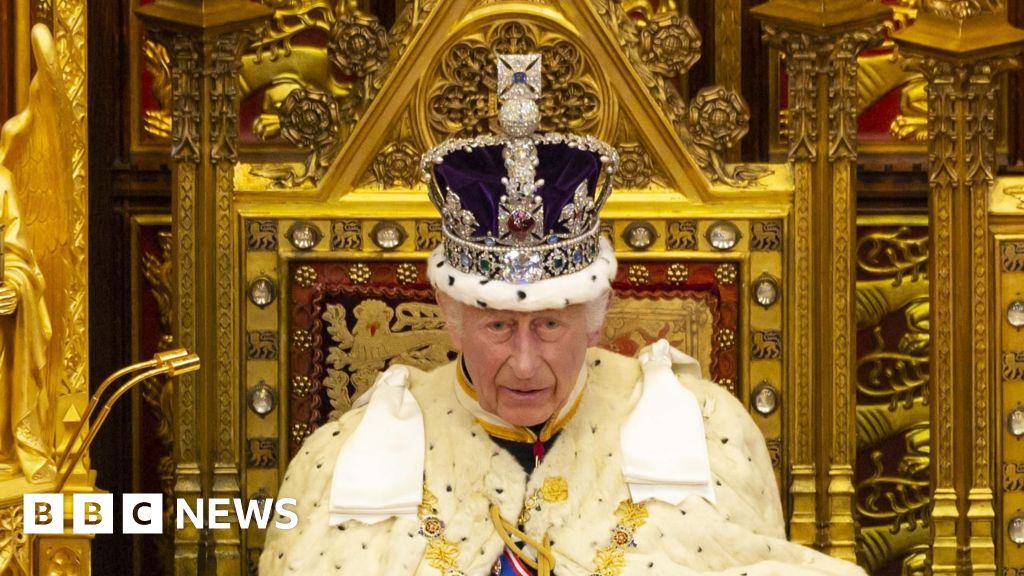
BBC is reporting that the HS2 Crewe -Manchester Bill will be in the King's Speech:
 www.bbc.com
High Speed Rail (Crewe - Manchester) Bill - A bill that was first proposed in January 2022, under the previous Conservative government, which would establish the powers needed to construct part of phase 2b of the HS2 high speed rail link.
It involves the construction of a railway line from Crewe to Manchester, stopping at Manchester Airport and Manchester Piccadilly. Carried over from the previous session and likely to become law later this year.
New laws expected to be in the King's Speech
EU alignment, welfare cuts, energy independence - here is a full rundown of the government's planned new laws.
www.bbc.com

LNW-GW Joint
Veteran Member
While the Crewe-Manchester HS2 Bill will be carried forward into the new parliamentary session, its scope will only cover the sections needed by the new NPR line between Liverpool and Manchester (ie from Millington via the airport to Piccadilly, mostly in tunnel).

Shrop
Established Member
- Joined
- 6 Aug 2019
- Messages
- 1,350
On this basis, ie that HS2 should function like a high speed metro, how many stops would you have between London and Manchester, and what would then be your end to end journey time?The assumption that train accelerations will stay where they are has meant that HS2 is not as useful as it could be, there should be far more stops and it should function more like a national high speed metro.
I'm just trying to understand what you're suggesting ...
The problem with this framing is that the benefits of large new infrastructure projects are tangible - they’re just wildly uncertain.You could get a lot of A66s for the cost of HS2! The best approach, irrespective of mode, is to focus on the tangible benefits and compare them to the costs, and ignore boosterish but vague claims about growth.
The actual usage of a public transport project can be anywhere from an order of magnitude lower to multiple orders of magnitude higher than the projected estimates. What you call “boosterish but vague claims about growth” in many case, turned out to be the right call! The Elizabeth Line is the most recent example.
I think that it would be better to describe predictions about the connectivity benefits of a buildout like HS2 as high-variance, rather than vague.
zwk500
Veteran Member
Can you point to examples of each? Using published data, not narrative journalism.The actual usage of a public transport project can be anywhere from an order of magnitude lower to multiple orders of magnitude higher than the projected estimates.

jfowkes
Established Member
- Joined
- 20 Jul 2017
- Messages
- 1,266
It's not even a valid assumption *now*. Many countries of similar size and population to the UK have high-speed rail. Italy and South Korea are probably the closest examples. And of course Taiwan is comparatively tiny and still has a HSR line that they are extending.So yes, once we throw in improved technology or different framing common assumptions like "the UK isn't big enough to benefit from very high speeds" fall over.
Last edited:
You could get a lot of A66s for the cost of HS2! The best approach, irrespective of mode, is to focus on the tangible benefits and compare them to the costs, and ignore boosterish but vague claims about growth.
I would hope so, just comparing the length 1 × HS2 phase 1would mean you could get 3 × A66's.
That's before you consider a dual carriageway has a capacity for around 3,000 cars an hour, based on 1.5 people per car that's 4,500 people being moved in each direction, and that's pretty much the limit. HS2 phase 1 at 15tph with 1,000 seats in each train at 90% loading is 13,500 people, and that's close to the limit, there's so scope for more people standing up.
Just on those two factors (3 times the distance and 3 times the capacity) we're getting to around 1 × HS2 vs 10 × A66's on a per person per km basis.
That's before you consider that HS2 includes the vehicle costs and several other factors.

Nottingham59
Established Member
Using batteries to boost the acceleration of HS2 trains is way down the priority list.It is perfectly feasible to design a train today that would not have OHLE limiting its acceleration (by constraining power output to ~20MW) and would accelerate at 1.3ms-2 to around 125mph and still be accelerating at 0.83ms-2 at 186mph. That train would get up to 248mph (400kph) line speed in 7km and 1m50s,
The priority for battery really is to boost the acceleration of stopping, so called "slow", trains.
There are dozens of routes across the country where capacity is limited by the need to mix fast trains and stopping trains on the same twin-track railway. Start with batterifying unelectrified lines that are already full, and then move on to boost electrified routes (like the ECML and the routes from Crewe into Manchester) where capacity is constrained by the speed difference between stopping and fast services.
Batterifying HS2 is a distraction.
InTheEastMids
Established Member
- Joined
- 31 Jan 2016
- Messages
- 1,382
Agree and would add that long-term projects needs a coalition of different interests to maintain support. HS2 have taken a lot of criticism for over-engineering and trying to future-proof everything. So trying to maintain stakeholder support and future proof against what some people will still dismiss as fantasy sounds like a heroically tough sell. As for the first generation of HS2 rolling stock, we are rapidly approaching the point of no return for the order and nobody has demonstrated this type of train. In the real-world, does anybody really want to up the risk of delay and additional costs of HS2 by asking Alsthom/Hitachi to redesign the trains. The one thing they are demonstrably trying to avoid is the situation that HS2 is ready - years late - but the trains are still not ready and we have the embarrassment that is EWR, but on a grander scale.Making plans based on what you might have - remember that these supposed super-accelerating high speed trains do not exist
It's not even a valid assumption *now*. Many countries of similar size and population to the UK have high-speed rail.
Agree, and for the same reasons the UK is doing high speed rail (quote below is from Wikipedia article on Taiwan HSR, my emphasis). Sounds very familiar (apart from the "rapid economic growth" bit, no idea what that means
 ).
).Taiwan's rapid economic growth during the latter half of the twentieth century led to congestion of highways, conventional rail, and air traffic systems in the western transport corridor, which threatened to impede the region's development
if HS2 was on a different alignment e.g. stations at Luton/MK/Northampton then HS2 might fill up with commuters and carry a lot of fresh air further north. The MML IC services used to be like this until EMR Connect started - i.e. a lot of money was spent segregating commuter and long-distance demand! With the current alignment, nowhere between OOC of Birmingham unless the plan is to turn e.g. Brackley into a city the size of MK and invest billions in road/conventional rail infrastructure and place-making.how many stops would you have between London and Manchester
Technologist
Member
- Joined
- 29 May 2018
- Messages
- 467
On this basis, ie that HS2 should function like a high speed metro, how many stops would you have between London and Manchester, and what would then be your end to end journey time?
I'm just trying to understand what you're suggesting ...
Ok, so we could go London, Luton, Milton Keynes, Northampton, Leicester, Nottingham, Sheffield, Leeds - total distance about 300km.
We use the super performance BEMU trains that accelerate at tube train rates (1.3ms-2) to very high speed, 400m long train deploys ~70MW to do so (crazy for current rail, off the shelf parts for BEVs). The trains have an operating speed of 400kph, average journey between stations is ~43km, average travelling time between stations is 8 min 15 seconds, average dwell time is 90 seconds. Time London to Leeds is 67 minutes without operating margin, if we add say 5 minutes to that we still get an end to end average speed of ~250kph.
If we subsequently go to York, Middlesbrough, Newcastle it takes 1 hour 30 to get to Newcastle without margin.
Passengers are typically not going to spend more than an hour on the train, these would be configured like Thameslink trains, double doors, standing spots, no seat reservations. With 16 tph it is a walk up railway, you need to pee or want to eat, get off the train and re-board the next train 3-5 minutes later. City centre stations would be tunnelled with single platforms per direction, basically a monster tube platform. There is plenty of space to fit a platform into a typical HS2 9m diameter tunnel, you could use both sets of doors. Like on the tube terminating stations will be at the little used end of lines, where having multiple platforms is relatively cheap.
Potentially the London station would actually be 3-4 stops on a cross city tunnel to spread out demand/make it more useful with termination in a commuter station south east of the city. Getting to Manchester would involve getting on a comparable train going east-west at comparable velocity.
Using batteries to boost the acceleration of HS2 trains is way down the priority list.
The priority for battery really is to boost the acceleration of stopping, so called "slow", trains.
There are dozens of routes across the country where capacity is limited by the need to mix fast trains and stopping trains on the same twin-track railway. Start with batterifying unelectrified lines that are already full, and then move on to boost electrified routes (like the ECML and the routes from Crewe into Manchester) where capacity is constrained by the speed difference between stopping and fast services.
Batterifying HS2 is a distraction.
I agree with this, I think we should be a lot more ambitious with the capabilities of BEMUs to accelerate journeys. Our high acceleration BEMU can get up to 125mph in 1200m and 42 seconds. It essentially means that we don't need "fast" trains at all, we stop all trains at all stations and operate every track like a metro (we close little used stations too close to each other at the benefit of far more intermediate stops having a vastly improved service).
Furthermore the high speed acceleration means that we can "high speed" a lot more geometries. Speed and frequency plus transit orientated development will drive a lot more passenger traffic to the point where we chuck freight off the tracks and have max cant angles around all the curves allowing greater line speed. With much higher accelerations, advanced signalling systems and eddy current emergency braking we can sprint up to much higher velocities between speed limiting track geometry. Key point is we are creating a metro so all trains will follow precisely the same stopping pattern and speeds.
jfowkes
Established Member
- Joined
- 20 Jul 2017
- Messages
- 1,266
Speed and frequency plus transit orientated development will drive a lot more passenger traffic to the point where we chuck freight off the tracks
This topic should have it's own thread as it's not HS2 related, but just because I have to ask: where are you putting all the freight? Back on the roads?!
InTheEastMids
Established Member
- Joined
- 31 Jan 2016
- Messages
- 1,382
This is - from one perspective - bordering on a version of the Musk/Hyperloop argument that was successfully deployed against high speed rail. i.e. "Wait guys, this variant/alternative technology is about to emerge that makes what you're doing obsolete. Best not to invest, but to pause, rescope and pay some consultants* some more fees to give the appearance of doing something".We use the super performance BEMU trains that accelerate
What Musk did actually manage to deliver from billions spent on Hyperloop/The Boring Company is the Vegas Loop which is by any measure just about the world's sh*ttiest metro system.
*As a consultant, I heartily endorse this approach
This, of course, is what the term "bionic duckweed" was invented to describe, in response to the Blair government being sceptical of electrification on the grounds that hydrogen trains would be coming soon. In the event, of course, hydrogen trains have not proven to be especially practical.This is - from one perspective - bordering on a version of the Musk/Hyperloop argument that was successfully deployed against high speed rail. i.e. "Wait guys, this variant/alternative technology is about to emerge that makes what you're doing obsolete. Best not to invest, but to pause, rescope and pay some consultants* some more fees to give the appearance of doing something".
What Musk did actually manage to deliver from billions spent on Hyperloop/The Boring Company is the Vegas Loop which is by any measure just about the world's sh*ttiest metro system.
*As a consultant, I heartily endorse this approach
Technologist
Member
- Joined
- 29 May 2018
- Messages
- 467
This is - from one perspective - bordering on a version of the Musk/Hyperloop argument that was successfully deployed against high speed rail. i.e. "Wait guys, this variant/alternative technology is about to emerge that makes what you're doing obsolete. Best not to invest, but to pause, rescope and pay some consultants* some more fees to give the appearance of doing something".
What Musk did actually manage to deliver from billions spent on Hyperloop/The Boring Company is the Vegas Loop which is by any measure just about the world's sh*ttiest metro system.
*As a consultant, I heartily endorse this approach
I think you will find Musk hates consultants with a passion, fires the consultant, fires the person who hired them!
As for the Vegas loop, proposed in 2019, tunnelling began in 2019, first tunnel opened in 2021 (conceived and built within the commissioning period for Cross Rail). 2023 permission to build 105km of tunnels granted. Currently has 9 stations and 5 miles of tunnels dug.
Once the thing is running with 12 person self driven minibuses I suspect that the Vegas Loop will be thought of as an incredibly extensive metro system built in very little time at very little cost.
Regarding the high performance upgrades for all of UK rail the whole go slow and enrich consultants is more of a current behaviour of UK rail than it is an iron law of nature. With GBR we will in theory have a central mind who can do proper R&D and actually integrate infrastructure with what is technically feasible in rail vehicles in the short medium and long term. The first step is to get a proper R&D budget for GBR, second is to copy Japan and start actually building prototype rail vehicles. Said high performance BEMU could probably crack 300kph on Old Dalby, get some politicians in it, start send it to crack obscene speeds on branch lines. Show, don't tell.
== Doublepost prevention - post automatically merged: ==
This topic should have it's own thread as it's not HS2 related, but just because I have to ask: where are you putting all the freight? Back on the roads?!
Discussed this at length on this site if you search my usrid. But yes, we wouldn't suggest putting freight on a tube line during the day. Intense passenger operations are a much higher value use of the rails and we shouldn't have grandfathered freight access rights stopping us turning sections of rail into high speed metro lines.
From a perspective of efficient use of infrastructure a freight train removing 20 lorries and taking 2-3 passenger paths to do it is much less efficient than two passenger trains carrying 500 people each taking 700 cars off the road.
zwk500
Veteran Member
This relies on Whitehall letting it loose. Good Luck.With GBR we will in theory have a central mind who can do proper R&D
As for the Vegas loop, proposed in 2019, tunnelling began in 2019, first tunnel opened in 2021 (conceived and built within the commissioning period for Cross Rail). 2023 permission to build 105km of tunnels granted. Currently has 9 stations and 5 miles of tunnels dug.
Once the thing is running with 12 person self driven minibuses I suspect that the Vegas Loop will be thought of as an incredibly extensive metro system built in very little time at very little cost.
I'm yet to be convinced that it's going to be delivered in full, on budget and/or on time.
In part, due to it being mostly privately funded, the costs are not as transparent as UK infrastructure (for example HS2) and so it's possible (I'm not claiming that this is the case, just that it's possible) that the actual costs are much higher.
I also understand that it only operates 10am to 9pm, whist that's useful for guests, it's not likely to be useful for staff.
Likewise, it's ongoing net costs (especially given the limited opening times and current scale) are quite significant, so even if the build costs are lower, it's possible that the lifetime costs might not be.
A low-throughput gadgetbahn built with no regard for safety. Can cope with fewer people per hour than Thameslink can handle in three minutesOnce the thing is running with 12 person self driven minibuses I suspect that the Vegas Loop will be thought of as an incredibly extensive metro system built in very little time at very little cost.
InTheEastMids
Established Member
- Joined
- 31 Jan 2016
- Messages
- 1,382
Agree with your pessimism on this.This relies on Whitehall letting it loose. Good Luck.
Its performance will be monitored by ORR - potentially encouraging risk aversion. I can't see significant investment in new facilities like labs, workshops or new test facilities, more likely a project management function.
So it'll be a tall order persuading it to spend a lot of money (that it almost certainly won't have) on large-scale demonstrations of new rolling stock, particularly given the lack of a BREL to provide capability to build a train and a route to market. If it funds a manufacturer to do this, it will be accused of picking winners/unfair state aid and subsidising overseas train builders.
So I think it's really unlikely we'll see GBR employees developing advanced bogie designs, traction systems or whatever.
I do hope for larger, better funded and coherent programmes that things like the FOAK Innovation challenges can sit within (latest one has just launched). I've seen derisive tweets by certain industry journalists because it's not doing the next APT. But the world has changed and it's clear from the scope that maintaining a Victorian asset base in a changing climate is the priority. There's some really interesting stuff, and if it's not ending up in more widespread use, that is obviously an issue that GBR needs to be set up to unblock.
He should, when it goes wrong. For instance, consultancies should not be delivering core workload/functions, and they should not be providing cover/scapegoats for leaders' unpopular Change programmes. These are the types of people that Musk, and before him Alan Sugar, boast about firing.hates consultants
However, the lines between "consultant". "contractor" and "professional services" are extremely blurred. So if an organisation has uneven workload (for instance due to boom and bust created by 5-year regulatory periods and political tinkering), needs to do something it's incapable/inexperienced of doing, or it requires very specific knowledge/insight then...
Getting back on topic: HS2, as conceived was an 18 x 400m tph per direction. Looks like what we will get is 6-8 trains per hour of <400m, so about 1/3 of the capacity. So many benefits will be missed as Government, the media and so on obsess about cost, which is of course only half the story. Is as much attention going into how to maximise benefits?Can cope with fewer people per hour than Thameslink can handle in three minutes
fishwomp
Established Member
if only a connection was there at Berkswell and a better New St / Curzon St solution (link from one to the other by rail) - then it could've also had the fasts from Coventry to Brum - including XC and the remnants of Euston - Brum fasts / semi-fasts post HS2 opening. That'd be some more use..Getting back on topic: HS2, as conceived was an 18 x 400m tph per direction. Looks like what we will get is 6-8 trains per hour of <400m, so about 1/3 of the capacity. So many benefits will be missed as Government, the media and so on obsess about cost, which is of course only half the story. Is as much attention going into how to maximise benefits?
A rail link between Curzon and New St? It's about 300m door to door. That's less than Euston to St Pancras which many people walk.if only a connection was there at Berkswell and a better New St / Curzon St solution (link from one to the other by rail) - then it could've also had the fasts from Coventry to Brum - including XC and the remnants of Euston - Brum fasts / semi-fasts post HS2 opening. That'd be some more use..
Shrop
Established Member
- Joined
- 6 Aug 2019
- Messages
- 1,350
Euston to St Pancras is another example of uncaring authorities, in the rail industry, Government or anywhere else. It would be easy and inexpensive to provide clear signing along such a relatively short walking route, and yet there's virtually nothing at all.A rail link between Curzon and New St? It's about 300m door to door. That's less than Euston to St Pancras which many people walk.
Quite remarkable when so many people want to do this walk, who don't know the area. For all the £billions involved with HS2, the cost of a few signs, and perhaps a coloured line along a pavement route would be insignificant.
Ah, but it isn't the job of HS2. Nor anyone else it seems.
As is so often with railways in the UK, yet again the public are dumped in unfamiliar areas and left to fend for themselves, simply because no-one in any position of influence is prepared to take on any responsibility.
But you can be sure they'll be perfectly competent at finding excuses as to why it's "not my job".