• Our new ticketing site is now live! Using either this or the original site (both powered by TrainSplit) helps support the running of the forum with every ticket purchase! Find out more and ask any questions/give us feedback in this thread!

Companies That You Expect to Disappear Soon

Brightonboy

Member
Joined
20 Jan 2025
Messages
153
Location
Suffolk
They wouldn’t be allowed to get orange juice from Tesco!
A few years ago I stayed at a Travelodge where they ran out of bacon during a bank holiday weekend and there was no bacon available at breakfast on two mornings. This Travelodge had a Waitrose as part of the building on the ground floor, a Tesco opposite and a Sainsbury’s just around the corner.
I agree that corporate policies these days frequently prevent ad-hoc solutions to immediate problems, but where those problems are related to basic supplies and appear to the layman to be easily resolvable then the question has to be asked whether corporate policies are working for or against the customer and the overall business performance. Poor customer satisfaction = declining income = declining profits. I should add that the staff told me that OJ hadn't been available for a few days so it wasn't just a 1 off.
 
Sponsor Post - registered members do not see these adverts; click here to register, or click here to log in
R

RailUK Forums

Trackman

Established Member
Joined
28 Feb 2013
Messages
4,322
Location
Lewisham
Many hotels seem to be inable to function outside of their supply chains. A McDonalds hotel in Frimley was unable to give me the jacket potato that was advertised with a meal. When a hotel cannot provide a potato, all hope is lost.
A few years ago I stayed at a Travelodge where they ran out of bacon during a bank holiday weekend and there was no bacon available at breakfast on two mornings. This Travelodge had a Waitrose as part of the building on the ground floor, a Tesco opposite and a Sainsbury’s just around the corner.

I knew someone who stayed at a hotel and there were no sausages with his full English.
He stormed out and bought some from a local supermarket and came back and said 'cook these!', which they did.
This episode was to stick with him for the rest of his life as he earned the nickname 'sausage'
He's passed away now, but at the funeral there was a request from several people why he was called sausage as a lot of people didnt know why, anyway someone got up and told the story.
 

styles

Established Member
Joined
7 Dec 2014
Messages
4,966
Location
Gwynedd
I knew someone who stayed at a hotel and there were no sausages with his full English.
He stormed out and bought some from a local supermarket and came back and said 'cook these!', which they did.
This episode was to stick with him for the rest of his life as he earned the nickname 'sausage'
He's passed away now, but at the funeral there was a request from several people why he was called sausage as a lot of people didnt know why, anyway someone got up and told the story.
The inflexible use of single suppliers springs to mind.

I had a work canteen about 10 years ago who offered jacket spuds with various toppings.

Every now and then they would run out of either baked beans, or tuna for the tuna mayo.

And you just thought, this is silly, no? Tuna and beans come in tins with a "best before" date of probably a couple of years, and even then can be eaten well beyond that. You'd surely just keep a few extra tins in the pantry. How can a kitchen regularly find themselves out of these? It's not like they had days where there was a rush on tuna mayo! And in any case, there was a wholesalers on the other side of the road, surely someone could just pop over in the morning and stock up. But they were part of the Compass Group and presumably had a single procurement policy with 3663 or Bid Food or whoever and didn't want to deviate.
 

AndrewE

Established Member
Joined
9 Nov 2015
Messages
7,372
The inflexible use of single suppliers springs to mind.
You would think that when the single supplier is jeopardising the hotel's reputation there would be a clause in the contract allowing local purchase and reclaim of the costs...
I had a work canteen about 10 years ago who offered jacket spuds with various toppings.

Every now and then they would run out of either baked beans, or tuna for the tuna mayo.

And you just thought, this is silly, no? Tuna and beans come in tins with a "best before" date of probably a couple of years, and even then can be eaten well beyond that. You'd surely just keep a few extra tins in the pantry. How can a kitchen regularly find themselves out of these? It's not like they had days where there was a rush on tuna mayo! And in any case, there was a wholesalers on the other side of the road, surely someone could just pop over in the morning and stock up. But they were part of the Compass Group and presumably had a single procurement policy with 3663 or Bid Food or whoever and didn't want to deviate.
My experiences: Staying with a muslin colleague at a Travelodge near Stroud for work for a few days we found that the adjacent "restaurant" had no eggs available at breakfast! So the poor chap started the day with no proper cooked breakfast. Similar to the above, reasonable shelf life and guaranteed demand should make this a never event.

Also at the Premier Inn opposite the Waitrose store on Guernsey a couple of years ago, their "full English" breakfast regularly had no fresh tomatoes available, and not even tinned ones as a substitute...
 

35B

Established Member
Joined
19 Dec 2011
Messages
5,593
You would think that when the single supplier is jeopardising the hotel's reputation there would be a clause in the contract allowing local purchase and reclaim of the costs...
That assumes that the problem is with the supplier. When my brother worked for Threshers, a major problem was “the warehouse” determining what they should have, overriding local knowledge.
 

AndrewE

Established Member
Joined
9 Nov 2015
Messages
7,372
That assumes that the problem is with the supplier. When my brother worked for Threshers, a major problem was “the warehouse” determining what they should have, overriding local knowledge.
again, they should be using management accounting to buy locally and transfer the extra costs to "the warehouse's" budget. The whole point of this level of accounting is that it can be used to drive different behaviour by a part of the business which is letting the company down.
 

SuspectUsual

Established Member
Joined
11 Jul 2018
Messages
6,850
That assumes that the problem is with the supplier. When my brother worked for Threshers, a major problem was “the warehouse” determining what they should have, overriding local knowledge.

Assuming that the warehouse had loads of stock sitting around, of course. Often the issue is a supplier shortage or not ordering enough in the first place, and then the logistics people end up having to short store orders, and then get the blame for it. Gap on the shelf? Blame the big truck that didn't bring enough

When I was at Coop, the average on shelf availability in stores was about 97.5%, but the logistics function shipped just over 99.9% of the store demand they received.

Why the gap? Principally:

1 - poor forecasting from head office supply chain meaning either (i) not enough stock ordered from the supplier and/or (ii) the supplier not being able to react to a spike in ordering that wasn't forecasted

2 - supplier failure

3 - store stock file inaccuracy (the system shows positive stock that isn't really there, so the head office system sees no need to order anything) - poor store processes, markdowns/shrinkage not done properly, theft etc

4 - stock is in the store but not on the shelf

5 - poor system setup by head office supply chain - eg reorder trigger point set too low

Then you're into the less impactful stuff like:

6 - QC rejection / product recall

7 - significant warehouse downtime, eg systems/power outage, fire alarm, ammonia alarm

8 - supplier short term range reduction to cope with some crisis on their part

9 - outbound transport issue

10 - panic buying (eg Covid)

(And the problem for convenience retailers like Coop is that almost every line of a store order is for one case of the product, so not having enough inevitably means a store getting zero. For the big box retailers with more fast moving products a shortage might mean 5 instead of 6 and the customer impact is less obvious)

 

Sonic1234

Member
Joined
25 Apr 2021
Messages
802
Location
Croydon
Ditto various coffee chains where the circa £4 coffee and circa £4 cake seem to be a new norm. I do wonder if their bubble might burst as discretional spend diminishes?
Costa in Lewes has closed, and several London branches have too. They seem to be in a middle ground - people who value quality are going to independents, Gail's etc with better cakes and baked goods and similarly priced coffee. The value conscious go to Greggs, who are opening bigger stores with seating.

People seem happy to pay for convenience
See the existence of Deliveroo et al. People will pay a premium + delivery + service fees to be lazy. Also see the outrage on here if a ticket is paper only.
 

Djgr

Established Member
Joined
30 Jul 2018
Messages
3,442
Assuming that the warehouse had loads of stock sitting around, of course. Often the issue is a supplier shortage or not ordering enough in the first place, and then the logistics people end up having to short store orders, and then get the blame for it. Gap on the shelf? Blame the big truck that didn't bring enough

When I was at Coop, the average on shelf availability in stores was about 97.5%, but the logistics function shipped just over 99.9% of the store demand they received.

Why the gap? Principally:

1 - poor forecasting from head office supply chain meaning either (i) not enough stock ordered from the supplier and/or (ii) the supplier not being able to react to a spike in ordering that wasn't forecasted

2 - supplier failure

3 - store stock file inaccuracy (the system shows positive stock that isn't really there, so the head office system sees no need to order anything) - poor store processes, markdowns/shrinkage not done properly, theft etc

4 - stock is in the store but not on the shelf

5 - poor system setup by head office supply chain - eg reorder trigger point set too low

Then you're into the less impactful stuff like:

6 - QC rejection / product recall

7 - significant warehouse downtime, eg systems/power outage, fire alarm, ammonia alarm

8 - supplier short term range reduction to cope with some crisis on their part

9 - outbound transport issue

10 - panic buying (eg Covid)

(And the problem for convenience retailers like Coop is that almost every line of a store order is for one case of the product, so not having enough inevitably means a store getting zero. For the big box retailers with more fast moving products a shortage might mean 5 instead of 6 and the customer impact is less obvious)
When I worked in head office retailing a colleague wrote the supply chain allocation system. It is not as easy as it looks. There are costs involved in over-supply (e.g. food going off) as well as under-supply.
 

35B

Established Member
Joined
19 Dec 2011
Messages
5,593
again, they should be using management accounting to buy locally and transfer the extra costs to "the warehouse's" budget. The whole point of this level of accounting is that it can be used to drive different behaviour by a part of the business which is letting the company down.
A route that very quickly makes a branch's economics look poor, as the costs of local purchase (even if the product is available) will tend to far outweigh the corporate purchases. The warehouse, as a central function, will have much more influence and the costs of arguing about attribution will soon add up - if they're even manageable for a small branch with only one or two core staff.

For perishable items and caterers, there are also significant food safety considerations - maintaining the audit trail for temperature control and contamination is also important. A non-coeliac gluten-intolerant friend can easily cause chaos at an eatery if served wrong, both at table and then in correspondence with the head office.
Assuming that the warehouse had loads of stock sitting around, of course. Often the issue is a supplier shortage or not ordering enough in the first place, and then the logistics people end up having to short store orders, and then get the blame for it. Gap on the shelf? Blame the big truck that didn't bring enough
Threshers were an off-licence chain, with negligible perishable stock. The issue for branches (I don't believe my brother's was unique) was that the warehouse would override local orders, over-supplying items that just didn't sell and under-supplying things that had a really strong market. As a branch, they could handle "no stock" type messages - it was the universal overrides that killed.
 

TheSmiths82

Member
Joined
29 Jun 2023
Messages
613
Location
Manchester
I don't think I've ever been charged for entering..?

They don't charge for entering, but at some busier times do you have to wait to be seated, although usually you can just sit where you want. The beer offering is crap but I go to a Lounge bar to eat food, if I wanted a decent pint there are plenty of great pubs to go to. The offering to me is similar to what the Whitbread pubs that where next to Premier Inn offered but the Lounge bars are all unique and they don't feel like a typical chain pub. That said if you were blind folded on entry and then had to guess where you were you would know you're in a Lounge bar.
 

MP33

Member
Joined
19 Jun 2011
Messages
635
I attended a festival. When the Van providing food, did not turn up for breakfast. There had been problems with the cooker all week. The organisers, did not have the certificate to sell food. So they sold the food and directed the customer to the cooking facilities. To cook the food themselves.
 

styles

Established Member
Joined
7 Dec 2014
Messages
4,966
Location
Gwynedd
I attended a festival. When the Van providing food, did not turn up for breakfast. There had been problems with the cooker all week. The organisers, did not have the certificate to sell food. So they sold the food and directed the customer to the cooking facilities. To cook the food themselves.
Decent solution!

It reminds me of two much more dubious things I've experienced mind.

The first is our students' union real ale club selling real ale, but actually what they were doing was saying go to the bar and buy a token, then come back to us and we'll swap your token for an ale. They did this because then they weren't accountable for ID'ing people. But it's a bit of a poor system given you could just buy tokens, then give them to your 17 year-old mate. Shaky legal grounds if somebody under-age got served in my view, but we were a campus-based university and we weren't awash with local teenagers trying it on etc.

The second was a bingo fundraiser I went to at a local youth group. They didn't have the on-prem licence or the temporary event notice to serve booze, so they sold biscuits for £2 which came with a free can on beer. That wasn't shaky legal grounds, that was earthquake legal grounds. Nobody was going to dob them in though, and the organiser was himself a local councillor so most people probably thought it was technically allowed.
 

AndrewE

Established Member
Joined
9 Nov 2015
Messages
7,372
A route that very quickly makes a branch's economics look poor, as the costs of local purchase (even if the product is available) will tend to far outweigh the corporate purchases. The warehouse, as a central function, will have much more influence and the costs of arguing about attribution will soon add up - if they're even manageable for a small branch with only one or two core staff.
Perhaps this sums up what is wrong in british industry, and especially in retailing: Not putting the costs at the door of the non-customer-facing department which caused them or holding its management to account, while tying the hands of (and blaming) the ones who do have to face the customers...

It has remarkable parallels with the problems on XC being discussed in https://www.railforums.co.uk/thread...hat-could-be-done.296752/page-20#post-7772961 Back-office and finance dept (TOC management and the Treasury/DfT) screwing down the resources but never suffering any public criticism or abuse, all the while leaving the Poor Bloody Infantry to cope with passengers left behind on station platforms because the second Voyager on a train is locked out of use...
 

SuspectUsual

Established Member
Joined
11 Jul 2018
Messages
6,850
Perhaps this sums up what is wrong in british industry, and especially in retailing: Not putting the costs at the door of the non-customer-facing department which caused them or holding its management to account, while tying the hands of the ones who do have to face the customers...

That's a very good point. And it isn't just tying the hands of the customer facing teams....

An example.....20-odd years ago I got a job as logistics manager for a cash and carry company. At that time the ordering of non-food stock belonged to the buyers and their assistants, rather than to supply chain, who only looked after the ordering of food SKUs. Very early on in that job a buyer came to see me and said "just a heads up, but I've got a great deal and I've ordered about a year's worth of stock of Dysons, so can you arrange storage". I didn't really have any choice at that point as the order was placed, but I did some sums and worked out it would cost an average of just under £3.00 per unit to store them, assuming they sold as expected. I went and asked the buyer about her amazing deal, and got told she'd saved just over a quid a unit. So the business was worse off overall, and to make things worse, because her trading margin increased, so did her bonus.

The Finance Director was stunned when I told him about this, and shortly afterwards we put a proper process in place that required buys like this to be signed off by all impacted stakeholders
 

35B

Established Member
Joined
19 Dec 2011
Messages
5,593
Perhaps this sums up what is wrong in british industry, and especially in retailing: Not putting the costs at the door of the non-customer-facing department which caused them or holding its management to account, while tying the hands of (and blaming) the ones who do have to face the customers...

It has remarkable parallels with the problems on XC being discussed in https://www.railforums.co.uk/thread...hat-could-be-done.296752/page-20#post-7772961 Back-office and finance dept (TOC management and the Treasury/DfT) screwing down the resources but never suffering any public criticism or abuse, all the while leaving the Poor Bloody Infantry to cope with passengers left behind on station platforms because the second Voyager on a train is locked out of use...
Quite possibly. Though I'd also note a) that Threshers went bust a while back and b) the policies being implemented were as far as I could understand to do with what the company wished to promote - so "head office" driven, with the warehouse merely intermediaries.

== Doublepost prevention - post automatically merged: ==

Decent solution!

It reminds me of two much more dubious things I've experienced mind.

The first is our students' union real ale club selling real ale, but actually what they were doing was saying go to the bar and buy a token, then come back to us and we'll swap your token for an ale. They did this because then they weren't accountable for ID'ing people. But it's a bit of a poor system given you could just buy tokens, then give them to your 17 year-old mate. Shaky legal grounds if somebody under-age got served in my view, but we were a campus-based university and we weren't awash with local teenagers trying it on etc.
That would be flat out illegal under current licensing law, and would put the SU bar license in jeopardy. Not just for alcohol, but all music and entertainments.
 

Peter Mugridge

Veteran Member
Joined
8 Apr 2010
Messages
17,856
Location
Oakham
That's a very good point. And it isn't just tying the hands of the customer facing teams....

An example.....20-odd years ago I got a job as logistics manager for a cash and carry company. At that time the ordering of non-food stock belonged to the buyers and their assistants, rather than to supply chain, who only looked after the ordering of food SKUs. Very early on in that job a buyer came to see me and said "just a heads up, but I've got a great deal and I've ordered about a year's worth of stock of Dysons, so can you arrange storage". I didn't really have any choice at that point as the order was placed, but I did some sums and worked out it would cost an average of just under £3.00 per unit to store them, assuming they sold as expected. I went and asked the buyer about her amazing deal, and got told she'd saved just over a quid a unit. So the business was worse off overall, and to make things worse, because her trading margin increased, so did her bonus.

The Finance Director was stunned when I told him about this, and shortly afterwards we put a proper process in place that required buys like this to be signed off by all impacted stakeholders
I can top that - I'm not going to name the hapless company involved, but I am aware of an instance where one of the biggest companies in the world had a bulk supply deal for stationery with a major global stationery supplier.

These deals usually involve a substantial discount for a usually extensive range of core list items.

In this instance, it took one stationery buyer placing an order for basic things against this supplier just seconds to realise from the quote that something was very wrong; a quick check on the same supplier's public website page revealed that the negotiated deal was actually priced higher than the cost to the public of buying the same items from the same supplier.

It takes a special kind of incompetence to negotiate a deal like that.
 

styles

Established Member
Joined
7 Dec 2014
Messages
4,966
Location
Gwynedd
I can top that - I'm not going to name the hapless company involved, but I am aware of an instance where one of the biggest companies in the world had a bulk supply deal for stationery with a major global stationery supplier.

These deals usually involve a substantial discount for a usually extensive range of core list items.

In this instance, it took one stationery buyer placing an order for basic things against this supplier just seconds to realise from the quote that something was very wrong; a quick check on the same supplier's public website page revealed that the negotiated deal was actually priced higher than the cost to the public of buying the same items from the same supplier.

It takes a special kind of incompetence to negotiate a deal like that.
Procurement departments in companies justify this as "simplifying" the purchasing process by having dedicated suppliers and thus there are cost savings. I've never really believed in it.
 

Peter Mugridge

Veteran Member
Joined
8 Apr 2010
Messages
17,856
Location
Oakham
Procurement departments in companies justify this as "simplifying" the purchasing process by having dedicated suppliers and thus there are cost savings. I've never really believed in it.
It only gives cost savings if they let people who really know what they are doing handle the negotiations! :)
 

londonbridge

Established Member
Joined
30 Jun 2010
Messages
1,896
They wouldn’t be allowed to get orange juice from Tesco!
A few years ago I stayed at a Travelodge where they ran out of bacon during a bank holiday weekend and there was no bacon available at breakfast on two mornings. This Travelodge had a Waitrose as part of the building on the ground floor, a Tesco opposite and a Sainsbury’s just around the corner.

There’s a Pizza Gogo near me that gets garlic bread slices from the nearby Sainsbury’s Local, and I know a couple of the local cafes that use them for supplies of bread and vegetables as well.

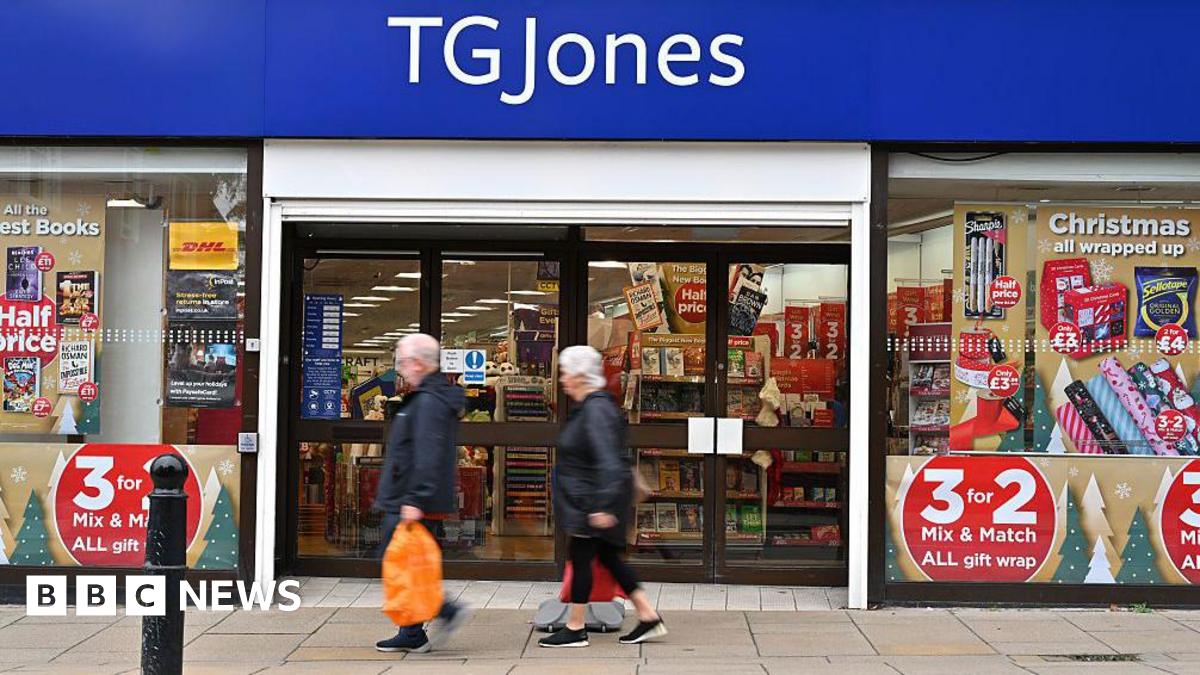
As to WH Smith/TG Jones, agree in that I use them occasionally, but much more rarely than I used to.
 

SuspectUsual

Established Member
Joined
11 Jul 2018
Messages
6,850
There’s a Pizza Gogo near me that gets garlic bread slices from the nearby Sainsbury’s Local, and I know a couple of the local cafes that use them for supplies of bread and vegetables as well.

As to WH Smith/TG Jones, agree in that I use them occasionally, but much more rarely than I used to.

I did some contracting work for Brakes about 25 years ago, supporting the implementation of a big new contract with Compass. Because it’s foodservice, not delivering a product because it’s unavailable is the absolute last resort, because if the menu is shepherds pie and you don’t deliver mince the menu isn’t happening. We had a call first thing each morning with all of the out base depots round the country and one of the agenda items was always the count and value of order lines they’d had to buy in from another local retailer.
 

AndrewE

Established Member
Joined
9 Nov 2015
Messages
7,372
I did some contracting work for Brakes about 25 years ago, supporting the implementation of a big new contract with Compass. Because it’s foodservice, not delivering a product because it’s unavailable is the absolute last resort, because if the menu is shepherds pie and you don’t deliver mince the menu isn’t happening. We had a call first thing each morning with all of the out base depots round the country and one of the agenda items was always the count and value of order lines they’d had to buy in from another local retailer.
that is good, it sounds as though someone is paying attenton to that situationm (unlike what seems to happen elsewhere!)
 

wilbers

Member
Joined
10 Mar 2022
Messages
514
Location
Penrith
could be between 80-100 TG Jones shops closing after the moratorium period has ended IF this is accurate (which it may not be as it looks to have been written by AI (North Wales as a branch name a bit of a giveaway)).

Reports suggest the restructuring will impact around 100 of the chain’s 480 shops, with around 400 stores expected to continue trading.
 

BuhSnarf

Member
Joined
22 May 2010
Messages
918
Location
Leicester
could be between 80-100 TG Jones shops closing after the moratorium period has ended IF this is accurate (which it may not be as it looks to have been written by AI (North Wales as a branch name a bit of a giveaway)).
I did hear that they might actually be using a 'cram down' strategy to force through the closures with the reasoning that without the closures the company would not be able to avoid bankruptcy.
 

jon0844

Veteran Member
Joined
1 Feb 2009
Messages
30,972
Location
UK
I did hear that they might actually be using a 'cram down' strategy to force through the closures with the reasoning that without the closures the company would not be able to avoid bankruptcy.

Vodafone is also seeking to get rid of Three sooner than planned, with lots of staff at Three HQ already leaving or having left in the last few weeks.

It will be interesting to see how the regulator handles things when VodafoneThree was officially a merger and with no job cuts until a year or so from now.

Obviously most people knew Three wanted out and while VodafoneThree claims it won't change anything, I'm sure they'll try various tricks to downsize as quickly as they can.
 

Dave61

Member
Joined
8 Mar 2026
Messages
155
Location
Long Eaton
Procurement departments in companies justify this as "simplifying" the purchasing process by having dedicated suppliers and thus there are cost savings. I've never really believed in it.
In many companies the lower minions are only allowed to purchase stuff off a pre-approved list. It makes life easier for the purchasing department and keeps everything standard but is often a poor value for money.

If you need anything not on the list then you need 3 quotations and masses of paperwork.....
 

BuhSnarf

Member
Joined
22 May 2010
Messages
918
Location
Leicester
In many companies the lower minions are only allowed to purchase stuff off a pre-approved list. It makes life easier for the purchasing department and keeps everything standard but is often a poor value for money.

If you need anything not on the list then you need 3 quotations and masses of paperwork.....

It also makes things easier from a allergies perspective. If the lackey going out and buying the pesto for the pasta dish accidentally buys pesto with pine nuts in and that's not listed on the menu as the one they normally use doesn't include pine nuts it could get dicey for nut allergy people like myself.

It does feel backwards from a common sense perspective, but there will be reasons behind all these decisions. Usually money, maybe the sausages from the supplier are 15p each which makes the Full English profitable, but if they buy them at Tesco and are paying 75p a sausage then maybe the dish isn't profitable so it's easier to just not serve it.
 

Backroom_boy

Member
Joined
28 Dec 2019
Messages
597
Location
London
could be between 80-100 TG Jones shops closing after the moratorium period has ended IF this is accurate (which it may not be as it looks to have been written by AI (North Wales as a branch name a bit of a giveaway))
BBC are suggesting 'up to 150' closing
 

Harpo

Established Member
Joined
21 Aug 2024
Messages
3,976
Location
Newport

Tetchytyke

Veteran Member
Joined
12 Sep 2013
Messages
17,669
Location
Isle of Man
It's what Modella Capital do, just as they did with Claire's Accessories and Hobbycraft and Ted Baker. I see Modella will be using the hedge fund Aurelius for funding again.

When Body Shop went bust Aurelius got all their money back because it was secured. Redundancy payments had to come from the National Insurance Fund. HMRC had to go whistle. And then, like a phoenix, the new company re-emerges, debt-free and under the same ownership.

Unless and until the Directors of these companies are made personally liable for redundancy payments, nothing will change. Or at the very least, taxpayer creditors (so HMRC and staff redundancy payments) should be top of the pile for repayment before any other creditors get a single penny.
 

Top