• Our new ticketing site is now live! Using either this or the original site (both powered by TrainSplit) helps support the running of the forum with every ticket purchase! Find out more and ask any questions/give us feedback in this thread!

Italo to compete in German high-speed market

U-Bahnfreund

Member
Joined
6 Feb 2015
Messages
552
Location
Germany
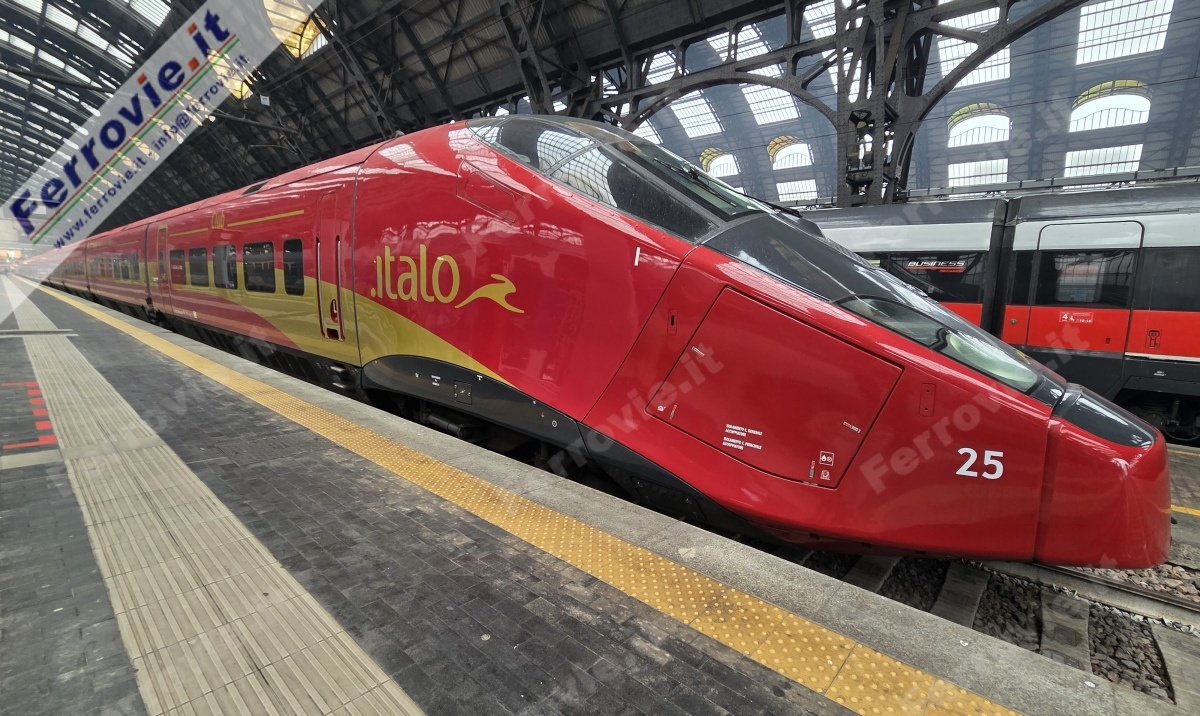
Italo and its parent organisation NTV have very serious plans to enter the German high-speed rail market and compete with DB Fernverkehr.

They have a contract ready to buy 30 Siemens Velaro for 3.6 billion euros and intend to start running 56 daily trains in 2028. It would be an hourly service Munich-Cologne-Dortmund and every two hours Munich-Berlin-Hamburg for a start. Trains would offer three different classes, including a "Club Executive". It's all a bit dependent on them getting multi-year contracts for train paths by May, which is something DB InfraGO is currently stalling to implement.

This is from a recent FAZ interview with Luca di Montezemolo: https://www.faz.net/aktuell/wirtsch...hen-markt-aufmischen-will-accg-200775502.html
 
Sponsor Post - registered members do not see these adverts; click here to register, or click here to log in
R

RailUK Forums

eastwestdivide

Established Member
Joined
17 Aug 2009
Messages
3,394
Location
S Yorks, usually
Similar info in Italian at
where it suggests 26 trainsets and an option for 14 more:
  • 26 treni della piattaforma Siemens Velaro (con opzione per ulteriori 14), per un valore di acquisto di 1,2 miliardi di euro
and "importantly" in a blue livery to differentiate from DB and Flix:
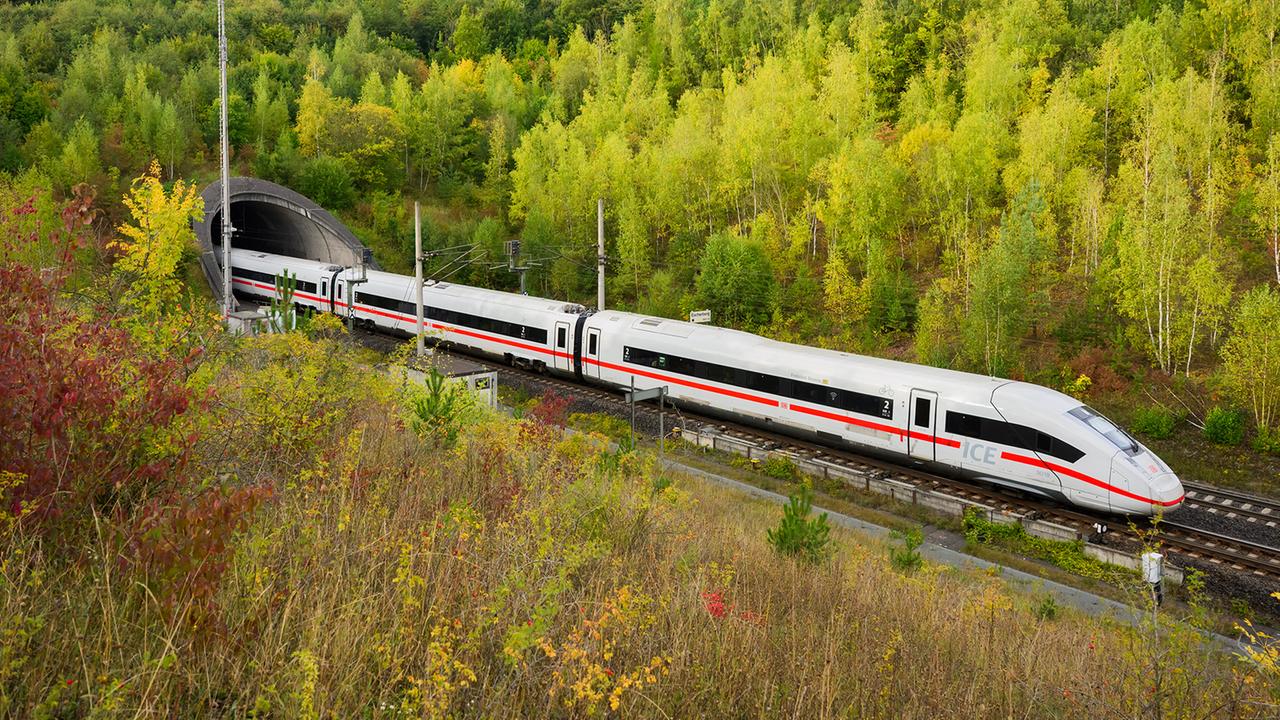
La livrea sarà blu — una differenziazione cromatica netta rispetto agli ICE (bianco/rosso) e ai treni Flixtrain (verde).

The related forum comments reckon the trains will effectively be the ICE3 Neo version
 

TheWierdOne

Member
Joined
30 Oct 2020
Messages
386
Location
Yorkshire
While I’m sure there is potential for this to be very lucrative, does the dire state of German rail infrastructure not pose a serious threat?
 

Halish Railway

Established Member
Joined
26 Apr 2017
Messages
2,173
Location
West Yorkshire / Birmingham
I don’t know where they’re going to find this mythical path for an hourly Munich to Dortmund service. I was under the impression that a large program of works was required to accommodate planned extra Rhine Ruhr Express services, at least to be able to run a clockface every 15 minute service between Cologne and Dortmund.

Then there’s the case of the routing from Frankfurt to Munich, as running via both Stuttgart and Nuremberg involve using oversaturated mixed traffic two-track railways.
 
Joined
7 Jan 2009
Messages
1,029
Yes, InfraGo are hardly going to be queueing up to support this new addition. The Rhine-Ruhr-Main areas are already very congested..... Still, Fernverkehr could lease any spare ICE3neos going!
 
Last edited:

Farigiraf

Member
Joined
23 Jul 2023
Messages
1,135
Location
Bridge on the River Cam
Besides reliability concerns - how will these services be integrated into the taktfahrplan & DB fares network without severing regional connections? If it's the same as with FlixTrain, then in cases where you have an hourly ICE path through a station with 2-3 regional services connecting to the ICE service, if that path is handed over to the OAO, they may just decide that stopping at that station isn't worth it, thereby cutting off not just that town's hourly ICE link but also every place with a connecting rail service to it.
 

AdamWW

Established Member
Joined
6 Nov 2012
Messages
5,900
Besides reliability concerns - how will these services be integrated into the taktfahrplan & DB fares network without severing regional connections?

That one's easy, isn't it? I'd assume they won't integrate with the fares network.

The price you pay (literally) for introducing competition.
 

U-Bahnfreund

Member
Joined
6 Feb 2015
Messages
552
Location
Germany
Flixtrain offers through tickets on some regional connections these days, no reason why Italo couldn't do the same
 

Farigiraf

Member
Joined
23 Jul 2023
Messages
1,135
Location
Bridge on the River Cam
Open Access and takt are not compatible. Pick one.
I'm in favour of competition on routes like London - Paris where it's the only sensible way of improving the service without major subsidy (as Eurostar are perfectly happy with maintaining their monopoly). Though even on this route there are red flags, such as whether Virgin will accept Eurostar tickets if the Eurostar service is cancelled.
However it's widely accepted that the best country for rail in Europe (arguably the world) is Switzerland. How do they achieve that title? Their taktfahrplan.

Second, third and fourth place (imo), the Netherlands, Austria and Luxembourg, have one too. If open access isn't compatible with this undoubtedly successful way of timetabling, there needs to be a long think over whether low-regulation open access operations really have a place in the wider integrated transport network.
That one's easy, isn't it? I'd assume they won't integrate with the fares network.

The price you pay (literally) for introducing competition.
DB currently offer City-Tickets which are essentially travelcards that you can add onto your long-distance ticket. These help out a lot with fares integration and reduce the amount of people driving into the Hauptbahnhof to park, congesting the city centre roads. If an OAO takes over an ICE path, this option won't be available. Less people are likely to use local transport, increasing traffic. That's just one example of the knock on effects of an unintegrated transport network.

Ryanair on rails doesn't work as well when you have limited capacity on a route and you have to fit in local connections as well as end-to-end intercity traffic. It works in France, Italy and Spain so well because the HSR lines are basically airline routes - they don't care about connections to regional services.
 
Last edited:

mugam4

Member
Joined
24 Feb 2016
Messages
157
I'm in favour of competition on routes like London - Paris where it's the only sensible way of improving the service without major subsidy (as Eurostar are perfectly happy with maintaining their monopoly).

Second, third and fourth place (imo), the Netherlands, Austria and Luxembourg, have one too. If open access isn't compatible with this undoubtedly successful way of timetabling, there needs to be a long think over whether low-regulation open access operations really have a place in the wider integrated transport network.

Precisely. Agreed, I think? Either OAO (Eurostar) or Takt (NL, AT, LU). Not both.

(Regarding any OAO in the countries mentioned - I think they would be better off without it, OR it's an international service that operates "outside" of the Takt system.)

If the current system continues, we will come to see these countries' Takt systems compromised, or further compromised, by OAO, delivering a worse overall service in the name of OAO.

By all means have OAO - but you can't have both. Watching Germany with interest.
 

NCT

Established Member
Joined
18 Apr 2025
Messages
2,095
Location
London
FWIW, I do think Italo will face an uphill struggle in securing the paths from the current German network.

From my observations, it would seem that infrastructure operators are able to define taktfahrplan structures and sorting operators' services into those structures. Within Italy, RFI is able to sort Trenitalia and Italo into clockface patterns and forming combined half-hourly or 15-minute timetable patterns on core routes. In the Netherlands, ProRail is able to publish its own TOC-agnostic view of network timetable without landing itself into legal hot water.

I do not agree with the assertion that taktfahrplan and competition are mutually exclusive.

The Deutschlandtakt, as it's currently published, is unambitious. Given the current chronic overcrowding, and observed service patterns in Italy, the basic frequency of point-to-point intercity 'Sprinter' services should be half hourly rather than the hourly assumed in the Deutschland takt as published. Things like Berlin - Frankfurt and Berlin - Munich should be half-hourly each, not merely hourly each forming combined half-hourly with interchanges at Halle and Erfurt. Yes, Berlin - Halle - Erfurt should be 4tph, like Milan - Bologna.

Italo's attempt at entering the German market, even if not entirely successful, at least will have value in forcing conversations in aiming for a more ambitious takt and a more ambitious high-speed rail infrastructure programme.

Opponents of competition want to protect national operators' monopoly positions rather than to create a truly TOC-agnostic integrated transport offering. If ticketing is the concern, then argue for ticketing regulation where all operators are compelled to participate in a supra-TOC Ticketing and Settlement Agreement and accept inter-available tickets.
 

fandroid

Established Member
Joined
9 Nov 2014
Messages
2,557
Location
Hampshire
I'm in favour of competition on routes like London - Paris where it's the only sensible way of improving the service without major subsidy (as Eurostar are perfectly happy with maintaining their monopoly). Though even on this route there are red flags, such as whether Vi

DB currently offer City-Tickets which are essentially travelcards that you can add onto your long-distance ticket. These help out a lot with fares integration and reduce the amount of people driving into the Hauptbahnhof to park, congesting the city centre roads. If an OAO takes over an ICE path, this option won't be available. Less people are likely to use local transport, increasing traffic. That's just one example of the knock on effects of an unintegrated transport network.
City-Tickets are not Travelcard equivalents. They offer single connecting local journeys at each end. Also, the DB ticket machines always have a local transport section so it's not difficult to separately buy tickets in an unfamiliar city. Everyone driving to/from stations due to a lack of a City-ticket add-on is an unlikely scenario in a nation where joined-up local public transport is the norm.
 

Farigiraf

Member
Joined
23 Jul 2023
Messages
1,135
Location
Bridge on the River Cam
Everyone driving to/from stations due to a lack of a City-ticket add-on is an unlikely scenario in a nation where joined-up local public transport is the norm.
It's one example, amidst a variety of different consequences of poor fares integration & transport integration, and if you combine all of them then local transport usage will decline. Of course not 'everyone' who'd be driving would be doing so because there's no city ticket - but there may be a couple percent who currently notice the option on the DB booking site and pick it who otherwise wouldn't have considered taking the bus or tram. Add together other changes - for example an OAO dropping a station call altogether to slightly speed up their service and prove that their service isn't abstracting revenue - and outside of a few key profitable corridors, rail usage really dips if you let OAOs run wild.

== Doublepost prevention - post automatically merged: ==

Opponents of competition want to protect national operators' monopoly positions rather than to create a truly TOC-agnostic integrated transport offering. If ticketing is the concern, then argue for ticketing regulation where all operators are compelled to participate in a supra-TOC Ticketing and Settlement Agreement and accept inter-available tickets.
Agree with your 2nd sentence - after all the Swiss & Dutch model does have private operators running services that are determined by the timetablers, with integrated fares (albeit Arriva still does require separate PAYG readers at stations also served by NS). This is, I think, the best way of running things, as you have that competition to provide a decent service, and if the state operator is in a bad spot it doesn't make the others in a bad spot too.

But operators like Flix and Italo likely wouldn't bid if it were structured like this - in fact the German regional train system works like this and often there are few bidders for a local transport operation - because it's not a get rich quick scheme for OAOs, it's more like a fixed salary for running a decent train service. Flix, Italo, Lumo etc want to focus on maximising profitability by any means necessary, and that's harmful if you want a joined up network.

The reason that intercity operations aren't typically tendered out in the best countries for rail is primarily because the state, understandably, wants the money from the most profitable routes to go directly back to the state, so that it can support the subsidy for local services. Whether that's fair is up for debate, but I certainly see the logic.
 
Last edited:

DanielB

Established Member
Joined
27 Feb 2020
Messages
1,439
Location
Amersfoort, NL
I do not agree with the assertion that taktfahrplan and competition are mutually exclusive.
Agree with that, the Netherlands is actually a good example with already some open access services next to the taktfahrplan. GoVolta is the first open access day train, but European sleeper, Nightjet to Zürich and the Arriva night-trains from Groningen / Maastricht to Schiphol are examples of open access existing next to the takt.

Paths are more challenging during the day indeed. Arriva has been trying to set up an open access fast train Groningen - Zwolle for a while now, but for 2025 they got only four paths for Mo-Thu and considered that not enabling a profitable service. For the 2026 timetable they unexpectedly got 24 paths, but are still not using them as now there is uncertainty if they can accept the travel product for students. They'd need the students to be profitable, but it's currently not certain that open access operators would also get their share in the payments by the Ministry of Education compensating the check-ins with the student travel product.
 

Austriantrain

Established Member
Joined
13 Aug 2018
Messages
1,786
Open Access and takt are not compatible. Pick one.

A "free for all" is indeed not possible, but that does not mean they cannot be combined. They can. You would need to define the recurrent paths and then adjudicate them as "bundles" to the competitors, so that e.g. TOC A gets the path for one hourly service and TOC B for the second one, both combining to a half-hourly Takt. Only useful with ticket cross-acceptance of course.

The real problem is that current EU rules don't allow a way to make this legally safe. There is however an amendment trundling through the EU legislative procedure that would allow infrastructure operators to impose a fixed "path allocation" for various traffic types. It is also urgently needed: Currently, for instance in the Brenner Base tunnel when it opens, there would not be a legally safe way to limit and bundle the number of paths for passengers - open-access passenger services could easily reduce the available freight paths close to nil (of course, if everyone plays nice, it will still work, but that is a poor basis for long-term planning). In the future, the infrastructure operator could offer e.g. two passenger paths an hour, and the rest for freight (like in the Channel tunnel, which even when the UK was in the EU was a special case); like SBB do in the Gotthard base tunnel.
 

NCT

Established Member
Joined
18 Apr 2025
Messages
2,095
Location
London
A "free for all" is indeed not possible, but that does not mean they cannot be combined. They can. You would need to define the recurrent paths and then adjudicate them as "bundles" to the competitors, so that e.g. TOC A gets the path for one hourly service and TOC B for the second one, both combining to a half-hourly Takt.

RFI seems to be doing this with Trenitalia and Italo.

Only useful with ticket cross-acceptance of course.

Hopefully EU ticketing initiatives will go some way to solve this.

The real problem is that current EU rules don't allow a way to make this legally safe. There is however an amendment trundling through the EU legislative procedure that would allow infrastructure operators to impose a fixed "path allocation" for various traffic types. It is also urgently needed: Currently, for instance in the Brenner Base tunnel when it opens, there would not be a legally safe way to limit and bundle the number of paths for passengers - open-access passenger services could easily reduce the available freight paths close to nil (of course, if everyone plays nice, it will still work, but that is a poor basis for long-term planning). In the future, the infrastructure operator could offer e.g. two passenger paths an hour, and the rest for freight (like in the Channel tunnel, which even when the UK was in the EU was a special case); like SBB do in the Gotthard base tunnel.

Yeah greater legal safeguards would be extremely welcome.
 

Austriantrain

Established Member
Joined
13 Aug 2018
Messages
1,786
RFI seems to be doing this with Trenitalia and Italo.

Yes, which draw a lot of criticism from SNCF because of the difficulty to obtain paths. But try and go to Court in Italy - maybe you will get decisions in time for the 2033 timetable. :lol: And apparently, they got theirs in the end or are about to.
Of course, I believe RFI's way is entirely sensible.
 

NCT

Established Member
Joined
18 Apr 2025
Messages
2,095
Location
London
Yes, which draw a lot of criticism from SNCF because of the difficulty to obtain paths. But try and go to Court in Italy - maybe you will get decisions in time for the 2033 timetable. :lol: And apparently, they got theirs in the end or are about to.
Of course, I believe RFI's way is entirely sensible.

As an aside (still tenuously related), I do wonder what kind of paths SNCF wanted. If they wanted Milan - Rome via Florence then I can see potential difficulties as between TI and Italo they operate 2tph all day on that stopping pattern. However, on the fastest pattern bypassing Florence Italo only operates 1tph in the offpeak and I'd have thought that the most obvious for SNCF to go for. This obviously ignores Belfiore and I don't know when that's supposed to be completed.
 

Farigiraf

Member
Joined
23 Jul 2023
Messages
1,135
Location
Bridge on the River Cam
A "free for all" is indeed not possible, but that does not mean they cannot be combined. They can. You would need to define the recurrent paths and then adjudicate them as "bundles" to the competitors, so that e.g. TOC A gets the path for one hourly service and TOC B for the second one, both combining to a half-hourly Takt. Only useful with ticket cross-acceptance of course.
This and the upcoming EU rail ticketing law changes would really bring the best of both worlds. Bonus points if the regions/counties/combined authorities have stakes in the companies, as then multimodal integration is easier, plus minor improvements to services & stations which fit to the locals' needs can be done quite a bit easier. Still not perfect of course, but it's still better than either a free for all or a state-run monopoly with little incentive to bring growth.
 

H F Stephens

Member
Joined
26 May 2024
Messages
93
Location
England
A lot of idealistic discussion here.

Domestically, Italo may exert competitive pressure on the incumbent Trenitalia, but it does so by being cheap and not especially cheerful.

If DB’s woes are mostly infrastructure related, and customers don’t see price as a major issue with a relatively good on board service with DB, it’s potentially a stretch to see how a rail challenger might find a sustainable niche.

Likewise, observe Trenitalia’s performance on its French incursions; significantly better on board service, but not driving volumes as the SNCF product seems to suit the current market better.
 

U-Bahnfreund

Member
Joined
6 Feb 2015
Messages
552
Location
Germany
A couple of days ago, Bundesnetzagentur, the federal competition regulator has decided that DB InfraGO must enable more competition in long-distance train service. On railway lines officially classed as "congested", when there are conflicting path requests for long-distance trains, they may not give more than 60-75% of those paths to DB Fernverkehr AG (*). This enables competitors, specifically Italo, to have a realistic chance at getting paths.

(*) This is 60-75% of paths constructed for long-distance trains, not 60-75% of overall paths. Regional and freight paths shouldn't be impacted as they have the same preset share of overall capacity as before. DB InfraGO can set the exact percentage between 60-75% for each officially congested line.

Press release Bundesnetzagentur, 17 July: https://www.bundesnetzagentur.de/SharedDocs/Pressemitteilungen/EN/2026/20260717_Eisenbahnen.html

While this is short of the multi-year path framework contracts that Italo wanted, it's apparently enough investment safety for them. Siemens reports that Italo has officially ordered 26 Velaro trains, with an option for 14 more trains. Top speed 320 km/h, eight cars per set, 440 seats, four voltage systems (1.5 kV and 3 kV DC, 15 kV 16.7 Hz and 25 kV 50 Hz AC), 30 year maintenance contract at Siemens' Dortmund site, ~€3bn investment.

Press release Siemens, 20 July: https://press.siemens.com/global/en/pressrelease/italo-orders-velaro-high-speed-trains-siemens
 
Last edited:

Austriantrain

Established Member
Joined
13 Aug 2018
Messages
1,786
A couple of days ago, Bundesnetzagentur, the federal competition regulator has decided that DB InfraGO must enable more competition in long-distance train service. On railway lines officially classed as "congested", when there are conflicting path requests for long-distance trains, they may not give more than 60-75% of those paths to DB Fernverkehr AG (*). This enables competitors, specifically Italo, to have a realistic chance at getting paths.

(*) This is 60-75% of paths constructed for long-distance trains, not 60-75% of overall paths. Regional and freight paths shouldn't be impacted as they have the same preset share of overall capacity as before. DB InfraGO can set the exact percentage between 60-75% for each officially congested line.

Press release Bundesnetzagentur, 17 July: https://www.bundesnetzagentur.de/SharedDocs/Pressemitteilungen/EN/2026/20260717_Eisenbahnen.html

While this is short of the multi-year path framework contracts that Italo wanted, it's apparently enough investment safety for them. Siemens reports that Italo has officially ordered 26 Velaro trains, with an option for 14 more trains. Top speed 320 km/h, eight cars per set, 440 seats, four voltage systems (1.5 kV and 3 kV DC, 15 kV 16.7 Hz and 25 kV 50 Hz AC), 30 year maintenance contract at Siemens' Dortmund site, ~€3bn investment.

Press release Siemens, 20 July: https://press.siemens.com/global/en/pressrelease/italo-orders-velaro-high-speed-trains-siemens

Knowing Germany, there will likely be court proceedings now…

I find it hard to see how on lines with an hourly base frequency, giving away 25-40% of paths away to a competitor with presumably separate ticketing will really improve provide overall consumer benefits. Yes, you will have a certain amount of cheaper tickets, but at the loss of easiness to use, flexibility and in effect frequency too.

And as we all know, adding new paths is likely a recipe for disaster in Germany.
 
Last edited:

Top