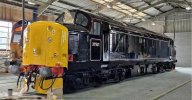
89001 ran in TDM 'slave' mode, with DVT 82139 leading in TDM 'master' mode, during the Crewe to Stafford leg of the test run on 24 November 2025. Only a short train, and only 25 miles at up to 75 mph, but it proved the loco's normal TDM functionality was OK. Prior to that, 89001's TDM functionality had been checked during the relevant vehicle maintenance exam job, carried out before it ventured out on the main line for the 'first time' back in September 2025; and it has been used with 82139 during driver training and train preparation on depot at Crewe. Also, as has been mentioned, on the short leg of the recent test runs between depot and the Down Refuge Siding.
The TDM system on an AC loco is like having a third, but much simplified, driving cab hidden away in the locomotive; with about 50 digital signals interfacing between the TDM electronics rack and the loco wiring. The two 'real' driving cabs are much more complex, and to meet the latest requirements (i.e. since GNER days) they also have had GSM-R radio equipment and Mk.4 TPWS installed (in both of these there is equipment per cab as well equipment common to the two cabs). This week's runs were about testing all this cab kit in real world conditions, proving that the loco will function as a loco under load and at speed, getting the loco thoroughly warmed up, and also for driver training and competence assessment. Those last items need doing in the loco, not in the DVT, where the driver is one stage removed from the loco.
Doing test runs is expensive, so they are carefully planned to 'kill several birds with one stone'.
Incidentally if you have an AC loco leading a train with a DVT on the rear, unless you need to run above 110 mph you don't need to use the simultaneous front and rear brake application facility that the TDM system provides; so you isolate the brake frame from the brake pipe using the DVT's DW3 cock. This way, if the TDM decides to de-configure en route the DVT won't dump the brake pipe; it's a train reliability benefit.