• Our new ticketing site is now live! Using either this or the original site (both powered by TrainSplit) helps support the running of the forum with every ticket purchase! Find out more and ask any questions/give us feedback in this thread!

Have flights numbers decreased?

AndrewE

Established Member
Joined
9 Nov 2015
Messages
7,300
My wifejust commented on how clear and blue the sky is, reminds us of the Icelandic volcano and Covid days. I have probably noticed less than a dozen vapour trails when out in the garden today...

Is it just that the atmospheric conditions aren't making them visible, or have flight numbers dropped recently? I could imagine lots of journeys that would have gone via the Middle East being abandoned!
 
Last edited by a moderator:
Sponsor Post - registered members do not see these adverts; click here to register, or click here to log in
R

RailUK Forums

Ted633

Member
Joined
15 Mar 2018
Messages
555
Don’t you know? ‘Those’ in charge of ChemTrails have Easter off! ;)


In all seriousness, haven’t noticed a flight reduction. Have also noticed that the contrails aren’t hanging around as much (but still plenty of them). Must be different atmospheric conditions. I’m sure someone cleverer than me on here can explain.
 

Peter Mugridge

Veteran Member
Joined
8 Apr 2010
Messages
17,793
Location
Epsom
In all seriousness, haven’t noticed a flight reduction. Have also noticed that the contrails aren’t hanging around as much (but still plenty of them). Must be different atmospheric conditions. I’m sure someone cleverer than me on here can explain.
Yes, it's atmospheric conditions, that's all. The existence or otherwise of a contrail depends on atmospheric temperature and moisture content. The higher the humidity, the quicker they vanish - and it needs to be way below zero for them to form at all.

They've recently discovered that adjusting flight levels by as little as 2,000 feet can make the difference between a trail forming and not forming, and flight plans are increasingly being deliberately adjusted where possible to take that into account to reduce the volume of trails being produced.
 

Struner

Member
Joined
13 Dec 2018
Messages
923
Location
Ommelanden, EU
why would they do so? :rolleyes:
- less fuel?
- clear sky for the lookers on?
- or better sunlight for solar things on the ground? & if so, who’ll pay?

just wondering, no need to know the answers @Peter Mugridge ;)
 

AndrewE

Established Member
Joined
9 Nov 2015
Messages
7,300
I was imagining that it was a good bit of PR for the aviation industry: if it doesn't cost much but takes (outsider/green) people's minds off the constant burning of jet fuel for the benefit of a tiny minority then they have notched up a win...
 

Struner

Member
Joined
13 Dec 2018
Messages
923
Location
Ommelanden, EU
I was imagining that it was a good bit of PR for the aviation industry: if it doesn't cost much but takes (outsider/green) people's minds off the constant burning of jet fuel for the benefit of a tiny minority then they have notched up a win...
:lol: indeed! (still wondering all the same…)
 

Bald Rick

Veteran Member
Joined
28 Sep 2010
Messages
35,583
SWMBO just comented on how clear and blue the sky is, reminds us of the Icelandic volcano and Covid days. I have probably noticed less than a dozen vapour trails when out in the garden today...

Is it just that the atmospheric conditions aren't making them visible, or have flight numbers dropped recently? I could imagine lots of journeys that would have gone via the Middle East being abandoned!

Depends where you are in the country, as we had a lot more flights over us the last two days than normal. Weather had a part to play in it, both wind direction for Hethrow traffic, and jet stream position for Europe > N Anerica.
 

Peter Mugridge

Veteran Member
Joined
8 Apr 2010
Messages
17,793
Location
Epsom
why would they do so? :rolleyes:
- less fuel?
- clear sky for the lookers on?
- or better sunlight for solar things on the ground? & if so, who’ll pay?

just wondering, no need to know the answers @Peter Mugridge ;)
They did state at the time ( no, I haven't got a link - I didn't save one; why would I have? ) that it was an attempt to reduce, no matter how slightly, the global warming effect from the increased cloud cover resulting from persistent contrails.
 

Bantamzen

Established Member
Joined
4 Dec 2013
Messages
10,488
Location
Cheshire
why would they do so? :rolleyes:
- less fuel?
- clear sky for the lookers on?
- or better sunlight for solar things on the ground? & if so, who’ll pay?

just wondering, no need to know the answers @Peter Mugridge ;)
Just as an example, there are lots more, American Airlines are trialling AI forecasting models to help reduce potential contrails:

AI can help: American Airlines' newest solution to get rid of contrails

While the vapor trails produced by airliners don't contain chemical agents sprayed for secretive reasons, they do pose a risk. Contrails are an effect that results from specific atmospheric conditions combined with elements from an aircraft's engine exhaust, manifesting as long trails that form behind an aircraft. They can pose a significant threat to the environment, which is why airlines and manufacturers are looking for ways to combat it. American Airlines, the US' second-largest airline, is turning to artificial intelligence.

American is working with Google to utilize AI-forecasting tools to combat contrails. It's currently trialing the system to determine its true functions and benefits, but the results thus far are promising. The tool is promoted as being scalable, meaning that it should be relatively easy for other airlines to implement these measures on a widespread basis. This represents one of the airline industry's strongest measures yet to combat contrails, a major source of aviation pollution.

Overview Of Aircraft Contrails

Commercial airliners typically cruise between 30,000 feet and 43,000 feet, where the air is sufficiently thin that drag is significantly reduced and fuel burn is lower. Flying lower increases drag, while flying above these altitudes can result in significantly reduced lift, increasing fuel burn. In addition, flying at these altitudes allows planes to overfly rough weather. However, this is also the altitude where conditions are ideal for contrails, which are line-shaped vapor trails that form behind aircraft and result from an aircraft's exhaust gases mixing with the outside air.

The two largest components of jet engine exhaust are carbon dioxide and water vapor, while chemical byproducts make up a smaller percentage. When hot, humid exhaust air comes into contact with thin, cold air at high altitudes, it raises the air's relative humidity, essentially creating a cloud. This is a contrail, and the time required for the air to cool results in long trails. While you'll typically find contrails at high altitudes, they occasionally occur at lower altitudes as well, depending on atmospheric conditions.

There are three major types of aircraft contrails: 'short-lived', 'persistent non-spreading', and 'persistent spreading'. Each one has a greater impact on the environment than the last, and contrails as a whole are believed to be one of the aviation industry's biggest contributors to climate change, as they trap heat in the atmosphere, much like a cloud. Therefore, manufacturers and airlines are prioritizing solving this issue, as the industry as a whole aims to reduce its environmental impact.

Using Artificial Intelligence To Reduce Contrails

American, based in Fort Worth, Texas, has been diligently working with Google to reduce the impact of contrails. This began with a 2023 study led by Google Research and Breakthrough Energy, which concluded that there were practical measures to help flights avoid generating contrails. This was backed up by further studies in 2024 and 2025 that focused on replicating and scaling the findings, with the goal of implementing contrail-avoidance strategies into flight planning systems.

American Airlines and Googleare using artificial intelligence to generate contrail forecast maps, cross-referencing predictions with open-source contrail models developed by Breakthrough Energy. The forecasts are then added to its flight planning system, indicating to pilots where to change altitude and suggesting optional routes to avoid areas where contrails are more likely to form. This tool is directly integrated into software that American already uses, making it a low-risk, low-cost solution.

The initial 2023 trial saw a 54% reduction in contrails across 70 flights, with subsequent studies corroborating these findings. In a recent study published to arXiv from January to March 2025, researchers had 112 transatlantic flights follow contrail-avoidance routes and observed a 62% reduction in contrail production compared to a focus group, along with a 69% reduction in associated warming. What's more, using contrail-avoidance routes did not result in a meaningful increase in fuel burn.
 

brad465

Veteran Member
Joined
11 Aug 2010
Messages
11,381
Location
Taunton or Kent
Looks like flight numbers will be decreasing plenty this summer:


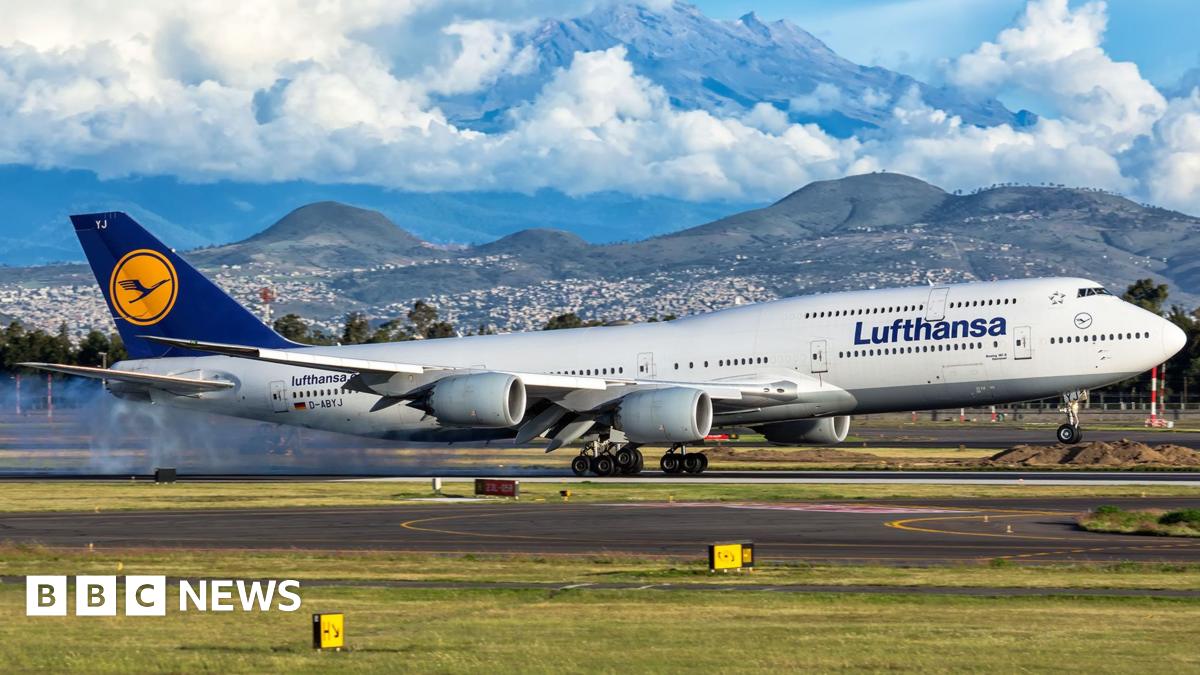
German airline Lufthansa will cut 20,000 short-haul flights over the summer, saying soaring fuel prices have made many journeys "unprofitable" for the firm.

Jet fuel has doubled in price since the start of the US-Israel war with Iran as the conflict has slowed its production and transportation across the Middle East.

Several airlines, including KLM-France and Delta, have also temporarily cut some flights while others have raised ticket prices as they pass on expenses to customers.

Analysts have warned that travellers should expect further ticket price rises and more cancelled flights as the conflict continues.

The Gulf is a major source of aviation fuel, accounting for about 50% of Europe's imports. The bulk of it comes through the Strait of Hormuz, which Iran has effectively closed in response to US and Israeli attacks.

The increase in jet fuel prices reflects the role Middle Eastern refineries play in supplies. The Al-Zour refinery in Kuwait alone provides roughly 10% of Europe's jet fuel imports, according to Energy Intelligence.

The International Energy Agency warned last week that Europe could run out of jet fuel in weeks, though the UK government and airlines say they are not seeing a disruption in supply.

Lufthansa said on Tuesday it was cutting down its European network, but that passengers will "continue to have access to the global route network, particularly long-haul connections".

"However, due to the increase in jet fuel prices, this will be achieved significantly more efficiently than before."

It said this would save "approximately 40,000 metric tons of jet fuel".

The announcement on Tuesday comes after the firm said last week it was speeding up the permanent closure of its European flight offering CityLine.

It also said at the time it was retiring the programme's 27 aircraft, partly due to "significantly increased kerosene prices", but also because of "additional burdens from labor disputes".

Lufthansa said "the first 120" of these flight cuts were implemented on Tuesday. Routes affected include those from Frankfurt to Poland and Norway.

 

TravelDream

Member
Joined
7 Aug 2016
Messages
1,158
Looks like flight numbers will be decreasing plenty this summer:


Lufthansa was/ is poorly hedged for fuel this summer so is hurting more than others.

Though there are other factors involved too and fuel cost is a good public way of presenting the cuts for the company.
 

atillathehunn

Established Member
Joined
6 Jan 2010
Messages
1,521
Location
NL
I have seen elsewhere reports that BA have loaded quite a sizable number of May cancellations (though it hasn't filtered through to Flyertalk yet) as well as reports of cancellations by easyJet and Ryanair for May.

I only have a couple of flights booked in May (both Ryanair and easyJet) and thankfully both remain untouched for now.
 

AlterEgo

Verified Rep - Wingin' It! Paul Lucas
Joined
30 Dec 2008
Messages
29,181
Location
LBK
An excellent time to be squatting on favourable air fares booked during the war. I will have a fun summer rebooking some of them much more interesting connecting itineraries!
 

brad465

Veteran Member
Joined
11 Aug 2010
Messages
11,381
Location
Taunton or Kent
I have seen elsewhere reports that BA have loaded quite a sizable number of May cancellations (though it hasn't filtered through to Flyertalk yet) as well as reports of cancellations by easyJet and Ryanair for May.

I only have a couple of flights booked in May (both Ryanair and easyJet) and thankfully both remain untouched for now.
I have an easyJet flight to Verona in late July and some connecting flights in Scandanavia booked in mid-August as part of some possible cross-European travel (with Scandinavian airlines). While I've not heard anything yet, I wouldn't be surprised if these are cancelled as they are not the most popular routes.
 

D1511

Member
Joined
29 Jul 2023
Messages
1,199
Location
WCML N
I've a flight to AMS in June with BA, but I'm fully expecting it to be cancelled, but as my dates aren't flexible, I've booked a reserve return on Eurostar. If my flight does go ahead, then I'll rebook the Eurostar for later in the year, probably for no difference in cost.
Unless the Hormuz business is resolved quickly, I reckon 50% of short haul flights will be canned over the summer, not just for reasons of flight viability, but for the more fundamental reason of a lack of aviation fuel.
 

TravelDream

Member
Joined
7 Aug 2016
Messages
1,158
An excellent time to be squatting on favourable air fares booked during the war. I will have a fun summer rebooking some of them much more interesting connecting itineraries!

Of course. Some real bargains were had compared to fares now.

Still deals to be had if you're willing to take the risk of going through the Middle East.

Unless the Hormuz business is resolved quickly, I reckon 50% of short haul flights will be canned over the summer, not just for reasons of flight viability, but for the more fundamental reason of a lack of aviation fuel.

Very important point.
Supply will be the real constraint rather soon.
Even very hedged airlines like Ryanair will be cancelling lots if there is no fuel to fly.
 

atillathehunn

Established Member
Joined
6 Jan 2010
Messages
1,521
Location
NL
I think there's two problems with the point raised here. The first is I don't think 50% is realistic (nor does even pessimistic analysis), but also that the damage is done at a % far lower than 50%.

Analysis in Politico today gives credence to both: 10% cancellations across the board are likely to give sufficient cause for very serious disruption, particularly to LCCs built on a high usage model.


Top