Our new ticketing site is now live! Using either this or the original site (both powered by TrainSplit) helps support the running of the forum with every ticket purchase! Find out more and ask any questions/give us feedback in this thread!
We're our own worst enemy. No doubt there are many who not only didn't moan but had been convinced that they're somehow better off not having solar (or a heat pump).because of something they read on the Internet.
In 2012 we were selling our (bog standard identi-kit developer) house built in 1994 which we had retrofitted with very efficient new windows, MVHR, solar thermal panels for heating the domestic hot water and some PV panels (not as many as we would have liked but we fitted the PV a couple of years after the solar thermal so there wasn't a lot of space left on the roof for PV panels). We had timed the PV installation well for the introduction of the Feed-in-tariff and were getting near to 50p
(when the amount for deemed export was added to the generation amount) every time the red light on the generation meter blinked.
The new buyer would benefit from that for the remainder of the 20 years of the FIT.
None of the people who viewed the house were interested in the reduced running costs, compared to similar houses, and one actually asked how much it would cost to remove the panels!!! Needless to say he didn't buy.
In 2012 we were selling our (bog standard identi-kit developer) house built in 1994 which we had retrofitted with very efficient new windows, MVHR, solar thermal panels for heating the domestic hot water and some PV panels (not as many as we would have liked but we fitted the PV a couple of years after the solar thermal so there wasn't a lot of space left on the roof for PV panels). We had timed the PV installation well for the introduction of the Feed-in-tariff and were getting near to 50p
(when the amount for deemed export was added to the generation amount) every time the red light on the generation meter blinked.
The new buyer would benefit from that for the remainder of the 20 years of the FIT.
None of the people who viewed the house were interested in the reduced running costs, compared to similar houses, and one actually asked how much it would cost to remove the panels!!! Needless to say he didn't buy.
I am wondering where there is a "forum" for advertising houses like ours (just solar thermal, pv, and upgraded windows here) to attract the attention of people pre-disposed to take such houses.
There must be a modern equivalent of the small ads in a DIY or house improvement magazine...
(Good news is that a friend put up for sale a house that he had been renting out and the agent preparing the description commented that the long-standing pv with FIT would increase its value.)
Getting very close to carbon free right now with fossil generation below 1 GW (0.94 GW at 12:55). Pumped hydro is soaking up 1.52 GW for later use, it's a shame we can't see what battery storage is absorbing.
I do wish reporting sites would hurry up and work out how to report this accurately, as it becomes an increasingly large part of the network missing this hugely reduces live reporting accuracy.
I am wondering where there is a "forum" for advertising houses like ours (just solar thermal, pv, and upgraded windows here) to attract the attention of people pre-disposed to take such houses.
There must be a modern equivalent of the small ads in a DIY or house improvement magazine...
(Good news is that a friend put up for sale a house that he had been renting out and the agent preparing the description commented that the long-standing pv with FIT would increase its value.)
Given that you can search for parking, gardens, new guinea and the like on Rightmove, I do wonder if they will extend that list of options to include Solar at some point.
I do wish reporting sites would hurry up and work out how to report this accurately, as it becomes an increasingly large part of the network missing this hugely reduces live reporting accuracy.
The live reporting sites use NESO API data feeds and these originate data only from generators registered in the balancing mechanism (BM). Until recently most batteries were 50MW or a lot less and are not obliged to register their assets in the BM so they aren't feeding live data. There is a push to lower the threshold down to 10MW as the ESO control room need more visibility of what the batteries are doing in advance rather than having to react to changes on the system.
The live reporting sites use NESO API data feeds and these originate data only from generators registered in the balancing mechanism (BM). Until recently most batteries were 50MW or a lot less and are not obliged to register their assets in the BM so they aren't feeding live data. There is a push to lower the threshold down to 10MW as the ESO control room need more visibility of what the batteries are doing in advance rather than having to react to changes on the system.
Yes the ‘other’ category on gridwatch is certainly seeing more generation these days, especially at peak price times which I assumeis Batteries discharging. However it doesn’t appear to show negative when charging. Now that there are more and more battery systems connecting that are over 50MW, we should be seeing much more in this.
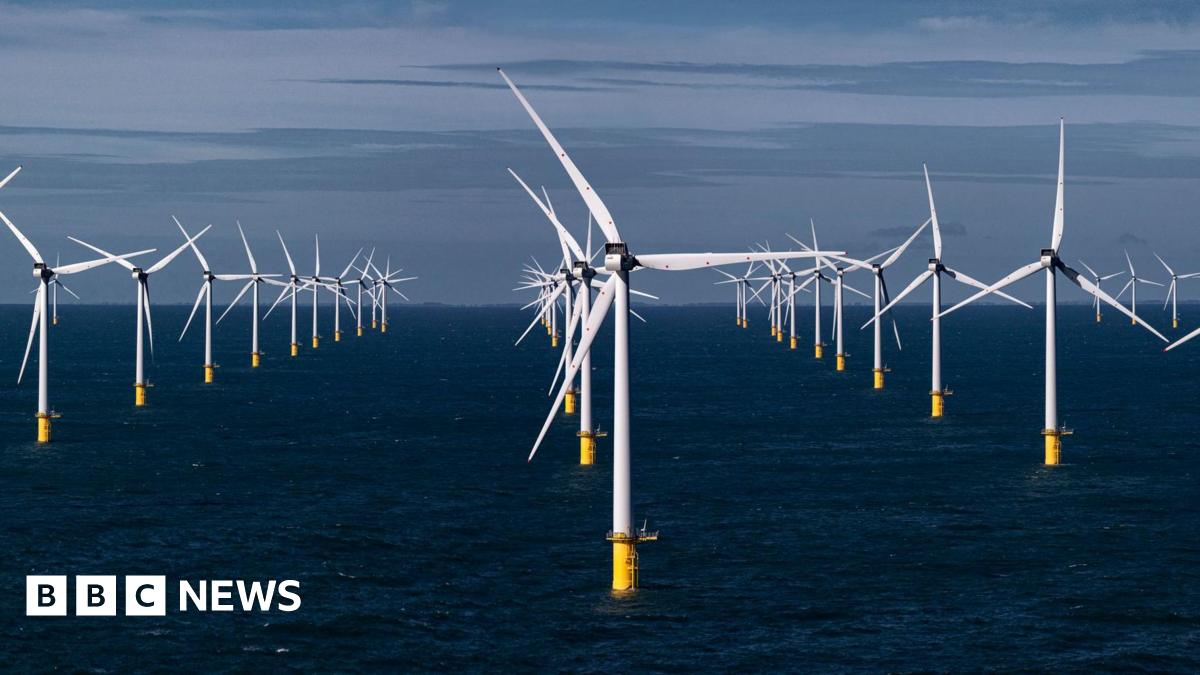
Looking like the wind generation record could be broken today. 23.64GW as of 10 mins ago and winds forecast to rise a little in key areas over the next couple of hours.
The UK giant is optimistic but chief executive Greg Jackson tells the BBC he is making contingency plans.
www.bbc.co.uk
The UK's biggest energy firm has seen a 50% rise in solar panel sales after the US-Israel war with Iran pushed oil and gas prices up, its boss told the BBC.
Greg Jackson, head of Octopus Energy, described a "huge jolt" in sales of solar panels and heat pumps, as well as enquiries about electric vehicles and chargers, so far this month compared to February.
Jackson said households would "very likely" see higher energy bills from July when Ofgem's price cap, which is currently shielding millions of households, is reset.
He told the BBC's Big Boss Interview podcast that Octopus was staying optimistic about the impacts of the conflict, but planning on it being "more serious".
Wholesale oil and gas prices have surged since the war broke out on 28 February, disrupting the production and transportation of energy across the Middle East.
Higher energy prices may lead to a rise in the cost of other goods around the world, but it often shows up first at the fuel pump.
Jackson said the UK had experienced a "much more dramatic increase in energy costs than we are likely to see here" after Russia's full-scale invasion of Ukraine in 2022.
He acknowledged it "couldn't be more confusing" for people that the price cap will lower prices for three months from April, while at the same time people are being warned the crisis will likely lead to future energy bill rises.
He said this had pushed households to think about renewable energy.
He said customers were saying "Look, we've just got to do something about it" with Octopus seeing a 50% rise in solar panel sales and 30% rise in heat pump sales, while enquiries about EVs were up more than a third, and chargers by about a fifth.
This is based on comparing the first three weeks of February and March, with Jackson saying orders and enquiries were normally fairly steady month on month.
What would be helpful is if the numerical sales' values were known, as while I'm willing to believe they are already substantial, a 50% increase from say 100 sales is 150, whereas 5,000 sales would increase to 7,500.
The UK giant is optimistic but chief executive Greg Jackson tells the BBC he is making contingency plans.
www.bbc.co.uk
What would be helpful is if the numerical sales' values were known, as while I'm willing to believe they are already substantial, a 50% increase from say 100 sales is 150, whereas 5,000 sales would increase to 7,500.
Was also quoted in the government press release on plug in solar (although no value quoted either) and lower bills for those near wind turbines which otherwise would be turned off:
'Plug-in' solar panels to be in shops within months, offering households chance to significantly cut energy bills.
www.gov.uk
Greg Jackson, Founder and CEO of Octopus Energy, said:
People want to be free of these fossil fuel crises - since the conflict in the Middle East began, interest in solar has shot up 50%, heat pump and electric cars are also seeing surges.
Every solar panel, heat pump and battery cuts bills and boosts Britain’s energy independence. And the government’s latest steps can help cut the costs of electrification.
With solar, many homes can produce and use their own electricity, and cut their bills further by selling the excess back to us. With heat pumps and electric cars, their own electricity can slash heating and driving bills - stuff you simply can’t do with gas and petrol.
And it’s great that the government want to give homes and businesses cheap electricity on windy days instead of paying wind farms to switch off. Once this is permanent, companies and families will be able to invest confidently in electric vehicles, batteries and heat pumps - knowing they’ll be cheap to run."
Port operator ABP will begin work on developing a facility to assemble and launch turbines out to sea.
www.bbc.co.uk
Port Talbot will become the first dedicated hub for floating offshore wind in the Celtic Sea.
Associated British Ports (ABP) will begin detailed design and engineering work on new port infrastructure after securing grant funding of up to £64m from the UK government.
The project will support the assembly and deployment of floating turbines that will operate in deeper waters off the Welsh coast. ABP said the development could support thousands of jobs and attract hundreds of millions of pounds in further investment.
The UK government said the new port would help deliver clean, homegrown electricity, protect households from volatile fossil fuel markets and create up to 5,000 new jobs.
Redeveloping the port to handle the assembly of wind turbines could position Port Talbot at the centre of a fast-growing clean energy sector.
Offshore wind is expected to play a major role in meeting future electricity demand and will further reduce the UK's reliance on volatile global oil and gas markets.
Floating offshore wind technology allows turbines to be installed far further from the shore than traditional fixed bottom structures - opening up areas of the Celtic Sea that are regarded as having some of the best wind resources in Europe.
The design work in Port Talbot is the first stage in creating the infrastructure needed to handle, assemble and launch giant floating turbine platforms.
This will be particularly effective if delivered, as it's both a very windy part of the world and increases the geographical spread of wind power across the UK, meaning it's more likely somewhere will always be providing wind.
Port operator ABP will begin work on developing a facility to assemble and launch turbines out to sea.
www.bbc.co.uk
This will be particularly effective if delivered, as it's both a very windy part of the world and increases the geographical spread of wind power across the UK, meaning it's more likely somewhere will always be providing wind.
Port operator ABP will begin work on developing a facility to assemble and launch turbines out to sea.
www.bbc.co.uk
This will be particularly effective if delivered, as it's both a very windy part of the world and increases the geographical spread of wind power across the UK, meaning it's more likely somewhere will always be providing wind.
That's a particularly good location as the new jobs created should go somewhere way to offset the jobs lost at the steelworks with new jobs with a long term future.
A future link up between renewable energy offshore powering on shore electric arc furnaces would offer lots of green steel potential.
This will be particularly effective if delivered, as it's both a very windy part of the world and increases the geographical spread of wind power across the UK, meaning it's more likely somewhere will always be providing wind.
There's certainly a good number of onshore turbines in Cornwall (not that far away) although like Scotland their existing cable network limits how much they can deliver (even solar on homes can be limited due to grid connection capacity - although the example I know of I don't know if that's the local grid or the national one).
What would be helpful is if the numerical sales' values were known, as while I'm willing to believe they are already substantial, a 50% increase from say 100 sales is 150, whereas 5,000 sales would increase to 7,500.
Whilst we can't know Octopus internal data, and they may be overstating it, the MCS data suggests that domestic PV installations were ticking along at about 15,000 systems and 75 MW per month, so assuming a rising tide lifts all boats, and Greg Jackson is not being economical with the truth, then this would suggest we might to see it lift to >20k systems and 100 MW / month.
The stats do not record whether systems are roof mounted, ground mounted or something else (like car ports), but nearly 30% of MW capacity is in <10kW systems and these are going to be mostly domestic and smaller non-domestic rooftops. 25% is 10 kW to 5 MW which is large commercial rooftop or smaller ground-mount, and the rest (45%) is >5MW and these will be pretty much exclusively ground-mounted.
There's also Alverdiscott in North Devon that Xlinks had proposed to connect 3.6 GW or Moroccan renewables into, although whether that'd have run into constraints due to being in the same part of world as Hinkley Point I don't know.
The UK giant is optimistic but chief executive Greg Jackson tells the BBC he is making contingency plans.
www.bbc.co.uk
What would be helpful is if the numerical sales' values were known, as while I'm willing to believe they are already substantial, a 50% increase from say 100 sales is 150, whereas 5,000 sales would increase to 7,500.
Having re-read the article, the thing of note is that at the end of this quote he says that monthly variations aren't typically significant, so the talk of +50% in sales is still quite important, even if it's from a low base.
However given that (according to Wikipedia) they have a fleet of 27,000 EV's (2025) on lease with their car leasing company a 33% uplift on 1/36'th of that (assuming average lease tends of 3 years) would be an extra 250 vehicles (so 1,000 in a month vs the more normal 750).
Whist not deal breaking, and there's always a possibility that all that's happened is people have moved early on a purchase that they were already going to make, if those numbers become a trend they could see their total fleet size grow by just over 10% in a year to around 30,000.
That's not an insignificant thing.
It's much harder to find numbers on solar, heat pump and charger numbers. However, given they have over 6 million customers in the UK it's fairly likely that the numbers are going to be reasonable.
Although, there will be a lot of those who already have solar setups already. However if just 0.2% of those (120,000) are looking to install over the next 4 years that's still going to be around 2,500 per month. As such even from such a fairly modest number a 50% increase is still noteworthy.
It's worth noting that in 2022 there were a total of 190,000 solar installations to homes in the UK, with numbers growing since then. However, if we assume similar growth across all solar installers from that 2022 number, that could be somewhere in the region of 100,000 extra homes this year gaining solar over what may have been the case.
That's before any changes from plug in solar.
Just a reminder that most of the above is pure speculation, but does highlight that we could see a noticeable uplift in home solar, the exact numbers won't be known until later.
It's also worth noting that if the war, and associated oil and gas prices, is short lived the impact may also be short lived and so may not be as significant as the above indicates. However conversely, if the war does drag on, then (assuming other supplies aren't too badly impacted) solar could have a good future.
Edit, I've come across an article about heat pumps and it gives some numbers from Octopus in that:
The government wants Britons to embrace heat pumps. But will they ever make financial sense for the average user?
www.bbc.co.uk
Greg Jackson, the chief executive of Octopus - the biggest retail energy supplier in Britain and the biggest vendor of heat pumps too - is enthusiastic about the technology. "[We install] around 1,000 a month, typically," he says. "There's still quite a lot of policy barriers, but people who get them are very, very happy."
But he accepts the "crazy high" price of UK electricity is a problem. "In the UK, currently, electricity is about four and a bit times more expensive than gas. In Germany, it's three times, in France it's just over twice as expensive as gas. And in Scandinavia, it's in places almost at parity," he says.
A 30% uplift on 1,000 is 300, so that would be an extra 3,600 a year when in 2025 there were just shy of 52,000 me heart pumps installed (figure taken from earlier in the article, which is from a graph so is difficult to quote).
Obviously if they are the only company seeing an uplift that's hardly anything, but if others are too that could again make a noticeable difference over the year.
== Doublepost prevention - post automatically merged: ==
Not sure where these numbers come from and so how reliable they are, however this is saying that producing oil and gas may not protect the economy from oil price shocks:
And producing oil at home doesn’t shield economies because prices are set globally. Since the latest conflict began, gasoline prices in Texas – a major oil-producing region – have risen by more than 25%, surpassing those in oil-importing countries like the UK and France.
Not sure where these numbers come from and so how reliable they are, however this is saying that producing oil and gas may not protect the economy from oil price shocks:
Interestingly, and related to another thread, the USA only has about a decade of oil left in the ground at current production rates. It’s not too far a stretch to say they will be net importing fairly soon, which will be interesting to see from a world economic order and petro-dollar perspective.
It’s follows that if the US does not pursue electrification of the economy and renewable energy at scale, it will be needing to secure future oil supplies in the very near future.
And in a remarkable coincidence, the countries occupying first and third place in terms of proven reserves in the ground are Venezuela and Iran.
Interestingly, and related to another thread, the USA only has about a decade of oil left in the ground at current production rates. It’s not too far a stretch to say they will be net importing fairly soon, which will be interesting to see from a world economic order and petro-dollar perspective.
It’s follows that if the US does not pursue electrification of the economy and renewable energy at scale, it will be needing to secure future oil supplies in the very near future.
And in a remarkable coincidence, the countries occupying first and third place in terms of proven reserves in the ground are Venezuela and Iran.
Various interests in the US have done well to keep that quiet.
By the way, when it comes to the other uses of oil that don't involve burning it, what alternatives exist for these and how easily can they be scaled up? Plastic can be recycled and/or replaced with hemp, alternative clothing fibers could/should be sourced more naturally, but lubricants and fertiliser* might be more challenging. I am hoping though that high oil prices will promote innovation into finding alternatives, now a better cost-benefit ratio exists for this.
*regenerative farming maybe an alternative here, but is very difficult to scale up.
By the way, when it comes to the other uses of oil that don't involve burning it, what alternatives exist for these and how easily can they be scaled up? Plastic can be recycled and/or replaced with hemp, alternative clothing fibers could/should be sourced more naturally, but lubricants and fertiliser* might be more challenging. I am hoping though that high oil prices will promote innovation into finding alternatives, now a better cost-benefit ratio exists for this.
*regenerative farming maybe an alternative here, but is very difficult to scale up.
Various interests in the US have done well to keep that quiet.
By the way, when it comes to the other uses of oil that don't involve burning it, what alternatives exist for these and how easily can they be scaled up? Plastic can be recycled and/or replaced with hemp, alternative clothing fibers could/should be sourced more naturally, but lubricants and fertiliser* might be more challenging. I am hoping though that high oil prices will promote innovation into finding alternatives, now a better cost-benefit ratio exists for this.
*regenerative farming maybe an alternative here, but is very difficult to scale up.
When I was based at a plant sciences department at a university, one of the main focuses was to have plants replace the raw materials used for making stuff, especially the more complicated compounds that get used.
For some raw materials, plant-based materials are already widely available (e.g., ethanol and ethane). For others, there are oil-free ways of making them (e.g., hydrogen and ammonia). It's also fairly common for substances in medication to be made by one of a wide range of single-celled organisms such as yeasts or bacteria that are fed on sugar (and some other food-based feedstocks). We can widen all of those, especially if oil gets more expensive.
And that's before you get into things like replacing (oil-based) plastic with (wood-based) paper, using less materials, etc.
Interestingly, and related to another thread, the USA only has about a decade of oil left in the ground at current production rates. It’s not too far a stretch to say they will be net importing fairly soon, which will be interesting to see from a world economic order and petro-dollar perspective.
It’s follows that if the US does not pursue electrification of the economy and renewable energy at scale, it will be needing to secure future oil supplies in the very near future.
And in a remarkable coincidence, the countries occupying first and third place in terms of proven reserves in the ground are Venezuela and Iran.
It has a decade of proven reserves at current rates. However, that is not the total of what is in the ground. It’s a technical definition of what can definitely be profitably extracted with current technology in discovered fields.
There have been further estimates made, taking into account regions that haven’t been explored yet but which have similar geological features to areas where we know oil is found, or less conventional sources (e.g. shale oil). If you take those into account, then the US has many decades of oil available.
It has a decade of proven reserves at current rates. However, that is not the total of what is in the ground. It’s a technical definition of what can definitely be profitably extracted with current technology in discovered fields.
There have been further estimates made, taking into account regions that haven’t been explored yet but which have similar geological features to areas where we know oil is found, or less conventional sources (e.g. shale oil). If you take those into account, then the US has many decades of oil available.
Well, yes, but looking at that through the other end of the looking glass reads “the US has around 60 billion barrels of proven oil reserves; there is more that is not certain to be able to be profitably extracted, or needs as yet undeveloped technology, and/or new fields that have yet to be discovered”
Meanwhile there’s half a trillion barrels of oil just between Venezuela and Iran that can “definitely be profitably extracted with current technology in discovered oil fields”.
Meanwhile there’s half a trillion barrels of oil just between Venezuela and Iran that can “definitely be profitably extracted with current technology in discovered oil fields”.
That's a particularly good location as the new jobs created should go somewhere way to offset the jobs lost at the steelworks with new jobs with a long term future.
A future link up between renewable energy offshore powering on shore electric arc furnaces would offer lots of green steel potential.
UK does need to do more though to onshore more manufacturing or even assembly of windfarm equipment as too much is imported. Take Inch Cape all the below is imported albeit there is an element of some UK input but its small beer
Vestas: 72 (15MW) wind turbines.
Siemens Energy & Iemants (Smulders): Awarded the contract for the offshore substation and electrical transmission infrastructure.
Cadeler: install the 72 wind turbines
CWHI (CNOOD-Wenchong Heavy Industries) / Dajin Offshore: Responsible for the supply of monopole (MP) foundations.
TKF: Awarded a contract to supply and install inter-array cables.
We get to construct onshore substations and cable routes along with managing port services and logistics. The biggest win for UK workers is the long term operation and support services for maintaining the wind farm which is good work for many decades. Thing is though weve had politicians of every hue telling us we are global offshore wind super power for decades but doing very little to get that work for UK citizens which is poor given the investment being made on behalf of all citizens.
We are aware of an issue with emails from the Forum to Microsoft-based email accounts (hotmail/outlook/live.com email addresses). This is being looked into currently, thanks for your patience meanwhile.