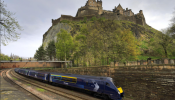
I assume this will now be the end of the Intercity 125s?
Just a question, Scotrail has 26 HST sets but they are getting 22 Class 222. That is a reduction of 4 trains.
They only need 19 222s a day to deliver the service.

I assume this will now be the end of the Intercity 125s?
Just a question, Scotrail has 26 HST sets but they are getting 22 Class 222. That is a reduction of 4 trains.
Indeed, on timetabled public passenger services anyway. There's a few around on charter and heritage services, and some modified ones used for non-passenger purposes.I assume this will now be the end of the Intercity 125s?
I assume this will now be the end of the Intercity 125s?
Just a question, Scotrail has 26 HST sets but they are getting 22 Class 222. That is a reduction of 4 trains.
assuming that they actually work... There seems to be a lot of grief on the Midland Main Line from 222s failing at the moment, so I am surpirsed that the only power-supply comment on the list of upgrades in post#6 is "Intelligent Engine Start Stop (automatically stops an engine to reduce emissions.") It seems to me that they need something a lot deeper if they are going to be relied upon not to fail in the middle of the desolate wastes in the north!They only need 19 222s a day to deliver the service.
Yes specifically says will be phased replacement from 2027 to be all replaced by December 2028I assume this will now be the end of the Intercity 125s?
Just a question, Scotrail has 26 HST sets but they are getting 22 Class 222. That is a reduction of 4 trains.
I foresee these being the last diesels ScotRail acquires - I do wonder about whether there's an opportunity to use them on other lines such as the West Highland in future, if and when non-diesel stock and electrification is rolled out on the routes they'll cover initially.
Just a question, Scotrail has 26 HST sets but they are getting 22 Class 222. That is a reduction of 4 trains.
Anyway, it does make me wonder what will happen to the 3 ‘spare’ coaches. Stored for potential future use, or disposed of?
Has anyone had any experience driving them?
I guess the big question is whether all of the 810's will have made it into service by 2028?
Haymarket will have plenty of room for 222s once the HSTs go. Given the 222 is originally a Bombardier product I wouldn't envisage Haymarket having any problems given that it's the principal 170 maintenance depot.
assuming that they actually work... There seems to be a lot of grief on the Midland Main Line from 222s failing at the moment, so I am surpirsed that the only power-supply comment on the list of upgrades in post#6 is "Intelligent Engine Start Stop (automatically stops an engine to reduce emissions.") It seems to me that they need something a lot deeper if they are going to be relied upon not to fail in the middle of the desolate wastes in the north!
They will not be thrashed at 125mph in Scotland, although some gradients are steeper than most of Midland mainline.assuming that they actually work... There seems to be a lot of grief on the Midland Main Line from 222s failing at the moment, so I am surpirsed that the only power-supply comment on the list of upgrades in post#6 is "Intelligent Engine Start Stop (automatically stops an engine to reduce emissions.") It seems to me that they need something a lot deeper if they are going to be relied upon not to fail in the middle of the desolate wastes in the north!
Quite. I'm not sure why we're supposed to care about the political opinions of a businessman. We all no doubt buy things all the time that financially benefit someone we wouldn't agree with, whatever our own political leanings are.It's a good service that's provided by starlink, unfortunately the media drive this anti musk campaign which is downright embarrassing
Why are they unreliable though? Their older, and possibly more intensively worked, Voyager cousins aren't. Are they just not being maintained well as they're on their way out from the Midland Main Line?assuming that they actually work... There seems to be a lot of grief on the Midland Main Line from 222s failing at the moment, so I am surpirsed that the only power-supply comment on the list of upgrades in post#6 is "Intelligent Engine Start Stop (automatically stops an engine to reduce emissions.") It seems to me that they need something a lot deeper if they are going to be relied upon not to fail in the middle of the desolate wastes in the north!

They were perfectly reliable (even winning multiple golden spanners) until a year or so ago, when Hitachi took over maintenance. They are very reliable trains if looked after - it also sounds like they'll receive a full overhaul before entering service with ScotRail, which should help reverse the rot.Why are they unreliable though? Their older, and possibly more intensively worked, Voyager cousins aren't. Are they just not being maintained well as they're on their way out from the Midland Main Line?


Excuse my ignorance, but I see these 222s sometimes referred to a diesel-electric…. What’s the difference between that and simply diesel?
It means electric transmission, i.e. the engine turns a generator and electric motors turn the wheels. The other options are diesel-hydraulic (e.g. the Sprinter classes) and diesel-mechanical (e.g. classic DMUs and 195/6/7).
There's no such thing as a diesel train they're all diesel-something. In this case diesel-electric means that the diesel engine drivers a generator which produces electricity which is then used by electric motors to actually provide traction power (and is amongst the most common form of diesel powered rolling stock, particularly locomotives). You can also have diesel-hydraulic where various things happen involving hydraulic fluids to provide the traction power (the ability to explain that eludes me!) or diesel-mechanical where there is a direct connection from the diesel engine to the wheels through a gearbox (quite a common DMU set up and basically what you'd have a in a car or van).
Exactly.Diesel electric is where the diesel engine drives a generator to provide power to traction motors.
Diesel mechanical is where the drive is through a gearbox usually and then to the wheels. No electrics other than power for onboard auxiliaries and starting.
I posted two images (that one and another one) in post #37Image

This is rather rose tinted and misses that on introduction many of the same complaints made today were being made about the Mk3/HST compared to their predecessors. Both in terms of passenger experience and motive power.Was any replacement for Mk3s ever an improvement? I strongly suspect they’ll be looked back on as a pinnacle of design, especially in terms of ride quality.
Doing this would have made extending the wires less, rather than more likely. 'Why spend on extending electrification if what has been built isn't used?' Plus it would prevent implementing improvements in the timetable from the substantially better acceleration of IETs on electric vs any 'express' multiple unit from a similar time as the 222s.Shame we couldn't have had this in the East Midlands rather than the 810'sWould have been a good stopgap before complete electrification.
I guess the big question is whether all of the 810's will have made it into service by 2028?
I'm really interested to hear what the 222s are like from the cab too. Any East Midlands Trains drivers on here that can fill us in on them? Most importantly is the driver seat on these comfier than the knackered old HST ones?Has anyone had any experience driving them?

If Scotrail eventually get the Lumo units as well, then they'd have 27x Class 222s. If they keep the 6-car formation in the process (if passenger growth continues in the years ahead this maybe necessary), that's a further enhancement.I assume this will now be the end of the Intercity 125s?
Just a question, Scotrail has 26 HST sets but they are getting 22 Class 222. That is a reduction of 4 trains.
Great that they've finally made the public announcement of the worst kept secret of the company! I am really looking forward to these 'new' (to us) trains, although I have enjoyed attempting to get to grips with the HSTs in the short time I've been working them.
I'm really interested to hear what the 222s are like from the cab too. Any East Midlands Trains drivers on here that can fill us in on them? Most importantly is the driver seat on these comfier than the knackered old HST ones?
ScotRail driver managers have been to Polmadie to go and see them, and there have been training materials arriving at ScotRail for some time. This has been known about internally for over a year, and the beginnings of the training side are underway already, even if no driver has sat in a cab yet.
They may not be brand new, or bi-mode, but I'm sure Scottish passengers will see the 222s as an improvement.
Why are they unreliable though? Their older, and possibly more intensively worked, Voyager cousins aren't. Are they just not being maintained well as they're on their way out from the Midland Main Line?
I wonder how many spare engines there are and how much rebuilding will be needed... Equally, are "overhauled" engines run in on a test bed before being released back to the user?They were perfectly reliable (even winning multiple golden spanners) until a year or so ago, when Hitachi took over maintenance. They are very reliable trains if looked after - it also sounds like they'll receive a full overhaul before entering service with ScotRail, which should help reverse the rot.

I'm pretty certain that no part of the Scottish network which these trains will use has a line speed of over 100mph.That's Interesting. So people inside the industry have known about it for a wee while. When they do come into service do you think it will lead to higher line speed for shorter journeys?
I think the green band for the cycle storage is where the buffet currently is in the pictures. I may be wrong though. Taking out the buffet might be how they can fit 6 cycles in.Given they’ve never used the buffets in the HST’s I can’t see them having them in the 222’s.
I foresee these being the last diesels ScotRail acquires - I do wonder about whether there's an opportunity to use them on other lines such as the West Highland in future, if and when non-diesel stock and electrification is rolled out on the routes they'll cover initially.
They won't be used on the WHL, not least because the heavy axle load restrictions on speed on the Mallaig extension would be prohibitive.
The rolling stock itself wouldn't be reason for line speed changes, and 222s can use the 'HST' speed differential so any performance gain/change would be from differences in acceleration.That's Interesting. So people inside the industry have known about it for a wee while. When they do come into service do you think it will lead to higher line speed for shorter journeys?

What’s the difference in the 222/1 subclass?
The 222/1s were, as you say, procured by HT. They were originally 4-car units and then, as already said, moved to East Midlands Trains (not Railway) once HT got the 180s.Hopefully someone can answer your question properly, but they're the former Hull Trains 'Pioneers', which they used for just 3 years from 2005 to 2009 for some reason.
Basically some interior/seating differences though from what I understand.
Thanks to all who replied to my question including this very detailed replyExactly.
Diesel-mechanical (engine-gearbox) is classes 10x/11x/12x and [14x as built] for the old SCG 4-speed box, then 172, NI C4K and 195/196/197 use a modern ZF 6-speed box.
Diesel-hydraulic (engine-hydraulic transmission) is classes [14x re-engineered], 150, 153, 155, 156, 158, 159, 165, 166, 168, 170, 171, 175 and NI C3K for the 2-speed Voith hydraulic, and 180 and 185 for the 3-speed Voith hydraulic. Was unusually also used by locomotives of classes 35, 41/42/43 (Warship) and 52.
Diesel-electric (engine-generator-traction motors) is classes 20x and then 220, 221, 222, 230 (London Northwestern, as was) and 231. Also used by the vast majority of diesel locomotives (including the HST power cars), the "diesel mode" of bi/tri-mode locomotives, and the "diesel mode" of bi/tri-mode units (230 Transport for Wales, 755, 756, 769, 800, [801 "rescue engine"], 802, 805 and 810).
=========================
The acronyms for all three types are:
DMMU - Diesel-Mechanical Multiple Unit
DHMU - Diesel-Hydraulic Multiple Unit
DEMU - Diesel-Electric Multiple Unit
and then DMU (Diesel Multiple Unit) includes all three.
=========================
Sometimes though, you'll hear/see (as indeed you did) DMU ("diesel") and DEMU ("diesel-electric").
In this case, DMU is [DMMU and/or DHMU] and DEMU is, well, DEMU.
This latter way does align with the TOPS class number ranges, as [DMMU and DHMU] ("DMU") are 1xx, then DEMU is 2xx.
== Doublepost prevention - post automatically merged: ==
I posted two images (that one and another one) in post #37
It would likely be used in two situations: First similar to as you say, but would keep some engines running for hotel power during a turnround. The second is where engine(s) are turned off when running to save fuel when the power is not required. If designed/implemented like the system on the Class 185s the deactivated engine(s) will vary to balance engine hours / maintenance windows.Thanks to all who replied to my question including this very detailed reply
Does the stop/start function mean (like a car) the diesel engines will only be engaged immediately before departure? The HSTs currently belch out diesel fumes at terminus stations well before departure.
I would love it if they retained their Meridian name given that it’s been part of their identity for nearly 25 years (indeed, the name is used interchangeably with the number 222); but I recognise it wouldn’t have any meaning at SR.
Well the argument for cancelling the electrification twice now has been "we've got these bi-mode trains, and them up north don't mind diesel fumes, so they're perfect for the job". If the bi-modes didn't exist, there was clear agreement that the MML needed wiring, and I believe we would be seeing it almost complete by now.Doing this would have made extending the wires less, rather than more likely. 'Why spend on extending electrification if what has been built isn't used?' Plus it would prevent implementing improvements in the timetable from the substantially better acceleration of IETs on electric vs any 'express' multiple unit from a similar time as the 222s.
the trouble with this is that trains have a lot of auxiliary equipment. The most obvious (to me) is brake reservoir pressure, assuming these things have air-operated brakes, and I suspect that "older" rolling stock - or drivers trained on such - will need to do that preparation, which may take several minutes. One of my motorcycling friends insisted that he had to get the bike engine up to some specified temperature before putting it under load too...Thanks to all who replied to my question including this very detailed reply
Does the stop/start function mean (like a car) the diesel engines will only be engaged immediately before departure? The HSTs currently belch out diesel fumes at terminus stations well before departure.
Yup... this would have been great, along with the remuddling concepts between the Wigston and Syston areas... but is also entirely irrelevant to my point because it didn't happen like that, bi-modes do exist, and the wires have only been extended to Wigston.Well the argument for cancelling the electrification twice now has been "we've got these bi-mode trains, and them up north don't mind diesel fumes, so they're perfect for the job". If the bi-modes didn't exist, there was clear agreement that the MML needed wiring, and I believe we would be seeing it almost complete by now.
The 810's have been specced to match the 222 performance. While they may have slightly better acceleration under electric mode, evidence is suggesting they're slightly worse than the 222's on diesel - bye bye any chance of timetable improvements - even if you could fit a faster journey in on the bottom part of the MML.
Isn't there some difference with the seating though? I read something to that effect.
== Doublepost prevention - post automatically merged: ==
The 222/1s were, as you say, procured by HT. They were originally 4-car units and then, as already said, moved to East Midlands Trains (not Railway) once HT got the 180s.
They became 5-car units after EMR reconfigured the 222 fleet into 5 and 7 car units.
I would love it if they retained their Meridian name given that it’s been part of their identity for nearly 25 years (indeed, the name is used interchangeably with the number 222); but I recognise it wouldn’t have any meaning at SR.