
• Our new ticketing site is now live! Using either this or the original site (both powered by TrainSplit) helps support the running of the forum with every ticket purchase! Find out more and ask any questions/give us feedback in this thread!

House of Lords Reform

Status
Not open for further replies.

JamieL

Member
Joined
6 Aug 2022
Messages
955
Location
UK
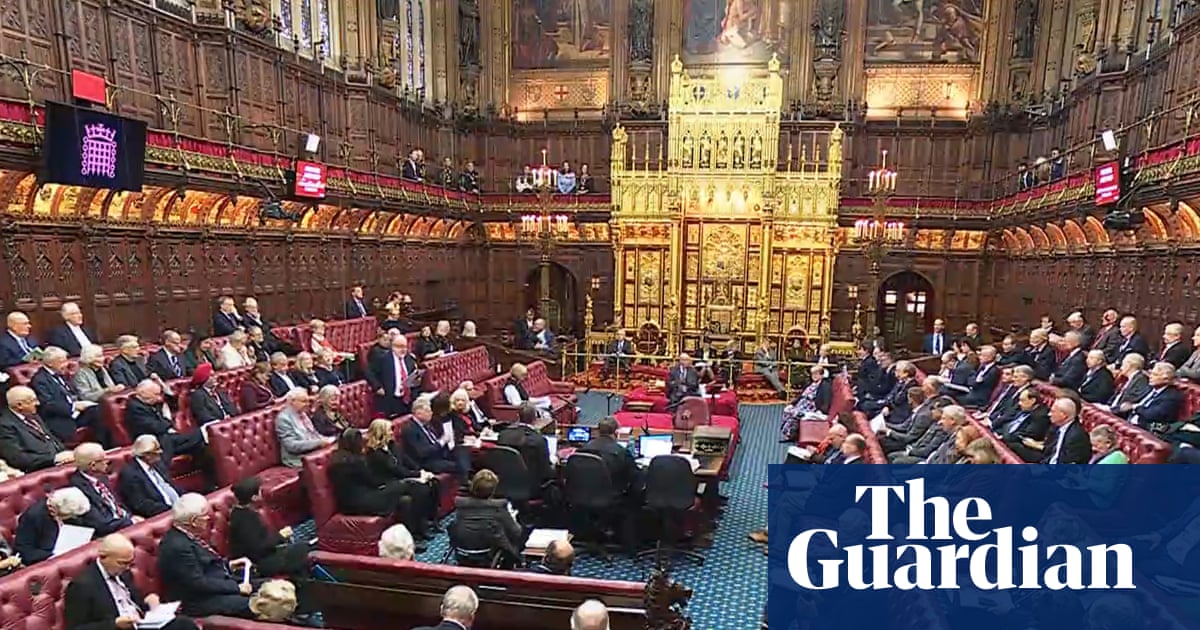
Finally, it seems that Hereditary peers are to lose their automatic right to seats within the House of Lords:

Hereditary peerages will be abolished before the next king’s speech after a deal was struck granting life peerages to some Conservatives and cross-benchers losing their seats.

On Tuesday evening the upper chamber accepted a final draft of the House of Lords (hereditary peers) bill, marking the end of its passage through parliament and clearing the way for it to be added to the statute book.

Great news that the right to seats based on birth is being eliminated but disappointing that life peerages are being handed at as compensation. Also, some interesting comments by Lady Smith:

Lady Smith said: “This has never been about the contribution of individuals but the underlying principle that was agreed by parliament over 25 years ago that no one should sit in our parliament by way of an inherited title.

Does this include the King who sits in Parliament for the state opening and has to approve all Statutes?

Source:
 
Sponsor Post - registered members do not see these adverts; click here to register, or click here to log in
R

RailUK Forums

styles

Established Member
Joined
7 Dec 2014
Messages
4,930
Location
Gwynedd
About time. Something decent Blair and Starmer have managed.

I don't expect Parliament to manage the kind of radical reform I'd like, but it's good to see steps in the right direction being made.
 

Harpo

Established Member
Joined
21 Aug 2024
Messages
3,905
Location
Newport
Does this include the King who sits in Parliament for the state opening and has to approve all Statutes?
The difference being that Charlie is a human rubber stamp and not much else.

== Doublepost prevention - post automatically merged: ==

About time. Something decent Blair and Starmer have managed.

I don't expect Parliament to manage the kind of radical reform I'd like, but it's good to see steps in the right direction being made.
Exactly. So, you can’t be born into peerage but can still be given one for life, without democratic scrutiny, just for doing favours for the right (wrong?) people.

Snails pace progress but no hint of true modernisation just yet.
 

styles

Established Member
Joined
7 Dec 2014
Messages
4,930
Location
Gwynedd
The difference being that Charlie is a human rubber stamp and not much else.

== Doublepost prevention - post automatically merged: ==


Exactly. So, you can’t be born into peerage but can still be given one for life, without democratic scrutiny, just for doing favours for the right (wrong?) people.

Snails pace progress but no hint of true modernisation just yet.
Next step is likely to be fixed-term peer sitting rights.

Either get rid of the religious posts, or grant every religion (or lack thereof) a proportionate number of peers based on the BSA survey.

Until people physically, and at scale, protest the existence of the Lords, potentially even violently, they're not going to approve a wholesale abolition of themselves.
 

gg1

Established Member
Joined
2 Jun 2011
Messages
2,498
Location
Birmingham
Either get rid of the religious posts, or grant every religion (or lack thereof) a proportionate number of peers based on the BSA survey.
The first option please. Britain is one of only two countries in the world to grant senior religious figures automatic positions in the state legislature, the other is Iran.
 

styles

Established Member
Joined
7 Dec 2014
Messages
4,930
Location
Gwynedd
The first option please. Britain is one of only two countries in the world to grant senior religious figures automatic positions in the state legislature, the other is Iran.
I'd be ok with it providing atheism is represented, which according to BSA represents over half the population's religious identity. So if we had 10 peers for religions, 5 of them would go to something like the National Secular Society, Atheists UK, Humanism UK or something.

But yes personally I'd just bin them off entirely.
 

Gloster

Veteran Member
Joined
4 Sep 2020
Messages
13,034
Location
Up the creek
I am not a great supporter of the monarchical system, but I don’t think that Charles is really in the same category as the hereditarys. To ‘sit‘ implies taking part in the law making and related activities in the House: Charles is merely a part of the formalities and has no influence over discussion. I see no reason why he and any successors cannot continue to play their small part in the process as long as they continue to be entirely non-partisan.

I agree that the Lords Spiritual should go. There is no reason why a thoroughly decent bishop or archbishop or leading member of any other faith should not become a member if their general conduct makes them just as worthy as any other person. However, they shouldn’t get there by Buggins‘ Turn or because a PM was an admirer of their cricketing prowess.
 

JamieL

Member
Joined
6 Aug 2022
Messages
955
Location
UK
I am not a great supporter of the monarchical system, but I don’t think that Charles is really in the same category as the hereditarys. To ‘sit‘ implies taking part in the law making and related activities in the House: Charles is merely a part of the formalities and has no influence over discussion. I see no reason why he and any successors cannot continue to play their small part in the process as long as they continue to be entirely non-partisan.
This is a long debunked myth. The Guardian did a deep investigation of this a few years back outlining the process for the monarch's 'consent':

Queen’s consent is a procedural rule, internal to the workings of parliament and of unclear origins, which requires the monarch’s consent to be obtained for certain types of legislation – before they can be presented for final approval by either house of parliament. It must not be confused with the equally archaic process of royal assent which, in contrast, is well understood, applies to legislation already approved by both houses of parliament, and which is widely accepted as being purely symbolic in almost all realistic circumstances.

The anti-democratic potential of the consent process is obvious: it gives the Queen a possible veto, to be exercised in secret, over proposed laws. But there has been no way to know whether it was realising that potential or not, and so no way to know how damaging the process might be, because its workings have previously remained hidden from public view.


The monarch wields significantly more power than any hereditary peer, even those that may make it to the Cabinet, and needs to be addressed. The elimination of hereditary peers from Parliament at least opens up a conversation on this.
 

Sorcerer

Established Member
Joined
20 May 2022
Messages
2,172
Location
Liverpool
Personally I'd like to see an abolishment of the House of Lords as a whole along with proportional representation for the House of Commons as part of a wider electoral reform package. Why in this day and age should the UK require a bicameral Parliament, especially one that is entirely unelected?
 

The exile

Established Member
Joined
31 Mar 2010
Messages
9,451
Location
Somerset
Personally I'd like to see an abolishment of the House of Lords as a whole along with proportional representation for the House of Commons as part of a wider electoral reform package. Why in this day and age should the UK require a bicameral Parliament, especially one that is entirely unelected?
A bicameral parliament (particularly one with different election cycles or electorate - see the Bundesrat) is a very good check against the quirks of a temporary “blip” in electoral politics.
I woukd go for a second chamber of representatives of various bodies (deciding which ones would of course open a whole can of worms) and possibly even a random selection of members of the public - with similar restrictions on power to the current House of Lords. What I would do is restrict individuals to one term as a counter to populism.
 

brad465

Veteran Member
Joined
11 Aug 2010
Messages
11,529
Location
Taunton or Kent
Personally I'd like to see an abolishment of the House of Lords as a whole along with proportional representation for the House of Commons as part of a wider electoral reform package. Why in this day and age should the UK require a bicameral Parliament, especially one that is entirely unelected?
There's a small part of me that wants the Palace of Westminster to suffer serious fire damage and become too uneconomical to repair; I don't want anyone to be hurt in any way (and given the state it's in a fire could well naturally happen without any deliberate intent), but this is probably the only way to get serious discussion about reforming Westminster, i.e. when it's existential.
 

Sorcerer

Established Member
Joined
20 May 2022
Messages
2,172
Location
Liverpool
A bicameral parliament (particularly one with different election cycles or electorate - see the Bundesrat) is a very good check against the quirks of a temporary “blip” in electoral politics.
I woukd go for a second chamber of representatives of various bodies (deciding which ones would of course open a whole can of worms) and possibly even a random selection of members of the public - with similar restrictions on power to the current House of Lords. What I would do is restrict individuals to one term as a counter to populism.
So we say, but New Zealand seems to manage fine with a unicameral Parliament. For the most part I would say that bicameral legislature is better suited to federations where one house is for the people and the other for the states or the equivalents. But for a unitary state I don't see why a single unicameral legislature wouldn't work.

There's a small part of me that wants the Palace of Westminster to suffer serious fire damage and become too uneconomical to repair; I don't want anyone to be hurt in any way (and given the state it's in a fire could well naturally happen without any deliberate intent), but this is probably the only way to get serious discussion about reforming Westminster, i.e. when it's existential.
I hope the slowly eroding two-party system will be enough to be honest. Labour will struggle to win future elections without some kind of left-wing alliances, and even the Tories are starting to losing influence. It'd be a real shame if it had to come down to a fire though because even if nobody was inside I don't want to risk losing beautiful old Big Ben. What else is going to precede the exit polls every five years? :frown:
 

Ediswan

Established Member
Joined
15 Nov 2012
Messages
3,449
Location
Stevenage
The first option please. Britain is one of only two countries in the world to grant senior religious figures automatic positions in the state legislature, the other is Iran.
And the Isle of Man, though they are soon to lose the right to vote.

https://www.bbc.co.uk/news/articles/c62n6l6nv4jo

28 January 2026
Legislation to remove Tynwald voting rights from the Isle of Man's bishop has been passed.
While the Constitution Bill 2023 retains the bishop's seat in the Manx parliament, voting rights will be removed.
Members of the House of Keys approved changes to the proposed legislation that would delay the removal until the current bishop, the Right Reverend Patrica Hillas, leaves office.
 

Bletchleyite

Veteran Member
Joined
20 Oct 2014
Messages
113,711
Location
"Marston Vale mafia"
I'd be ok with it providing atheism is represented, which according to BSA represents over half the population's religious identity. So if we had 10 peers for religions, 5 of them would go to something like the National Secular Society, Atheists UK, Humanism UK or something.

But yes personally I'd just bin them off entirely.

I think in terms of function what you probably want is a meritocratic second chamber whose role isn't to look at stuff politically but more in terms of looking at it based on their actual profession or skill. Could it therefore be something you apply for and have to demonstrate competence in a specific area, e.g. you might want Roger Ford in there for rail (even though I disagree with him on ticketing)? Not sure how you would do that though. So the "lay" Commons comes up with something, and the "Lords" uses its competency to identify problems and send it back for review until it's perfected?
 

styles

Established Member
Joined
7 Dec 2014
Messages
4,930
Location
Gwynedd
I think in terms of function what you probably want is a meritocratic second chamber whose role isn't to look at stuff politically but more in terms of looking at it based on their actual profession or skill. Could it therefore be something you apply for and have to demonstrate competence in a specific area, e.g. you might want Roger Ford in there for rail (even though I disagree with him on ticketing)? Not sure how you would do that though. So the "lay" Commons comes up with something, and the "Lords" uses its competency to identify problems and send it back for review until it's perfected?
Yes this is something I'd prefer.

When we had home secretaries going on news programmes saying they wanted to ban encryption, I had a look, at in the Commons there was only one MP with a computing background (David Davies has a degree in Molecular Science and Computer Science). The scrutiny over a lot of our modern legislation is inadequate because a lot of it is in response to technological changes yet our law makers don't have the foggiest idea about technology, not least because of their average age.

The Lords should've been the place to put a stop to some of the misguided online safety legislation, but they're equally unqualified.

Yes there are committee's and advisory panels but I don't think them a proper replacement for some sort of expertise.
 

AlterEgo

Verified Rep - Wingin' It! Paul Lucas
Joined
30 Dec 2008
Messages
29,544
Location
LBK
I would ban all careerists and experts from the House of Lords. The idea you'd have Roger Ford in there voting on whether puberty blockers should be banned is as insane as people who get in there by birthright. People who are experts belong on committees, not as lawmakers.
 

43096

On Moderation
Joined
23 Nov 2015
Messages
18,856
Personally I'd like to see an abolishment of the House of Lords as a whole along with proportional representation for the House of Commons as part of a wider electoral reform package. Why in this day and age should the UK require a bicameral Parliament, especially one that is entirely unelected?
And whilst they are it, sort out the mess of Scottish/Welsh/Northern Irish MPs being able to vote on legislation that is a devolved matter - i.e. those MPs can vote opn English-only laws. It's completely unacceptable.
 

Cdd89

Established Member
Joined
8 Jan 2017
Messages
1,769
While hereditary peers are obviously a bad thing, it's hard to see how appointing people that political parties want to do a favour to / friends of outgoing prime ministers is better.

I am thus actually wondering whether moving to give more influence to the latter is worse, because while the former only corrupts the process of legislative ascent, the latter additionally corrupts current politics.
 

Gloster

Veteran Member
Joined
4 Sep 2020
Messages
13,034
Location
Up the creek
While hereditary peers are obviously a bad thing, it's hard to see how appointing people that political parties want to do a favour to / friends of outgoing prime ministers is better.

I am thus actually wondering whether moving to give more influence to the latter is worse, because while the former only corrupts the process of legislative ascent, the latter additionally corrupts current politics.

I have to say I have a similar opinion. Reduction to the ninety-two elected peers seems to have meant that those hereditaries who have sought election are those who wish to take an active part in the proceedings of the House. Whereas a lot of the recent life peers have used their appointments to pay back favours, increase their prestige or lay in promises for future advantage.

It really is impossible to have an appointed upper house that does not risk being biased. An upper house should be elected on a different system and, as far as possible, time scale to the lower house. The members should be not be in a position where there is a personal advantage to them in voting at their party’s call and it should be the final stage in their career so there is no possibility of them being bribed with promises of future advantage. Easy to say…
 

JamieL

Member
Joined
6 Aug 2022
Messages
955
Location
UK
And whilst they are it, sort out the mess of Scottish/Welsh/Northern Irish MPs being able to vote on legislation that is a devolved matter - i.e. those MPs can vote opn English-only laws. It's completely unacceptable.

I have to say I have a similar opinion. Reduction to the ninety-two elected peers seems to have meant that those hereditaries who have sought election are those who wish to take an active part in the proceedings of the House. Whereas a lot of the recent life peers have used their appointments to pay back favours, increase their prestige or lay in promises for future advantage.

It really is impossible to have an appointed upper house that does not risk being biased. An upper house should be elected on a different system and, as far as possible, time scale to the lower house. The members should be not be in a position where there is a personal advantage to them in voting at their party’s call and it should be the final stage in their career so there is no possibility of them being bribed with promises of future advantage. Easy to say…
Perhaps one option could be to recast the constitution and have the Devolved Legislatures as the 'second chamber'. Obviously this would require creation of a suitable body/bodies for England. This would mean any Act would need approval of all the devolved legislatures and the Westminster Parliament before it became law. English/Scottish/Welsh only matters of course could be done solely by the devolved legislatures as per the current arrangements.
 

AlterEgo

Verified Rep - Wingin' It! Paul Lucas
Joined
30 Dec 2008
Messages
29,544
Location
LBK
Perhaps one option could be to recast the constitution and have the Devolved Legislatures as the 'second chamber'. Obviously this would require creation of a suitable body/bodies for England. This would mean any Act would need approval of all the devolved legislatures and the Westminster Parliament before it became law. English/Scottish/Welsh only matters of course could be done solely by the devolved legislatures as per the current arrangements.
That would mean Northern Ireland, for example, can veto laws at Westminster - is that how that would work?
 

JamieL

Member
Joined
6 Aug 2022
Messages
955
Location
UK
That would mean Northern Ireland, for example, can veto laws at Westminster - is that how that would work?
We shouldn't be scared about consensus politics! It would make the UK much stronger if we took all regions into account when making laws, vice prioritising South England!
 

AlterEgo

Verified Rep - Wingin' It! Paul Lucas
Joined
30 Dec 2008
Messages
29,544
Location
LBK
We shouldn't be scared about consensus politics! It would make the UK much stronger if we took all regions into account when making laws, vice prioritising South England!
No, it wouldn't. There is no good reason why the Northern Ireland Assembly (representing 1.8m people) should have a veto on laws which affect 68m other people. Nobody in Northern Ireland would think this was a good idea.
 

JamieL

Member
Joined
6 Aug 2022
Messages
955
Location
UK
No, it wouldn't. There is no good reason why the Northern Ireland Assembly (representing 1.8m people) should have a veto on laws which affect 68m other people. Nobody in Northern Ireland would think this was a good idea.
Well, at the moment we have Lords who represent a much smaller pool which can block laws. You shouldn't fear democracy.
 

Bevan Price

Established Member
Joined
22 Apr 2010
Messages
8,341
I think the House of Lords should consist of, say 100 members, nominated by political parties in proportion to the percentage of votes they received at a general election (but with a qualification level of, say. 10 % of the total number of votes) - that would avoid coaiition governments being "held to ransom" by minority extremists in order to get a parliamentary majority.
 

AlterEgo

Verified Rep - Wingin' It! Paul Lucas
Joined
30 Dec 2008
Messages
29,544
Location
LBK
Well, at the moment we have Lords who represent a much smaller pool which can block laws. You shouldn't fear democracy.
But the Northern Irish Lords cannot veto legislation in and of themselves. You need half the Lords plus one. That's before we get into the fact that you forgot who Sinn Fein are and their views on voting on legislation pertaining to Great Britain.

Suggesting that anyone who doesn't think this proposal works "fears democracy" is just a way of avoiding scrutiny of what is, I think, one of the least workable constitutional reform ideas I've heard.
 

JamieL

Member
Joined
6 Aug 2022
Messages
955
Location
UK
But the Northern Irish Lords cannot veto legislation in and of themselves. You need half the Lords plus one. That's before we get into the fact that you forgot who Sinn Fein are and their views on voting on legislation pertaining to Great Britain.

Suggesting that anyone who doesn't think this proposal works "fears democracy" is just a way of avoiding scrutiny of what is, I think, one of the least workable constitutional reform ideas I've heard.
It isn't really avoiding scrutiny and you only consider it unworkable because you are working from a starting point that Westminster is the be all and end all for the UK - the very reason of course that the UK is creaking at the steams and now looking down the barrel of the possibility of a far-right Government in the near-term. It would be perfectly possibly for the devolved legislatures to act as the Second Chamber for laws that are applicable to them. Sinn Fein abstaining, just as they currently do at Westminster, is of course disappointing for their constituents but hardly a show-stopper. If anything, the bigger risk to the plan would come from DUP who historically have had a toxic and unwanted influence in British politics. But the solution there is just to make the laws not applicable to NI and then Stormont wouldn't need to be included.
 

AlterEgo

Verified Rep - Wingin' It! Paul Lucas
Joined
30 Dec 2008
Messages
29,544
Location
LBK
Sinn Fein abstaining, just as they currently do at Westminster, is of course disappointing for their constituents but hardly a show-stopper.
No, it's fundamental and this shows a total lack of understanding of the issues.

Sinn Fein do not abstain from Stormont.

If you make Stormont a chamber for passing laws anywhere in Great Britain Sinn Fein would object and collapse the Assembly. There would therefore be no Assembly. "Sinn Fein could just abstain and it would be fine" - haha.

Sinn Fein are elected to Westminster, by the way, specifically to abstain from it. Therefore their electorate are by and large perfectly satisfied with that, and framing it as a disappointment is a very English perspective.

If anything, the bigger risk to the plan would come from DUP who historically have had a toxic and unwanted influence in British politics.
The DUP wouldn't be there. There'd be no Assembly.

But the solution there is just to make the laws not applicable to NI and then Stormont wouldn't need to be included.
Better still is to let the devolved legislature be a devolved legislature as per the Belfast Agreement, and not unilaterally declare it to be something else. This is classic English ignorance of Northern Ireland's unique constitutional position and history.

Regardless, how do you propose to push through stuff like defence bills? A vast amount of legislation pertains to currently reserved matters and some of that is for perfectly good reason.

Nobody serious has ever come up with this idea and that's because it doesn't work.
 

aar0

Member
Joined
13 Sep 2016
Messages
618
I think in terms of function what you probably want is a meritocratic second chamber whose role isn't to look at stuff politically but more in terms of looking at it based on their actual profession or skill. Could it therefore be something you apply for and have to demonstrate competence in a specific area, e.g. you might want Roger Ford in there for rail (even though I disagree with him on ticketing)? Not sure how you would do that though. So the "lay" Commons comes up with something, and the "Lords" uses its competency to identify problems and send it back for review until it's perfected?
Roger would be made a lord by invitation, and he probably knows enough politicians that he could drop a hint he would be interested if asked. My great grandfather was made a cross bench life peer to bring STEM expertise in, and my understanding was that the idea (if not recent “mates” appointees) was to bring in experts who would attend on days when their general area was being discussed. So Roger probably wouldn’t attend debates on puberty blockers.
 
Status
Not open for further replies.

Top