• Our new ticketing site is now live! Using either this or the original site (both powered by TrainSplit) helps support the running of the forum with every ticket purchase! Find out more and ask any questions/give us feedback in this thread!

UK switching to electric vehicles discussion

jon0844

Veteran Member
Joined
1 Feb 2009
Messages
30,836
Location
UK
No I don't think it is, but it's probably wise even if you have a long warranty. The risk is low (arguably lower than anyone expected) but it's also easy to check.

When it comes to second hand sales, especially private sales, there will always be people trying to get rid of problems.
 
Sponsor Post - registered members do not see these adverts; click here to register, or click here to log in
R

RailUK Forums

E27007

Member
Joined
25 May 2018
Messages
1,032
I believe they are bound to do so.
The Act of Parliament, ZEV mandate 2024, for a vehicle to receive a credit for the ZEV quota, the manufacturer must warrant the battery for a minimum of 100,000 miles or 8 years, service degradation is permitted from 100% to 70% of capacity
 

Mawkie

Established Member
Joined
17 Feb 2016
Messages
1,242
If anyone is interested in what a battery health report may look like, then the Car 360 sales website* often get an independent report for their cars. I'm sure there are plenty of others offering the service.

For example, this 2022 BMW iX3 has one which I've attached below.
Screenshot_2026-01-11-09-13-10-70_3aea4af51f236e4932235fdada7d1643.jpg
(Screenshot of the pdf report below showing battery health at 97.3%)

Of course these reports are a sales technique, but can give some reassurance for customers.

*I have no affiliation with this company.

== Doublepost prevention - post automatically merged: ==

The Independent is running a story today about the decline of diesel sales. (Note the report authors.)

This mirrors some of the comments on the forum suggesting there will be a swift conversion of 'petrol stations' into 'EV charging hubs'.

Some filling stations in London will stop selling diesel within the next four years as demand dwindles, according to a report.

The analysis by electric vehicle (EV) think tank New AutoMotive also predicted that many of the roughly 8,400 filling stations across the UK will have stopped selling the fuel by 2035.

It predicted this will encourage more motorists to switch to EVs.

Diesel vehicle numbers and fuel use are consistently falling nationwide.

In 10 years there will only be about 250,000 diesel cars left on the roads, the report forecast, down from 15.5 million as of the end of June 2025.

London is expected to be the UK’s first city with no diesel cars.
 

Attachments

  • document(3).pdf
    2 MB · Views: 8
Last edited:

styles

Established Member
Joined
7 Dec 2014
Messages
4,615
Location
Gwynedd
If anyone is interested in what a battery health report may look like, then the Car 360 sales website* often get an independent report for their cars. I'm sure there are plenty of others offering the service.

For example, this 2022 BMW iX3 has one which I've attached below.
View attachment 195672
(Screenshot of the pdf report below showing battery health at 97.3%)

Of course these reports are a sales technique, but can give some reassurance for customers.

*I have no affiliation with this company.

== Doublepost prevention - post automatically merged: ==

The Independent is running a story today about the decline of diesel sales. (Note the report authors.)

This mirrors some of the comments on the forum suggesting there will be a swift conversion of 'petrol stations' into 'EV charging hubs'.
97.3% health at 20k miles seems pretty good?

I'm not sure how to benchmark this though?
 

Noddy

Established Member
Joined
11 Oct 2014
Messages
1,630
Location
UK
In news that surprises no one and probably of relevance to more than just this thread:

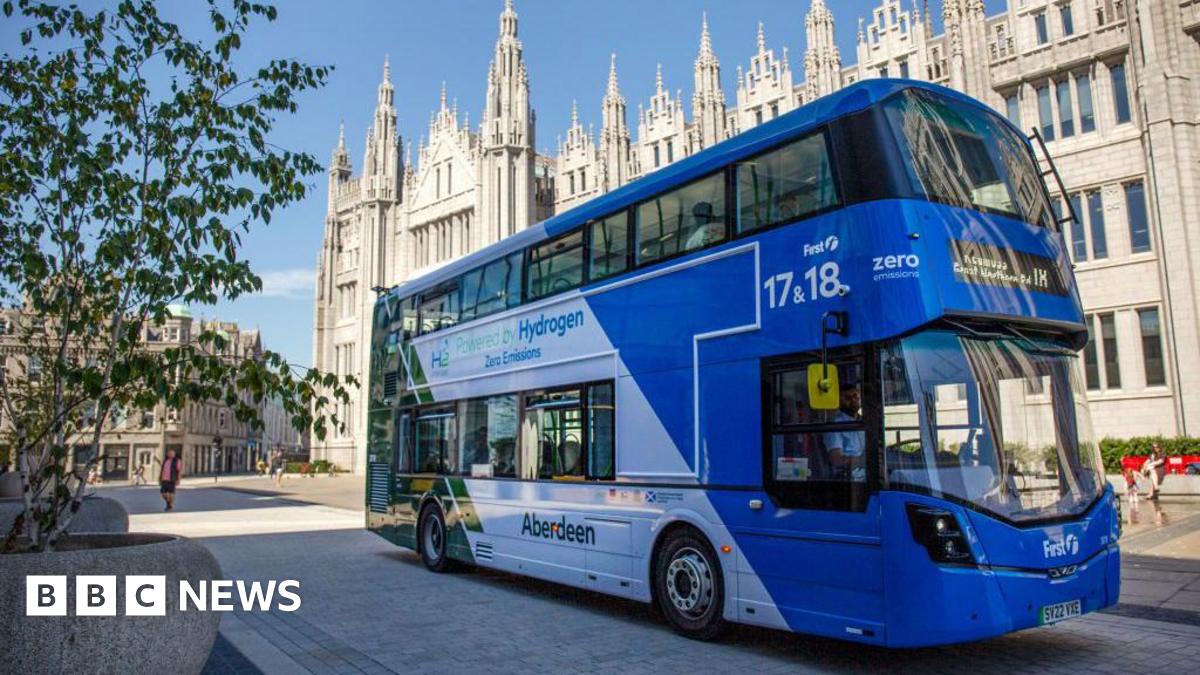
Why has the world's first hydrogen double-decker fleet failed?​

The world's first hydrogen double-decker bus fleet has reached the end of the road.
The multi-million pound project in Aberdeen - involving 25 buses - was meant to be the future of clean public transportation, with the city billed as the global hub for hydrogen-powered buses.
But the zero emissions vehicles are now being ditched, along with the ambition that 700 jobscould be created.
The council announced on Thursday evening that it was to drop its hydrogen double-decker bus fleet in favour of electric vehicles following a meeting of its urgent business committee.
Aberdeen City Council and oil and gas giant BP became commercial partners in 2022 for Aberdeen's hydrogen ambitions.
After a number of technical problems, the hydrogen fleet has now fallen foul of the fast pace of progress in electric vehicle technology.


Mawkie

Established Member
Joined
17 Feb 2016
Messages
1,242
In news that surprises no one and probably of relevance to more than just this thread:
Yes, there was an inevitability about this.

Without derailing the thread - is it buses or busses? Or either?

Screenshot_2026-02-27-21-36-40-05_41453ac94f418184dfd859d8c1bcdad8.jpg
 
Last edited:

styles

Established Member
Joined
7 Dec 2014
Messages
4,615
Location
Gwynedd
In news that surprises no one and probably of relevance to more than just this thread:


Have a family member who mentions their opposition to EVs whenever the topic comes up, and swears hydrogen is the real answer.

Maybe for HGVs doing the length of the country but by the time they build out a network of hydrogen filling stations I wouldn't be surprised if the battery problem had rapidly progressed even for HGVs. It's just not happening for cars and the like though.
 

johncrossley

Established Member
Joined
30 Mar 2021
Messages
4,374
Location
London
Metrobus went for hydrogen because they have so many 24 hour bus services, meaning that they have less time available for charging. Most of their hydrogen fleet has been recalled after a fire destroyed. Maybe opportunity charging would have been worked well enough. It is very popular in other countries but hardly used in the UK. Buses are ideal for opportunity charging as they regularly spend time at the terminus. Opportunity charging means you can get away with smaller batteries.
 
Last edited:

Noddy

Established Member
Joined
11 Oct 2014
Messages
1,630
Location
UK
Yes, there was an inevitability about this.

Have a family member who mentions their opposition to EVs whenever the topic comes up, and swears hydrogen is the real answer.

Maybe for HGVs doing the length of the country but by the time they build out a network of hydrogen filling stations I wouldn't be surprised if the battery problem had rapidly progressed even for HGVs. It's just not happening for cars and the like though.


If I was being really cynical I would say this partnership has bought BP (at least) four more years of selling fossil fuels largely (I suspect) at tax payers expense… But of course I’m not that cynical :rolleyes:
 

Roast Veg

Established Member
Joined
28 Oct 2016
Messages
2,319
Maybe for HGVs doing the length of the country but by the time they build out a network of hydrogen filling stations I wouldn't be surprised if the battery problem had rapidly progressed even for HGVs.
Megawatt charging stations are being built. Hydrogen filling stations are not.
 

3141

Established Member
Joined
1 Apr 2012
Messages
2,108
Location
Whitchurch, Hampshire
If I was being really cynical I would say this partnership has bought BP (at least) four more years of selling fossil fuels largely (I suspect) at tax payers expense… But of course I’m not that cynical :rolleyes:
If I met someone who was that cynical, I'd wonder if he was suggesting that BP went into the partnership expecting this outcome. If he was suggesting that, I'd ask whether he thought they'd somehow bamboozled Aberdeen Council into joining it with them.

Four or five years ago there was an article in Buses magazine about Wrightbus, who at that time were convinced that hydrogen was the future. This would be around the time when this Aberdeen deal was being set up. I see no reason to doubt that the belief in the future of hydrogen power was genuine. As it's turned out, battery and charging technology have advanced considerably since then. Hydrogen technology, including provision of the infrastructure to make it widely usable, has not. It seems reasonable to me (but I'm not as cynical as some) to conclude that it's a case of one technology moving faster than the other.

What would be interesting would be research to establish how the total costs and "greenness" of the two technologies compare. I suspect the answer varies from region to region. It may also vary over the course of time, if the rare elements required by batteries become scarcer, and cheap solar power to obtain hydrogen from sea water becomes a more attractive option. In both cases, there are potential economic and political implications.
 

cactustwirly

Established Member
Joined
10 Apr 2013
Messages
8,406
Location
UK
Metrobus went for hydrogen because they have so many 24 hour bus services, meaning that they have less time available for charging. Most of their hydrogen fleet has been recalled after a fire destroyed. Maybe opportunity charging would have been worked well enough. It is very popular in other countries but hardly used in the UK. Buses are ideal for opportunity charging as they regularly spend time at the terminus. Opportunity charging means you can get away with smaller batteries.
Well the new EVs for Reading buses are on 24hr routes and manage fine
 

PGAT

Established Member
Joined
13 Apr 2022
Messages
2,121
Location
Selhurst
Metrobus went for hydrogen because they have so many 24 hour bus services, meaning that they have less time available for charging. Most of their hydrogen fleet has been recalled after a fire destroyed. Maybe opportunity charging would have been worked well enough. It is very popular in other countries but hardly used in the UK. Buses are ideal for opportunity charging as they regularly spend time at the terminus. Opportunity charging means you can get away with smaller batteries.
Well the new EVs for Reading buses are on 24hr routes and manage fine
In London at least opportunity charging has been a remarkable failure. They trialled it for Route 358 between Orpington and Crystal Palace which in 2020 couldn’t be done on a single charge for the whole day. However, it took 4 and a half years to get the infrastructure up and running, in the meantime virtually every modern EV on the market has enough range to clear the route with ease, so they would’ve been better off waiting a year or two.

That alone is not the end of the world, but the pantographs are very unreliable and are constantly plagued with issues, causing the route to be cut to Elmers End due to the limitations of the smaller battery.
 

Peter Sarf

Established Member
Joined
12 Oct 2010
Messages
9,570
Location
Croydon
If I met someone who was that cynical, I'd wonder if he was suggesting that BP went into the partnership expecting this outcome. If he was suggesting that, I'd ask whether he thought they'd somehow bamboozled Aberdeen Council into joining it with them.

Four or five years ago there was an article in Buses magazine about Wrightbus, who at that time were convinced that hydrogen was the future. This would be around the time when this Aberdeen deal was being set up. I see no reason to doubt that the belief in the future of hydrogen power was genuine. As it's turned out, battery and charging technology have advanced considerably since then. Hydrogen technology, including provision of the infrastructure to make it widely usable, has not. It seems reasonable to me (but I'm not as cynical as some) to conclude that it's a case of one technology moving faster than the other.

What would be interesting would be research to establish how the total costs and "greenness" of the two technologies compare. I suspect the answer varies from region to region. It may also vary over the course of time, if the rare elements required by batteries become scarcer, and cheap solar power to obtain hydrogen from sea water becomes a more attractive option. In both cases, there are potential economic and political implications.
This reminds me a bit of video recorders (and tapes) - how the VHS format got to market before the better Betamax format.

Not saying it is the same. Will only know when we look back from some point in the future.

The cynic in me suggests that BP were only too keen to latch on to Hydrogen technology so they could be seen to be making green advances.

The pragmatist in me suggests Hydrogen fuel technology was going to be far more relevant to BPs petrol station forecourts than EV charging stations. EV chargers do not have to be on existing petrol station forecourts and also require more space for more, slower, chargers. So BP would be keen to guarantee a future for their forecourts - or are they all franchised ?.

== Doublepost prevention - post automatically merged: ==

In London at least opportunity charging has been a remarkable failure. They trialled it for Route 358 between Orpington and Crystal Palace which in 2020 couldn’t be done on a single charge for the whole day. However, it took 4 and a half years to get the infrastructure up and running, in the meantime virtually every modern EV on the market has enough range to clear the route with ease, so they would’ve been better off waiting a year or two.

That alone is not the end of the world, but the pantographs are very unreliable and are constantly plagued with issues, causing the route to be cut to Elmers End due to the limitations of the smaller battery.
And there is an example of the VHS vs Betamax analogy.

I always sit back and let technology mature before I jump in !.
CD players came down quite quickly from £400+ when I was being nagged to add one to my HiFi to being about £100 for a good basic one last time I looked. But it all has now been superseded by other digital media AND a slight come back of vinyl - analogue media !.
 
Last edited:

Energy

Established Member
Joined
29 Dec 2018
Messages
5,135
This reminds me a bit of video recorders (and tapes) - how the VHS format got to market before the better Betamax format.
However, hydrogen isn't "the better [...] format", it's fundamentally flawed. Electrolysis is not showing any sign of meaningful efficiency improvement, so green hydrogen is going to continue to be significantly more expensive than electricity.

Additionally, as Metrobus has found, storing large quantities of hydrogen safely is difficult.
 

Mawkie

Established Member
Joined
17 Feb 2016
Messages
1,242
That alone is not the end of the world, but the pantographs are very unreliable and are constantly plagued with issues, causing the route to be cut to Elmers End due to the limitations of the smaller battery.
London Buses has a long history of trialling innovation. I remember a trial on the 42s with an electric bus probably 20 years ago - it must have been one of the first trials of electric buses in passenger service. It wasn't a sucess; if I recall, it couldn't get up Denmark Hill, and it ran on a special timetable (with dedicated drivers) and couldn't do a full day's work.
The cynic in me suggests that BP were only too keen to latch on to Hydrogen technology so they could be seen to be making green advances.
The cynic in me suggests that BP were only too keen to latch on to Hydrogen technology so they could be seen to be making green advances maintain profits through providing a product that wasn't possible for the 'man in the street' to easily reproduce, thereby locking consumers into another closed system.

EV chargers do not have to be on existing petrol station forecourts and also require more space for more, slower, chargers.
And that was always the problem for the fossil fuel industry - they knew that electricity is ubiquitous, and couldn't be up-sold as (for example) 'BP Premium Electricity'.
Additionally, as Metrobus has found, storing large quantities of hydrogen safely is difficult.
If I let my mind go way back - again probably 20 years, I seem to remember hydrogen buses running from a garage in Hackney. No London borough would host a hydrogen storage tank at the time, so they had to run empty to a BP garage way-out past Upminster and outside the M25, somewhere on the A127.
 

Noddy

Established Member
Joined
11 Oct 2014
Messages
1,630
Location
UK
Four or five years ago there was an article in Buses magazine about Wrightbus, who at that time were convinced that hydrogen was the future. This would be around the time when this Aberdeen deal was being set up. I see no reason to doubt that the belief in the future of hydrogen power was genuine. As it's turned out, battery and charging technology have advanced considerably since then. Hydrogen technology, including provision of the infrastructure to make it widely usable, has not. It seems reasonable to me (but I'm not as cynical as some) to conclude that it's a case of one technology moving faster than the other.

Prior to this investment by the council the commercial bus companies were investing in hundreds of battery electric buses. If this deal had been done 15 or even 10years ago I could understand but the writing has been on the wall for hydrogen fuel cell vehicles since at least 2020. This deal was as late as 2022.

EDIT: The other thing I would point out regarding Wrightbus is that they are owned by the son of Lord ‘JCB’ Bamford. He has thrown his weight behind firmly hydrogen at JCB but needs everyone else to also do so in order to make hydrogen economically viable…

What would be interesting would be research to establish how the total costs and "greenness" of the two technologies compare. I suspect the answer varies from region to region. It may also vary over the course of time, if the rare elements required by batteries become scarcer, and cheap solar power to obtain hydrogen from sea water becomes a more attractive option. In both cases, there are potential economic and political implications.

A hydrogen fuel cell vehicle is always going to be vastly more inefficient than a battery electric vehicle, requiring huge amounts of extra energy to be produced somewhere. It’s pretty basic science, which is why anyone trying to promote hydrogen fuel cell vehicles today is either stupid or has an ulterior motive.
 
Last edited:

MotCO

Established Member
Joined
25 Aug 2014
Messages
6,078
In London at least opportunity charging has been a remarkable failure. They trialled it for Route 358 between Orpington and Crystal Palace which in 2020 couldn’t be done on a single charge for the whole day. However, it took 4 and a half years to get the infrastructure up and running, in the meantime virtually every modern EV on the market has enough range to clear the route with ease, so they would’ve been better off waiting a year or two.
That is one of the reasons I have not bought an EV car - the technology is still relatively new. It has taken over 100 years to get petrol engines to their current level of efficiency and cleanliness - how long will it be before EV cars are cheap enough and have sufficient range to compete with petrol cars? (and we're not there yet)
 

johncrossley

Established Member
Joined
30 Mar 2021
Messages
4,374
Location
London
In London at least opportunity charging has been a remarkable failure. They trialled it for Route 358 between Orpington and Crystal Palace which in 2020 couldn’t be done on a single charge for the whole day. However, it took 4 and a half years to get the infrastructure up and running, in the meantime virtually every modern EV on the market has enough range to clear the route with ease, so they would’ve been better off waiting a year or two.

London must be doing it wrong somehow, given how widely used it is in other countries.
 

PGAT

Established Member
Joined
13 Apr 2022
Messages
2,121
Location
Selhurst
London must be doing it wrong somehow, given how widely used it is in other countries.
Maybe that's down to the broader nationwide woes of building infrastructure. Regardless, battery electric buses are more advantageous, and we now have one of the largest fleets of EVs in the world, certainly the largest in Western Europe.
 

johncrossley

Established Member
Joined
30 Mar 2021
Messages
4,374
Location
London
Maybe that's down to the broader nationwide woes of building infrastructure. Regardless, battery electric buses are more advantageous, and we now have one of the largest fleets of EVs in the world, certainly the largest in Western Europe.

Opportunity charging buses are battery electric buses, only with smaller batteries. Smaller batteries mean less weight and therefore less wasted energy. Electric buses in the Netherlands (for example) generally have more demands on power than London buses, because they are fully specified with double-glazing and air-conditioning.
 

PGAT

Established Member
Joined
13 Apr 2022
Messages
2,121
Location
Selhurst
Opportunity charging buses are battery electric buses, only with smaller batteries. Smaller batteries mean less weight and therefore less wasted energy. Electric buses in the Netherlands (for example) generally have more demands on power than London buses, because they are fully specified with double-glazing and air-conditioning.
That is one advantage of opportunity charging but there isn't much beyond that. Battery sizes diminish and energy density increases as every iteration of the technology evolves so that advantage will erode in the long term.

With larger batteries, there is more flexibility to operate routes basically wherever you want. There's also a prospect of keeping a skeleton service alive in the case of a powercut.
 

MotCO

Established Member
Joined
25 Aug 2014
Messages
6,078
except we are there now on a whole life cost basis.
I can do over 500 miles on a tank of petrol; can an EV do likewise (at an affordable price)? (And I'm not looking for comments saying you can't drive that far without a break. If I want to recharge at home for a fraction of the cost of public chargers, if I don't want to have to queue for a charger on a bank holiday, if I don't want to look for a charger that is working and is compatible, if I want to tow a caravan etc etc, then 500 miles does not sound unreasonable.)
 

Bald Rick

Veteran Member
Joined
28 Sep 2010
Messages
35,581
I can do over 500 miles on a tank of petrol; can an EV do likewise (at an affordable price)?

Yep, I can do 600 miles in a Skoda Enjaq EV with one (necessary) stop, for £250/month lease cost. Roughly the same price as a low spec VW Golf.
 

Peter Sarf

Established Member
Joined
12 Oct 2010
Messages
9,570
Location
Croydon
On the subject of electric busses. They do seem to be very much heavier than diesel buses. I am noticing bus stops with ruts in the tarmac where the bus wheels come to a stop !. Furthermore when traveling on electric buses they sway more on bends and shudder on bumps more than a diesel bus. I am beginning to think a fairground ride needs a safety bar/belt less than these buses do. I notice the suspension bottoming out regularly which my spine is beginning to notice !. The electric buses get driven harder which makes finding a seat after boarding very urgent !. I used to aim for upstairs but really that is too risky.
 

Energy

Established Member
Joined
29 Dec 2018
Messages
5,135
The electric buses get driven harder which makes finding a seat after boarding very urgent !. I used to aim for upstairs but really that is too risky.
Drivers are usually trained to be careful and accelerate slowly; frustratingly, some don't.
If I want to recharge at home for a fraction of the cost of public chargers, if I don't want to have to queue for a charger on a bank holiday, if I don't want to look for a charger that is working and is compatible, if I want to tow a caravan etc etc, then 500 miles does not sound unreasonable.
... but how often does this occur?

Audi will sell you a 400+ mi 100kWh battery A6 E-tron, but you're paying for a big battery that may not be used that often.

I get not wanting to use expensive public charging all the time, but a couple of public charges a year is cheaper than a massive battery.
 

Peter Sarf

Established Member
Joined
12 Oct 2010
Messages
9,570
Location
Croydon
Drivers are usually trained to be careful and accelerate slowly; frustratingly, some don't.

.......................
Indeed the eager driver I had this evening managed to shut the entrance doors on my (small) ruc-sack as I reached out and touched in !.
His braking for each stop had me pressing my right foot on the floor !.
I do not get up before the bus stops any more.
But when boarding you have no choice !.

I try to be first on the bus so those behind me are still getting on when I get secure. Coming home in the busy times I can make it upstairs as long as there are seats near the stairs. I now make a point of stamping my feet as I go upstairs and do it as a bit of a limp - I figure they might delay lift off then.
 

Mawkie

Established Member
Joined
17 Feb 2016
Messages
1,242
But when boarding you have no choice !
I'm saddened to hear this - but I don't think it's necessarily anything to do with electric buses.

When I drove buses back in the 90s, I remember the conversion of the garage from Metros to low floor Plaxton Presidents.

Seemingly perversely, the older passengers preferred the stepped Metros with their longitudinal front seats. When the low floor stuff came in, they would often ask me "Give me a chance to sit down love" because the first seats were so far away!

Hopefully if you specifically ask for a little extra time the driver would respect that.
 

Top