• Our new ticketing site is now live! Using either this or the original site (both powered by TrainSplit) helps support the running of the forum with every ticket purchase! Find out more and ask any questions/give us feedback in this thread!

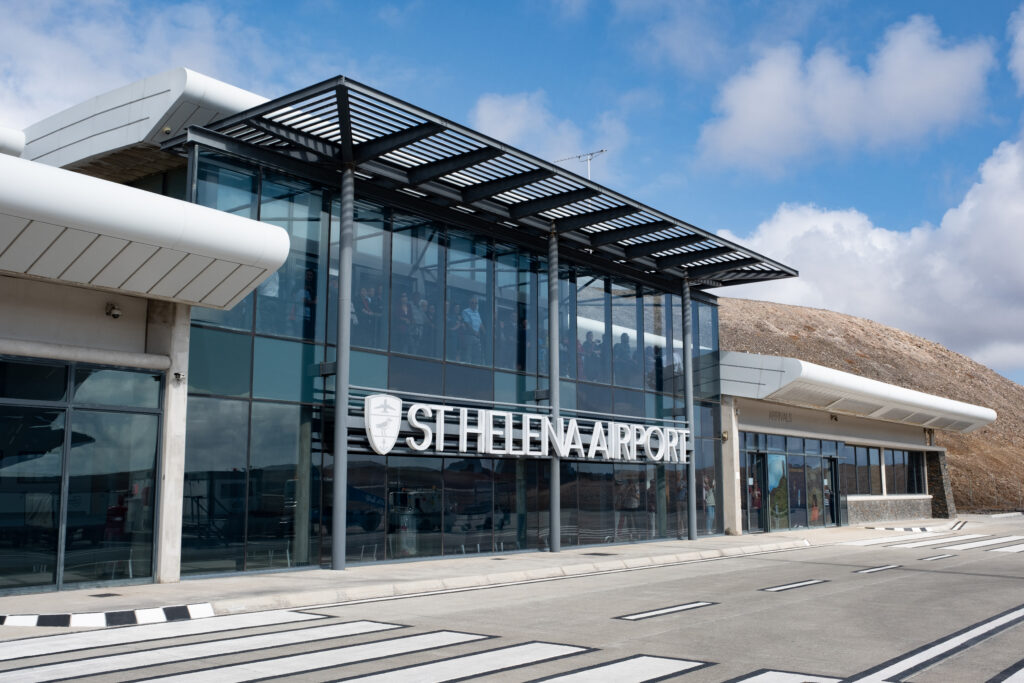
Saint Helena Airport closed for two weeks

Status
Not open for further replies.

Cloud Strife

Established Member
Joined
25 Feb 2014
Messages
2,962
An interesting problem in a difficult to reach part of the world:


St Helena Government has announced that airport is unable to operate following technical assessments to downgrade it from Category 6. With immediate effect flights will not operate to-and-from St Helena and are cancelled until issue is resolved. Thought to be 20 Feb at earliest

The follow up says:

No problem with the airport as such, the issue is based on international safety requirements and a lack of confidence in the operational readiness of the fire tenders.

I also found a more detailed news article on the topic:


It's not possible to copy the link, but the gist of it is that two of their fire engines at the airport were out of use and awaiting spare parts, and then the final fire engine had some issue that affected the ability to deliver the required fire suppressant. As a result, the aviation regulator (a subsidiary of the UK CAA that exists to regulate aviation in the overseas territories) has downgraded the airport's category and so the E190 used by Airlink for the vital air connection cannot land there. It seems that it wasn't permitted to use the local fire engines that serve the island as they don't have the capacity to deal with a jet fire.

It's seemingly caused quite a lot of chaos on the island, as people are now facing extended stays both on the island and abroad, and the government of Saint Helena is trying to find a way to get the spare parts to the island as quickly as possible. It does seem strange that the UK hasn't just sourced the spare parts and flown them straight away to Saint Helena however, especially as a military flight wouldn't have to comply with civil aviation rules.
 
Sponsor Post - registered members do not see these adverts; click here to register, or click here to log in
R

RailUK Forums

AlastairFraser

Established Member
Joined
12 Aug 2018
Messages
4,145
An interesting problem in a difficult to reach part of the world:


The follow up says:


I also found a more detailed news article on the topic:


It's not possible to copy the link, but the gist of it is that two of their fire engines at the airport were out of use and awaiting spare parts, and then the final fire engine had some issue that affected the ability to deliver the required fire suppressant. As a result, the aviation regulator (a subsidiary of the UK CAA that exists to regulate aviation in the overseas territories) has downgraded the airport's category and so the E190 used by Airlink for the vital air connection cannot land there. It seems that it wasn't permitted to use the local fire engines that serve the island as they don't have the capacity to deal with a jet fire.

It's seemingly caused quite a lot of chaos on the island, as people are now facing extended stays both on the island and abroad, and the government of Saint Helena is trying to find a way to get the spare parts to the island as quickly as possible. It does seem strange that the UK hasn't just sourced the spare parts and flown them straight away to Saint Helena however, especially as a military flight wouldn't have to comply with civil aviation rules.
Indeed. Surely something from Ascension can be brought over via the flight from the UK? When is the next AirTanker service to the Falklands via Ascension?
 

Cloud Strife

Established Member
Joined
25 Feb 2014
Messages
2,962
I'd assume it's the plan, but the issue might be that there's no way to get the spare parts from Ascension to Saint Helena. Flights are twice a week on Wednesdays and Sundays, so it's not an issue to get to Ascension at least. But to make matters stranger, the RAF has landed a C-17 there before, so it's really quite confusing why they can't just fly in a new fire engine. A huge amount of money was spent on the airport, so it would be pocket change in comparison to send down a C-17 with a new fire engine onboard along with spare parts.
 

stadler

Established Member
Joined
5 Jun 2023
Messages
3,304
Location
Horsley
Is there not a spare ferry or ship they could use to get everything between Ascension and Saint Helena while the airport is closed. Fly everything needed in to Ascension and then go to Saint Helena by ship. I know it is quite a distance but it is still the closest other island. It might be the best solution if they can find a ship to use between the two.
 

Indigo Soup

Established Member
Joined
17 May 2018
Messages
1,485
a military flight wouldn't have to comply with civil aviation rules.
In peacetime they do. Defence Safety Authority regulations dictate that the military has to comply with civilian regulations except where necessary to satisfy an overriding operational requirement and where compliance is not reasonably practical.
But to make matters stranger, the RAF has landed a C-17 there before, so it's really quite confusing why they can't just fly in a new fire engine. A huge amount of money was spent on the airport, so it would be pocket change in comparison to send down a C-17 with a new fire engine onboard along with spare parts.
The RAF can't land there (in peacetime at least) without fire coverage - and while I don't know for sure, I'd be pretty confident a C-17 needs more capacity than an E190. The options are to bring the necessary parts in by sea, or to air drop them - which would be expensive and risky.
Is there not a spare ferry or ship they could use to get everything between Ascension and Saint Helena while the airport is closed. Fly everything needed in to Ascension and then go to Saint Helena by ship. I know it is quite a distance but it is still the closest other island. It might be the best solution if they can find a ship to use between the two.
The trouble is that both islands are functionally in the middle of nowhere - they're 800 miles apart and each is the other's nearest neighbour. The only ship that would routinely have been in the area was the ST HELENA, which was retired when the airport opened. I'd guess that the 20 February date is set by the earliest date on which a ship will call, and is contingent on the necessary spares making it on to that ship.

It might be possible to fly the spares from Ascension to St Helena, but only if there's an aircraft available which (a) is certified to make a flight of that length, including a diversion back to Ascension in an emergency, and (b) is small enough that the island's domestic fire appliances provide adequate fire coverage. Such an aircraft might exist, but is unlikely to be hanging around on Ascension waiting to be useful.
 
Last edited:

Cloud Strife

Established Member
Joined
25 Feb 2014
Messages
2,962
In peacetime they do. Defence Safety Authority regulations dictate that the military has to comply with civilian regulations except where necessary to satisfy an overriding operational requirement and where compliance is not reasonably practical.

I wonder if another complication is that the Saint Helena airport is civilian only, so it wouldn't be possible to justify the flight as being an overriding operational requirement. But again, wouldn't it be possible to justify such a flight as being essential for defence purposes? It's not as if it's a serious risk for the C-17 to land there with everything else operational except the lack of fire cover.

The RAF can't land there (in peacetime at least) without fire coverage - and while I don't know for sure, I'd be pretty confident a C-17 needs more capacity than an E190. The options are to bring the necessary parts in by sea, or to air drop them - which would be expensive and risky.

A RAF C-17 landed there a couple of years ago, using around half the runway length. It's not a problem for them, as the minimum runway length they need is only 3500 feet. The runway at Saint Helena is nearly double that, so it's not an issue in terms of being able to actually go there. The RAF definitely have a crew (or crews!) capable of making the journey if needs be.

It might be possible to fly the spares from Ascension to St Helena, but only if there's an aircraft available which (a) is certified to make a flight of that length, including a diversion back to Ascension in an emergency

Does Ascension have fuel available for planes, I wonder? It must do, otherwise they wouldn't be able to make the onwards journey to the Falklands. I don't think there's anything other than the C-17 available for such a flight however.
 

Acathater

Member
Joined
11 Dec 2025
Messages
659
Location
NorthWest
but in the event of bad weather over the island could a C-17 return to Ascension unrefuelled? Or would it have to be partnered with a tanker?
 

Ted633

Member
Joined
15 Mar 2018
Messages
555
but in the event of bad weather over the island could a C-17 return to Ascension unrefuelled? Or would it have to be partnered with a tanker?
A C-17 would easily have enough range (range with a 71t payload is over 2000 miles, obviously the payload would be far less than that)
For info - our tankers are not capable of refuelling C-17s
 

Indigo Soup

Established Member
Joined
17 May 2018
Messages
1,485
I wonder if another complication is that the Saint Helena airport is civilian only, so it wouldn't be possible to justify the flight as being an overriding operational requirement. But again, wouldn't it be possible to justify such a flight as being essential for defence purposes? It's not as if it's a serious risk for the C-17 to land there with everything else operational except the lack of fire cover.
The 'overriding operational requirement' thing is supposed to cover situations where following civilian regulations results in people getting shot at and killed. It's not a get-out-of-jail-free card for when the regulations are inconvenient. The armed forces have had to get that explained to them many times in small words; they now mostly get it.

You might be able to justify making a landing in this case if (say) someone was critically ill on the island and the likelihood of them being able to wait for the airport reopening was low. Even then, it would be necessary to demonstrate what had been done to reduce the risk to the lowest possible level - but see below.
A RAF C-17 landed there a couple of years ago, using around half the runway length. It's not a problem for them, as the minimum runway length they need is only 3500 feet. The runway at Saint Helena is nearly double that, so it's not an issue in terms of being able to actually go there. The RAF definitely have a crew (or crews!) capable of making the journey if needs be.
I was referring to firefighting capacity, not runway capacity. As the C-17 is a large aircraft with a high fuel load, it stands to reason that it will need similar or greater firefighting provision.
I don't think there's anything other than the C-17 available for such a flight however.
I've looked up the airport's current agreed firefighting capacity (Category 4). Any aircraft landing there would have to be no more than 24 metres long and have a fuselage no wider than 4 metres. This does appear to allow a light aircraft (possibly a Twin Otter) to carry out medical evacuation and transport of essential spare parts.
 

Cloud Strife

Established Member
Joined
25 Feb 2014
Messages
2,962
You might be able to justify making a landing in this case if (say) someone was critically ill on the island and the likelihood of them being able to wait for the airport reopening was low. Even then, it would be necessary to demonstrate what had been done to reduce the risk to the lowest possible level - but see below.

Would it not be permitted so that the emergency evacuation capability would be available? It seems quite strange that it wouldn't be permitted to carry out an operation which would secure the emergency airlift capability, especially given the very limited resources on Saint Helena. Having said that, I rather appreciate that the regulations cannot be easily broken, which is the hallmark of a professional military.

I was referring to firefighting capacity, not runway capacity. As the C-17 is a large aircraft with a high fuel load, it stands to reason that it will need similar or greater firefighting provision.

Ah, my mistake! Yes, presumably it would need at least the same firefighting provision if the regulations have to be followed. I'm actually surprised that it doesn't require even more provision than the E190.

I've looked up the airport's current agreed firefighting capacity (Category 4). Any aircraft landing there would have to be no more than 24 metres long and have a fuselage no wider than 4 metres. This does appear to allow a light aircraft (possibly a Twin Otter) to carry out medical evacuation and transport of essential spare parts.

From what I understand, there's nothing that would meet the Category 4 requirements while still having the range and fuel to make the journey, because of the lack of alternates. I thought about the ATR-72 or Dash-8, but neither of them would be able to make it from Africa, not according to the fire requirements nor the fuel requirements, although apparently the Dash-8 might just be able to make it with zero (or almost zero) payload.

It seems that the ATR-72 could do it from Ascension legally with the ETOPS-120 certification that it has, but it wouldn't be able to ferry the payload to Ascension in the first place. Having said that, the ATR-72 can be given permission to fly to Saint Helena as it's category 5, and there is provision for allowing a limited amount of one category higher flights.

Edit: I've done some more digging, and it seems that nothing actually prevents the E190 from operating a cargo-only flight to the island. The fire regulations relate to passenger operations, specifically that the fire appliances need to be able to safely deal with a jet with 100 passengers on board for category 6. Without passengers, they only need to deal with the pilots, and it's hard to believe that the domestic appliances on the island wouldn't be enough to ensure evacuation of the pilots in the event of a fire. In this case, the Saint Helena authorities could grant one-off permission for such a flight, assuming that the necessary parts can fit within the belly of the E190.

It seems that the key point is that the Saint Helena Government would have to declare a state of emergency, which would permit the RAF to ignore the regulations. But perhaps it's just a matter of cost: Saints will be used to problems getting on/off the island, and a handful of tourists won't be expensive to accommodate while waiting for the ship to turn up. Chartering the E190 from Airlink would be expensive, and I assume the SHG would have to pay the RAF the cost of providing a civilian cargo mission.
 

DelW

Established Member
Joined
15 Jan 2015
Messages
5,934
Is there not a spare ferry or ship they could use to get everything between Ascension and Saint Helena while the airport is closed. Fly everything needed in to Ascension and then go to Saint Helena by ship. I know it is quite a distance but it is still the closest other island. It might be the best solution if they can find a ship to use between the two.
You would need a ship capable of self-loading at sea, as there's no quay capable of accommodating a ship at Ascension, so cargo has to be transferred by lighters. The RMS St Helena used her foredeck cranes to transfer containers between her foredeck cargo area and the lighters, while moored several hundred metres offshore.

RMS St Helena at anchor off Ascension port:
P1010040.JPG

Lighter operations viewed from RMS St Helena, Ascension port area in background:
P1010054.JPG

This operation has to be done in open water in mid-Atlantic, so is weather dependent too.
 

Cloud Strife

Established Member
Joined
25 Feb 2014
Messages
2,962
It seems that the airport has been given permission to operate at Category 4, which will allow for medical evacuation flights and which will be hopefully be used for transporting the spare parts/personnel needed. It seems that there's quite a few smaller planes that can make the journey easily, so the delay is more related to sourcing the spare parts rather than the inability to reach the island by plane.

It does raise the question as to how all three fire engines were able to end up out of service however, and also why they went with a fleet that was only usable for the airport rather than simply equipping the local fire brigade with engines that could handle both normal fire operations as well as airport duties. While it might not be the norm, I'm sure that an exception could have been negotiated for Saint Helena given the specifics of the place. It also seems that the firefighting operation at the airport is full time, and allegedly the need for spare parts has been communicated up the chain and ignored for quite a while. Reading around, it seems that the island generally has a huge problem with maintenance of various facilities. The airport has generally been a very strange operation from the first days, not least through building a hugely overengineered terminal that was designed for commercial traffic that never materialised.

Interestingly, it seems that Saint Helena Airport is capable of hosting quite a variety of aircraft, and a Boeing 757 as well as a Airbus A318 have both made it there without any serious issues. The windshear/crosswinds keep being mentioned, but it seems that it's not as bad as it's made out to be, just that the company that tried to take a 737 in simply didn't have pilots with the skill/experience to do it. From several sources, I've read that Airlink with the E190 simply fly through the windshear in most weather conditions instead of doing an immediate go-around, and if everything is fine, they continue the approach and landing.

There's a very fascinating video here from the cockpit of the Titan Airways A318 that went in a few times, and also footage from outside showing landings, takeoffs and a go-around.


westcoaster

Established Member
Joined
4 Dec 2006
Messages
4,490
Location
DTOS A or B
It seems that the airport has been given permission to operate at Category 4, which will allow for medical evacuation flights and which will be hopefully be used for transporting the spare parts/personnel needed. It seems that there's quite a few smaller planes that can make the journey easily, so the delay is more related to sourcing the spare parts rather than the inability to reach the island by plane.

It does raise the question as to how all three fire engines were able to end up out of service however, and also why they went with a fleet that was only usable for the airport rather than simply equipping the local fire brigade with engines that could handle both normal fire operations as well as airport duties. While it might not be the norm, I'm sure that an exception could have been negotiated for Saint Helena given the specifics of the place. It also seems that the firefighting operation at the airport is full time, and allegedly the need for spare parts has been communicated up the chain and ignored for quite a while. Reading around, it seems that the island generally has a huge problem with maintenance of various facilities. The airport has generally been a very strange operation from the first days, not least through building a hugely overengineered terminal that was designed for commercial traffic that never materialised.

Interestingly, it seems that Saint Helena Airport is capable of hosting quite a variety of aircraft, and a Boeing 757 as well as a Airbus A318 have both made it there without any serious issues. The windshear/crosswinds keep being mentioned, but it seems that it's not as bad as it's made out to be, just that the company that tried to take a 737 in simply didn't have pilots with the skill/experience to do it. From several sources, I've read that Airlink with the E190 simply fly through the windshear in most weather conditions instead of doing an immediate go-around, and if everything is fine, they continue the approach and landing.

There's a very fascinating video here from the cockpit of the Titan Airways A318 that went in a few times, and also footage from outside showing landings, takeoffs and a go-around.

There is an interesting recent video, that covers the weather on Flightradar24 YouTube channel.

Also shows the airports operation, and the full time Met office staff onsite.


ainsworth74

Forum Staff
Staff Member
Global Moderator
Joined
16 Nov 2009
Messages
31,067
Location
Redcar
It does raise the question as to how all three fire engines were able to end up out of service however, and also why they went with a fleet that was only usable for the airport rather than simply equipping the local fire brigade with engines that could handle both normal fire operations as well as airport duties. While it might not be the norm, I'm sure that an exception could have been negotiated for Saint Helena given the specifics of the place.
Surely it's a size issue? Airport fire engines are huge as they have to carry a lot of water and foam agents, have big engines because they have to haul that weight extremely quickly, and are designed to be able to handle off-road and rough terrain. You're typical fire engine serving normal towns does not have to meet those design criteria so can be considerably smaller.

Equipping the local brigade with engines capable of fighting aircraft fires would mean that they probably wouldn't fit down many roads in Saint Helena quite apart from any other issues that would arise.
Also shows the airports operation, and the full time Met office staff onsite.
Yes that did tickle me. Presumably if you really annoy your boss at the Met Office they banish you, Napoleon like, to Saint Helena to think about the error of your ways! :lol:

(It was a very interesting video though and the Met Office guy did a really good job talking about his role and the weather around Saint Helena!)
 

Indigo Soup

Established Member
Joined
17 May 2018
Messages
1,485
Surely it's a size issue? Airport fire engines are huge as they have to carry a lot of water and foam agents, have big engines because they have to haul that weight extremely quickly, and are designed to be able to handle off-road and rough terrain. You're typical fire engine serving normal towns does not have to meet those design criteria so can be considerably smaller.
Not just size, but the airfield firefighting appliances must be available for airfield firefighting any time the airfield is open. If the domestic appliances are dual-hatted, then a fire somewhere else means the airfield gets shut down until it's extinguished.
 

stadler

Established Member
Joined
5 Jun 2023
Messages
3,304
Location
Horsley
It looks like the airport is fully reopened and back to normal now:


26 February 2026

Airport Operations – Major Incident Stood Down

SHG is pleased to confirm that the major incident regarding airport operations has now been stood down. This follows the return of all three airport fire tenders to full operational status and successful flights to and from St Helena, Ascension and South Africa this week. Normal operations have now resumed.

Gold Command stands down

With the airport now operating as normal, the Gold Command Group was formally stood down this morning, with a final briefing which included thanks to all teams involved from the Chief Minister.

The work of Gold Command was underpinned by the Multi-Agency Gold Incident Command (MAGIC) training undertaken last year, as well as emergency response plan testing overseen by the Emergency Planning Department. This internationally recognised framework ensured that the Major Incident was managed with a high level of coordination.

A formal multi-agency debrief will be conducted in the forthcoming weeks. This process is designed to identify further improvements to the process and highlight where close multi-agency working was successfully implemented.

Strengthening resilience and infrastructure

Whilst the major incident has concluded, further work will continue led by the airport or the relevant portfolio.

These workstreams include:

New fire tenders for the airport

The issues with the airport fire tenders have caused us to speed up our scheduled replacement programme. With thanks to support from the FCDO, we have been able to order two new fire tenders for delivery early in the new financial year.

Business support

Work on a support package for local businesses directly impacted by the airport closure continues to progress. More information on this will be available shortly.

Investigation into the incident

The Governor has previously committed to an investigation to establish the root cause of the airport closure. This is now in the planning phase. More detail will be shared in due course. We remain committed to transparency.

A message of thanks

The successful restoration of services in less than two weeks is a testament to the resilience and collective spirit of our community.

Chief Secretary and Gold Commander, Ian Todd, said:

“I am extremely grateful to everyone involved for the long hours and hard work put into resolving this incident. That is not just public servants but also the Governor’s Office, Saint Helena Airport Ltd, Solomons and many other individuals and organisations. The teamworking ethos has been exceptional. Our major incident plans have worked effectively, which I hope reassures the public.”

A passenger affected by the Airport Closure, Lauren Williams, conveyed her thanks:

“Following the temporary closure of Saint Helena Airport, I would like to sincerely thank everyone involved in resolving the situation and restoring flights as quickly as possible. As someone travelling alone, it was a stressful and uncertain time, and I really appreciated the regular updates and clear communication, which helped reassure us and kept us informed throughout.

I’m also extremely grateful for how well we were looked after in Johannesburg — accommodation, meals, and support were all organised and handled smoothly, which took a huge weight off my shoulders.

Thanks to the hard work, overtime, and commitment of everyone involved, I was able to return home safely to my family sooner than expected, and I will always be grateful for the care and effort shown during such a difficult situation.”

#StHelena #AirAccess

www.facebook.com/StHelenaGovt

Share This

That was certainly much quicker than i had expected it to be resolved.
 

Cloud Strife

Established Member
Joined
25 Feb 2014
Messages
2,962
That was certainly much quicker than i had expected it to be resolved.

I'm also surprised. It would be interesting to know about the logistics involved, and whether the spare parts were actually delivered by plane or not.
 
Status
Not open for further replies.

Top