
Thanks for this, any idea what type of gap fillers are planned to be used?Just attended this meeting and it was quite interesting.
THE FOLLOWING ISN'T FINAL AND MAY CHANGE AND MAY NOT BE APPROVED BY DfT AFTER SUBMISSION
The current consideration is to have the track on a tilt on slab track and to use gap fillers. They seem to currently have the clearances very close for most trains but they are going to do their best to make sure every operator can have level boarding. They will have to lower the track on the step free platforms too for it to fit and have level boarding.
PWI will release the video of the meeting and documents in the meeting in a few days, they stated.

-
Our new ticketing site is now live! Using either this or the original site (both powered by TrainSplit) helps support the running of the forum with every ticket purchase! Find out more and ask any questions/give us feedback in this thread!
You are using an out of date browser. It may not display this or other websites correctly.
You should upgrade or use an alternative browser.
You should upgrade or use an alternative browser.
Old Oak Common - Level Boarding for Elizabeth Line trains
- Thread starter mr_moo
- Start date
Sponsor Post - registered members do not see these adverts; click here to register, or click here to log in
R
RailUK Forums

wanderingriver
Member
Delkor was a considered brand. I've attached an image used in the presentation but found from google.
https://delkorrail.com/platform-gap-filler/
(The image depicts a 1st person view out of a train window looking at the platform gap filler attached to the platform edge)

https://delkorrail.com/platform-gap-filler/
(The image depicts a 1st person view out of a train window looking at the platform gap filler attached to the platform edge)

TransportHub
Member
As I see it there are two important things with level boarding:
1 There are many thousands of platforms across the country and broadly speaking they don't change very often (and can be very disruptive and difficult to alter), but most of them will be around the 915mm standard
2 Trains only last 30-50 years before needing to be replaced
So given these two things surely ensuring all new build trains are low floor (like the 755s or 777s) is the only realistic way to get the majority of stations accessible within the next 30 odd years? Building/rebuilding platforms to non standard heights or ordering new high floor trains is only going to bake in these problems for decades to come. The Elizabeth Line for example will never be fully accessible, high level platforms in the core with PSDs is going to be a very expensive thing to fix (as in to lower to standard height for a new low floor train in a few decades time)
Lets not forget level boarding isn't just about wheelchair users, its people with suitcases, buggies, kids, other mobility issues and even drunks staggering home after a night out!
1 There are many thousands of platforms across the country and broadly speaking they don't change very often (and can be very disruptive and difficult to alter), but most of them will be around the 915mm standard
2 Trains only last 30-50 years before needing to be replaced
So given these two things surely ensuring all new build trains are low floor (like the 755s or 777s) is the only realistic way to get the majority of stations accessible within the next 30 odd years? Building/rebuilding platforms to non standard heights or ordering new high floor trains is only going to bake in these problems for decades to come. The Elizabeth Line for example will never be fully accessible, high level platforms in the core with PSDs is going to be a very expensive thing to fix (as in to lower to standard height for a new low floor train in a few decades time)
Lets not forget level boarding isn't just about wheelchair users, its people with suitcases, buggies, kids, other mobility issues and even drunks staggering home after a night out!
Absolutely. Even if every single person boarding/disembarking is/has none of these it still speeds up boarding and allows reduced dwell time.Let’s not forget level boarding isn't just about wheelchair users, it’s people with suitcases, buggies, kids, other mobility issues and even drunks staggering home after a night out!
But low floors reduce the floor space (as the vehicles are narrower at floor height) and hence capacity on board - are DfT going to compensate by funding extra vehicles to prevent a reduction in capacity?As I see it there are two important things with level boarding:
1 There are many thousands of platforms across the country and broadly speaking they don't change very often (and can be very disruptive and difficult to alter), but most of them will be around the 915mm standard
2 Trains only last 30-50 years before needing to be replaced
So given these two things surely ensuring all new build trains are low floor (like the 755s or 777s) is the only realistic way to get the majority of stations accessible within the next 30 odd years? Building/rebuilding platforms to non standard heights or ordering new high floor trains is only going to bake in these problems for decades to come. The Elizabeth Line for example will never be fully accessible, high level platforms in the core with PSDs is going to be a very expensive thing to fix (as in to lower to standard height for a new low floor train in a few decades time)
Lets not forget level boarding isn't just about wheelchair users, its people with suitcases, buggies, kids, other mobility issues and even drunks staggering home after a night out!
How many platforms nationally could have much smaller gaps if track lowering (and assessing matching horizontal offsets) were used to aim for heights sensibly greater than 915mm?
Have a read of the discussions that went into setting the 915mm number. If the process were repeated today the same answer would almost certainly not be reached.
For example most SE stations have platform heights over 1m hence they are going to target over 1m for their level boarding height and aim to do something about the outliers.
Bletchleyite
Veteran Member
But low floors reduce the floor space (as the vehicles are narrower at floor height) and hence capacity on board - are DfT going to compensate by funding extra vehicles to prevent a reduction in capacity?
It doesn't really reduce capacity significantly unless you're going for 3+2 seating, which is pretty much dead as a concept. If it's 2+2 you can mitigate the loss of width by going for underfloor heating instead of conduits, the curved in bodyside takes up about as much space as a conduit normally does. If it's longitudinal the loss of width is entirely hidden under the seats.

BRX
Established Member
- Joined
- 20 Oct 2008
- Messages
- 4,545
My understanding from the talk was that in the end the preferred solution does *not* use gap fillers of any kind.Thanks for this, any idea what type of gap fillers are planned to be used?
wanderingriver
Member
I must have misunderstood in the talk. My bad for saying they were gonna use themMy understanding from the talk was that in the end the preferred solution does *not* use gap fillers of any kind.
mr_moo
Member
Ah, sorry, yes! Footsteps coming out of the trains is a bit different!I was talking about train mounted ones, as per Merseyrail - because that's what I thought you were talking about with the footsteps coming out!
== Doublepost prevention - post automatically merged: ==
Gap fillers were considered as part of the option selection process, but were discounted at the completion of that process.I must have misunderstood in the talk. My bad for saying they were gonna use them
The option being taken forward is:
- Slab track
- No gap filler, i.e. solid coper edge throughout.
- Positive clearances to all trains, acheived through a mix of design and operational restrictions.
Last edited:
wanderingriver
Member
bigbigcheese
Member
I completely missed the previous post somehow...
Edited as I can't seem to delete posts... Whoops!
Edited as I can't seem to delete posts... Whoops!
Last edited:
An excellent and informative presentation, demonstrating the difficulty (and craziness?) of trying to introduce changes LATE, which should have been considered much earlier.The PWI have posted the slides from the meeting (attached) and uploaded a YouTube video of the meeting too.
How many people are envisaged changing to/from HS2 from/to GW/Elizabeth Line trains heading to non- 'central section' staions (mainly to the west)?
Whereas 'regular' users of any line or staion may be familiar with 'Minding the Gap' (or 'step'?) I can see the hazards for 'irregulars', esp non English-speaking tourists etc given the UK propensity to avoid bilingual sighns and notices (outside of Wales and Bicester Village of course!)
Thank you <Wandering River> for loading this up to share with us. BW
Hi everyone,
There is work being undertaken to establish whether level boarding can be provided to the Elizabeth Line at the new Old Oak Common station.
If you are interested, there's a PWI talk about it happening on 4th Feb in Reading (and also broadcast online):
Thames Valley Section hybrid meeting
Level Boarding for Elizabeth Line Trains at Old Oak Common - The PWI
Thames Valley Section hybrid meetingwww.thepwi.org
Thread reopened for an update from @mr_moo
mr_moo
Member
Thanks mag_seven.
Hi everyone,
Very good news now - The level boarding work has been completed, the business, technical, and safety cases have been accepted by the DfT, a regulation 14 deviation (against the NTSN requirement for UK platform height and offset) has been granted, and level boarding is now going to happen on the relief line platforms.
Fantastic news for Old Oak common, and I look forward to getting onto an Elizabeth Line train in future, without having any step between train and platform.
I may have had a little hand in this work, so I'm particularly proud of this outcome. It also means I can probably answer any questions about it so fire away!
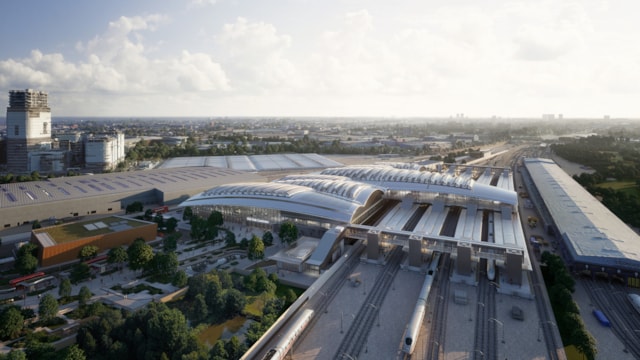
 mediacentre.hs2.org.uk
Hi everyone,
Very good news now - The level boarding work has been completed, the business, technical, and safety cases have been accepted by the DfT, a regulation 14 deviation (against the NTSN requirement for UK platform height and offset) has been granted, and level boarding is now going to happen on the relief line platforms.
Fantastic news for Old Oak common, and I look forward to getting onto an Elizabeth Line train in future, without having any step between train and platform.
I may have had a little hand in this work, so I'm particularly proud of this outcome. It also means I can probably answer any questions about it so fire away!
Level boarding confirmed for Elizabeth line services at HS2’s Old Oak Common superhub station
Passengers using Elizabeth line services at Old Oak Common will benefit from a fully step free journey from street level to train This will support independent travel by removing the need for boarding ramps or staff assistance for many passengers Collaboration between HS2, Network Rail...
Level boarding confirmed for Elizabeth line services at HS2’s Old Oak Common superhub station
Published on
29 Sep 2026
Future passengers using Elizabeth line services at HS2’s Old Oak Common in west London will benefit from step free access following agreement between HS2 Ltd, Network Rail, Transport for London and the Department for Transport.
- Passengers using Elizabeth line services at Old Oak Common will benefit from a fully step free journey from street level to train
- This will support independent travel by removing the need for boarding ramps or staff assistance for many passengers
- Collaboration between HS2, Network Rail, Transport for London and the Department for Transport has enabled agreement on a more accessible design
- View and embed video of Old Oak Common construction of platforms and CGI
Located between Paddington and Acton Main Line, Old Oak Common will be the 42nd stop on the Elizabeth line and one of the UK’s best-connected stations, with trains serving more than 100 destinations.
The decision follows extensive technical, operational and accessibility work, including consultation with campaign groups, accessibility panels and relevant train operators.
The Department for Transport has approved an exemption from the usual national platform height requirements. This will allow platforms 5 to 8 to be constructed at a height optimised for Elizabeth line trains while complying with applicable accessibility requirements.
The reduction in step and gap between Elizabeth line trains and the platforms will enable many passengers with reduced mobility to board and leave trains independently, without the need for a ramp or staff assistance. Level boarding will also make journeys easier for people travelling with luggage, parents and carers with pushchairs, older passengers and anyone who finds it difficult to negotiate the usual step between a platform and train.
The HS2 platforms at Old Oak Common, located underground, will also be step-free, so passengers interchanging between Elizabeth line and HS2 services will have a seamless and safe step-free journey through the new superhub station.
Under the previous plans, the platforms would have been built to the standard height used across the national rail network, and ramps would have been required to provide step free access to Elizabeth line trains.
The engineering solution was made possible by close collaboration through the new Old Oak Common area delivery model. Established as part of the HS2 Reset, the model brings together key organisations involved in the station’s design, construction and future operation.
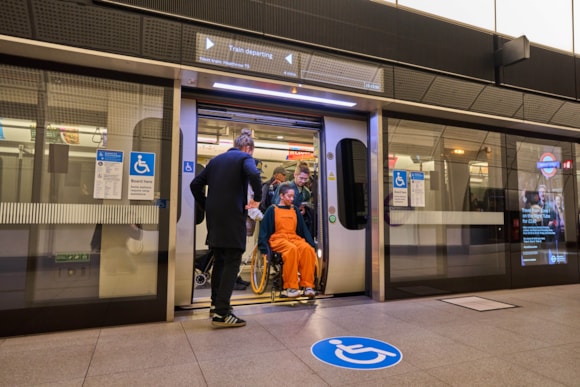
Rail Minister, Lord Hendy, said:
“Everyone should be able to travel confidently and independently on our rail network, so I’m delighted that passengers using the Elizabeth line at Old Oak Common will benefit from level boarding and seamless step-free access.
“This is a practical improvement that will make journeys easier for thousands of people and shows what can be achieved when the rail industry works together to put passengers first.”
Mark Wild, HS2 Ltd Chief Executive, said:
"Old Oak Common is set to become one of the best-connected new stations ever built in the UK and delivering step-free access here is vital for passenger safety and accessibility.”
"This engineering solution shows what can be achieved when HS2, Network Rail, Transport for London, the Department for Transport, train operators and accessibility groups work together to prioritise passengers.”
"The new station is projected to boost the west London economy by £10 billion over the next decade. We remain focussed on safely opening the railway from Old Oak Common to Birmingham Curzon Street in 2037 and creating a station that provides better journeys and supports growth for generations to come."
Rupert Walker, Major Programme Director, Network Rail, said:
“Old Oak Common will be one of the UK's most important transport interchanges, connecting people to more than 100 destinations across the UK. Making sure customers can move through the station and onto Elizabeth line services as independently and seamlessly as possible has been a key priority for everyone involved.
“By providing level boarding for customers using platforms 5 to 8, we're making it easier for Elizabeth line customers to travel independently. This means more people will be able to travel with confidence, access new opportunities and benefit from the exceptional connectivity that Old Oak Common will provide.
“This outcome has only been possible through a huge joint effort by teams in HS2, Network Rail, Transport for London, the Department for Transport, train operators and accessibility groups, all working together to create a more accessible railway for everyone.”
Andy Lord, London’s Transport Commissioner, said:
“Elizabeth line passengers are expected to account for around 90 per cent of interchanges at Old Oak Common, so level boarding is vital for the safety and accessibility of our customers.
“The platforms will also be step-free from the street, benefitting local residents as well as those travelling through the station, and supporting the growth in homes planned in the area.
“The solution that has been achieved highlights the importance of collaboration in the rail industry and with stakeholders, and it is fantastic news that Old Oak Common will join the Elizabeth line’s 41 stations that provide step-free access.”
The engineering solution involves lowering the tracks serving platforms 5 to 8 and installing solid concrete slab track through the station rather than ballast.
The platforms will be designed to accommodate a range of passenger and freight services, providing operational flexibility for the railway. Level boarding will, however, only be available to Elizabeth line passengers when services are calling at their usual platforms.
Construction of Old Oak Common’s six underground high-speed platforms has been completed, and work will now begin on the eight conventional platforms at ground level. These will serve the Elizabeth line, Great Western Main Line and Heathrow Express.
Economic research published by HS2 last year showed that the arrival of the new station could boost the west London economy by £10 billion over a decade. The research, conducted by Arcadis, found that HS2 could support more than 22,000 homes, 693,000 square metres of commercial floorspace and 18,782 jobs within 1.5 miles of Old Oak Common.
What will happen when the GWML is running as a 2-track railway due to weekend works and everything is running on the Mains?Very good news now - The level boarding work has been completed, the business, technical, and safety cases have been accepted by the DfT, a regulation 14 deviation (against the NTSN requirement for UK platform height and offset) has been granted, and level boarding is now going to happen on the relief line platforms.
Fantastic news for Old Oak common, and I look forward to getting onto an Elizabeth Line train in future, without having any step between train and platform.
zwk500
Veteran Member
There'll be a step down from Elizabeth Line trains.What will happen when the GWML is running as a 2-track railway due to weekend works and everything is running on the Mains?
Presumably this means that the platforms 5-8 will be 1,100mm above the rail head? @mr_moo will there be any restrictions on freight trains using these platforms?
What happens when the mains are closed and everything goes through the relief?
I’m interested in the idea that there can be a reasonably small gap to an Elizabeth line train and a large enough gap to a freight train. What will the step up be like, similar to the Piccadilly? What help will wheelchair users have?
I’m interested in the idea that there can be a reasonably small gap to an Elizabeth line train and a large enough gap to a freight train. What will the step up be like, similar to the Piccadilly? What help will wheelchair users have?
mr_moo
Member
What will happen when the GWML is running as a 2-track railway due to weekend works and everything is running on the Mains?
There'll be a step down from Elizabeth Line trains.
Presumably this means that the platforms 5-8 will be 1,100mm above the rail head? @mr_moo will there be any restrictions on freight trains using these platforms?
Yep, possessions will continue in similar fashion, with 2-track railway being normal. When everything is on the Mains, there will still be a step down from train onto platform - the Main line platforms will still be standard height.
Similarly, when everything is running through the Reliefs, there will be a much smaller step into other trains, although the Elizabeth Line is the only one that will have 'level boarding' (per NTSN definitions).
Platform height is approximately 1100mm, yes. Not exactly for various reasons of clearance and alignment, but in broad terms, yes.
Freight trains - Being careful with how much info I make public, but 'not really'. There are some minor implications on freight trains but, for the most part, no, they can still pass happily. Note that the only freight destination is Paddington New Yard, and the solution allows that to continue to be served as it is today.
Note also that, in clearance/permission terms, things like the the measurement trains, sandite units, and tampers all class as freight trains too, and these can continue unimpeded.
(Yes, I'm choosing my words very carefully!)
The goal was to provide a step/gap, compliant with the dimensions in the Accessibility NTSN, that allowed boarding without the need for a boarding ramp being provided. This was achieved for the Elizabeth Line class 345 stock, so wheelchair users will be able to board and alight at OOC on the Relief line platforms without booking assistance or getting a ramp deployed, in the same way that they do in the central section.What happens when the mains are closed and everything goes through the relief?
I’m interested in the idea that there can be a reasonably small gap to an Elizabeth line train and a large enough gap to a freight train. What will the step up be like, similar to the Piccadilly? What help will wheelchair users have?
Wheelchair users for other stock, such as the GWR class 800 long distance IET, will still need a ramp for some users. The gap will be fairly small, but not 'level'. We're not looking at a Piccadilly line solution where you step up to some stock and down to other stock as normal. This will be level to Liz Line and small to everything else, with exception to the any future low floor train that may be introduced one day.
If that happens of course, there will be a step down into the train, but that's a whole different story and one I can't go into much in public.
The provision of a gap small enough to allow level boarding but large enough to allow a freight train to pass has been achieved through multiple iterations of alignments (horizontal, vertical, and cant), a strong focus on reducing tolerances wherever possible, and the usage of slab track. All four relief line platforms will be built in slab track, which allows much smaller tolerances to be applied safely and trains to pass with much smaller clearances than they would normally. Some freight trains will be very close to the platform edge when passing.
It will be interesting, once all is running in place, to see how shrill demands for the same platform interfaces to be provided out to Reading are rebutted.
Mechanical Gap Fillers were mentioned above. The New York Subway has its own experience of these, on tight terminal loops with the platform on the outside, where original stock which just had end doors was replaced by modern cars with multiple sliding doors. Most have been very expensively replaced with tunnel diversions to straight terminal platforms, although there's one left. Being foul of the loading gauge when extended they are interlocked with the signalling, and the mechanisms are just not reliable enough. I can recall two generations of them, earlier were like a drawbridge, more recently a sliding segment under the platform edge. Just one of the many interlocks failing, from issues as trivial as a pencil falling in the mechanism, and the whole line was out of action. No.
Mechanical Gap Fillers were mentioned above. The New York Subway has its own experience of these, on tight terminal loops with the platform on the outside, where original stock which just had end doors was replaced by modern cars with multiple sliding doors. Most have been very expensively replaced with tunnel diversions to straight terminal platforms, although there's one left. Being foul of the loading gauge when extended they are interlocked with the signalling, and the mechanisms are just not reliable enough. I can recall two generations of them, earlier were like a drawbridge, more recently a sliding segment under the platform edge. Just one of the many interlocks failing, from issues as trivial as a pencil falling in the mechanism, and the whole line was out of action. No.
Last edited:
mr_moo
Member
Absolutely. Mechanical gap fillers were considered and discounted for several reasons, including exactly what you describe here. Given the intensity of the Elizabeth Line service, anything built needs to be very reliable.
The key thing that helped at OOC, and will be more difficult elsewhere, is speed. The faster a train goes, the larger it gets in gauging terms, as the greater the dynamic movement has to be allowed for. The lower linespeeds (that were there anyway, nothing to do with level boarding) were helpful for the solution at OOC, but would not necessarily be able to be used at other stations.
The key thing that helped at OOC, and will be more difficult elsewhere, is speed. The faster a train goes, the larger it gets in gauging terms, as the greater the dynamic movement has to be allowed for. The lower linespeeds (that were there anyway, nothing to do with level boarding) were helpful for the solution at OOC, but would not necessarily be able to be used at other stations.

Chris125
Established Member
Note also that, in clearance/permission terms, things like the the measurement trains, sandite units, and tampers all class as freight trains too, and these can continue unimpeded.
(Yes, I'm choosing my words very carefully!)
Do we know what the impact on charter operators will be? Are outside cylinder steam locos likely to be a problem?
mr_moo
Member
Most steam locos are absolutely fine, including outside cylinder ones. We have made quite a good solution all in!Do we know what the impact on charter operators will be? Are outside cylinder steam locos likely to be a problem?
So what’s the ‘catch’? Obviously it’s great news for those who need it and I don’t want to take away from the excitement, but if there were no drawbacks or tradeoffs in practice then presumably it would have gone through immediately and not needed such a long-winded process to agree?
I imagine that the costs of lowering 200+m of formation by 150mm plus the slab track were a bit of a debating pointSo what’s the ‘catch’? Obviously it’s great news for those who need it and I don’t want to take away from the excitement, but if there were no drawbacks or tradeoffs in practice then presumably it would have gone through immediately and not needed such a long-winded process to agree?
It seems like the tradeoff is that it only works on new-build stations with dead straight platforms with slab track fitted, at very low operating speeds, can't accommodate larger gauge freight trains, and involves quite precise and detailed modelling in advance to prove that it's safe for normal traffic. All of this is also a potentially large deviation from the normal processes for designing and approving track on the national network.So what’s the ‘catch’? Obviously it’s great news for those who need it and I don’t want to take away from the excitement, but if there were no drawbacks or tradeoffs in practice then presumably it would have gone through immediately and not needed such a long-winded process to agree?
If that's the case then the really big catch is that it will be about a week before people start demanding that the same fix is applied to all the other stations outside the core, where it isn't feasible at all.
But the platforms are not dead straight, with the northernmost one the most curved. A rough measure off satellite pictures gives a radius of only a little over 1 km. I did wonder if there was any scope for a very late tweak in that platform to straighten it, but looking at the current state of the build there's a solid wall says you can't.It seems like the tradeoff is that it only works on new-build stations with dead straight platforms with slab track fitted, at very low operating speeds, can't accommodate larger gauge freight trains, and involves quite precise and detailed modelling in advance to prove that it's safe for normal traffic. All of this is also a potentially large deviation from the normal processes for designing and approving track on the national network.
If that's the case then the really big catch is that it will be about a week before people start demanding that the same fix is applied to all the other stations outside the core, where it isn't feasible at all.
With that radius, I reckon the minimum gap at the "end" doors of a 345 is roughly 30 cm, to which the running clearance at the centre doors has to be added. I'm not sure what the maximum tolerable gap for a wheelchair is, but I suspect not a lot more than that. So that platform looks to be at the limit of acceptable curvature.
In practice, for an existing line, there will be some stations with platforms straight enough already, or fixable within a feasible budget. But it only takes one station along the line where the site constraints make that impossible and the whole scheme moves into the "really really difficult" pile.
mr_moo
Member
Fundamentally the catch is:
- It needs slab track, which is more expensive.
- It only works because of the existing low speed and thus reduced clearances. That then creates a constraint on the future, as the linespeed through these platforms could not be increased much if anyone ever wanted to in future.
- It uses clearances much smaller than would normally be accepted.
- It thus has an enhanced maintenance regime that is more onerous than usual, to go along with managing those smaller clearances safely.
- It's not free from constraints, although we did manage to minimise them.
- It does provide inconsistency with other trains, which carries its own set of risks. With a standard platform, you have a known big step which passengers are familiar with. With this, you have no step unless you are on a non-EL train, in which case you have something small and variable - making sure that's sufficiently safe required some thinking.
- It has required some compromises to the alignment which are not non-compliant but are less than ideal, resulting in a really useful alignment design but also one that will have a slightly higher rate of wear and thus a slightly shorter lifespan.
- It makes construction a bit more complex.
- It is still a deviation to the standards, and thus non-compliant platforms will be literally set in concrete for probably their whole life. Should we really be building non-compliant platforms at a brand new station? (I think yes in this case, but it needed some thinking and justification).
There's a lot more detail that I can't share yet but essentially it's a great solution but it comes with constraints, cost, and compromises. It's certainly not something you could just copy across to other EL stations without some quite detailed work there too.
And to clarify, when we say "level boarding", we mean compliant with the Accessibility NTSN.

 www.gov.uk
Here's the relevant section:
- It needs slab track, which is more expensive.
- It only works because of the existing low speed and thus reduced clearances. That then creates a constraint on the future, as the linespeed through these platforms could not be increased much if anyone ever wanted to in future.
- It uses clearances much smaller than would normally be accepted.
- It thus has an enhanced maintenance regime that is more onerous than usual, to go along with managing those smaller clearances safely.
- It's not free from constraints, although we did manage to minimise them.
- It does provide inconsistency with other trains, which carries its own set of risks. With a standard platform, you have a known big step which passengers are familiar with. With this, you have no step unless you are on a non-EL train, in which case you have something small and variable - making sure that's sufficiently safe required some thinking.
- It has required some compromises to the alignment which are not non-compliant but are less than ideal, resulting in a really useful alignment design but also one that will have a slightly higher rate of wear and thus a slightly shorter lifespan.
- It makes construction a bit more complex.
- It is still a deviation to the standards, and thus non-compliant platforms will be literally set in concrete for probably their whole life. Should we really be building non-compliant platforms at a brand new station? (I think yes in this case, but it needed some thinking and justification).
There's a lot more detail that I can't share yet but essentially it's a great solution but it comes with constraints, cost, and compromises. It's certainly not something you could just copy across to other EL stations without some quite detailed work there too.
And to clarify, when we say "level boarding", we mean compliant with the Accessibility NTSN.
NTSN: accessibility
National Technical Specifications Notices (NTSNs) relating to accessibility (ACC), formerly known as persons with reduced mobility (PRM).
Here's the relevant section:
Level access
A level access is an access from a platform to the doorway of a rolling stock for which it can be demonstrated that:
— The gap between the door sill of that doorway (or of the extended bridging plate of that doorway) and the platform does not exceed 75 mm measured horizontally and 50 mm measured vertically and
— The rolling stock has no internal step between the door sill and the vestibule.
BRX
Established Member
- Joined
- 20 Oct 2008
- Messages
- 4,545
Fundamentally the catch is:
- It needs slab track, which is more expensive.
- It only works because of the existing low speed and thus reduced clearances. That then creates a constraint on the future, as the linespeed through these platforms could not be increased much if anyone ever wanted to in future.
- It uses clearances much smaller than would normally be accepted.
- It thus has an enhanced maintenance regime that is more onerous than usual, to go along with managing those smaller clearances safely.
- It's not free from constraints, although we did manage to minimise them.
- It does provide inconsistency with other trains, which carries its own set of risks. With a standard platform, you have a known big step which passengers are familiar with. With this, you have no step unless you are on a non-EL train, in which case you have something small and variable - making sure that's sufficiently safe required some thinking.
- It has required some compromises to the alignment which are not non-compliant but are less than ideal, resulting in a really useful alignment design but also one that will have a slightly higher rate of wear and thus a slightly shorter lifespan.
- It makes construction a bit more complex.
- It is still a deviation to the standards, and thus non-compliant platforms will be literally set in concrete for probably their whole life. Should we really be building non-compliant platforms at a brand new station? (I think yes in this case, but it needed some thinking and justification).
There's a lot more detail that I can't share yet but essentially it's a great solution but it comes with constraints, cost, and compromises. It's certainly not something you could just copy across to other EL stations without some quite detailed work there too.
And to clarify, when we say "level boarding", we mean compliant with the Accessibility NTSN.
NTSN: accessibility
National Technical Specifications Notices (NTSNs) relating to accessibility (ACC), formerly known as persons with reduced mobility (PRM).
Here's the relevant section:
Thanks for sharing all this detailed info in such a clear & straightforward way. It's very interesting.