Grimsby town
Member
- Joined
- 4 Apr 2011
- Messages
- 867
I agree with this position. Its crazy to think we've reached peak electrification on the network. There's plenty of lines that either have very heavy usage (e.g. Dore-Sheffield-Swinton), high speeds (e.g. Birmingham to Derby) or heavy freight use and aren't electrified. The Calder Valley is fairly low speed (mainly 70-75mph) and isn't overly frequent or used by freight which means its a fair way down the electrification priorities. It needs to be electrified to the extent that battery trains can easily use the line. The acceleration will likely be worse than an EMU, but not significantly so.Much as I am a fan of battery powered vehicles this simply isn’t true. The weight of the battery will slow you down. With small gaps in electrification and small batteries that just need to plug these short gaps this won’t be that noticeable. But if you call it quits now on electrification of the network you are going to need BEMU with large, heavy batteries to cover all the extended gaps in electrification.
== Doublepost prevention - post automatically merged: ==
Halifax is the 12th biggest flow out of Leeds.What services passing through Bradford? Only toy trains serving small communities generating very small through flows.
The history of the Bradford saga is something like this:
- Initially they wanted a super-duper NPR route via Oldham and Bradford, tunnelling under either urban areas or the widest part of the Pennines. All fast Manchester - Leeds trains would use this route and Bradford would get metro frequency to both. It was completely bonkers.
Oldham was never realistically considered as part of NPR. The plan was for 8tph between Manchester and Leeds via Bradford. Hardly metro frequency. I agree though it was an overkill solution.
I'd says that's broadly accurate.- They realised such a route would indeed be bonkers, and realised that investments in TRU meant it made no sense for a future NPR route to not go via Huddersfield
- Once Huddersfield was decided upon it became clear that Huddersfield - Bradford - Leeds would never be quicker than Huddersfield - Dewsbury - Leads (or indeed any future straight fast route).
- Bradford was never going to be on the fastest Manchester - Leeds services. We are back to only Calder Valley toy trains going to/via Interchange. The rationale for 'getting through Bradford quicker' completely evaporates.
You're missing that Bradford was still being considered as a route for some trains because there isn't capacity via Dewsbury for up to 8 trains per hour. It's also pretty clear that Bradford should be served better given the population, population growth and relatively youth of the population.
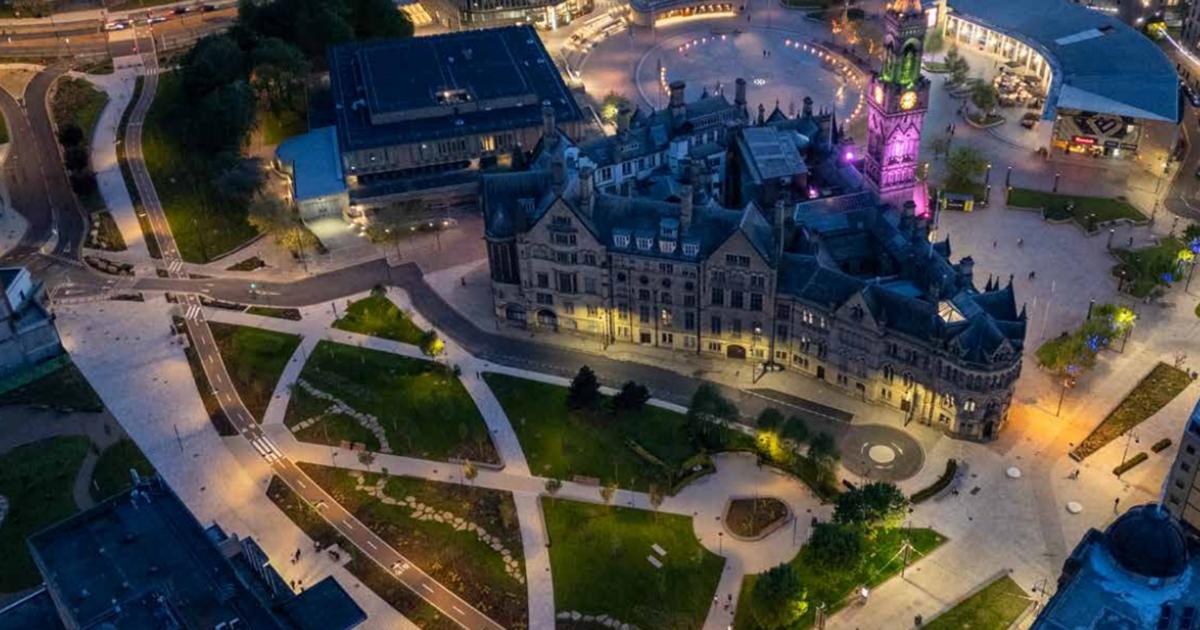
I disagree. It's clearly government policy that population should be increased around railway stations and in city centers. This is informed by research from centre for cities over the last 5 years who have shown that the UK doesn't have enough people close to the productive city centres. So a policy to increase population in city centers and public transport connectivity into city centres is being pursued. A new station at Bradford both reduces journey times to Leeds and facilitates the growth in Bradford City centre. Its completely strategically aligned with the government's goals and therefore I'd be shocked if it didn't happen.Bradford's existing city centre diameter between Forster Square and Interchange is less than 700 metres. Interchange to St James is 1km, along a hostile Wakefield Road. Bradford City Centre is not going to double in size. It just isn't. Plonking a station there isn't going to turn it into Bristol Temple Meads. It'll look like Reading West at best. Let's be clear, a bus station relocated to St James would simply be bypassed by the majority of bus routes.
But of course in order to save face, local leaders must have something, even if it means harming the actual city.
Last edited: