It's going to be Saturdays only at first, for various logistical reasons that are nothing to do with the 230 itself, but the aspiration from the management is to increase operations to the full 6 days a week (no Sunday service on the Greenford branch) as soon as possible, and providing the unit / charging system is reliable enough to do that. But do bear in mind that it's only one unit and expecting it to have 100% availability except on Sundays is probably 'for the Birds' as the politicians say, so expect there to be a mixture of 230 and Turbo operation on the Greenford branch for the foreseeable.Well spotted. I hope it runs for more than just Saturday 31st as that will give me a chance to sample a 230 later in the week.
EDIT
Looks to be Saturdays only (there is similar for Satorday 07/02/2026).

-
Our new ticketing site is now live! Using either this or the original site (both powered by TrainSplit) helps support the running of the forum with every ticket purchase! Find out more and ask any questions/give us feedback in this thread!
You are using an out of date browser. It may not display this or other websites correctly.
You should upgrade or use an alternative browser.
You should upgrade or use an alternative browser.
GWR Class 230 Information, Movements & Discussion.
- Thread starter FGW_DID
- Start date
Sponsor Post - registered members do not see these adverts; click here to register, or click here to log in
R
RailUK Forums
MasterPhillips
Member
- Joined
- 26 Jun 2019
- Messages
- 212
Looks like the Turbo that does 2P04 from Reading Paddington, which forms the Greenford branch shuttle, is booked to go empty to West Ealing sidings. Suggests it will remain there spare for the day.
Looks like the Turbo that does 2P04 from Reading Paddington, which forms the Greenford branch shuttle, is booked to go empty to West Ealing sidings. Suggests it will remain there spare for the day.
If you look further on in the day, 2254 to Reading TCD as 5R65

Something I've noticed from looking at photos of 230001 is that it still had it's Wedgelock couplers from it's days as a D stock set , Any ideas why these haven't been swapped out with Dellner or tightlock couplers as Wedgelock couplers would be pretty useless as no non tube stock other than the 230 uses them so it makes them pretty much impossible to rescue.
Something I've noticed from looking at photos of 230001 is that it still had it's Wedgelock couplers from it's days as a D stock set , Any ideas why these haven't been swapped out with Dellner or tightlock couplers as Wedgelock couplers would be pretty useless as no non tube stock other than the 230 uses them so it makes them pretty much impossible to rescue.
I suspect it’s a case of making minimum changes to its donor vehicle.
It’s unlikely the coupler mountings are at an appropriate height for UK mainline coupling. That would be a massive job, within the crash structure of the vehicle.
Then there’s what coupler?
Dellner is the predominant type on the Inner GWML, but multiple different variants that aren’t really compatible without adaptors - and excepting IETs; nothing else on the Inner GWML can even get onto the Greenford branch to rescue as there’s no overhead wires.
So BSI would probably be the logical type - as fitted to the 165s - but nothing has been built with a BSI in 20 years; are the on train systems set up wired correctly to feed into a BSI? Unlikely.
It will only be in the event of significant failure that 230001 will need to couple to anything; so the current setup of an adaptor coupling being kept at West Ealing that will translate from LU Wedgelock to various types is the route that has been taken.
If this trial were going further, and multi working was on the table, then sure the design and manufacturing expense of a new coupling might be worth it.
But it isn’t. 230001 will quietly prove its battery tech in passenger service over the coming months and maybe years; and hopefully the lessons learned will feed into a future GWR fleet in the early part of next decade.

tfw756rider
On Moderation
15 years, the 172s. I guess your point still stands though.nothing has been built with a BSI in 20 years

I don't think they ruled out 230001 ever entering passenger service. A few months ago was when the accessibility dispensation was done which wouldn't have been needed if no intent to run passenger services. From GWR fast charge whitepaper last summer (bolding mine):A few months ago, the 230 entering passenger service was ruled out by the experts on here and GWR themselves, what has changed?
The testbed itself is a former London Underground train that was converted especially for this fast-charge project. Although it can and has carried people, it’s not our intention at GWR to use it in regular service in the long-term.
Whether the 230s would be deployed more widely is a different question. From the same whitepaper:
It’s too early to roll out a plan. This train is only a testbed; it’s not a model geared for mass production. There’s more work to do with manufacturers to incorporate fast-charging equipment into their designs.
There are other advantages to batteries. GWR put its testbed batteries under the floor because that’s where it had space. But a new train specifically designed for batteries might put them on the roof. This provides the prospect of trains with lower floors that can match Network Rail’s standard platforms and provide level boarding, which lets passengers in wheelchairs board and alight without having to ask staff for help. It also benefits passengers with heavy luggage and parents wrestling prams on and off trains.
Taking these together, it would be costly to develop another 230 into a fast charge capable unit. That unit as well as having old bodyshells will not meet accessibility standards both in regulations and expectations for the next generation of trains. Aside from the fast charge capability, the rest of the 230s aren't particularly special. GWRs preference is clearly for their fast charging system to be available on trains procured.
For 230001 on the Greenford branch, the train is already built and the accessibility isn't markedly worse than existing 165s. Deploying it will give additional data and the hope will be to increase confidence in wider rollouts. The costs of doing this is relatively low for the potential benefit. However, if they do procure replacement stock with fast charging then 230001 is expected to be replaced by those rather than kept long-term.
I don't think there has necessarily been a change in plan from GWR here. Someone close to the project has challenged those stating no intent for any passenger service runs. I wouldn't be surprised if it's the "in the long-term" can easily be interpreted as either "this testbed isn't a long term solution" or "no long-term plans to move into passenger service" which has caused some confusion.

REVUpminster
Established Member
It does beg the question as to why GWR bought all the D stock that they did? Perhaps they thought they would not rust but corrode over time.I don't think they ruled out 230001 ever entering passenger service. A few months ago was when the accessibility dispensation was done which wouldn't have been needed if no intent to run passenger services. From GWR fast charge whitepaper last summer (bolding mine):
Whether the 230s would be deployed more widely is a different question. From the same whitepaper:
Taking these together, it would be costly to develop another 230 into a fast charge capable unit. That unit as well as having old bodyshells will not meet accessibility standards both in regulations and expectations for the next generation of trains. Aside from the fast charge capability, the rest of the 230s aren't particularly special. GWRs preference is clearly for their fast charging system to be available on trains procured.
For 230001 on the Greenford branch, the train is already built and the accessibility isn't markedly worse than existing 165s. Deploying it will give additional data and the hope will be to increase confidence in wider rollouts. The costs of doing this is relatively low for the potential benefit. However, if they do procure replacement stock with fast charging then 230001 is expected to be replaced by those rather than kept long-term.
I don't think there has necessarily been a change in plan from GWR here. Someone close to the project has challenged those stating no intent for any passenger service runs. I wouldn't be surprised if it's the "in the long-term" can easily be interpreted as either "this testbed isn't a long term solution" or "no long-term plans to move into passenger service" which has caused some confusion.
I would expect that had they not been purchased on Vivarail’s demise, the remaining D78 stock would have gone for scrap. Perhaps three years ago there was more optimism that the trial might produce something indicating further uses for the stock? If the other units were all razor blades, then they’re not available for that use. For example, there’s the perennial issue of what will replace the Turbos on the Thames Valley branches.It does beg the question as to why GWR bought all the D stock that they did? Perhaps they thought they would not rust but corrode over time.
Peter Sarf
Established Member
GWR bought the whole lot as a job lot iirc. They had no choice as they wanted the technology. The rest of the D stock I think was valued at scrap prices so it is just money tied up that can easily be got back when the price of scrap metal (aluminium) is good. In the meantime they have access to spare parts.It does beg the question as to why GWR bought all the D stock that they did? Perhaps they thought they would not rust but corrode over time.

It does beg the question as to why GWR bought all the D stock that they did? Perhaps they thought they would not rust but corrode over time.
GWR bought the whole lot as a job lot iirc. They had no choice as they wanted the technology. The rest of the D stock I think was valued at scrap prices so it is just money tied up that can easily be got back when the price of scrap metal (aluminium) is good. In the meantime they have access to spare parts.
Correct, the purchase was for 230001, the fast charge tech IP and some staff. Everything else was thrown in as a job lot by the administrator of Vivarail.

D365
Veteran Member
- Joined
- 29 Jun 2012
- Messages
- 13,176
The former LNWR units 230003-005. Best I recall, they were purchased separately? Is there a future for them beyond spares?Everything else was thrown in as a job lot by the administrator of Vivarail.
Actually the 230's accessibility is over 3 times better than the existing 165s, you could say! Why do I say that? Because the 165s have 10 areas of non-compliance according to their dispensation letter, whereas 230001 only has 3 areas of non-compliance.I don't think they ruled out 230001 ever entering passenger service. A few months ago was when the accessibility dispensation was done which wouldn't have been needed if no intent to run passenger services. From GWR fast charge whitepaper last summer (bolding mine):
Whether the 230s would be deployed more widely is a different question. From the same whitepaper:
Taking these together, it would be costly to develop another 230 into a fast charge capable unit. That unit as well as having old bodyshells will not meet accessibility standards both in regulations and expectations for the next generation of trains. Aside from the fast charge capability, the rest of the 230s aren't particularly special. GWRs preference is clearly for their fast charging system to be available on trains procured.
For 230001 on the Greenford branch, the train is already built and the accessibility isn't markedly worse than existing 165s. Deploying it will give additional data and the hope will be to increase confidence in wider rollouts. The costs of doing this is relatively low for the potential benefit. However, if they do procure replacement stock with fast charging then 230001 is expected to be replaced by those rather than kept long-term.
I don't think there has necessarily been a change in plan from GWR here. Someone close to the project has challenged those stating no intent for any passenger service runs. I wouldn't be surprised if it's the "in the long-term" can easily be interpreted as either "this testbed isn't a long term solution" or "no long-term plans to move into passenger service" which has caused some confusion.
The notion that "having old bodyshells will not meet accessibility standards" is putting 2+2 together to make 5. If you read about 230001's dispensation in more detail, and in particular the 'Applicant's explanation', you can examine each of the non-compliances in more detail.
The first of those non-compliances concerns something to do with the door closing signal, a requirement which was only introduced in 2025; the train could be made to comply, but GWR wriggled out of it on the grounds of being disruptive and expensive to the vehicle wiring, and in any case having to comply with a new design requirement in 2025 when the vehicle was designed/built 5 years previously is not really cricket.
The second non-compliance concerns the height of the exterior door buttons, which has been a non-compliance on every 230 ever built - this one could be dealt with by 'alterations to the vehicle structure' but because that would potentially be quite expensive, and the non-compliance is only 100mm, was never done - the buttons (sensibly) use the original aperture in the bodyside, hence are at the original height relative to floor level, all of which was perfectly acceptable for the millions of people that used the D78 during their 30+ years on the Underground (It Was, come on, please don't anybody start a lecture on accessibility otherwise we might end up arguing about the height of letters on the Passenger Information Dot Matrix display.....).
The final non-compliance concerns platform heights. According to GWR's 'step and gap assessment and mitigation policy', trains are supposed to have a vertical step of no more than (ironically!) 230mm. The dispensation request lists all the locations on the Greenford branch where the vertical step is more than 230mm. Also, at some stations, e.g. West Ealing Platform 5, only 6 of the 10 bodyside door positions have a step greater than 230mm, which is a bit odd. But the 165 also suffers from the same non-compliance. Ergo, the height of some of the platforms on the Greenford branch (and presumably elsewhere on the network) are all over the place; non-compliant! If Network Rail could just sort that little problem out, I'm sure a lot of rolling stock Engineers would be very grateful and we wouldn't have to be procuring trains with complicated retractable gap-closing devices.....
Anyway, the bottom line is, the 230 isn't as 'non-accessible' as some people might assume. In fact it's very nearly fully-compliant, as evidenced by the recently-granted dispensation against only 3 of the clauses in the ACC NTSN (which supersedes the old PRM NTSN, and before that the PRM TSI).
As to whether or not GWR will ever build any more fast charge-equipped 230s, that is still the subject of debate within GWR. Some people are still pushing the idea of building some more for the West Country branch lines, but it's fair to say they're probably in a minority. As everyone probably already knows, GWR are pushing for new BEMUs and discontinuous electrification all over their network to replace their regional DMUs (150, 158, 159, 165, 166). Whether those new BEMUs will be equipped with fast charge equipment as well is also a subject of some internal debate at the moment. It is perfectly conceivable that GWR could end up with no more 230s and no more fast charge. So all of this would have been an interesting cul-de-sac of railway history, wouldn't it?!
== Doublepost prevention - post automatically merged: ==
At the moment, source of spares only, although 230004 is listed for the National Collection so cannot be cannibalised. As is 230001.The former LNWR units 230003-005. Best I recall, they were purchased separately? Is there a future for them beyond spares?
== Doublepost prevention - post automatically merged: ==
Keeping their options open really. Interestingly, one of the structural engineers who worked on the original D78 design at MetCamm, assured that the bodyshells and bogies would be good for another 20 or 25 years post-conversion to 230, such was the very limited levels of corrosion to their aluminium bodyshells even after 30+ years of service on the Underground (and the fact that the bogies were redesigned and rebuilt mid-life).It does beg the question as to why GWR bought all the D stock that they did? Perhaps they thought they would not rust but corrode over time.
Last edited:
Hopefully there is , it's quite sad to see photos of units as young as the 230s Stored up in Long Marston IMCR scrapyard Alongside the unconverted D stock.The former LNWR units 230003-005. Best I recall, they were purchased separately? Is there a future for them beyond spares?
D365
Veteran Member
- Joined
- 29 Jun 2012
- Messages
- 13,176
That’s a curious development. Not sure whether or not it’s worth a dedicated thread - but why those units in particular?At the moment, source of spares only, although 230004 is listed for the National Collection so cannot be cannibalised. As is 230001.
norbitonflyer
Established Member
GWR does not have any 159s. Although, now that it will all be part of GBR, including the Waterloo line replacement stock in the GWR procurement would make a lot of sense, as the rest of the SWR division is all-electric and none of it is due for replacement any time soon.As everyone probably already knows, GWR are pushing for new BEMUs and discontinuous electrification all over their network to replace their regional DMUs (150, 158, 159, 165, 166).
(A 3rd rail variant would be a "nice-to-have")

778
Member
Are the 458s and 455s not due for replacement?GWR does not have any 159s. Although, now that it will all be part of GBR, including the Waterloo line replacement stock in the GWR procurement would make a lot of sense, as the rest of the SWR division is all-electric and none of it is due for replacement any time soon.
(A 3rd rail variant would be a "nice-to-have")

pokemonsuper9
Established Member
701s are doing that (and for the 455s, already have)Are the 458s and 455s not due for replacement?
778
Member
Nothing against them being preserved but I think there are lots of other trains that are more deserving of a place in the National Collection.At the moment, source of spares only, although 230004 is listed for the National Collection so cannot be cannibalised. As is 230001.

Mordac
Established Member
We need to keep them as a warning from history.Nothing against them being preserved but I think there are lots of other trains that are more deserving of a place in the National Collection.
Ah yes sorry you're right, my mistake.GWR does not have any 159s.
== Doublepost prevention - post automatically merged: ==
It would be sensible but at the moment only GWR, Chiltern and EWR BEMUs are being considered together 'as one' (with GWR taking the lead). I don't know where SWR have got to with their DMU rolling stock replacement project for the route via Salisbury to Exeter and other parts of their non-electrified routes.Although, now that it will all be part of GBR, including the Waterloo line replacement stock in the GWR procurement would make a lot of sense, as the rest of the SWR division is all-electric and none of it is due for replacement any time soon.
(A 3rd rail variant would be a "nice-to-have")
== Doublepost prevention - post automatically merged: ==
Amusingly, Adrian Shooter had originally managed to get all the 230s and 484s listed as well as all the remaining D78 cars for some bizarre reason (probably an administrative oversight somewhere) but a few years back, when this was discovered as a posthumous surprise from beyond the grave, the 'listing' was scaled back to just 230004 and 230001. I guess 230004 is an example of the weird and wacky application of automotive technology to a rail vehicle and represents 'Part 1' of the rollercoaster Vivarail story, whereas 230001 represents both the first chapter and possibly the last chapter in the 230 story, in that it started life as the Diesel Electric prototype, and ended up as the first to utilise 'fast charge' technology, as well as being the first battery train to cross the Forth Bridge, and setting the world distance record last year of course. In that respect I think 230001 is a lot more deserving of a place in the National Collection than 230004.That’s a curious development. Not sure whether or not it’s worth a dedicated thread - but why those units in particular?
Last edited:

43096
On Moderation
- Joined
- 23 Nov 2015
- Messages
- 18,800
It is quite normal for there to be a “class designation” in place before specific vehicles are chosen by the RHDAB. For example there was a class designation on the HST fleet with grand designs on the NRM “saving a complete set for the nation” - this had the effect of preventing the ROSCOs from disposing of vehicles for preservation until specific vehicles were nominated instead. In the event it has been left to the voluntary preservation sector to preserve a full HST set, so the big plan came to naught.Amusingly, Adrian Shooter had originally managed to get all the 230s and 484s listed as well as all the remaining D78 cars for some bizarre reason (probably an administrative oversight somewhere) but a few years back, when this was discovered as a posthumous surprise from beyond the grave, the 'listing' was scaled back to just 230004 and 230001.
Fair point, maybe that's what it was. Is the list of vehicles chosen by the RHDAB in the public domain, out of interest, or is that kept a secret?It is quite normal for there to be a “class designation” in place before specific vehicles are chosen by the RHDAB. For example there was a class designation on the HST fleet with grand designs on the NRM “saving a complete set for the nation” - this had the effect of preventing the ROSCOs from disposing of vehicles for preservation until specific vehicles were nominated instead. In the event it has been left to the voluntary preservation sector to preserve a full HST set, so the big plan came to naught.

bluegoblin7
Established Member
Yes, here.
It can run a bit behind decision making, but row 886 clearly lists the 'Class Designation' for VivaRail units.
It can run a bit behind decision making, but row 886 clearly lists the 'Class Designation' for VivaRail units.

rivervale
Member
- Joined
- 28 Feb 2017
- Messages
- 26
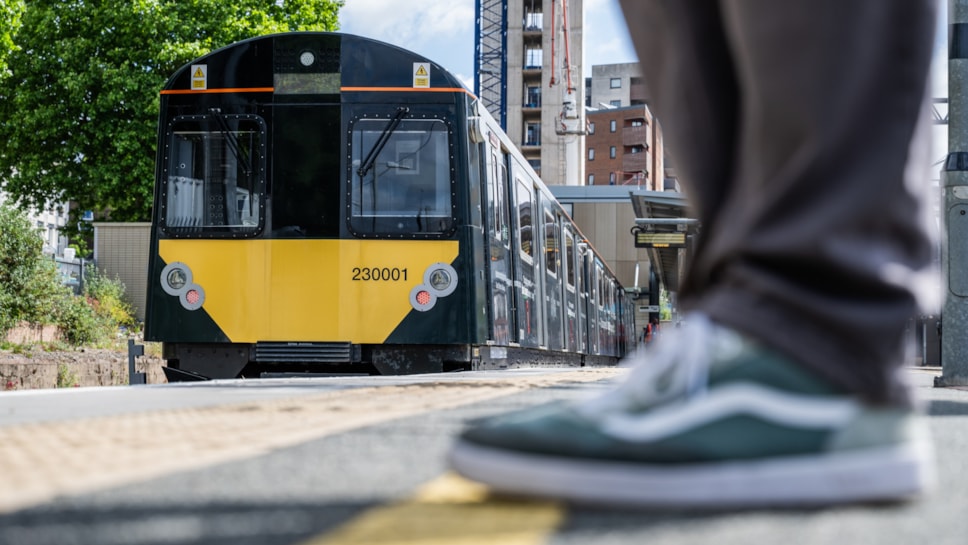
Great Western Railway to introduce record-breaking battery train into passenger service | GWR News
Great Western Railway will introduce the UK’s first battery-only powered train into passenger service on Saturday (31 January).
 news.gwr.com

I assume it's going to operate all the services that day?Great Western Railway to introduce record-breaking battery train into passenger service | GWR News
Great Western Railway will introduce the UK’s first battery-only powered train into passenger service on Saturday (31 January).
I assume it's going to operate all the services that day?
Yes with the turbo sitting in West Ealing depot as spare
I wonder what time the most people will be around. Presumably not the 5:30 departureI'm in London Saturday, but don't fancy being in numerous Youtube videos next week
