Last month, the local butcher was stating the weight of the turkey and some other items in his 'Christmas meat hamper' in pounds.Remember the Metric Martyrs? What a good use of everyone's time and energy that was. Metric Martyrs

-
Our new ticketing site is now live! Using either this or the original site (both powered by TrainSplit) helps support the running of the forum with every ticket purchase! Find out more and ask any questions/give us feedback in this thread!
You are using an out of date browser. It may not display this or other websites correctly.
You should upgrade or use an alternative browser.
You should upgrade or use an alternative browser.
Things in living memory which seem very anachronistic now
- Thread starter GordonT
- Start date
Sponsor Post - registered members do not see these adverts; click here to register, or click here to log in
R
RailUK Forums
Last month, the local butcher was stating the weight of the turkey and some other items in his 'Christmas meat hamper' in pounds.
Believe it or not, the law does allow you to use imperial as long as the metric is there as well.
It’s just most food packagers don’t bother and only put the metric.
Even in the USA the law requires everything to be labelled in metric and US customary (imperial).
The metric martyrs issue was that they wouldn’t switch from imperial-only (waste of public money to prosecute, mind!)
If all food packaging had both measures, then everyone would be happy, and that’s not against the law in the UK as it stands.
Oxfordblues
Member
- Joined
- 22 Dec 2013
- Messages
- 1,132
I believe the cases of the "Metric Martyrs" were part of the reason for the 2016 EU membership referendum and were used as ammunition by the Leave campaign. Didn't Miles Kington once write that he was afraid of being forced by Brussels to call himself "Kilometres Kington"?The metric martyrs issue was that they wouldn’t switch from imperial-only (waste of public money to prosecute, mind!)

Hadlow Road
Member
Ah, yes: “Let’s parlez Franglais.” What a joy.I believe the cases of the "Metric Martyrs" were part of the reason for the 2016 EU membership referendum and were used as ammunition by the Leave campaign. Didn't Miles Kington once write that he was afraid of being forced by Brussels to call himself "Kilometres Kington"?
PMH
Member
Last month, the local butcher was stating the weight of the turkey and some other items in his 'Christmas meat hamper' in pounds.
Ours the same I'd say. I grew-up with kilos but still think in pounds in relation to meat as that's the common parlance.
It didn't have to be the drama some were determined to make it.
ic31420
Member
Being early 40s I'm at a pretty unique age that I use imperial in metric mixed.
measurements I can do either, through prefer millimeters for small stuff under an inch.
Fluids depend on what it is, litres for paint, pints for milk, water, stock and beer, litres for fuel prices, miles for milage. Again I tend to default to metric for small stuff under a pint.
Weights, I tend to be mainly metric, but if buying loose stuff over the counter it's oz and lbs.
People... stones and a lbs, feet and inches. I can visualize a 6ft tall 14 stone bloke, but give it me in metric I'll need a moment to convert it.
I used to work an a hardware store and mixed systems were quite usual.
Can I have 2.4m of 3"X2"...
How many square meters of laminate floor do I need for a 12ft by 18ft room.
Have you got 4ft of M8 threaded bar.
8ft of 2.5mm T&E
... four candles please.
measurements I can do either, through prefer millimeters for small stuff under an inch.
Fluids depend on what it is, litres for paint, pints for milk, water, stock and beer, litres for fuel prices, miles for milage. Again I tend to default to metric for small stuff under a pint.
Weights, I tend to be mainly metric, but if buying loose stuff over the counter it's oz and lbs.
People... stones and a lbs, feet and inches. I can visualize a 6ft tall 14 stone bloke, but give it me in metric I'll need a moment to convert it.
I used to work an a hardware store and mixed systems were quite usual.
Can I have 2.4m of 3"X2"...
How many square meters of laminate floor do I need for a 12ft by 18ft room.
Have you got 4ft of M8 threaded bar.
8ft of 2.5mm T&E
... four candles please.
Virtually the whole of my education was using imperial measurement. In 1970, there was a government campaign to encourage/mandate many commodity products to be sold in metric measure. A logo was created as shown on this picture of a 5 litre can of paint:

This logo became quite common through industry, which internally adopted metric material, equipment, tools and work practice readily, - it was generally so much more efficient to work with.
This logo became quite common through industry, which internally adopted metric material, equipment, tools and work practice readily, - it was generally so much more efficient to work with.

Can we just drop using stones, please? Pounds if you must, but kg is much more convenient.People... stones and a lbs, feet and inches. I can visualize a 6ft tall 14 stone bloke, but give it me in metric I'll need a moment to convert it.
For you, perhaps. It's the unit of measure that I relate to for things like someone's weight.Can we just drop using stones, please? Pounds if you must, but kg is much more convenient.
I'm in a similar camp to @ic31420, albeit a little older - taught across units, and therefore familiar with a variety (and I've had to get my head around Troy ounces and the associated conversions recently).
Yeah, but *only* for people's weight. Anything else needs conversion and calculations. And even with weights it's not mathematically convenient.For you, perhaps. It's the unit of measure that I relate to for things like someone's weight.
For example if a lift has a weight limit of 2,000kg how many 15 stone people can it carry safely? If I weigh 16 stone 5, Dave is 14 stone 8, and Bob is 14 stone 3, what's our average weight?
Quite. But for most people, most of the time, units of measure are not primarily for calculation.Yeah, but *only* for people's weight. Anything else needs conversion and calculations. And even with weights it's not mathematically convenient.
For example if a lift has a weight limit of 2,000kg how many 15 stone people can it carry safely? If I weigh 16 stone 5, Dave is 14 stone 8, and Bob is 14 stone 3, what's our average weight?
As for the difficulties of the problems you defined, working out distances travelled in miles and chains kept my arithmetic quite sharp - something that dumping them into Excel as fractions has weakened
It's an interesting debate. I was taught engineering during the 70's. As such I had to be fluent in both imperial and metric. One day I would be working to microns for a European customer, the next in thou for a US job. Now I tend to work in whatever system the item was originally made. If it was designed and made in imperial I'll use that. If it's made in metric then metric it is.
We have great fun cooking at home. Some recipes are in oz, some in grams, others in cups. It's all ratios so I just grab the appropriate weights or cups and crack on.
Mind you, the present Mrs X, being Swiss, does occasionally work in dexilitres. Now that gets scary.
We have great fun cooking at home. Some recipes are in oz, some in grams, others in cups. It's all ratios so I just grab the appropriate weights or cups and crack on.
Mind you, the present Mrs X, being Swiss, does occasionally work in dexilitres. Now that gets scary.

Didnt EE or someone else export a loco to Europe only for them to say 'Where are the metric measurements?'It's an interesting debate. I was taught engineering during the 70's. As such I had to be fluent in both imperial and metric. One day I would be working to microns for a European customer, the next in thou for a US job. Now I tend to work in whatever system the item was originally made. If it was designed and made in imperial I'll use that. If it's made in metric then metric it is.
EYFanatic
Member
Wasn't that Kestrel?Didnt EE or someone else export a loco to Europe only for them to say 'Where are the metric measurements?'

D6130
Established Member
....and North British Loco Company built four different classes of diesel locomotives with engines which they manufactured under licence from MAN in Germany. Unfortunately all the drawings sent from Germany - as you would expect - were in metric measurements and the NBL works in Glasgow were only tooled in imperial measurements. The resulting approximate conversions made for a very unreliable - and frequently self-combusting - product.Didnt EE or someone else export a loco to Europe only for them to say 'Where are the metric measurements?'
This is ringing bells about North British locos - I think this is the one.....and North British Loco Company built four different classes of diesel locomotives with engines which they manufactured under licence from MAN in Germany. Unfortunately all the drawings sent from Germany - as you would expect - were in metric measurements and the NBL works in Glasgow were only tooled in imperial measurements. The resulting approximate conversions made for a very unreliable - and frequently self-combusting - product.
Cheers.
This is precisely why we used to work to the originators measurement system. Removed conversion errors at source. Did carry an extra overhead in tooling though, plus you needed a fluently bilingual workforce.....and North British Loco Company built four different classes of diesel locomotives with engines which they manufactured under licence from MAN in Germany. Unfortunately all the drawings sent from Germany - as you would expect - were in metric measurements and the NBL works in Glasgow were only tooled in imperial measurements. The resulting approximate conversions made for a very unreliable - and frequently self-combusting - product.
Just to add to the mix, a lot of US engineers worked in decimal inches which was fun.
Cups are really annoying, and unfortunately still widely used in the US, but they are a measure of volume which makes conversion to weight irritating, if I want to measure flour for something I do it by weight and not by volume, and to be honest I don’t care whether it’s pounds and ounces or grams.We have great fun cooking at home. Some recipes are in oz, some in grams, others in cups. It's all ratios so I just grab the appropriate weights or cups and crack on.
I am, however, definitely accustomed to stones and pounds for weight, and fahrenheit for temperature.
Apparently the reason that United Statesian recipes use cups is because in colonial times it was rare for homes to have scales, but everyone had cups. So it became traditional to use volume rather than weight. Which worked because, as noted above, home baking is mainly about ratios rather than exact amounts.Cups are really annoying, and unfortunately still widely used in the US, but they are a measure of volume which makes conversion to weight irritating, if I want to measure flour for something I do it by weight and not by volume, and to be honest I don’t care whether it’s pounds and ounces or grams.
In the late '60s I was working in a mixed metric/imperial environment depending on the age of the product design and the end customer's requirements. Drawing masters for dyeline printing in those days were either melinex or linen so they had a default definition of tolerances using the number of a dimension's decimal places pre printed in the border boxes. There were quite a few drawings on the wrong master so an example of a dimension on a formally released drawing could effectively mean: 45mm ± 5 'thou'! *It's an interesting debate. I was taught engineering during the 70's. As such I had to be fluent in both imperial and metric. One day I would be working to microns for a European customer, the next in thou for a US job. Now I tend to work in whatever system the item was originally made. If it was designed and made in imperial I'll use that. If it's made in metric then metric it is.
* a "thou" was engineer's speak for one thousandth of an inch, (0.001")
Something that I think has not been mentioned were the boxes that attached to your telephone that dialled an access code for a different operator before the time when it was no longer needed. Without the box you need to dial an access number before dialing the number of the person you wanted to call.
My auntie had one for One.Tel.
My auntie had one for One.Tel.
Less archaic are Mercury phone boxes, which used prepaid cards. I preferred to use them rather than BT phone cards since Mercury phones were less popular than BT, therefore there was rarely a queue to use them, particularly at railway stations.Something that I think has not been mentioned were the boxes that attached to your telephone that dialled an access code for a different operator before the time when it was no longer needed. Without the box you need to dial an access number before dialing the number of the person you wanted to call.
My auntie had one for One.Tel.
I still see some Mercury branded manhole covers around, I believe there is at least one in Dorchester.Less archaic are Mercury phone boxes, which used prepaid cards. I preferred to use them rather than BT phone cards since Mercury phones were less popular than BT, therefore there was rarely a queue to use them, particularly at railway stations.
m0ffy
Member
The network underneath will often still be live - Mercury was a Cable and Wireless brand, which was acquired by Vodafone some years ago.I still see some Mercury branded manhole covers around, I believe there is at least one in Dorchester.
Of course they'll still be used, I bet some of them come in quite handy.The network underneath will often still be live - Mercury was a Cable and Wireless brand, which was acquired by Vodafone some years ago.
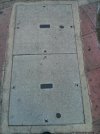
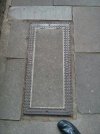
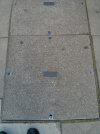
Naturally there are still some others around labelled "Post Office Telegraphs" which will still be in use.
There are some older than that. Somewhere I have some pictures that I took on one street in London which has successive "Post Office Telegraphs", "GPO", 1980s BT logo, and "BT" marked covers.Of course they'll still be used, I bet some of them come in quite handy.
Naturally there are still some others around labelled "Post Office Telegraphs" which will still be in use.
Edit: found them. A history of telecoms in one side road.
Attachments

As another middle-aged user of mixed units, I think of mountain heights in feet in the UK (to the extent that if I see a height in metres I will multiply it by 3 and a bit to get the 'real' height), but in metres on the Continent. (This means that the actual numbers are similar in Scotland and the Alps -- 2xxx for modest-sized mountains, 3xxx for the bigger ones, and 4xxx for a few really big ones).
I think this may be getting less common, but not long ago there was something of a tendency for centigrade to be used for low temperatures and Fahrenheit for high ones, which as someone pointed out neatly meant that in the British climate zero was an unusually cold day (if maintained for the whole day) and 100 an extremely hot one.
I think this may be getting less common, but not long ago there was something of a tendency for centigrade to be used for low temperatures and Fahrenheit for high ones, which as someone pointed out neatly meant that in the British climate zero was an unusually cold day (if maintained for the whole day) and 100 an extremely hot one.
Being early 40s I'm at a pretty unique age that I use imperial in metric mixed.
I’m much older, and my first language is metric but I have conversational imperial. There won’t be many people under 60 who weren’t taught exclusively in metric. Although I will say that I have metricised my brain for a few things relatively recently, moving from stones for a person’s weight to kg only 3 years ago. (Because it is straightforward to remember that every gram of fat is ~10kcal, and therefore every 100 calories burned or not eaten is another 10g of weight loss. Or vice versa)
As another middle-aged user of mixed units, I think of mountain heights in feet in the UK (to the extent that if I see a height in metres I will multiply it by 3 and a bit to get the 'real' height), but in metres on the Continent.
I’m exclusively metres for altitude and km for distance. Causes some fun on walking / cycling trips as I have to convert for two of my fellow particpants (both of whom are younger, one much more so!)