
-
Our new ticketing site is now live! Using either this or the original site (both powered by TrainSplit) helps support the running of the forum with every ticket purchase! Find out more and ask any questions/give us feedback in this thread!
You are using an out of date browser. It may not display this or other websites correctly.
You should upgrade or use an alternative browser.
You should upgrade or use an alternative browser.
Information on the Fairlop Loop in LNER days.
- Thread starter AM9
- Start date
- Status
- Not open for further replies.
Sponsor Post - registered members do not see these adverts; click here to register, or click here to log in
R
RailUK Forums

Mcr Warrior
Veteran Member
- Joined
- 8 Jan 2009
- Messages
- 17,258
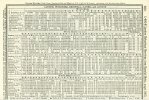
'LNER days' would be anytime after January 1923 but prior to late 1947, yes?
Yes, that's correct. The loop services were actually instigated in GER days and finished just before Nationalisation when LT took over with the electrified loop using the Newbury Park to Leytonstone tunnels.'LNER days' would be anytime after January 1923 but prior to late 1947, yes?
Wow! Thank you very much. Can anybody help with the typical rolling stock used, I imagine that it was somewhere near the bottom of the pile, getting an assortment of stuff that wasn't needed on the GE mainline suburban services? I imagine that gradients weren't really an issue on the loop if the traction was good enough to get up the bank to Bethnal Green junction.
To bear in mind, the times shown for the London termini were not necessarily through trains, and possibly in the case of Fenchurch Street none at all. That's how timetables were done in those times (Bradshaw was the same), showing connections and through trains the same, it was up to the staff at the boarding station to see your ticket and say "change at Ilford". Or possibly not even that if dealing with regulars. Sometimes, particularly to say holiday resort branches, there would be through carriages detached at the junction on peak days, but not otherwise. There were certain sleuth-like ways to work out what was likely, such as looking at the main line timetable for the initial train, seeing if it continued beyond the junction, or not, what the difference in times there was, etc. Bold timetable font for through trains only came with the pioneer 1965 Western Region timetable.I imagine that gradients weren't really an issue on the loop if the traction was good enough to get up the bank to Bethnal Green junction.
I think the Ilford to Woodford loop, pre-WW2, may have been treated as more of a local service. Until well into the 1930s it was mostly open fields. The huge London suburban 1930s housebuilding boom led to it, and also stations on the GEML served by local buses from the area, being completely overwhelmed, and the Central Line plans.
Last edited:
The timetable shows both Liverpool St and Fenchurch St as London destinations. At first I thought of splitting trains at, maybe Stratford, but given that the GE & LNER commuter operation was one of the busiest in the World, realised that they were connections. It also seems that the service was tailored to meet the specific needs of 'City' commuters, - the 8.04 am from Fairlop skipped Ilford and arrived 26 mins later at Liverpool St, which compared with the current Lizzy time from Seven Kings of 25 mins with 1 extra stop (Whitechapel), and an exclusive track, suggests a special commuter train for Fairlop loop passengers.* There is also a shuttle mentioned at the top of the table leaving Newbury Park at 08:16am which would provide service for local commuters to Ilford.To bear in mind, the times shown for the London termini were not necessarily through trains, and possibly in the case of Fenchurch Street none at all. That's how timetables were done in those times (Bradshaw was the same), showing connections and through trains the same, it was up to the staff at the boarding station to see your ticket and say "change at Ilford". Or possibly not even that if dealing with regulars. Sometimes, particularly to say holiday resort branches, there would be through carriages detached at the junction on peak days, but not otherwise. There were certain sleuth-like ways to work out what was likely, such as looking at the main line timetable for the initial train, seeing if it continued beyond the junction, or not, what the difference in times there was, etc. Bold timetable font for through trains only came with the pioneer 1965 Western Region timetable.
I think the Ilford to Woodford loop, pre-WW2, may have been treated as more of a local service. Until well into the 1930s it was mostly open fields. The huge London suburban 1930s housebuilding boom led to it, and also stations on the GEML served by local buses from the area, being completely overwhelmed, and the Central Line plans.
The whole issue came up during me explaining to younger members of the family that getting from Hainault/Fairlop to central London was a lot slower in the 1930s and 1940s than today. One relative put two and two together making five, saying that Fairlop station opened in 1907 and the Central line opened in 1900, so the journey was on an old Central tube train much the same as now. I knew this to be wrong so was looking for timetable and train consist info to show just what it was like from the 'loop' before the tube tunnels were bored (and used) in 1948.
There doesn't seem to be any pictures of trains operating on the loop but I am presuming that the consist was an N7 pulling up to 8 non-corridor compartment coaches, maybe quad or quint-art stock.
* It may also be a consequence of operational difficulties accessing the up slow line and then stopping at Ilford, - delaying a faster service from further down the main line.
Last edited:
contrex
Established Member
I have always known that part of the Central Line as the 'Hainault loop', but I just found out that 'Fairlop loop' was its first name when opened in 1903. Every day's a schoolday.
It was originally a speculative project by the GER encourage housing development of the outer limits of built-up London further into Essex. At the turn of the century, the GER mainline was successfully serving the corridor of towns extending eastwards from Stratford (now the A12), and on a smaller scale the Woodford-Loughton and Epping corridor (now the A11) in a more northerly direction. The idea was to create a line linking those two that covered the northern parts of the Borough of Ilford and Chigwell village. At that time the only substantial settlement north of Ilford town was Barkingside. Fairlop station was about the midpoint of the line, thus it became the name of the loop. Hainault was some way along a country lane (new North Road) and there were little or no houses north of Barkingside High Street. Take a look at maps dated 1902-1923 on the National Library of Scotland website that shows the area there devoid of any development. Hainault station was closed in 1908 and reopened 22 years later in 1930.I have always known that part of the Central Line as the 'Hainault loop', but I just found out that 'Fairlop loop' was its first name when opened in 1903. Every day's a schoolday.
By 1930, development had progressed up Fencepiece Road (A123) and towards Hainault station. The LPTB (then LT) New Works programme included electrifying the loop whilst extending the Central line Eastwards and Hainault was chosen as the London County Council was planning (and has built) a large overspill estate there. Thus LT/TfL has always referred to it as the 'Hainault Loop'.
Hope that explains.
ChiefPlanner
Established Member
As ever - the magesterial work on "London's Local Railways" by the late Alan A Jackson has some useful comments on this - particularly the growth north of Ilford towards Gants Hill , (and beyond) - and ot course the mass construction of cheaper suburban housing in much of the area / London generally.
I had the very great pleasure of meeting him in 1985 via a friend - absolute gentleman (he worked for HM Treasury) - and I got him so sign my copy. Much treasured.
"Semi- detached London" is another one of his outputs. A lifetimes interest and passion. Both presumably available from the usual secondhand sources.
== Doublepost prevention - post automatically merged: ==
About £45 for "Semi-detached London" - in my view worth every penny. The second edition is quite superb.........
I had the very great pleasure of meeting him in 1985 via a friend - absolute gentleman (he worked for HM Treasury) - and I got him so sign my copy. Much treasured.
"Semi- detached London" is another one of his outputs. A lifetimes interest and passion. Both presumably available from the usual secondhand sources.
== Doublepost prevention - post automatically merged: ==
About £45 for "Semi-detached London" - in my view worth every penny. The second edition is quite superb.........
Last edited:
At which time Stratford was a part of West Ham, Essex.At the turn of the century, the GER mainline was successfully serving the corridor of towns extending eastwards from Stratford

Bevan Price
Established Member
- Joined
- 22 Apr 2010
- Messages
- 8,334
Looking through the RCTS History of LNER locos, steam classes that worked London (Liverpool Street) area local services as well as N7 0-6-2T were J67/J69 0-6-0T, and F4-F7 2-4-2T. I think the L1 2-6-4T only arrived after the Fairlop line had been electrified. Whilst withdrawal of 2-4-2T started in the 1920s, quite a lot survived well into the 1950s.
4-wheel passenger stock survived into the 1920s. In later years, some articulated stock was used: Gresley produced 5 and 4 coach versions - not clear to me if both were used at Liverpool Street. Until normal circumstances, all trains would have been non-corridor compartment stock.
(The RCTS books show mainly photos just of the locos; only a few include passenger trains, none of the Fairlop line.; )
4-wheel passenger stock survived into the 1920s. In later years, some articulated stock was used: Gresley produced 5 and 4 coach versions - not clear to me if both were used at Liverpool Street. Until normal circumstances, all trains would have been non-corridor compartment stock.
(The RCTS books show mainly photos just of the locos; only a few include passenger trains, none of the Fairlop line.; )
Yes that which was east of the Lea. It's really strange hearing Harold Hill being described as in London now.At which time Stratford was a part of West Ham, Essex.

THC
Member
West Ham, like its neighbour East Ham, was a county borough, so in effect the same as a unitary local authority today. In other words, while it may have been part of ceremonial Essex, it was not administered as such.At which time Stratford was a part of West Ham, Essex.
THC
As a child, I did actually venture from Liverpool St to Chingford before it was electrified. I think it must have been in those Gresley suburban coaches, and it was drawn by a N7.Looking through the RCTS History of LNER locos, steam classes that worked London (Liverpool Street) area local services as well as N7 0-6-2T were J67/J69 0-6-0T, and F4-F7 2-4-2T. I think the L1 2-6-4T only arrived after the Fairlop line had been electrified. Whilst withdrawal of 2-4-2T started in the 1920s, quite a lot survived well into the 1950s.
4-wheel passenger stock survived into the 1920s. In later years, some articulated stock was used: Gresley produced 5 and 4 coach versions - not clear to me if both were used at Liverpool Street. Until normal circumstances, all trains would have been non-corridor compartment stock.
(The RCTS books show mainly photos just of the locos; only a few include passenger trains, none of the Fairlop line.; )
Cricketer8for9
Member
- Joined
- 11 Jan 2015
- Messages
- 970
Adding complete agreement re both books.As ever - the magesterial work on "London's Local Railways" by the late Alan A Jackson has some useful comments on this - particularly the growth north of Ilford towards Gants Hill , (and beyond) - and ot course the mass construction of cheaper suburban housing in much of the area / London generally.
I had the very great pleasure of meeting him in 1985 via a friend - absolute gentleman (he worked for HM Treasury) - and I got him so sign my copy. Much treasured.
"Semi- detached London" is another one of his outputs. A lifetimes interest and passion. Both presumably available from the usual secondhand sources.
== Doublepost prevention - post automatically merged: ==
About £45 for "Semi-detached London" - in my view worth every penny. The second edition is quite superb.........
My understanding is that the Quadarts (4 coach) were for the GN section, and Quintarts for the GE.Looking through the RCTS History of LNER locos, steam classes that worked London (Liverpool Street) area local services as well as N7 0-6-2T were J67/J69 0-6-0T, and F4-F7 2-4-2T. I think the L1 2-6-4T only arrived after the Fairlop line had been electrified. Whilst withdrawal of 2-4-2T started in the 1920s, quite a lot survived well into the 1950s.
4-wheel passenger stock survived into the 1920s. In later years, some articulated stock was used: Gresley produced 5 and 4 coach versions - not clear to me if both were used at Liverpool Street. Until normal circumstances, all trains would have been non-corridor compartment stock.
(The RCTS books show mainly photos just of the locos; only a few include passenger trains, none of the Fairlop line.; )
Also that the GE regarded the Fairlop loop, and the line via Woodford to Epping/Ongar as 'up-market' - they did not (or certainly resisted) offering workmen's fares on them: whether that made any difference to the quality of stock provided, I've no idea. But IIRC the GE suburban lines were late in abolishing second class (don't recall when it did go).

Sprinter107
Member
- Joined
- 26 Mar 2019
- Messages
- 1,097
So passengers who used those trains to travel to Ilford would've been left without a service after it was converted to the Underground network I take it. It mustve have inconvenienced passengers.
I've ordered it from the local library.Adding complete agreement re both books.
Not really, by 1948, there were regular trolleybuses from the Fairlop (northern) end of Barkingside High St to Barking via Ilford, plus regular buses - the 150 from Chigwell Row via Hainault Station to Ilford Station, the 26 from and to the same as the 150 but via the Bald Hind, the 167 from Loughton/Debden, the 129 from Clayhall Broadway to Ilford Station, and the 62 from Little Heath, via Whalebone Lane and Becontree to Gants Hill. Given that very few people lived near Fairlop Station, it is likely that the door to door journey time by bus was similar to the LNER direct services.So passengers who used those trains to travel to Ilford would've been left without a service after it was converted to the Underground network I take it. It mustve have inconvenienced passengers.
Last edited:
There were a very large number of fundamentally "north-south" bus services from areas north of the GEML to its stations, and to Ilford, Stratford and Barking. In fact it was the overwhelming of these bus connections by passenger numbers, particularly outside the GEML stations in the evening peak, that was one of the drivers of the Underground plan. This was at a time when the bus fare onwards might be just say 2 pence. And that was the OLD 2 pence!So passengers who used those trains to travel to Ilford would've been left without a service after it was converted to the Underground network I take it. It mustve have inconvenienced passengers.
My memories of local travel in Ilford only go back to the early - 50s and the Tube was a very popular way to get to Stratford and beyond. Travel to Ilford (centre) was by bus to York Road, or trolley (691) to Ley St or Ilford Broadway. The half fare to Gants Hill from the Maypole B'side was 1d.There were a very large number of fundamentally "north-south" bus services from areas north of the GEML to its stations, and to Ilford, Stratford and Barking. In fact it was the overwhelming of these bus connections by passenger numbers, particularly outside the GEML stations in the evening peak, that was one of the drivers of the Underground plan. This was at a time when the bus fare onwards might be just say 2 pence. And that was the OLD 2 pence!
Other memories included an invite to the signal box at Newbury Park. A neighbour worked there and I was invited to see how the box and signals worked. A few years later, there was a non-fatal 'one under' and I believe it was him who got under the train so that it could be driven away. His name was Jim Kenton.
It certainly came earlier than that for things like summary tables - a very quick check shows the summary tables for the 1950 ER timetable have it.Bold timetable font for through trains only came with the pioneer 1965 Western Region timetable.
Whilst I was at secondary school in ther early '60s, I usually carried a local timetable that had bus, train and tube times for the London 'E' districts and adjoining Essex areas. It was the size of a small paperback book and about 10mm thick.It certainly came earlier than that for things like summary tables - a very quick check shows the summary tables for the 1950 ER timetable have it.
Timetables were there for the Shenfield service, The Southend service and mainline Clacton, Lowestoft and Norwich/Yarmouth trains. The through services on the latter were in bold, i.e. to get from Ilford to Chelmsford, the normal (off-peak) route was the Southend xx:58 train to Shenfield, to meet the xx:23 Clacton/Walton train. This was shown boldened.
The timetable was an LT/BR joint publication but very useful to carry in a pocket/bag.
I bought the Romford edition regularly, covering the area out to Tilbury and Brentwood. I thought they were only published for areas served by the Country division of LT. The great advantage was that they covered all buses and coaches in the area.Whilst I was at secondary school in ther early '60s, I usually carried a local timetable that had bus, train and tube times for the London 'E' districts and adjoining Essex areas. It was the size of a small paperback book and about 10mm thick.
Timetables were there for the Shenfield service, The Southend service and mainline Clacton, Lowestoft and Norwich/Yarmouth trains. The through services on the latter were in bold, i.e. to get from Ilford to Chelmsford, the normal (off-peak) route was the Southend xx:58 train to Shenfield, to meet the xx:23 Clacton/Walton train. This was shown boldened.
The timetable was an LT/BR joint publication but very useful to carry in a pocket/bag.

izvor
Member
Correct.I thought they were only published for areas served by the Country division of LT.
Yes, and for Central (red) services they often contained full timetables, while the Central area timetable only showed frequencies.The great advantage was that they covered all buses and coaches in the area.
They were popular. I remember seeing them on sale in Brighton, and (I think, pretty sure) Southend in the 1960s, presumably as they showed the train services to London in the clearest form. Local newsagents stocked them, my parents always bought the latest copy for a few pence.
I went to High school in Chigwell using the routes 10 and 167, so maybe they were sold locally as the LT Country buses weren't far away, - (Epping and Brentwood). Up until 1970, LT Green Line services were operated by the Country Bus group so the local timetable that I had included the A11 corridor services, - 718 & 720, as well as the A12 corridor routes, (from Romford RE Garage) the 721,722 & 726. I cant, remember whether it had the A13 corridor route, the 723.Correct.
Yes, and for Central (red) services they often contained full timetables, while the Central area timetable only showed frequencies.
They were popular. I remember seeing them on sale in Brighton, and (I think, pretty sure) Southend in the 1960s, presumably as they showed the train services to London in the clearest form. Local newsagents stocked them, my parents always bought the latest copy for a few pence.
izvor
Member
The Romford area book also covered Brentwood, Grays and Tilbury so included the 723 group. My 1965 copy runs to 288 pages and was price one shilling (5p). Presumably - if my memory is correct - this would be the one on sale in Southend - my vague memory is of seeing it on sale at the kiosk at the top of Pier Hill, along with local tide tables, the Southend & District bus timetable, postcards etc., but I could be mistaken.I went to High school in Chigwell using the routes 10 and 167, so maybe they were sold locally as the LT Country buses weren't far away, - (Epping and Brentwood). Up until 1970, LT Green Line services were operated by the Country Bus group so the local timetable that I had included the A11 corridor services, - 718 & 720, as well as the A12 corridor routes, (from Romford RE Garage) the 721,722 & 726. I cant, remember whether it had the A13 corridor route, the 723.
Another, definite memory was seeing the LT local books for sale at the BR enquiry office at Victoria, on display behind the counter. When I asked for one I was asked which one I wanted so I pointed at one at random. I still have it, Sevenoaks & District, January 1967. Aged ten I was already a collector! But looking back it seems remarkable that the LT Country Area publicity team were so proactive in marketing these books to sales outlets far and wide.
Back to the OP's topic, here is a timetable for the Fairlop loop for October 1945 (LNER timetable booklet). Note the use of bold type for through services.
Attachments
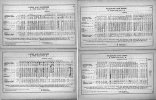
First, thanks for the 1945 timetable pages. It's interesting to see the differences between the 1939 version posted upthread by @Taunton . It seems that there was a general tightening up of journey times after the war, (maybe there was an improvement in the motive power, e.g. a mix of F3/4s upgraded to N7s to better keep headways from Ilford to Liverpool St. I also think that all the four-wheeled coaches were scrapped by '45.The Romford area book also covered Brentwood, Grays and Tilbury so included the 723 group. My 1965 copy runs to 288 pages and was price one shilling (5p). Presumably - if my memory is correct - this would be the one on sale in Southend - my vague memory is of seeing it on sale at the kiosk at the top of Pier Hill, along with local tide tables, the Southend & District bus timetable, postcards etc., but I could be mistaken.
Another, definite memory was seeing the LT local books for sale at the BR enquiry office at Victoria, on display behind the counter. When I asked for one I was asked which one I wanted so I pointed at one at random. I still have it, Sevenoaks & District, January 1967. Aged ten I was already a collector! But looking back it seems remarkable that the LT Country Area publicity team were so proactive in marketing these books to sales outlets far and wide.
Back to the OP's topic, here is a timetable for the Fairlop loop for October 1945 (LNER timetable booklet). Note the use of bold type for through services.
As for the local combined timetables in the '60s, the versions that I remember certainly included the Eastern National 151/251 serves Wood Green to Westcliff. Having checked on the sct61.org.uk pages, I have also answered a longstanding question in my mind as to why my parent's generation called those routes , the 'city buses'. buses on those routes were run by the 'City' bus company from 1928 to 1952.
Sprinter107
Member
- Joined
- 26 Mar 2019
- Messages
- 1,097
I was reading in that right up until 1970 there was a limited dmu service between Liverpool Street and Epping. Did these dmus also go to Hainault via Woodford, or did they only go to Epping.
Ive looked for photos of them, but there doesn't seem to be any. I suppose if it was a limited service there may not be.
Ive looked for photos of them, but there doesn't seem to be any. I suppose if it was a limited service there may not be.
There was, but it was only a couple of round trips early on Sunday morning before the Underground services started, which possibly accounts for lack of photographs as they were before daylight for half the year. Not apparent, given that the Underground commonly had longer operating times than the Railway, why it was run this way.I was reading in that right up until 1970 there was a limited dmu service between Liverpool Street and Epping. Did these dmus also go to Hainault via Woodford, or did they only go to Epping.
More mainstream hours were the goods services, principally household coal to station yard merchants, which continued to the same time, with diesel locos for the last years. I believe all traction running over the line had to have tripcocks.
- Status
- Not open for further replies.