Given that ADL did not have a standard EV single decker for most of the year, I am surprised that ADL were still top.Had a look through the new registration data for 2025 on Bus Lists On the Web (BLOTW). Single and double deck registrations (ie excluding coaches and minibuses) seem to be well up in 2025. However, a note of caution is that I imagine may of the electrics in particular may get reregistered if there entry into service is delayed. ADL and Wright are still neck and neck as the largest manufacturers but Yutong have a big increase in market share.
ADL Wright Volvo Yutong BYD Other TOTAL

-
Our new ticketing site is now live! Using either this or the original site (both powered by TrainSplit) helps support the running of the forum with every ticket purchase! Find out more and ask any questions/give us feedback in this thread!
You are using an out of date browser. It may not display this or other websites correctly.
You should upgrade or use an alternative browser.
You should upgrade or use an alternative browser.
Bus Manufacturer News & Discussion
- Thread starter Jordan Adam
- Start date
Sponsor Post - registered members do not see these adverts; click here to register, or click here to log in
R
RailUK Forums
Is there a timescale for the EV200? I thought it was meant to be ready to market by the end of last year…Given that ADL did not have a standard EV single decker for most of the year, I am surprised that ADL were still top.
stevieinselby
Established Member
ADL seem to have by default become the go-to manufacturer for operators wanting diesels, perhaps because they haven't been going all-out on electrics. Go-Ahead alone have bought something like 140 E400MMCs in the last couple of years, and Bee Network have bought over 300 E200MMCs and E400MMCs.Given that ADL did not have a standard EV single decker for most of the year, I am surprised that ADL were still top.
Dwarfer1979
Member
In many ways they always have been but currently they are the only supplier with a proper full diesel range and pushing it. With the closure of Optare/Switch removing the Solo ADL now are the only active supplier in that category with the short E200MMC (and that is a big segment) and with Volvo not supplying a 2-axle decker currently the E400MMC is almost the only option there (the diesel Streetdeck is still available but struggles to get over the reputation accrued with some issues around earlier versions). It is only the main single-deck market (10.8m-12m) where there is significant competition from Volvo with the B8 EvoRa.ADL seem to have by default become the go-to manufacturer for operators wanting diesels, perhaps because they haven't been going all-out on electrics. Go-Ahead alone have bought something like 140 E400MMCs in the last couple of years, and Bee Network have bought over 300 E200MMCs and E400MMCs.
Also interesting that despite the ADL complaints about struggling against Chinese competition the two manufacturers from there still aren't selling as many combined as either of the two UK manufacturers (and with Wright being mostly electric and entirely UK assembly, ADL are using Chinese supply for single-deck body shells initially reportedly, a decent like for like comparison)Had a look through the new registration data for 2025 on Bus Lists On the Web (BLOTW). Single and double deck registrations (ie excluding coaches and minibuses) seem to be well up in 2025. However, a note of caution is that I imagine may of the electrics in particular may get reregistered if there entry into service is delayed. ADL and Wright are still neck and neck as the largest manufacturers but Yutong have a big increase in market share.
ADL Wright Volvo Yutong BYD Other TOTAL
If the analysis compared the first 6 months of 2025 with the last 6 months, it may be a different picture. I just sense that BYD double deckers, and to some extent Yutong double deckers, flooded in during the last 6 months of the year.Also interesting that despite the ADL complaints about struggling against Chinese competition the two manufacturers from there still aren't selling as many combined as either of the two UK manufacturers (and with Wright being mostly electric and entirely UK assembly,

joieman
Member
But Wrightbus have already gained several orders for Streetdecks with the new Cummins engine, which is a more equal competitor in a market with few options than the original Mercedes-Benz four-cylinder engine.ADL seem to have by default become the go-to manufacturer for operators wanting diesels, perhaps because they haven't been going all-out on electrics. Go-Ahead alone have bought something like 140 E400MMCs in the last couple of years, and Bee Network have bought over 300 E200MMCs and E400MMCs.
For instance, as we probably know, Nottingham City Transport's order for six of the new Cummins-engined Streetdecks is their first order from Wrightbus in 23 years.

markymark2000
On Moderation
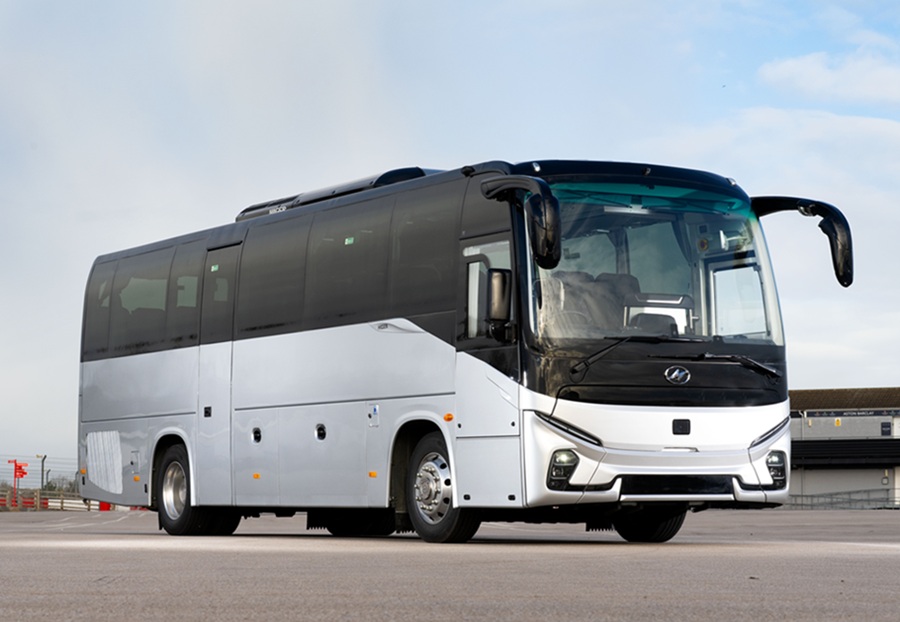
Harris (who are importing the Higer vehicles) has chosen Worksop as it's HQ for the UK. If they come in fighting, it'll be interesting to see how many orders they get.
 www.route-one.net
Harris Bus and Coach UK selects Worksop to host headquarters - routeone
Harris Bus and Coach UK has selected Worksop for the location of its headquarters, with those facilities to open during March.
www.route-one.net

Hyebone
Member
I for one hope to see more Scania Fencers hit the roads as a viable alternative to the B8 Evora.Harris (who are importing the Higer vehicles) has chosen Worksop as it's HQ for the UK. If they come in fighting, it'll be interesting to see how many orders they get.
Harris Bus and Coach UK selects Worksop to host headquarters - routeone
Harris Bus and Coach UK has selected Worksop for the location of its headquarters, with those facilities to open during March.
47550
Member
In many ways they always have been but currently they are the only supplier with a proper full diesel range and pushing it. With the closure of Optare/Switch removing the Solo ADL now are the only active supplier in that category with the short E200MMC (and that is a big segment) and with Volvo not supplying a 2-axle decker currently the E400MMC is almost the only option there (the diesel Streetdeck is still available but struggles to get over the reputation accrued with some issues around earlier versions). It is only the main single-deck market (10.8m-12m) where there is significant competition from Volvo with the B8 EvoRa.
Also interesting that despite the ADL complaints about struggling against Chinese competition the two manufacturers from there still aren't selling as many combined as either of the two UK manufacturers (and with Wright being mostly electric and entirely UK assembly, ADL are using Chinese supply for single-deck body shells initially reportedly, a decent like for like comparison)
Yes ADL and Wright still top in terms of volume but they both have reduced market share....to Yutong.
2023 | 2024 | 2025 | |
| ADL | 27% | 34% | 29% |
| Wright | 25% | 30% | 27% |
| Volvo | 13% | 14% | 16% |
| Yutong | 7% | 4% | 13% |
| BYD | 23% | 13% | 12% |
| Other | 4% | 6% | 3% |
== Doublepost prevention - post automatically merged: ==
In the coach market, Yutong and Mercedes Benz neck and neck with a big increase for Temsa and Volvo losing market share.
2023 | 2024 | 2025 | |
| Yutong | 110 | 221 | 326 |
| Mercedes Benz | 297 | 295 | 325 |
| Scania | 163 | 244 | 258 |
| Temsa | 74 | 101 | 183 |
| Irizar | 65 | 94 | 92 |
| Volvo | 139 | 142 | 78 |
| Auwaerter | 42 | 63 | 70 |
| Others | 201 | 219 | 159 |
| TOTAL | 1091 | 1379 | 1491 |

Mikey C
Established Member
- Joined
- 11 Feb 2013
- Messages
- 8,285
Also noteworthy in the bus market, is the total absence of European manufacturers as major players, other than Volvo, and even they have Egyptian MCV bodywork. The likes of Mercedes, Scania and VDL have all given up or been forced out of the UK market.Yes ADL and Wright still top in terms of volume but they both have reduced market share....to Yutong.
ADL Wright Volvo Yutong BYD Other
== Doublepost prevention - post automatically merged: ==
In the coach market, Yutong and Mercedes Benz neck and neck with a big increase for Temsa and Volvo losing market share.
Yutong Mercedes Benz Scania Temsa Irizar Volvo Auwaerter Others TOTAL
I can see BYD's share shooting up, as a LOT of the current deliveries to London operators are BYDs, both single and double deckers.
I think you will find unless the Government takes any action that Yutong and BYD will occupy 2 of the top 3 players in terms of market share within the next 3 years.
== Doublepost prevention - post automatically merged: ==
== Doublepost prevention - post automatically merged: ==
If Lothian weren't so wedded to Volvo and the B8RLE doing so well as a single decker chassis then you could imagine Volvo exiting as well.Also noteworthy in the bus market, is the total absence of European manufacturers as major players, other than Volvo, and even they have Egyptian MCV bodywork. The likes of Mercedes, Scania and VDL have all given up or been forced out of the UK market.
I can see BYD's share shooting up, as a LOT of the current deliveries to London operators are BYDs, both single and double deckers.
I'm not so sure, the BZL is doing well. The B5LH did well a few years ago, but the market for hybrid buses has pretty much been replaced by fully electric.If Lothian weren't so wedded to Volvo and the B8RLE doing so well as a single decker chassis then you could imagine Volvo exiting as well.
Cost and weight, I suppose. Once Scania discontinued the OmniCity and OmniDekka, they were dependent on ADL for bodying; similarly, VDL was dependent on Wrightbus. Once Wrightbus & ADL offered lighterweight integral models it was inevitable that the separate-chassis would lose market share.The likes of Mercedes, Scania and VDL have all given up or been forced out of the UK market.
2025 Yutong Mercedes Benz Scania Temsa Irizar Volvo Auwaerter Others TOTAL
ADL's continued neglect of Plaxton has had a pretty big effect.
Voyager 2953
Member
But Wrightbus have already gained several orders for Streetdecks with the new Cummins engine, which is a more equal competitor in a market with few options than the original Mercedes-Benz four-cylinder engine.
For instance, as we probably know, Nottingham City Transport's order for six of the new Cummins-engined Streetdecks is their first order from Wrightbus in 23 years.
GNE have about 25 on order, TFW have 6 and Bus Vannin have taken delivery of 6 also.

Worm
Member
Do Wrightbus build their own chassis now? If I recall correctly they used to use VDL, but someone do correct me if I'm wrong.VDL was dependent on Wrightbus. Once Wrightbus & ADL offered lighterweight integral models it was inevitable that the separate-chassis would lose market share.
Dwarfer1979
Member
The issue is we drive on the opposite side of the road. The UK market has always been slightly niche because British passengers prefer a seat so European standard models designed for large standing loads have struggled to be mainstream and the engineering costs of moving the drivers seat means we only ever got selected products from selected manufacturers and with the move to zero emission the market is even more fragmented and so potential sales are equally disparate.Cost and weight, I suppose. Once Scania discontinued the OmniCity and OmniDekka, they were dependent on ADL for bodying; similarly, VDL was dependent on Wrightbus. Once Wrightbus & ADL offered lighterweight integral models it was inevitable that the separate-chassis would lose market share.
Scania has been slow to electrify, even in Europe, and have only just launched their main models in that segment there - before they launched the Fencer they hadn't had a RHD model for several years and even after the initial launch of the Fencer the first bus was stated to be different from the likely final version mechanically.
Mercedes have always been niche on the bus side, they are expensive and heavyweight but designed for urban standees whereas the UK prefers buying heavyweight models for interurban work.
VDL gave up the UK bus market about a decade ago - I think their last buses for the UK were 65-plates but had probably been built for stock much earlier. For over a decade they had been the main competitor for ADL in the light/medium weight market so that has always been there, but the launch of the Streetlite probably did undermine them both by taking a major body supplier out and taking sales, and they were fairly reliant on Arriva fleet orders which began drying up around the time VDL stopped selling. Initially the SB120 & SB200 were built in LHD for Europe but I don't think that lasted very long so by the end they were a unique UK product and I just don't think VDL saw there being sufficient volume to justify engineering a specialist RHD model for Euro VI when they could concentrate the development work on much higher volume LHD models.
MAN also gave up on the UK bus market about a decade ago it seems, they had a last try with Gas buses and built a stock batch of midibuses that all ended up in Wales but their reputation for fragility (or over complexity - the engine cooling was susceptible to damage if not cleaned correctly which wasn't an issue in Europe where most maintenance is done by manufacturers under contract but in the UK it is done by the operator in house whose engineers were sometimes a little rough in cleaning out raidators and the like) in normal UK maintenance conditions has never been got over.
Volvo has been caught in a whirlwind of bad luck on the coach side, some of its own making and some of outside forces but it has all combined to leave them with limited mainstream offerings. ADL paused Plaxton production (even then probably permanently and it certainly looks that way now) and I think around the same time VDL decided to concentrate on their own complete models (losing the Jonckheere option in the UK) and shortly after Volvo announced they were closing their own coachbuilding plant and transferring production of those models to Sunsundegui (who were also one of their big coachbuilders for the UK) who appear to have overstretched themselves in trying to prepare for this deal and then went bust. This left Volvo with just the newer but slightly niche MCV EvoTor for normal coach sales, whilst it is a perfectly adequate multi-purpose coach it isn't the prestige model that a lot of Volvo sales had been, and whatever was going to National Express with Caetano bodies for the UK market. They have done an agreement with UNVI to supply a coach which should sit above the EvoTor in the range which should appear this year and reportedly they are going to be supplying integral coaches (the 9700 & 9900 models previously sold) from Mexico once they move production there it is possible that won't be until next year by which time they may have lost many of their customers to suppliers who can sell coaches now.
One of the other aspects driving non-traditional coach suppliers currently is that the mainstream big European manufacturers are sold out, I did see someone suggest that Mercedes was sold out for the next 2 years and I think the others are pretty much sold out for 2026 already at least. This helps sales from non-European manufacturers who can still give delivery slots in 2026, it has certainly helped Yutong build sales and it may well help Wrightbus (whose newly launched Contour is a badge engineered Chinese model) & probably help boost sales of the Higher coaches just launched and supplied via Irish dealer Harris.
markymark2000
On Moderation
There are often manufacturers who are happy to make buses for Malta though so I wonder why these haven't entered the UK market. Okotar for example has a pretty extensive fleet in Malta but until Jersey, hasn't done anything in the UK. King Long hasn't done any buses for the UK I don't think, only coaches.The issue is we drive on the opposite side of the road. The UK market has always been slightly niche because British passengers prefer a seat so European standard models designed for large standing loads have struggled to be mainstream and the engineering costs of moving the drivers seat means we only ever got selected products from selected manufacturers and with the move to zero emission the market is even more fragmented and so potential sales are equally disparate.
There are also manufacturers in Australia and New Zealand who are already building for right hand drive buses/coaches but, until recently with Custom Denning, have chosen not to cater to the UK market either (and let's be honest Denning only came over here to keep money within the Dunn family). I know there would be costs in transporting the vehicles over here, but the same can be said for all of the Chinese imports. Are the needs of the UK so different to that in New Zealand and Australia?
Any particular reason why? I admit that I have not experienced them yet but I am a big fan of the Evoras and seem to be excellent vehicles in my opinion, so I am curious why you'd like to see an alternative to them.I for one hope to see more Scania Fencers hit the roads as a viable alternative to the B8 Evora.
joieman
Member
The integral Wright Streetdeck replaced the VDL DB300 Wright Gemini 2 in 2014, while the last Volvo-based Wright Gemini 3 was delivered in 2020.Do Wrightbus build their own chassis now? If I recall correctly they used to use VDL, but someone do correct me if I'm wrong.
Dwarfer1979
Member
King Long did import buses into the UK, they have been quite popular with a couple of airport parking operators but didn't take off in the mainstream, until the final importer went bust. Their big issue was repeatedly selecting poor or unreliable importers that destroyed their reputation with operators due to unreliable support and broken relationships.There are often manufacturers who are happy to make buses for Malta though so I wonder why these haven't entered the UK market. Okotar for example has a pretty extensive fleet in Malta but until Jersey, hasn't done anything in the UK. King Long hasn't done any buses for the UK I don't think, only coaches.
There are also manufacturers in Australia and New Zealand who are already building for right hand drive buses/coaches but, until recently with Custom Denning, have chosen not to cater to the UK market either (and let's be honest Denning only came over here to keep money within the Dunn family). I know there would be costs in transporting the vehicles over here, but the same can be said for all of the Chinese imports. Are the needs of the UK so different to that in New Zealand and Australia?
I did wonder at the time why Solaris, who must have gone to some expense in creating a rhd version in an unsuccessful bid to win sales in Malta, didn't try and recover some of that spending by having a stab into the UK market then but possibly the cost of breaking into the market was too high for the potential sales they though they may accrue. There is more to importing a bus (or coach) than just re-engineering it as you have to set up a full support network (someone to do the sales, someone to hold parts and a network of garages to provide engineering support such as warranty work) and this I suspect is a bit of the sticking point - support and the right sales connections has often been what has caused these ventures to fall over (like King Long) and is noted as the reason Yutong has been so successful as Pelican are very good at it. Otokar have talked about importing buses to the UK for a few years, they keep showing them at shows, but it never quite materialises - they have importers for their coaches but they may not want to invest to meet the different expectations of support for bus operators.
I think historically Australian & New Zealand builders were body builders on imported chassis (or at least chassis from suppliers already established in the UK like MAN & Scania) which limits that value to them to cover the high shipping costs. Also different jurisdictions have different emission standards (they may be comparable but not identical) so there may be re-engineering costs whilst the UK has followed Euro regulations so mechanically European suppliers don't need to do more work. Now those builders are moving to integral products (so a greater part of the value is with the Aus/NZ builder and there isn't a chassis builder blocking import to protect established arrangements) and electric models (so no issues around emissions regs) mean that it does become a possibility for these suppliers to enter
There is an element that the UK bus market is a little different to most other countries in one way or another. Due to the more commercial nature of our industry (with a lower proportion of state funding overall) we are more concerned about lower running costs so lighter weight models are increasingly favoured though heavy weights can still find a niche for specific roles or if the price/spec is right. UK bus passengers expect a seat so operators favour models set up for a greater proportion of seating and less standing which can affect major layout factors (think B7L vs B7RLE). Chinese & Turkish manufacturers did struggle adapting their standard specs to the expectations of UK operators with busy looking interiors with too many poles, tip-up seats in strange places (a number of Chinese models had tip-ups by the emergency exit due to layout issues) and to UK eyes old fashioned poorly padded seats (though this is an issue for some European suppliers with more standard products like Mercedes as well) which limit support. It could be argued UK bus operators are quite conservative and stick with suppliers they know until they screw it up or offer something special that others don't. So the market leaders are ADL (long established off the back of the Dennis innovation with the Dart but with a history going back much further), Wrightbus (integral product sales built off earlier body building partnerships & pioneering in low-floor models) & Volvo (a presence in the market established off the back of the Leyland purchase, even if that wasn't their origin it made them the market leaders) being chased by Yutong (pushing electric buses with good range when electric buses were still niche but built a reputation off the competence of their importer) & BYD (off the back of a supply partnership with ADL that got them into many fleets)
It was that the coach side was also slightly different in that there was a lot more personalisation of specification. In Europe there are established quality bands with standard set-up (seat pitch & comfort, toilets etc) which operators choose from but in the UK it was more normal to choose from all options and produce a vehicle to your own specific needs. This seems less the case now, with the decline of those specialist suppliers (both UK based but importers like Van Hool who were more open to personalisation) and extended lead times coach operators have become more open to accepting more restricted standard option choices.
markymark2000
On Moderation
Thank you for that. Very informative and gives a good insight into some of the things going on.
Hopefully something changes as the more variety the better from an enthusiasts perspective, and more competition is better for operators to hopefully get lower prices or other vehicles which may be better suited to their operation.
Hopefully something changes as the more variety the better from an enthusiasts perspective, and more competition is better for operators to hopefully get lower prices or other vehicles which may be better suited to their operation.
Now would be a good time to enter the market then do you think? With the established manufacturers now having long lead times, and operators settling for more stock options. Kind of how Yutong has got so many coaches on the road , they deliver buses in a decent time, and seemingly at a decent price (amongst other things).It was that the coach side was also slightly different in that there was a lot more personalisation of specification. In Europe there are established quality bands with standard set-up (seat pitch & comfort, toilets etc) which operators choose from but in the UK it was more normal to choose from all options and produce a vehicle to your own specific needs. This seems less the case now, with the decline of those specialist suppliers (both UK based but importers like Van Hool who were more open to personalisation) and extended lead times coach operators have become more open to accepting more restricted standard option choices.
And the fact that they can build approx 400 buses and coaches a day.. Kind of how Yutong has got so many coaches on the road , they deliver buses in a decent time, and seemingly at a decent price (amongst other things).
Trainman40083
Established Member
The joys of mass production, and I suspect a high level of standardisation.And the fact that they can build approx 400 buses and coaches a day.

Belfastmarty
Member
Of course King Long have now re-entered the market indirectly through the partnership with Wrightbus, as the Contour coach is a badge engineered King Long product. I assume the attraction of this is they can leverage the Wrightbus support network and hence get over the issues previously encountered. It remains to be seen how successful this will be.King Long did import buses into the UK, they have been quite popular with a couple of airport parking operators but didn't take off in the mainstream, until the final importer went bust. Their big issue was repeatedly selecting poor or unreliable importers that destroyed their reputation with operators due to unreliable support and broken relationships.
I thought that this was only a short-term arrangement until such time as Wright have their own-designed product ready for the market.Of course King Long have now re-entered the market indirectly through the partnership with Wrightbus, as the Contour coach is a badge engineered King Long product. I assume the attraction of this is they can leverage the Wrightbus support network and hence get over the issues previously encountered. It remains to be seen how successful this will be.
Tom Gallacher
Member
I can comment as someone who is a supplier of parts to the bus companies. The problem is not (in general) that the companies they choose to supply their parts are poor or unreliable. They place such high stock level demands on the stock volume you need to keep that it is an extremely significant investment to make. Whilst the coaches are still in warranty the UK supplier is supplying parts that they have paid for (to keep the customers happy) but are not getting paid for these parts. All they will get is a replacement part supplied FOC.King Long did import buses into the UK, they have been quite popular with a couple of airport parking operators but didn't take off in the mainstream, until the final importer went bust. Their big issue was repeatedly selecting poor or unreliable importers that destroyed their reputation with operators due to unreliable support and broken relationships.
In essence the first few years of any new chassis demands a commitment from the manufacturer that they seem unwilling to provide. They expect the UK agent to finance their (in this respect King Long) operation.
If any new entrant into the chassis market seriously wants to get sales then, in my opinion, they should either, open their own parts centre with all the costs that this entails, or provide a level of stock on an imprest basis that covers such things as warranty claims.
The financial responsibility for keeping the coaches on the road shouldn't be solely the preserve of the parts supplier.
But how many parts are actually unique to each coach builder? The engines tend to be Cummins, gearbox ZF etc, axles are probably bought in, so how many parts are actually unique? And those that are unique, may be relatively cheaper, if you assume that engines and gearboxes are the expensive bits.I can comment as someone who is a supplier of parts to the bus companies. The problem is not (in general) that the companies they choose to supply their parts are poor or unreliable. They place such high stock level demands on the stock volume you need to keep that it is an extremely significant investment to make. Whilst the coaches are still in warranty the UK supplier is supplying parts that they have paid for (to keep the customers happy) but are not getting paid for these parts. All they will get is a replacement part supplied FOC.
In essence the first few years of any new chassis demands a commitment from the manufacturer that they seem unwilling to provide. They expect the UK agent to finance their (in this respect King Long) operation.
If any new entrant into the chassis market seriously wants to get sales then, in my opinion, they should either, open their own parts centre with all the costs that this entails, or provide a level of stock on an imprest basis that covers such things as warranty claims.
The financial responsibility for keeping the coaches on the road shouldn't be solely the preserve of the parts supplier.
Tom Gallacher
Member
It's not the uniqueness of the parts necessarily that's the problem, although that does cause problems especially on the electrical side. The point I'm trying to make is that in order for you to become an "agent" of the chassis manufacturer you normally have to commit to a minimum level of spend with them. Buying "their parts" direct from the OE manufacturer (if you have an account with them) might cost less but you then fill your warehouse with slow moving stock that has been purchased just in order to keep your agency.But how many parts are actually unique to each coach builder? The engines tend to be Cummins, gearbox ZF etc, axles are probably bought in, so how many parts are actually unique? And those that are unique, may be relatively cheaper, if you assume that engines and gearboxes are the expensive bits.
I've been in this business for nearly 30 years and I've lost count of the number of different suppliers who have offered me the opportunity to "become their agent". In every instance they want you to buy a selected list of parts with, payment up front. Sorry, that's not becoming an agent, that's becoming a customer. If I want to be a customer who sells on their wares then I want to be the one who decides what gets purchased and when.
There's a long list of chassis manufacturers who have tried to break into the UK market over the past 50 years. The only ones who have succeeded are those that work in partnership with their agents rather than just seeing them as a conduit to the end user.
Yes, I can understand if you were the agent for Castrosua City, or Iveco Turbocity, you would not want to keep a large stock of front brake calipers!It's not the uniqueness of the parts necessarily that's the problem, although that does cause problems especially on the electrical side. The point I'm trying to make is that in order for you to become an "agent" of the chassis manufacturer you normally have to commit to a minimum level of spend with them. Buying "their parts" direct from the OE manufacturer (if you have an account with them) might cost less but you then fill your warehouse with slow moving stock that has been purchased just in order to keep your agency.
I've been in this business for nearly 30 years and I've lost count of the number of different suppliers who have offered me the opportunity to "become their agent". In every instance they want you to buy a selected list of parts with, payment up front. Sorry, that's not becoming an agent, that's becoming a customer. If I want to be a customer who sells on their wares then I want to be the one who decides what gets purchased and when.
There's a long list of chassis manufacturers who have tried to break into the UK market over the past 50 years. The only ones who have succeeded are those that work in partnership with their agents rather than just seeing them as a conduit to the end user.

(Both were examples of one-off buses in the UK>)
Voyager 2953
Member
The integral Wright Streetdeck replaced the VDL DB300 Wright Gemini 2 in 2014, while the last Volvo-based Wright Gemini 3 was delivered in 2020.
The last Volvo Wright Geminis were delivered in 2022. They are with Sanders of Norfolk.
joieman
Member
I stand corrected - I had trouble finding them on BLOTW. They show up as being new in October 2021.The last Volvo Wright Geminis were delivered in 2022. They are with Sanders of Norfolk.

Alexander Dennis Enviro200EV next-generation makes its debut
Alexander Dennis has shown a first test and development example of its Enviro200EV next-generation battery-electric single-deck bus.
www.route-one.net
Alexander Dennis has shown a first test and development example of its Enviro200EV next-generation battery-electric single-deck bus, with the builder confirming that all production examples will be assembled at its plant in Scarborough.
The first of those customer vehicles are four bound for Go North East. They are 10.9m long, have been completed, and are for delivery to the Go-Ahead Group subsidiary soon.
From there will be built further 10.9m examples ordered by Falcon Buses and by First Bus for its operation in Bath, while in an echo of its work with the next-generation Enviro400EV double-deck, Alexander Dennis also plans to construct a number of maximum-length 11.7m variants that will be supplied to large operators as field trial vehicles.
President and Managing Director Paul Davies notes how getting the new Enviro200EV into service is now the priority. While a handful of prototypes have Chinese involvement in their assembly, news that production vehicles will be built in Scarborough ends the previous possibility that shells could come from China, as is the case for the smaller Enviro100EV.
Collaboration on bids to the third round of the Scottish Zero Emission Bus challenge fund(ScotZEB3) saw Alexander Dennis display the Enviro200EV alongside the Enviro100EV and the Enviro400EV at its Larbert headquarters on 20 and 21 January.
That saw representatives of operators and the wider bus industry in Scotland visit to learn more about and sample the range. Paul notes how the builder is confident that orders for its products will be forthcoming from ScotZEB3, to which up to £45 million has been put by the Scottish Government.
Transport Scotland has relaxed the consortium-only position of the previous round to one where operators may also bid on a standalone basis, and the manufacturer is engaging with partners towards developing bids under both of those conditions.
Commercial and Legal Director Julie Thomson notes how ScotZEB3 requires significant detail, but she adds that the builder is used to such a structure via work with Combined Authorities in England that are procuring buses for franchised networks.
Underlining previous comments from Engineering Director Chris Gall, Paul explains that key to the Enviro200EV is how it builds on the long-established Enviro200 diesel model’s approach of being a highly accessible bus with an attractive passenger environment.
He is forthright in a view that certain of the saloon layout niceties delivered in modern diesel buses have been sacrificed in some electrics in the name of accommodating batteries and other components. The latter vehicles have been “commoditised” to an extent, Paul believes. “We are unwinding some of that.”
Use of 19.5-inch rims and maximising the wheelbase are important contributors to such work in the Enviro200EV, he continues. The smaller wheels are enabled by a lightweight approach, and they reduce intrusion into the passenger area.
As a result, the raised rear section is not as pronounced as on some full-weight diesel or electric buses. Even at its highest, a person of 6ft can stand straight there without touching the ceiling, while there are no modesty issues relating to position of raised seats and the window line.
“We are two tonnes lighter than anyone else,” Paul says of the full-length Enviro200EV. The bus will be available in provincial and Transport for London (TfL) specifications at 9.9m, 10.9m and 11.7m, while a TfL-only variant at 10.4m rounds off the new product.
A further benefit is the extent of seating that can be reached without encountering a step. The 11.7m test and development bus, which has two wheelchair user bays, gives 16 forward facing positions in the low-floor area. Two more are above the offside front wheel on a platform, while each wheelchair user bay has three tip-ups.
Maximum total seating capacity in the 11.7m variant is 41 with two wheelchair user spaces and 43 with one. The development vehicle uses the Lazzerini Practico seat, where forward-facing positions are provided with a console that has a device holder, USB charging point, and stop request button.
Drive is taken via the Vehicle Electrical Drive System (VEDS) from Driventic. It is a rebadge of the established Voith Electrical Drive System following carve-out of Driventic from Voith.
Cab commonality across the Enviro100EV, Enviro200EV and Enviro400EV has been a focus for Alexander Dennis
Buyers can select from medium-duty or heavy-duty iterations of VEDS. Paul believes that the latter will have merit where higher average speeds are needed or potential future redeployment is in mind, although it is less beneficial in smaller Enviro200EV variants.
400kWh of energy storage from CATL using lithium iron phosphate chemistry is standard. It is split between the roof and what would otherwise be the engine bay.
That is a difference from the Enviro100EV and Enviro400EV, which use batteries from Impact Power; packaging in those buses requires some energy storage to sit within the chassis, to which the Impact Power batteries are well suited, but that is not the case for the newcomer.
Realistic energy consumption figures for the Enviro200EV have not yet been generated, but Paul points to excellent performance of the Enviro400EV in Zemo Partnership testing as an indicator of what is expected.
Lightweight construction and the efficient VEDS driveline are contributors to that optimism, but in an indication of the depths of consideration around overall energy usage, he adds that a lower overall height than competitors by up to 20cm means less interior volume to heat or cool, giving a further power consumption influence.
Lightweighting has relevance in other areas, the Alexander Dennis chief continues. Resulting lower energy usage means that when charged over a defined time, peak power draw is lower, and that ultimately is reflected in the total burden on the grid from a depot.
Body structure has been optimised for weight while recognising the significant battery mass on the roof. Lessons around strength in the right places have been learned from the earlier BYD AD Enviro200EV body; the new model’s upper batteries sit between the axles and behind them is the heating, ventilation and air-conditioning unit.
Low-floor area on test bus has 16 forward-facing seats and six tip-ups; two more seats are on pedestal behind cab
Tall side windows meet the roof fairings at the cantrail, which minimises the number of ‘joins’ on the next-generation bus. CCS2 sockets can be fitted to both sides at the rear, with 150kW the maximum power that can be accepted by that means.
Roof-mounted rails for inverted pantograph-based opportunity replenishment are optional, and fitted to the test and development bus. It also has a camera monitoring system, but conventional mirrors will be offered.
With the first customer deliveries approaching, introduction of the full next-generation Alexander Dennis battery-electric range in the UK is nearly complete. Given events over the past six months, that position is welcome, Paul observes.
“We have been playing catch-up on single-deck and had to wait longer than we would have liked. But we are now ready to service the market,” he says. Yet customer pressure on lead times for new buses “does not let up,” and thus an element of stock build may figure in the longer-term Enviro200EV outlook.
More on the Enviro200EV will follow in the February print issue of routeone.