Bletchleyite
Veteran Member
No issue with route branding (though it does look rubbish if frequently used on the wrong route), but there should be a conventional number as well. Most bus companies manage this.

Why?No issue with route branding (though it does look rubbish if frequently used on the wrong route), but there should be a conventional number as well. Most bus companies manage this.

It was every 6-7 mins pre tram.Out of interest, I had a look at Indigo. It is a 10 minute Mon-Fri service Nottingham to Long Eaton with a 15 minute evening service and an hourly (30 mins weekends) overnight service. Alternate journeys extend to Derby or Briar Gate for most of the day. This is an impressive level of service. I assume the lack of a route number and suffix variant has caused a big decline in customer use and reductions in service level from the old days. It must have been an impressive frequency back then.
Still a pretty impressive service given the tram overlaps the inner end. Does the tram have a route number?It was every 6-7 mins pre tram.
There were other extensions to various suburbs that were removed following the introduction of skylink and various revisions.
Why?
I don't buy that sorry - many towns and cities in the past didn't have service numbers. Quite a lot of the Lancashire and Welsh municipals were like that and coped perfectly well, just using the destination as an identifier just like trains do. A name can provide just as clear an identifier as a number.Why should there be a number? Because buses have numbers, everybody knows that and everybody understands it and what they mean. Doing something different isn't helpful because then your bus works differently to everyone else's.

No, the trams in Nottingham don't use route numbers for either route.Still a pretty impressive service given the tram overlaps the inner end. Does the tram have a route number?
No, the trams in Nottingham don't use route numbers for either route.

Not changed too much over the decades either, the coaches now bearing 'railair' with the tagline '& you're there'.Not necessarily an awful one, but for anyone who lived in or around Reading in the late '90s / early 2000s, the 2-Ten FM radio advert "from Reading to Heathrow, we'll get you there, Railair" will be forever etched in their memory!
Not changed too much over the decades either, the coaches now bearing 'railair' with the tagline '& you're there'.

Numbers are universal in any language and even if English isn't your first language it's easier to direct someone to get bus 44 to Pontypandy.I don't buy that sorry - many towns and cities in the past didn't have service numbers. Quite a lot of the Lancashire and Welsh municipals were like that and coped perfectly well, just using the destination as an identifier just like trains do. A name can provide just as clear an identifier as a number.
Hampshire Bus after de-reg had something similar… ‘We’re here to get you there’ which I think was better than the Arriva take on it though.Arriva have had a few questionable ones over the years,
"Here to take you there" or not, as I once remarked when a service failed to operate once.
"Go on, get on!" Often displayed on screens when buses were not in service, so probably wouldn't go down well if you were to take that literally.
Having worked in Aldershot, I’d rather not want to know what Alder Valley could give me so much more ofI do remember some bus advertising in the 80s on TVS here in the South. One was for Southdown that had a jingle that went "Southdown, we're travelling, with Southdown" and another that went "Alder Valley gives you so much more"

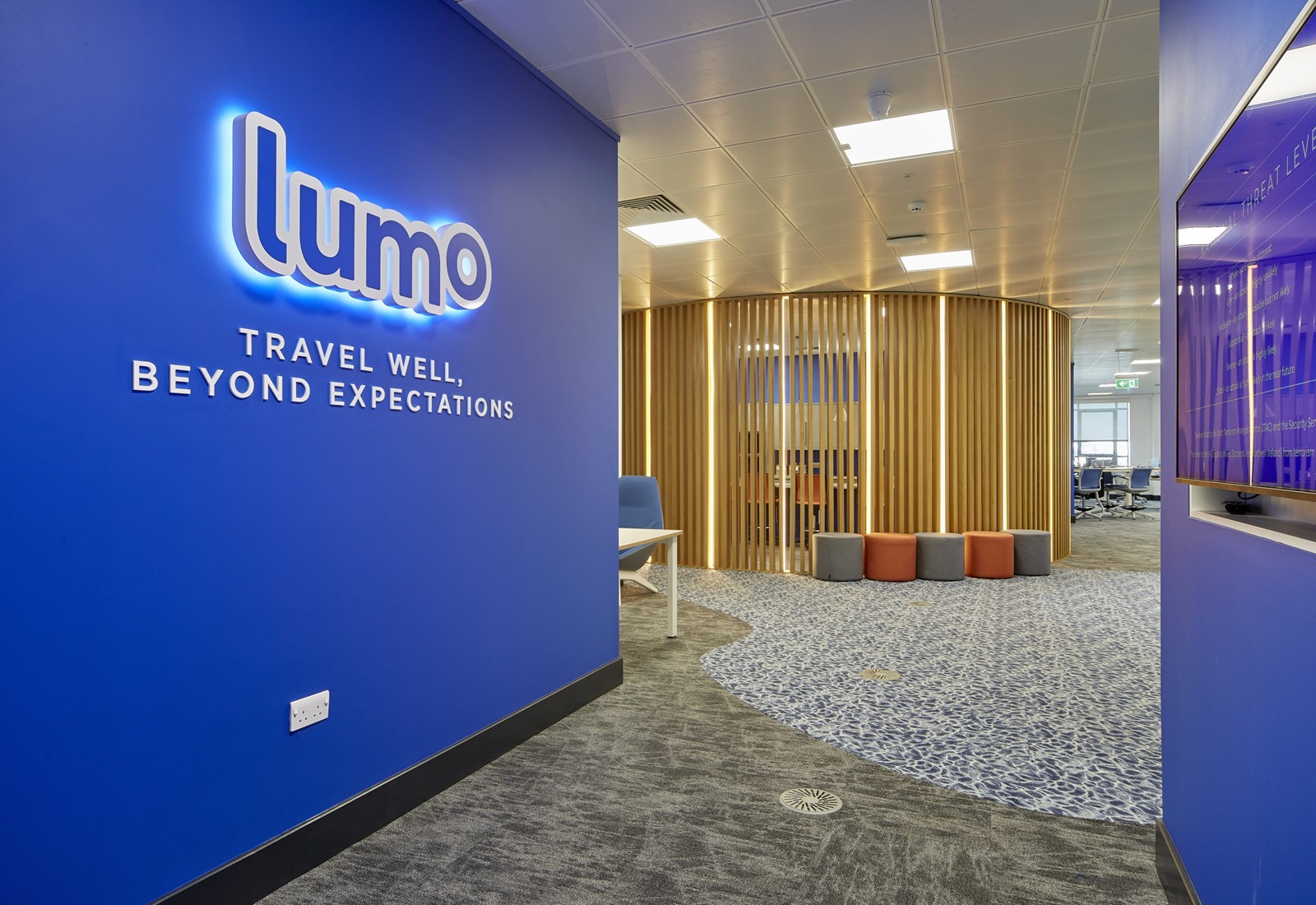
Just realised how terrible and confused Lumo's "Travel Well, Beyond Expectations" which I think is less clever than they think it is. Even with the double meaning of "well beyond" and "well, beyond" it doesn't fit the budget operation they are.
They removed the vinyls from the trains, replacing them with "doesn't cost the earth" and now I think just "all electric". Though they did like it so much they enshrined it in their HQ fitout in Newcastle.Do they still use that? I'd agree it's awful, dreamt up by a suit in an office not an entrepreneur. They'd have been better off just using something like "cheaper and faster" as certainly before the Edinburgh superfasts they largely were compared to LNER.
 www.janusarchitecture.co.uk
They removed the vinyls from the trains, replacing them with "doesn't cost the earth" and now I think just "all electric". Though they did like it so much they enshrined it in their HQ fitout in Newcastle.
Lumo Trains Office - Janus Architecture
A new headquarters for ‘affordable’ rail service, Lumo, in Newcastle.

 flic.kr
Don't forget in telecoms too - when Orange changed to EE it officially meant "Everything Everywhere" but that lasted exactly 2 seconds when it was met with the contempt it deserved from long suffering customers that found it was more often "Something sometimes"

Information systems are designed around routes having numbers, and it just works. Numbers are the convention, so you need to make a case for ditching them with an alternative and explain how it works "just as well" or better than a number. Otherwise you're just being different for the sake of being different.I don't buy that sorry - many towns and cities in the past didn't have service numbers. Quite a lot of the Lancashire and Welsh municipals were like that and coped perfectly well, just using the destination as an identifier just like trains do. A name can provide just as clear an identifier as a number.
"Here to get you there" was the slogan used by the West Yorkshire Public Transport Executive in the 1980s and 1990s.Arriva have had a few questionable ones over the years,
"Here to take you there" or not, as I once remarked when a service failed to operate once.
"Go on, get on!" Often displayed on screens when buses were not in service, so probably wouldn't go down well if you were to take that literally.
"Everything Everywhere" also appeared on the boxes of Orange and T-Mobile badged phones in that period.hat said, high-street retail stores were briefly branded "Everything Everywhere" but I think that lasted for a year and a half at the most before the "EE" brand took over.
No they are designed around characters. Letters work fine. At the end of the day the arbiter is the Traffic Commissioner who require a “route number or name”.Information systems are designed around routes having numbers, and it just works. Numbers are the convention, so you need to make a case for ditching them with an alternative and explain how it works "just as well" or better than a number. Otherwise you're just being different for the sake of being different.


