Devon Sunset
Member
Thanks for that.The VHMA ones had the staircase set slightly further back, as these were dual-door, and a 2+1 seating arrangement at the upstairs front.

Thanks for that.The VHMA ones had the staircase set slightly further back, as these were dual-door, and a 2+1 seating arrangement at the upstairs front.

It was Wallasey - and the livery was perpetuatued on the bus fleet until Wallasey Corporation was absorbed into Merseyside PTE. Most would argue the 'sea green' shade was really yellow. Ex Wallasey 1 (subsequently then 201) is preserved in this livery. My pic below.I once read it a book, I can't remember which tramway in Britain it was, a similar tale. The painter asked what colour he should paint the trams, and was told, "See Green," that being the General Manager's name, and he painted them sea green.
Both are plausible, but maybe at least one is just a joke!


Eastbourne's bus fleet was similarly affected. Between 1903 and 1910 East Sussex issued AP marks in the same fashion as Wallasey, which Eastbourne continued with HC when created as a county borough in 1911. The opportunity was taken to issue both odd and even marks to cars etc. when JK was started in 1928, with motorcycles continuing to plough their own furrow in even HC.It was Wallasey - and the livery was perpetuatued on the bus fleet until Wallasey Corporation was absorbed into Merseyside PTE. Most would argue the 'sea green' shade was really yellow. Ex Wallasey 1 (subsequently then 201) is preserved in this livery. My pic below.
View attachment 195568
Another 'quaint' fact about Wallasey's bus fleet - although this is more to do with the council's Motor Taxation department - is that initially, all buses registration numbers were odd (i.e. ended in 1,3,5,7 or 9). Thus, in 1920, their first motor vehicles - fleet numbers 1-6 inclusive - were registered HF 589/591/593/595/597/599 in sequence. This was because the Motor Taxation department - with a council's usual accuracy about assumptions of future demand - had decided that all cars, commercial vehicles and buses should be allocated odd numbers, with even numbers reserved for motorcycles. By 1935, when this 'odd' series reached HF 9999 and was exhausted, motorcycles had only used the numbers up to HF 44xx, so from that point, all road vehicles - whether with two, four six or more wheels - were assigned the remaining even numbers up to HF 9998. The first Wallasey buses with even registration numbers were thus the 1935 Leyland Cubs 12 & 13, registered HF 5008/5010 respectively.
I should add that these joint operations and area agreements were not really quirky or quaint, but the way many bus services were owned and operated from the 1930 Road Traffic Act until deregulation swept it all away 55 years later.Yes, there was always a mileage-balancing exercise in Bristol to account for Bristol Joint Services (BJS) vehicles being used on a country service and conversely country vehicles used on a city service (those licensed jointly to the company and Bristol Corporation). It was actually a bit more complicated than that, as a BJS bus might operate a summer duplicate to Weston-super-Mare. Similarly in Sheffield, where the split between the Corporation and Joint Omnibus Committee (the latter jointly owned with the railway) meant there were separate similar but distinct fleets. During the summer season, Corporation vehicles were often used to help out with duplicates to destinations such as Castleton and Ladybower. There was a wide range of other joint working arrangements, all of which disappeared with deregulation.
A sad come-down for a route that was half hourly at one point, both in late NBC days and in early privatisation.
Sadly, very representative of what has happened across Hampshire since 2010 due to funding cuts from central government. Look at the network even around the year 2000, compare it to now, and weep.

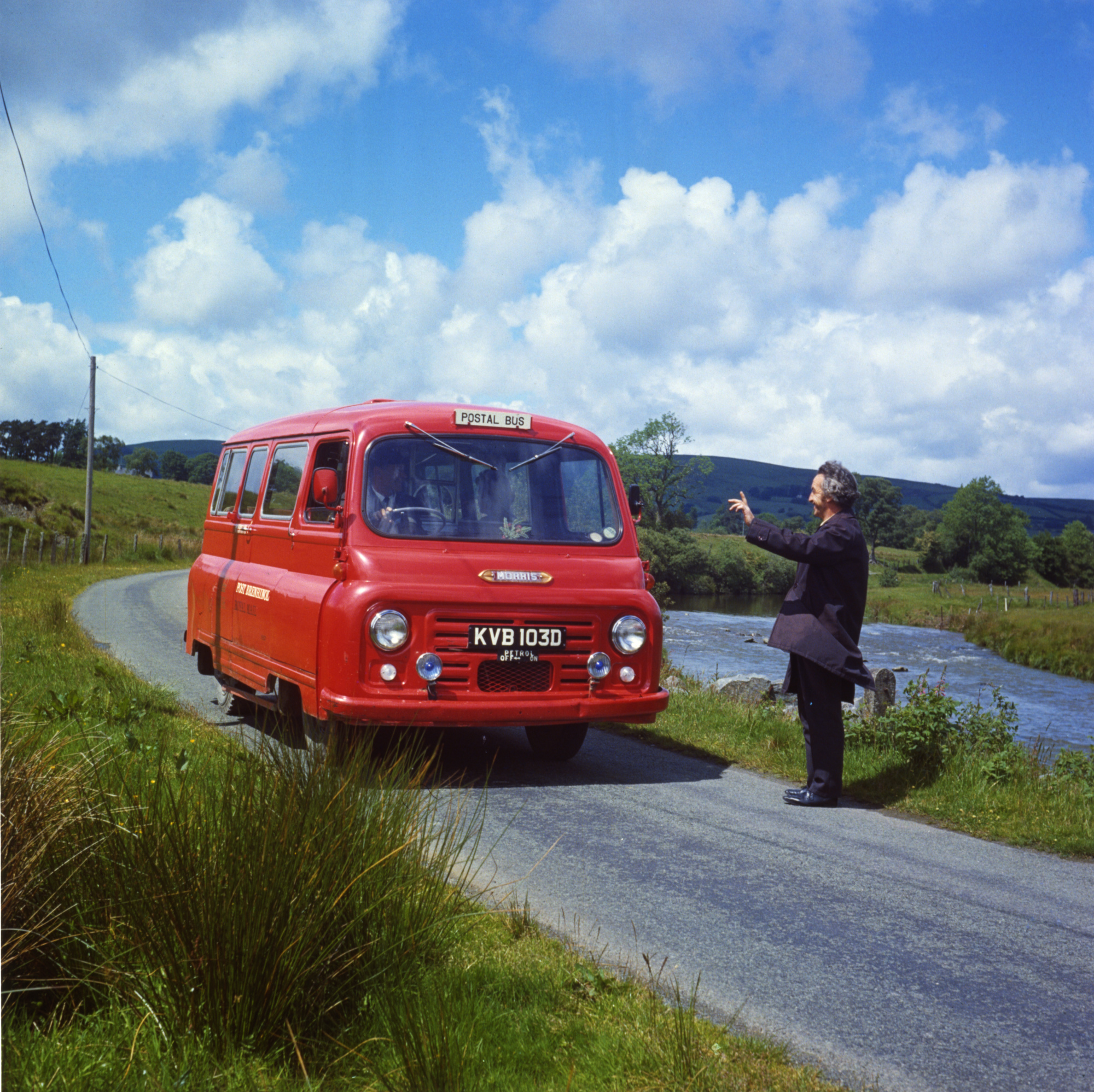
 www.postalmuseum.org

Several Postbuses were cars, especially towards the end of their lives as passenger numbers dropped. Four of us crammed into one while on holiday in Sutherland (luckily there were no other pax!). The Oxted - Lingfield Postbus ended up as a car, as did some in Kent, and no doubt elsewhere.Thinking of something a long way away, I’m pretty certain that as a small child I saw a photo in a library book of a Ford Cortina being used as a bus service somewhere very remote (possibly Scotland?). I recall a b&w photo of said vehicle with a slipboard destination/number on the dashboard. Has anyone else heard of this? I’m thinking it was linked in with a section on postbuses but it was many (35?) years ago or so
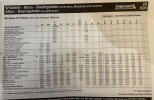
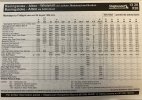
Presumably also the (as-was) 28 Alton-Basingstoke as well?Agree, looking at what was the Country Rota in Basingstoke c.1998, there was a lot going on. Newbury, Alton, Camberley, plus all the odd day stuff and peak trips such as the 201, 205, 207, 210, 211, 309, 333 etc. There was a separate Alton rota of around five drivers covering some of these plus the 23/24 Alton town services.
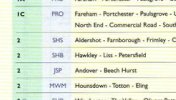
The 2 Hawkley-Petersfield, I don't remember that one. ISTR it was a postbus route (funnily enough) for a while in the 90s, don't recall Stagecoach doing it but I guess they must have.Edit: Just remembered the Alton rota did the 13 as well when it started at Alton working through to Haslemere/Liphook, as well as the 2 Hawkley - Petersfield at one point…..
In fact last time I looked the 13 interworks with Basingstoke town services at certain times of day, though whether that is the drivers or just the vehicles, I don't know.Look at it today - the country rota (or modern equivalent) is the 32 Newbury run and the 13 Bordon, that’s pretty much it.
No worries!Apologies NW1 for not acknowledging your recent post (#259) sooner and I was wondering why there was so much experimentation in the mid 1990s - indeed something like the 30/30A Basingstoke - Guildford seems quite bold.
There’s a lot of interesting information there and I appreciate you getting it all sent out : ) Sadly I’m at a loss as how to quote sections from different posts at the moment, hopefully one day I get my head around this and the replies might seem a bit tidier!had
That’s the one! 28/X28 Alton, 32/32A Newbury and 200 Camberley. Three main parts of the ‘out of town’ Basingstoke workings with the 28 acting as a feeder for other routes as well. The ex-Basingstoke 28 journeys at Alton not matching up with a return leg help the indication. Sadly, my Basingstoke area guide from the time doesn’t contain the details of the more rural routes or the full detail to Haslemere/Liphook but I do remember these running (and this might be a little job to do on Timetable World at one point soon!).Presumably also the (as-was) 28 Alton-Basingstoke as well?
The 2 Hawkley-Petersfield, I don't remember that one. ISTR it was a postbus route (funnily enough) for a while in the 90s, don't recall Stagecoach doing it but I guess they must have.
In fact last time I looked the 13 interworks with Basingstoke town services at certain times of day, though whether that is the drivers or just the vehicles, I don't know.
Several Postbuses were cars, especially towards the end of their lives as passenger numbers dropped. Four of us crammed into one while on holiday in Sutherland (luckily there were no other pax!). The Oxted - Lingfield Postbus ended up as a car, as did some in Kent, and no doubt elsewhere.
@Tom Gallagher thanks for the Postbus link, a nice reminder of a very useful service.
Hants & Dorset only used even numbers for its fleet numbers until 1939. I can only assume it was a bid to make the fleet look bigger!It was Wallasey - and the livery was perpetuatued on the bus fleet until Wallasey Corporation was absorbed into Merseyside PTE. Most would argue the 'sea green' shade was really yellow. Ex Wallasey 1 (subsequently then 201) is preserved in this livery. My pic below.
View attachment 195568
Another 'quaint' fact about Wallasey's bus fleet - although this is more to do with the council's Motor Taxation department - is that initially, all buses registration numbers were odd (i.e. ended in 1,3,5,7 or 9). Thus, in 1920, their first motor vehicles - fleet numbers 1-6 inclusive - were registered HF 589/591/593/595/597/599 in sequence. This was because the Motor Taxation department - with a council's usual accuracy about assumptions of future demand - had decided that all cars, commercial vehicles and buses should be allocated odd numbers, with even numbers reserved for motorcycles. By 1935, when this 'odd' series reached HF 9999 and was exhausted, motorcycles had only used the numbers up to HF 44xx, so from that point, all road vehicles - whether with two, four six or more wheels - were assigned the remaining even numbers up to HF 9998. The first Wallasey buses with even registration numbers were thus the 1935 Leyland Cubs 12 & 13, registered HF 5008/5010 respectively.

During Hulley's of Baslow's brief acquisition of Go Coach, they began renumbering their buses by affixing the capacity to the front of their buses' old fleet numbers.I always found The Kings Ferry fleet numbering system unusual. The first two characters specified the seat capacity, followed by a sequential number. Did any other operator do likewise?

I can't help but think that this is quite a good plan. In normal circumstances, if your want to get the right bus on the right job surely seating capacity is the most important thing to know about a bus? Having it upfront in the vehicle number should make sorting which buses are suitable really easy on a spreadsheet.I always found The Kings Ferry fleet numbering system unusual. The first two characters specified the seat capacity, followed by a sequential number. Did any other operator do likewise?
Yes, I did wonder about that, which is why I suggested it was 'unusual', rather than strange. Except it must cause chaos if buses are upseated!I can't help but think that this is quite a good plan. In normal circumstances, if your want to get the right bus on the right job surely seating capacity is the most important thing to know about a bus? Having it upfront in the vehicle number should make sorting which buses are suitable really easy on a spreadsheet.

The Lucketts Travel Group of companies (Lucketts Travel, Coliseum Coaches, Mortons Travel, Solent Coaches, Worthing Coaches) adopted this system, even prior to the group's purchase by National Express which ultimately brought them under the same ownership as The Kings Ferry.I always found The Kings Ferry fleet numbering system unusual. The first two characters specified the seat capacity, followed by a sequential number. Did any other operator do likewise?
I remember the re-registrations came about when a computerised ticket system was introduced at OK in the early nineties.Apparently OK Motor Services in the north east didn't have fleet numbers for their buses but used numbers from registration numbers even re-registering buses if there was duplication.
Not sure it's true but have read it several times

It was true but only in latter years - its why certain vehicles had to gain cherished plates to avoid duplication.Apparently OK Motor Services in the north east didn't have fleet numbers for their buses but used numbers from registration numbers even re-registering buses if there was duplication.
Not sure it's true but have read it several times
Even worse, they had a spell where they ran out of number 3s so used the number 8 cut in half, looked quite strangeTLC Travel of Bradford use the last 4 or 5 digits of the bus’ chassis number as their fleet numbering systems which is a tad odd
Thinking of something a long way away, I’m pretty certain that as a small child I saw a photo in a library book of a Ford Cortina being used as a bus service somewhere very remote (possibly Scotland?). I recall a b&w photo of said vehicle with a slipboard destination/number on the dashboard. Has anyone else heard of this? I’m thinking it was linked in with a section on postbuses but it was many (35?) years ago or so…..
After deregulation weren't mini bus drivers pay and conditions different to single/double decker and a different board ?
Apparently OK Motor Services in the north east didn't have fleet numbers for their buses but used numbers from registration numbers even re-registering buses if there was duplication.
(Lincolnshire) Road Car went in for 10 journey tickets in at least some of their patch in the 1990s. After they took over the Lincoln City Transport operation, and installed Almex Eurofare / A90 ticket machines, buses (in the Lincoln city area at least) had a magnetic card reader for these - the tickets were similar in size and shape to an APTIS rail ticket - this was a bit before smart cards were a thing.
I think they had previously issued them on card (LRC hung on to manual Almex machines quite late - I can't remember if the issue involved them, I'm aware some manual Almex machines could have a card inserted.) City Transport had previously just done weekly tickets.
(Lincolnshire) Road Car went in for 10 journey tickets in at least some of their patch in the 1990s. After they took over the Lincoln City Transport operation, and installed Almex Eurofare / A90 ticket machines, buses (in the Lincoln city area at least) had a magnetic card reader for these - the tickets were similar in size and shape to an APTIS rail ticket - this was a bit before smart cards were a thing.
I think they had previously issued them on card (LRC hung on to manual Almex machines quite late - I can't remember if the issue involved them, I'm aware some manual Almex machines could have a card inserted.) City Transport had previously just done weekly tickets.
If I remember correctly they were actually 12 journey tickets in the Lincoln area. The ticket card had green strips along the edges, with a white(ish) middle section. The idea was you popped them into the reader and it would print the date and time of the journey onto the ticket. When this didn’t work there were marked punch holes on the ticket for the driver to manually clip them. The tickets would invariably have a bit of both. The printers survived into the Stagecoach era as I remember the first MAN 18.220 single deckers to arrive being fitted with them. By this stage they were even more temperamental.
Now you remind me, I'm fairly sure you are right. It may have been 12 journeys for the price of 10x a standard single, which may have been what I was thinking.
Yes, I also remember tickets getting punched if the card reader didn't like them or wasn't working. I don't know if the card readers would have been able to detect the punch holes and give you an unauthorised 13th journey if that happened.
I also remember seeing 12 journey tickets issued on standard ticket roll - this may have been from buses where the machine wasn't working, or there may have been buses from other depots that did odd journeys in Lincoln (Lincs Road Car went in for that sort of thing at the time*) and the buses didn't have the machine at all.
* - as an aside, I remember one schedule change where one odd journey on a city route in Lincoln had been worked by a Newark bus off the 7 (or maybe 87 by then), and at the next schedule change it fell off the Newark duty. Newark assumed Lincoln would be doing it. Lincoln weren't. Oops.
I’ve seen a duty for Walcot outstation that involved visits to Sleaford, Grantham, Newark and Lincoln in the course of a single days work.