• Our new ticketing site is now live! Using either this or the original site (both powered by TrainSplit) helps support the running of the forum with every ticket purchase! Find out more and ask any questions/give us feedback in this thread!

Could a Transport for South East England (TfSEE) work

Status
Not open for further replies.

Mikey C

Established Member
Joined
11 Feb 2013
Messages
8,282
Comparisons like that do you no favours - however divided Cheshunt is, it bears no comparison to the division of Berlin.
I have visions of Bowie in the late 70s moving to Cheshunt to record his iconic albums with Eno :D
 
Sponsor Post - registered members do not see these adverts; click here to register, or click here to log in
R

RailUK Forums

aron2smith

Member
Joined
20 Jan 2025
Messages
699
Location
London
I have visions of Bowie in the late 70s moving to Cheshunt to record his iconic albums with Eno :D
Back then it got a bus to Smithfield Market, now can't even get one direct to Enfield Town. Good sense of humour though.

== Doublepost prevention - post automatically merged: ==

You need to step back and look at how those boundaries formed, then reconsider your opinion.

The county boundaries that form the basis of administrative structures have developed over many centuries. They inspire deep loyalties (I suggest you listen to Mark Steel's in Town from Oakham to get a flavour of this), and politicians have learned to their cost not to tinker with them. Like any line on a map, the boundaries are imperfect, and give rise to anomalies.

But one iron rule runs through those - that the administrative areas correspond to political governance. If you change that, you can guarantee that those served by but who can't vote for those politicians will struggle for influence.

You've explained your circumstances before, and no one disputes that you've drawn a short straw in how those boundaries affect you personally. What's much more questionable is whether, if you add up for all the others in the same area (especially including the vast majority who you will never have spoken to), the balance of opinion would match. Especially if it came with other London policies - ULEZ, for example.
From my understanding, seemed many formed because one group won a battle and the other didn't. I generally favour natural features for dividing up a country, I just don't think the River Lea is big enough to divide it here, it's not like the Thames or Tamar or Severn. Nor is there anything like the Chilterns or Pennines naturally dividing the area. So it would be something manmade like a major road instead.

I listened to that Oakham clip before, I think it made me realise if I identify with anywhere now, it's long defunct Middlesex, now mostly North London. But it's a quiet pride, not like Cornwall or Yorkshire or Lancashire at all. And I'm not really convinced such loyalties should always be how we run public services today. This region would be even more of a mess if a Middlesex County Council still existed today. Ceremonial counties are fine but if there's a better way of running things, we should do it. Doesn't mean we have to forget the past or what makes each town or region special.

I agree it's complex though, not even what is South East England can be universally agreed on but it's clearly defined by London all the same.
Comparisons like that do you no favours - however divided Cheshunt is, it bears no comparison to the division of Berlin.
I was referring to East Grinstead when I said that as Surrey, Kent and the 2 Sussexes meet not that far away.
 
Last edited:

Magdalia

Established Member
Joined
1 Jan 2022
Messages
7,438
Location
The Fens
The county boundaries that form the basis of administrative structures have developed over many centuries. They inspire deep loyalties (I suggest you listen to Mark Steel's in Town from Oakham to get a flavour of this)
The Oakham programme was a gem, and, I say as a local, Cambridge in the last series was excellent too.

And is being London centric that bad of a thing?
In a word, yes!

In Cambridge we have a saying: "you can always tell a Londoner, but you can never tell them anything".
 

NorthKent1989

Established Member
Joined
13 May 2017
Messages
2,172
Controversial opinion but with talks of having the likes of Epsom, Dartford and Slough joining London as new boroughs, would it be best if London was absorbed into the Southeast? TfL can still be its own thing but working together with SE England Transport Authority, we have a couple of cross boundary bus routes, my local 96 being the most famous example.

Also with the Elizabeth line reaching out to Reading but as a TfL line and the Thameslink having both inter-urban and inner suburban metro services it might present a case for a “Crossrail” banner on both services.
 

35B

Established Member
Joined
19 Dec 2011
Messages
5,587
Controversial opinion but with talks of having the likes of Epsom, Dartford and Slough joining London as new boroughs, would it be best if London was absorbed into the Southeast? TfL can still be its own thing but working together with SE England Transport Authority, we have a couple of cross boundary bus routes, my local 96 being the most famous example.

Also with the Elizabeth line reaching out to Reading but as a TfL line and the Thameslink having both inter-urban and inner suburban metro services it might present a case for a “Crossrail” banner on both services.
With recreation of some of the pre-1972 county boundaries, and Greater London returned to it's LCC era boundaries? That might work and deal with some of the boundary issues
 

NorthKent1989

Established Member
Joined
13 May 2017
Messages
2,172
With recreation of some of the pre-1972 county boundaries, and Greater London returned to it's LCC era boundaries? That might work and deal with some of the boundary issues

Yes something like that, the lines between London, the South East & Essex/Herts and even Bedfordshire are increasingly becoming blurred.

A while back I saw an advertisement about Bedfordshire and Cambridgeshire being called “North Londonshire”

Now I’ve always hate it when areas like Margate for example are called “Shoreditch on Sea” and a while back Folkestone was called “Kent’s Covent Garden” but this does highlight how these regions are slowly morphing into one.
 

Magdalia

Established Member
Joined
1 Jan 2022
Messages
7,438
Location
The Fens
Now I’ve always hate it when areas like Margate for example are called “Shoreditch on Sea” and a while back Folkestone was called “Kent’s Covent Garden” but this does highlight how these regions are slowly morphing into one.
I don't think it does show that. What it shows is rich Londoners moving in to take over small areas for their country retreats. North Norfolk has Chelsea on Sea. I expect that the Cotswolds have some similar names.
 

Bletchleyite

Veteran Member
Joined
20 Oct 2014
Messages
113,841
Location
"Marston Vale mafia"
I don't think it does show that. What it shows is rich Londoners moving in to take over small areas for their country retreats. North Norfolk has Chelsea on Sea. I expect that the Cotswolds have some similar names.

I don't know, but Brighton is commonly pejoratively known as "London-on-Sea", and I'm starting to wonder if Bristol should be "London-in-the-West" and Manchester "London-in-the-North" :)
 

Uncle Buck

Member
Joined
30 Jun 2020
Messages
336
Location
Glasgow
Could we not have “local transport boards” based on the economic/transport patterns rather than disrupt the existing local government structure?

Could these boards not then be grouped into regional boards to ensure connections between the constituent areas?

Could these regional boards not have members of each neighbouring board sitting on them with voting rights, to ensure that services are not adversely affected simply by being on a boundary?

Could local boards not be members of more than one regional board if it made sense?
 

William3000

Member
Joined
24 May 2011
Messages
610
Location
Cambridgeshire
Back then it got a bus to Smithfield Market, now can't even get one direct to Enfield Town. Good sense of humour though.

== Doublepost prevention - post automatically merged: ==


From my understanding, seemed many formed because one group won a battle and the other didn't. I generally favour natural features for dividing up a country, I just don't think the River Lea is big enough to divide it here, it's not like the Thames or Tamar or Severn. Nor is there anything like the Chilterns or Pennines naturally dividing the area. So it would be something manmade like a major road instead.

I listened to that Oakham clip before, I think it made me realise if I identify with anywhere now, it's long defunct Middlesex, now mostly North London. But it's a quiet pride, not like Cornwall or Yorkshire or Lancashire at all. And I'm not really convinced such loyalties should always be how we run public services today. This region would be even more of a mess if a Middlesex County Council still existed today. Ceremonial counties are fine but if there's a better way of running things, we should do it. Doesn't mean we have to forget the past or what makes each town or region special.

I agree it's complex though, not even what is South East England can be universally agreed on but it's clearly defined by London all the same.

I was referring to East Grinstead when I said that as Surrey, Kent and the 2 Sussexes meet not that far away.
Ceremonial counties are very different to traditional/historic counties
 

aron2smith

Member
Joined
20 Jan 2025
Messages
699
Location
London
In a word, yes!

In Cambridge we have a saying: "you can always tell a Londoner, but you can never tell them anything".
That assumes London somehow takes something away from the rest of the country, I don't think its London doing that, more how the government is structured locally, county level and nationally. The over-centralisation of Britain maybe favours London but it harms the whole country all the same. On infrastructure, we need that long term and regional approach, it won't deliver without it.

== Doublepost prevention - post automatically merged: ==

Controversial opinion but with talks of having the likes of Epsom, Dartford and Slough joining London as new boroughs, would it be best if London was absorbed into the Southeast? TfL can still be its own thing but working together with SE England Transport Authority, we have a couple of cross boundary bus routes, my local 96 being the most famous example.

Also with the Elizabeth line reaching out to Reading but as a TfL line and the Thameslink having both inter-urban and inner suburban metro services it might present a case for a “Crossrail” banner on both services.
Really agree with all of this.

== Doublepost prevention - post automatically merged: ==

Yes something like that, the lines between London, the South East & Essex/Herts and even Bedfordshire are increasingly becoming blurred.
Agree, seems it'll be a while before politicians catch up on this reality.
A while back I saw an advertisement about Bedfordshire and Cambridgeshire being called “North Londonshire”

Now I’ve always hate it when areas like Margate for example are called “Shoreditch on Sea” and a while back Folkestone was called “Kent’s Covent Garden” but this does highlight how these regions are slowly morphing into one.
I saw an advertisement for new houses in Bishops Stortford a while back promoting the best of city and country living! If that doesn't show how interconnected London, Herts and the wider area are then I don't know what does. Can't simply be a case of expecting people to drive locally and commute to London by train. There needs to be proper services and infrastructure at both ends!

== Doublepost prevention - post automatically merged: ==

Could we not have “local transport boards” based on the economic/transport patterns rather than disrupt the existing local government structure?

Could these boards not then be grouped into regional boards to ensure connections between the constituent areas?

Could these regional boards not have members of each neighbouring board sitting on them with voting rights, to ensure that services are not adversely affected simply by being on a boundary?

Could local boards not be members of more than one regional board if it made sense?
This would be ideal too. But would almost certainly rely on unique boundaries. The current government is somehow promoting both Total Place and the idea of unifying boundaries for all services, which obviously doesn't work.
 
Last edited:

NorthKent1989

Established Member
Joined
13 May 2017
Messages
2,172
Agree, seems it'll be a while before politicians catch up on this reality

Sadly it will, they think the solution is for London to take more boroughs that border London and their respective counties, but all that will do is kick the can down the road.


I saw an advertisement for new houses in Bishops Stortford a while back promoting the best of city and country living! If that doesn't show how interconnected London, Herts and the wider area are then I don't know what does. Can't simply be a case of expecting people to drive locally and commute to London by train. There needs to be proper services and infrastructure at both ends!

Yep, agreed, my examples of Thameslink and the Elizabeth line highlights this, both are similar types of railways yet are operationally separate due to a technicality.

It isn’t a question of London taking in more surrounding areas at this point it’s really absorbing London into the wider Southeast area.
 

aron2smith

Member
Joined
20 Jan 2025
Messages
699
Location
London
Sadly it will, they think the solution is for London to take more boroughs that border London and their respective counties, but all that will do is kick the can down the road.

Yep, agreed, my examples of Thameslink and the Elizabeth line highlights this, both are similar types of railways yet are operationally separate due to a technicality.

It isn’t a question of London taking in more surrounding areas at this point it’s really absorbing London into the wider Southeast area.
I look at how other European countries organise government around their capitals and just seems a lot smarter and less fragmented than us. Paris - Ile de France, Madrid - Comunidad de Madrid, Berlin - Berlin-Brandenburg etc then you look at the Dutch, less centred around Amsterdam but Randstad reflects the poly-centric but interconnected nature of that region.

In England, we have 2 regions arguably like Randstad. Here in the South East and the lines of Northern towns and cities from Liverpool to Leeds. Wales (Newport, Cardiff and Swansea) and Scotland (Central Belt) seem to have 1 area each that are smaller but similar. The way cities are evolving, they are far from homogenous masses dominating everyone else but more like conurbations of different towns and cities nearby each playing their part.

Hoping when each area around London and the South East sees Mayoral Strategic Authorities set up, each Mayor will work together and a Senate of the South East or something similar happens. A bit like how Northern mayors are seemingly starting to work together on various issues.

I think whether London's boundaries expand again or as you say have London absorbed into the wider area, it requires a bold government to do it, many probably would take the path of least resistance and even then be forced to change anything. It's clear the status quo is starting to hold back the wider area.
 

Bletchleyite

Veteran Member
Joined
20 Oct 2014
Messages
113,841
Location
"Marston Vale mafia"
In England, we have 2 regions arguably like Randstad. Here in the South East and the lines of Northern towns and cities from Liverpool to Leeds.

I'd say the West Midlands is more like the Randstad or Rhein-Ruhr. The North (as a whole) is a bit more like a slightly rubbish version of Switzerland, far bigger than the Randstad alone.

You could probably argue some sort of parallel with what I sometimes call the Liverpool-Preston-Manchester triangle which in many ways acts like one city, but not the whole north - the Pennines does act as a fairly significant divider, and while there is commuting across it it's far smaller in numbers than within each of the two sets of cities.

The difficulty with the SE is probably how far out commuting goes, hence why Network SouthEast was so wide an area which encompassed far more than the South East alone. Plus as you head out it gets polycentric - there's commuting from the Milton Keynes area to both London and Birmingham - clearly more to London by a significant margin but both do exist.

I'm really not sure you need local buses in Aylesbury and in Dover controlled by the same body, which is where this idea is heading. Local buses in South East commuter towns have little to do with rail connections and are unlikely to have anything to do with them because most commuters leave before they start and arrive home after they finish, and London isn't going to cough up the money for Milton Keynes to have a 4am to midnight 10 minute frequnecy bus service so you might as well forget that.

In reality the integration that's actually needed is probably provided by a combination of the Travelcard and increasingly Project Oval contactless payment which integrate the method of getting to London and that of getting around it together. You could put Milton Keynes buses into that same system as long as someone was going to cough up to roughly halve the fares (I suspect, but don't know, that Oval can only apply one bus fare and it's the London one), but there wouldn't be an awful lot gained by doing so.

By contrast, because there's a web of commuting and leisure travel by all manner of modes, a "Verkehrsverbund Nord-West" would probably have legs, but only if you managed to get the North West feeling like one place even if it practically is, which is unlikely as it would mean Liverpool playing second fiddle to local Government led from Manchester, and whether that would actually make sense or not the people of Liverpool aren't going to agree to it. The closest you're probably going to get, realistically, is some collaboration between the post-unitarisation Lancashire Combined Authority and TfGM/Merseytravel on how to deal with cross border bus and rail routes.
 
Last edited:

izvor

Member
Joined
11 Jun 2014
Messages
600
Location
on the SER
The difficulty with the SE is probably how far out commuting goes, hence why Network SouthEast was so wide an area which encompassed far more than the South East alone. Plus as you head out it gets polycentric - there's commuting from the Milton Keynes area to both London and Birmingham - clearly more to London by a significant margin but both do exist.
I'm really not sure you need local buses in Aylesbury and in Dover controlled by the same body, which is where this idea is heading.
I think the rollout of unitary authorities is yet another opportunity missed, with the amalgamation of district councils leading to less local accountability, yet the establishment of mayoral combined authorities along the old county lines covering areas too small for strategic decisions like planning and transport.

In Surrey there will be just 2 unitary authorities, yet still an MCA covering the old county. Pointless! Looks like the same will happen in Sussex and Kent (when the bickering dead-end consultation ends), including the abolition of the existing Medway unitary which covers a logical area.

Too late now to keep the existing District Councils, abolish the County Councils and create new Regions, with Greater London at the centre along its present boundary (with tweaks where necessary out towards the M25), surrounded by say 3 regions, with powers (including transport) transferred where necessary. No reason why a TfSEE could not encompass all of these.

My point is that the County Council areas, and the new unitaries, are arguably the most inappropriate for local democracy, being too large for proper local accountability yet too small for strategic planning. Yet we are being left stuck with two very similar levels of these, and neither of the more logical alternatives.

The North (as a whole) is a bit more like a slightly rubbish version of Switzerland
I did laugh at that - sure a few others did not!
 

Magdalia

Established Member
Joined
1 Jan 2022
Messages
7,438
Location
The Fens
Too late now to keep the existing District Councils, abolish the County Councils and create new Regions
Local government is not just about transport. Most district councils are too small to be unitary authorities, which are required to take responsibility for social care and education. Those responsibilities are why the current devolution programme has a guideline of minimum 500k population for a unitary authority.

Regional government is regarded as having been rejected after John Prescott's failed attempt to set up regional assemblies.

yet the establishment of mayoral combined authorities along the old county lines covering areas too small for strategic decisions like planning and transport.
This doesn't have to be the case.

There is going to be one mayor for Norfolk and Suffolk combined:


The race for the mayor of Suffolk and Norfolk has begun, with the five main political parties announcing who their candidates are.

A mayor would be in charge of what is called a combined county authority – which would be made up of Norfolk and Suffolk's councils.

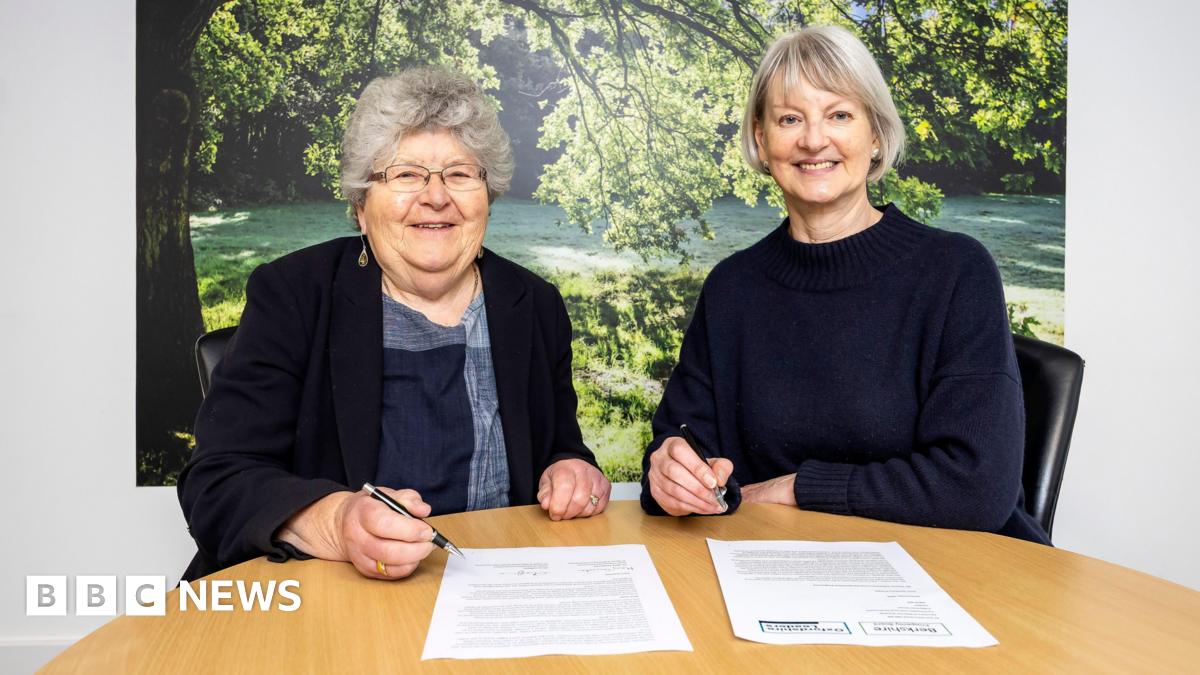
It looks increasingly likely that Berkshire and Oxfordshire will get together and have a Thames Valley mayor.


Council leaders have submitted an expression of interest letter, asking for the creation of a mayoral strategic authority (MSA) within the Thames Valley.

Mary Temperton, leader of Bracknell Forest Council and chair of the Berkshire Prosperity Board, and Liz Leffman, leader of Oxfordshire County Council, wrote to Communities Secretary Steve Reed, external following discussions and agreement by 13 councils within the region.

It comes as plans are also being considered for a major reorganisation of councils, scrapping Oxfordshire's two tier system of districts and a county council.

There is still a heated debate going on about whether Northamptonshire should be going in with Bedfordshire and Milton Keynes.


It's just over a year since the government published a white paper, setting out plans for English devolution involving combined authorities with regional mayors.

Local authorities were given just a month to submit a statement of interest if they wished to be part of a Devolution Priority Programme.

Instead of uniting six councils, which had just months earlier been considering creating a South Midlands combined authority, it caused a rift.

Kent and Surrey, for example, could have got together and had a single mayor, but decided not to do so.
 

RT4038

Established Member
Joined
22 Feb 2014
Messages
5,463
I'm really not sure you need local buses in Aylesbury and in Dover controlled by the same body, which is where this idea is heading. Local buses in South East commuter towns have little to do with rail connections and are unlikely to have anything to do with them because most commuters leave before they start and arrive home after they finish, and London isn't going to cough up the money for Milton Keynes to have a 4am to midnight 10 minute frequnecy bus service so you might as well forget that.

In reality the integration that's actually needed is probably provided by a combination of the Travelcard and increasingly Project Oval contactless payment which integrate the method of getting to London and that of getting around it together. You could put Milton Keynes buses into that same system as long as someone was going to cough up to roughly halve the fares (I suspect, but don't know, that Oval can only apply one bus fare and it's the London one), but there wouldn't be an awful lot gained by doing so.
By the same token, the trains in Aylesbury and Dover do not need to be controlled by the same body either. Local buses in South East (or anywhere else) have little to do with rail commuting precisely because they are not controlled by the same body as the rail service - until they are there will not be effective integration (times, routes and particularly fares) between the two transport modes. Surely this is essential for your penchant with the German/Austrian/Swiss/Dutch model. The 10 minute frequency bus service model you mention is hyperbole - in many places some fairly modest initial changes could change the offer considerably but they would have to be funded and are only likely to take place with a common strategy and vision. Rome (or Milton Keynes) was not built in a day, and it is not a binary all (a perfect comprehensive system) or nothing.
 

Bletchleyite

Veteran Member
Joined
20 Oct 2014
Messages
113,841
Location
"Marston Vale mafia"
By the same token, the trains in Aylesbury and Dover do not need to be controlled by the same body either. Local buses in South East (or anywhere else) have little to do with rail commuting precisely because they are not controlled by the same body as the rail service - until they are there will not be effective integration (times, routes and particularly fares) between the two transport modes.

This isn't really true, though. It would be negative to primarily design the local bus service in Milton Keynes around connecting with trains, as that's simply not what the majority of users want to do. Yes, passive stuff like ensuring you don't put bus stations and railway stations a mile apart (yes, you, Preston, but there are plenty of other examples) needs to be looked at, and it's probably worth making sure that the last bus of the day that might connect with an inbound train doesn't leave 2 minutes before the train does even if that throws the bus a few minutes off pattern, but is there a need to timetable buses to Bletchley to connect to trains to London? No, not really, hardly anyone would be using them for that even if they were so timetabled, and it's possible that timetabling them like that would cause inefficient operation that would mean lower frequencies for the main use case i.e. going to Central Milton Keynes.

Regional buses, yes, which is why I see them as different, just like the fact that they are different in a number of European countries (sometimes even run by the railway directly). It would absolutely make sense, for example, to have a railway-specific bus running from Buckingham to Winslow timed to connect to trains between there and Bicester/Oxford and waiting for those trains in case of delays, particularly if the X5 Bedford-Oxford ends up withdrawn without replacement once East West Rail opens which while not certain I don't see as entirely unlikely. And there are places where almost all buses would logically fit that regional bus model, e.g. Cornwall, where almost none of the towns/cities are big enough to sustain their own local bus service.

It looks like that's sort of happening in Wales, where the rail network and Trawscymru regional buses are being planned together to some extent (not quite enough of an extent yet, but they're getting there, to coin a phrase) but it's unlikely Cardiff Bus services are ever likely to all be timed to connect to trains to Paddington because that's just not what most people will be using them for.
 
Last edited:

Tomos y Tanc

Member
Joined
1 Jul 2019
Messages
918
Local government is not just about transport. Most district councils are too small to be unitary authorities, which are required to take responsibility for social care and education. Those responsibilities are why the current devolution programme has a guideline of minimum 500k population for a unitary authority.

Regional government is regarded as having been rejected after John Prescott's failed attempt to set up regional assemblies.
Yes but... here in Wales we have a number of unitary authorities with populations of under 100k. They seem to manage okay.
 

Bletchleyite

Veteran Member
Joined
20 Oct 2014
Messages
113,841
Location
"Marston Vale mafia"
Local government is not just about transport. Most district councils are too small to be unitary authorities, which are required to take responsibility for social care and education. Those responsibilities are why the current devolution programme has a guideline of minimum 500k population for a unitary authority.

The fix to that is to remove social care from local authorities. While the implementation was awful, the National Care Service proposals from the Johnson era Government in my view very much had potential. Not only is the need not really that local in nature (and a postcode lottery a negative thing) but also it's sapping budgets like there's no tomorrow which is preventing Councils delivering frontline services properly. Furthermore it prevents sensible debates like "you can choose between hourly buses and bins every week or half hourly buses and bins every other week" if the majority of your budget is being blown on services that aren't optional to deliver and can't be scaled or altered based on local needs and willingness to pay taxation alone.

Education is now mostly academised. Unless there's a plan to reverse that, it's largely irrelevant, and so managing it in terms of quality etc could similarly be moved out to a national organisation. Just finish the job and have a national QuANGO managing its quality etc to national standards, which might further help reduce the postcode lottery in terms of education which really shouldn't exist - every child in every school should receive the same high quality education.

That then leaves you in a position where local Government is purely about local services - bins, local bus transport and the likes - and thus it can be tailored to work around areas, regardless of population (to a point), that associate with one another, such as Milton Keynes Council (about 300K these days) which really does work quite well in encompassing the city and most of its local travel to work area (though some does need adding in e.g. Buckingham and surrounds).
 

Magdalia

Established Member
Joined
1 Jan 2022
Messages
7,438
Location
The Fens
The fix to that is to remove social care from local authorities.
I agree, but I don't see it happening any time soon.

Education is now mostly academised. Unless there's a plan to reverse that, it's largely irrelevant
Special Educational Needs and Disability are becoming an increasingly significant burden on local authority budgets. It isn't irrelevant.
 

Bletchleyite

Veteran Member
Joined
20 Oct 2014
Messages
113,841
Location
"Marston Vale mafia"
Special Educational Needs and Disability are becoming an increasingly significant burden on local authority budgets. It isn't irrelevant.

Is there a reason that schools and related provisions for those with SEND cannot be fully academised to remove this burden from Councils entirely? There's an academised new build one maybe a few hundred metres from my house...
 

Magdalia

Established Member
Joined
1 Jan 2022
Messages
7,438
Location
The Fens
Is there a reason that schools and related provisions for those with SEND cannot be fully academised to remove this burden from Councils entirely? There's an academised new build one maybe a few hundred metres from my house...
A big part of the cost is home to school transport, I can't see the academies funding that.
 

JamesT

Established Member
Joined
25 Feb 2015
Messages
4,915
A big part of the cost is home to school transport, I can't see the academies funding that.
Academy funding comes from central government, allow the academies to be reimbursed by the DfE for their costs in providing transport?
Unless there's some sort of economy of scale that makes this better organised at a council-sized level?
 

duncombec

Member
Joined
3 Sep 2014
Messages
1,162
I look at how other European countries organise government around their capitals and just seems a lot smarter and less fragmented than us. Paris - Ile de France, Madrid - Comunidad de Madrid, Berlin - Berlin-Brandenburg etc then you look at the Dutch, less centred around Amsterdam but Randstad reflects the poly-centric but interconnected nature of that region.
I think you're slightly mistaken in your outlook here. Brandenburg is an entirely separate federal state, covering a huge rural area that at the outskirts has nothing to do with Berlin whatsoever. It is about 2.5 times larger than the I-d-F and 4 times larger than the Madrid example. Not only that, Potsdam is in Brandenburg, yet is umbilically connected to Berlin, so in your thinking should actually be part of an expanded Berlin. The fact that the two states work together to fund/form one Verkehrsverbund (VBB) is separate to their statehoods.

We had something similar in the Hamburg region - the Verkehrsverbund covering Hamburg and its outskirts (HVV) was split between Hamburg and two other federal states. There was a combined tariff validity with the rest of Schleswig-Holstein (which was largely not in a Verbund area, except Kiel, but operated a common SH-Tarif), but not, as far as I understand, with Niedersachsen. If there was, then S-H residents could use the SH-Tarif for journeys the the Lower Saxon part of HVV but no further, and likewise in the other direction Lower Saxony residents could use Niedersachsen-Tarif for the S-H parts of HVV, but no further).

The local government boundaries do not "need" to move; TfL and the surrounding local authorities need to get better at talking to each other. (It does seem, from other threads, that TfL tends to go in with a mindset not that dissimilar to the 45th and 47th president of the US when opening negotiations...)

Incidentally, I hope you've filled out your response to the Hertfordshire Enhanced Partnership Survey...

including the abolition of the existing Medway unitary which covers a logical area.
Oh no, if only it did! Medway was unified on the basis of the former Rochester-upon-Medway and Gillingham Borough Councils, which were themselves formed from Rural and Urban District Councils, which came from parishes. @aron2smith would hate to see the southern boundary of the Medway Council area. Parts of Lordswood are in Maidstone, parts of Walderslade are in Tonbridge & Malling (TMBC). I used to joke my parents crossed a council boundary five times to drive to the supermarket (a single, largely straight road).

Maidstone is making this significantly worse, even before LGR was a thing, by sticking a chunk of it's housing targets right next to Medway, knowing full well that it will gain the council tax but residents will look to Medway for services.

At the same time, when the Medway option for LGR was revealed, which suggested ironing out these boundaries, the leader of TMBC reacted as though Medway had suggested a hostile takeover involving the TMNBC leadership being dismembered and burned at the stake. The same council who own a car park in Walderslade that never got gritted, and when people phoned to complain they denied they owned one there until they were told "it's got your sign on it, and you seem able to empty the money machine"!

Kent and Surrey, for example, could have got together and had a single mayor, but decided not to do so.
Good! The idea that a "Metro Mayor" could be covering areas as far apart (in both distance and interests) as Haslemere and Margate was, and is, bonkers.

 

Bletchleyite

Veteran Member
Joined
20 Oct 2014
Messages
113,841
Location
"Marston Vale mafia"
The local government boundaries do not "need" to move; TfL and the surrounding local authorities need to get better at talking to each other.

I think there are cases where they would be better if they did, and Potsdam (and Ormskirk, and Old Stratford) are the sort of places where they probably do. For instance having places that are physically part of Milton Keynes but are in Northamptonshire or Buckinghamshire really doesn't make any sense. It's not just buses, it's bins, roads, social care.....

Those are I suppose extreme examples, though.
 

35B

Established Member
Joined
19 Dec 2011
Messages
5,587
Is there a reason that schools and related provisions for those with SEND cannot be fully academised to remove this burden from Councils entirely? There's an academised new build one maybe a few hundred metres from my house...
There is a whole different conversation to be had about academisation, and whether or not education is better provided by local authorities; "mostly" academised ignores that a very large number of schools (especially primary) are not academised. For the purposes of this conversation, I will just observe that machinery of government change to structures is unlikely to address the fundamental issues there, and any such change is likely to be accompanied by transfer of the relevant central government funding away from local authorities.

There is an underlying connection, in that central government imposes duties on local authorities which it then does not adequately fund through central grants - in the knowledge that the local authorities will find it difficult (political pushback) or illegal (legislation limiting Council Tax rises) to raise directly.

== Doublepost prevention - post automatically merged: ==

I think there are cases where they would be better if they did, and Potsdam (and Ormskirk, and Old Stratford) are the sort of places where they probably do. For instance having places that are physically part of Milton Keynes but are in Northamptonshire or Buckinghamshire really doesn't make any sense. It's not just buses, it's bins, roads, social care.....

Those are I suppose extreme examples, though.
There are always exceptions at boundaries - I would far prefer councils to talk across boundaries than get into redrawing maps.
 

Bletchleyite

Veteran Member
Joined
20 Oct 2014
Messages
113,841
Location
"Marston Vale mafia"
There are always exceptions at boundaries - I would far prefer councils to talk across boundaries than get into redrawing maps.

I think we need to look at both. To me Ormskirk/Burscough should be in the Liverpool City Region for all services and Old Stratford and the new Salden Chase developments that are physically part of Milton Keynes' main built up area need bringing into the city. Similarly I'd bring everything inside the M25 e.g. Watford into Greater London.

However where it's just about one or two things e.g. transport, collaboration can also be an option, but it's sometimes politically difficult. The Preston-centric Lancashire County Council has never been particularly interested in putting money into Merseyrail, for instance. But if we look at the Lakes which is now split across two Councils, Cumberland and Westmorland/Furness, there does clearly need to be collaboration between the two unless you want silly things like bus services terminating in a lay-by on a main road in the middle of nowhere because that's the boundary. Though the answer to things like that might actually be to expand the role of the National Park into a full scale combined authority.
 

35B

Established Member
Joined
19 Dec 2011
Messages
5,587
I think we need to look at both. To me Ormskirk/Burscough should be in the Liverpool City Region for all services and Old Stratford and the new Salden Chase developments that are physically part of Milton Keynes' main built up area need bringing into the city. Similarly I'd bring everything inside the M25 e.g. Watford into Greater London.

However where it's just about one or two things e.g. transport, collaboration can also be an option, but it's sometimes politically difficult. The Preston-centric Lancashire County Council has never been particularly interested in putting money into Merseyrail, for instance. But if we look at the Lakes which is now split across two Councils, Cumberland and Westmorland/Furness, there does clearly need to be collaboration between the two unless you want silly things like bus services terminating in a lay-by on a main road in the middle of nowhere because that's the boundary. Though the answer to things like that might actually be to expand the role of the National Park into a full scale combined authority.
I'm not going to argue with the specific examples, but they demonstrate the challenge of managing organic change (e.g. new developments) onto long term organisations.
 

RT4038

Established Member
Joined
22 Feb 2014
Messages
5,463
I think we need to look at both. To me Ormskirk/Burscough should be in the Liverpool City Region for all services and Old Stratford and the new Salden Chase developments that are physically part of Milton Keynes' main built up area need bringing into the city. Similarly I'd bring everything inside the M25 e.g. Watford into Greater London.

However where it's just about one or two things e.g. transport, collaboration can also be an option, but it's sometimes politically difficult. The Preston-centric Lancashire County Council has never been particularly interested in putting money into Merseyrail, for instance.
Not only is it politically difficult sometimes, but it is also financially difficult. Shire Local Authorities are not set up financially to subsidise train services - they are much too expensive per head of poulation that would benefit from them - Central Government is seen as the subsidising Authority for them. Lancashire will have no money to be particularly interested in putting any in Merseyrail. The alternative is for the subsidy for regional train services to be devolved to the Local Authority, but be careful what you wish for as they find rather a lot of bus service can be bought for the subsidy spent on their railway......
 
Status
Not open for further replies.

Top