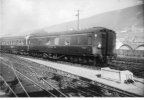
Two types of dmu car, lightweight (short, aluminium body) and heavyweight (long, steel body). Some lightweights by independent manufacturers were not so "light". Twin engines 150hp as standard, but various heavyweights had 230hp ones. And different initial formations and combinations of power cars and trailers. So all together you really need to know the power-to-weight ratio of any set first. Then there were the characteristics of the route, whether flat or hilly.
In fact the Western Region 150hp single cars were somewhat used specifically for haulage. The Plymouth to Saltash shuttle used twin sets of such power cars, which towed on several trips a couple of 6-wheeled milk tankers from the Saltash creamery, decidedly heavy when full. The similar parcels cars had 230hp engines, and hauled vans as standard.
The most extreme of this was the Northern Ireland Railway, which had even more powerful 275hp engines in their power cars. These were treated as loose formations, making up sets of these with trailers and standard coaches for each diagram, but they even used two power cars together to haul the remaining nightly freight train from Belfast to Londonderry and back, it just being accepted they were slow (and extremely noisy) on gradients. The transmissions later became unreliable, it was said this arduous duty had really overstressed them.



 )
)