• Our new ticketing site is now live! Using either this or the original site (both powered by TrainSplit) helps support the running of the forum with every ticket purchase! Find out more and ask any questions/give us feedback in this thread!

When did third rail change from 630/650V to 750V?

Status
Not open for further replies.
Joined
28 Oct 2017
Messages
253
The pre-EPB electric units on the Southern, SUBs et al, were notably basic electrically, they had no low voltage electric circuits, everything was traction voltage or nothing.
This is the nub of it. Three standard 240V lamp bulbs in series run on nominally 720V.

In lower voltages they get dimmer, but last for ages. In higher voltages they burn out very quickly (10% over-voltage halves the life, and it is exponential from there), so presumably this is why they had to be isolated to run over 750V nominal sections. If one bulb is broken, the two in series go out and the voltage across the failed one is the full line voltage...

I believe the class 502 units were like this, but 503 ran lighting from a motor-generator set at lower voltage, or vice versa.
 
Sponsor Post - registered members do not see these adverts; click here to register, or click here to log in
R

RailUK Forums

contrex

Established Member
Joined
19 May 2009
Messages
1,678
Location
St Werburghs, Bristol
This is the nub of it. Three standard 240V lamp bulbs in series run on nominally 720V. Lower voltages they get dimmer, but last for ages. Higher voltages they burn out very quickly (10% over-voltage halves the life, and it is exponential from there), so presumably this is why they had to be isolated to run over 750V nominal sections. If one bulb is broken, the two in series go out and the voltage across the failed one is the full line voltage ...
I believe the class 502 units were like this but 503 ran lighting from a motor-generator set at lower voltage, or vice versa.
I believe the SUBs, like the pre-war BILs, HALs, LAVs, etc, used strings of 70V bulbs in series. Unlike these, the express units (PUL, PAN, BEL, COR) got the heating and lighting power from motor generators providing 70V so the same bulbs could be used, and this is why redundant PUL/PAN stock, reformed as 6-COR, could be used in summer 1967 to help on Kent Coast services. These were not popular with the crews, I think.
 

bramling

Veteran Member
Joined
5 Mar 2012
Messages
20,414
Location
Hertfordshire / Teesdale
A few of these substations are still about in my local area. Are they still running or are they obsolete and just too hazardous to demolish?

In the London area, the whole electrification was completely reconfigured in (IIRC) the 1950s. What tended to happen was the substation spacing was enhanced, so for every previous three substations there were now four, plus TP huts. So some of the old “cathedral” buildings were able to be re-used, albeit completely re-equipped. A few even became over-sized TP huts. But where one old one was replaced by two new ones the spacing change meant the old building became redundant.
 

Bodiam

Member
Joined
8 Jul 2025
Messages
111
Location
Kent, UK
In the London area, the whole electrification was completely reconfigured in (IIRC) the 1950s. What tended to happen was the substation spacing was enhanced, so for every previous three substations there were now four, plus TP huts. So some of the old “cathedral” buildings were able to be re-used, albeit completely re-equipped. A few even became over-sized TP huts. But where one old one was replaced by two new ones the spacing change meant the old building became redundant.
I believe known as the frequency change scheme - along with the rest of the updating, the input was now at industrial frequency, 50 Hz.
 

contrex

Established Member
Joined
19 May 2009
Messages
1,678
Location
St Werburghs, Bristol
I believe known as the frequency change scheme - along with the rest of the updating, the input was now at industrial frequency, 50 Hz.
The Fifty (or 50) Cycle Scheme, I also heard. It swept away the last rotary converters, up to then, I believe, fed at 11 kV 25 Hz from Durnsford Road. The Accident Report after the 1955 Barnes Bridge collision mentions the evidence of the attendant at Barnes substation who said that he knew something was wrong when the one rotary of three that was running at the time ran down after the AC side breakers came out. The wreckage after the collision shorted the traction current and a wooden EMU coach caught fire. 11 passengers and 2 railwaymen died. I think the replacement recifiers were mercury-arc; a trial silicon diode substation was used in Phase 2 of the Kent Coast scheme in the early 1960s.
 

Taunton

Veteran Member
Joined
1 Aug 2013
Messages
12,313
The voltage will also be higher near a train that is using regenerative braking. If it reaches a certain limit then the train must assume the supply is not "receptive" and divert the current into on-board resistors or even revert to friction braking. Having the nominal voltage too close to this limit reduces the ability of trains to regenerate and therefore the amount of energy saved.
Depends on the system. A number of DC systems were always receptive for the train, with resistor banks outside at the substation to divert surplus regenerated current to. I believe Woodhead had this, as did a number overseas. Ability to have regeneration was one of the key reasons for installing, or keeping, DC systems, as until very recently it was not possible to regenerate power on the train with frequency synchronised exactly with an AC supply.

Regarding 630V third rail, we may note that London Underground has always used a 4-rail system, with +420/-210V on the two power rails. Where they run onto BR lines shared with BR trains this changes for them to +630/-0V, which as far as the train's equipment is concerned is exactly the same, so they run seamlessly from one to the other, with a brief neutral section. The neutral centre rail here is bonded to the running rails, so the Underground trains use this while the BR trains use their conventional running rail return. Upgrading these sections to 750V is dependent on the Underground also moving on to +500/-250V on their own lines.
 

eastwestdivide

Established Member
Joined
17 Aug 2009
Messages
3,417
Location
S Yorks, usually
On the Southern the 1959-62 Kent Coast scheme at 750V must have extended into the suburban area as SUB and HAL units were completely cleared out and banned from that Division thereafter.
Going back to this, the 4-SUB page on Blood and Custard at
has the SUBs being cleared out earlier:
As the 4 EPB construction programme continued from 1951 until 1957, these new units steadily displaced 4 SUB units from the Eastern Section, the newer units being concentrated there as they were required, working in conjunction with the BR type 2 EPB units, for the ‘10-car scheme’.
So along with the previously-mentioned 1982 railtour requiring fuses out beyond the suburban area, I’m not convinced that the 750V was extended into the suburban area at that time.
 

D6130

Established Member
Joined
12 Jan 2021
Messages
9,114
Location
West Yorkshire/Tuscany
Would I be correct in thinking that the Isle of Wight Line - with its separate local feed and formerly using standard tube stock - still operates at 630 volts? That was certainly the case when I worked on it in the late 1980s.
 

Big Jumby 74

Established Member
Joined
12 Feb 2022
Messages
2,244
Location
UK
So they could only go as far as Alton?
In regular planned passenger service moves. Yes, they could go further down the SWML, but as mentioned, the fuses had to be removed, and this was only permitted to be done - officially at least - by RM&EE staff (a fitter) who would have to be called out to attend. Hefty old fuses they were too, about a foot long or so AFAIR.
 

Taunton

Veteran Member
Joined
1 Aug 2013
Messages
12,313
So they could only go as far as Alton?
The SUBs did get to Portsmouth. There was even a timetabled 12SUB (otherwise an unusual formation) on summer Saturdays at about 11am from Waterloo, nonstop to Portsmouth, intended as a crowd buster for the Isle of Wight traffic, although expecting holidaymakers to sit fully 6-across in the compartment vehicles was probably optimistic.
 

4SubAsociation

Verified Rep
Joined
4 Dec 2020
Messages
300
Location
Ashford, Kent
The last SUB where withdrawn in August 1983 with the exceptions being 4732 and de-icers (and trailers which where reformed into EPBs).

The last de-icers usage was around 2004. (Example 930003) https://www.southernelectric.org.uk/departmental-stock/. Two did survive afterwards but where scrapped in 2010/2013. The one that was scrapped in 2013 was a derby and was static use. (930010).

Edit - so further reading, the de-icers should of had EE507. But this was not the case as 930010. I seem to recall that when the Belle group where looking for EE339. The only ones around where 4732 and De-icer 930010. Instead they went with going down the later EE507 route as there was more of these around.

The last passenger run of a SUB would of been the St Leonards Depot open day in 1994. From reading the above i suspect fuses may of been taken out of the heater circuit etc.
 
Last edited:

contrex

Established Member
Joined
19 May 2009
Messages
1,678
Location
St Werburghs, Bristol
In regular planned passenger service moves. Yes, they could go further down the SWML, but as mentioned, the fuses had to be removed, and this was only permitted to be done - officially at least - by RM&EE staff (a fitter) who would have to be called out to attend. Hefty old fuses they were too, about a foot long or so AFAIR.
As I recall, only depot staff could connect/disconnect the inter-unit 660V power jumpers on the SUBs, which meant that you would often see 8-car formations running in between the peaks.
 

Big Jumby 74

Established Member
Joined
12 Feb 2022
Messages
2,244
Location
UK
As I recall, only depot staff could connect/disconnect the inter-unit 660V power jumpers on the SUBs, which meant that you would often see 8-car formations running in between the peaks.
Quite so. In todays world of driver operated detach at the press of a button, and similarly simple AP by the driver, it is easy to forget the restrictions that once had to be taken in to account by the planners/controllers when diagramming units of those times.
 

Taunton

Veteran Member
Joined
1 Aug 2013
Messages
12,313
The last passenger run of a SUB would of been the St Leonards Depot open day in 1994. From reading the above i suspect fuses may of been taken out of the heater circuit etc.
My last run was the Woking open day in (1989? 150th anniversary of the station opening?) when it ran shuttles to Guildford and back with the 2-BIL. I believe by then they always ran together, as each was the only way to recover the other in the event of a failure. I did almost all the trips in the 2-BIL, which was novel by then, whereas the SUB was much like an EPB which were still in service. It was a useful shuttle as it came on to rain in the afternoon, and I think I did three round trips waiting for that to pass, reading whatever old books I had bought at the flea market stalls.
 

Big Jumby 74

Established Member
Joined
12 Feb 2022
Messages
2,244
Location
UK
My last run was the Woking open day in (1989? 150th anniversary of the station opening?) when it ran shuttles to Guildford and back with the 2-BIL.
May 30th was the date. You may be in this view? The steam in the air to the right was from USA tank 30072, that was running shuttles in the down yard using 3 x Queen Mary brake vans, that in itself being (I would think) a vary rare happening, even in normal goods service.
The SUB + BIL shuttle used the Down Bay (plat 5 as was at that time) at Woking, so on the up run, would cross to the Down line just prior to Woking Junction, and run to the station via the DSL.
 

Attachments

  • BJ-Woking150. 300589.jpg
    BJ-Woking150. 300589.jpg
    412.7 KB · Views: 35

4SubAsociation

Verified Rep
Joined
4 Dec 2020
Messages
300
Location
Ashford, Kent
My last run was the Woking open day in (1989? 150th anniversary of the station opening?) when it ran shuttles to Guildford and back with the 2-BIL. I believe by then they always ran together, as each was the only way to recover the other in the event of a failure. I did almost all the trips in the 2-BIL, which was novel by then, whereas the SUB was much like an EPB which were still in service. It was a useful shuttle as it came on to rain in the afternoon, and I think I did three round trips waiting for that to pass, reading whatever old books I had bought at the flea market stalls.
Yes that is correct. It was part of the reason why the SUB was kept due to it could opperate with the 2BIL. The other reason was it was the last 4SUB with a compartment trailer
 

Taunton

Veteran Member
Joined
1 Aug 2013
Messages
12,313
May 30th was the date. You may be in this view?
Ah, but I wasn't a window hanger, I was sat luxuriously in the first class of the 2-BIL. There weren't anything like that number on my trips - possibly this is the first one of the day.
 

181

Member
Joined
12 Feb 2013
Messages
945
The pre-EPB electric units on the Southern, SUBs et al....I think the driving position was standing up.
I visited the cab of the preserved 4-SUB at an open day at Stewart's Lane (maybe in about 1987?), and I seem to remember there being a rather basic folding seat that had to be folded away for the cab door to be opened.

My last run was the Woking open day in (1989? 150th anniversary of the station opening?) when it ran shuttles to Guildford and back with the 2-BIL. I believe by then they always ran together, as each was the only way to recover the other in the event of a failure. I did almost all the trips in the 2-BIL, which was novel by then, whereas the SUB was much like an EPB which were still in service. It was a useful shuttle as it came on to rain in the afternoon, and I think I did three round trips waiting for that to pass, reading whatever old books I had bought at the flea market stalls.

May 30th was the date. You may be in this view? The steam in the air to the right was from USA tank 30072, that was running shuttles in the down yard using 3 x Queen Mary brake vans, that in itself being (I would think) a vary rare happening, even in normal goods service.
The SUB + BIL shuttle used the Down Bay (plat 5 as was at that time) at Woking, so on the up run, would cross to the Down line just prior to Woking Junction, and run to the station via the DSL.
Ah, but I wasn't a window hanger, I was sat luxuriously in the first class of the 2-BIL. There weren't anything like that number on my trips - possibly this is the first one of the day.
Interesting to see other people's memories of that event. It was my last journey in a 4-SUB too, and my only one in a 2-BIL (and probably the only time I've used the down bay at Woking). My recollection is that it was in 1988 (Wikipedia says that the station was opened in 1838).
 

4SubAsociation

Verified Rep
Joined
4 Dec 2020
Messages
300
Location
Ashford, Kent
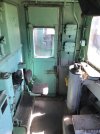
4SUB 4732 cab. Photo by Graeme Gleaves. This was taken shorlty before leaving coventry in 2018.
 

Attachments

  • 91370716_2796305133815174_865032900477714432_n.jpg
    91370716_2796305133815174_865032900477714432_n.jpg
    77.1 KB · Views: 43

Big Jumby 74

Established Member
Joined
12 Feb 2022
Messages
2,244
Location
UK
I visited the cab of the preserved 4-SUB at an open day at Stewart's Lane (maybe in about 1987?), and I seem to remember there being a rather basic folding seat that had to be folded away for the cab door to be opened.
That is correct, as per the image posted above by 4SubAsociation. 'Passed' to/from work up front on a few occasions on SUB's, and in my memory, I don't recall any of the drivers in question sitting down, just too cramped, especially for taller people. The drivers seat was more akin to the basic tip up seat fitted on the second man's side of VEP/CIGs and the like.

== Doublepost prevention - post automatically merged: ==

My recollection is that it was in 1988
That is correct - 30th May '88 was the date, although preparations for same took several days, the USA tank 30072 being off loaded from its road trailer on the 25th to join M7 30053. Other exhibits arrived over the next few days. Anyway, we are veering OT so will say no more.
 
Last edited:

frankmoh

On Moderation
Joined
7 May 2025
Messages
826
Location
London
Does anyone have anything to say about when the Watford DC line changed to 750V DC? (at least on the parts not shared with the Bakerloo)
 
Status
Not open for further replies.

Top