• Our new ticketing site is now live! Using either this or the original site (both powered by TrainSplit) helps support the running of the forum with every ticket purchase! Find out more and ask any questions/give us feedback in this thread!

Should we be building new railways?

Status
Not open for further replies.

Topological

Established Member
Joined
20 Feb 2023
Messages
4,291
Location
Swansea
It would be great to think we could move to a world where more of the "last mile" was road-based and the long distance was rail-based.

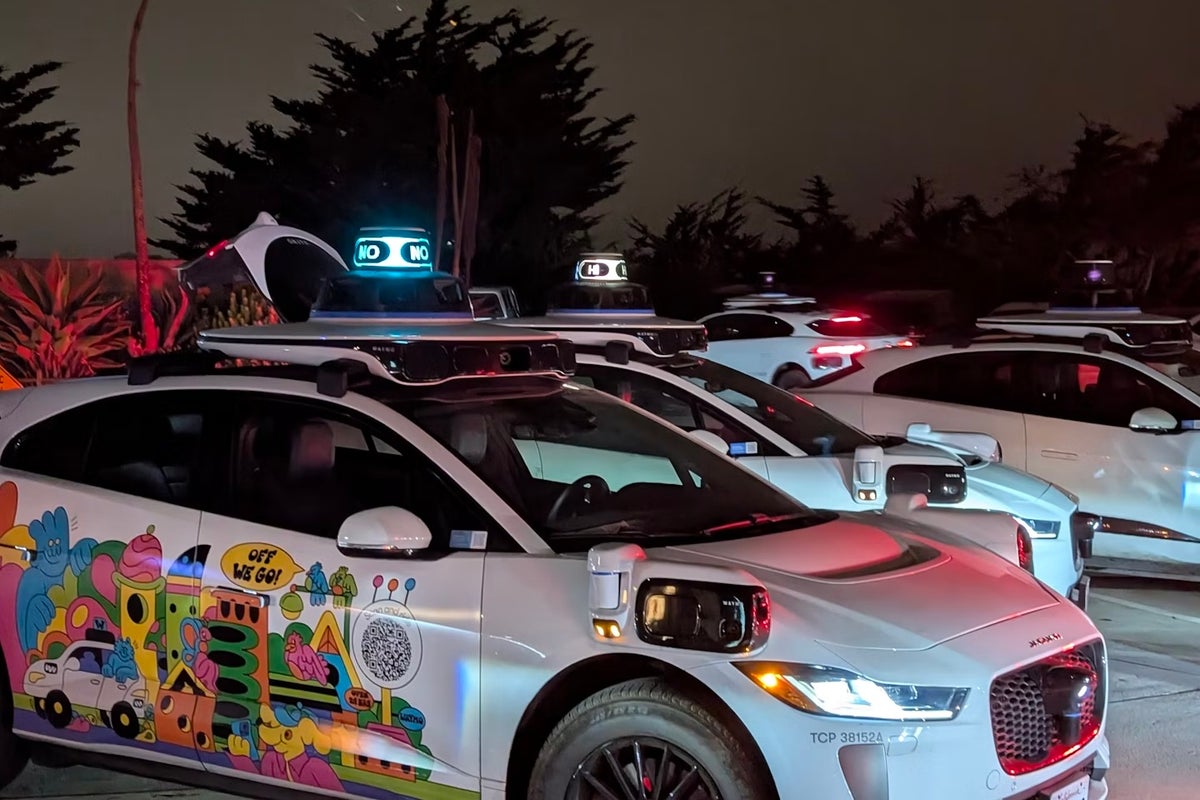
With driverless cars there is no reason for one person to own one car. You have cars pick you up to take you to the station, and then a different car to take you from the station to the destination.

Mid-distance may then suit bus and tram, but too many connections would kill the model.

To that end more railways make sense. More high-speed routes to bring the time penalties of connections down, and more connections to larger vehicle hubs.

I don't think that rebuilding what was closed makes that much sense, better to develop for new technologies than try to squeeze into older plans.
 
Sponsor Post - registered members do not see these adverts; click here to register, or click here to log in
R

RailUK Forums

HSTEd

Veteran Member
Joined
14 Jul 2011
Messages
20,318
In most cases, a well-used diesel train is still better for the environment than having everyone travel by car, even with a decent proportion of those cars being EVs. (Voyagers may be the exception to this!)

Shifting traffic (passenger and freight) from road to rail is a key element of decarbonising our traffic network, even if the trains are still diesel. If they can be made electric/battery then that is better still, but we shouldn't let perfect be the enemy of good by requiring too high a bar for rail. While I definitely want to see more of the rail network move to electric/battery, there is a decent argument that we would achieve more in terms of decarbonisation by using our engineering staff and resources to build new lines and increase capacity on existing lines before we electrify/batterify many more existing lines.
Electric car emissions are now something like ~30g per vehicle kilometre (assuming average electricity) and still falling rapidly as grid decarbonisation proceeds. For reasonable car occupancy and train occupancy electric cars already beat Voyagers and they have much further to fall.

Diesel trains may have the edge over the petroleum driven car fleet for now, but within a decade they are going to look very poor indeed compared to the new electric car fleet.
 

aron2smith

Member
Joined
20 Jan 2025
Messages
699
Location
London
Yes we should build new railways, many of them actually. But that doesn't mean simply reopening what existed before to do so, if a town needs a rail service and it can be served better by a new route, then do that instead. The railway needs to be looked at strategically to increase productivity and growth around all parts of the country, some places this means more tracks and new stations to support development, some it means reopening a branch line, others a completely new route and even some an enhanced integrated bus may be the best option. It requires looking at what exists and also case by case. Doing nothing is not an option though. It needs long term and joined up thinking.

== Doublepost prevention - post automatically merged: ==

My point is we need to build more east-west links avoiding London that reduce journey times and that are affordable.

We should be rebuilding missing links like the Alban Way (Hatfield to St Albans) with links beyond or Walsall to Lichfield to bring about modal shift.
Agreed, Hertfordshire is painfully slow to get across even with the small number of limited stop buses running across. But they need to join up. West Midlands lacks a metro full stop.

South of London, it is possible to get from Tonbridge to Guildford and Reading by train and avoid London, but unfortunately the journey is slow as it requires a change at Redhill and the trains don't time very well! So it's not just new links needed, but the existing ones need to be improved too. Redhill to Reading isn't even electrified!

Hertfordshire's solution is the HERT - Hertfordshire Essex Rapid Transit, which from I can tell is a bit like the Belfast Glider, not much has been revealed about it but it would require a lot of priority and right of way to work effectively.
 
Last edited:

eldomtom2

On Moderation
Joined
6 Oct 2018
Messages
2,383
We should be building new railways and upgrading existing ones. The problem is that at the moment infrastructure construction in the UK takes too long and costs too much compared to other developed countries.
 

yoyothehobo

Member
Joined
21 Aug 2015
Messages
853
I agree that the most environmentally friendly train is the one you already have, and that replacing a train before it is life-expired on environmental grounds is unlikely to add up, but that doesn't preclude buying additional trains.
It sounds like you've got all the arguments at your fingertips, so I don't need to repeat them here!


In most cases, a well-used diesel train is still better for the environment than having everyone travel by car, even with a decent proportion of those cars being EVs. (Voyagers may be the exception to this!)

Shifting traffic (passenger and freight) from road to rail is a key element of decarbonising our traffic network, even if the trains are still diesel. If they can be made electric/battery then that is better still, but we shouldn't let perfect be the enemy of good by requiring too high a bar for rail. While I definitely want to see more of the rail network move to electric/battery, there is a decent argument that we would achieve more in terms of decarbonisation by using our engineering staff and resources to build new lines and increase capacity on existing lines before we electrify/batterify many more existing lines.
Let me clarify when i say the climate change impact on the railway. I dont mean decarbonisation.

I mean there are large areas of the network at risk due to the wetter climate in winter and drier summers.

Earthworks are at major risk from increased water and the carnarge to timetables from the issues of shrinkable clays.

I would say that there are lines at risk from closure due to climate induced failure and the network will have to make real decisions over major repairs or closures
 

The exile

Established Member
Joined
31 Mar 2010
Messages
9,385
Location
Somerset
Electric car emissions are now something like ~30g per vehicle kilometre (assuming average electricity) and still falling rapidly as grid decarbonisation proceeds. For reasonable car occupancy and train occupancy electric cars already beat Voyagers and they have much further to fall.

Diesel trains may have the edge over the petroleum driven car fleet for now, but within a decade they are going to look very poor indeed compared to the new electric car fleet.
By one criterion, yes (albeit a very important - possibly at present the most headline-grabbing - one). EVs will however do nothing to alleviate congestion itself nor non-exhaust-related pollution.
 

birchesgreen

Established Member
Joined
18 Aug 2015
Messages
7,663
Location
Solihull
It would be great to think we could move to a world where more of the "last mile" was road-based and the long distance was rail-based.

With driverless cars there is no reason for one person to own one car. You have cars pick you up to take you to the station, and then a different car to take you from the station to the destination.
So is the dream but the big question is how well that would scale when 1000s of people need to travel at the same time.
 

Farnborough

Member
Joined
2 Mar 2025
Messages
307
Location
Farnborough
There is the old joke, with the punchline "If I were you, I wouldn't start from here!"

If we were to start from scratch, many of the existing railways would not follow their current paths; some of the existing railways would not be on the plan, some of the previously closed would be, and other completely new lines possibly could be.

As such, yes we should build some new lines, but equally, the exact path of others may be obsolete... and others need upgrading (however impractical that may be!)

== Doublepost prevention - post automatically merged: ==

So is the dream but the big question is how well that would scale when 1000s of people need to travel at the same time.
And what if you request all of them at the same time?


(Other sources available, but this one is not behind a paywall)
 

yorksrob

Veteran Member
Joined
6 Aug 2009
Messages
44,341
Location
Yorks
He does, though he was arguing, it seemed, that we shouldn’t even build new trains because of emissions. I get what he means, but I don’t really see how 2 car asbestos ridden lumps of wood have much of a place on the modern railway. DGMW, he’s a great guy, but it was a bit of a bewildering 2 minute convo imo.

Yes electric isn’t completely perfect, but it’s still pretty good and surely any step forward is a step that should be embraced, which is what we haven’t really done apart from the most major corridors.

Does this person drive, out of interest ? If so, does he disagree with building new cars ?

== Doublepost prevention - post automatically merged: ==

Let me clarify when i say the climate change impact on the railway. I dont mean decarbonisation.

I mean there are large areas of the network at risk due to the wetter climate in winter and drier summers.

Earthworks are at major risk from increased water and the carnarge to timetables from the issues of shrinkable clays.

I would say that there are lines at risk from closure due to climate induced failure and the network will have to make real decisions over major repairs or closures

They need to start reinforcing them now, in that case. The network isn't exactly over provided as it is.
 

yoyothehobo

Member
Joined
21 Aug 2015
Messages
853
They need to start reinforcing them now, in that case. The network isn't exactly over provided as it is.
They are, but there is a finite pot of money, and every pointless reinstatement survey on a no hope line reopening takes a little bit from the pot.

Some areas though are far too big issues to fix. The network can only sustain a certain number of Eden Brows style sized failures. If you had another, similar sized failure on the S and C at the same time as Eden Brows, i think there is a very strong chance the line would have been shut
 
Joined
22 Jan 2024
Messages
588
Location
Yorkshire
We should build new railways if they are genuinely needed. But a higher priority ought to be making better use of what we have. Like:

Electrification - especially of short links that would enable a large increase in electrically hauled freight;

Fares that would attract more custom (at least, to routes where there is capacity);

More frequent, comfortable, convenient services (ditto);

Policy changes to make more use of HS1 and the Tunnel; it is ridiculous that people who travel to places like Germany nearly always find that it’s cheaper to fly.

And stop wasting capacity with trains which are far too short for their intended purpose (e.g. Voyagers).
 

stevieinselby

Established Member
Joined
6 Jan 2013
Messages
1,693
Location
Selby
With driverless cars there is no reason for one person to own one car. You have cars pick you up to take you to the station, and then a different car to take you from the station to the destination.
The word is "taxis".
We don't need driverless cars to facilitate last mile travel when buses, taxis or potentially bikes or bike hire can also fulfil the same function.
Electric car emissions are now something like ~30g per vehicle kilometre (assuming average electricity) and still falling rapidly as grid decarbonisation proceeds. For reasonable car occupancy and train occupancy electric cars already beat Voyagers and they have much further to fall.

Diesel trains may have the edge over the petroleum driven car fleet for now, but within a decade they are going to look very poor indeed compared to the new electric car fleet.
I did say that Voyagers may be the exception to the rule! But most diesel trains are not Voyagers, we're not building any new Voyagers, and at the moment most cars are not EVs. So while the railway definitely needs to have a strategy for further electrification/batterification, we can still make a difference in the short term by getting more people onto trains regardless of what type of train it is.

Not to mention that, as The exile said, airborne pollution is only one metric – there are other metrics such as noise pollution, collision rates and land usage where trains also offer significant environmental and societal advantages over cars.
 

HSTEd

Veteran Member
Joined
14 Jul 2011
Messages
20,318
I did say that Voyagers may be the exception to the rule! But most diesel trains are not Voyagers, we're not building any new Voyagers, and at the moment most cars are not EVs.
Within a year or two the falling grid intensity will result in the same result for all diesel trains in service.
So while the railway definitely needs to have a strategy for further electrification/batterification, we can still make a difference in the short term by getting more people onto trains regardless of what type of train it is.
Within ten years or so the electric car fleet will be a very large portion of the whole.
Do you think the railway can meaningfully expand its traffic in that horizon, given how slow it is to respond to other stimuli?

Not to mention that, as The exile said, airborne pollution is only one metric – there are other metrics such as noise pollution, collision rates and land usage where trains also offer significant environmental and societal advantages over cars.
-Well the railways penchant for using old diesel engines for decades probably undermines this argument with regards to particulates. And the travails of the Class 68s in Marylebone says something about the noise pollution! We are, after all, in the position where electric cars are being made deliberately louder for safety reasons.

As to fatalities/safety, that entirely depends on how you account for rail related suicides on a per passenger-km basis. If none of the suicides could be avoided then the railway does win easily on fatalities, by contrast if all of the suicides could be avoided then the roads win easily. Obviously the answer will be between the two, but I would hesitate to say the safety advantage is truly decisive in favour of the railway.

And as noted, the time window left to make these advantages count is vanishingly small.
 

Topological

Established Member
Joined
20 Feb 2023
Messages
4,291
Location
Swansea
The word is "taxis".
We don't need driverless cars to facilitate last mile travel when buses, taxis or potentially bikes or bike hire can also fulfil the same function.

I did say that Voyagers may be the exception to the rule! But most diesel trains are not Voyagers, we're not building any new Voyagers, and at the moment most cars are not EVs. So while the railway definitely needs to have a strategy for further electrification/batterification, we can still make a difference in the short term by getting more people onto trains regardless of what type of train it is.

Not to mention that, as The exile said, airborne pollution is only one metric – there are other metrics such as noise pollution, collision rates and land usage where trains also offer significant environmental and societal advantages over cars.
I guess you could have an army of taxis in place, but they are more expensive because you have to pay a human. You also get bad experiences with taxis that you wouldnt get with driverless.

Bike hire is great, but not in all British weathers.

We are looking for options that are attractive enough to give up a personal space for. Whilst some of your suggestions hold, the desirability versus a private car is lower.

Trains also have an advantage on tyre particulates, which rail should maintain. But rail can never provide the convenience of a car.
 

The exile

Established Member
Joined
31 Mar 2010
Messages
9,385
Location
Somerset
But rail can never provide the convenience of a car.
Can never provide some of the conveniences of a car! When you’ve been stuck in barely moving traffic for several hours the provision of a “convenience” on a train is suddenly something very much to be envied!
 

al78

Established Member
Joined
7 Jan 2013
Messages
2,600
There is a large portion of society who believe we should build nothing and people should just travel less. These people generally travel a fair bit in my experience.

Should we be reopening old rural lines, absolutely not in my view. Should we be targeting areas that are overcrowded and building new strategic routes yes.
That is an extremist opinion but I do question whether we need to be travelling as much as we do, especially as we live in the age of high speed broadband/wifi which makes online meetings viable which weren't 40 or so years ago. The problem is that people take things for granted as though resources are infinite, whereas in reality they are not. Road and rail capacity is a finite shared resource and should be treated as such, instead we have the situation where trying to get any decent distance is an endurance testing ball-ache because so many roads and trains are rammed. We have the same issues with housing. Put the well paid jobs in the SE corner of the country which also happens to be the most water stressed, have a load of people all wanting to live in big houses in leafy suburbs, then wonder why more and more of the countryside is getting paved over to meet demand. You can also look at air travel and wonder how many of those protesting against Gatwick or Heathrow expansion are happy to fly abroad long haul multiple times a year. People don't get the connection between collective actions and societal consequences (partially a consequence of individualism).

Ultimately, when it comes to climate change, unsustainability and its potential consequences, we can either collectively voluntarily transition our lifestyles alongside the macro-systems as a whole (individuals cannot do much alone), or we can have it brutally forced on us as the consequences kick in. History shows that when societies facing large scale stresses choose the latter, things haven't ended well for them e.g. the Greenland vikings. Choose one future path.

== Doublepost prevention - post automatically merged: ==

Can never provide some of the conveniences of a car! When you’ve been stuck in barely moving traffic for several hours the provision of a “convenience” on a train is suddenly something very much to be envied!
I'm lucky in that I have never been stuck in barely moving traffic for several hours. My worst journey was driving to Northumberland from Crawley Down via Twickenham to drop my partner's dogs off to friends, 12 1/2 hours in total, but that due to was multiple moderate delays thanks to road works and lane closures on the A1, and having to stop for an evening meal, not one delay of several hours. Traveling long distance by road is an endurance test, but so is traveling by rail (we apologise for the delay, this is due to a problem with the signalling system/a problem under investigation/trespassers on the line/a shortage of train crew/adverse weather conditions (aka weather conditions comparable to a one or two year return level)/engineering works/industrial action/points failure/a passenger taken ill/a fault with a train).
 
Last edited:

Topological

Established Member
Joined
20 Feb 2023
Messages
4,291
Location
Swansea
Can never provide some of the conveniences of a car! When you’ve been stuck in barely moving traffic for several hours the provision of a “convenience” on a train is suddenly something very much to be envied!
Provided the door is not broken (see TfW 197s) or the tank is not full so the convenience locked out...

For some people the inevitable state of the convenience on the train later in the day is an issue, but needs must when it comes to evening travel.
 
Joined
9 Dec 2023
Messages
587
Location
High Wycombe
Not to mention that, as The exile said, airborne pollution is only one metric – there are other metrics such as noise pollution, collision rates and land usage where trains also offer significant environmental and societal advantages over cars.
Yeah, surely from a humanity perspective, the train is safer in terms of fatalities so surely it should be encouraged more
 

The exile

Established Member
Joined
31 Mar 2010
Messages
9,385
Location
Somerset
As to fatalities/safety, that entirely depends on how you account for rail related suicides on a per passenger-km basis. If none of the suicides could be avoided then the railway does win easily on fatalities, by contrast if all of the suicides could be avoided then the roads win easily.
Sorry - but that sounds as illogical as including the 9/11 casualties in the safety records of the aircraft types involved.
 

HSTEd

Veteran Member
Joined
14 Jul 2011
Messages
20,318
Sorry - but that sounds as illogical as including the 9/11 casualties in the safety records of the aircraft types involved.
I don't think they are really comparable at all.
It is widely believed, in my view reasonably, that the railway can materially effect the number of suicides on the railway.

Substantial efforts have been made all over the world towards that objective. Whilst it is true that some suicides would probably happen regardless, I don't think you can fully absolve the railway of all of them.
 

3141

Established Member
Joined
1 Apr 2012
Messages
2,119
Location
Whitchurch, Hampshire
That is an extremist opinion but I do question whether we need to be travelling as much as we do, especially as we live in the age of high speed broadband/wifi which makes online meetings viable which weren't 40 or so years ago. The problem is that people take things for granted as though resources are infinite, whereas in reality they are not. Road and rail capacity is a finite shared resource and should be treated as such, instead we have the situation where trying to get any decent distance is an endurance testing ball-ache because so many roads and trains are rammed. We have the same issues with housing. Put the well paid jobs in the SE corner of the country which also happens to be the most water stressed, have a load of people all wanting to live in big houses in leafy suburbs, then wonder why more and more of the countryside is getting paved over to meet demand. You can also look at air travel and wonder how many of those protesting against Gatwick or Heathrow expansion are happy to fly abroad long haul multiple times a year. People don't get the connection between collective actions and societal consequences (partially a consequence of individualism).

Ultimately, when it comes to climate change, unsustainability and its potential consequences, we can either collectively voluntarily transition our lifestyles alongside the macro-systems as a whole (individuals cannot do much alone), or we can have it brutally forced on us as the consequences kick in. History shows that when societies facing large scale stresses choose the latter, things haven't ended well for them e.g. the Greenland vikings. Choose one future path.

== Doublepost prevention - post automatically merged: ==
This is a fundamental issue. We travel more because for many of us it's easy to do. When I was young, seventy or more years ago, shorter annual holidays, less disposable income, and much lower levels of car ownership were the main reasons for much less travelling around. Few people went abroad for their holiday because of the cost. Nowadays it's so easy that "holiday" has come to mean a trip abroad, and "staycation" has been invented to describe a holiday in the British Isles.

It's interesting that much of the restored levels of income on the railways are the result of greater leisure travel.

If we continue to travel as much as we currently do, and the population continues to grow, we will need more railways, more roads and more airport runways. I'd prefer to see more railways. But just as new roads are said to lead to more traffic, I wouldn't be surprised if more railways produce more pressure on capacity where new lines feed into the existing network.

Climate change is one possible factor that might force a reduction in travel. Others may include lack of economic growth, the burden of an increasingly older population, the difficulty of meeting everybody's expectations about increasingly expensive healthcare. None of these will be easily accepted.
 

andy33gmail

Member
Joined
23 Mar 2025
Messages
297
Location
cambridgeshire
Can never provide some of the conveniences of a car! When you’ve been stuck in barely moving traffic for several hours the provision of a “convenience” on a train is suddenly something very much to be envied!
Fundamentally depends whether you're in a city

I walk from Kings Cross or Liverpool Street to Strand on my in office day. The tube would be faster, and is a valid option. But not a panacea much given the queues for the ticket barriers, delay for a train, queues for barriers on the other side.

However the road transport is an absolute joke. With a few specific exceptions, I really don't understand why people are paying in order to sit in their car - or worse a vomit wagon - going absolutely nowhere in solid traffic. I don't know what speed the road traffic averages, but it's certainly slower than I walk for the entire route at rush hour.

Meanwhile for the rest of the week I'm in civilised society, the car is generally much faster and more convenient.
 

Sorcerer

Established Member
Joined
20 May 2022
Messages
2,081
Location
Liverpool
If we continue to travel as much as we currently do, and the population continues to grow, we will need more railways, more roads and more airport runways. I'd prefer to see more railways. But just as new roads are said to lead to more traffic, I wouldn't be surprised if more railways produce more pressure on capacity where new lines feed into the existing network.
Although rail transport can be subject to induced demand in the same way road transport can (CrossCountry being a prime example), rail travel lends itself better to capacity increases for a much smaller footprint. If you futureproof the line with long platforms and/or provisions for easy future extensions, you can always extend trains to carry more people on each service.

Even more so if the line isn't a mixed traffic route and the signalling is something modern like ETCS where you can fit 18tph on a high-speed line (HS2) or even up to 24-36tph on a regional or metro line (Elizabeth or Victoria Line). It is considerably better than building an extra lane on a motorway and can transport a lot more people and freight every hour.
 

Sorcerer

Established Member
Joined
20 May 2022
Messages
2,081
Location
Liverpool
And Beeching too? By removing the inefficient branch lines, you had the side-effect of making efficient lines inefficient instead.
If anything, Beeching seems like the opposite of induced demand because the infrastructure and service is being reduced rather than increased, whereas induced demand would usually be something like when Virgin increased frequency on the CrossCountry route and ended up seeing an increase in passengers despite the shorter trains, which looking back on may seem like an abysmal oversight. If the DfT were actually prepared to allow it though then CrossCountry could easily have extended the Voyagers earlier or even replaced them with more suitable units with barely if any increase in land usage.
 

yorksrob

Veteran Member
Joined
6 Aug 2009
Messages
44,341
Location
Yorks
They are, but there is a finite pot of money, and every pointless reinstatement survey on a no hope line reopening takes a little bit from the pot.

Some areas though are far too big issues to fix. The network can only sustain a certain number of Eden Brows style sized failures. If you had another, similar sized failure on the S and C at the same time as Eden Brows, i think there is a very strong chance the line would have been shut

That would be a very specific circumstance though, which were it to occur ought to require a specific act of parliament.

It isn't something the infrastructure provider should be allowed to have in the back of their mind as a contingency for routes that they don't fancy upkeeping.
 

yoyothehobo

Member
Joined
21 Aug 2015
Messages
853
That would be a very specific circumstance though, which were it to occur ought to require a specific act of parliament.

It isn't something the infrastructure provider should be allowed to have in the back of their mind as a contingency for routes that they don't fancy upkeeping.
The routes only have a certain amount of money a year to upkeep earthworks and these major repair schemes can blow multiyear planning out of the water.

And whatever your utopia may think otherwise there will come a point in the next 10, 20 or 30 years that the decision will have to be made when a major failure effects a rural line vs ongoing upkeep and maintenance of busier/more strategic routes. This is clear with infrastructure all around the world.

Building new lines that are offering 1tph between rural towns, because there was a line there once will reduce the budget for upkeep of current lines. Its a simple equation, often ignored by railway fans who view the railways with a kind of unimpeachable permanence.
 

yorksrob

Veteran Member
Joined
6 Aug 2009
Messages
44,341
Location
Yorks
The routes only have a certain amount of money a year to upkeep earthworks and these major repair schemes can blow multiyear planning out of the water.

And whatever your utopia may think otherwise there will come a point in the next 10, 20 or 30 years that the decision will have to be made when a major failure effects a rural line vs ongoing upkeep and maintenance of busier/more strategic routes. This is clear with infrastructure all around the world.

Building new lines that are offering 1tph between rural towns, because there was a line there once will reduce the budget for upkeep of current lines. Its a simple equation, often ignored by railway fans who view the railways with a kind of unimpeachable permanence.

We all remember those viaducts in the last century that were supposedly too expensive to repair.

If there's a decision of that nature to be made, the railway (or the Executive for that matter) can't be allowed/trusted to make it on its own.

At the same time, I can't imagine the country ceasing to build new roads because climate change means that the cost of network upkeep will rise. The railway shouldn't be any different.
 

zwk500

Veteran Member
Joined
20 Jan 2020
Messages
18,524
Location
Northampton
We all remember those viaducts in the last century that were supposedly too expensive to repair.

If there's a decision of that nature to be made, the railway (or the Executive for that matter) can't be allowed/trusted to make it on its own.

At the same time, I can't imagine the country ceasing to build new roads because climate change means that the cost of network upkeep will rise. The railway shouldn't be any different.
I think that the closure process should (and almost certainly does) include a duty by the proposer to demonstrate why closure is in the overall public interest, and an assessment of the impact to the local, regional and national public interests.

However it should be a self-evident fact that the railway needs to change with the country it serves, and that this fact will require some closures. the Selby bypass, Farringdon-Moorgate and Newhaven Marine come to mind.
 

yorksrob

Veteran Member
Joined
6 Aug 2009
Messages
44,341
Location
Yorks
I think that the closure process should (and almost certainly does) include a duty by the proposer to demonstrate why closure is in the overall public interest, and an assessment of the impact to the local, regional and national public interests.

However it should be a self-evident fact that the railway needs to change with the country it serves, and that this fact will require some closures. the Selby bypass, Farringdon-Moorgate and Newhaven Marine come to mind.

None of those examples represented a loss of the service though.

Selby bypass was a bypass. Farringdon - Moorgate is served by the Met. Newhaven Marine is across the road from Newhaven Harbour etc.

It's a different proposition abandoning communities.
 
Status
Not open for further replies.

Top