• Our new ticketing site is now live! Using either this or the original site (both powered by TrainSplit) helps support the running of the forum with every ticket purchase! Find out more and ask any questions/give us feedback in this thread!

A different way of combining Franchises

Status
Not open for further replies.

sulli_os

Member
Joined
19 May 2011
Messages
55
Ok these ideas does have its faults (such as splitting the Pendo stock between two franchises, and some issues with depots) but I thought I'd suggest them anyway...

With the aim of having fewer franchises and therefore fewer associated costs, instead of simply merging TPE and Northern how about either of the following?

1) "Great Northern and Scottish Railways" - TPE + Northern + Services from the North to London (which would mostly run semi-fast/fast in the North, and pretty much non-stop further south).

Then merge the West Midlands franchise with West Coast services from the Midlands, and likewise with the East Midlands.

This idea turns five franchises into three.

2) * "London West Coast & Midlands Rail" -merge West Midlands with West Coast
* "London East Coast & Midlands Rail" - merge East Midlands with East Coast

Both of these to include local and interurban services along the length of the franchise, so the LWCM franchise would include TPE NW services and LECM local services in Yorkshire and the North-East

* "Cross Country Rail" - an East-West operator, so existing services plus Norwich-Liverpool + most of the TPE routes.

This idea turns 7 franchises in 3, and might reduce the subsidy needed for the XC franchise by adding profitable routes across the Pennines.

Both ideas would also allow (if the was a desire for it) vertical integration.
 
Sponsor Post - registered members do not see these adverts; click here to register, or click here to log in
R

RailUK Forums

sulli_os

Member
Joined
19 May 2011
Messages
55
Yes, do expand - that's how good ideas are formed, by discussing "off the wall" ideas and tweaking them until they are workable.

For example, a modification of option 2 produces the following mergers:
1) Northern + TPE
2) West Coast and West Midlands
3) East Coast and East Midlands

Have the incumbent midlands operators take control of the east/west coast franchises until the next franchise rounds (if you can't re-franchise them together right now) and get the bidding under way for the Great Northern franchise.
 

mallard

Established Member
Joined
12 Apr 2009
Messages
1,304
I've got a better idea, how about we combine them like this:

1. East Coast, Virgin, FGW, AXC, EMT route 1 and 2 services, the faster FTPE and LM services and NXEA's Liverpool St.-Norwich service.
2. Northern, ATW, the rest of FTPE, LM's West Midlands services, FGW "locals", EMT "locals", and the non-London NXEA services.
3. Southern, SET, SWT, Chiltern, LO, FCC, C2C, the rest of LM, FGW and NXEA.

We could call 1 something like "Inter-City", 2 could be something containing the word "Regional" and 3 would be branded as some sort of "Network" of South-Eastern commuter services! :lol:
 

sulli_os

Member
Joined
19 May 2011
Messages
55
Even if it wasn't renationalised, I guess franchising the whole network as one (or two - intercity and regional railways) would still work, particularly if the franchise spec was tight enough.
 

ReverendFozz

Member
Joined
26 Feb 2011
Messages
484
Location
Murton, Co. Durham
The one question about Nationalisation, at what cost would it be to the public, how did British Rail perform in the years upto privatisation.

What are the pros and cons of Nationalisation, how has East Coast worked under Public Ownership?

If we nationalise the Railways, what next, shall we regulate buses again
 

DarloRich

Veteran Member
Joined
12 Oct 2010
Messages
32,939
Location
Fenny Stratford
I've got a better idea, how about we combine them like this:

1. East Coast, Virgin, FGW, AXC, EMT route 1 and 2 services, the faster FTPE and LM services and NXEA's Liverpool St.-Norwich service.
2. Northern, ATW, the rest of FTPE, LM's West Midlands services, FGW "locals", EMT "locals", and the non-London NXEA services.
3. Southern, SET, SWT, Chiltern, LO, FCC, C2C, the rest of LM, FGW and NXEA.

We could call 1 something like "Inter-City", 2 could be something containing the word "Regional" and 3 would be branded as some sort of "Network" of South-Eastern commuter services! :lol:

Would this system be integrated to ensure that, say, the "Regional" train doesnt leave 2 minutes before this "inter city" train you speak of? Thus avoiding a wait of at least an hour for the unlucky passenger?

Could we perhaps have one body overseeing everything, some sort of super Infraco/TOC/FOC, to try and run everything in a sensible manner. As for a name i would suggest something like "British Railways" to try and show what the company does. Although perhaps we should call it Consiglia or something modern and trendy!
 

Greenback

Emeritus Moderator
Joined
9 Aug 2009
Messages
15,268
Location
Llanelli
The one question about Nationalisation, at what cost would it be to the public, how did British Rail perform in the years upto privatisation.

What are the pros and cons of Nationalisation, how has East Coast worked under Public Ownership?

If we nationalise the Railways, what next, shall we regulate buses again

Financially, BR costs less subsidy. A lot less in fact. But the argument against nationalisation is that BR also did a lot of things to save money that it probably should not have done. Some of the track rationalisation done in the 1980's has since had to be reinstated and BR was criticised for maintenance holidays on some lines.

I don't think we can really look to EC's performance. Although it has moved into public ownership, it operates within the frnachised system so cannot really be an indication of how a nationalised netwrok might perform.

I would welcome the regulation of buses. What we have at the moment can best be described as a disorganised mess.

they could include all bus services & ferries and call it British Transport Corporation ;)

I am all in favour of this!
 

Zoe

Established Member
Joined
22 Aug 2008
Messages
5,905
I would welcome the regulation of buses. What we have at the moment can best be described as a disorganised mess.
I'm not sure this is how it was planned to be with the buses. The idea at the time was that there would be competition and this would result in lower fares/better service as the companies tried to keep custom, you would have quite a few idependent competing against each other. It may well not have been expected that the likes of First and Stagecoach would go around swallowing up most of the small independent companies and forming the large groups that we have today that dominate bus transport.
 

Greenback

Emeritus Moderator
Joined
9 Aug 2009
Messages
15,268
Location
Llanelli
I'm sure it was not the intention to end up with a disorganised mess. I am also sure it was not the itnention that rail privatisation would end up costing far more than the nationalised system! But that is what we have got!

Competition may be fine for some things, but for essentail public services like the NHS and transport, it simply does not work.
 

Zoe

Established Member
Joined
22 Aug 2008
Messages
5,905
But if the large groups hadn't gone around swalling up the independents then maybe there would be more competition.
 

Greenback

Emeritus Moderator
Joined
9 Aug 2009
Messages
15,268
Location
Llanelli
But one of the realities of t free market competition is to try and establish a dominant market position in order to see off competitiors. This is often achieved by takeovers and mergers. Look at the big supermarkets and mobile providers!
 

ivanhoe

Member
Joined
15 Jul 2009
Messages
963
Indeed, also ITV.

ITV has always been regulated and it depended where you lived, as to what Company you watched. Even before Granada and Carlton effectively merged, to form ITV as we know it today, there was never any choice
 

Zoe

Established Member
Joined
22 Aug 2008
Messages
5,905
ITV has always been regulated and it depended where you lived, as to what Company you watched. Even before Granada and Carlton effectively merged, to form ITV as we know it today, there was never any choice
There was still competition though as the companies competed for the ITV franchises. It's the same as the railways, little rail on rail competition but competition for the franchise.
 

Failed Unit

Established Member
Joined
26 Jan 2009
Messages
9,803
Location
Central Belt
There was still competition though as the companies competed for the ITV franchises. It's the same as the railways, little rail on rail competition but competition for the franchise.

How often was the franchise looked at? I remember the high profile one the 1990s and I do remember Central replacing ATV. but I don't kow how often it happens (although railways will be talking 20 years in the future!)
 

Zoe

Established Member
Joined
22 Aug 2008
Messages
5,905
How often was the franchise looked at? I remember the high profile one the 1990s and I do remember Central replacing ATV. but I don't kow how often it happens (although railways will be talking 20 years in the future!)
ITV franchises are for ten years but there most likely won't ever be another ITV franchise round as they can now be renewed without having to be contested. The previous franchise period ran from 1982 to 1992. One difference to the system used on the railways is that the franchises were all awarded at the same time.
 
Last edited:

Seacook

Member
Joined
17 May 2010
Messages
456
Location
West Bromwich
But if the large groups hadn't gone around swalling up the independents then maybe there would be more competition.

It's not as though this was unpredictable. The same thing happened when the railways were being built in the 19th century - lots of companies were set up but most were absorbed or driven out of business by larger rivals. And the predatory railways did not have the advantage of direct competition on routes to force their prey into losses. One tactic used by the large bus companies was to take a short-term loss and set their timetables to run a couple of minutes before the rivals, bringing in extra buses if necessary.

Most company directors are in favour of competition in public, but dream of holding a monopoly.
 

LE Greys

Established Member
Joined
6 Mar 2010
Messages
5,389
Location
Hitchin
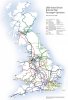
I think we've been through this before. This is what I came up with.
 

Attachments

  • Rail Companies Map (e).jpg
    Rail Companies Map (e).jpg
    105.3 KB · Views: 16

mallard

Established Member
Joined
12 Apr 2009
Messages
1,304
It's not as though this was unpredictable. The same thing happened when the railways were being built in the 19th century - lots of companies were set up but most were absorbed or driven out of business by larger rivals. And the predatory railways did not have the advantage of direct competition on routes to force their prey into losses.

Although that did happen "naturally" creating the some large companies, such as the Midland Railway, it was regulation (the 1921 Railways Act) that forced the railway companies to amalgamate in the end.
 
Status
Not open for further replies.

Top