Trainman40083
Established Member
And even they get stuck in megga traffic jams.Maybe for stuff like the airport runs but no good for the long distance runs, we need coaches that will do Hull to London and back on a charge

And even they get stuck in megga traffic jams.Maybe for stuff like the airport runs but no good for the long distance runs, we need coaches that will do Hull to London and back on a charge
I could definitely see Edwards taking a few. only problem is if they were laying over in Bristol Bus Station the only charging ports are for use by First West Of England, so would need a bit more added.Amongst the products featuring at Busworld this coming week is a battery-electric version of the Levante. The first example is right-hand drive; will National Express go for this?

Scania Caetano eLevante battery-electric coach breaks cover - routeone
Scania has debuted a battery-electric coach chassis at Busworld, with the first example in right-hand drive form with a Caetano eLevante body.www.route-one.net

 www.route-one.net
It's a wonder why Yutong didn't come out with TfL-compliant buses sooner, given the popularity of their models with provincial operators.Yutong has shown a second-generation U11DD battery-electric double-deck bus that meets Transport for London requirements and will allow it to enter that market via compliance with the contracting body’s Bus Safety Standard.
The vehicle is a development of the existing U11DD. It includes a flat floor in each saloon with improvements to the layout at the rear of both via a repackaging exercise.
Dealership Pelican Bus and Coach advises that the new version will be sold to all customers, not just Transport for London contractors. The example shown at Busworld is a seed single-door example. Revised design aspects having been led by feedback from the UK. Buses will continue to be completed by Pelican after arrival here.
Energy storage of 417kWh will be fitted, Head of Yutong UK Ian Downie has clarified. Some of that is now mounted around the chassis thanks to use of thinner packs. He adds that a single-motor arrangement will continue to be used in production buses.
Development of a next generation of the Yutong U11DD that suits London follows success for Pelican with the initial variant, which was first seen in 2023. Around a year later, First Bus ordered 127 of the type as part of a larger deal for Yutong electric products. Several other buyers have also taken the U11DD.
Well, it’s certainly the better of the revised for TfL designs (Wrightbus I’m looking at you for the ugliest). Took me a little while to really see the difference between the existing model and this one but it’s not a bad improvement at all.In other news, Yutong have unveiled a new U11DD, the principal changes over the previous model being a reshaped front end to comply with TfL pedestrian safety regulations, and changes to the battery layout. It is intended for both capital and provincial operators.
Overhauled Yutong U11DD gives model access to London market - routeone
Yutong has shown a second-generation U11DD battery-electric double-deck bus that complies with Transport for London requirements.
It's a wonder why Yutong didn't come out with TfL-compliant buses sooner, given the popularity of their models with provincial operators.

Have you not seen the BYD??Well, it’s certainly the better of the revised for TfL designs (Wrightbus I’m looking at you for the ugliest). Took me a little while to really see the difference between the existing model and this one but it’s not a bad improvement at all.

The BYD BD11 is an aesthetic abomination. I'm glad Arriva got Wrights for Leicestershire.Have you not seen the BYD??
I never understood why all BYD buses everywhere are this ugly when the corresponding Yutong are so much nicerThe BYD BD11 is an aesthetic abomination.

The BYD surely should take that crown! The Wrightbus in my opinion is a nice facelift on the classic designWell, it’s certainly the better of the revised for TfL designs (Wrightbus I’m looking at you for the ugliest). Took me a little while to really see the difference between the existing model and this one but it’s not a bad improvement at all.
The initial body choice of an RHD Levante means it’s pretty clearly aimed at National Express, and I’d be surprised if Scania hadn’t developed this without feedback from NX.Maybe for stuff like the airport runs but no good for the long distance runs, we need coaches that will do Hull to London and back on a charge
But presumably the shorter diagrams expect coaches to be used on more than one return journey. Would there be time to recharge between trips?The initial body choice of an RHD Levante means it’s pretty clearly aimed at National Express, and I’d be surprised if Scania hadn’t developed this without feedback from NX.
There’s plenty of NX routes which it could do roundtrip easily.

 www.route-one.net
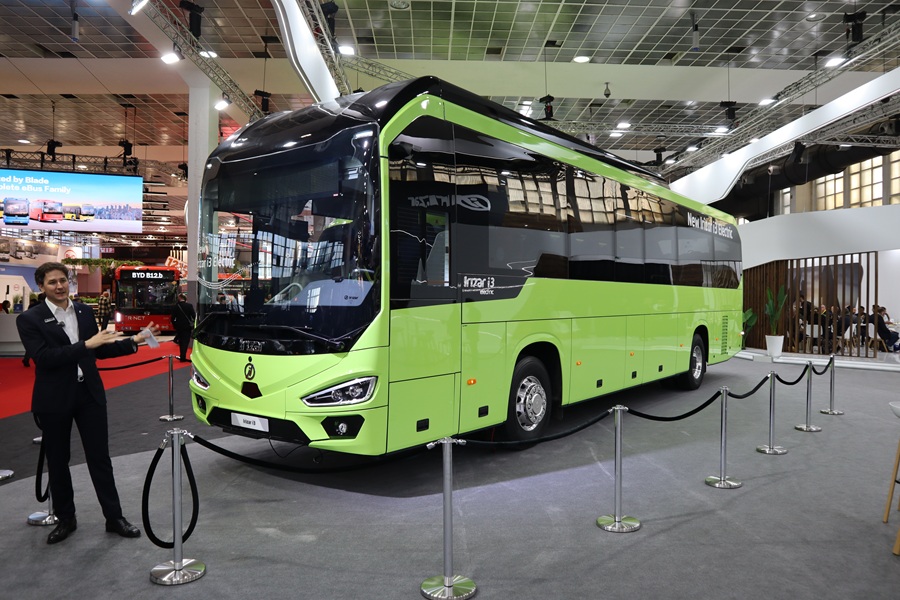
Irizar has launched an i3 Normal Floor battery-electric low-height coach that the builder expects to come to the UK in due course.
The product debuts at Busworld in 12.2m, two-axle form, although Irizar says other lengths will follow. As shown, it has 528kWh of battery capacity using lithium iron phosphate chemistry, although other battery choices will come as the breadth of the model expands.
Up to 53 passengers can be carried. The show example has a Masats passenger lift at its broad centre nearside door, with room for a wheelchair user directly opposite.
A range of up to 450km is claimed by Irizar. Six battery packs are fitted: two at the rear, and four on the roof. Charging is via CCS2 at up to 150kW, with front or rear connection options. The model is also compatible with pantograph-based opportunity replenishment at 300kW.
Irizar Group CEO Imanol Rego says arrival of the i3 Normal Floor “completes the offer of the i3 [range],” which thus far has been deployed in low-entry bus applications. He adds that growth of the Spanish OEM’s zero-emission range continues a path of decarbonisation “with a technological neutrality.”
Over seven cubic metres of underfloor luggage space is included, with options of manual or powered bay doors. That is part of what Irizar says is “a completely vanguard design” to maximise passenger and baggage space.
Drive is taken via a 260kW motor coupled to a three-speed gearbox. The manufacturer adds that it has worked hard on the vehicle to leverage serviceability. All electronics are within the interior and not outside the cabin.
Some components in the i3 Normal Floor are shared with other Irizar products. The new model will be available only with a camera monitoring system; no rear-view mirror fitment is expected. It also complies with EU R29 regulations on driver and passenger protection in a head-on collision.
On right-hand drive plans, Irizar Export Sales Director Javier Goikoetxea notes that “there is a demand” in the UK for such a coach, although he cautions that coming of a right-hand drive variant will follow work in left-hand drive.
On the longer journeys like Hull - London, there must be some relatively long calls at bus stations to allow for connections, as well as personal needs breaks for drivers. Enough time for a "Switch. Charge, Lift and Dash"?But presumably the shorter diagrams expect coaches to be used on more than one return journey. Would there be time to recharge between trips?
The styling of buses and livery should be about making buses stand out in the streetscape and attracting passengers (like TfL Red). The Wrightbus bodied buses for NXWM in dark grey do neither. https://www.busandcoachbuyer.com/wrightbus-hits-co2-saving-milestone/Well, it’s certainly the better of the revised for TfL designs (Wrightbus I’m looking at you for the ugliest). Took me a little while to really see the difference between the existing model and this one but it’s not a bad improvement at all.

Only got round to looking at the article (with photo) today and makes me wonder if Caetano took inspiration from the Thunderbirds tv show for the eLevante! At least Plaxton knew how to style the feature window in the eighties...Amongst the products featuring at Busworld this coming week is a battery-electric version of the Levante. The first example is right-hand drive; will National Express go for this?
https://www.route-one.net/news/scania-caetano-elevante-battery-electric-coach-breaks-cover/
I agree. I think the Wrightbus face-lift is superb, although Yutong have done a very good job.The BYD surely should take that crown! The Wrightbus in my opinion is a nice facelift on the classic design
Having been involved in Stansted operations for a little while (albeit not for NX) - almost certainly, yes. They could surely manage two trips on the airport services before needing charging, while the drivers have their break anyway - they tended to keep the same vehicle all day as far as I was aware anyway. It would need a redesign of some of the duties perhaps but nothing insurmountable!But presumably the shorter diagrams expect coaches to be used on more than one return journey. Would there be time to recharge between trips?
There are no scheduled breaks anywhere on the Londons we runOn the longer journeys like Hull - London, there must be some relatively long calls at bus stations to allow for connections, as well as personal needs breaks for drivers. Enough time for a "Switch. Charge, Lift and Dash"?
== Doublepost prevention - post automatically merged: ==
The styling of buses and livery should be about making buses stand out in the streetscape and attracting passengers (like TfL Red). The Wrightbus bodied buses for NXWM in dark grey do neither. https://www.busandcoachbuyer.com/wrightbus-hits-co2-saving-milestone/


Nottingham City Transport had a couple batches of 08 reg MAN Optare Versas and they really weren’t fans of their reliability. They also were also terribly sluggish, especially compared to Cummins Solo SRs which came a few years later. I believe they were all part exchanged for ADL E200s with them now ending up at Ipswich buses. I’ve also heard it said that the MAN customer support reputation wasn’t greatThis may be the wrong thread but if so my apologies.
I saw a social media post about someone asking for opinions on a MAN E300 MMC being made.
Why did Optare & ADL drop MAN engines? At points both offered them.. were they dropped due to the poorer reliability? Or other reasons?
I suspect reliability issues damaged the reputation of MAN buses at Euro IV/V which then killed demand so the manufacturers dropped the option due to lack of sales. The big issue seemed to be around the cooling systems and particularly the radiators being susceptible to damage then leading to overheating. As I understand it from reports the big issue was on the continent much of the routine maintenance is done via manufacturer support which meant that they could ensure vehicles are treated as they need to be but in the UK even quite small bus operators do their own maintenance in house and vehicles weren't being treated quite as carefully, the story I heard was particularly around cleaning radiators where operators would normally hose out but the hoses had a little too much power and were damaging the grills which reduced the amount of cooling available. This reduced cooling then added to the fact that MAN engines ran hotter because they, like Scania, opted not to use exhaust additives (known generally as AdBlue) to clean exhausts and instead used a higher engine temperature to burn up the things that needed to be cleaned and it resulted in overheating issues.This may be the wrong thread but if so my apologies.
I saw a social media post about someone asking for opinions on a MAN E300 MMC being made.
Why did Optare & ADL drop MAN engines? At points both offered them.. were they dropped due to the poorer reliability? Or other reasons?
They do still with coaches where demand has held up better as the reliability issues around overheating appear to have been less pronounced (possibly more space for cooling over a bus but also possibly more small coach operators do use manufacturers supported maintenance programs) but they don't appear to have any bus products currently available in the UK. Like a lot of manufacturers the increasing sophistication of modern PSVs mean that they chassis suppliers only work with a small number of approved bodybuilders. I think the last attempt to sell bus chassis in the UK was the partnership with Caetano that came off the back of the Gas buses but only a single batch appears to have been built which all ended up with Adventure Travel in South Wales.Do MAN still offer a chassis for others to body? They seem to have stopped selling their engines for competitors to insert in their integral vehicles which is one reason why Cummins has become more common across Europe
The RR series used to be a popular option with the MobiPeople Explorer, dunno if it still is.Do MAN still offer a chassis for others to body? They seem to have stopped selling their engines for competitors to insert in their integral vehicles which is one reason why Cummins has become more common across Europe
Metrobus had 5 East Lancs Esteems with MAN engines. They never seemed to be very popular, and were moved on fairly quickly.This may be the wrong thread but if so my apologies.
I saw a social media post about someone asking for opinions on a MAN E300 MMC being made.
Why did Optare & ADL drop MAN engines? At points both offered them.. were they dropped due to the poorer reliability? Or other reasons
The ones bought by Ipswich later had their MAN engines swapped out for Cummins ones.Nottingham City Transport had a couple batches of 08 reg MAN Optare Versas and they really weren’t fans of their reliability. They also were also terribly sluggish, especially compared to Cummins Solo SRs which came a few years later. I believe they were all part exchanged for ADL E200s with them now ending up at Ipswich buses. I’ve also heard it said that the MAN customer support reputation wasn’t great

 www.facebook.com
Only got round to looking at the article (with photo) today and makes me wonder if Caetano took inspiration from the Thunderbirds tv show for the eLevante! At least Plaxton knew how to style the feature window in the eighties...
The Levante was never a looker to begin with, but that thing is just hideous.Only got round to looking at the article (with photo) today and makes me wonder if Caetano took inspiration from the Thunderbirds tv show for the eLevante! At least Plaxton knew how to style the feature window in the eighties...
 www.theguardian.com
And probably affects any vehicles (e.g. cars) made in China or using Chinese electronics. A remote 'kill switch' could cause havoc if China was ever so inclined to activate it on all such vehicles.Although the story relates to Denmark and Norway, presumably the same “risk” exists with UK operators of Chinese buses?
Danish authorities in rush to close security loophole in Chinese electric buses
Investigation launched after discovery that Chinese supplier had remote access to vehicles’ control systems
Investigation launched after discovery that Chinese supplier had remote access to vehicles’ control systems
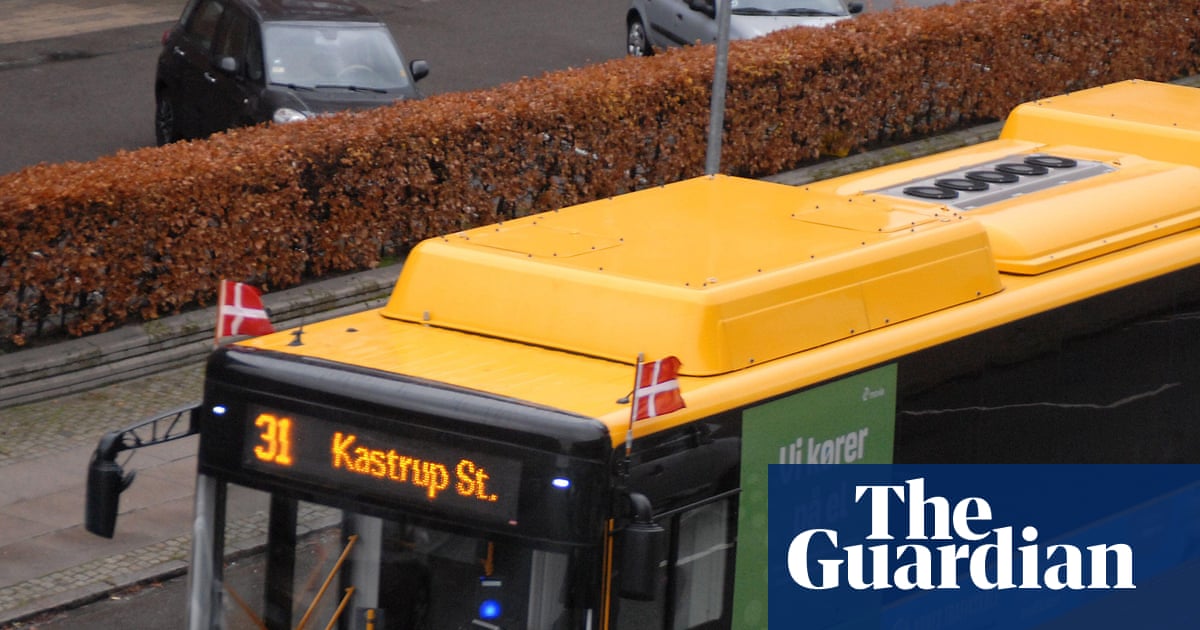
Authorities in Denmark are urgently studying how to close an apparent security loophole in hundreds of Chinese-made electric buses that enables them to be remotely deactivated.
The investigation comes after transport authorities in Norway, where the Yutong buses are also in service, found that the Chinese supplier had remote access for software updates and diagnostics to the vehicles’ control systems – which could be exploited to affect buses while in transit.
Amid concerns over potential security risks, the Norwegian public transport authority Ruter decided to test two electric buses in an isolated environment.
Bernt Reitan Jenssen, Ruter’s chief executive, said: “The testing revealed risks that we are now taking measures against. National and local authorities have been informed and must assist with additional measures at a national level.”
Their investigations found that remote deactivation could be prevented by removing the buses’ sim cards, but they have not done this because it would also disconnect the bus from other systems.
Ruter said it planned to bring in stricter security requirements for future procurements. Jenssen said it must act before the arrival of the next generation of buses, which could be even “more integrated and harder to secure”.
Movia, Denmark’s largest public transport company, has 469 Chinese electric buses in operation – 262 of which were manufactured by Yutong.
Jeppe Gaard, Movia’s chief operating officer, said he was last week made aware that “electric buses – like electric cars – can be remotely deactivated if their software systems have web access”. He added: “This is not a Chinese bus problem. It is a problem for all types of vehicles and devices with Chinese electronics built in.”
Gaard said the Danish agency for civil protection and emergency management told it that it was not aware of any specific cases in which electric buses had been deactivated, but warned that the vehicles were equipped with “subsystems with internet connectivity and sensors (cameras, microphones, GPS) that can constitute vulnerabilities which could be exploited to disrupt bus operations”.
Yutong said it “strictly complies with the applicable laws, regulations, and industry standards of the locations where its vehicles operate” and that Yutong vehicle terminal data in the EU were stored at an Amazon Web Services (AWS) datacentre in Frankfurt.
A spokesperson added: “This data is used solely for vehicle-related maintenance, optimisation and improvement to meet customers’ after-sales service needs. The data is protected by storage encryption and access control measures. No one is allowed to access or view this data without customer authorisation. Yutong strictly complies with the EU’s data protection laws and regulations.”
Thomas Rohden, the chair of the Danish China-Critical Society and a regional Social Liberal party councillor, said Denmark has been “way too slow” when it came to dependence on Chinese companies.
“This is a huge problem. We should not be so dependent on a country that has values and ideals so different to Denmark,” Rohden said. He added that at a time when Denmark was trying to increase its resilience amid allegations of hybrid attacks by Russia “it’s not very resilient to be totally dependent on China”.
The Norwegian ministry of transport declined to comment.
Not just Chinese, a lot of more recent models have the ability to perform remote software updates, and more will have some form of telematics for monitoring which may have some limited control capability.And probably affects any vehicles (e.g. cars) made in China or using Chinese electronics. A remote 'kill switch' could cause havoc if China was ever so inclined to activate it on all such vehicles.


