• Our new ticketing site is now live! Using either this or the original site (both powered by TrainSplit) helps support the running of the forum with every ticket purchase! Find out more and ask any questions/give us feedback in this thread!

Why do trains not have seat belts? (overheard question)

Status
Not open for further replies.

tfw756rider

On Moderation
Joined
30 Nov 2024
Messages
1,995
Location
Wales (sometimes in England), thanks for replying!
I was on a train earlier and a little girl asked her Dad why there were no seat belts, and he told her that he didn't actually know.

That got me wondering, why don't any passenger trains have seat belts? Some buses and coaches do (although I understand that's more for school workings) but why don't any trains?

I know the chance that they'd actually be needed is very low, but...
 
Sponsor Post - registered members do not see these adverts; click here to register, or click here to log in
R

RailUK Forums

The exile

Established Member
Joined
31 Mar 2010
Messages
9,455
Location
Somerset
Is it not the case that the number of accidents in which they would help is balanced / outweighed by the number where they would actually make things worse? That’s before we get to the question of standing passengers/ those on the way to the toilet etc.
 

swt_passenger

Veteran Member
Joined
7 Apr 2010
Messages
34,308
It was assessed in detail after the Ufton Nurvet HST collision/derailment and they reckoned seatbelts wouldn’t have helped. One of the main points is that in GB almost all trains are assumed to carry significant numbers of standing passengers, and at risky points in journeys, such as approaching a terminus, nearly everyone gets up and is heading for the doors while the train is moving.

I think the safety emphasis for many years has been, (and continues to be), about preventing collision and over speeding by means of the signalling system, hence add ons such as AWS/TPWS, ATP, TASS and more recently ETCS.

AWS Automatic Warning System,
TPWS Train Protection and Warning System,
ATP Automatic Train Protection,
TASS Tilt Authorisation and Speed Supervision,
ETCS European Train Control System.
 

frankmoh

On Moderation
Joined
7 May 2025
Messages
826
Location
London
There are not too many times you would be flying out of a cab windshield. Not that it would matter, as you are perfectly fine to stand on a train.
 

Sorcerer

Established Member
Joined
20 May 2022
Messages
2,189
Location
Liverpool
Aside from the fact that we have standing passengers and seats facing opposite the direction of travel, it's much easier to pursue the goal of preventing collisions on railways because of their fixed routing along a two-dimensional plain unlike road vehicles where there is significant risk from other drivers with greater unpredictability. Road traffic collisions are almost an inevitability with the current setup, so mitigating their effects is a better strategy compared to trying to ensure everyone drives perfectly at all times, whereas railways are the complete opposite.
 

Bald Rick

Veteran Member
Joined
28 Sep 2010
Messages
35,939
The short answer, after some very detailed assessment following accidents in the last 30 years, is that seatbelts on trains would cause more passenger injuries and fatalities than the current system.

Also, enforcing their use, and maintaining them, would be quite some challenge.
 

Fidelis

Member
Joined
27 Aug 2020
Messages
86
Location
Worcester
Because half the seats in a train face backwards, so no use there and possibly harmful
Why do you assume that seats not facing the direction of travel are harmful.as the MOD medical & safety research dept at Farnborough proved that it is safer to travel with your back to the direction of travel as in a sudden stop the passenger is pressed into the back of their seat by the body's momentum -Newtons Third Law . When the RAF had their own transport aircraft, based on the VC 10, all seats faced the back of the aircraft despite seat belts being compulsory for all personnel.
Airliners found that their passengers preferred facing the direction of travel relying on warnings and crouched posture.
 

The exile

Established Member
Joined
31 Mar 2010
Messages
9,455
Location
Somerset
Why do you assume that seats not facing the direction of travel are harmful.as the MOD medical & safety research dept at Farnborough proved that it is safer to travel with your back to the direction of travel as in a sudden stop the passenger is pressed into the back of their seat by the body's momentum -Newtons Third Law . When the RAF had their own transport aircraft, based on the VC 10, all seats faced the back of the aircraft despite seat belts being compulsory for all personnel.
Airliners found that their passengers preferred facing the direction of travel relying on warnings and crouched posture.
That’s not how I read the comment - more that in backward facing seats seat-belts would be of little use and might themselves possibly be harmful. This to me makes sense as the main benefit of them (stopping you from being shot forwards in the case of a sudden deceleration) doesn’t apply, but all the possible risks (trapping in case of fire etc) remain.
 

Stossgebet

Member
Joined
3 Oct 2024
Messages
203
Location
Midlands
Also, imagine the legal perspective. Especially after an accident involving a train with seatbelts AND standing passengers getting injured or worse.

The legal argument would follow the logic that if the industry said it was safer for passengers to wear the provided seat belts, then the industry in endangering the people that it allows to stand on trains.
 

fandroid

Established Member
Joined
9 Nov 2014
Messages
2,567
Location
Hampshire
In normal passenger aircraft, the seat belts don't restrain you from falling forwards. They stop you flying out of your seat if the plane makes a sudden downward move. Not a common event on trains.

Given the intense focus on safety on passenger aircraft, I'm certain that they would have adopted shoulder restraints too if they thought them worthwhile
 

michael8

Member
Joined
13 Feb 2021
Messages
236
Location
UK
What purpose would a seatbelt on a train serve ? The speed of trains and their weight mean there is very little chance of a "sudden stop" happening, as with a car, unless there are two equal trains head on crash at equal speed, in which case the entirety of the train would be obliterated at that weight and speed, rendering seatbelts useless.

A car's seatbelt stops you from being propelled out the windscreen in a sudden stop situation.

A plane's seatbelt - one strap - holds you down if there is turbulence.

If a train were to derail or collide, an effective course of action would be to hold on to something to steady yourself.
 

Tester

Established Member
Joined
5 Jul 2020
Messages
1,732
Location
Watford
If it were deemed necessary for rail passengers to wear seat belts, standing would clearly have to be banned, so compulsory reservation for every train, including suburban, with comprehensive access controls and sufficient staffing levels to ensure enforcement.

Also, unlike on planes where seatbelts are only mandatory for small parts of the flight, on trains this would need to apply whenever the train was in motion - hence no leaving the seat to visit toilet or buffet, or to stretch your legs, except during (presumably extended) station stops - again presumably enforced by an army of staff.

In short - forget it.
 

edwin_m

Veteran Member
Joined
21 Apr 2013
Messages
28,727
Location
Nottingham
What purpose would a seatbelt on a train serve ? The speed of trains and their weight mean there is very little chance of a "sudden stop" happening, as with a car, unless there are two equal trains head on crash at equal speed, in which case the entirety of the train would be obliterated at that weight and speed, rendering seatbelts useless.
There have been accidents, such as Ufton Nervet mentioned above, where coaches have overturned and people have been thrown around inside and some even ejected from broken windows. Seatbelts, if fitted and useable and actually used, might have saved some lives there. But also also mentioned above, the analysis concluded that more lives would have been lost in other accidents.
 

supervc-10

Member
Joined
4 Mar 2012
Messages
763
In normal passenger aircraft, the seat belts don't restrain you from falling forwards. They stop you flying out of your seat if the plane makes a sudden downward move. Not a common event on trains.

Given the intense focus on safety on passenger aircraft, I'm certain that they would have adopted shoulder restraints too if they thought them worthwhile

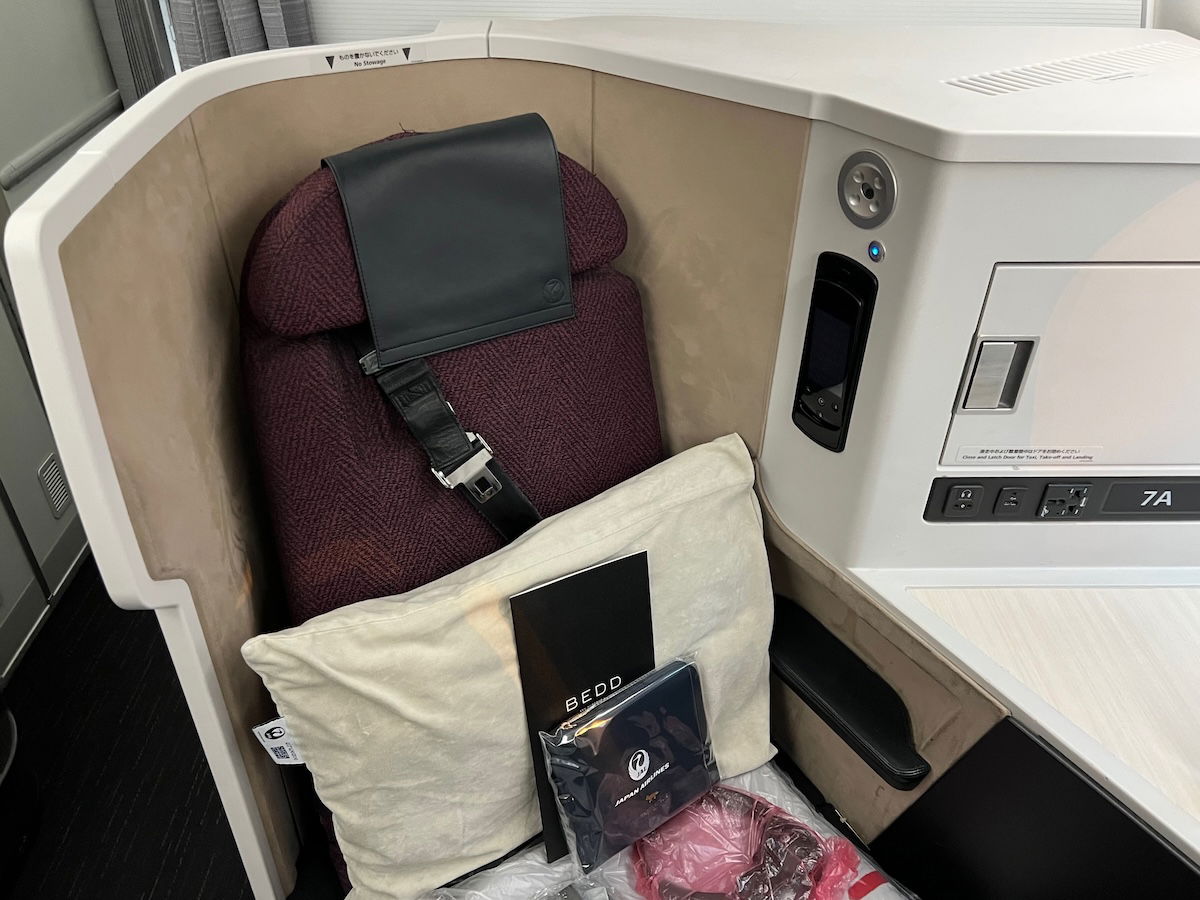
Some aircraft seats do have shoulder straps - generally seats in first/business class which are at an angle. The shoulder strap is used for takeoff and landing - where there is the possibility for sudden deceleration. You then detach it from the rest of the seatbelt for cruise, where the seatbelt is there to prevent injuries from turbulence.

Japan-Airlines-Business-Class-787-11.jpeg

(Image shows a JAL Boeing 787 business class seat, with a shoulder strap)

Seatbelts are there on planes for restraining you from forward motion too. Things like runway overruns will result in quite significant rates of deceleration, and seatbelts help passengers survive that with minimal injuries normally.
 

michael8

Member
Joined
13 Feb 2021
Messages
236
Location
UK
There have been accidents, such as Ufton Nervet mentioned above, where coaches have overturned and people have been thrown around inside and some even ejected from broken windows. Seatbelts, if fitted and useable and actually used, might have saved some lives there. But also also mentioned above, the analysis concluded that more lives would have been lost in other accidents.
Very interesting, thank you, I didn't know that
 

Helvellyn

Established Member
Joined
28 Aug 2009
Messages
2,581
Some aircraft seats do have shoulder straps - generally seats in first/business class which are at an angle. The shoulder strap is used for takeoff and landing - where there is the possibility for sudden deceleration. You then detach it from the rest of the seatbelt for cruise, where the seatbelt is there to prevent injuries from turbulence.

Japan-Airlines-Business-Class-787-11.jpeg

(Image shows a JAL Boeing 787 business class seat, with a shoulder strap)

Seatbelts are there on planes for restraining you from forward motion too. Things like runway overruns will result in quite significant rates of deceleration, and seatbelts help passengers survive that with minimal injuries normally.
And of course the angled or rear facing seats with a different belt design are always suitable because the plane is always travelling forward. Trains change direction many times a day so you'd have to fit this type to every seat.
 

HSTEd

Veteran Member
Joined
14 Jul 2011
Messages
20,360
I think, after the Carmont derailment, you could make an argument for providing train drivers with quick release motor racing style harnesses. After all the driver in that incident was probably killed by being thrown around the cab as the train came off the rails. [Link to RAIB accident report]

Unlike passengers, train crew can presumably be trained on how to use them properly and release them rapidly in an emergency.
 
Last edited:

Helvellyn

Established Member
Joined
28 Aug 2009
Messages
2,581
I think, after the Carmont derailment, you could make an argument for providing train drivers with quick release motor racing style harnesses. After all the driver in that incident was probably killed by being thrown around the cab as the train came off the rails. [Link to RAIB accident report]

Unlike passengers, train crew can presumably be trained on how to use them properly and release them rapidly in an emergency.
It's an interesting question for Drivers. It's not something I'm aware ASLEF have advocated for and I'd have thought if they were seen to gave real benefits they would have done so, even if only for new trains. Given they'd have to be adjustable I wonder how much it would require a significant redesign of Driver's seats in cabs?
 
Joined
5 Jan 2014
Messages
570
Also, imagine the legal perspective. Especially after an accident involving a train with seatbelts AND standing passengers getting injured or worse.

The legal argument would follow the logic that if the industry said it was safer for passengers to wear the provided seat belts, then the industry in endangering the people that it allows to stand on trains.
Well they are endangering people surely the logic is the railway should provide a seat for everyone.
 

mangyiscute

Established Member
Joined
6 Mar 2021
Messages
1,526
Location
Reading
Well they are endangering people surely the logic is the railway should provide a seat for everyone.
I wouldn't say that having standing passengers endangers anyone in particular, and unfortunately due to how travel has such huge demand spikes its impossible to eliminate standing passengers entirely (think peak commuter times or big sporting events etc) without using a reservation only system which would be awful (although I do acknowledge that a lot of services that have standing passengers shouldn't)
 

greatkingrat

Established Member
Joined
20 Jan 2011
Messages
3,312
It's an interesting question for Drivers. It's not something I'm aware ASLEF have advocated for and I'd have thought if they were seen to gave real benefits they would have done so, even if only for new trains. Given they'd have to be adjustable I wonder how much it would require a significant redesign of Driver's seats in cabs?
I suspect most drivers would not want to wear any sort of seatbelt/harness anyway, even if fitted.
 

The exile

Established Member
Joined
31 Mar 2010
Messages
9,455
Location
Somerset
Well they are endangering people surely the logic is the railway should provide a seat for everyone
Life is not without risk. “Provide a seat for everyone” would actually mean “restrict the number of people who can use the safest practical form of transport available”. Overall the risk for the travelling public would increase - even if the railway could smugly point to a 0.00001% increase in its own safety (invented figure).
 

Tester

Established Member
Joined
5 Jul 2020
Messages
1,732
Location
Watford
Life is not without risk. “Provide a seat for everyone” would actually mean “restrict the number of people who can use the safest practical form of transport available”. Overall the risk for the travelling public would increase - even if the railway could smugly point to a 0.00001% increase in its own safety (invented figure).
This is a very important point which is sadly lost on many people.
 

Trainbike46

Established Member
Joined
18 Sep 2021
Messages
4,376
Location
belfast
Life is not without risk. “Provide a seat for everyone” would actually mean “restrict the number of people who can use the safest practical form of transport available”. Overall the risk for the travelling public would increase - even if the railway could smugly point to a 0.00001% increase in its own safety (invented figure).
I mean, based on posts in this thread the evidence suggests that seatbelts wouldn't make rail safer at all, so making seats mandatory would just be outright worse
 

Krokodil

Established Member
Joined
23 Jan 2023
Messages
6,606
Location
Wales
Why do you assume that seats not facing the direction of travel are harmful.as the MOD medical & safety research dept at Farnborough proved that it is safer to travel with your back to the direction of travel as in a sudden stop the passenger is pressed into the back of their seat by the body's momentum -Newtons Third Law . When the RAF had their own transport aircraft, based on the VC 10, all seats faced the back of the aircraft despite seat belts being compulsory for all personnel.
It occurred to me when reading about the injuries at Talerddig that rear-facing seats are much safer than front-facing ones, especially non-airline-style.

That knowledge doesn't stop me from making a beeline for a forward-facing table seat wherever possible.
 
Status
Not open for further replies.

Top