
Buzby
Established Member
You cannot get to the new bridge from the turning circle - you’d need to double back the way you came (or climb through a scrap yard). Once at Meadowside Street it’s at least 1Km to walk.

Yeah, that’s why I don’t get why they didn’t make the 26B go to the bridge.You cannot get to the new bridge from the turning circle - you’d need to double back the way you came (or climb through a scrap yard). Once at Meadowside Street it’s at least 1Km to walk.

I feel it is apt to mention that the 26B only exists to serve those areas of Renfrew that were cut off when the 26 had to be pulled along the 23 route because of the infamous Ferry Road works!Yeah, that’s why I don’t get why they didn’t make the 26B go to the bridge.
Indeed, the 26B has got nothing to do with the new bridge, it’s simply covering the majority of stops omitted by the regular 26 during the current 17 week closure of Ferry Road.I feel it is apt to mention that the 26B only exists to serve those areas of Renfrew that were cut off when the 26 had to be pulled along the 23 route because of the infamous Ferry Road works!
 www.mcgillsbuses.co.uk
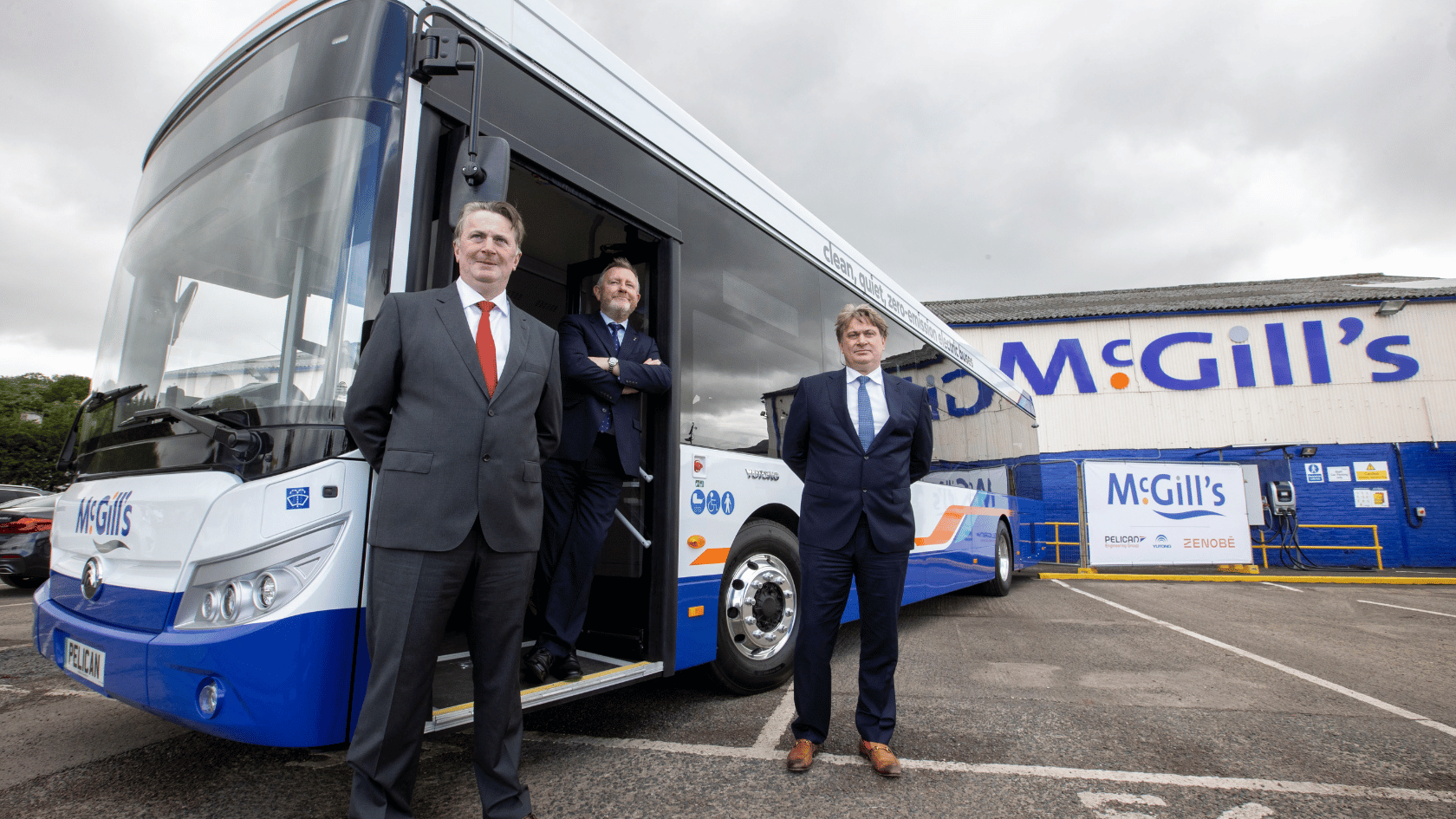
McGill’s Group, the UK’s largest independent bus company, has unveiled plans for a new £25 million depot on a prime site close to Glasgow city centre, in a move that could deliver up to 850 jobs.
Do we think this is for a big push against firstMcGill's have announced plans for a new depot to the south of Glasgow City Centre.
McGill's Group Announce Plans for £25M Mega Depot in the Centre of Glasgow
Major investment could create up to 850 new jobs in the city.
I wonder how nervous First Glasgow are feeling… this new planned depot is less than a mile from First’s massive Caley depot!McGill's have announced plans for a new depot to the south of Glasgow City Centre.
McGill's Group Announce Plans for £25M Mega Depot in the Centre of Glasgow
Major investment could create up to 850 new jobs in the city.
https://www.mcgillsbuses.co.uk/mcgi...stwood-significant-expansion-coach-operations McGill’s Group Acquires Prentice Westwood in Significant Expansion of Coach Operations.
Scotland's largest independent transport group continues coach growth with seven-figure deal.
McGill’s Group, the UK’s largest independent transport operator, has announced the acquisition of leading coach firm Prentice Westwood as part of its continued expansion in the coach travel sector.
The seven-figure deal will see the respected West Lothian-based business - one of Scotland’s longest-established, family-run coach companies with more than 70 years of experience - join the portfolio of McGill’s Group companies owned by leading Scottish businessmen, Sandy and James Easdale.
All Prentice Westwood employees will become part of the McGill’s Group, and it is anticipated the well-known brand will be retained following the completion of the deal.
Over the past five years, McGill’s Group has significantly grown its coach operations. Its FLY services connecting Edinburgh Airport with Dundee and Aberdeen have proved immensely popular, while its private coach hire business continues to thrive across Scotland.
In 2023, McGill’s also launched Loch Lomond Travel, a coach holiday division that has seen rapid growth and strong demand among holidaymakers. The company is also the operator of the successful FlixBus network in Scotland and across the UK, with the international intercity service flourishing since its 2021 launch in partnership with McGill’s.
Tony Williamson, CEO of McGill’s Group, said the acquisition strengthens the company’s offering in central Scotland and brings further expertise into the business.
Mr Williamson said: “Prentice Westwood has a terrific reputation as a quality transport provider in central Scotland, and we are very pleased to welcome them into the McGill’s Group.
“During our discussions, I was very impressed by their team, ethos and operational standards - all of which made this an easy decision.
“We believe Prentice Westwood will play a significant role in supporting our continued growth across coach travel in central Scotland and beyond, and we look forward to welcoming our new colleagues into the business.”
Robbie Prentice, owner of Prentice Westwood, said the move was an exciting next step for the business and its staff.
Mr Prentice said: “We are incredibly proud of what Prentice Westwood has achieved over the past 70 years as a family enterprise.
“Joining McGill’s Group represents a fantastic opportunity to secure the long-term future of the business and for our team to be part of one of the most forward-thinking and ambitious transport operators in the UK.
“The values and vision of McGill’s align closely with our own, and I’m eager to see the development of the business in the coming years.”
It will be used by Loch Lomond Tours for all the coaches. The idea is to split them away from using the other depots incase of franchising comes into play in Glasgow and they want to get ahead of that to ensure they still have space to keep the coaches.Do we think this is for a big push against first
Loch Lomond tours include Flixbus they operate on that licenseDoes that mean Flixbus operations will move depots aswell?
Given that the SNP were the ones who introduced the Transport (Scotland) Act that expressly permits franchising, I'd wager they would be in favour to prove that what was passed at Holyrood is effective.Nothing wrong with a bit of ambition, but 300 coaches is a lot of coaches. What on earth would they be doing? Is there that much work to win from competitors, or can the West of Scotland market grow that much? Feels like the McGills PR machine has gone into overdrive.
I know SPT have started the franchising process, but without funding it isn’t going anywhere. Labour and the Greens are very supportive, but do the SNP have a view? Since they seem likely to remain in charge after next year’s elections it’s their bus policy (if they have one) that’ll count. I’d like to see it happen, but it won’t be cheap, so likely to be kicked into the long grass.
If franchising does go ahead, First would be unlikely to keep everything (and might lose the lot!), so the new depot makes sense. But if it doesn’t, they’ll need a lot of coaches to fill it…
They might be, but they may be put off by the cost. Perhaps they’re waiting to see how things pan out south of the border. Manchester is costing more than originally estimated.Given that the SNP were the ones who introduced the Transport (Scotland) Act that expressly permits franchising, I'd wager they would be in favour to prove that what was passed at Holyrood is effective.

 www.route-one.net
Whilst probably difficult to monetise/quantify, it would be interesting to know what the wider health and socio-economic benefits are as a result of Franchising in TfGM-land, given the uptake in bus journeys etc.They might be, but they may be put off by the cost. Perhaps they’re waiting to see how things pan out south of the border. Manchester is costing more than originally estimated.
Whilst Glasgow or the wider Strathclyde area may not be directly comparable to Manchester (I certainly don’t know), the initial estimate by SPT of £85m a year seems a tad optimistic.
Bee Network: The now and the future of bus in Greater Manchester - routeone
Rollout of the Bee Network in Greater Manchester is complete, but Transport Commissioner Vernon Everitt sees scope to do much more with it.
Ongoing costs of the Bee Network have drawn comment from some sources. Data recently published by Transport for Greater Manchester (TfGM) shows how 47% of those in the current financial year will be recovered via the farebox. Local taxation captures a further 29% of the £390 million of total expenditure in FY2025/26.
Interestingly in Glasgow that argument is already happening I work on the care sector and something being talked about is the effect of transport of socio economics out comes in deprived areas.Whilst probably difficult to monetise/quantify, it would be interesting to know what the wider health and socio-economic benefits are as a result of Franchising in TfGM-land, given the uptake in bus journeys etc.
There seems to be a rhetoric of it being ok to plough lots of money into the NHS (not knocking the NHS by any means), but then anytime subsidy of public transport is mentioned is boo-hooed and 'needs to cover for itself' (probably because for the buses it's going to private operators, and fare-based). Would that change if the buses were franchised?
Two thoughts therefore:
There is surely an argument supporting higher subidy into transport - like bus franchising - which delivers better outcomes for life, jobs and social opportunities etc., which has an impact on reducing some burdens on NHS, health and other services.
In the same way Glasgow/West Scotland successfully tackled knife-crime as a 'health' problem; can we re-divert/re-imagine the conversation around bus franchising (and Public Transport in general) as having the socio-economic and health benefits?
Did it move today? Could be a spare one so they can display one of the type at the Larbert Depot Open Day tomorrow.What’s with 2236 moving back to Johnstone depot from Midland Bluebird? Are more Eclipses heading back to Johnstone soon? Seems weird to have only one return.
No, it moved 3 days ago and has been out in active service.Did it move today? Could be a spare one so they can display one of the type at the Larbert Depot Open Day tomorrow.

A private bus operator under deregulation already relies on a similar level of public funding, around 50% of revenue, according to the NAO. Yet when TfGM publishes the same proportion for the Bee Network, it is presented as though uniquely alarming.Ongoing costs of the Bee Network have drawn comment from some sources. Data recently published by Transport for Greater Manchester (TfGM) shows how 47% of those in the current financial year will be recovered via the farebox. Local taxation captures a further 29% of the £390 million of total expenditure in FY2025/26.
Why are we talking more about the Bee Network future for Scotland? Not meaning to be rude, just asking?A private bus operator under deregulation already relies on a similar level of public funding, around 50% of revenue, according to the NAO. Yet when TfGM publishes the same proportion for the Bee Network, it is presented as though uniquely alarming.
That “scary” headline figure also folds in infrastructure and wider system costs, which I’ve pointed out before to the same outlet. The fact they’ve once again omitted this context suggests less an oversight and more a political framing designed to make franchising look disproportionately expensive. (bus only costs are £127.8m)
What makes this year’s data different is that it finally gives us a like-for-like financial comparison. Unlike earlier indicators, these figures exclude maintenance and capital projects, showing only the operational cost of running the network. The gap? Just 3%.
the Bee Network is deliberately pursuing low fares and service growth. In other words, this isn’t evidence of inefficiency or runaway subsidy, it is the logical outcome of a policy choice to grow patronage and make buses more affordable. They could join the 50% club with a fare rise.
Franchising was approved a few hour ago by the SPTWhy are we talking more about the Bee Network future for Scotland? Not meaning to be rude, just asking?
As it is essentially an unknown system for most of the UK. You can only really make comparisons with a network which is somewhat similar to your own.Strathclyde Partnership for Transport (SPT) Partnership has unanimously approved the Strathclyde Regional Bus Strategy (SRBS) and action plan, including development of bus franchising across the region.
The Strategy also includes actions to develop bus infrastructure, traffic management, and wider policies to support bus.
Following the public consultation on the future of bus in the west of Scotland earlier in the year, 83% of survey respondents supported the view that SPT should take forward plans for bus franchising with 5% opposing such plans.

Oh joy. The same organisation that is completely incompetent with the existing tendered network, is now being given more power to screw over the rest of the bus network. Whether you like or loathe First, McGills and Stagecoach, the network will be in a damn better state under the current model than under franchising. SPTs network team are a laughing stock.Franchising was approved a few hour ago by the SPT
As it is essentially an unknown system for most of the UK. You can only really make comparisons with a network which is somewhat similar to your own.
They have to find the money first, …so don’t hold your breath!Oh joy. The same organisation that is completely incompetent with the existing tendered network, is now being given more power to screw over the rest of the bus network. Whether you like or loathe First, McGills and Stagecoach, the network will be in a damn better state under the current model than under franchising. SPTs network team are a laughing stock.
I’m curious, what is the incentive for bus companies to compete against each other?I for one look forward to what can occur when bus companies are no longer incentivised to compete against each other on particular overdone corridors e.g. Paisley Road West, and what could then happen if the finances priorly allocated to an overabundance of provision in one area are reallocated to improving links in more suburban areas in which there have been wide swathes of cuts in recent years due to the vicious cycle affecting buses as oft described by the Confederation of Passenger Transport, which I would imagine would improve as a result of government subsidy!

