• Our new ticketing site is now live! Using either this or the original site (both powered by TrainSplit) helps support the running of the forum with every ticket purchase! Find out more and ask any questions/give us feedback in this thread!

The Labour Party under Andy Burnham

Tetchytyke

Veteran Member
Joined
12 Sep 2013
Messages
17,519
Location
Isle of Man
the vote for Reform is mostly about the fact that the little guy isn't being looked after by the state any more. They aren't getting pay rises, costs are going up and they can't afford to buy a home.
Absolutely this.

My household income is about £130k a year as both my wife and I are in well paid jobs. I am not going to sit here and plead poverty, because I am comfortable. I can afford to eat and heat without worrying about it. My mortgage fixed term ends in 12 months and, whilst I'm not looking forward to it, I'm not dreading it.

But I do not feel wealthy. A household income well into the six digits should afford a certain standard of living that I simply do not have. I don't have debt, other than my mortgage. I don't have flashy cars- my cars are 6 and 12 years old. Yet I don't have huge amounts of spare cash lying around. A hundred grand a year always felt like it should be "a nice car and foreign holidays at the pointy end of the plane" territory and, well, it isn't.

And then you see Tesco making record profits and increasing their underlying margin by 50%, all whilst the government (of both hues) are telling us that we're all in it together and we all need to make sacrifices. There's no evidence that the people at the top are feeling any pain whatsoever. Their net worth and their spending power is rising whilst mine isn't.

If I'm feeling little more than comfortable on my income, then I can't begin to imagine what it feels like for people who are on the national average wage, never mind minimum wage.

What should really worry governments is that the middle classes are getting restless. They see their standard of living receding into the distance. The peasants are always revolting but governments fall when the middle classes join them.
 
Sponsor Post - registered members do not see these adverts; click here to register, or click here to log in
R

RailUK Forums

jon0844

Veteran Member
Joined
1 Feb 2009
Messages
30,880
Location
UK
I heard an interesting point made on LBC yesterday (forget who the presenter was) - the vote for Reform is mostly about the fact that the little guy isn't being looked after by the state any more. They aren't getting pay rises, costs are going up and they can't afford to buy a home. The point was made that if Reform doesn't deliver on fixing this - and to be honest I'm confident they have no chance of doing so, given that immigration, while an issue, is not THE issue (rather it's just a scapegoat) - they wouldn't like to think what might happen in terms of social unrest or even worse political approaches. That would be a real shame, but could be where we are headed.

Reform has got little chance on delivering the things the working class need because they will be wanting to reduce the size of Government and cut taxes. Sure, lower taxes might benefit the poorer people too - but not by much. And the services they rely on will go, just like in the USA. If the NHS is changed to be more insurance based then they'll suffer even more because what little pay they do get will go on that.

Reform voters are useful idiots to get Farage into power and do what he needs to do for big business (and his own wealth). You can't get into power relying on votes from the rich alone, so you need to secure votes from a base that are easy to manipulate.

I don't know how Labour can get this message over. Of course trying to help the poorer people is a start, but the economy isn't in great shape right now.

Labour doesn't want to admit Brexit caused a lot of these issues, which is ironic because if everyone could be shown how Brexit caused damage and Farage was one of the orchestrators of Brexit, maybe that would raise a few eyebrows. They're just too terrified to even mention the B word.
 

Tetchytyke

Veteran Member
Joined
12 Sep 2013
Messages
17,519
Location
Isle of Man
Since 2017 MPs have been banned from employing spouses and close relatives (‘connected persons’). However, those that were employed before can remain in their jobs. Unfortunately, it doesn’t stop MPs employing people as favours for others.
The ban has had limited impact because it is full of loopholes.

Exhibit one: Morgan McSweeney's wife is an MP.

== Doublepost prevention - post automatically merged: ==

Labour doesn't want to admit Brexit caused a lot of these issues, which is ironic because if everyone could be shown how Brexit caused damage and Farage was one of the orchestrators of Brexit, maybe that would raise a few eyebrows. They're just too terrified to even mention the B word.
They're too terrified of everything.

The government should be guiding public opinion, not merely parroting whatever complaints they hear in focus groups.

A strong government would be on the front foot, explaining what the cost of Brexit was, they'd be explaining what the actual cost of the boat people is (and explaining how much of that "cost of immigration" is actually going straight to Serco). They'd be explaining that immigration is a necessary evil because, essentially, the local population aren't creating enough children to keep the working population numbers high enough to support the ageing population.

I'm not saying they should be arguing to reverse Brexit, but the government should be spelling out exactly what that decision has cost. Let the electorate then make an informed choice; maybe they think the cost is worth paying.

Instead we just get Pub Karaoke Farage from Starmer. He's not stupid, surely he can see that parroting Farage just strengthens Farage? After all, you don't go see the tribute act when the original band are in town.
 
Last edited:

jon0844

Veteran Member
Joined
1 Feb 2009
Messages
30,880
Location
UK
Instead we just get Pub Karaoke Farage from Starmer. He's not stupid, surely he can see that parroting Farage just strengthens Farage? After all, you don't go see the tribute act when the original band are in town.

This.

It's like Tesco boasting that they're matching a certain number of prices with Aldi. It just makes me think I should probably be going to Aldi in the first place for all the items Tesco doesn't say it is matching.
 
Last edited:

J663738

Member
Joined
20 May 2025
Messages
339
In terms of margin, Tesco was making about 3.1% after adjustments in 2021
Not sure why large retailers with a margin of 3.1% is coming in for so much stick? same with energy companies and petrol retailer with margins less than 5%.
When people are happy to buy football kits, coffees and and mobile phones, with margins which all exceed 100%
 

dcbwhaley

On Moderation
Joined
4 Aug 2018
Messages
834
There’s a “cost of living crisis” even for people like me. My household income is north of £130k a year. I am comfortable in that I can pay my mortgage and turn the heating on without worrying. I have no debt (except the mortgage) yet even then I certainly do not feel remotely wealthy.
Curious. We have a household income of about £90K and no mortgage. And I feel incredible wealthy, never unable to buy what I want.
Perhaps that is because I have known poverty and my tastes are inexpensive.
 

jon0844

Veteran Member
Joined
1 Feb 2009
Messages
30,880
Location
UK
Not sure why large retailers with a margin of 3.1% is coming in for so much stick? same with energy companies and petrol retailer with margins less than 5%.
When people are happy to buy football kits, coffees and and mobile phones, with margins which all exceed 100%

You can make something sound like very little with low percentage figures, but 3, 4 or 5% can still be a lot of money. It also seems to be mixing up profit as a percentage overall, versus profit on a single item. Costco limits profit on an item to around 13% but many supermarkets have 50-60% margins on staple food items, so they absolutely are not working on 3.1% profit per product.

I think a lot of Tesco employees are also rather upset by the amount of money the CEO gets paid and the recent changes to their terms at work, which means that even with a pay increase they're potentially worse off due to the loss of some extra payments and a new rostering system that makes their duties a nightmare (to the point where local store managers often ignore them and tell staff to work as before).
 

Lewisham2221

Established Member
Joined
23 Jun 2005
Messages
2,750
Location
Staffordshire
Not sure why large retailers with a margin of 3.1% is coming in for so much stick? same with energy companies and petrol retailer with margins less than 5%.
When people are happy to buy football kits, coffees and and mobile phones, with margins which all exceed 100%
Because it's the large retailers and energy companies that keep putting their prices up (because they apparently can't afford not to) and then announcing that they've made record profits.

Quite frankly, that's a terrible soundbite.

The fact that it's "only" a tiny percentage margin means absolutely bugger all to some poor sod on little more than minimum wage who's struggling to pay the rent and the electricity bill and the weekly shopping bill.

== Doublepost prevention - post automatically merged: ==

No mortgage could mean an extra grand a month disposable. That's significant!
In fairness, that's still a £28k gap between the two household incomes - that's (more than) an entire salary for some people.
 

Tetchytyke

Veteran Member
Joined
12 Sep 2013
Messages
17,519
Location
Isle of Man
Perhaps that is because I have known poverty and my tastes are inexpensive.
Likewise. I am from Yorkshire.

It's always subjective, but I don't feel much more wealthy than when I was poor.

== Doublepost prevention - post automatically merged: ==

No mortgage could mean an extra grand a month disposable. That's significant!
Yep. My mortgage is £995/month at 1.49%. I'm not looking forward to that fixed term ending next year!

Asset inflation is the other reason why people feel poorer, of course. I live in a suburban three-bedroom semi. It's not extravagant but it cost me £385k. That was a good deal; similar houses are now going for £420k...
 

Topological

Established Member
Joined
20 Feb 2023
Messages
4,280
Location
Swansea
They're too terrified of everything.

The government should be guiding public opinion, not merely parroting whatever complaints they hear in focus groups.

A strong government would be on the front foot, explaining what the cost of Brexit was, they'd be explaining what the actual cost of the boat people is (and explaining how much of that "cost of immigration" is actually going straight to Serco). They'd be explaining that immigration is a necessary evil because, essentially, the local population aren't creating enough children to keep the working population numbers high enough to support the ageing population.

I'm not saying they should be arguing to reverse Brexit, but the government should be spelling out exactly what that decision has cost. Let the electorate then make an informed choice; maybe they think the cost is worth paying.

Instead we just get Pub Karaoke Farage from Starmer. He's not stupid, surely he can see that parroting Farage just strengthens Farage? After all, you don't go see the tribute act when the original band are in town.
I am not getting into Brexit, but suffice to say that it is not quite as simple as anyone would like to believe.

I saw Labour trying to talk about the origins of the discontent being in the Financial Crisis of 2008. However, that is selective memory. Disenfranchisment and the global rise of discontent can be traced much further back than that.

The 2000s were a period when many industries relocated to Eastern Europe. The change in the border of the EU sowed the seeds of Brexit long before the financial crisis. Look at the Red Wall and the areas where Reform does well and you will see it littered with empty factories from the relocations. This created real anger because jobs were not lost to the cheapest countries (as was typically the case), but companies taking advantage of the EU expansion.

Government report from 2006 (pre-crisis): https://publications.parliament.uk/pa/cm200607/cmselect/cmtrdind/592/592.pdf

84. Since the opening of the Central and Eastern European economies, and particularly since their accession to the European Union, there have been a series of high-profile relocations of production facilities from the UK to the A8/A2 countries. This is particularly true in the manufacturing and automotive sectors. EEF evidence to us shows that 17% of surveyed UK manufacturing companies in 2004 who had located any production overseas had chosen new EU member states in Eastern or Central Europe.117 The SMMT noted that passenger car production in Central and Eastern Europe had doubled over the period 1997-2005 and expressed the view that production would continue to relocate from the UK eastwards.118 Our Report into the future of the UK automotive industry agreed with this assessment, concluding “we believe that the closure of car plants in Western Europe and the opening of up-to-date facilities in Eastern Europe, using cheaper labour, will continue.”119 Media reports have claimed a significant negative impact on employment in certain areas of the UK caused by off-shoring production to Central and Eastern Europe. For example, earlier this year BBC Wales ran a documentary ‘Going East’ which claimed that 4,500 jobs had been lost in Wales due to relocation to Eastern Europe—a claim picked up in the local press.120

So I could have told you we would leave the EU as soon as the opportunity arose. This was all about Blair chasing the "investment opportunities" and disconnecting from the core vote. It happened in France and Germany too.

Labour will continue to try to argue that it was the Global Financial Crisis (when they were in power) that was the issue, but they probably need to look at some other decisions they made in the Blair years.

I sincerely hope Labour can own this and actually look at how you fill the voids in those communities that lost out in the 2000s. The Tories do not care, but why would they, that is Labours core and it is Labour that needs to fill the void.
 

edwin_m

Veteran Member
Joined
21 Apr 2013
Messages
28,642
Location
Nottingham
I am not getting into Brexit, but suffice to say that it is not quite as simple as anyone would like to believe.

I saw Labour trying to talk about the origins of the discontent being in the Financial Crisis of 2008. However, that is selective memory. Disenfranchisment and the global rise of discontent can be traced much further back than that.

The 2000s were a period when many industries relocated to Eastern Europe. The change in the border of the EU sowed the seeds of Brexit long before the financial crisis. Look at the Red Wall and the areas where Reform does well and you will see it littered with empty factories from the relocations. This created real anger because jobs were not lost to the cheapest countries (as was typically the case), but companies taking advantage of the EU expansion.

Government report from 2006 (pre-crisis): https://publications.parliament.uk/pa/cm200607/cmselect/cmtrdind/592/592.pdf


So I could have told you we would leave the EU as soon as the opportunity arose. This was all about Blair chasing the "investment opportunities" and disconnecting from the core vote. It happened in France and Germany too.

Labour will continue to try to argue that it was the Global Financial Crisis (when they were in power) that was the issue, but they probably need to look at some other decisions they made in the Blair years.

I sincerely hope Labour can own this and actually look at how you fill the voids in those communities that lost out in the 2000s. The Tories do not care, but why would they, that is Labours core and it is Labour that needs to fill the void.
Why stop in the Blair years? There was a lot of deindustrialisation during the Major and Thatcher years and probably before that, most obviously with the pit closures. Much of it was probably inevitable but very little was done to provide alternatives for those communities.

That may well be a reason for Brexit, but doesn't change the fact that Brexit then made things much worse.
 

Topological

Established Member
Joined
20 Feb 2023
Messages
4,280
Location
Swansea
Why stop in the Blair years? There was a lot of deindustrialisation during the Major and Thatcher years and probably before that, most obviously with the pit closures. Much of it was probably inevitable but very little was done to provide alternatives for those communities.

That may well be a reason for Brexit, but doesn't change the fact that Brexit then made things much worse.
I think that is quite obvious?

Thatcher, and the Tories in general, are about creative destruction and accelerating the decline of older industries (especially Labour heartlands) would be logical policy. It would certainly not be unexpected for the electorate. Yes, the Tories could become the party of the red wall, but I don't think they will.

The point I am making is that Labour are the party that normally does something about the decline and certainly not a party that would be enabling offshoring in the way that happened in the described report. The fact that Labour first presided over that offshoring, and then continue to pursue champagne socialism is what leaves the void.

If the party you think represents you lets you down you get annoyed.

The relationship with Europe should have been much better managed, but much of that comes back to the EUs refusal to grant the UK exemptions on the reforms needed to support the Euro. For a long time the Euro was held back as a currency by Britain, and Britain was forced to go along with policies that were unpopular here. Once the differences between Euro members and non-Euro members were restricted, Brexit was right for both sides. Sadly, we seem to be run by children and neither side are negotiating in the best interests of their citizens.

Note you can trade fully freely with any country on a bi-lateral agreement. But there are two key words there that seem to be a long way from the negoitators with the EU.
 

Tetchytyke

Veteran Member
Joined
12 Sep 2013
Messages
17,519
Location
Isle of Man
I am not getting into Brexit, but suffice to say that it is not quite as simple as anyone would like to believe.
It is quite as simple. The removal of friction-free trade with our biggest trading partner has a cost attached to it.

Everyone will have a different view on that cost. Some will think it's a price worth paying to be rid of the EU, and some won't.

Note you can trade fully freely with any country on a bi-lateral agreement. But there are two key words there that seem to be a long way from the negoitators with the EU.
And some will try and blame the EU for it all. Shocked, they are, that once they stopped paying the green fees they weren't allowed in the clubhouse anymore.
 

Topological

Established Member
Joined
20 Feb 2023
Messages
4,280
Location
Swansea
It is quite as simple. The removal of friction-free trade with our biggest trading partner has a cost attached to it.

Everyone will have a different view on that cost. Some will think it's a price worth paying to be rid of the EU, and some won't.


And some will try and blame the EU for it all. Shocked, they are, that once they stopped paying the green fees they weren't allowed in the clubhouse anymore.
It does not need to have a cost. Both sides are just run by children.

I no more blame the EU, than I blame our side. Although we do still allow EU passports at our passport gates and most countries in the EU don't so there is a slightly more adult attitude taken on the British side there.

The problem with the EU is that it is neither global free trade, nor protectionism at a level the British population identify with. Trade theory actually tells us that a minimum number of free trade blocks (like the EU) is the worst outcome globally. All theories of political organisation stress the importance of identity, hence Scottish devolution and the mess we have in Wales.

I am an advocate for global free trade and a global focused UK, essentially what the Tories should be doing. Sadly, the narrative has been taken over by those who wanted to contract rather than expand beyond the EU. Contracting a la Reform is a guaranteed route to disaster.
 

J663738

Member
Joined
20 May 2025
Messages
339
It is quite as simple. The removal of friction-free trade with our biggest trading partner has a cost attached to it.

Everyone will have a different view on that cost. Some will think it's a price worth paying to be rid of the EU, and some won't.


And some will try and blame the EU for it all. Shocked, they are, that once they stopped paying the green fees they weren't allowed in the clubhouse anymore.
In October 2021, the UK government's Office of Budget Responsibility calculated that Brexit would cost 4% of GDP per annum over the long term, however, if you do a google search for UK GDP you can see that the UK's GDP as compared to France and Germany has not altered over the past 5 years. If it did have this 4% extra per year, this would mean it would now be 22% larger, similar to Germany, which is total nonsense.
 

Railwaycat

Member
Joined
15 Jul 2023
Messages
277
Location
Derbyshire
The ban has had limited impact because it is full of loopholes.

Exhibit one: Morgan McSweeney's wife is an MP.

== Doublepost prevention - post automatically merged: ==


They're too terrified of everything.

The government should be guiding public opinion, not merely parroting whatever complaints they hear in focus groups.

A strong government would be on the front foot, explaining what the cost of Brexit was, they'd be explaining what the actual cost of the boat people is (and explaining how much of that "cost of immigration" is actually going straight to Serco). They'd be explaining that immigration is a necessary evil because, essentially, the local population aren't creating enough children to keep the working population numbers high enough to support the ageing population.

I'm not saying they should be arguing to reverse Brexit, but the government should be spelling out exactly what that decision has cost. Let the electorate then make an informed choice; maybe they think the cost is worth paying.

Instead we just get Pub Karaoke Farage from Starmer. He's not stupid, surely he can see that parroting Farage just strengthens Farage? After all, you don't go see the tribute act when the original band are in town.

You weren't at the same Steve Richards talk as we were by any chance?

Because you have utterly and totally hit the nail on the head. This was exactly what Richards proposed and explained, and the audience was in agreement. Make every effort to get the boat people numbers down (it was pointed out that legal immigration is actually a bigger problem than illegal) in the background, but make your points loud and clear up front. Morgan McSweeney is seen as responsible for the current mess.
 

Tetchytyke

Veteran Member
Joined
12 Sep 2013
Messages
17,519
Location
Isle of Man
The 2000s were a period when many industries relocated to Eastern Europe. The change in the border of the EU sowed the seeds of Brexit long before the financial crisis. Look at the Red Wall and the areas where Reform does well and you will see it littered with empty factories from the relocations.
Many of the industries had died long before the 2000s. Thatcher killed off the mining industry but the real damage to heavy industry was done in the period 1990-1997. The damage had largely been done by the time Blair took charge.

You mention the automotive industry. Ford stopped making cars at their Dagenham plant in 2002, before the EU expanded, and manufacture was moved to Spain. But it had stopped making everything except the Fiesta there as long ago as 1990. You see similar with Leyland Bus, Volvo closing both plants in the mid-90s. By the time Labour were in charge, nearly everything had gone.

I'd agree that this destruction of heavy industry is the root of so many issues in the UK. As you say, Reform do well in areas where heavy industry left and simply wasn't replaced. I find it fascinating how immigration has become the lightning rod in these places, given that the areas with high Reform support tend to have low immigration levels.

Labour have never had an answer as to how to replace these lost industries, though, which is why they are where they are. Blairism didn't work for these communities and Corbynism was rejected by these communities.

I think we could have done with rather more protectionism in the 90s, rather than less. We privatised everything and let foreign countries buy all our industry up. Turns out that whenever demand dips then those foreign countries prioritise industry in their own country and shut all the UK plants. Who would have thought it?

It does not need to have a cost. Both sides are just run by children.
Tearing up a long standing free trade agreement has a cost. Even if you just replace it with what you had before, there is a cost.

As for negotiations, the EU don't want to give all the benefits of membership to a country which had decided to leave the club. You can see their point. And the UK, for their part, don't want to accept the conditions set by the club they'd just left. Again, you can see their point- why leave if you're just going to keep doing the same thing.]

It's all a mess. Sadly it is only the LibDems who are publicly pointing the blame at Farage for this mess, a mess he created. But I'm a LibDem at heart and even I understand that nobody really cares what the LibDems think.
 

Topological

Established Member
Joined
20 Feb 2023
Messages
4,280
Location
Swansea
Many of the industries had died long before the 2000s. Thatcher killed off the mining industry but the real damage to heavy industry was done in the period 1990-1997. The damage had largely been done by the time Blair took charge.

You mention the automotive industry. Ford stopped making cars at their Dagenham plant in 2002, before the EU expanded, and manufacture was moved to Spain. But it had stopped making everything except the Fiesta there as long ago as 1990. You see similar with Leyland Bus, Volvo closing both plants in the mid-90s. By the time Labour were in charge, nearly everything had gone.

I'd agree that this destruction of heavy industry is the root of so many issues in the UK. As you say, Reform do well in areas where heavy industry left and simply wasn't replaced. I find it fascinating how immigration has become the lightning rod in these places, given that the areas with high Reform support tend to have low immigration levels.

Labour have never had an answer as to how to replace these lost industries, though, which is why they are where they are. Blairism didn't work for these communities and Corbynism was rejected by these communities.

I think we could have done with rather more protectionism in the 90s, rather than less. We privatised everything and let foreign countries buy all our industry up. Turns out that whenever demand dips then those foreign countries prioritise industry in their own country and shut all the UK plants. Who would have thought it?


Tearing up a long standing free trade agreement has a cost. Even if you just replace it with what you had before, there is a cost.

As for negotiations, the EU don't want to give all the benefits of membership to a country which had decided to leave the club. You can see their point. And the UK, for their part, don't want to accept the conditions set by the club they'd just left. Again, you can see their point- why leave if you're just going to keep doing the same thing.]

It's all a mess. Sadly it is only the LibDems who are publicly pointing the blame at Farage for this mess, a mess he created. But I'm a LibDem at heart and even I understand that nobody really cares what the LibDems think.

This is all true, but also neglects the focus of the report I linked, which was on the impact of EU expansion in the 2000s.

One business that I can give as an example is seatbelt manufacture. A large employer in Burnley relocated production to Romania at that time. The relocation was not from structural changes in the 1990s, rather it was because it would be cheaper to manufacture in Romania. The belts were still sold through a minimal UK presence to the UK car producers. We should not forget that whilst Ford et al were closing, Toyota, Nissan and Honda expanded. There was a market in the UK, but Romania had access and so why not take advantage. The report details those arguments.

Your point on Reform hits to the very issue. It is not about immigration it is about the perception of others benefitting "unfairly" at a time when the local experience is suffering. It used to be easy to say that the fat cat tories benefitted from manufacturing decline. When Labour did nothing to reverse the trends, it became about those who seemed to be benefitting "unfairly" under New Labour... the rest follows.

It is too easy to say these "boat people" are benefiting unfairly because there are economic migrants amongst the genuine asylum seekers. But I am sure not one person on the march in London would have liked to have a genuine reason to seek asylum in another country. We need to do something about the boats, but it isn't the Reform solution.

There is another problem with the Brexit debate. The constant assumption that people were "stupid" to vote Leave. That no one can "understand". It does not really help anything.
 

edwin_m

Veteran Member
Joined
21 Apr 2013
Messages
28,642
Location
Nottingham
I am an advocate for global free trade and a global focused UK, essentially what the Tories should be doing. Sadly, the narrative has been taken over by those who wanted to contract rather than expand beyond the EU. Contracting a la Reform is a guaranteed route to disaster.
Doesn't free trade inevitably lead to the sort of offshoring you opposed a few posts above this one?
In October 2021, the UK government's Office of Budget Responsibility calculated that Brexit would cost 4% of GDP per annum over the long term, however, if you do a google search for UK GDP you can see that the UK's GDP as compared to France and Germany has not altered over the past 5 years. If it did have this 4% extra per year, this would mean it would now be 22% larger, similar to Germany, which is total nonsense.
You misunderstand the projection.

It is actually saying that the UK economy slipped back by 4% relative to where it would have been without Brexit, then continued at the same relative growth rate. So it remains 4% smaller in each subsequent year than it would have been, not falling back another 4% each year. However, that 4% translates into about £100bn of economic activity and £40bn of tax receipts, which happens to be about the size of the economic hole the government now finds itself in.

I'm actually somewhat surprised that the OBR doesn't say the UK continues to fall back due to the ongoing economic effects throttling trade and investment, but it is what it is not what either of us think it might be.
 

Topological

Established Member
Joined
20 Feb 2023
Messages
4,280
Location
Swansea
Doesn't free trade inevitably lead to the sort of offshoring you opposed a few posts above this one?
Yes and no

There is a difference between optimising globally "fair" and optimising on arbitrary constraints "unfair".

The fact that it took changes in trading conditions within the EU, means that the EU is in line for discussion.

None of this changes the role of Labour as the traditional representative of these communities.
 

Yew

Established Member
Joined
12 Mar 2011
Messages
7,230
Location
UK
I heard an interesting point made on LBC yesterday (forget who the presenter was) - the vote for Reform is mostly about the fact that the little guy isn't being looked after by the state any more. They aren't getting pay rises, costs are going up and they can't afford to buy a home. The point was made that if Reform doesn't deliver on fixing this - and to be honest I'm confident they have no chance of doing so, given that immigration, while an issue, is not THE issue (rather it's just a scapegoat) - they wouldn't like to think what might happen in terms of social unrest or even worse political approaches. That would be a real shame, but could be where we are headed.
Indeed, I think Reform is a long way to the right answer to the problem, but that do have at least seem to have actively acknowledged that there is one. Meanwhile, Labour are too busy sipping on the Austerity Kool-Aid.
Labour doesn't want to admit Brexit caused a lot of these issues, which is ironic because if everyone could be shown how Brexit caused damage and Farage was one of the orchestrators of Brexit, maybe that would raise a few eyebrows. They're just too terrified to even mention the B word.
It's the same with the issue of the boats, before Brexit there was an agreement (the Dublin agreement?) that meant we could return people to EU countries. However, because of the Hard Brexit (anything less would be a treasonous betrayal, remember) that was called for by Farrage, we no longer have that ability to return people to the EU.

It really should be an open goal,
 

Senex

Established Member
Joined
1 Apr 2014
Messages
2,956
Location
York
None of this changes the role of Labour as the traditional representative of these communities.
But which communities does Labour represent now? It seems to have become just the party of the ever-growing numbers of claimants and of those sections of the working population that remain strongly unionised.

Given that the Tories remain, as they really always have been, the party for the very rich, who is there now to represent the middle-income middle class, who may well feel they are the ones expected to pay for everything and get increasingly little?

Way back in the last century we always used to look at Scandinavia with its very high taxation, but recognise that all the people enjoyed good services for what they paid. Here we all pay, but what you get for your money seems increasingly little and of ever-diminishing quality. Can anyone wonder that demagogues of the right and left see to exercise such a strong appeal for many across the political spectrum who feel that the old politics never has cared for them and certainly doesn't now?
 

Topological

Established Member
Joined
20 Feb 2023
Messages
4,280
Location
Swansea
But which communities does Labour represent now? It seems to have become just the party of the ever-growing numbers of claimants and of those sections of the working population that remain strongly unionised.

Given that the Tories remain, as they really always have been, the party for the very rich, who is there now to represent the middle-income middle class, who may well feel they are the ones expected to pay for everything and get increasingly little?

Way back in the last century we always used to look at Scandinavia with its very high taxation, but recognise that all the people enjoyed good services for what they paid. Here we all pay, but what you get for your money seems increasingly little and of ever-diminishing quality. Can anyone wonder that demagogues of the right and left see to exercise such a strong appeal for many across the political spectrum who feel that the old politics never has cared for them and certainly doesn't now?
Somewhere near the middle.

The ones who want to feel they are doing good and get that warm fuzzy feeling from voting Labour. They vote safe in the knowledge that Labour will not actually raise tax that much, and that there is little chance of Labour driving inflation like the Labour of old. These are younger people who are still flush with optimism and only really know life with the Nasty Tories.

For a long time this was Mondeo Man, but Mondeo Man got old and realised its time to vote Tory again.

The way the constituencies are set up means Labour only need to make some inroads into this "Middle" group and then they will get a landslide irrespective of the popular vote. As long as Labour hold their heartlands then Reform et al. do very little. However, that hold on the heartlands is wearing thin. Labour have been given this chance and one year in are not taking it.
 

Lewisham2221

Established Member
Joined
23 Jun 2005
Messages
2,750
Location
Staffordshire
But which communities does Labour represent now? It seems to have become just the party of the ever-growing numbers of claimants and of those sections of the working population that remain strongly unionised.

Given that the Tories remain, as they really always have been, the party for the very rich, who is there now to represent the middle-income middle class, who may well feel they are the ones expected to pay for everything and get increasingly little?

Way back in the last century we always used to look at Scandinavia with its very high taxation, but recognise that all the people enjoyed good services for what they paid. Here we all pay, but what you get for your money seems increasingly little and of ever-diminishing quality. Can anyone wonder that demagogues of the right and left see to exercise such a strong appeal for many across the political spectrum who feel that the old politics never has cared for them and certainly doesn't now?
That depends on what you're counting as "middle-income middle class".

Figures from 2019 suggest that only 79% of the British workforce earn less than £30k pa. I think you'd struggle to convince anyone in that 79% that they are "middle-income middle class". So who represents them? It certainly isn't the Tories, Labour don't appear to be successfully representing anyone right now, the Lib Dems are still licking their wounds from the coalition days and most people probably think the Greens just want to ban cars and force everyone to become vegan.

That's the chunk of the electorate that feels the most ignored, forgotten about or crapped on. "We're helping the poorest people" lines from government almost always refers to people who are out of work, or working only part-time, and receiving some sort of benefits. This just fuels the nasty, vicious rhetoric about people scrounging, dole dossers, negativity around Motorbility and PIP etc. Meanwhile, the media likes to focus on the people in the 21% (and not those who only just creep into the 21% either), who've had to keep a car for longer, or take less holidays, or take their kids out of private school or switch from Waitrose to Sainsbury's or something such. And then there's all the talk around the rich moving abroad because they have more money than anyone actually needs but can't stand the thought of paying a tiny bit more of that in tax for the benefit of the greater good.
 

brad465

Veteran Member
Joined
11 Aug 2010
Messages
11,456
Location
Taunton or Kent

This goes from bad to worse!

Turning into the Death of Stalin. We will have no factionalism comrades.

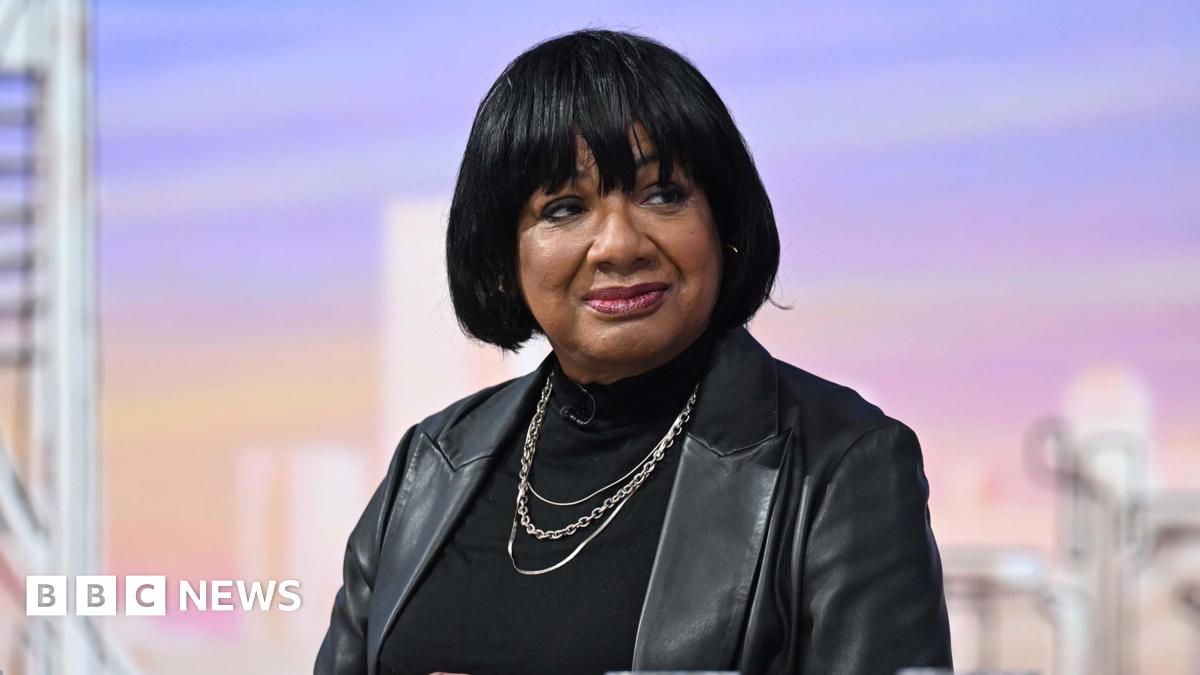
Can someone remind me again, is Diane Abbot in the Labour Party or not?
The comments were made 8 years ago, and Abbott is largely irrelevant now. My guess is the Mail held this back for maximum impact, which Rayner and Mandelson provided.

Abbott in my view, along with Corbyn, Edward Leigh and other veteran MPs, should not be MPs, because they've stayed in place far too long. MPs should be subject to term limits.
 

Gloster

Veteran Member
Joined
4 Sep 2020
Messages
12,977
Location
Up the creek

This goes from bad to worse!

Turning into the Death of Stalin. We will have no factionalism comrades.

Can someone remind me again, is Diane Abbot in the Labour Party or not?

She is an Independent at the moment, having lost the whip for repeating some ill-advised, although (arguably) not completely untrue, comments about racism. She had previously lost the whip for similar comments in 2023.

Somewhere near the middle.

The ones who want to feel they are doing good and get that warm fuzzy feeling from voting Labour. They vote safe in the knowledge that Labour will not actually raise tax that much, and that there is little chance of Labour driving inflation like the Labour of old. These are younger people who are still flush with optimism and only really know life with the Nasty Tories.

For a long time this was Mondeo Man, but Mondeo Man got old and realised its time to vote Tory again.

The way the constituencies are set up means Labour only need to make some inroads into this "Middle" group and then they will get a landslide irrespective of the popular vote. As long as Labour hold their heartlands then Reform et al. do very little. However, that hold on the heartlands is wearing thin. Labour have been given this chance and one year in are not taking it.

Perhaps some people vote Labour because they are the only party that both might do something that they feel ought to be done and might get in. Conservatives and further right never will, the Liberal-Democrats and Greens don’t look like being able to influence policy, while Jeremy and George’s Ego Parties are completely unrealistic.
 

Topological

Established Member
Joined
20 Feb 2023
Messages
4,280
Location
Swansea
Perhaps some people vote Labour because they are the only party that both might do something that they feel ought to be done and might get in. Conservatives and further right never will, the Liberal-Democrats and Greens don’t look like being able to influence policy, while Jeremy and George’s Ego Parties are completely unrealistic.
Quite probably - certainly explains the disappointment when the Red Tories do not actually do much different.
 

Top