They’d need Boots or a very old fashioned hairdresser for the rest. (“Something for the Balearics sir?”)Presumably a few teenage boys have been in before their holiday to Majorca…

-
Our new ticketing site is now live! Using either this or the original site (both powered by TrainSplit) helps support the running of the forum with every ticket purchase! Find out more and ask any questions/give us feedback in this thread!
You are using an out of date browser. It may not display this or other websites correctly.
You should upgrade or use an alternative browser.
You should upgrade or use an alternative browser.
Companies That You Expect to Disappear Soon
- Thread starter whhistle
- Start date
Sponsor Post - registered members do not see these adverts; click here to register, or click here to log in
R
RailUK Forums

It doesn't surprise me really. I bought components to build my first computers from there when they were idk 5 years old as a company. They were price competitive with computer fairs (remember those?!) once delivery, convenience, and stock were taken into account.Have just seen that ebuyer.com has entered administration and that Frasers are apparently purchasing it.
Personally, this is a sad day as I used them a lot, along with the likes of dabs direct and Watford Electronics.
I used them for a few years, along with the likes of Scan, OCUK, etc.
Then I went years without building my own PCs, or indeed buying PCs instead of getting pricey dev spec laptops provided by work which just happened to run games very well.
About 3-4 years ago I was shopping for a work laptop, and considered building a desktop and just getting a tablet for admin work while travelling. Ebuyer was not competitive for PCs, laptops, individual components, or tablets. I had the same when buying another device a year ish later and had the same issue. I haven't looked at them since.
Can't say what went wrong with their business model, but from a consumer point of view of you're doing e-commerce for commonly available products, you either need to be price competitive or have some other USP. I'm not sure they did in the end.
Rather amusingly WHSmith has now managed to overprice their own accounting figures 

 www.bbc.co.uk
WH Smith shares tumble 42% after accounting blunder
The retailer has drafted in auditors to review the issue and slashed its profit guidance.
www.bbc.co.uk
WH Smith shares slumped 42% on Thursday following an accounting error which led it to overstate its North America profits.
The company has cut its profit forecasts in the region as a result and has ordered a review by auditors. It said the mistake was because of an issue in how it calculated the amount of supplier income it received essentially causing it to be logged too early.
Its share price is now on track for its worst single-day decline on record.
Analysts said the blunder was a "huge embarrassment" for WH Smith, which is looking for a fresh start after selling its UK High Street division earlier this year.
The group is now expecting a trading profit for North America of about £25m for the year to August - a cut from the £55m initially forecast.
As a result, the company lowered its outlook for annual pre-tax profits to around £110m.
It has asked accountancy firm Deloitte to conduct a review into the error, and said it would provide an update on this review alongside its full-year results.
Rather amusingly WHSmith has now managed to overprice their own accounting figures
WH Smith shares tumble 42% after accounting blunder
The retailer has drafted in auditors to review the issue and slashed its profit guidance.
Crivens, that's quite the balls up!
Bought a few shares on that dip today!
Did you get a free copy of the Telegraph and some Galaxy chocolate with them?
Chocolate orange mate.Did you get a free copy of the Telegraph and some Galaxy chocolate with them?
DavidGrain
Established Member
- Joined
- 29 Dec 2017
- Messages
- 1,488
Retailers should be aware of this problem if it is the same problem that caught out Wickes some years back. Charging suppliers for stocking their products and then taking credit in the accounts in the previous accounting period. One of the fundamental features of accounting is to account for income and expenditure in the correct time period.
SuspectUsual
Established Member
- Joined
- 11 Jul 2018
- Messages
- 6,850
Retailers should be aware of this problem if it is the same problem that caught out Wickes some years back. Charging suppliers for stocking their products and then taking credit in the accounts in the previous accounting period. One of the fundamental features of accounting is to account for income and expenditure in the correct time period.
Unfortunately the likes of Smiths are outside the jurisdiction of GSCOP and are likelier to make these mistakes it seems

Steddenm
Established Member
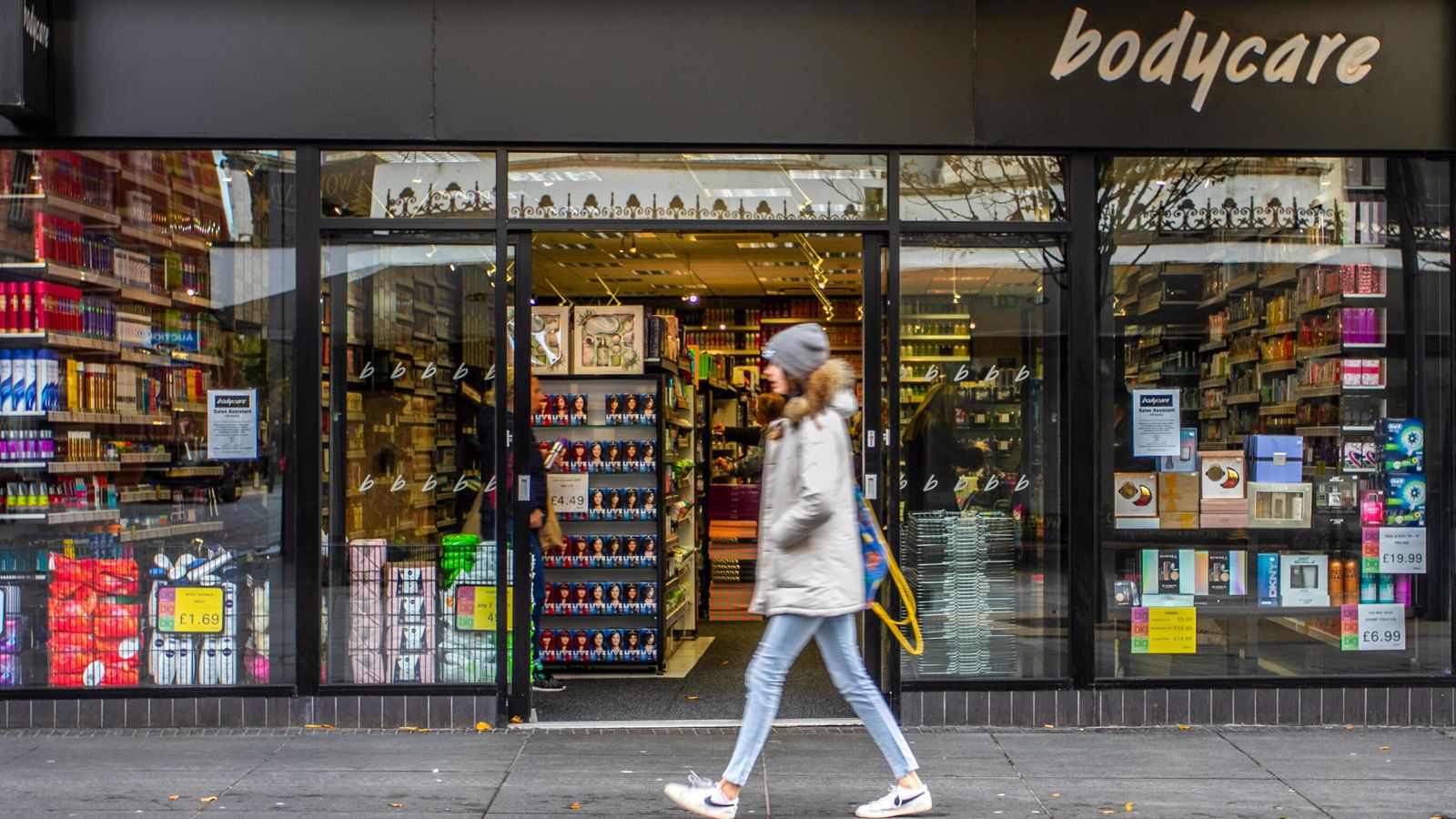
Looks like Bodycare is in trouble.
 news.sky.com
In the same article it seems that Poundland are looking to do the same deal to save itself:
Health and beauty chain Bodycare in race to avert collapse
Hundreds of jobs are at risk at the health and beauty retail chain, which employs about 1,500 people, as advisors race to avert its collapse as early as next week, Sky News learns.
Hundreds of jobs are at risk at the health and beauty retail chain, which employs about 1,500 people, as advisors race to avert its collapse as early as next week, Sky News learns.
In the same article it seems that Poundland are looking to do the same deal to save itself:
Later this week, the struggling discount giant Poundland will seek similar approval from the courts for a radical overhaul that will entail dozens of shop closures.
Seems like my hunch (13 August) was right then.Looks like Bodycare is in trouble.
The Poundland deal was approved yesterday, otherwise they were potentially going to be in big trouble by the end of this week
Not really sure what it will achieve other than delaying the inevitable to be honest, all very well promising to go 'back to basics' but the shoppers have long diverted their custom to the likes of B&M / Home Bargains / The Range so it'll be quite difficult to win them back
 www.bbc.co.uk
Not really sure what it will achieve other than delaying the inevitable to be honest, all very well promising to go 'back to basics' but the shoppers have long diverted their custom to the likes of B&M / Home Bargains / The Range so it'll be quite difficult to win them back
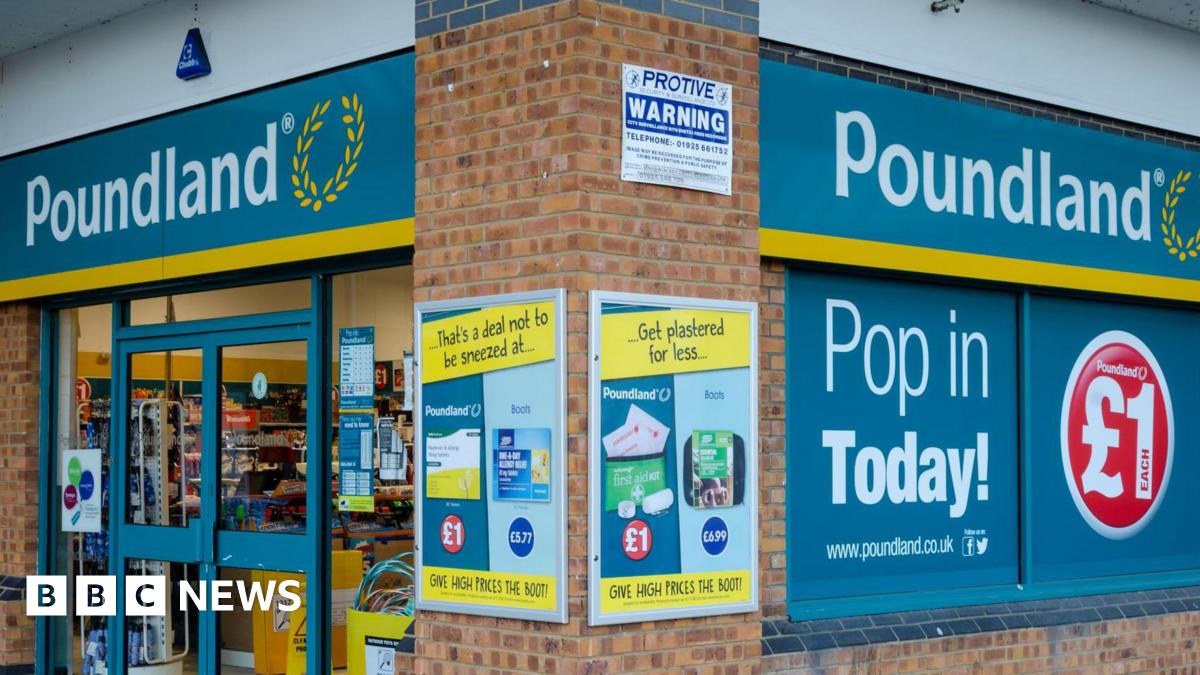
Poundland rescue deal saves firm from administration
The struggling budget chain was sold to a private equity firm for £1 earlier this year.
www.bbc.co.uk
Poundland has avoided collapsing into administration after its turnaround plan was approved days before the chain was due to run out of money.
The budget retailer had asked the judge to approve a deal, saying it would have run out of cash without it by 7 September.
Poundland has around 14,700 staff and operates about 800 stores. It has previously announced plans to close 68 shops after it was sold to a subsidiary of a private equity firm for £1, putting about 1,000 jobs at risk.
The High Court heard on Tuesday that the turnaround plan would see a significant injection of cash into the company.
Tom Smith KC, for Poundland Limited, wrote that the retailer's financial position had "significantly deteriorated during the last two years" and that it had "performed poorly in a difficult retail and economic environment".
He said if the restructure had not been approved, the company's directors would likely have placed it into administration by Friday.
Approving the rescue plan, Sir Alastair Norris said: "I am going to sanction the plan. I will give my reasons later."
The Campaign For Real Ale (CAMRA) is in trouble with the Great British Beer Festival and it’s winter equivalent both losing money, and the 2026 events cancelled.
CAMRA’s Chairman said “ (it) did not get enough people through the doors to cover costs such as hiring the venue, accommodation for volunteers and buying beer, cider and perry,”

 www.thedrinksbusiness.com
CAMRA’s Chairman said “ (it) did not get enough people through the doors to cover costs such as hiring the venue, accommodation for volunteers and buying beer, cider and perry,”
CAMRA reveals the ‘stark reality’ of its financial woes
The Campaign for Real Ale (CAMRA) has cancelled its Great British Beer Festival (GBBF) events for 2026 as it faces the “stark reality” of its financial challenges.
www.thedrinksbusiness.com
I'm not surprised their membership figures are suffering. I just don't think it's the kind of group which will attract many young people; so while the current membership are undoubtedly loyal, they'll only last so long. Add into the mix the sheer variety of drinks now and the popularity of 'craft beers' over 'real ales', I can see why they may be struggling.The Campaign For Real Ale (CAMRA) is in trouble with the Great British Beer Festival and it’s winter equivalent both losing money, and the 2026 events cancelled.
CAMRA’s Chairman said “ (it) did not get enough people through the doors to cover costs such as hiring the venue, accommodation for volunteers and buying beer, cider and perry,”
CAMRA reveals the ‘stark reality’ of its financial woes
The Campaign for Real Ale (CAMRA) has cancelled its Great British Beer Festival (GBBF) events for 2026 as it faces the “stark reality” of its financial challenges.
That said, you'd think there'd be enough support to make their annual Great British Beer Festival profitable. That's a pretty shocking situation to be in.
It's a shame really because in an age of Wetherspoons dominance, decent independent local pubs serving real ale would be welcome.
Ultimately, with the overall decline in drinking levels, and the rise of teetotalism in the UK, I suspect reversing CAMRA's decline will be quite the challenge.

DelW
Established Member
- Joined
- 15 Jan 2015
- Messages
- 6,046
To some extent, it's a victim of its own success - over its lifetime the cask ale market has fluctuated, but real ale has always been far more freely available, and varied, than it was when CAMRA was set up.The Campaign For Real Ale (CAMRA) is in trouble with the Great British Beer Festival and it’s winter equivalent both losing money, and the 2026 events cancelled.
CAMRA’s Chairman said “ (it) did not get enough people through the doors to cover costs such as hiring the venue, accommodation for volunteers and buying beer, cider and perry,”
When I was at university in the early 1970s, a friend of mine was a real ale enthusiast, and introduced me to it. But there were only about four pubs within a ten-mile radius where it was sold. Three were Young's and the other was Gale's, so that was about four or five different ales in total. These days there are that many on hand pump in my local Wetherspoon's, so people don't have to search (or indeed join CAMRA) to find them.
I am surprised to hear this news. The last beer festival I attended in the summer at Yapton, West Sussex was completely rammed with people. It's been going for many years and seems as popular as ever. Other factors rather than popularity of beer would seem to be pertinent.

Puffing Devil
Established Member
- Joined
- 11 Apr 2013
- Messages
- 3,170
Local beer festivals serving the local community, perhaps with Craft Cask Ale, can and do flourish. Asking people to travel to London for a Real Ale exclusive event is limiting the audience, and this is where CAMRA is failing.
It was created as a campaigning organisation dedicated to halting the demise of real ale, and it has succeeded. It does have a broader mission statement, including the preservation of pubs, but the core membership doesn't want to let go of the Real Ale thing and seems locked into a world where there is no other quality beer. Unlike the 1970s, when brewers sought to flood the market with Double Diamond and fizzy lager.
Unless it confronts the core membership, it will slowly decline as a Real Ale Society, and the well-established brand will not be able to fight effectively for all pubs and beer.
To demonstrate that Keg and Cask can coexist harmoniously, here's a plug for my favourite beer festival, which raises a substantial amount of money for charity each year. I thoroughly recommend attending for at least one session.

 www.salfordbeerfest.com
It was created as a campaigning organisation dedicated to halting the demise of real ale, and it has succeeded. It does have a broader mission statement, including the preservation of pubs, but the core membership doesn't want to let go of the Real Ale thing and seems locked into a world where there is no other quality beer. Unlike the 1970s, when brewers sought to flood the market with Double Diamond and fizzy lager.
Unless it confronts the core membership, it will slowly decline as a Real Ale Society, and the well-established brand will not be able to fight effectively for all pubs and beer.
To demonstrate that Keg and Cask can coexist harmoniously, here's a plug for my favourite beer festival, which raises a substantial amount of money for charity each year. I thoroughly recommend attending for at least one session.
ISBFX
www.salfordbeerfest.com
CAMRA won most of the battles but the brewing industry is fighting back against the extra costs of real ale with ‘craft’, using a cunning ‘added value’ name to imply that a fizzy ale in a tin somehow has the traditional craftsmanship of real ale. There’s still work to do.It was created as a campaigning organisation dedicated to halting the demise of real ale, and it has succeeded.
Puffing Devil
Established Member
- Joined
- 11 Apr 2013
- Messages
- 3,170
CAMRA won most of the battles but the brewing industry is fighting back against the extra costs of real ale with ‘craft’, using a cunning ‘added value’ name to imply that a fizzy ale in a tin somehow has the traditional craftsmanship of real ale. There’s still work to do.
And there's the problem with CAMRA in a nutshell. Cutting off its nose to spite its face.
There is room for all good beer, irrespective of the final delivery, as my friend Sean demonstrates with his brewhouse, which offers both cask and keg beers. https://www.tomstap.co.uk/
This is the one. And in fact the increase in local and regional beer festivals will only serve to detract from a national festival. People switching from mainstream lager to real ales and craft beers may be more popular than ever, but if there's a beer festival a month within an hour's drive of them then there's little incentive to travel to the other side of the country for CAMRA's national festival.Local beer festivals serving the local community, perhaps with Craft Cask Ale, can and do flourish. Asking people to travel to London for a Real Ale exclusive event is limiting the audience, and this is where CAMRA is failing.
Indeed. They need a directional shift in their campaigning and their membership offering.It was created as a campaigning organisation dedicated to halting the demise of real ale, and it has succeeded. It does have a broader mission statement, including the preservation of pubs, but the core membership doesn't want to let go of the Real Ale thing and seems locked into a world where there is no other quality beer. Unlike the 1970s, when brewers sought to flood the market with Double Diamond and fizzy lager.
Unless it confronts the core membership, it will slowly decline as a Real Ale Society, and the well-established brand will not be able to fight effectively for all pubs and beer.
To demonstrate that Keg and Cask can coexist harmoniously, here's a plug for my favourite beer festival, which raises a substantial amount of money for charity each year. I thoroughly recommend attending for at least one session.
ISBFX
I've been a member of CAMRA since 1972 and have drunk hardly anything but real ale since. I don't mind other people drinking keg if they want to, it's easy for them because every pub in the country sells keg beer of some sort. I don't know any real ale pub that doesn't also sell keg but I've never come across a pub that serves only real ale and no keg. That's why the CAMRA Good Beer Guide is such a valuable publication.
I've got everyone since the 1972 edition which was suppled in an office paper file, and also the 1973 Watney's "avoid like the plague" edition which was withdrawn and reprinted as "avoid at all costs" to lessen the chance of us being sued.
CAMRA also nearly went bankrupt years ago but was saved by the late Neil Kellet, a CAMRA stalwart and an accountant.
I've got everyone since the 1972 edition which was suppled in an office paper file, and also the 1973 Watney's "avoid like the plague" edition which was withdrawn and reprinted as "avoid at all costs" to lessen the chance of us being sued.
CAMRA also nearly went bankrupt years ago but was saved by the late Neil Kellet, a CAMRA stalwart and an accountant.
Local beer festivals serving the local community, perhaps with Craft Cask Ale, can and do flourish. Asking people to travel to London for a Real Ale exclusive event is limiting the audience, and this is where CAMRA is failing.
It was created as a campaigning organisation dedicated to halting the demise of real ale, and it has succeeded. It does have a broader mission statement, including the preservation of pubs, but the core membership doesn't want to let go of the Real Ale thing and seems locked into a world where there is no other quality beer. Unlike the 1970s, when brewers sought to flood the market with Double Diamond and fizzy lager.
Unless it confronts the core membership, it will slowly decline as a Real Ale Society, and the well-established brand will not be able to fight effectively for all pubs and beer.
To demonstrate that Keg and Cask can coexist harmoniously, here's a plug for my favourite beer festival, which raises a substantial amount of money for charity each year. I thoroughly recommend attending for at least one session.
ISBFX
They literally just moved it away from London, presumably in an attempt to bring the festival to different folk, but it's clearly misfired badly. I am really not surprised that it has ended in failure. If you can't get enough people through the door in London I don't see how moving it to a soulless warehouse near an airport, on the outskirts of Birmingham is going to help.
Must admit, London would at least attract some foreign tourists, which far outnumber those in Birmingham.They literally just moved it away from London, presumably in an attempt to bring the festival to different folk, but it's clearly misfired badly. I am really not surprised that it has ended in failure. If you can't get enough people through the door in London I don't see how moving it to a soulless warehouse near an airport, on the outskirts of Birmingham is going to help.

With the right marketing you could attract quite a few foreign tourists.Must admit, London would at least attract some foreign tourists, which far outnumber those in Birmingham.
Soulless? Did you ever go to Earls Court? Nuclear bunkers may have had more charm than that place did.They literally just moved it away from London, presumably in an attempt to bring the festival to different folk, but it's clearly misfired badly. I am really not surprised that it has ended in failure. If you can't get enough people through the door in London I don't see how moving it to a soulless warehouse near an airport, on the outskirts of Birmingham is going to help.
I hope there will be some analysis of why an established event (ie London) was completely abandoned and replaced by an unproven location. I’d hate to see GBBF join the list of failed crown jewel events alongside the Great Dorset Steam Fair, Warley MRC etc..
Puffing Devil
Established Member
- Joined
- 11 Apr 2013
- Messages
- 3,170
They literally just moved it away from London, presumably in an attempt to bring the festival to different folk, but it's clearly misfired badly. I am really not surprised that it has ended in failure. If you can't get enough people through the door in London I don't see how moving it to a soulless warehouse near an airport, on the outskirts of Birmingham is going to help.
It's the format more than the location. The audience for Real Ale only is smaller than for an all-inclusive good beer festival.
I've been a member of CAMRA since 1972 and have drunk hardly anything but real ale since. I don't mind other people drinking keg if they want to, it's easy for them because every pub in the country sells keg beer of some sort. I don't know any real ale pub that doesn't also sell keg but I've never come across a pub that serves only real ale and no keg. That's why the CAMRA Good Beer Guide is such a valuable publication.
I've got everyone since the 1972 edition which was suppled in an office paper file, and also the 1973 Watney's "avoid like the plague" edition which was withdrawn and reprinted as "avoid at all costs" to lessen the chance of us being sued.
CAMRA also nearly went bankrupt years ago but was saved by the late Neil Kellet, a CAMRA stalwart and an accountant.
That's a significant long-term commitment to CAMRA, reflecting the dedication that was central to the success of the original campaign.
It also addresses what many consider CAMRA's most significant contemporary challenge. The organisation was founded by a generation passionate about saving cask ale, but many younger drinkers today don't draw the same hard line between traditional real ale and high-quality craft keg beer. This creates a potential barrier to attracting new members who have grown up with a much wider range of beer options.
Regarding the Good Beer Guide, its value is sometimes undermined by the selection process. Because decisions are made at a local branch level, the criteria are not applied consistently on a national basis. This can lead to several well-known issues.
For example, some branches use a meticulous scoring system based solely on beer quality, while others may be influenced by factors such as a pub's atmosphere or the personal preferences of the committee. There are also frequent accusations of a 'Buggins' turn' system, where pubs are rotated in and out of the guide for the sake of variety rather than consistent merit. The volunteer-led structure can also be slow to recognise new, deserving pubs or to remove old favourites whose standards have slipped.
When I was a member of CAMRA. In the newsletter, there was a change to the Good Beer Guide advised. A pub was removed due to a long list of issues, all down to service. It appeared that a Branch member, got upset at not being served quickly enough. Out of the guide, the Pub went.
DannyMich2018
Member
- Joined
- 19 Dec 2018
- Messages
- 944
Several Clarks shoe shops (franchise ones reported) have closed in the last week, Grantham, Sleaford, Kettering and Corby.

brad465
Veteran Member
AI bubble fears have been increasing of late. The big guns like OpenAI and Nvidia are probably safe, but I can see a number of smaller AI-based companies going to the wall in the event of a bubble burst:
 www.bbc.co.uk
A tangled web of deals stokes AI bubble fears in Silicon Valley
Some are worried that the rapid rise in the value of AI tech companies may be a bubble waiting to burst.
www.bbc.co.uk
At OpenAI's DevDay this week, OpenAI boss Sam Altman did what American tech bosses rarely do these days: he actually answered questions from reporters.
"I know it's tempting to write the bubble story," Mr Altman told me as he sat flanked by his top lieutenants. "In fact, there are many parts of AI that I think are kind of bubbly right now."
In Silicon Valley, the debate over whether AI companies are overvalued has taken on a new urgency.
Sceptics are privately - and some now publicly - asking whether the rapid rise in the value of AI tech companies may be, at least in part, the result of what they call "financial engineering".
In other words - there are fears these companies are overvalued.
Mr Altman said he expected investors would make some bad calls and silly start-ups would walk away with crazy money.
But with OpenAI, he told me, "there's something real happening here".
Not everyone is convinced.
In recent days, warnings of an AI bubble have come from the Bank of England, the International Monetary Fund, as well as JP Morgan boss Jamie Dimon who told the BBC "the level of uncertainty should be higher in most people's minds".
And here, in what is often considered the tech capital of the world, concerns are growing.
At a panel discussion at Silicon Valley's Computer History Museum this week, early AI entrepreneur Jerry Kaplan told a packed audience he has lived through four bubbles.
He's especially concerned now given the magnitude of money on the table as compared to the dot-com boom. There's so much more to lose.
"When [the bubble] breaks, it's going to be really bad, and not just for people in AI," he said.
"It's going to drag down the rest of the economy."
However, at the Stanford Graduate School of Business, which has minted its fair share of tech entrepreneurs, Prof Anat Admati says while there have been many attempts to model when we're in the bubble, it can be a futile exercise.
"It is very hard to time a bubble," Prof Admati told me. "And you can't say with certainty you were in one until after the bubble has burst."
But the data is concerning to many.
AI-related enterprises have accounted for 80%, external of the stunning gains in the American stock market this year - and Gartner estimates global spending on AI, external will likely reach a whopping $1.5tn (£1.1tn) before 2025 is out.
My prediction on this will be that the big names like Microsoft, Amazon, etc will have enough diversification to both survive the bubble and to use it as a growth opportunity by buying up smaller AI firms on the cheap, and will eventually come out on top.AI bubble fears have been increasing of late. The big guns like OpenAI and Nvidia are probably safe, but I can see a number of smaller AI-based companies going to the wall in the event of a bubble burst:
A tangled web of deals stokes AI bubble fears in Silicon Valley
Some are worried that the rapid rise in the value of AI tech companies may be a bubble waiting to burst.