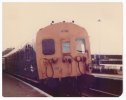
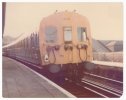
Source: https://units-library.weebly.com/class-423-vep.html, Nathan Williamson, 2005
I've seen many pictures of slamdoor stock and often they have neon orange headcode blinds instead of a route number, especially in the later years of use . Why?

Source: https://units-library.weebly.com/class-423-vep.html, Nathan Williamson, 2005
I've seen many pictures of slamdoor stock and often they have neon orange headcode blinds instead of a route number, especially in the later years of use . Why?

Yes, it was the SUBs... and they could carry them on either side.Which were the last Southern emus to carry separate tail lamps? 4SUBs? From my childhood I recall oil lamps being trimmed and filled at a bench behind the stops on platform 9 at Victoria.
Presumably to make for easy access from the platform.Yes, it was the SUBs... and they could carry them on either side.
Yes, though one wonders what happened to that theory if the train terminated somewhere on the opposite side from where it started...Presumably to make for easy access from the platform.

Aren't they mauve on other planets?And they are red, not orange. Red is the universal colour for taillights.

Some SUBS with non-opening secondman-side front windows, had handy grab rails that, in the days of green livery. were picked out in yellow. They were to hang on to for changing the headcode stencil. I don;t know if they could be used for getting at such a tail light, or whether descent to the four-foot would be needed.Yes, though one wonders what happened to that theory if the train terminated somewhere on the opposite side from where it started...

I recall the Bromley North - Grove Park shuttle often used to run with one red and one white blank at each end. Understandable on such a short run, to save the driver's wrist muscles, but surely a breach of railway regulations?

I can recall being told of a rail tour being run with one of the Hastings line DEMUs that got stopped off region because the signalman refused to accept the headcode blinds as a valid taillamp.
When they last re-emerged on a regular working to Bristol it was PSB everywhere!They had the same problem when the Hastings DEMUs first worked the Brighton-Exeter. I don’t know if the situation was the same when 3-car DEMUs worked through to Bristol, but it is possible that the Westbury area was familiar with blinds and beyond Bradford Junctions it was all PSB, which couldn’t see.

The railway I volunteer on insists that the class 33 carries a proper tail lamp when running light engine.I can recall being told of a rail tour being run with one of the Hastings line DEMUs that got stopped off region because the signalman refused to accept the headcode blinds as a valid taillamp.
Quite right too - with a loco there’s no other way of proving it hasn’t lost its train. A multiple unit can’t lose its rear coach(es) without it being obvious - and, as long as the intermediate rear cabs aren’t showing red blinds - those at the rear of a train formed of more than one unit do the job. The risk was presumably with non-corridor units an intermediate rear cab could be displaying red and then it wouldn’t be obvious that they rain had accidentally divided - but with through braking etc, we’re in the realms of multiple “one in a million”s stacking up!The railway I volunteer on insists that the class 33 carries a proper tail lamp when running light engine.
When they last re-emerged on a regular working to Bristol it was PSB everywhere!
Isn't that line operated on the "one engine in steam" principle, so there might have been a rule amendment permitting the blinds as such?I recall the Bromley North - Grove Park shuttle often used to run with one red and one white blank at each end. Understandable on such a short run, to save the driver's wrist muscles, but surely a breach of railway regulations?
When I trained as a guard the rule book referred to "tail light or red blinds" throughout, so there should have been no misunderstanding of what it meant or where on the train they should (or shouldn't) be displayed.Quite right too - with a loco there’s no other way of proving it hasn’t lost its train. A multiple unit can’t lose its rear coach(es) without it being obvious - and, as long as the intermediate rear cabs aren’t showing red blinds - those at the rear of a train formed of more than one unit do the job. The risk was presumably with non-corridor units an intermediate rear cab could be displaying red and then it wouldn’t be obvious that they rain had accidentally divided - but with through braking etc, we’re in the realms of multiple “one in a million”s stacking up!
When we had 33s this was observed at my (WR) depot.that all involved fully understood the need for discipline with the use of blinds. Red blinds should only be used as an end of train indication and should be turned to something different when not acting as such.
Wow! It just seems so basic.When we had 33s this was observed at my (WR) depot.
I think on my heritage line they are not fully understood and red blinds are not catered for in our rule book.
Don’t forget, many volunteers are not ex-railway. Volunteers such as signalmen are told to look for a tail LAMP and that’s what they look for. I think on my line a signalman had sent 4 - 5 (train passed without tail lamp) thinking the 33 had lost its train despite being belled as a light loco. As I said red blinds are not in our rule book and lamps are now insisted on. It’s daft, but then so is crisis management.I never thought I would see the day when someone felt the need to ask this question on this forum!
== Doublepost prevention - post automatically merged: ==
Wow! It just seems so basic.
The picture is from 1985 though so "through" services to Charing Cross were still up and running. Not sure if that meant there could be more than one train on the line during peak hours.Isn't that line operated on the "one engine in steam" principle, so there might have been a rule amendment permitting the blinds as such?

I have a feeling British Rail didn't give a proverbial about what happened on that line in its last years, given how less than 200 people used it each day. Was the Woodside & South Croydon Line also "one train working"?That does not of course excuse the other rule breaches mentioned in the thread, such as deliberate late running and guards driving.
Hmm - it's amazing what humans have to put in place to make up for a common sense vacuum!Don’t forget, many volunteers are not ex-railway. Volunteers such as signalmen are told to look for a tail LAMP and that’s what they look for. I think on my line a signalman had sent 4 - 5 (train passed without tail lamp) thinking the 33 had lost its train despite being belled as a light loco. As I said red blinds are not in our rule book and lamps are now insisted on. It’s daft, but then so is crisis management.
A multiple unit definitely can divide (lpae its rear coaches) and the driver be not aware.Quite right too - with a loco there’s no other way of proving it hasn’t lost its train. A multiple unit can’t lose its rear coach(es) without it being obvious - and, as long as the intermediate rear cabs aren’t showing red blinds - those at the rear of a train formed of more than one unit do the job. The risk was presumably with non-corridor units an intermediate rear cab could be displaying red and then it wouldn’t be obvious that they rain had accidentally divided - but with through braking etc, we’re in the realms of multiple “one in a million”s stacking up!
Presumably in both those cases both the units left behind and the ones that continued displayed reds?A multiple unit definitely can divide (lpae its rear coaches) and the driver be not aware.
A class 150 left a 153 behind when the pins on the coupler were wired wrong. The guard pushed the PA button and the unit uncoupled with the front unit carrying on its merry way with the driver oblivious.
Simular thing happened with a pair of 165's when the trip cock was activated in the Banbury to Leamington area. Driver reset the trip cock by pressing the uncouple button in the inside cab and then went to the front and left the rear portion in section.
YesPresumably in both those cases both the units left behind and the ones that continued displayed reds?

My thoughts entirely, at Brighton we would laugh when the 6/12 car Demu came back from Exeter on a Saturday evening with a white Tail Lamp stamped W.R on the back below the red blinds/I never thought I would see the day when someone felt the need to ask this question on this forum!
== Doublepost prevention - post automatically merged: ==
Wow! It just seems so basic.
One white, one red blind was used for shunting movements on the Southern. ECS from Lovers Walk into the Brighton platforms always displayed this.
Source: https://www.flickr.com/photos/36034969@N08/6727375535/ 2-EPB at Bromley North
Here's a photo of what you said.
I wonder if the driver and guard didn't swap round at the end of the journey but just operatedtheir respective cabs?
I recall seeing something similar on a Youtube comment from a driver on the former Woodside & South Croydon line. He said that him and the guard wouldn't swap round at Elmers End or Sanderstead, they would just stay on their respective side and carry on driving. This commenter also said that he would run late on purpose so that him and the guard would only have to do 4 runs up and down the line instead of 5.
Both blatant rule breaks but the line was already dying at this point.
And I remember the Lymington and Addiscombe branch units doing so too.My thoughts entirely, at Brighton we would laugh when the 6/12 car Demu came back from Exeter on a Saturday evening with a white Tail Lamp stamped W.R on the back below the red blinds/
== Doublepost prevention - post automatically merged: ==
One white, one red blind was used for shunting movements on the Southern. ECS from Lovers Walk into the Brighton platforms always displayed this.