• Our new ticketing site is now live! Using either this or the original site (both powered by TrainSplit) helps support the running of the forum with every ticket purchase! Find out more and ask any questions/give us feedback in this thread!

UK switching to electric vehicles discussion

Bald Rick

Veteran Member
Joined
28 Sep 2010
Messages
35,965
That petrol PHEV should not be sold.

Diesel is likely to be available in retail quantities for the forseable as a result of road haulage. However I expect a precipitous decline in petrol sales and then availability to occur in the lifetime of cars being sold today.

If petrol sales really do what the legal position implies then we could end up with a substantial fleet of stranded cars with no petrol available (at retail) to fuel them.

And unlike diesel people can't even order a heating oil style delivery for a bulk tank.

Petrol sales will fall rapidly… but there will still be enough places that sell it. In the same way that there are enough places you can buy coal for your traction engine, or feed for your horse, etc. Obviously it will be more expensive per unit due to lower economies of scale.
 
Sponsor Post - registered members do not see these adverts; click here to register, or click here to log in
R

RailUK Forums

Tazi Hupefi

On Moderation
Joined
1 Apr 2018
Messages
1,931
Location
Nottinghamshire
Was thinking about my first ever car, a sporty Honda that drank four-star leaded fuel, which was widely available just as much as any other at the time.

I had scrapped it a little before the ban on leaded petrol came in, but some fuel stations did start selling a replacement fuel, but it was never commercially successful and soon disappeared. You could also convert some vehicles, but I suspect not many did given the age of most of them at that point.

I genuinely can't remember whether this was a huge issue at the time, I don't recall it being too problematic - but I do remember being surprised how quickly the infrastructure changed and how quickly people forgot that it ever even existed.
 

JamesT

Established Member
Joined
25 Feb 2015
Messages
4,911
Was thinking about my first ever car, a sporty Honda that drank four-star leaded fuel, which was widely available just as much as any other at the time.

I had scrapped it a little before the ban on leaded petrol came in, but some fuel stations did start selling a replacement fuel, but it was never commercially successful and soon disappeared. You could also convert some vehicles, but I suspect not many did given the age of most of them at that point.

I genuinely can't remember whether this was a huge issue at the time, I don't recall it being too problematic - but I do remember being surprised how quickly the infrastructure changed and how quickly people forgot that it ever even existed.
I'm not sure I'd necessarily describe it as quick. Unleaded petrol first went on sale in the UK in 1986, the ban on four-star was 2000. But the main driver would have been the catalytic converter mandate in 1992, so every new car from that point needed unleaded. I suspect the natural turnover (the average age of a car in 2000 was just over 7 years) would have meant a limited number would have still needed lead replacement. It's also relatively easy to add the substitute yourself rather than needing the petrol station to do it.

Whereas with the majority of cars being sold still being ICE and the average age of a UK car having risen to 10 years, I'm not seeing that there will be a massive drop in availability of petrol until many years after the ban on new ICE car sales comes in.
 

thejuggler

Established Member
Joined
8 Jan 2016
Messages
1,654
Just traded a pure ICE for a hybrid and the benefits of having a petrol engine when required still outweigh the downsides of EV. I've not driven it much, but on the trips I have they have been largely local and battery is used for majority of the time.

Over about 150 miles it is showing 70mpg.
 

61653 HTAFC

Veteran Member
Joined
18 Dec 2012
Messages
19,373
Location
Yorkshire
Was thinking about my first ever car, a sporty Honda that drank four-star leaded fuel, which was widely available just as much as any other at the time.

I had scrapped it a little before the ban on leaded petrol came in, but some fuel stations did start selling a replacement fuel, but it was never commercially successful and soon disappeared. You could also convert some vehicles, but I suspect not many did given the age of most of them at that point.

I genuinely can't remember whether this was a huge issue at the time, I don't recall it being too problematic - but I do remember being surprised how quickly the infrastructure changed and how quickly people forgot that it ever even existed.
Pretty much all petrol engines could be converted to use unleaded, and for those that couldn't be there were (and still are) fuel additives available. If that wasn't the case there wouldn't be so many classic cars still on the roads.
 

bspahh

Established Member
Joined
5 Jan 2017
Messages
2,444
Pretty much all petrol engines could be converted to use unleaded, and for those that couldn't be there were (and still are) fuel additives available. If that wasn't the case there wouldn't be so many classic cars still on the roads.
In 2000, I had a 1986 Fiesta which needed to use leaded petrol as the valve seats would wear too quickly with unleaded. To fix this would have meant replacing the cylinder head with upgraded valve seats.

If forget how much that would have cost, but it had done 140k miles, the starter motor would start the engine but would sometimes not stop without some encouragement from a lump hammer, it was rusty, with worn suspension so I scrapped it.
 

61653 HTAFC

Veteran Member
Joined
18 Dec 2012
Messages
19,373
Location
Yorkshire
In 2000, I had a 1986 Fiesta which needed to use leaded petrol as the valve seats would wear too quickly with unleaded. To fix this would have meant replacing the cylinder head with upgraded valve seats.

If forget how much that would have cost, but it had done 140k miles, the starter motor would start the engine but would sometimes not stop without some encouragement from a lump hammer, it was rusty, with worn suspension so I scrapped it.
I said they could all be converted/modified (or run using additives)... I didn't say it was easy or economically viable to do so in every case!
 

bspahh

Established Member
Joined
5 Jan 2017
Messages
2,444
I didn't say it was easy or economically viable to do so in every case!
Quite.

Back onto electric cars, the goverment is distorting the market.

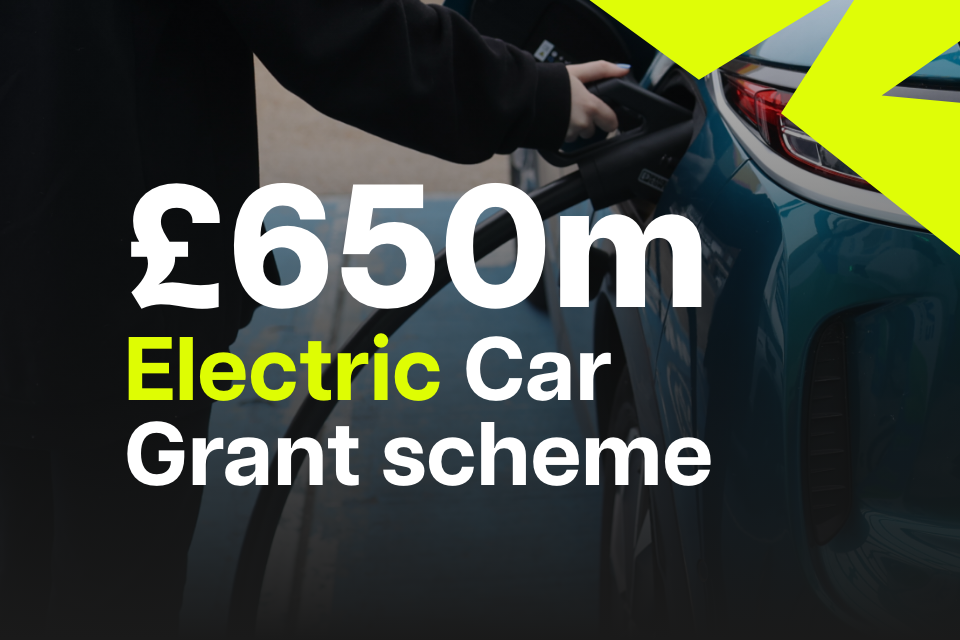
With a KIA EV3, the cheapest Air model has a discount of £3750 to match the Electric Car Grant as the list price is under £37k. The list prices for the GT Line and GT Line S are over £40k so they won't get the new grant and cars registered after April 1st 2025 will have £400 extra car tax each year for the first five years.

I wanted a sunroof which only comes on the GT Line S, so I bought one for £34600 that was registered in January with 14k miles. I could also have had one with 10 miles for £38000, but that would cost £2000 extra in VED.
 
Last edited:

Mawkie

Established Member
Joined
17 Feb 2016
Messages
1,285
Quite.

Back onto electric cars, the goverment is distorting the market.

With a KIA EV3, the cheapest Air model has a discount of £3750 to match the Electric Car Grant as the list price is under £37k. The list prices for the GT Line and GT Line S are over £40k so they won't get the new grant and cars registered after April 1st 2025 will have £400 extra car tax each year for the first five years.

I wanted a sunroof which only comes on the GT Line S, so I bought one for £34600 that was registered in January with 14k miles. I could also have had one with 10 miles for £38000, but that would cost £2000 extra in VED.
I'm all for any mechanism that brings down prices for consumers - especially at no cost to the public (as in this case).

Speaking of the government discount, has the uncertainty been ironed out yet, or does anybody know which cars or manufacturers are eligible? It didn't seem very clear initially.
 

bspahh

Established Member
Joined
5 Jan 2017
Messages
2,444
I'm all for any mechanism that brings down prices for consumers - especially at no cost to the public (as in this case).
The problem is that it has put off some buyers from changing car while they wait for clarity. For most people thats a minor inconvenience, but not if your in car sales staff and rely on commission for most of your income.

Speaking of the government discount, has the uncertainty been ironed out yet, or does anybody know which cars or manufacturers are eligible? It didn't seem very clear initially.
The AutoExpress article says
The move comes amid confusion over which vehicles will be eligible for the grant, with several manufacturers reporting customers pausing or canceling orders while they wait to see which vehicles will qualify for the £3,750 or £1,500 levels of discount. Clarity is unlikely before mid-August, so (KIA) is one of a number to respond.
 

trebor79

Established Member
Joined
8 Mar 2018
Messages
4,912
I'd almost say that PHEVs should only be permitted with diesel burning engines, but I know that is probably not a realistic expectation at this point.
Ewww. No. Small diesel engines should be banned outright. Horrible filthy contraptions.
And I just don't see the point of hybrids. The longest journey you're likely to do in this country can be done with one charge stop.
We went Norfolk to Cornwall last week. 420 miles. Stopped for an 18 minutes charge at Amesbury and that was that. Much cheaper than petrol too.

== Doublepost prevention - post automatically merged: ==

Just traded a pure ICE for a hybrid and the benefits of having a petrol engine when required still outweigh the downsides of EV. I've not driven it much, but on the trips I have they have been largely local and battery is used for majority of the time.

Over about 150 miles it is showing 70mpg.
That's pretty rubbish TBH. BEV is 250mpg equivalent on a cost basis. That 150 miles would cost me about £2.50 in electricity.
What are the downsides of EV?
 

trebor79

Established Member
Joined
8 Mar 2018
Messages
4,912
Upfront cash purchase cost? I still don't want to rent a car. I want it outright mine.
When I can buy a 12 month old D segment EV with 6k miles on it, from a dealership, for less than £15k, then I'm in.
Because I paid less than that for my ICE and meeting all those same criteria.
EVs are pretty much cost parity with ICE now, or cheaper if you go for a "pre-reg".
 

trebor79

Established Member
Joined
8 Mar 2018
Messages
4,912
Total cost of ownership I presume? That makes sense.
My bugbear is the amount of upfront cash for a D segment sized EV.
Not just that, in many cases EV is parity on purchase price.
The fuel and maintenance savings are absolutely massive too.
 

Bald Rick

Veteran Member
Joined
28 Sep 2010
Messages
35,965
Upfront cash purchase cost? I still don't want to rent a car. I want it outright mine.
When I can buy a 12 month old D segment EV with 6k miles on it, from a dealership, for less than £15k, then I'm in.
Because I paid less than that for my ICE and meeting all those same criteria.

But the cost of ownership is not just the upfront cost. Plenty of examples of year ld MG5s and similar for £17kish. Depending on your mileage, you could potnetially save the £2k in fuel in a year.
 

Energy

Established Member
Joined
29 Dec 2018
Messages
5,135
Our budget sadly is more constrained than we'd like it to be, for the time being
You can get a bit fancier than the MG5 for that price bracket. Around £13-17k I'm seeing 11k mile Renault Meganes, or if you're ok with higher mileage, there's a few ~40k mile Skoda Enyaqs.
 

Snow1964

Established Member
Joined
7 Oct 2019
Messages
11,255
Location
West Wiltshire
DfT has added more models to £1500 grant, with more expected in next couple of weeks, as applications from manufacturers are assessed.

List of cars with grant is now :
  • Citroën ë-C3 = £1,500 discount
  • Citroën ë-C4 = £1,500 discount
  • Citroën ë-C5 = £1,500 discount
  • Citroën ë-Berlingo = £1,500 discount
  • Renault Alpine A290 = £1,500 discount
  • Renault Megane = £1,500 discount
  • Renault 4 = £1,500 discount
  • Renault 5 = £1,500 discount
  • Renault Scenic = £1,500 discount
  • Nissan Micra = £1,500 discount
  • Nissan Ariya = £1,500 discount (available from 13 August 2025)
  • Vauxhall Corsa Electric = £1,500 discount
  • Vauxhall Combo Life Electric = £1,500 discount
  • Vauxhall Astra Electric = £1,500 discount
  • Vauxhall Mokka Electric = £1,500 discount
  • Vauxhall Frontera Electric = £1,500 discount
  • Vauxhall Grandland Electric = £1,500 discount
 

dcbwhaley

On Moderation
Joined
4 Aug 2018
Messages
841
Not just that, in many cases EV is parity on purchase price.
The fuel and maintenance savings are absolutely massive too.
My current ICE car cost £3500. Can I get a viable BEV for that money?
If not what is the lowest I would have to pay.
 

Harpers Tate

Established Member
Joined
10 May 2013
Messages
2,054
"Viable" depends on you and your probable usage. £3500 is perhaps stretching it but I see autotrader has 245 assorted EVs under £5k.
 

Snow1964

Established Member
Joined
7 Oct 2019
Messages
11,255
Location
West Wiltshire
My current ICE car cost £3500. Can I get a viable BEV for that money?
If not what is the lowest I would have to pay.
Viable is a rather open term, could interpret it anywhere from reliable with negligible blemishes, to something that just about gets you from A to B but regularly keeps local mechanic busy.

Probably need another 2-4 years before EVs under £3500 are plentiful, partly because new volumes were low decade ago, and partly because as a run around second car current owners might think it remains useful.
 

The Ham

Veteran Member
Joined
6 Jul 2012
Messages
12,044
"Viable" depends on you and your probable usage. £3500 is perhaps stretching it but I see autotrader has 245 assorted EVs under £5k.

Indeed, if the individual wants a car which never does more than 100 miles (and even then only a few times a year which are over 20 miles) then an early Zoe or Leaf would probably suffice, if they do 200 miles a day then they may have to wait.
 

DerekC

Established Member
Joined
26 Oct 2015
Messages
2,443
Location
Hampshire (nearly a Hog)
That's pretty rubbish TBH. BEV is 250mpg equivalent on a cost basis. That 150 miles would cost me about £2.50 in electricity.
What are the downsides of EV?
The problem for a lot of people (including me) is that you don't have access to a domestic EV tariff unless you have a garage or dedicated parking space next to your house. Octopus currently offers 7p/kWh for domestic EV charging. You can charge for 30p/kWh at my local sports centre, or you can go to BP up the road and pay 88p/kWh. At BP's prices and your 250mpg is down to 20mpg. I would very much like to get an EV, but currently it's not on the radar and I will keep my 10 year old Euro6 diesel which does 60mpg happily enough.

Even if more public chargers are made available, this enormous price discrepancy is going to cause big, big problems. It is hugely unfair to people at the lower end of the income scale (which, being honest, I am not). It will be seized on by the likes of Farage as another example of the elite screwing the people and become another nail in the coffin of Net Zero. Someone is making loads and loads of dosh out of it and it needs to be regulated for the same reason as domestic electricity prices.
 

Noddy

Established Member
Joined
11 Oct 2014
Messages
1,656
Location
UK
It will be seized on by the likes of Farage as another example of the elite screwing the people and become another nail in the coffin of Net Zero.

Not sure having a drive is being part of the elite. There are some extremely expensive houses in some cities with no private parking and no prospect of having any. But many current and former council houses (including mine) have a driveway. All new housing estates have a percentage of social housing and 100% of these will have not only a drive but also a charger ready installed. I previously posted this photo to the thread already but the stone building in the foreground is four flats, and beyond are eight brick houses-all of which are social housing and all have a charger:

1754759565098.jpeg
(Photo shows new build social housing with parking and EV chargers ready fitted).
 
Last edited:

DerekC

Established Member
Joined
26 Oct 2015
Messages
2,443
Location
Hampshire (nearly a Hog)
Not sure having a drive is being part of the elite. There are some extremely expensive houses in some cities with no private parking and no prospect of having any. But many current and former council houses (including mine) have a driveway. All new housing estates have a percentage of social housing and 100% of these will have not only a drive but also a charger ready installed. I previously posted this photo to the thread already but the stone building in the foreground is four flats, and beyond are eight brick houses-all of which are social housing and all have a charger:
Recent new build housing will have charger provision, but that doesn't answer the question. This article:

https://www.fleetnews.co.uk/news/la...-of-uk-homes-unsuitable-for-electric-vehicles

Suggests that in 2023 44% of UK homes didn't have access to domestic charging, and that won't have changed much.
More than two fifths (44%) of UK homes are unsuitable for charging an electric vehicle (EV) due to the lack of off-road parking, research from Lloyds Bank suggests. It found just 56% of British homes can currently support electric charging points, which it says excludes many from making the change to an EV.

While the Government has recently brought in new laws for housebuilders - which require them to ensure any new-build homes, workplaces and supermarkets have a charge point installed – the data suggests many people will remain unable to charge an EV at their place of residence.

However, the charging infrastructure in the UK is improving, with the latest data showing there are more than 36,000 charging points across 21,000 in the UK.

Nick Williams, transport director at Lloyds Bank, said: “The growth we have seen in electric vehicle registrations is encouraging but, with many in the UK living in properties where installing a home charging port isn’t a viable option, having a reliable charging infrastructure is absolutely vital for the UK’s transition to net zero. The Government has made positive steps by ensuring new build homes are fully equipped to have charging facilities, but many will have to continue to rely on charging an electric vehicle somewhere other than at home. This means there remains a need for focused investment in public charging points in residential, and particularly rural, areas. We’ll only make real progress in becoming a nation of sustainable drivers if we don’t leave anyone behind – no matter where they live in the country or their home set-up. There are significant regional variations in views on charging infrastructure. While the large proportion of people living in flats in London remains a charging challenge, residents of the capital tend to believe that charging coverage is sufficient (54%).

In comparison, only a fifth (22%) of those living in the Midlands agree this is the case. Nationally, fewer than a third (30%) of people have a positive view on the availability of charging points.

The cost-of-living crisis is impacting many people’s driving decisions. Just under half (48%) of Brits are now driving less because of fuel costs, with three in 10 (30%) saying they have been forced to postpone buying their next vehicle, by an average of two years.

For EVs, this could mean future adoption may slow, suggests Lloyds Bank, as a fifth (18%) say they are now less likely to buy one, due to cost-of-living challenges.

I can't find statistics that show the relationship between the 44% of houses without access to domestic charging and house value or income, but common sense suggests that overall it will tend to be lower cost, older housing occupied by less wealthy people - and yes, there are inner-city exceptions, but I doubt that affects the balance very much. I am not at all saying that means we shouldn't switch to EVs, but it's a problem that needs to be addressed both in terms of the availability of public charging points and in reducing the price discrepancy for kWh purchased.
 

Noddy

Established Member
Joined
11 Oct 2014
Messages
1,656
Location
UK
I can't find statistics that show the relationship between the 44% of houses without access to domestic charging and house value or income, but common sense suggests that overall it will tend to be lower cost, older housing occupied by less wealthy people - and yes, there are inner-city exceptions.

It’s not just inner city exceptions though. Go to the Cotswolds and the pretty and expensive cottages in places like Bourton, Painswick and Bibury don’t have any parking (infamously in the latters case). The council houses in these places do.

There are vast out of town council estates built in the post-war period on the edges of our cities which almost universally have driveways (or gardens with space for driveways). I was in Lawrence Weston in Bristol a few weeks ago. I suspect the relationship you describe is the inverse in a city like Bristol.
 
Last edited:

Top