
I think anyone advocating for the ethnic cleaning of Jews is just as bad as anyone wanting the ethnic cleansing of Muslim Palestinians. It does appear to be the goal of many “river to the sea” types.Or do they mean the surrounding countries would expand into what’s now Israel? None of those countries are particularly fond of Jewish people so that would be problematic. That’s the clarification some people on the other forum who post such things don’t tend to give, and where I fear it may verge on anti-semitism.

-
Our new ticketing site is now live! Using either this or the original site (both powered by TrainSplit) helps support the running of the forum with every ticket purchase! Find out more and ask any questions/give us feedback in this thread!
You are using an out of date browser. It may not display this or other websites correctly.
You should upgrade or use an alternative browser.
You should upgrade or use an alternative browser.
2023 Israel - Hamas / Hezbollah war
- Thread starter GRALISTAIR
- Start date
- Status
- Not open for further replies.
Sponsor Post - registered members do not see these adverts; click here to register, or click here to log in
R
RailUK Forums
Would calling for the removal of Jewish settlers from the West Bank count as ethnic cleansing ?I think anyone advocating for the ethnic cleaning of Jews is just as bad as anyone wanting the ethnic cleansing of Muslim Palestinians. It does appear to be the goal of many “river to the sea” types.
Until a final comprehensive land & peace deal is signed between Israel & Palestine that’ll remain subjective.Would calling for the removal of Jewish settlers from the West Bank count as ethnic cleansing ?
Last edited:

brad465
Veteran Member
That candidate has now won the primary in question. I would expect him to be hounded to bits now about his views on this subject, but as you allude to, it takes some top-level gaslighting for saying you put the people you're supposed to represent ahead of another country to be controversial.With the NYC mayor debate a few days ago, they were all asked which country would be their first foreign visit while in office and they were all falling over themselves to say Israel. Except one person who said he would stay in NYC because that is who he is serving. He was then asked an additional question if he believed “in the right of Israel to exist as a Jewish state.” He said he believed in the right for Israel to exist as an equal state and there is outrage over this. So they believe in a superior race.
The level of influence that AIPAC has is profound. Something I found out only recently was that JF Kennedy wanted AIPAC (they had a different name at the time) to register as a foreign agent. Furthermore, he wanted to investigate Israel for Nuclear weapons. He was assassinated shortly after that and all of Israel’s problems were wiped away. To this day AIPAC are not registered as a foreign agent.
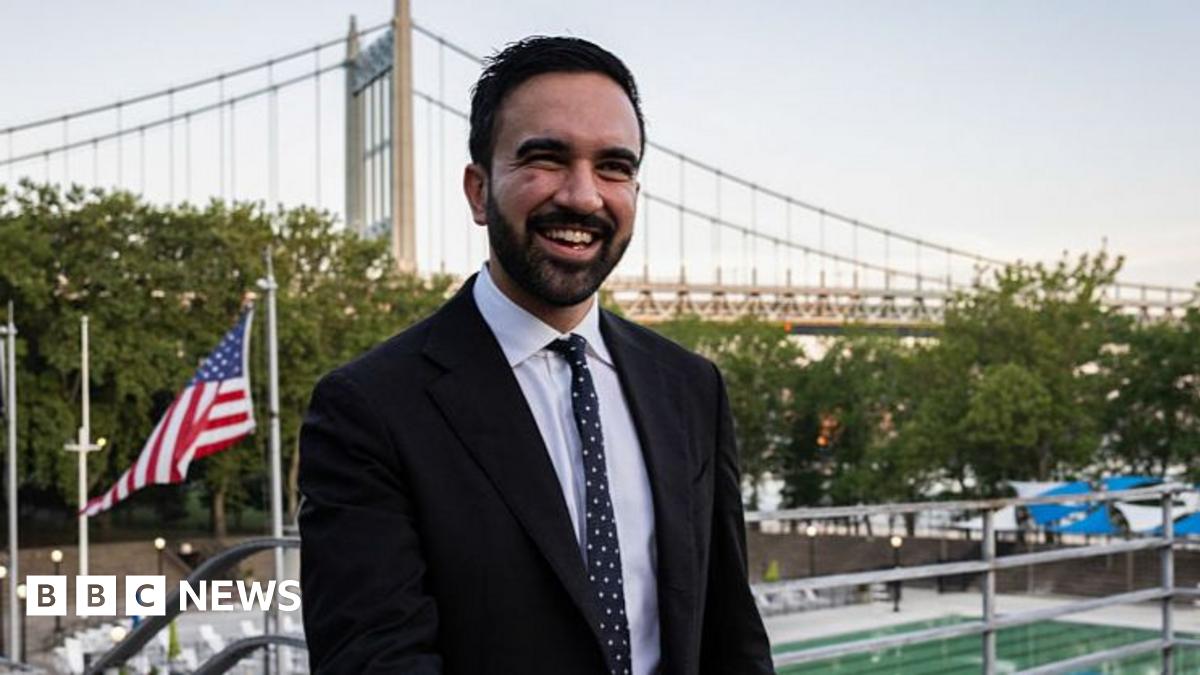
Zohran Mamdani stuns Andrew Cuomo in NYC mayor primary
The 33-year-old democratic socialist would be the first Muslim to lead the nation's largest city if elected.
 www.bbc.co.uk
A young left-wing candidate, Zohran Mamdani, is poised to become the Democratic nominee for New York mayor after delivering a stunning political upset.
The 33-year-old socialist declared victory in the city's Democratic primary on Tuesday, defeating his main rival and political veteran Andrew Cuomo who previously served as state governor.
"Tonight we made history," Mamdani said in his victory speech. If elected, he would be the first Muslim and Indian American to lead the nation's largest city.
Cuomo, 67, was attempting to pull off a comeback after resigning from office in 2021 over a sexual harassment scandal. He congratulated his opponent for a "really smart and great campaign".
The primary in staunchly liberal New York is likely to determine who becomes mayor in November's election.
The contest was being watched as a litmus test for the Democratic Party as it seeks to hone its messaging after election losses last November that saw President Donald Trump's Republicans win the White House and both chambers in Congress.
Results on Tuesday night showed Mamdani with a commanding lead, but falling short of the 50% threshold needed to win outright.
brad465
Veteran Member
Call me cynical, but it's almost as if Netanyahu needs war and chaos in all Israel's neighbours for his own political survival. What exactly does striking Syria like this, just as they look out coming out of civil war and with several sanctions on Syria being lifted, achieve?

US says 'specific steps' agreed to end Syria violence after Israeli strikes hit Damascus
Earlier Israeli strikes hit the Syrian defence ministry, as well as government forces in the southern part of the country.
www.bbc.co.uk
US says 'specific steps' agreed to end Syria violence after Israeli strikes hit Damascus
Earlier Israeli strikes hit the Syrian defence ministry, as well as government forces in the southern part of the country.
www.bbc.co.uk
Israel says it continues to strike Syria
We have another statement from the Israel Defence Forces now (IDF), which says it "continues to strike military targets" in southern Syria.
The latest statement says in recent hours the IDF hit "several armoured vehicles loaded with heavy machine guns and weapons" that were on the way to the Suweida area.
"Additionally, firing posts, weapons storage facilities, and additional Syrian regime military targets in southern Syria were struck."
Cloud Strife
Established Member
- Joined
- 25 Feb 2014
- Messages
- 2,964
Call me cynical, but it's almost as if Netanyahu needs war and chaos in all Israel's neighbours for his own political survival. What exactly does striking Syria like this, just as they look out coming out of civil war and with several sanctions on Syria being lifted, achieve?
This is just... I don't even know what to say. It's just inexplicable, Israel had no reason to get involved, they weren't asked for help and Syria was showing signs of being willing to normalise relations with Israel too. Are things going badly in Gaza?
uglymonkey
Member
- Joined
- 10 Aug 2018
- Messages
- 708
He thinks without an external threat pulling his people together people might start thinking about his leadership and he lose power. If that happens it's a short step to a trial and jail. He wants to avoid that at all costs so distracts with any crisis he can, often making it worst for his own ends.
This is just... I don't even know what to say. It's just inexplicable, Israel had no reason to get involved, they weren't asked for help and Syria was showing signs of being willing to normalise relations with Israel too. Are things going badly in Gaza?
Not particularly from an Israeli Government point of view. Their idea to build a "humanitarian city" (or I as I prefer to refer to it a concentration camp seeing as it's a camp in which people will be concentrated and not permitted to leave) doesn't appear to be in any particular jeopardy of happening so Gaza seems to be bubbling along with no real issues.
As for Syria? Seems to be calculated to ensure that chaos continues in Syria which is likely seen by some in the Government to be in Israel's wider interest. They want to make sure their neighbours remain weak and divided. It's also in their interest anyway as since December 2024 Israel has increased the land that they hold in Syria so they will be unlikely to want to give that back at least not without something in return.
GiordyRail
Member
I think we need a two state solution and both sides pull out of each others area
Ideally yes, the problem is what structure those states would take that would be sustainable and wouldn't leave either side feeling under the gun of the other?I think we need a two state solution and both sides pull out of each others area
Assuming it would be based on something along the lines of the 1967 ceasefire lines with some mix of the 1949 armistice line and 1948 UN partition plan and perhaps the 1990s Oslo Accords you run into simple geographic issues. One of the reasons that these structures have always been unacceptable to many Israelis is simply that it leaves Israel with a very narrow waist roughly from north from Tel Aviv to south of Haifa. At it's narrowest it's only around 8 miles wide, it would therefore be incredibly easy for a Palestinian state to cut Israel in two should the two sides come to war at some point in the future.
From a Palestinian perspective they have similar concerns about Gaza being easily cut off and invaded (which have been amply demonstrated by what's happened in reality). And the issue of having their state not be contiguous with the West Bank and Gaza separated by a chunk of Israel. Any attempt to connect them even with a massive tunnel (which has been proposed) is fraught with the scale of the construction, the cost involved and the risk of it being vulnerable to destruction.
This is all quite apart from who Israel would negotiate such a settlement with. There isn't really a coherent Palestinian government and hasn't been for some time. The Palestinian Authority is an authority almost in name only these days and besides has no influence, even before the war, in Gaza where Hamas ruled the roost.
The reality is that its very hard to come up with borders for a Palestinian and Israeli state that would ever be acceptable to both sides.
In some respects the only actual solution is a one-state solution but good luck persuading the Israeli Government to accept giving equal rights and representation to the Palestinians that live in the current territories let alone possibly having to give equal rights to all the displaced Palestinians that would be seeking a right of return. In which case you just have even more of an apartheid state than you already have though I guess at least that would be undeniable that point (though no doubt some would try). Indeed it seems clear to me that the present Israeli Government is working towards a one-state solution with the current genocide in Gaza. I have no doubt they'll turn to the West Bank once they finish up in Gaza.
Not particularly from an Israeli Government point of view. Their idea to build a "humanitarian city" (or I as I prefer to refer to it a concentration camp seeing as it's a camp in which people will be concentrated and not permitted to leave) doesn't appear to be in any particular jeopardy of happening so Gaza seems to be bubbling along with no real issues.
Just return to this the BBC have reportage today about the ongoing efforts to clear Gaza:
Israel has demolished thousands of buildings across Gaza since it withdrew from a ceasefire with Hamas in March, with entire towns and suburbs - once home to tens of thousands of people - levelled in the past few weeks.
Satellite images show massive amounts of destruction in several areas which Israel's military command claims to have under "operational control".
Large swathes of it has been caused by planned demolitions, both to already damaged buildings and ones that appeared largely intact.
Verified footage shows large explosions unleashing plumes of dust and debris, as Israeli forces carry out controlled demolitions on tower blocks, schools and other infrastructure.
Multiple legal experts told BBC Verify that Israel may have committed war crimes under the Geneva Convention, which largely prohibits the destruction of infrastructure by an occupying power.
An Israel Defense Forces (IDF) spokesperson said it operated in accordance with international law; that Hamas concealed "military assets" in civilian areas, and that the "destruction of property is only performed when an imperative military necessity is demanded".
Israel levelling thousands of Gaza civilian buildings in controlled demolitions - BBC News
Investigation by BBC Verify using satellite images and verified footage to show the extent of destruction in Gaza, where the Israeli military have carried out demolitions to raze entire towns and suburbs
The genocide continues unabated or at the very least, in this case, wide spread war crimes are being perpetrated by the indiscriminate destruction of civilian infrastucture for no obvious military reason.
I saw this from Led by Donkeys that perhaps explains why many people and organisations are terrified into silence about the subject.
UK Lawyers for Israel Ltd has tried to silence various voices supporting Palestine. Their charitable wing has made public statements rejecting international law. Jewish activist @EmHilton91 is on the Charity Commission offices to ask for an investigation. “The weaponisation of antisemitism is not only an egregious attack on Palestine advocacy, civil liberties & human rights - it also hurts the fight against antisemitism. It makes it harder for us to identify true antisemitism when it happens & creates scepticism about whether anti-Jewish racism even still exists, or is just a political tool.”
Also use of UK private prosecutions:I saw this from Led by Donkeys that perhaps explains why many people and organisations are terrified into silence about the subject.
Comic Hunter appears in court over alleged antisemitic posts
Comedian Reginald D Hunter has appeared in court over alleged antisemitic social media posts.
The US stand-up comic, 56, is accused of three counts of sending an offensive communication on three different occasions to Heidi Bachram on X, formerly Twitter, on 24 August, and 10 and 11 September last year.
Mr Hunter spoke to confirm his personal details when he appeared at London's Westminster Magistrates' Court on Monday for the private prosecution, which is being brought by the Campaign Against Antisemitism (CAA) charity.
The CAA describes itself as an organisation of volunteers which works to "expose and counter antisemitism through education and zero-tolerance enforcement of the law".

PudseyBearHST
Member
Don’t forget the smear campaign or getting “cancelled”. Here’s one example and all he said was “free Palestine” nothing about Israel.
The UK justice system (by which I mostly mean various legal firms rather than the courts themselves, they have deal with what's put in front of them according to law!) has no issue being used to settle the squabbles and disputes of various foreign entities. Various Russian oligarchs are forever suing each other in British courts and the firms doing the work are racking up very tasty legal fees. You may wonder whether this is really a suitable use of the UK court system but unless someone wants to make some changes to the law they'll keep doing it... Various issues of Private Eye refer.Also use of UK private prosecutions:
Comic Hunter appears in court over alleged antisemitic posts
So it's hardly surprising that another group is finding a way of weaponizing the UK justice system. It's just a shame in this case the CPS doesn't take over the prosecution and end it seeing as I struggle to believe it actually reaches the level for a criminal prosecution whatever he did (as otherwise surely the CPS would have prosecuted it in the first place...). It certainly has the feel of a SLAPP (Strategic Lawsuit Against Public Participation) suit at the very least. Indeed the description that the group gives themselves make them sound like a factory of SLAPP suits!
Monarch010
Member
- Joined
- 28 Feb 2013
- Messages
- 94
I think that Netanyahu and Putin are two men who need a forever war to keep themselves from being undermined domestically.Call me cynical, but it's almost as if Netanyahu needs war and chaos in all Israel's neighbours for his own political survival. What exactly does striking Syria like this, just as they look out coming out of civil war and with several sanctions on Syria being lifted, achieve?
US says 'specific steps' agreed to end Syria violence after Israeli strikes hit Damascus
Earlier Israeli strikes hit the Syrian defence ministry, as well as government forces in the southern part of the country.
Blade Fisher
Member
Well most of the sensible world would agree to that - butI think we need a two state solution and both sides pull out of each others area
the USA and Israel aren't sensible.
== Doublepost prevention - post automatically merged: ==
Yep just like the Waffen SS. Oh the irony. Millions of Jews persecuted for being Jewish 1937+ 2025 millions of Palestinians persecuted for being err Palestinian.Ideally yes, the problem is what structure those states would take that would be sustainable and wouldn't leave either side feeling under the gun of the other?
Assuming it would be based on something along the lines of the 1967 ceasefire lines with some mix of the 1949 armistice line and 1948 UN partition plan and perhaps the 1990s Oslo Accords you run into simple geographic issues. One of the reasons that these structures have always been unacceptable to many Israelis is simply that it leaves Israel with a very narrow waist roughly from north from Tel Aviv to south of Haifa. At it's narrowest it's only around 8 miles wide, it would therefore be incredibly easy for a Palestinian state to cut Israel in two should the two sides come to war at some point in the future.
From a Palestinian perspective they have similar concerns about Gaza being easily cut off and invaded (which have been amply demonstrated by what's happened in reality). And the issue of having their state not be contiguous with the West Bank and Gaza separated by a chunk of Israel. Any attempt to connect them even with a massive tunnel (which has been proposed) is fraught with the scale of the construction, the cost involved and the risk of it being vulnerable to destruction.
This is all quite apart from who Israel would negotiate such a settlement with. There isn't really a coherent Palestinian government and hasn't been for some time. The Palestinian Authority is an authority almost in name only these days and besides has no influence, even before the war, in Gaza where Hamas ruled the roost.
The reality is that its very hard to come up with borders for a Palestinian and Israeli state that would ever be acceptable to both sides.
In some respects the only actual solution is a one-state solution but good luck persuading the Israeli Government to accept giving equal rights and representation to the Palestinians that live in the current territories let alone possibly having to give equal rights to all the displaced Palestinians that would be seeking a right of return. In which case you just have even more of an apartheid state than you already have though I guess at least that would be undeniable that point (though no doubt some would try). Indeed it seems clear to me that the present Israeli Government is working towards a one-state solution with the current genocide in Gaza. I have no doubt they'll turn to the West Bank once they finish up in Gaza.
Just return to this the BBC have reportage today about the ongoing efforts to clear Gaza:
Israel levelling thousands of Gaza civilian buildings in controlled demolitions - BBC News
Investigation by BBC Verify using satellite images and verified footage to show the extent of destruction in Gaza, where the Israeli military have carried out demolitions to raze entire towns and suburbswww.bbc.co.uk
The genocide continues unabated or at the very least, in this case, wide spread war crimes are being perpetrated by the indiscriminate destruction of civilian infrastucture for no obvious military reason.
uglymonkey
Member
- Joined
- 10 Aug 2018
- Messages
- 708
Also" blood guilt" from that time also seems erily familiar. " Collective punishment". Humanity never seems to change ( or want to).
Blade Fisher
Member
What do you mean by blood guilt? The 'world' after WWII towards jews?Also" blood guilt" from that time also seems erily familiar. " Collective punishment". Humanity never seems to change ( or want to).
I’m not sure most people are terrified into anything. Currently daily news from Gaza suggests dozens are being shot dead at aid stations whilst the other side denies it, who’s right? if it’s Hamas then it’s carnage that’s being rightly condemned or if it’s Israel then Hamas are running a clever campaign of deception, anyone know the real truth ?I saw this from Led by Donkeys that perhaps explains why many people and organisations are terrified into silence about the subject.
Blade Fisher
Member
But why would Hamas shoot their own side?I’m not sure most people are terrified into anything. Currently daily news from Gaza suggests dozens are being shot dead at aid stations whilst the other side denies it, who’s right? if it’s Hamas then it’s carnage that’s being rightly condemned or if it’s Israel then Hamas are running a clever campaign of deception, anyone know the real truth ?
Control? Hamas have been known to steal aid in order to hand it out to those people they favour. Stopping people accessing other sources of aid would be entirely on-brand for them.But why would Hamas shoot their own side?
DustyBin
Established Member
But why would Hamas shoot their own side?
I don’t think that’s what was being suggested. (Although they do shoot Palestinians who aren’t on “their side”).
Blade Fisher
Member
Are you sure?Not even Israel has come up with the lie that Hamas are responsible for killing starving Palestinians seeking aid.

GusB
Established Member
Would you mind providing links to the daily news from Gaza that you're currently consuming? The sources that I'm reading tell me that the aid stations are located within areas that are subject to evacuation orders and that they're only open for very short periods of time. Palestinians have also have to travel for fairly long distances through territory that is essentially war zone in order to reach these sites.I’m not sure most people are terrified into anything. Currently daily news from Gaza suggests dozens are being shot dead at aid stations whilst the other side denies it, who’s right? if it’s Hamas then it’s carnage that’s being rightly condemned or if it’s Israel then Hamas are running a clever campaign of deception, anyone know the real truth ?
Have a read of this:
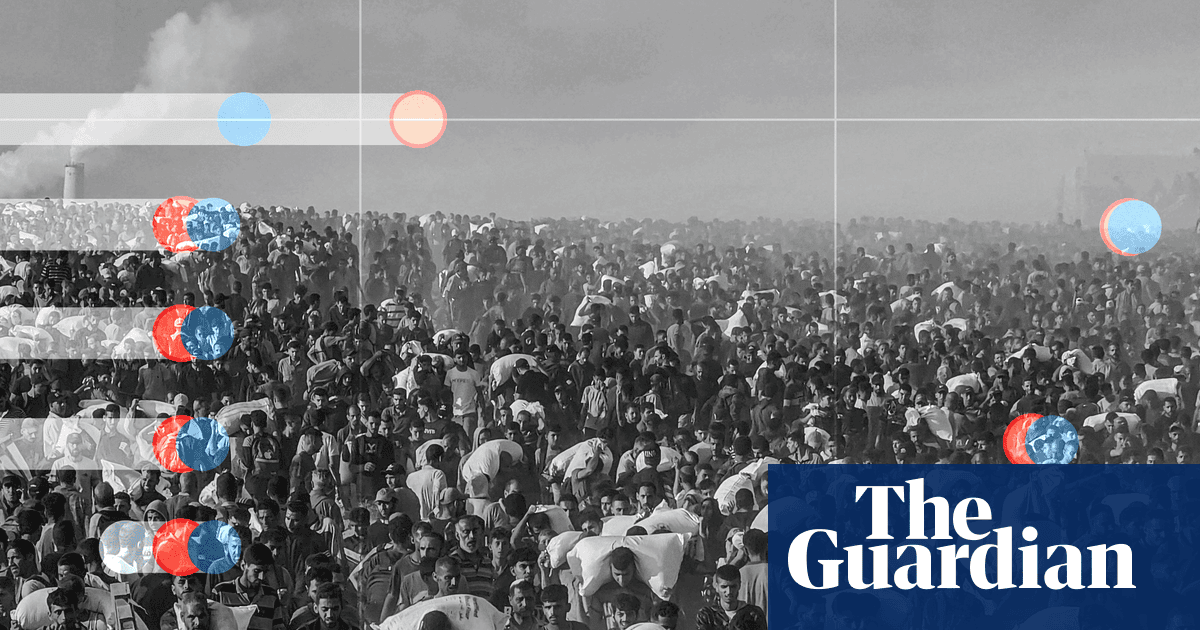
Eleven-minute race for food: how aid points in Gaza became ‘death traps’ – a visual story
Hundreds of people have died while seeking food since delivery was taken over by the Gaza Humanitarian Foundation in May. But Palestinians facing extreme hunger have no choice but to take the risk
 www.theguardian.com
Raed Jamal sends the message shortly after he returns, empty-handed, from an aid distribution point to his tent in the al-Mawasi displacement camp in south-west Gaza. “The tanks came and started firing. Three boys near me were martyred,” says the 36-year-old, who has four children. “I didn’t even get anything, just two empty boxes.”
Jamal’s journey involved a long walk to and from a former residential neighbourhood bulldozed by Israeli forces and turned into one of four militarised aid distribution centres run by the Gaza Humanitarian Foundation (GHF), which is based in Delaware in the US.
The GHF sites – Tal al-Sultan, Saudi neighbourhood, Khan Younis and Wadi Gaza – are located in evacuation zones, which means civilians seeking food have to enter areas they have been ordered to leave. According to GHF’s Facebook page, the sites remain open for as little as eight minutes at a time, and in June the average for the Saudi site was 11 minutes. These factors have led to accusations from NGOs that the system is dangerous by design. The Unrwa chief, Philippe Lazzarini, has said “the so-called mechanism … is a death trap costing more lives than it saves.”
The system favours the strongest, so it is mostly men who travel along the designated routes. Then they wait – often for hours – for a centre to open. Finally, there is a dash into the centre of the zones and a scramble to grab a box.
At every stage, those seeking aid pass Israeli tanks and troops, as quadcopters fly above. In another clip shared by Jamal he ducks as bullets pass overhead.
“We have purged our hearts of fear,” Jamal says of his near daily walks to the site. “I need to bring food for my children so they don’t die of hunger.”
I've quoted an article from the Guardian, which you may or may not deem to be a reliable source. If you wish to disagree with me, have the decency to do some research and provide links and quotes from sources that back up your arguments.A new system, and near daily deaths
GHF, a startup organisation with no experience of distributing food in complex conflict zones, employs US mercenaries at the sites, which opened in May. They replaced 400 non-militarised aid points run under a UN system that Israel claimed had to be shut down because Hamas was diverting aid from it. No evidence for this has been provided.
Since May, more than 1,000 people have died while seeking food from the centres and other humanitarian convoys, according to the UN.
The sites’ opening times are usually announced in posts on a Facebook account and, more recently, messages sent through a Telegram channel. A WhatsApp channel was also set up in the first weeks. People have been warned not to approach the centres until they open.
As the chart below shows, for the site Jamal visited, the amount of time between the site’s opening time being announced and the opening itself decreased dramatically in June.
*YAWN* Straight from the Israeli government playbook. As above, sources are required.Control? Hamas have been known to steal aid in order to hand it out to those people they favour. Stopping people accessing other sources of aid would be entirely on-brand for them.

== Doublepost prevention - post automatically merged: ==
Not even Israel has come up with the lie that Hamas are responsible for killing starving Palestinians seeking aid.
While it has not suggested that Hamas is responsible for killing starving Palestinians, David Mencer continutes to suggest that "There is no famine caused by Israel".
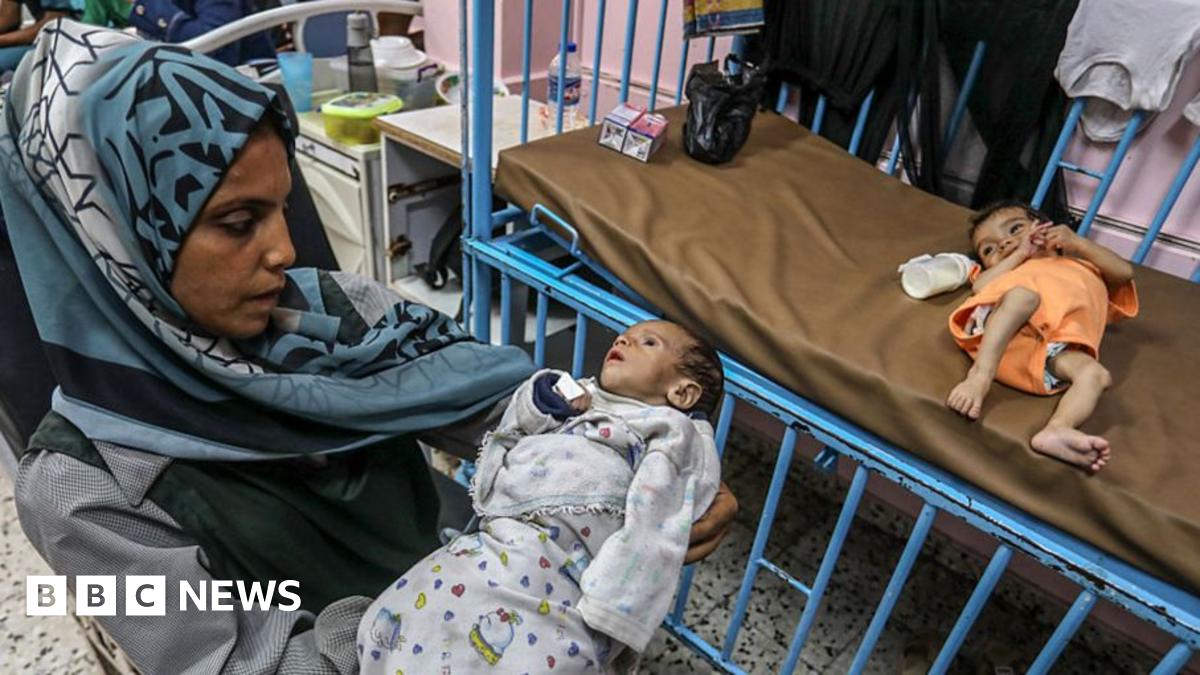
UN agency says 6,000 lorries' worth of aid ready to enter Gaza and urges Israel to allow access
The UN's humanitarian agency warns only a "trickle" of aid is getting into Gaza - Israel says 800 trucks are inside Gaza waiting for collection.
www.bbc.co.uk
"There is a man-made shortage engineered by Hamas," he says.
Aid has been flowing into Gaza through the Gaza Humanitarian Foundation (GHF) and through UN-coordinated shipments of raw materials for bakeries and communal kitchens, Mencer continues.
Between 19 July until Tuesday, more than 4,400 aid trucks have entered Gaza, he says, containing food, flour and baby food.
Yesterday, the GHF distributed two million meals to Gazans in one day, he says before adding that 87 million meals have been distributed by organisation in total.
"Hamas is trying to prevent the distribution of food," Mencer says, adding "they are looting aid trucks".
I'll leave it there before I say something I might regret.
Last edited:
Falcon1200
Established Member
Initially, I supported Israel's right to respond in the way they did to the abominable Hamas attack. No longer, what Israel is doing in Gaza, and to the Palestinian people, is beyond any level of acceptability, or justification. How do the Israelis think, if indeed they do, there will ever be peace in the region, after the anguish and pain they have caused, and the resulting hatred towards them? It is utter madness.
DustyBin
Established Member
Initially, I supported Israel's right to respond in the way they did to the abominable Hamas attack. No longer, what Israel is doing in Gaza, and to the Palestinian people, is beyond any level of acceptability, or justification. How do the Israelis think, if indeed they do, there will ever be peace in the region, after the anguish and pain they have caused, and the resulting hatred towards them? It is utter madness.
This is my position as well. Whatever your view of Israel, the Palestinians, or Hamas (my view of the latter hasn’t changed), what’s happening is completely unacceptable. I really hate to say it, but the term “final solution” comes to mind.
brad465
Veteran Member
Yes this is the thing, the way to oppose Hamas, and like-minded extremists, is to create/support an environment in which such organisations cannot thrive. Indiscriminate bombing and starvation of a region is to future terrorist organisations what a rotting carcass is to flies and maggots.Initially, I supported Israel's right to respond in the way they did to the abominable Hamas attack. No longer, what Israel is doing in Gaza, and to the Palestinian people, is beyond any level of acceptability, or justification. How do the Israelis think, if indeed they do, there will ever be peace in the region, after the anguish and pain they have caused, and the resulting hatred towards them? It is utter madness.
It is a genocide, people have been saying so for a very long time, and they are right. They are now starving adults, children and babies to death. They are shooting civilians, as usual. On top of their bombing campaign which has killed something like 80,000 to 100,000 people.
- Status
- Not open for further replies.