Most likely, given the ongoing mess that is ZEBRA 1 where the West Midlands Combined Authority is concerned...These would be the first electric articulated buses in the UK, am I right?

-
Our new ticketing site is now live! Using either this or the original site (both powered by TrainSplit) helps support the running of the forum with every ticket purchase! Find out more and ask any questions/give us feedback in this thread!
You are using an out of date browser. It may not display this or other websites correctly.
You should upgrade or use an alternative browser.
You should upgrade or use an alternative browser.
Bus Manufacturer News & Discussion
- Thread starter Jordan Adam
- Start date
Sponsor Post - registered members do not see these adverts; click here to register, or click here to log in
R
RailUK Forums
Goldfish62
Veteran Member
- Joined
- 14 Feb 2010
- Messages
- 13,230
Ah yes. Has any order actually been placed? If not I imagine the DfT is close to running out of patience.given the ongoing mess that is ZEBRA 1 where the West Midlands Combined Authority is concerned...
aswilliamsuk
Member
- Joined
- 10 Jul 2016
- Messages
- 542
The funding amount was recently changed (and indeed switched to electric from hydrogen) - I suspect that now that has been settled, they've been given additional time to procure (tenders etc) and place the order.Ah yes. Has any order actually been placed? If not I imagine the DfT is close to running out of patience.
Wyrleybart
Established Member
I have seen a facebook which suggests the NXWM hydroliner fleet is being handed back in exchange for more battery buses - not sure if Zenobe or Wright based - if correct.The funding amount was recently changed (and indeed switched to electric from hydrogen) - I suspect that now that has been settled, they've been given additional time to procure (tenders etc) and place the order.
Would it be feasible to strip the hydro kit out and replace with batteries ? to convert the 4 year old Hydros into something more useful ?
Trainman40083
Established Member
Is the problem the bus OR the lack of a reliable hydrogen supply?I have seen a facebook which suggests the NXWM hydroliner fleet is being handed back in exchange for more battery buses - not sure if Zenobe or Wright based - if correct.
Would it be feasible to strip the hydro kit out and replace with batteries ? to convert the 4 year old Hydros into something more useful ?
citybus2500
Member
Handed back to who? And what is Zenobe based?I have seen a facebook which suggests the NXWM hydroliner fleet is being handed back in exchange for more battery buses - not sure if Zenobe or Wright based - if correct.
Would it be feasible to strip the hydro kit out and replace with batteries ? to convert the 4 year old Hydros into something more useful ?
I'm sure that a conversion is possible, but seems as Wrights think Hydrogen is the bees knees it would be a bit of an admission of guilt for them to do it. But I'm sure they would.
Both, but at the moment there is limited/no hydrogen supply.Is the problem the bus OR the lack of a reliable hydrogen supply?
Trainman40083
Established Member
Chicken and the egg situation.. Who will supply hydrogen if there is limited demand versus who would buy hydrogen buses if there was limited hydrogen. That all said, I did read an article about a forthcoming hydrogen network in the UK and production on Humberside.Handed back to who? And what is Zenobe based?
I'm sure that a conversion is possible, but seems as Wrights think Hydrogen is the bees knees it would be a bit of an admission of guilt for them to do it. But I'm sure they would.
Both, but at the moment there is limited/no hydrogen supply.
They’re owned by Birmingham City Council, so I’d imagine NX will hand them back and BCC will try to sell them off.Handed back to who?
Zenobe provide battery leasing and charging infrastructure to National Express (Coventry & West Mids), though they don’t have a hand in the bus design itself.And what is Zenobe based?
Owner Jo Bamford is big into hydrogen, including the production through his ownership of Ryze Hydrogen.I'm sure that a conversion is possible, but seems as Wrights think Hydrogen is the bees knees it would be a bit of an admission of guilt for them to do it. But I'm sure they would.
Supply should be fine, the NXWM fleet is refuelled at Tyseley Energy Park which produces hydrogen onsite… the equipment is frequently out of action.Chicken and the egg situation.. Who will supply hydrogen if there is limited demand versus who would buy hydrogen buses if there was limited hydrogen. That all said, I did read an article about a forthcoming hydrogen network in the UK and production on Humberside.
Walsall was meant to get hydrogen refuelling equipment but planning permission got refused due to neighbouring houses. No other depots want them.
HSE doesn’t like large hydrogen tanks onsite, Metrobus Crawley has a 2000kg (equipment’s max capacity is 5000kg) limit on their hydrogen storage.
The NXWM units have been useful in testing out hydrogen, but it’s clear that WMCA & NXWM have learnt and have no interest in hydrogen buses going forward.
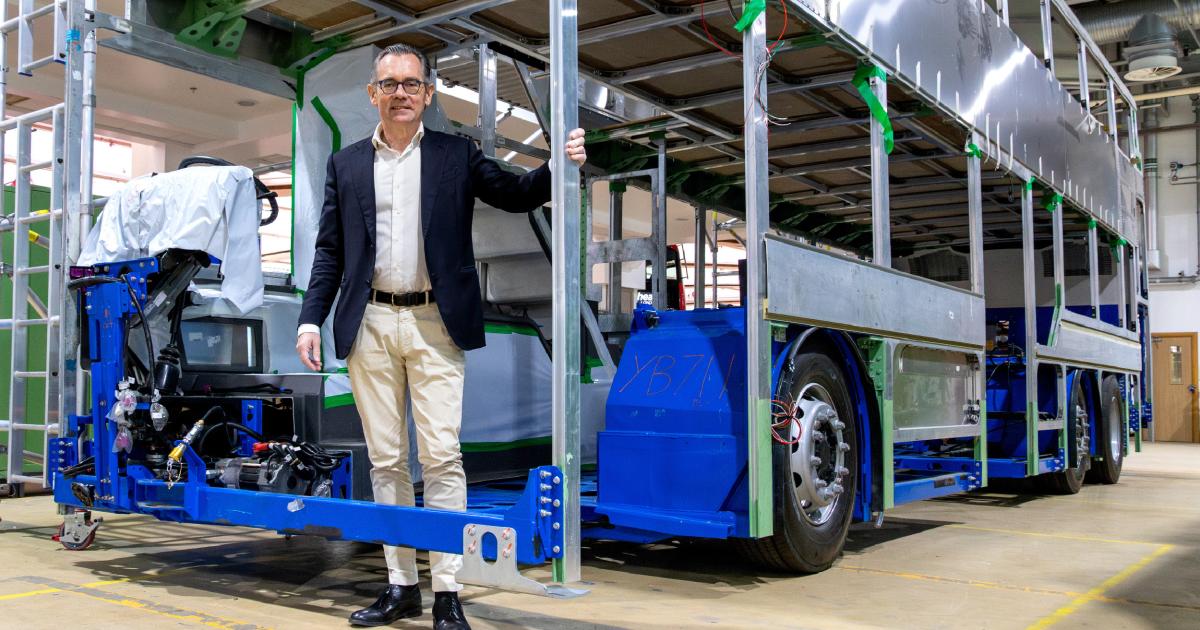
Wrightbus new triaxle.
 wrightbus.com
Wrightbus unveils 6x2 as it ramps up production for the Far East
Two years in the making, Wrightbus has given the first glimpse of its hotly anticipated 6x2 zero-emission bus – the prototype rolling off the production line simultaneously at its factories in Northern Ireland and Malaysia.
wrightbus.com

PG
Established Member
The press release reads like a salvo on Alexander Dennis!
Efficiency and durability tests will be completed during the summer, with a demonstrator heading out to a customer in Hong Kong for 12 months.
Mr Gales said there were further widescale sales opportunities in Singapore, Australia, New Zealand and the UK.

It also sounds like they are begging for an inquiry into modern slavery, as the team apparently have been working on it 24 hours a day for two years solid....The press release reads like a salvo on Alexander Dennis!
Either that or it's standard PR twaddle

busesrusuk
Member
Lets hope its more successful than Wrightbus last venture with a fully built up bus. KMB were less than impressed with their Streetdeck...

GusB
Established Member
The most obvious market for a tri-axle decker is certainly Hong Kong/Singapore, but it wouldn't surprise me if the powers that be at Wright had Lothian in mind when they were developing the product. I wonder if a demonstrator will be heading to Auld Reekie in due course.Wonder if they have had a chat with Lothian about it...

ClydeCoaster
Member
- Joined
- 31 Jul 2019
- Messages
- 203
Press release does say "With orders already lined up for the Far East and Europe"... Europe as in mainland Europe? Or UK & Ireland Europe?
mm3309219x
Member
I believe it was more due to the unfortunate timing of Wrightbus entering adminstration at around the same time the demonstrator entered service, which led to issues with after sales support. There were also some rumours that KMB hasn't paid for the demonstrator vehicle yet, meaning it was still an asset of Wrightbus so it had to be returned.Lets hope its more successful than Wrightbus last venture with a fully built up bus. KMB were less than impressed with their Streetdeck...
Personal opinion, but I think KMB were quite confident about the Streetdecks as they once placed an order for 50 before Wright entered adminstration, which was quite a large number for a new vehicle type.

joieman
Member
I believe Ensignbus now own it.Did the demonstrator get shipped from Malaysia to Ireland? I seen pics of it on a boat in Malaysia but not sure where it went to.
busesrusuk
Member
I also believe that, having taken the best part of two years to get it into service that resulted in that bus doing no more than a day or two's work when it finally got licenced probably had a part to play. The integral StreetLite and its double deck counterpart will probably not go down in history as their finest products. Yes, a number were sold but operators have learnt to live with them rather than embracing them IMO. The re-power programme may well be the saviour of the Streetdeck...I believe it was more due to the unfortunate timing of Wrightbus entering adminstration at around the same time the demonstrator entered service, which led to issues with after sales support. There were also some rumours that KMB hasn't paid for the demonstrator vehicle yet, meaning it was still an asset of Wrightbus so it had to be returned.
Personal opinion, but I think KMB were quite confident about the Streetdecks as they once placed an order for 50 before Wright entered adminstration, which was quite a large number for a new vehicle type.
Last edited:

You would be correct, however there are still one or two with KMB's subsidiary Sun Bus that usually operates on the NR331/NR331S route from Tsuen Wan/Tsuen Wan West to Park Island(Ma Wan).I believe Ensignbus now own it.
I believe Ensignbus now own it.
Ensignbus own the ADL500 prototype (reg ED68), if that's what you're thinking of. I think the Bromley Bus Preservation Group persuaded ADL to sell it to them, and after a while, they sold it to Ensignbus. who were looking for a long-wheelbase bus for open-top services at Southend.
busesrusuk
Member
This is the ex KMB Streetdeck demonstrator that came back to the UK and is now with Ensignbus:Ensignbus own the ADL500 prototype (reg ED68), if that's what you're thinking of. I think the Bromley Bus Preservation Group persuaded ADL to sell it to them, and after a while, they sold it to Ensignbus. who were looking for a long-wheelbase bus for open-top services at Southend.

Ensignbus 160 Apr24
Brooklands 2024, Apr 2024. This bus was originally Kowloon Motor Bus W6S1.
 www.flickr.com
Whilst this is the Enviro 500 prototype that is also now with Ensignbus:


Mikey C
Established Member
- Joined
- 11 Feb 2013
- Messages
- 8,283
The improvement in air quality and reduced CO2 emissions from the electric buses will offset one flight out of GatwickIrizar will supply 14 articulated ie trams to Gatwick Airport for their car park shuttles.

Gatwick airport purchases 14 Irizar ie tram buses
Irizar is to supply 14 new 18m long ie tram buses to London Gatwick airport to connect passengers with long-stay car parks.www.route-one.net
KevinBrum12
Member
It now looks very grim for the Alexander Dennis site in Falkirk, despite the politicians saying they are in talks to see if jobs and the site. Alexander Dennis have put the site up for sale...
STV News - Alexander Dennis site up for sale amid consultation to close Scottish operations
Alexander Dennis’ Falkirk site has been put up for sale as the bus manufacturer consults on proposals to shut Scottish operations.
Due to financial concerns, the company is considering moving away from the Larbert location to a single site in Yorkshire, potentially putting 400 jobs at risk.
STV News - Alexander Dennis site up for sale amid consultation to close Scottish operations
Alexander Dennis’ Falkirk site has been put up for sale as the bus manufacturer consults on proposals to shut Scottish operations.
Due to financial concerns, the company is considering moving away from the Larbert location to a single site in Yorkshire, potentially putting 400 jobs at risk.
The article seems to be slightly muddled. There are two separate locations, the historic factory in Falkirk and the more recent facility in Larbert which is where recent E400EV production has taken place. At one point it refers to the Larbert site where it clearly means the Falkirk one.It now looks very grim for the Alexander Dennis site in Falkirk, despite the politicians saying they are in talks to see if jobs and the site. Alexander Dennis have put the site up for sale...
STV News - Alexander Dennis site up for sale amid consultation to close Scottish operations
Alexander Dennis’ Falkirk site has been put up for sale as the bus manufacturer consults on proposals to shut Scottish operations.
Due to financial concerns, the company is considering moving away from the Larbert location to a single site in Yorkshire, potentially putting 400 jobs at risk.
My guess is that if a deal is done to keep ADL in Scotland it would be on the basis of all production at the new facility in Larbert. Falkirk has a glass roof which has been leaking for years and requires significant investment, I gather.
I read between the lines on the original announcement and came to similar conclusion I.e; if we get some orders/support then we will restart production at Larbert but Falkirk has no way back.The article seems to be slightly muddled. There are two separate locations, the historic factory in Falkirk and the more recent facility in Larbert which is where recent E400EV production has taken place. At one point it refers to the Larbert site where it clearly means the Falkirk one.
My guess is that if a deal is done to keep ADL in Scotland it would be on the basis of all production at the new facility in Larbert. Falkirk has a glass roof which has been leaking for years and requires significant investment, I gather.
Another ADL development - a positive one, hopefully - in partnership with KleanDrive they've established a repowering arm, named AD Repower.
 www.route-one.net
Alexander Dennis and KleanDrive to open repower with Enviro400 - routeone
AD Repower collaboration between Alexander Dennis and KleanDrive promises upcycling, with first Enviro400 to debut in Q2 2026.
www.route-one.net
Published: August 4, 2025

Alexander Dennis has appointed KleanDrive as conversion partner for its newly-created AD Repower arm in a collaboration that will see the repurposing of diesel buses to battery-electric, with an initial focus on the Enviro400 double-decker.
That repower will see the installation to the Enviro400 of 352kWh of battery capacity, of which 324kWh will be usable. Lithium iron phosphate chemistry will be used with cells from CATL.
The first converted bus is expected to take to the road in Q2 2026, KleanDrive says. A range of 195 miles is claimed at 50% passenger occupancy with use of a ‘plug and play’ battery-electric drivetrain and control software.
That will include Voith motors housed with all power electronic in a framework and skid system. The new driveline interfaces with existing bus controls and instrumentation, with KleanDrive noting that the package has been designed for installation at an operator’s premises to minimise vehicle downtime.
Alexander Dennis Engineering Director Chris Gall says: “Repowering buses is a smart way to make a big impact on emissions and running costs for our customers with lower capital expenditure.
“The engineering on the KleanDrive drivetrain is in keeping with our reputation for quality, and we have been impressed with how well thought out the design is for easy installation and maintenance.”
Mr Gall adds that offering repower of diesel buses alongside the Alexander Dennis range of new battery-electric vehicles “is the quickest route to decarbonisation of our customers’ fleets, while delivering cleaner, quieter and smoother journeys for passengers.”
AD Repower is fully backed by Alexander Dennis and will be supported through the existing AD24 aftermarket platform, he continues.
Work with the NFI Group subsidiary represents a major expansion of KleanDrive’s bus repower portfolio. In 2024, FirstGroup took a £1 million stake in the supplier and it recently received a 30-unit order from First Bus for repower of vehicles from another manufacturer.
KleanDrive CEO Joe Tighe notes that Alexander Dennis buses have a reputation for durability. “By repowering them with an EV drivetrain, we can maximise the lifespan of the vehicle, while eliminating noxious emissions and slashing running costs and CO2 emissions.
“By repowering rather than prematurely replacing, we avoid throwing away a perfectly good vehicle and the carbon dioxide that is embedded within that.”
Bornin1980s
Member
- Joined
- 4 Apr 2017
- Messages
- 720
I wonder, might repowering allow for very long overall lives, perhaps even 30 years?