
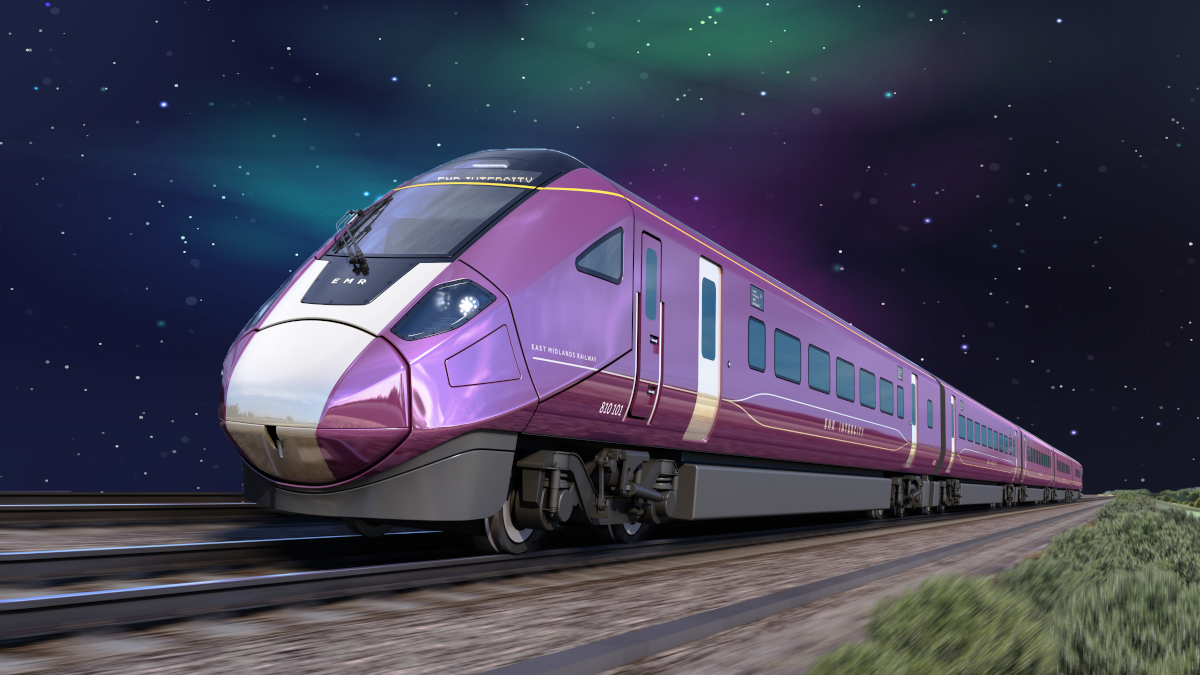
I do hope, that should the 810 design be successful, we see fewer 8XX classes, instead with something more like 810/X for Diesel, Battery and Electric variants, as I'm not sure how wise the current trend of lots of similar but not quite the same fleets is.Does that have any real advantage over simply buying more Class 810s once they presumably manage to get this batch working?

-
Our new ticketing site is now live! Using either this or the original site (both powered by TrainSplit) helps support the running of the forum with every ticket purchase! Find out more and ask any questions/give us feedback in this thread!
You are using an out of date browser. It may not display this or other websites correctly.
You should upgrade or use an alternative browser.
You should upgrade or use an alternative browser.
MML Electrification: is it going to be completed?
- Thread starter londonmidland
- Start date
- Status
- Not open for further replies.
Sponsor Post - registered members do not see these adverts; click here to register, or click here to log in
R
RailUK Forums

Killingworth
Established Member
But the route will not be fully electrified before 2035, maybe not until 2040, if ever.The advantage is that an electric only version would be somewhat cheaper to buy and maintain.
At what point would it be safe to order new all electric units?
Which is why I see development of longer range hybrid battery powered units to cover most scenarios.

HSTEd
Veteran Member
- Joined
- 14 Jul 2011
- Messages
- 20,319
With modern traction motors and drives the limit is likely to be the rating of the transformer on 25kV on electric power.A Diesel/Electric drive is limited by the engine shaft power x the alternator and inverter control efficiencies. An electric only drive is limited by the allowable short term rating of the traction motors, often 50% above CMR and also adhesion. Just compare the actual acceleration of a bi-mode both pan-up and pan-down. You can feel the extra!
WAO
EDIT:
To clarify, I mean that the transformer output will limit the output of the train on electric power, not that electric will have lower performance than diesel or anything like that.
Last edited:
Modern low-iron 2MW+ transformers are quite compact and nowhere near as bulky and heavy as a 1MW diesel genset/fuel tank.With modern traction motors and drives the limit is likely to be the rating of the transformer on 25kV on electric power.
But the route will not be fully electrified before 2035, maybe not until 2040, if ever.
At what point would it be safe to order new all electric units?
Which is why I see development of longer range hybrid battery powered units to cover most scenarios.
Battery units are all electric

Killingworth
Established Member
Exactly, and wire less.Battery units are all electric
No need for track lowering or bridge rebuilding and no tunnel complexities. Big savings on wires, but can sufficient range and speed be guaranteed in a train that can be built and operated at a competitive price? Not today, but better brains than mine are clearly working on achieving that in the not too distant future.
However good our brains, we will always be limited by Physics (specifically Chemical Thermodynamics, with batteries). I don't expect more than marginal improvements over a period as we are probably on the asymptote of development.Exactly, and wire less.
No need for track lowering or bridge rebuilding and no tunnel complexities. Big savings on wires, but can sufficient range and speed be guaranteed in a train that can be built and operated at a competitive price? Not today, but better brains than mine are clearly working on achieving that in the not too distant future.
Brilliant minds tackled the steam engine but couldn't better the Carnot Cycle nor the limitations of the fire tube boiler.
One good inextinguishable train battery fire will restore the balance.
WAO

Mikey C
Established Member
- Joined
- 11 Feb 2013
- Messages
- 8,260
The best way of charging battery trains is under wires. Wire the main trunks of the UK rail network (which includes the MML), and you can then run battery trains on the quieter branches and local services.
Yep. The 810s produce 4 x 735kW = 2.94MW on diesel (but only 8 driven axles according to Modern Railways in 2021). I've not seen figures for the power rating of the traction motors. A five car 222 generates 5x556=2.8MW, with ten driven axles. I'd expect the 810s are a bit lighter too.
Do you have a figure for the 810 power on AC?
I was working back from the six-car class 395 which has a power of 3.36MW and a top speed of 140mph. If an 810 on AC has the same power per car, that would be 5/6x3.36 = 2.8MW.
EDIT:
According to Rail Engineer, the Aurora traction motors can deliver 8x290=2.32MW at the rail, so power under AC will not be more than this, at the rail. (Unless they have a short-term boost rating of course)
Aurora - A new dawn for the East Midlands - Rail Engineer
Listen to this article To learn about the major rolling stock changes planned for the Midland Main Line, Rail Engineer was pleased to meet Rachel Turner, head of new trains at East Midlands Railway (EMR). The Midland Railway Main Line from London St. Pancras to Nottingham, Sheffield, Derby, and...www.railengineer.co.uk
Not to hand, but I know a man who might @hwl
A Diesel/Electric drive is limited by the engine shaft power x the alternator and inverter control efficiencies. An electric only drive is limited by the allowable short term rating of the traction motors, often 50% above CMR and also adhesion. Just compare the actual acceleration of a bi-mode both pan-up and pan-down. You can feel the extra!
WAO
The 222 (and 220 and 221) engines have been derated from 750 to 700hp to improve engine reliability ~15 years ago. On the 22x the limitation (bottleneck) post derate is still the traction inverter and software are the limiters not the motors or diesel engines. Hotel and auxiliary loads also need to be include in the analysis.
Unlike the previous 80x bi-modes where the diesel traction power (and hence acceleration /max speed) was lower than that for OHLE, the 810s performance is effectively matched on both.
On the 80x the OHLE TE is software rather than power limited which provides uniform acceleration and normally the motors operate below their nominal limit, this allow for some redundancy as motors can deliver more power if another is isolated.
On 810s there is theoretically less redundancy but you only need the peak power for acceleration for relatively short periods for which the motors can do if there is one isolated.
== Doublepost prevention - post automatically merged: ==
Indeed - the improvements in performance (and lack of weight) of some of the modern transformers in the 2-3.2MW has largely gone unnoticed. Keeping the units as light as possible thus reducing power requirements then has further huge virtuous effects by being able to utilise more efficient and very light transformers.Modern low-iron 2MW+ transformers are quite compact and nowhere near as bulky and heavy as a 1MW diesel genset/fuel tank.
Last edited:
With the pace of battery technology improvements and the uncertain implications it would be irresponsible to use limited public funds for an expansion of conventional electrification at the present time.The best way of charging battery trains is under wires. Wire the main trunks of the UK rail network (which includes the MML), and you can then run battery trains on the quieter branches and local services.
That's an elective rather than a physical limitation.On the 80x the OHLE TE is software rather than power limited which provides uniform acceleration and normally the motors operate below their nominal limit, this allow for some redundancy as motors can deliver more power if another is isolated.
WAO
If we use not having an exact picture of the future as a reason not to do something, we would never do anything.With the pace of battery technology improvements and the uncertain implications it would be irresponsible to use limited public funds for an expansion of conventional electrification at the present time.
HSTEd
Veteran Member
- Joined
- 14 Jul 2011
- Messages
- 20,319
The section of the MML proposed for construction in the near future doesn't meaningfully aid charging activities though.The best way of charging battery trains is under wires. Wire the main trunks of the UK rail network (which includes the MML), and you can then run battery trains on the quieter branches and local services.
What trains would strongly benefit from electrification between East Midlands Parkway and Wigston?
Maybe the one unit an hour that reverses northbound at Leicester, but thats not much to justify the enormous cost.
If you want to use parts of the envisaged MML scheme to achieve rail electrification you probably forget that part and install the bits near Sheffield.
EDIT:
Wigston to East Midlands Parkway is close to 160 track kilometres, it could cost £350-700m

1D54
Established Member
- Joined
- 1 Jun 2019
- Messages
- 1,469
Which is 99.45 miles for those of us that prefer figures that way.Wigston to East Midlands Parkway is close to 160 track kilometres, it could cost £350-700m
Where did you get the costings from? There is one heck of a difference between the two you give.

Nottingham59
Established Member
Yep. Dore-Sheffield currently carries 8tph and Sheffeld-Meadowhall carries 11tph. Both those sections should be prioritised over Syston-EMD, which only carries 4tph on the fast lines and 1tph plus some freight on the slows.Maybe the one unit an hour that reverses northbound at Leicester, but thats not much to justify the enormous cost.
If you want to use parts of the envisaged MML scheme to achieve rail electrification you probably forget that part and install the bits near Sheffield.
HSTEd
Veteran Member
- Joined
- 14 Jul 2011
- Messages
- 20,319
Reports in the press, literature and on these forums over the last few years have suggested electrification costs from £2.5m up to £4.5m per single track kilometre.Which is 99.45 miles for those of us that prefer figures that way.
Where did you get the costings from? There is one heck of a difference between the two you give.
I haven't seen any for the phase south of Wigston though.
EDIT:
Our own @Bald Rick may be able to comment, he has mentioned these sorts of prices in the past.
Last edited:
There's a letter to a Parliamentary Committee below. The case for, of course.
1D54
Established Member
- Joined
- 1 Jun 2019
- Messages
- 1,469
Pretty frightening when you read figures like that and may have played a part in not even taking the wires the 3 miles from Wigston to Leicester which many have stated would have made so much sense for a variety of reasons.Reports in the press, literature and on these forums over the last few years have suggested electrification costs from £2.5m up to £4.5m per single track kilometre.
I haven't seen any for the phase south of Wigston though.
EDIT:
Our own @Bald Rick may be able to comment, he has mentioned these sorts of prices in the past.
Killingworth
Established Member
Sounds simple, but it's not.Yep. Dore-Sheffield currently carries 8tph and Sheffeld-Meadowhall carries 11tph. Both those sections should be prioritised over Syston-EMD, which only carries 4tph on the fast lines and 1tph plus some freight on the slows.
The 4 track section between Dore and Sheffield would have been fine for electrification if had been done before 2 tracks and bridges over the Sheaf and roads were removed - maybe before 1960!
Watch this Dan Coffey video to see how even adding back a 3rd track (HS2's intention) will be tricky - and expensive. Follow in from now demolished Totley Tunnel East signal box at 52.40. Most critically from 56.09 at the site of old Millhouses and Ecclesall station. See;
Sheffield station tracks, points, bridges, signals, platforms, signalling and retail need very careful planning to make best use of the site - immediately above the confluence of the River Sheaf and Porter Brook. Planning should allow for a doubling of passenger numbers within 25 years. That's roughly how long it's likely to take to get the job done at the current rate of progress and by then it might not prove to have been enough.
Of course restructuring the listed station would be beneficial even without electrification but you just know one will be deferred for the other, into eternity.
* Dore-Sheffield currently carries 8tph
EMR London 2
XC 2
EMR + Northern Nottingham 2
Northern Manchester 1
EMR + TPE Liverpool 2
Plus freight so at least 9 tph
Last edited:

GRALISTAIR
Established Member
The whole “bionic duckweed” principle.If we use not having an exact picture of the future as a reason not to do something, we would never do anything.
Nottingham59
Established Member
If we use not having an exact picture of the future as a reason not to do something, we would never do anything.
There's uncertainty, sure. But the way to handle that uncertainty is well established.The whole “bionic duckweed” principle.
Define the uncertainty: Batteries might work out; or batteries might be a total illustion.
- If batteries are a total illusion, then we will need to electrify the whole MML to Sheffield and on to Doncaster and Leeds.
- If batteries work out for main line trains as well as local services, then we will still need to electrify at least Dore-Sheffield-Meadowhall and Trent triangle-Nottingham to give those trains somewhere to recharge.
- Electrify those lengths of the MML that we know will need to be done anyway.
- In the meantime, work fast to address the uncertainty by trialling battery trains, determine what range will be possible, and modelling what the recharging regime should be (or alternatively prove batteries will never work on mainline trains)
- Depending on the answer to (2) implement electrification with wires or battery as appropriate.
With the pace of battery technology improvements and the uncertain implications it would be irresponsible to use limited public funds for an expansion of conventional electrification at the present time.
Up to a point. There's still a need for some electrification otherwise where do the battery trains charge.
Likewise if you only do just enough to charge, you then need everything to be working well for it to work.
There's uncertainty, sure. But the way to handle that uncertainty is well established.
Define the uncertainty: Batteries might work out; or batteries might be a total illustion.
So the answer to the bionic duckweed problem is:
- If batteries are a total illusion, then we will need to electrify the whole MML to Sheffield and on to Doncaster and Leeds.
- If batteries work out for main line trains as well as local services, then we will still need to electrify at least Dore-Sheffield-Meadowhall and Trent triangle-Nottingham to give those trains somewhere to recharge.
If batteries are bionic duckweed, then it should be easy to demonstrate it.
- Electrify those lengths of the MML that we know will need to be done anyway.
- In the meantime, work fast to address the uncertainty by trialling battery trains, determine what range will be possible, and modelling what the recharging regime should be (or alternatively prove batteries will never work on mainline trains)
- Depending on the answer to (2) implement electrification with wires or battery as appropriate.
Indeed, however you need to do step 1 and step 2 of those 3 steps, you can't just jump to step 3.
I fear there is agreement!Up to a point. There's still a need for some electrification otherwise where do the battery trains charge.
Likewise if you only do just enough to charge, you then need everything to be working well for it to work.
Indeed, however you need to do step 1 and step 2 of those 3 steps, you can't just jump to step 3.
Killingworth
Established Member
The most expensive bits to electrify if all other improvements are made at the same time, but even more expensive if they're not until a later date.
- If batteries work out for main line trains as well as local services, then we will still need to electrify at least Dore-Sheffield-Meadowhall and Trent triangle-Nottingham to give those trains somewhere to recharge.

TT-ONR-NRN
Veteran Member
You're biased based on where you live though. Everybody thinks they're worse off where they are. @irish_rail is constantly suggesting Plymouth gets a rough deal from XC and GWR. The Reading line users that swamp the SWR fleet threads think they've got the short end of the stick there. I moan that the Eccles line gets the worst treatment of the Metrolink, probably because that's where I live (but partially because it doesAbsolutely disgusting treatment of the East Midlands. Surely it can’t get any worse?! We hope Alexander will pull something out of the bag, but I doubt it!
)But contrary to what you may think, the East Midlands is no worse off than plenty of the rest of Britain. This was SWR a few months back with the 701s, it was Merseyrail with the 777s, it was TfW with the 230s plus the continuously disappointing delayed "Metro." It was Northern for decades. It'll bounce back and the eventual improvements will be worth it.
It's laziness and tightness disguised as environmentally-friendly sustainable nonsense. Greenwashing.Sounds like desperate British exceptionalism. Waiting for unproven technology to save us from what we should have done decades ago. Oh silly Europeans sinking money into electrification for we alone have got it right by waiting for batteries to come to the rescue.
Batteries are expensive and require constant replacement. Fleets of battery buses are now grounded in China, because while there was government funding for initial purchase, there is no funding stream for mid-life battery replacement. Then there's the issue of mining lithium and cobalt, and we don't even know how to quantify it (but it's there and very real).
Electrify and be done with it.
In 3 or so years time we could have had 25Kv wire continuously from Edinburgh to Derby. A lengthy stretch. That would be more miles of Cross Country diesel trains under the wires. Even so, battery bimodes in 15 years time are not sufficient for XC to do away with some form of diesel propulsion as it doesn't look as if wires will be extended south of Wakefield/Doncaster towards Bristol/Plymouth for generations.
Nevertheless, electrification should be continued 4 miles into Leicester to make things tidy for pan up/pan down stationary in a station instead of in the countryside on the move. I hope contact wire tensioning has been made sufficient to allow pan up here at 80mph?
Nevertheless, electrification should be continued 4 miles into Leicester to make things tidy for pan up/pan down stationary in a station instead of in the countryside on the move. I hope contact wire tensioning has been made sufficient to allow pan up here at 80mph?
Grimsby town
Member
- Joined
- 4 Apr 2011
- Messages
- 864
I think there's a pretty strong case that the East Midlands has the worst rail service of anywhere in Britain. There's plenty of reasons for itYou're biased based on where you live though. Everybody thinks they're worse off where they are. @irish_rail is constantly suggesting Plymouth gets a rough deal from XC and GWR. The Reading line users that swamp the SWR fleet threads think they've got the short end of the stick there. I moan that the Eccles line gets the worst treatment of the Metrolink, probably because that's where I live (but partially because it does
But contrary to what you may think, the East Midlands is no worse off than plenty of the rest of Britain. This was SWR a few months back with the 701s, it was Merseyrail with the 777s, it was TfW with the 230s plus the continuously disappointing delayed "Metro." It was Northern for decades. It'll bounce back and the eventual improvements will be worth it.
- No electrification hence less reliable services
- Comparatively short trains on local and intercity services
- Slow journey times particularly from Nottingham to Birmingham/Leeds/Manchester
- Poor frequency. Pretty much all regional routes are hourly at best

Class15
Established Member
Almost all of this is also true of the West Country though isn’t it.I think there's a pretty strong case that the East Midlands has the worst rail service of anywhere in Britain. There's plenty of reasons for it
Electrification wouldn't have solved all those problems, but it would have improved reliability and increased the chance of longer and high frequency services on some routes, given the electric trains are more abundant and cheaper to run.
- No electrification hence less reliable services
- Comparatively short trains on local and intercity services
- Slow journey times particularly from Nottingham to Birmingham/Leeds/Manchester
- Poor frequency. Pretty much all regional routes are hourly at best
Exactly, took the words out of my mouth.You're biased based on where you live though. Everybody thinks they're worse off where they are. @irish_rail is constantly suggesting Plymouth gets a rough deal from XC and GWR. The Reading line users that swamp the SWR fleet threads think they've got the short end of the stick there. I moan that the Eccles line gets the worst treatment of the Metrolink, probably because that's where I live (but partially because it does
A case might be made to wire to the EM and replace the 810 engines with batteries for the last hop to Sheffield. The Derby - Sheffield wiring need only then be implemented when the XC stock is replaced. Even at £0.5bn, the EM wiring cut is only 1/30 of the bung Heidi/Starmer has offered the "Red Wall" for trams etc (which cost over 10x per mile more than 25kV).
I would also propose batteries for HS2, saving the OLE cost with a reduced speed, eliminating the slab track and using existing stock designs (I favour the 810!). At 125mph all the way, (could they squeeze a little more?), a good time should be possible, only a few minutes more than proposed.
You don't have to go fast, just don't go slow.
WAO
I would also propose batteries for HS2, saving the OLE cost with a reduced speed, eliminating the slab track and using existing stock designs (I favour the 810!). At 125mph all the way, (could they squeeze a little more?), a good time should be possible, only a few minutes more than proposed.
You don't have to go fast, just don't go slow.
WAO
Trainbike46
Established Member
I think there's a pretty strong case that the East Midlands has the worst rail service of anywhere in Britain. There's plenty of reasons for it
Electrification wouldn't have solved all those problems, but it would have improved reliability and increased the chance of longer and high frequency services on some routes, given the electric trains are more abundant and cheaper to run.
- No electrification hence less reliable services
- Comparatively short trains on local and intercity services
- Slow journey times particularly from Nottingham to Birmingham/Leeds/Manchester
- Poor frequency. Pretty much all regional routes are hourly at best
I have heard it said that the areas that have gotten the worst deal out of transport funding in the UK are the South West/West Country, the East Midlands, and Northern Ireland. I'm willing to believe that, tbh.Almost all of this is also true of the West Country though isn’t it.
Agreed.It's laziness and tightness disguised as environmentally-friendly sustainable nonsense. Greenwashing.
Electrify and be done with it.
Last edited:
- Status
- Not open for further replies.