DistantAR3
Member
Is there anywhere where a 4 aspect signal is controlled by a lever frame?

Haslemere and Winsford, for a little while at least!Is there anywhere where a 4 aspect signal is controlled by a lever frame?
How did it even work?Haslemere and Winsford, for a little while at least!
Ah, thank you.The lever frame won't actually be controlling the aspects. If the lever is reversed to clear the signal and various other conditions are satisfied, it will display an aspect that depends on the aspect of the next signal.
 www.railforums.co.uk

That is exactly how I understand it, not being totally signalling minded. As thirteen year old my dad sent me off to some family friends in Northampton, he being a bobby at Northampton No 4. He was afternoon shifts that week and we drove as far as we could then walked the rest of the way to the box which was opposite the Downside yard. From memory Northampton No 4 fringed with Rugby PSB in the west and Noirthampton No 2 then No 1 in the east - pretty sure No 3 had already closed before then.The lever frame won't actually be controlling the aspects. If the lever is reversed to clear the signal and various other conditions are satisfied, it will display an aspect that depends on the aspect of the next signal.
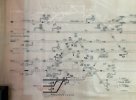
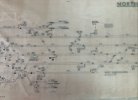
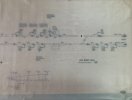
Thanks very much for that "Jfollows" . Perhaps I just assumed four aspect signalling was the go to for the WCML modernisation.Attached is my plan of the Northampton area when the four signal boxes still existed.
Three aspect signals, actually. Your memory is pretty good. 84 up was auto. I show signal numbers but not point numbers in my plan.
My plan also predates your memories since the plan includes No. 3 box, so some things could have changed.
Yes, back in the day I managed to borrow the official resignalling diagrams at electrification, so I came up with a style for copying them by hand, and then the diagrams have survived house and country moves since then.That really is a nicely drawn set of diagrams. Did you hand draw them ?
Thanks again for rekindling some memories !!
The same principle but in miniature - perfectly valid here, I think.I know that what is meant here is 'full-sized levers', but both Harrow-on-the-Hill (inc. subs) and Rickmansworth control 4-aspect signalling with manual, mechanical, miniature lever frames. Technically speaking Amersham, Chalfont & Latimer and Watford South Junction are also controlled by levers, specifically remote-controlled V-style interlockings.
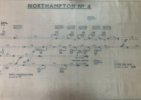
Just to let vou know the diagram from no 4 box is preserved. . Signal NN4 111 was in fact a controlled signal at the time of closure not sure if it ever was a auto. Regards Kevin.Yes, back in the day I managed to borrow the official resignalling diagrams at electrification, so I came up with a style for copying them by hand, and then the diagrams have survived house and country moves since then.
The Market Harborough line closed in 1981, but anyway I went to university in 1980 and I drew the plans before I left home.
== Doublepost prevention - post automatically merged: ==
See also https://www.s-r-s.org.uk/pullfree.asp?FilePath=ArchiveSignals\Downloads\brmr&FileName=1965-141g.pdf
This was probably the source for my hand-drawn diagram.
AUTO in the 1965 notice I linked to, but that's not to say that's what happened or it wasn't changed later, interesting.Just to let vou know the diagram from no 4 box is preserved. . Signal NN4 111 was in fact a controlled signal at the time of closure not sure if it ever was a auto. Regards Kevin.
Just to let vou know the diagram from no 4 box is preserved. . Signal NN4 111 was in fact a controlled signal at the time of closure not sure if it ever was a auto. Regards Kevin.
Was there much traffic over the line that late ?The Market Harborough line closed in 1981, but anyway I went to university in 1980 and I drew the plans before I left home.

And Heaton Norris (part of the "Stockport 5").Stockport 1&2 & Edgeley Junction 1&2
Broughton Crossing next box towards Market Harborough in 1965 from the link in post #14.Fascinating. I hope it gives some people memories.
Is the diagram in a public place ?
== Doublepost prevention - post automatically merged: ==
Was there much traffic over the line that late ?
In fact what would the next signal box be to Northampton No 4 ?
Thanks again for those fifty year old memories !!!
Broughton Crossing next box towards Market Harborough in 1965 from the link in post #14.
Not much traffic.
In 1970 there was 1S24 21:00 sleeper Euston-Glasgow which had used to start from Saint Pancras and went Settle-Carlisle, 1M98 in the up direction, of course loco change at Northampton (https://www.railforums.co.uk/threads/thames-clyde-express-in-the-1970s.264956/page-3#post-6735267).
Thank you, yes, for some reason part of my brain thought it was an OCS panel, but it’s not, lots of nice levers!And Heaton Norris (part of the "Stockport 5").

That’s brilliant! I’m working that area this week so will be looking at the changes and trying to see where things once were.Attached is my plan of the Northampton area when the four signal boxes still existed.
Three aspect signals, actually. Your memory is pretty good. 84 up was auto. I show signal numbers but not point numbers in my plan.
My plan also predates your memories since the plan includes No. 3 box, so some things could have changed.
Just to let vou know the diagram from no 4 box is preserved. I have it . Signal NN4 111 was in fact a controlled signal at the time of closure not sure if it ever was a auto. Regards Kevin.
I bought it from collectors corner soon after the box closed and restored it . Lots of grey paint had to be removed which covered points, sidings and certain signals which had been removed over the years. Thats when i noticed signal 111 had it's auto plate painted over and showed a red aspect which had been painted over the yellow one. I did not make a note of the new signal number it had been given.AUTO in the 1965 notice I linked to, but that's not to say that's what happened or it wasn't changed later, interesting.
Interesting stuffI bought it from collectors corner soon after the box closed and restored it . Lots of grey paint had to be removed which covered points, sidings and certain signals which had been removed over the years. Thats when i noticed signal 111 had it's auto plate painted over and showed a red aspect which had been painted over the yellow one. I did not make a note of the new signal number it had been given.
The copy I have shows it as an auto with replacement switch. I assume if it was converted, it would be on a switch panel due to the high numbering?Just to let vou know the diagram from no 4 box is preserved. . Signal NN4 111 was in fact a controlled signal at the time of closure not sure if it ever was a auto. Regards Kevin.
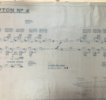
Here’s some photos of a rather faded office copy of the box diagram I came across. It’s not dated, but with the amount of amendments I’d imagine it would be accurate to near the end.Fascinating. I hope it gives some people memories.
Is the diagram in a public place ?
From https://www.wbsframe.mste.co.uk/public/Northampton_No3.htmlInteresting stuff
Sadly I was only 14 at the time so didnt make notes andf didn't have a camera. Just remember we drove down the dirt trak as far as we could go in his blue Hillman Avenger (I think), then walked the rest of the way. I have a feeling we left the car somewhere near the previous box. Which one had been closed ? Was it No2 or No3 out of the sequence No 4 - No 1. Incidentally I think all those boxes were on the up side of the track, but is that relevant ?
So Northampton No. 2 was the first to go, at the end of 1982.Northampton No3. signal box
Northampton No.3 was opened by British Railways on 1st November 1981. The box, a London Midland Region Type 15 design and the frame, an 83 lever Westinghouse Brake & Signal Co. Ltd. Style 'L' Power lever frame was moved from Bedford North. The frame was a refurbished section of the 167 lever frame from Cannon Street signal box, which was in turn part of a 227 lever 'L' frame (frame number 97) purchased by London, Midland & Scottish Railway in case of war damage.
When opened, the box replaced the previous Northampton No.3 signal box which was fitted with a 58 lever London & North Western Railway 'Tumbler' frame. On 3rd December 1982 Northampton No.2 signal box, which was fitted with a 118 lever London & North Western Railway 'Tumbler' frame, was closed and it's area of responsibility was taken over by Northampton No.3
The intention was for the box to take over the whole area including Northampton Bridge Street Crossing but this never took place and eventually the whole area except Bridge street was taken over by Rugby PSB, this will change again soon when Rugby PSB closes and the area becomes controlled by Rugby SCC.
Northampton No.3 frame was configured to take over the whole of the Northampton area but it only managed to take over the old Northampton No3 area and Northampton No2 area.
The box was closed on 28th July 1991 when Rugby PSB took over signalling of the area.
I think the last miniature lever frame left on Network Rail is Maidstone East. I would be surprised if this doesn't have four aspect signals. But jt is a style L frame, with all-electric locking, i.e. no mechanical locking between levers.I know that what is meant here is 'full-sized levers', but both Harrow-on-the-Hill (inc. subs) and Rickmansworth control 4-aspect signalling with manual, mechanical, miniature lever frames. Technically speaking Amersham, Chalfont & Latimer and Watford South Junction are also controlled by levers, specifically remote-controlled V-style interlockings.
Immingham Reception Sidings still has a slide frame, though is Associated British Ports property rather than NR.I think the last miniature lever frame left on Network Rail is Maidstone East. I would be surprised if this doesn't have four aspect signals. But jt is a style L frame, with all-electric locking, i.e. no mechanical locking between levers.