Our new ticketing site is now live! Using either this or the original site (both powered by TrainSplit) helps support the running of the forum with every ticket purchase! Find out more and ask any questions/give us feedback in this thread!
Road is the overwhelming majority mode for passengers and rail, and always will be. This is good as it tackles a major connectivity pinch point from Kent into areas north and East of London.
And needs to be reduced if we are going to have a transport system fit for the future, with reduced carbon emissions, fewer casualties, lower pollution, noise and more sensible urban and town planning.
The majority of car trips are short distances, when you start looking at longer distance travel (anything more than 50 miles) the amount done by car is general quite limited.
Typically the average trip done per person when including as a driver or a passenger by car is up to 9.1 miles.
Compare that to surface rail where it's an average of 30 miles per trip.
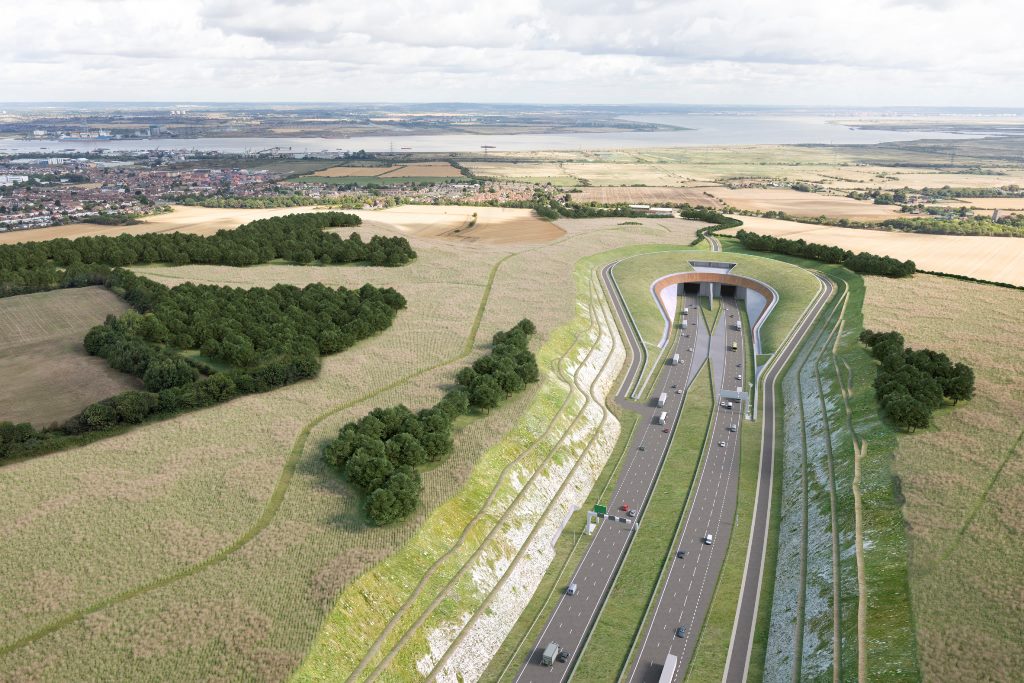
The now defunct Tilbury ferry would probably be a lot more viable as a Tilbury Gravesend Bus. Ultimately this(along with Silverton):could be quite a gift for public transport and stop the two sides of the Thames feeling so far apart
The Silverton tunnel managed to meet schedule and budget, occasionally infrastructure does go well in this country
And needs to be reduced if we are going to have a transport system fit for the future, with reduced carbon emissions, fewer casualties, lower pollution, noise and more sensible urban and town planning.
Carbon emissions will be reduced by electric vehicles/alternative fuels. Frustrated and delayed drivers cause accidents, so reducing congestion will hopefully reduce that. Pollution and noise will also be alleviated by reducing congestion.
I cannot understand why so many people seem to have this rail (and other public transport) vs. car mentality. They are complementary, not antagonistic. They are both useful. Most rail users drive.
The majority of car trips are short distances, when you start looking at longer distance travel (anything more than 50 miles) the amount done by car is general quite limited.
Typically the average trip done per person when including as a driver or a passenger by car is up to 9.1 miles.
Compare that to surface rail where it's an average of 30 miles per trip.
The average distances are right but long distance car journeys are still a major consideration. Rail certainly increases significantly at longer distances but car trips still dominate. 2023 data here:
The following reaction from the North East of England shows why it is politically clueless for this Labour Government to give consent for the Lower Thames Crossing. Even if the Lower Thames Crossing is funded with private finance it still sends the message that the Government is again concentrating all investment in the South East of England and showing no interest in the North of England.
Regardless of how it is paid for, the announcement of a major transport project in the South East of England getting the green light from ministers has proved painful for some observers in our region.
The average distances are right but long distance car journeys are still a major consideration. Rail certainly increases significantly at longer distances but car trips still dominate. 2023 data here:
There's an average of by car of:
9 trips of between 50 and 100 miles
5 trips of more than 100 miles a year
That compares with 218 trips of between 5 and 50 miles and 326 trips of less than 5 miles.
That's means that car travel over 50 miles is limited (about 2% of all car trips, which includes as a passenger as well as a driver so there's potential that this is double or even triple counting some of those journeys).
In comparison about 13% of all rail trips are over 50 miles.
Yes the number of car trips which are over 50 miles still is the majority (around 75%) however given that the vast majority of the UK population doesn't live within 50 miles of the Lower Thames Crossing (I'd guess less than 20%), there's a lot of travel by road which won't be impacted by the fact that this is being built.
If you looked at a rail link, especially if you could deliver it so you could run Eurotunnel style services to North of the Thames, not only could you relieve capacity at Dartford, but you could also remove the need to consider upgrades to the trunk road network in Kent.
If the expectation is for (say) 30,000 extra vehicles a day (20% of the Dartford crossing numbers), that's the equivalent (circa 3,000) in the peak hour to one whole motorway lane.
Given the M2 at junction 5 is likely to need to be widened to 3 lanes in the not to distant future (remember I design roads for a living so maybe party to information which may not be in the public realm yet) increasing demand (by removing a bottleneck) would probably increase the need to do that.
As I said a rail link would have likely reduced that need.
Also a rail link would mean that the frequency of the times that operation stack gets used would likely reduce significantly. Especially if you could hold a lot of lorries in Essex at the northern terminal of a Eurotunnel style service.
If you looked at a rail link, especially if you could deliver it so you could run Eurotunnel style services to North of the Thames, not only could you relieve capacity at Dartford, but you could also remove the need to consider upgrades to the trunk road network in Kent.
Assuming you mean Eurotunnel style services from Calais (and otherwise, it would seem a bit silly because you'd be throuhg a road tunnel before you even finished loading!) you'd have to build a brand new railway line from Folkestone, which would get extremely expensive!
Assuming you mean Eurotunnel style services from Calais (and otherwise, it would seem a bit silly because you'd be throuhg a road tunnel before you even finished loading!) you'd have to build a brand new railway line from Folkestone, which would get extremely expensive!
The now defunct Tilbury ferry would probably be a lot more viable as a Tilbury Gravesend Bus. Ultimately this(along with Silverton):could be quite a gift for public transport and stop the two sides of the Thames feeling so far apart
The Silverton tunnel managed to meet schedule and budget, occasionally infrastructure does go well in this country
Who knows, if we are about to have a bonfire of all the environmental and planning processes followed by a long term focus on state capacity maybe the final bill may be more in line with what similarly rich European nations will pay. Though it should be pointed out that our relative cost delta on road building a much lower because the UK contractors do enough of it to remain competent.
More broadly we might get some sort of useful AI breakout between now and then, in which case we might see quite massive improvements in productivity!
Regarding congestion, yes it will fill up, but it will fill up with useful journeys someone thought it worth while to make which aren't currently being made. This is generally held to be a good thing, plus 99% of the traffic it will carry in its lifespan will be EVs powered mostly by zero carbon energy.
Circling back to the top point projects like this if executed properly will improve confidence in the ability of the UK to execute on construction and thus make more rail projects likely.
As always, this figure is heavily slewed towards short local hops. Rail is a greater proportion of medium - long distance journeys (which are the type more likely to involve crossings of the lower Thames).
(Not giving any view on how much the tunnel is needed - just that that particular statistic isn't much use when discussing rail or strategic road network projects).
== Doublepost prevention - post automatically merged: ==
Though it should be pointed out that our relative cost delta on road building a much lower because the UK contractors do enough of it to remain competent.
That's really not true. Even simple roads cost many times more than in our neighbouring countries. Nowhere else pays £147m for a mile of dual carriageway in flat countryside. Norway builds tunnels under the sea for less than we build roads across fields
That's really not true. Even simple roads cost many times more than in our neighbouring countries. Nowhere else pays £147m for a mile of dual carriageway in flat countryside. Norway builds tunnels under the sea for less than we build roads across fields
That's really not true. Even simple roads cost many times more than in our neighbouring countries. Nowhere else pays £147m for a mile of dual carriageway in flat countryside. Norway builds tunnels under the sea for less than we build roads across fields
That's really not true. Even simple roads cost many times more than in our neighbouring countries. Nowhere else pays £147m for a mile of dual carriageway in flat countryside. Norway builds tunnels under the sea for less than we build roads across fields
I can't be bothered to find the actual original paper so will have to settle with an article by the people who wrote it.
"A study by Britain Remade found that compared to seven other rich countries, the UK was spending twice as much on building new railways and a tenth more per mile of road on average."
I'm sure we can agree that 1/10 is less than 2/1, there may be individual examples of road building being expensive but on average our cost per mile is higher than peers but not massively so. Our cost of building railways on the other hand is multiples higher per mile. I am well aware that HS2 costs are a bit like including the price of a Lamborghini sat on the drive in the cost per m2 of your drive and then saying "construction of my drive was very expensive".
== Doublepost prevention - post automatically merged: ==
As always, this figure is heavily slewed towards short local hops. Rail is a greater proportion of medium - long distance journeys (which are the type more likely to involve crossings of the lower Thames).
(Not giving any view on how much the tunnel is needed - just that that particular statistic isn't much use when discussing rail or strategic road network projects).
Even if you do it by passenger km road transport is vastly higher than any other means of transport either today or its historical levels. For example if we got cycling rates up to peak levels in the 1930's it would hardly dent car millage assuming that any new cycle trips would remove a road journey. If no capacity restriction is put on car travel then someone else will in most cases just take that new path.
My point earlier is that we need to get away from this general view that car traffic is something to be generally reduced which this thread is based on.
The Abundance Agenda is one where as a starting point we should say personal mobility is broadly good, automotive is well on the way to removing the climate externalities which then leaves the local environmental and safety externalities. Where space is limited and car noise is problematic we should have usage restrictions and broad investment in alternatives, however the really big thing that we could do to reduce the externalities of car usage is to build lots more roads and re-allocate the freed up roads to other modes.
the really big thing that we could do to reduce the externalities of car usage is to build lots more roads and re-allocate the freed up roads to other modes.
I've previously joked that the problem with the "one more lane" thinking for a road is that the one more lane needs to be a bus lane or a cycle lane for that to work and not for general traffic.
I can't be bothered to find the actual original paper so will have to settle with an article by the people who wrote it.
"A study by Britain Remade found that compared to seven other rich countries, the UK was spending twice as much on building new railways and a tenth more per mile of road on average."
I'm sure we can agree that 1/10 is less than 2/1, there may be individual examples of road building being expensive but on average our cost per mile is higher than peers but not massively so. Our cost of building railways on the other hand is multiples higher per mile. I am well aware that HS2 costs are a bit like including the price of a Lamborghini sat on the drive in the cost per m2 of your drive and then saying "construction of my drive was very expensive".
== Doublepost prevention - post automatically merged: ==
Even if you do it by passenger km road transport is vastly higher than any other means of transport either today or its historical levels. For example if we got cycling rates up to peak levels in the 1930's it would hardly dent car millage assuming that any new cycle trips would remove a road journey. If no capacity restriction is put on car travel then someone else will in most cases just take that new path.
My point earlier is that we need to get away from this general view that car traffic is something to be generally reduced which this thread is based on.
The Abundance Agenda is one where as a starting point we should say personal mobility is broadly good, automotive is well on the way to removing the climate externalities which then leaves the local environmental and safety externalities. Where space is limited and car noise is problematic we should have usage restrictions and broad investment in alternatives, however the really big thing that we could do to reduce the externalities of car usage is to build lots more roads and re-allocate the freed up roads to other modes.
Unfortunately, the more new roads you build, the less green space and attractive countryside you have. We're not a big country. That's not to say no new roads - this tunnel may be very important. However a future based on lots of new roads wouldn't be appealling.
I can't be bothered to find the actual original paper so will have to settle with an article by the people who wrote it.
"A study by Britain Remade found that compared to seven other rich countries, the UK was spending twice as much on building new railways and a tenth more per mile of road on average."
It's not overly clear what that is being compared for roads unlike the rail examples. and the author points out there are plenty of UK projects that are significantly more expensive e.g Newark Northern Bypass, LTC etc
This report suggests that the cost of road projets is closer to double the European average.
"The average cost for a flat road in the UK is £8.45 million per lane km, compared to the European average of £5.77 million per lane km and £4.22 million per lane km in France."
LTC clearly rivals the likes of HS2 and Crossrail for cost per km particularly when road schemes should be cheaper than highspeed and underground rail.
The Abundance Agenda is one where as a starting point we should say personal mobility is broadly good, automotive is well on the way to removing the climate externalities which then leaves the local environmental and safety externalities. Where space is limited and car noise is problematic we should have usage restrictions and broad investment in alternatives, however the really big thing that we could do to reduce the externalities of car usage is to build lots more roads and re-allocate the freed up roads to other modes.
I'd be happy to support roads if there were plans to reduce road space elsewhere. For example i'd support bypass upgrades around York if it meant the city centre was made more bus and active travel friendly. There's not much joined up thinking though and it's not clear that building the LTC isn't just going to lead to other areas becoming even more congested and households buying more and more cars without space to store them.
There are still arguments about the financial viability of the project, however, which some believe could deter private finance.
Professor Phil Goodwin, emeritus professor of transport policy at University College London and the University of the West of England, told the Financial Times last August: “I was closely involved in the ‘public examination’ of National Highways’ proposed Lower Thames Crossing and there are many unanswered questions as to its viability. Despite thousands of pages of evidence, National Highways declined to produce updated value for money figures as to the uncertainty around long-term traffic scenarios, as was required by Department for Transport 2022 guidelines. This, and other calculations, were challenged, but we still had serious questions as to whether the scheme would pass investors’ due diligence, without the public purse providing major guarantees. Private funding does not turn a bad scheme into a good one, and the case for this one did not stack up.”
My point earlier is that we need to get away from this general view that car traffic is something to be generally reduced which this thread is based on.
The Abundance Agenda is one where as a starting point we should say personal mobility is broadly good, automotive is well on the way to removing the climate externalities which then leaves the local environmental and safety externalities. Where space is limited and car noise is problematic we should have usage restrictions and broad investment in alternatives, however the really big thing that we could do to reduce the externalities of car usage is to build lots more roads and re-allocate the freed up roads to other modes.
Automotive emissions are hugely significant outside of the exhaust emissions. Particulate emissions are getting worse as a result of heavier and electric cars and road run off is something the UK doesn't even bother to monitor. Thousands of people per year are killed or seriously injured (and the numbers are going up as a result of heavier vehicles). That's why car traffic needs to be reduced. Hopefully to zero in urban areas where public and active transport is the most efficient solution and to mainly essential journeys in rural areas. More roads destroy human scale towns and cities and encourage urban sprawl. Electrification of road transport is the latest wheeze of the the motor industry not a sustainable way to plan transport.
We are aware of an issue with emails from the Forum to Microsoft-based email accounts (hotmail/outlook/live.com email addresses). This is being looked into currently, thanks for your patience meanwhile.