
Rail Quest
Member
Was a fantastic video, that. The departure shot at 2:05 sounded different from the previous Stadler UK products. It sounded quite loud when passing, and thats in electric!more from Velim:

Was a fantastic video, that. The departure shot at 2:05 sounded different from the previous Stadler UK products. It sounded quite loud when passing, and thats in electric!more from Velim:

Sounds like a jet passing you . Still be good to see them.in serviceWas a fantastic video, that. The departure shot at 2:05 sounded different from the previous Stadler UK products. It sounded quite loud when passing, and thats in electric!

That really is an unusual sound - especially to my ears which were brought up on the sound of BR AC "Roarers" classes 81 and 85.The departure shot at 2:05 sounded different from the previous Stadler UK products.

Reminiscent of the "do-re-mi-lok" (Siemens Eurosprinter) on OBBWas a fantastic video, that. The departure shot at 2:05 sounded different from the previous Stadler UK products.

I was expecting to see a music analysis before long, and you have kindly obliged!Reminiscent of the "do-re-mi-lok" (Siemens Eurosprinter) on OBB
Although Stadler have gone for an arpeggio - second inversion triad in B major, I think (F#, B, D#) - rather than a scale.
Do-fa-la (or fa-do-mi depending on what key you are in)

How originalName just sprung to mind was:
'Whistlers'


Measured from the video using a software spectrum analyser, the fundamental of the lowest tone is around 730 Hz, the middle tone around 1000 Hz and the high tone around 1300 Hz, so a pretty good match with your musical analysisAlthough Stadler have gone for an arpeggio - second inversion triad in B major, I think (F#, B, D#) - rather than a scale.
 (F# => 739.99 Hz, B => 987.77 Hz and D# => 1244.51 Hz). Those will be the 'chopping' frequencies of the traction inverters, used to synthesize the variable frequency 3-phase AC for the motors.
Measured from the video using a software spectrum analyser, the fundamental of the lowest tone is around 730 Hz, the middle tone around 1000 Hz and the high tone around 1300 Hz, so a pretty good match with your musical analysis

Let's hope not!I wonder if the new Stradler 93 and 99's are quieter in diesel than the very noisy 68's
K

I second thisLet's hope not!
Was expecting the Columbia Pictures logo to appear after that.Reminiscent of the "do-re-mi-lok" (Siemens Eurosprinter) on OBB
Although Stadler have gone for an arpeggio - second inversion triad in B major, I think (F#, B, D#) - rather than a scale.
Do-fa-la (or fa-do-mi depending on what key you are in)
I think the 68s will be the benchmark for cranks vs public argumentsLet's hope not!
 .
.I think those kind of questions can only be answered by manufacturer and testers. They are usually wired up with loads of testing kit for the duration of the tests.In the pacing shot 2/3 of the way through, there is obviously a yellow test cable out of the cab window and down the side. Any ideas what for, it seems to go down to the sandpipe?
Just guesswork, but it might be a camera to record the behaviour of the wheel-rail interface and the sanding equipment, or possibly a pipe used to squirt something slippery onto the railhead for low-adhesion testing.In the pacing shot 2/3 of the way through, there is obviously a yellow test cable out of the cab window and down the side. Any ideas what for, it seems to go down to the sandpipe?
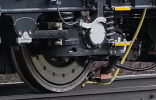

Thanks.Just guesswork, but it might be a camera to record the behaviour of the wheel-rail interface and the sanding equipment, or possibly a pipe used to squirt something slippery onto the railhead for low-adhesion testing.
A close-up of the end of it, captured from the video:
View attachment 176123
99002 is officially on board!
Next stop, Velim!
Watch this space for exclusive videos and photos as it undergoes testing.
I wonder if a section of track in Spain is the same track gauge?I'm surprised that the locomotive's journey from Valencia in Spain to Velim in the Czech Republic has a leg that's by ship. I would have expected it to do the whole journey by road or the whole journey by rail. But fair enough.

Just guesswork, but it might be a camera to record the behaviour of the wheel-rail interface and the sanding equipment, or possibly a pipe used to squirt something slippery onto the railhead for low-adhesion testing.
A close-up of the end of it, captured from the video:
View attachment 176123

There are different track gauges between the factory and the French border where all track would be standard gaugeI wonder if a section of track in Spain is the same track gauge?
Wasn't 99002 at the Berlin show? Did it return to Valencia or did it stay in Berlin. Given that Velim is in the Czech Republic which is landlocked anyway why would you put the locomotive on a ship. Berlin to Prague is only about 400 kms.I'm surprised that the locomotive's journey from Valencia in Spain to Velim in the Czech Republic has a leg that's by ship. I would have expected it to do the whole journey by road or the whole journey by rail. But fair enough.
Canal?Wasn't 99002 at the Berlin show? Did it return to Valencia or did it stay in Berlin. Given that Velim is in the Czech Republic which is landlocked anyway why would you put the locomotive on a ship. Berlin to Prague is only about 400 kms.
According to Wikipedia, there is a standard gauge high speed link between Valencia and Madrid, and another between madrid and the French border, so it could be done that way. But there may be reasons why the high speed link can't be used for tghis purpiose. Valencia is on the Mediterranean coast, so shipping to soemwhere nearer Velim is certainly possible.There are different track gauges between the factory and the French border where all track would be standard gauge
Apparently it could have been barged along the River Elbe low water levels permitting to Cerhenice which is where the test track is. Other trains for the test centre move by the same route, the Saudi's had some moved by the same route.Canal?
99002 wasn't complete when it was in Berlin, hence it had to go back to Spain to be finished.I'm surprised that the locomotive's journey from Valencia in Spain to Velim in the Czech Republic has a leg that's by ship. I would have expected it to do the whole journey by road or the whole journey by rail. But fair enough.
Wasn't 99002 at the Berlin show? Did it return to Valencia or did it stay in Berlin. Given that Velim is in the Czech Republic which is landlocked anyway why would you put the locomotive on a ship. Berlin to Prague is only about 400 kms.
Yeah, and remember than the class 99s are only 75mph locos... not ideal for a HS lineAccording to Wikipedia, there is a standard gauge high speed link between Valencia and Madrid, and another between madrid and the French border, so it could be done that way. But there may be reasons why the high speed link can't be used for tghis purpiose. Valencia is on the Mediterranean coast, so shipping to soemwhere nearer Velim is certainly possible.
99002 wasn't complete when it was in Berlin, hence it had to go back to Spain to be finished.
The test track in Velim is located about 1/2mile (closest point) to the River Elbe so a suitably sized vessel can enter the Elbe estuary near Hamburg and get very close. At a guess it will probably be unloaded in Kolin about 4 miles away or Melnik about 20 miles away where there are active rail connected Dockyards (for both containers (e.g. to/from Hamburg) and bulk).
Exactly - we are talking about the equivalent of sailing a small containership 400miles upriver from Felixstowe / Southampton / London Gateway! Normal on the continent, alien concept here (the equivalent is using a coaster to Grangemouth via the North Sea).
The Elbe and transportation on it is part of the reason Czechia is much more industrialised than Slovakia (and one of our former prime minsters ended up waving a bit of paper at Croydon Airport 87 years ago)