
What is the point, shaming TOC's isn't going to improve things, if anything, it'll simply deter potential customers... all while introducing another cost to the TOC's to produce and update this information... I thought there was no money?

-
Our new ticketing site is now live! Using either this or the original site (both powered by TrainSplit) helps support the running of the forum with every ticket purchase! Find out more and ask any questions/give us feedback in this thread!
You are using an out of date browser. It may not display this or other websites correctly.
You should upgrade or use an alternative browser.
You should upgrade or use an alternative browser.
Worst train companies to be named and shamed
- Thread starter styles
- Start date
- Status
- Not open for further replies.
Sponsor Post - registered members do not see these adverts; click here to register, or click here to log in
R
RailUK Forums
It’s all a bit Gerald Ratner.*What is the point, shaming TOC's isn't going to improve things, if anything, it'll simply deter potential customers...
* A man who killed his company by telling the world one of his products was crap.

12LDA28C
Established Member
- Joined
- 14 Oct 2022
- Messages
- 5,058
Um, the railway had bucket loads of problems before COVID19. Go back and look at the records. We had the failure of Railtrack plus various poorly performing TOCs.
Rather ironically, IIRC reliability was quite good during the times of the "lock downs". Mainly due to less booked services, hence recovery was easier. And less problems due to a lack of staff.
What's happened since COVID19 is many of the problems that previously existed (but may not have been visable) have got worse plus we have new problems and they have all accumulated to create the mess that we have today.
Network Rail won't admit it, but I hear that many maintenance managers off the record say that Modernising Maintenance is causing lots of problems.
With less maintenance staff, response times for attending infrastructure failures has become worse. And in places, it was already longer than when Railtrack or BR existed.
The railway had problems, yes. But for a long period prior to Covid, passenger numbers were increasing year-on-year, new trains were introduced, TOC revenue was doing well, there were no national strikes and at least one TOC was actually paying a premium back to the Treasury rather than taking a subsidy.
Of course reliability was 'quite good' during the lockdowns. You'd hope that an Operator could run 20% or so of the normal service without too much of a problem, things would be pretty bad if they couldn't.
What we have now is a situation where overcrowding is rife and little can be done about it because TOCs have to go cap-in-hand to the Government to ask for more stock and jump through hoops just in order to justify the need for it, let along actually acquire some. You'll forgive me if I don't view GBR as a miracle cure for all the current ills.
Halwynd
Member
It’s all a bit Gerald Ratner.*
* A man who killed his company by telling the world one of his products was crap.
Ah, but at least Gerald offered cheap crap - less than the cost of a prawn sandwich if I remember rightly - the railway service today is expensive crap.


By attributing every single delay and cancellation to the operator, it will keep hammering home that the operators are the issue and the railways should be nationalised
Who said they’d be doing this? Yes it will be displayed by the operators but delay attribution happens in the background.
If the posters / displays had context for delay reasons / cancellations that would be good, but I believe the nuance would probably be lost over the big number likely to be front and centre. Imagine lots of squabbling going on right now about what the poster actually displays!
== Doublepost prevention - post automatically merged: ==
Rather ironically, IIRC reliability was quite good during the times of the "lock downs". Mainly due to less booked services, hence recovery was easier. And less problems due to a lack of staff.
And fewer passengers! Less passenger incidents overall and also service recovery was easier as there make up time and more capacity. Couldn’t last that way forever of course but the most punctual railway I’ve seen.
What's happened since COVID19 is many of the problems that previously existed (but may not have been visable) have got worse plus we have new problems and they have all accumulated to create the mess that we have today.
Network Rail won't admit it, but I hear that many maintenance managers off the record say that Modernising Maintenance is causing lots of problems.
With less maintenance staff, response times for attending infrastructure failures has become worse. And in places, it was already longer than when Railtrack or BR existed.
Yes maintenance response time and/or availability definitely seems to have taken a nosedive.
But yes, for MPs, yes, attendance figures and voting figures would be helpful and entertaining. But they should also be displayed in the town's and cities of their constituencies. They could be compared to the average and best (top ten) figures.
Off-topic but I’d suggest they’d hardly be read. People don’t read the local election notices posted at their town hall which is presumably where they’d be displayed. Maybe more if they’re online.
But of course you can already do that know for rail company performance and also for your individual station - even if that (for now) is using a 3rd party website
== Doublepost prevention - post automatically merged: ==
What difference do these stats/screens mean to Joe Public? They just want to get from A to B.
It doesn’t stop them doing that though does it? And some people do want to know.
Last edited:

LNW-GW Joint
Veteran Member
What will happen when the TOC column says "GBR" in every case (including the Network Rail one)?
Who's to blame then?
Who's to blame then?

What difference do these stats/screens mean to Joe Public? They just want to get from A to B.
Don’t you think it’s important that the operators of the railway continue to be held accountable in a publicly visible way? Personally I quite like reading about PPM, rolling stock reliability figures etc.
I don’t think by station is the best way to break the information down. Many of the criticisms advanced on this thread seem somewhat reflexive, though.
What we have now is a situation where overcrowding is rife and little can be done about it because TOCs have to go cap-in-hand to the Government to ask for more stock and jump through hoops just in order to justify the need for it, let along actually acquire some. You'll forgive me if I don't view GBR as a miracle cure for all the current ills.
100% this. Ironically there’s going to be even less incentive for operators to pander to “customers” in the new world, and that’s something that’s often valued highly on this forum. I honestly have no idea why so many contributors are in favour of nationalisation.
== Doublepost prevention - post automatically merged: ==
Ah, but at least Gerald offered cheap crap - less than the cost of a prawn sandwich if I remember rightly - the railway service today is expensive crap.
That seems to be a sweeping generalisation. The bits of the UK railway I use regularly are excellent, and compare very favourably to the local trains I’ve recently spent a few days using in the south of France.
Last edited:
Adrian1980uk
Member
- Joined
- 24 May 2016
- Messages
- 843
Impressive and making the most of what they have... If Ely junction is done GA will be targeting 90 Million.And we doOn target to hit 80 million passenger journeys this year too. Let the others weep at the thought.

dk1
Veteran Member
Impressive and making the most of what they have... If Ely junction is done GA will be targeting 90 Million.
Would be a boon if it does get the green light.
Halwynd
Member
That seems to be a sweeping generalisation. The bits of the UK railway I use regularly are excellent, and compare very favourably to the local trains I’ve recently spent a few days using in the south of France.
Unfortunately I live in an area where services are provided by Northern, Avanti and TPE, each of which have given their passengers significant problems in recent years. My local station is the second highest in the UK on the recently published list of stations with the most cancellations, and on Sundays is currently having to operate a very limited emergency timetable. I don't qualify for a railcard and don't receive free or 75% staff discount, so it is expensive. Numerous staff strikes and other disputes have affected many in recent times - one of my former colleagues resigned her job because of it. Trains are less comfortable - TPE electric units have particularly hard and uncomfortable seating, and Avanti isn't much better - and some IC trains have been so full that you cannot get to the toilet.
I'm afraid 'expensive crap' is putting it politely.
Last edited:
Class 170101
On Moderation
- Joined
- 1 Mar 2014
- Messages
- 8,664
Thats because they miss out Thurso (on a branch) to then return south on time.It's a bit weird, if you look at Wick Station you'd think ScotRail brilliant(ish)... Thurso, not so much
WICK (Time to 3%): 68.7% Cancelled: 1.1%
GEORGEMAS JUNCTION (Time to 3%): 67% Cancelled: 3%
THURSO (Time to 3%): 70.4% Cancelled: 7.6%
Should be higher but no thanks to Network Rail taking so much access when it suits them rather than the customers. Its also not a story GA doing well, that doesn't sell media time.And we do
But the engineers don't approve of it so haven't tried to make it work in my opinion.Network Rail won't admit it, but I hear that many maintenance managers off the record say that Modernising Maintenance is causing lots of problems.
With less maintenance staff, response times for attending infrastructure failures has become worse. And in places, it was already longer than when Railtrack or BR existed.
But they are all awful, pretty much, aren't they?Absolutely no point including Civil Servants. They are not elected. And exactly how would you rate them?
But yes, for MPs, yes, attendance figures and voting figures would be helpful and entertaining. But they should also be displayed in the town's and cities of their constituencies. They could be compared to the average and best (top ten) figures.
Should be doable even without Ely Junction improvements, I would have thought (Ely and Haughley Jn improvements should be done of course). Most of their business would be in the London commuter belt though.Impressive and making the most of what they have... If Ely junction is done GA will be targeting 90 Million.
dk1
Veteran Member
With the strong return of commuting along the GEML and copious amount of freight day/night during the week it only leaves weekends as the sensible time for NR to complete engineering work.Should be higher but no thanks to Network Rail taking so much access when it suits them rather than the customers. Its also not a story GA doing well, that doesn't sell media time.
Class 170101
On Moderation
- Joined
- 1 Mar 2014
- Messages
- 8,664
But not every weekend which is what NR seem to be aiming for.With the strong return of commuting along the GEML and copious amount of freight day/night during the week it only leaves weekends as the sensible time for NR to complete engineering work.
dk1
Veteran Member
But not every weekend which is what NR seem to be aiming for.
Hopefully with Beaulieu Park and Cambridge South reaching completion they should no longer affect things. Obviously other works will always impact. Not sure how much is planned this summer though.
Adrian1980uk
Member
- Joined
- 24 May 2016
- Messages
- 843
It all just shows that revenue and passengers are there if you run the trains consistently, of course GA have their own (much documented) rolling stock issues, you might not get the service you expected but at least the train is there and on time and gets you to your destination and In general terms comfortably, not overcrowdedWith the strong return of commuting along the GEML and copious amount of freight day/night during the week it only leaves weekends as the sensible time for NR to complete engineering work.
The Planner
Veteran Member
- Joined
- 15 Apr 2008
- Messages
- 19,729
Which no one has to accept in the operator community.But not every weekend which is what NR seem to be aiming for.
I saw this at a Greater Anglia station the other day. The performance stats were in a tiny section of the departure screen and you couldn’t even read it. Essentially box-ticking it felt like.
ikcdab
Member
It depends how you define "rife". Most people travel on overcrowded trains, that's why they are overcrowded. But there are thousands of services every day that are not overcrowded. But because very few people travel on those services, we hear nothing from them. I'm not excusing anything, TOCs need to sort out the overcrowded services, but as a proportion of the actual services run, the overcrowded ones are in the minority.What we have now is a situation where overcrowding is rife an
12LDA28C
Established Member
- Joined
- 14 Oct 2022
- Messages
- 5,058
It depends how you define "rife". Most people travel on overcrowded trains, that's why they are overcrowded. But there are thousands of services every day that are not overcrowded. But because very few people travel on those services, we hear nothing from them. I'm not excusing anything, TOCs need to sort out the overcrowded services, but as a proportion of the actual services run, the overcrowded ones are in the minority.
'TOCs need to sort out the overcrowded services' you say. Did you not see the rest of my post where I described how some TOCs are trying to do just that by acquiring more stock but are being prevented from doing so by the DfT?

43096
On Moderation
- Joined
- 23 Nov 2015
- Messages
- 18,882
Which needs more taxpayer support. With 2% of all journeys being by rail, a mode which consumes over 60% of DfT funds, quite rightly the answer should be no. The railway has a subsidy addiction problem.'TOCs need to sort out the overcrowded services' you say. Did you not see the rest of my post where I described how some TOCs are trying to do just that by acquiring more stock but are being prevented from doing so by the DfT?
Adrian1980uk
Member
- Joined
- 24 May 2016
- Messages
- 843
It's not always as simple as longer trains although in some cases it is, regional routes infrastructure particularly my have stations designed for a set number of carriages, an example of this is Norwich to Cambridge, rolling stock is available but the infrastructure can't cope with 6 or 8 carriages and Ely junction stops more frequent services'TOCs need to sort out the overcrowded services' you say. Did you not see the rest of my post where I described how some TOCs are trying to do just that by acquiring more stock but are being prevented from doing so by the DfT?

No - but there’s plenty of examples of where it is (XC for example)It's not always as simple as longer trains although in some cases it is, regional routes infrastructure particularly my have stations designed for a set number of carriages, an example of this is Norwich to Cambridge, rolling stock is available but the infrastructure can't cope with 6 or 8 carriages and Ely junction stops more frequent services
12LDA28C
Established Member
- Joined
- 14 Oct 2022
- Messages
- 5,058
Which needs more taxpayer support. With 2% of all journeys being by rail, a mode which consumes over 60% of DfT funds, quite rightly the answer should be no. The railway has a subsidy addiction problem.
So you're in favour of overcrowding and a worsening passenger experience then, putting people off travelling by rail? How strange. Taxpayer support to acquire new or cascaded stock leads to increased ridership and a rise in farebox income going to the treasury.
== Doublepost prevention - post automatically merged: ==
It's not always as simple as longer trains although in some cases it is, regional routes infrastructure particularly my have stations designed for a set number of carriages, an example of this is Norwich to Cambridge, rolling stock is available but the infrastructure can't cope with 6 or 8 carriages and Ely junction stops more frequent services
Where did I mention longer trains? An increase in frequency where possible will achieve the same result. And there's plenty of routes that are still operating shorter trains than pre-Covid so lengthening trains is still an option, provided the stock is available.
LNW-GW Joint
Veteran Member
At some level, going right back to the early BR era, that was policy both at the DfT and as delivered by the TOCs of the day.So you're in favour of overcrowding and a worsening passenger experience then, putting people off travelling by rail? How strange. Taxpayer support to acquire new or cascaded stock leads to increased ridership and a rise in farebox income going to the treasury.
2 cars for 3 replacement of steam stock to DMU started it.
Pricing passengers off, and increasing fares for those that still travel (eg limiting Advance availability), has been part of the game for decades.
Premium pricing on fast trains is another tactic (eg after electrification, or on HS1).
Today's (not so) new issue is the quality of service offered to disabled passengers.
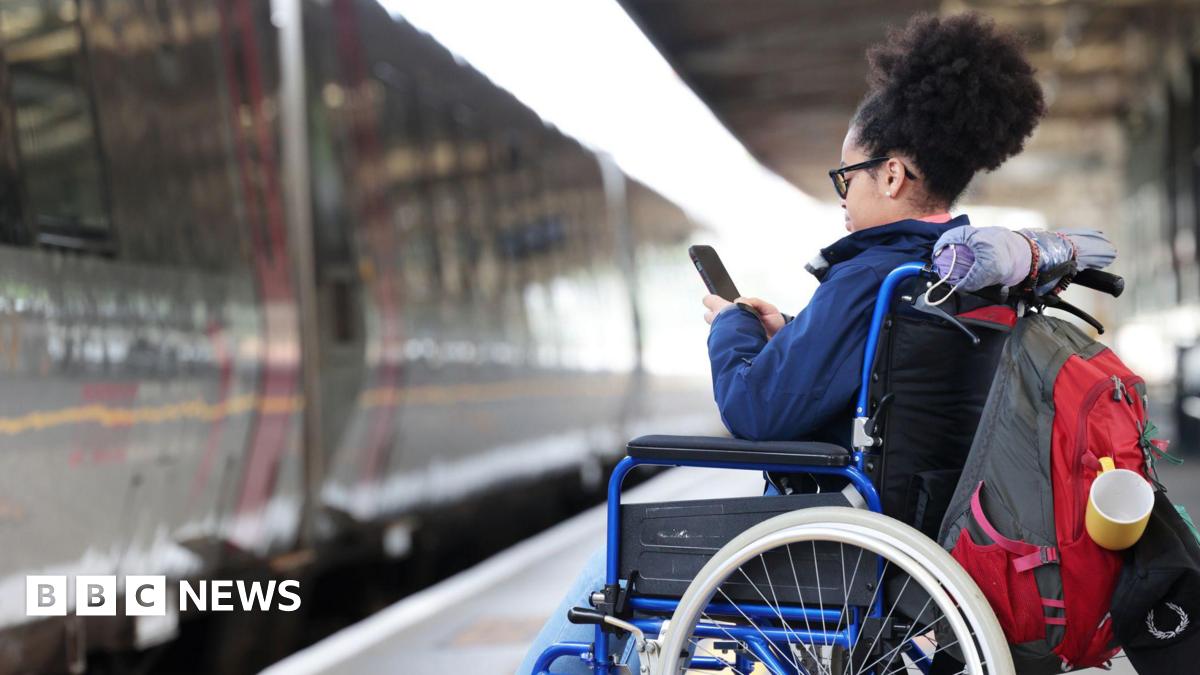
Disabled transport access a "national embarrassment", MPs warn
A report by parliament's cross-party-transport select committee says accessibility failings are "systematic" across all modes of transport.
www.bbc.co.uk
A report by parliament's cross-party transport select committee found "systematic" failings across all public transport and says "too great a burden is placed on individual disabled people" to hold operators and authorities to account.

That 2% figure is highly misleading and sadly repeated by both politicians and the media. It comes from UK total journeys that passengers make of which 46% are on foot and 2% by bike. The appropriate figure of journeys that can be made by rail is 9% of the total, with 90% road and 1% air.Which needs more taxpayer support. With 2% of all journeys being by rail, a mode which consumes over 60% of DfT funds, quite rightly the answer should be no. The railway has a subsidy addiction problem.

Annetts key
Established Member
All these figures that include walking or public transport, even car use, are IMHO misleading.That 2% figure is highly misleading and sadly repeated by both politicians and the media. It comes from UK total journeys that passengers make of which 46% are on foot and 2% by bike. The appropriate figure of journeys that can be made by rail is 9% of the total, with 90% road and 1% air.
How, for example do they count my travel. Depending on my role at the time, a day could involve walking to the railway station, train trip to my depot, driving the company van. Walking from the van to the site of work. Then return.
Or, drive my car to the railway station. Get the train to London (split ticket because I had a season ticket for part of the trip). Change to the Tube. Walk to the office where I attended a meeting. And return. Often having to change trains on the way back.
Also, how long do you decide to allow between parts of a journey to count them as separate? Especially if you have to pop in to somewhere or meet someone in between the different journeys?
And just to complicate matters further, there are multiple different routes I use when walking or driving. And I used multiple different trains as the time I needed to arrive varied.
Only very occasionally would anyone on a train hand out survey cards. And then the answer boxes often only allowed simple answers...
And of course at least some of the statistics are most likely based on a "representative" sample. I mean, just look at the discussion on here about split tickets and how the number of journeys are counted...
As usual, statistics if some of the relevant details are not included, can be rather misleading.
Shouldn't potential customers know if a service is unreliable?What is the point, shaming TOC's isn't going to improve things, if anything, it'll simply deter potential customers... all while introducing another cost to the TOC's to produce and update this information... I thought there was no money?
What's the problem with naming and shaming? Public pressure to change is a very good thing.
Annetts key
Established Member
Public pressure on who?What's the problem with naming and shaming? Public pressure to change is a very good thing.
If they complain to the TOC, with the current set up, what can the TOC actually do?
43096
On Moderation
- Joined
- 23 Nov 2015
- Messages
- 18,882
2% or 9%, it doesn’t really matter much in the context of 60% of all taxpayer transport funding for rail. It’s still a railway addicted to subsidy.That 2% figure is highly misleading and sadly repeated by both politicians and the media. It comes from UK total journeys that passengers make of which 46% are on foot and 2% by bike. The appropriate figure of journeys that can be made by rail is 9% of the total, with 90% road and 1% air.
- Status
- Not open for further replies.